How I Launched My Startup
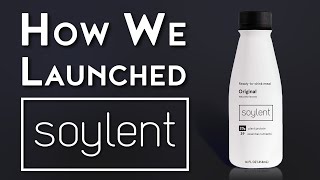
John Coogan recounts the founding and viral launch of Soylent (2013), describing how a roommate’s 30-day self-experiment and detailed public write-up generated massive media attention and a record-setting $3M crowdfunding campaign. He frames the launch as an accidental but effective demonstration-based marketing tactic, linking it to classic advertising principles and stressing the importance of storytelling for journalists and customers.
Questions this video answers
$3 million (record for food/CPG at the time).
February 13, 2013.
In 2013, the company I co founded, Soylent, broke crowdfunding records and raised $3 million for a bizarre new food product that very few people had actually tried. New direct to consumer e commerce companies are dime a dozen nowadays, but back then there wasn't an established playbook for how to launch a new product. We stumbled into one of the most effective viral marketing techniques by complete accident. And my experience launching Soylent still informs a lot of how I think about business today. I'm John Coogan and this is how we launched Soylent. I moved to Silicon Valley in 2012 with the hope of starting a traditional technology company, something that would live on the web or in the App Store and hopefully grow exponentially like the many successful tech companies that had come before. But building a great tech product proved to be harder than I originally thought. My first company was focused on education technology and was essentially a quiz app to help students memorize flashcards in a fun and interactive way. I was still learning to program and had no idea how to actually grow a new product after I published it. Months went by and nothing I built gained any traction. But this was extremely common. Most startups fail, after all. Fortunately, I had been living in a sort of hacker house with another startup that was going through similar challenges. Everyone was working hard and basically coding around the clock, but we kept failing to get users and actually grow the things that we built. It was a constant cycle of come up with an idea, build a minimum viable product, launch it, and then watch our analytics flatline. It was a tough experience, but we really enjoyed the process of building new things. So the day to day work was actually quite fun. After my startup ran out of the $17,000 we had raised in funding, I informally joined the other startup team who still had about $100,000 left in funding from Y Combinator. One of Paul Graham's most hilariously simple pieces of startup wisdom is just don't die. He wrote an essay where he said, if you can just avoid dying, you get rich. That sounds like a joke, but it's actually a pretty good description of what happens in a typical startup. So we took this to heart. With no revenue coming in, we set out to cut our expenses as much as possible. We moved to a tiny one bedroom apartment in the Tenderloin district of San Francisco where I slept on a twin bed in the living room. We paid our rent a year in advance, so we at least knew that we would have a place to live as long as we were able to pay for food and Internet service. We knew we could continue to try new ideas until something took off. I was still focused on writing code and building traditional software startups, but one of the roommates, Rob Reinhart, broadened his vision and started researching biology. He noticed that we were spending most of our money on food, and we were eating extremely unhealthy diets of mostly ramen noodles and Costco corn dogs. So he started working on a solution that would be healthy, convenient, and affordable. Typically, food options only satisfy two of these criteria. Nice restaurants are healthy and convenient, but expensive. Fast food is convenient and affordable, but unhealthy. And growing your own food is affordable and healthy, but is inconvenient in a tiny apartment. The idea he came up with was simple. Buy the exact nutrients needed to satisfy the fda, recommended daily values, and blend them together into a drink that was quick and cheap to make. He started tinkering with formulas, and to be honest, the first time he told me about the project, I wrote it off entirely. I simply thought that all viable startups had to be tech companies and that there was no way we could launch a new food brand. It was an interesting experiment, but I didn't see how it could make any money. But Rob liked the product he had made and thought others might too. So he started blogging about his experience. He posted a lengthy blog post on February 13th of 2013 where he detailed his experience using the Soylent prototype formula and shared how his health had improved while using the product exclusively. Rob has always been a creative writer, and he has a knack for crafting interesting and provocative narratives. He called the piece How How I Stopped Eating Food and explained that he had been using Soylent exclusively for 30 days straight, with only positive health changes to show for it. The blog post received mixed reviews on Hacker News, with some people claiming it was satirical, while others claimed it must be a scam. But a few people were genuinely engaging with the ideas and said that they would like to try the formula as long as they could independently vet the ingredients. So Rob posted the ingredients the next day, and the idea started to grow. Soon, reporters from Vice magazine and Discovery News started interviewing Rob to hear about the experiment. And seemingly overnight, 10,000 people had signed up on an extremely simple landing page to try the product when it was available. With so much organic interest in the product, we were able to launch a crowdfunding campaign that raised $3 million, which was a record for food products at the time and still stands in the consumer package goods category. After working for nearly a year on failed idea after failed idea, we had finally lucked into something that spoke to people and was to gain organic traction. We didn't realize it at the time, but by stress testing Soylent on himself, by eating it exclusively for 30 days straight, Rob had stumbled upon one of the oldest marketing techniques around. David Ogilvy is known as the father of advertising and had one of the most successful careers in advertising throughout the 20th century. He's produced iconic advertisements for Rolls Royce, Dove, and countless other American heritage brands. In 1963, Ogilvy published Confessions of an Advertising man, which is still remarkably relevant today, even though the mediums have shifted from radio to podcasts, from TV to Instagram, and from newspapers to tweets. All of the methods he outlines speak to fundamental human nature and are therefore timeless. He has a chapter in his book titled how to Make TV Commercials that Sell, where he outlines a variety of techniques like humor, testimonials, books, problem solution, and emotion. These are all still used regularly today, but he highlights demonstrations as particularly effective. He says that demonstrations don't have to be dull and shares one particularly interesting commercial that his firm created for the superglue brand Loctite. In the ad, Superglue is applied to the soles of an actor's shoes before lifting him onto the ceiling, where he sticks and and hangs upside down. The visual is quite striking, and it makes sure that the actor will have the viewer's full attention while delivering the sales pitch. The ad was so successful that it made Loctite Superglue the brand leader, and the commercial won first prize at the Cannes Festival. This ad has even been remade by Loctite and directly copied by several competitors over the past few decades. The strategy of a shocking demonstration has also been used to sell other products like dog food. Back in the 1980s, Alpo Dogfood had hired the actor Lorne Greene as a spokesperson, and in each commercial they were careful to point out that Lorne indeed fed Alpo to his dogs. It's also a bit of a legend that the president of Colcon Pet Food would personally eat a can of his company's dog food at the annual shareholders meeting each year. But one can of dog food isn't nearly as impressive as a full month of dog food. So naturally, Mitch Felderhoff, the president of the Munster Milling Company, ate nothing but Munster brand dog food for 30 days at the start of 2020. The marketing stunt worked for Munster Milling, and the press covered Mitch's dog food diet extensively. These extreme demonstrations are good for two reasons. First, they let the customer know that you have faith in your product and are willing to put your own body on the line to test it before products have independent reviews, customer testimonials, or slick ads. Sometimes the only advocate for the product is the founder. The second benefit of a stress test is that it is extremely hard to ignore. Some people love these stunts, some people hate them, but very few people can disregard them entirely. Everyone had an opinion on Soylent when we launched it, which meant lots of attention. The press wanted to hear the full story, and people who read stories about Soylent couldn't resist commenting on how crazy this Silicon Valley guy was for giving up food entirely for 30 days straight. Now, is a stress test demonstration right for every product launch? Absolutely not. It's only appropriate when your product is significantly different from the competition and would naturally draw a lot of skepticism from potential customers. But that doesn't mean that it's not important to focus on telling a compelling story when you launch the product. There are plenty of founders who lament the fact that no journalist wants to write about what they are building. But journalists only write about things that people will read. They need to find compelling stories. Good stories have clear narrative arcs. For Soylent, it was a broke entrepreneur struggling to find a way to stay healthy, who took a big risk by testing a new product on himself for 30 days straight. It's a dramatic story, like someone walking a tightrope between two buildings. Will they fall? Will Rob's Soylent experiment wind up having some unforeseen health consequences? It's human nature to want to find out what happens. So that's how we launched Soylent. We focused on making a product that solved a real problem we had ourselves, and then we told the world about it in the most dramatic way possible. None of us had studied marketing or even heard of David Ogilvy before, but we knew what made for an interesting experiment and that sharing detailed information would spark people's interest. Hopefully you enjoyed this video. I'm planning to post a few more about my personal entrepreneurial experiences, so please subscribe to the channel if you haven't already. If you'd like to get in touch with me, just reach out on Twitter. And as always, thanks for watching.










