How Squid Game Changed Streaming
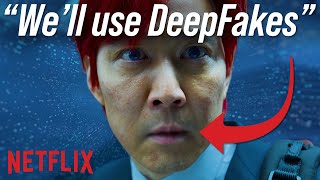
Squid Game's global hit status came from universal themes like money and survival that crossed cultures fast. John Coogan argues Netflix's binge-release strategy beats Disney's weekly franchise model, and that AI dubbing and deepfake mouth remapping could soon automate translation for entire streaming catalogs.
Squid Game has been an absolute breakout success, and that's bad news for Disney. The show is doing so well, in fact, that even the head of Netflix seems surprised by it.
There's a show on Netflix right now that is the number one in the world. Squid Game is will definitely be our biggest non English language show in the world for sure. It's only been out for nine days and it's a very good chance it's going to be our biggest show ever.
But there's actually a few really great reasons why Netflix's strategy here paid off so huge. They are basically doing the exact opposite of Disney when it comes to creating creating new shows, and people are starting to pay attention. Even Jeff Bezos had to pay his respects on Twitter to how brilliant this strategy was, calling it impressive and inspiring. Naturally, people were skeptical that he would give Netflix such a big compliment, since he did create Amazon Video after all. But Bezos responded to those comments directly, saying that no, it was just simple admiration. So why is Jeff Bezos so excited about Squid Game even though he hasn't even seen the show yet? Well, Bezos is a businessman first and foremost, and he understands that Squid Game is going to change everything for the world of online streaming. And the business strategy is interesting, but I think the technological implications here might be even bigger since Squid Game could mark the key turning point for the commercial use of deepfakes. But we'll get to that in a bit. First, we need to cover why Squid Game is so successful in the first place. This isn't the first time a foreign language show has broken out and gone viral. After all, Narcos captured everyone's attention in 2015 with the wild story of Pablo Escobar. And the German time travel series. Dark was wildly successful when it launched in 2017. But squid game is a little different, mostly because of the speed with which it has gained popularity. Just two weeks after launch, Squid Game became a massive phenomenon and topped the charts in 90 different countries, including the United States. The core reason that Squid Game is so universally popular and hard to put down is is that the subject matter is incredibly relatable. The main plot centers around a game show with deadly consequences. It's essentially a last man standing competition where whoever can stay alive the longest wins millions of dollars, everyone has a relationship with money, and everyone fears death. At some level. These themes cut across cultures and allow anyone with a pulse to clearly understand the stakes and get drawn into the story. But there's another reason why I think Squid Game has been so successful. The subplot See, while the main plot centers around a group of characters fighting for their lives and millions of dollars, the show introduces a detective character who is trying to uncover what's really going on. Mysteries also make for incredibly engaging stories, so Squid Game is basically putting one great story within another great story. If you went and deleted all the scenes where the contestants were playing the actual games and just watched the detective work the case, I think you'd still be very entertained by combining these two addictive genres, and the creators of the show are basically guaranteeing that you won't be able to put it down. And this strategy works especially well because Netflix releases all of the episodes at once. Binge watching is a critical part of the Netflix content strategy first and foremost because it's just what viewers want. But there is a major drawback. By pumping out content all at once, it's much harder for Netflix to drive attention through positive reviews from critics. In fact, Netflix didn't even mail out screeners of Squid Game to the press before the show went live, which is very abnormal. This could be because no one, not even Netflix, could have predicted exactly how successful Squid Game was going to be, but it's also part of their forward looking strategy. Reviews from established critics are increasingly irrelevant. Just look at the consistent disparity between Dave Chappelle's critics scores and audience scores on Rotten Tomatoes, and Netflix has the power to design around bad critic scores. The Netflix app could easily integrate with Rotten Tomatoes or Metacritic to show users an aggregated rating before recommending a movie or show, but they don't. This is because Netflix's recommendations are driven by an algorithm and only care about finding a show that you, the current viewer, will like. Clearly, lots of people disagree with critics and love shows that get bad reviews, and Netflix is happy to serve that content to the people who will enjoy it. When Netflix releases nine hours of content in one go, reviewers often can't even watch it all to write a review before the show has gone viral. And that's a big advantage of the bingeable release strategy. The flip side to all of this is the Disney strategy. Two years ago they launched Disney and the streaming service was an overwhelming success. The service broke 100 million users ahead of schedule, and now Disney is doubling down and aiming to release one new piece of content every week. There's a problem though. Even though Disney's content is on average extremely high quality, they don't have very much of it. This chart shows the ratio of good shows to bad shows for every major streaming service, and Disney ranks incredibly well, especially for movies, but when you look at the total size of the Disney plus content library, it's the smallest of any service. This makes sense though. Disney spends billions of dollars developing major franchises like Marvel, Star wars and the Disney Princesses, they simply aren't in the business of taking lots of risks on smaller projects. They would much rather spend billions acquiring a company like Marvel than that everyone already knows about. This leads them to miss out on wildcards like Squid Game, though. The most impressive thing about the Squid Game virality is that it was based on no existing intellectual property, it wasn't adapted from a book or a video game, and it still succeeded with no built in fan base. Now you could say that it builds upon established works in the broader Battle Royale genre, especially movies like as the Gods Will, but there's nothing stopping Disney, Amazon prime, or Apple from developing a similar title. They haven't though, and the reason comes back to the core Netflix strategy. Netflix focuses relentlessly on user engagement. The team there understands that every night they are competing with every other app to deliver something interesting to watch. That means having lots of content. Instead of putting massive resources into a single franchise, which people could get tired of, Netflix focuses on taking risks on lots of new projects. Many of them fail, but when one of them breaks out, it changes everything. Stock and Netflix hit all time highs shortly after Squid Game went viral, so the strategy seems to be working. There is another Netflix competitor that we haven't talked about yet though, and they have way more content than any other platform by far. I'm talking about YouTube of course, which in some ways is the Netflix model on steroids. There's now 500 hours of content uploaded to YouTube every minute, which, now that I'm saying it out loud, makes me think that I'm kind of crazy for trying to compete with all of that. But anyway, great content clearly rises to the top on YouTube, just like squid Game did on Netflix. And increasingly, in order to win in the content streaming game, you just need the most content. This all bodes well for Netflix, but we still have to discuss internationalization and the future of deepfakes. Netflix is by far the most aggressive streaming service when it comes to translation. They now offer subtitles in 37 different languages and dubs in 34 different languages. This helps increase the reach of every title in the Netflix library. And no, I'm not about to transition into a VPN ad. Translation and dubbing are one thing, but they don't always work out as planned. I've seen tons of videos floating around about how bad the English dubs were for squid game, and yeah, they're pretty bad, but technology is about to change all of that. Deepfakes are already pretty impressive on their own, but they don't have a ton of practical uses. Sure, you can make a funny video, but they aren't widely used in Hollywood, at least not yet. Part of the problem with deepfakes is that in order to get a really realistic result, you need an actor to stand in and give a convincing performance. They'll definitely help movie studios bring back actors to reprise famous roles long after they're gone, but that's a bit of a niche use case. Deepfakes will also probably help with future projects that are like the Irishman, where older actors are digitally de aged to play their younger selves within a story. But I still think that won't be as impactful as as what deepfakes could do for internationalization. Two years ago, a team of machine learning researchers released a paper called Text Based Editing of Talking Head Video. In it, they describe a method for automatically generating mouth movements to match words that were never spoken by the actor. Take a look at this sample I.
Love the smell of napalm in the morning. I love the smell of French toast in the morning.
They also used this method to create video of that guy speaking German. Here we enable our non German speaking subject to speak German. Ich precher Deutsch. Even though this is just a demo and it's two years old now, the results are pretty remarkable. I really don't think it'll be long until this technology is rolled out at companies like Netflix across the entire content catalog. There are still a few major hurdles like dealing with odd lighting scenarios and shots with heavy visual effects, but it definitely seems within reach. Obviously you still need a great voice actor to bring the performance to life, but AI is getting better at generating realistic voices as well, so it's entirely possible that in a few years translation, dubbing and mouth remapping will be fully automated. Deepfakes are endlessly fascinating to me, so if you're working on anything related to this, I'd love to get in touch with you to talk more about it. In the meantime, please check out this recommended video. The YouTube algorithm thinks that you'll really like it.










