How to BUILD like Elon Musk
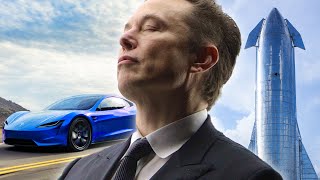
John Coogan breaks down Elon Musk's building strategy into three steps: pick big opportunities with a world-class team, launch products first and build hype before scaling manufacturing, then expand into enormous markets like self-driving and Starlink. Uses Tesla and SpaceX as examples.
Entrepreneurs like Elon Musk know something about business that keeps them ahead of the competition. Let's go through his three step formula by analyzing Tesla and SpaceX. A little later on, we'll actually read some internal company emails because Elon does some pretty interesting things inside his businesses. But first we need to talk about something that's often overlooked. Which takes us to step number one. Elon has a system for getting businesses off the ground. What I've noticed about some of the best entrepreneurs in the world is that they are incredible at identifying big opportunities. Someone like Elon is constantly thinking of ideas. His real skill is being able to filter through them and pick the one that has the best chance of getting funding and attracting talent. And the good news is that there's a bit of a system to this. I've noticed that the businesses that Elon prioritizes have to pass four main criteria before he starts them. The first thing is all of Elon's businesses have a large addressable market. It shouldn't be a surprise that the biggest companies tend to operate in the biggest markets. Small markets are great for building lifestyle businesses. But Elon wants more. The global car market is worth nearly $4 trillion. So it's no surprise that there are 40 car companies worth more than $1 billion. The second thing is that Elon's companies tend to operate in blue ocean markets. Even though there are dozens of large car companies, there weren't any manufacturers really taking electric cars seriously without when he started working on Tesla. It's easy to attract talent and capital when you're the only company working on a new technology. The same thing is true for SpaceX. Reusable rockets were heavily doubted for years before Elon and his team got them to work. But by taking a unique approach from day one, he basically had no real competition. Who is your competition? We have no serious competition. Elon's companies also build on his previous skills. In college he studied economics and physics. So when he built PayPal, he was well equipped to understand the economic problems in front of him. Then when he started SpaceX, he had no experience in the aerospace industry. But he had managed a team of engineers before and could leverage his physics knowledge. Finally, Elon always stresses the importance of building a world class team. We'll cover some of the recruiting tactics Elon uses later in the video. If you look at any of Elon's companies, they all follow these four criteria. But now it's time for the really interesting parts. And because ideas are useless without execution. Which takes us on to Step number two, Elon builds for exponential growth. I heard something about Elon recently that really surprised me and it's one of the main reasons I wanted to make this video in the first place. Despite being worth over $200 billion, Elon still has a regular 10pm meeting on Raptor engine design at SpaceX. Now I've worked with plenty of billion dollar company founders and trust me, this is very rare. So why does Elon do this to himself? Well, let's take a listen to Elon explaining why he is so dedicated to SpaceX. When you had that third failure in a row, did you think, I need to pack this in? Never. Why not? I don't ever give up. I'd have to be dead or completely incapacitated. Okay, so Elon's really hyped up his ability to consistently raise the stakes. Financial markets, as we've discussed many times before, were reward companies who can consistently outperform expectations. So let's take a look at the number of vehicles Tesla was able to deliver over the past 10 years. As you can see, the growth in Tesla deliveries is almost perfectly exponential. But this wasn't just luck. Elon had a strategy to deliver better and better results each year. He outlined this in his secret plan back in 2006. The goal was simple. Tesla would build a high end sports car to fund the development of a sporty four door family car, which in turn would fund an even cheaper third model. Exponential growth is all about timing. Elon focuses on the product first. The team will iterate on the core design until it's ready to produce. Then there's a big marketing announcement that generates a wave of hype. He then channels all this hype into pre orders for the new vehicle. This helps generate cash for the business, but also validates demand and justifies additional investment. Finally, when the cash is in the bank, Tesla can break ground on a new manufacturing facility to ramp up production. Building new manufacturing capacity is extremely risky. But Elon succeeds by using a proven structure. Product customer demand investment. Many companies fail because they get this order wrong. They raise too much money too soon, or they try to scale a product that doesn't have proven demand. If you look a bit closer at the Tesla data, you'll notice that Model S deliveries actually plateaued pretty early on. Elon was already thinking ahead though, and had a plan to continue the exponential growth. Technology innovation usually follows an S curve. When a new product like the Tesla Model S comes along, it takes off very quickly, but then it reaches maturity. Then a new innovation window opens. And a new product can take off if it's better. Elon is able to look into the future and anticipate what technologies will disrupt Tesla and then start building those technologies before the competition can take over. After the Model S proved that electric cars could become popular, he had to follow up with a cheaper option in order to hit that next part of the exponential curve. And Elon followed this same strategy at SpaceX and carefully staged investments based on successful tests. It took three years for SpaceX to launch their first Falcon 1 rocket, and it exploded after just 33 seconds of flight. Progress was slow at first, and the second launch didn't happen until 2007. But Elon kept pushing things forward. At each stage, the team learned valuable lessons and improved their technology that eventually led SpaceX to win a massive contract from NASA to deliver supplies to the International Space Station. Over the past 10 years, SpaceX has steadily increased capacity every year and is now experiencing the exponential growth that Elon planned out when the company started. Growing extremely quickly creates lots of problems, though. As Tesla fought to double the amount of cars they delivered each year, it's easy to forget about what was going on inside the company to make that happen. As a company scales, offices will get bigger, more people will get hired, and everything gets more complex. That's why Elon insists that Tesla employees always work in the actual Tesla offices. In an email earlier this year, Elon said that everyone at Tesla is required to spend a minimum of 40 hours a week in the office. His goal is to keep people in sync with each other and consistently push for better results. In the early days of Tesla, Elon lived in the factory and slept on the floor. All so he could constantly be in tune with production and identify any blockers to growth. This type of decisive management doesn't work unless your team is fully aligned with your mission. But Elon has made it clear that he's not just working for a quick buck. His companies are the type of place where you can spend your entire career and always be working on something new. To really build a massive company, you need to set yourself up for exponential growth. But for Elon's formula, there's still a vital part that's missing which takes us on to the next step. Elon maximizes terminal value. Elon knows that all his effort up to this point would be useless if he doesn't capture as much of the market as possible. After all, exponential growth always comes to an end. When we see an exponential curve in the real world, we are actually seeing just the beginning of A logistic curve. At some point, the growth rate will start to decline and eventually plateau. You can't just project out Tesla deliveries exponentially forever. If you did, you'd eventually end up estimating that Tesla would sell more cars every year than human beings on the planet, which is just impossible. But Elon recognizes that hypergrowth will inevitably end, and he plans for this. First, by operating in only the largest markets, his growth curves will naturally have very high endpoints. Tesla might eventually plateau, but at least it will still be operating in one of the largest industries in the world. Elon doesn't stop there, though. He consistently creates opportunities to increase the size of the market he's going after. With Tesla, that means building self driving car technology and eventually humanoid robots as well. The timelines on these projects are constantly slipping, but that actually doesn't matter as much as people think. As long as these technologies eventually become valuable, Tesla will be able to capitalize on them. The same is true for SpaceX, where Elon realized that the market for launching rockets just, just wasn't big enough. So he had to build Starlink. The aerospace industry is clearly extremely important, but the entire launch market is just $8 billion. So it wouldn't be easy for Elon to reach his goals by sticking exclusively to launches. But the market for Internet connectivity is much bigger. Globally, broadband Internet is worth over $1 trillion. So by expanding his business into this new area, Elon has been able to justify additional investment in SpaceX and ultimately reshape the aerospace industry in the process. The impact of starlink on Elon's plans really can't be underestimated. So if you want to understand how Elon is strategizing for the next decade of space exploration, you have to watch this video about how SpaceX makes money next. Thanks for watching.










