Interviewing the CEO of Y Combinator
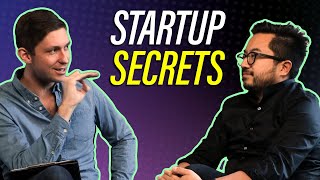
Gary Tan, CEO of Y Combinator, talks with John Coogan about what founders should focus on: retained users and weekly growth, not vanity metrics. He explains how to balance the sprint to demo day with longer-term thinking, and why investor fit matters more than valuation.
Gary Tan is one of the top Silicon Valley investors of all time. He's funded dozens of amazing startups that I've covered here on the channel in the past. Companies like Flexport, Cruise, Instacart, and Coinbase all received checks from Gary before raising money from other venture capitalists. He invests at the earliest stages, so I wanted to know how he thinks about building companies. Fortunately, last time I was in San Francisco, we were able to sit down for a great conversation and, and answer some really important questions about startups. Hope you guys enjoy the conversation.
Okay, so once you've gotten into yc, how do you get the most out of yc? Because it's such a short program, just a couple months. Walk me through. If you today were on day one of the latest YC batch, what rules would you follow? What groundwork would you lay to make sure that you get the most out of the program?
There's sort of two different ways to look at it. One is like, you want to raise money, right? And then the tricky thing is, like, that's always been in the background, like, people just want to do it to, like, raise money. And the funny redirect actually, like, there are all these hacks that other people do. I will say that a lot of the people who just do that, like, start talking to investors right away and all of that. It doesn't work in the long term.
Yeah, yeah, they fizzle out. It's kind of like a focus on vanity metrics. Investor inbound is investor inbound.
Feels good, feels like work. And then, you know, the dangerous thing right now that I think people sometimes think is like, well, I did yc, so then I can have access to Silicon Valley. And then that skips the whole process. I'm like, demo day is by bar none the craziest, most powerful place to ever raise money. But it's also like the 10 weeks before are sort of how you learn how to run fast, actually.
Totally.
You know, the people who skip directly to trying to raise money, like the second gate, they get into yc, miss this completely. And then often they never learned how to run fast. And the company goes in the ground after they raise money because literally there's this one thing that I have even tried to get into people's heads to teach them how to run fast. And as an individual investor, it's actually not possible for me to do. Like, I funded things that precede, tried to get them to run fast, didn't work, and then I got them to do YC and they were a Different company afterwards, actually.
Yeah, yeah. I mean that honestly happened to me with my second time through yc because when I left the first company, Soylent, we were 50 employees. I think I had almost 10 direct reports. I was a manager. And so when I got back to yc, Dalton said, hey, you're in manager mode, you're not in builder mode. I was like, oh wait, you're right. I'm thinking about hiring agencies to do all this little stuff and like, yeah, we have the money so we could do it, but that's not gonna teach me anything. I need to get in and actually talk to people and, and be on the ground, on the front lines and go and figure this stuff out and start running fast. And it really changed our mindset. And there's always this question about like, oh, is YC worth it? It's X amount of dilution or whatever. If it works for you and you flip that switch and you start running fast, you never look back. And that's why so many of the successful YC founders are like, yeah, of course it was worth it.
And then I think it's like the mechanics of it though, or even picking a particular metric and then making that metric grow 10% every single week. Because if you have like from small numbers, if you can't, you know, get user numbers that grow by 10% or more importantly, usually it's, you know, retained users.
Totally.
Like users is actually a vanity metric. Retained users is the real metric.
Yeah, people that actually love your product.
And keep using it like you know, 10 weeks in, but ideally forever. Absolutely.
Can you talk a little bit about work life balance during yc? Because it's three months, it's so easy just to say I'm going to work 120 hours every single week. Is that the best thing to do? What makes sense?
Oh man. The hard part about startups period though is that like the harder you work, like often it does result in better results. That's the tricky thing. I mean it's not popular to say, but especially pre product market fit when you don't have anything. Especially in the last video we were talking about startup ideas all sort of come in waves and for good reason. Like normally there's like some regulatory thing that just changed. There's some technology cost curve that just like hit an inflection point. It's not a mistake that, you know, when Instacart started there were 20 or 30 other people who were trying to do exactly the same thing. And I know because I read those YC applications too. And when you're in that race, just imagine, like, who's going to run faster and harder. That doesn't last forever. And it's highly unsustainable to run at full. At full sprint. They call it a sprint for a reason.
Exactly.
You literally could not do that, you know, long term. The hard part is when you're that early and it's a race.
Yeah.
Like, sometimes, you know, if you want to win, that's what it takes.
Yeah.
But I do believe that post demo day, after you've raised money, you have to switch into marathon mode.
Yeah, totally.
And we also see this all the time.
Right.
We have lots of friends who they tried to sprint 26 miles and you just don't make it even five miles.
Yeah, yeah, I do think.
Yeah.
So there's definitely the element of, like, cut out anything that's unnecessary. You know, you're not going to be going and getting brunch on Sunday, and.
If it can be done later, do.
It later, do it later. But at the same time, like, you do want to maintain your health. I remember, I still vividly remember we were living in a rundown house in Sunnyvale, and our one release of the day would be we would just go throw a football in the street and we would just go and talk. And we were still talking about business. So it was almost work, but it was a little bit of exercise. It was some fresh air, some sunlight, and we just got away from hands on the keyboard, which is great and very important. And there's going to be weeks when you're up late coding. But I think you do have to have some sort of balance, right?
You know, Ryc batch. Well, I just remember coding like 20 hours straight and then going to sleep and doing it again. But then Tuesday nights, we'd go to Garden street in Cambridge for dinner because we were the last batch in Cambridge, Summer 08. And then on Fridays, we would go out for pizza and beers.
Yeah.
And not everyone from our batch did come out for pizza and beers. And the people who didn't come out their startups died basically immediately.
Wow. Yeah.
And I don't really know why. I think some of it is that if you meet other people and, like, spend time with them, like, you just become a part of that community. Of course, the community sort of impels you to, like, keep going.
Yeah.
And then if you're totally isolated, you just lose steam. Like, it is too hard. It's like Elon Musk says, it's starting a company is eating glass and staring into the abyss of death. Right?
Yeah.
And like, you know, it's what you're. You need friends. Yeah.
You need a community. You need people that understand. Because a lot of times, I mean, I know when I started my first company, like, my family, my. My. My family is like art people. So they don't really understand startups and business. And having a community where that's like, fully accepted is just super, super critical. That's one of the best things about yc. You've gotten to demo day. You've worked super hard and you've built your product every single day. You've gotten those retained users and maybe even have a curve or a graph that's up into the right things are looking good. How do you take the most advantage of demo day? You said something about how demo day is like the most frantic fundraising environment. How can a startup get the most out of that? And the question that I really want to get to is, obviously the funding markets are crazy right now. There's a ton of money flowing into the venture capital world broadly. How much is too much to raise after demo day? How do you think about that?
Yeah, those are tough questions.
There's a lot there.
I mean, demo day itself. What's funny is it used to be a room and then now it's all online. The good thing is Y Combinator has a website called Book Face and which is a website that I actually created back when I was there. And there was an investor database in there, so I would definitely trust that investor database. The weird thing that is sort of happening now is that it's not really the money that is the limiting reagent, which is, like, really crazy to me. Like, remembering being a founder. I remember it didn't. It felt like getting the money itself was the hard part.
Totally.
And now I realize, you know, there is so much money and so many people are getting funded.
Yeah.
The question is more like, can you hire your investors the way you would hire an executive team?
Sure.
And so that's actually kind of the thing that it shifted.
I mean, that is an excellent mindset to be in at demo day, in my mind is, sure, I'm pitching myself and I'm pitching my startup, but really I'm interviewing investors that I want to work with because if it works out, you're going to be working with these folks for 10 years more. So I feel like there's always a lot of power in that dynamic of coming into a conversation or a negotiation as equals and say, sure, you're the one that has the Money. But I'm the one with the startup. I'm the one with the equity that I'm selling and the equity is valuable and it could be worth a lot. So I have value. It's not an invitation to be rude to each other. It's an invitation to just.
Yeah. Even more cordial.
Yeah, exactly. Yeah, exactly.
I like what you said about sort of approaching it as, you know, the minds of equals coming together.
Yeah.
And actually, frankly, like, if investors don't treat you like that, then actually don't take their money.
Yeah.
That's just disrespectful. Like they're showing you what it's going to be like to work with them later.
One of my favorite things is when you have an idea as an entrepreneur and you meet the investor that's been thinking about that category for a long time, but they haven't seen, seen what you're working on.
Yeah, that's cool.
And then you can come to them and say, hey, you're already an expert in xyz, but I've done Z Prime or something, something a little bit different. And then it just fits into their mental model and they're like, they click, they get it, they're on board very quickly and then they're immediately a great thought partner because they're plugged into the ecosystem. They know how to get you to other investors or other employees and they really understand.
Yeah, that's a powerful moment. I mean, I love those pitch meetings because I'm like, I need to fund that company.
Like, I've been waiting for this thing. Yeah. I just haven't heard anyone like actually solve that last little piece to crack this. But I've known that housing was going to be an important market or food was going to be an important market or I've always wanted to do something this day. Yeah.
I love that for the viewers. That's, that's what you need to be looking for. That's like investor market, founder fit, actually.
Totally, Totally. Yeah. And I think that a lot of people, obviously they're like the top tier. Like, you're on the Midas list. Everyone knows that. You know, like, like working with Gary is incredible. But it's still important to, to, you know, just understand where the key expertise is and find that alignment and oftentimes find the investor who hasn't done a deal with your competitor.
Totally.
I mean, just doing some background there, but talk to me about the different pressures. I really want to understand how you think about pricing a deal because things have changed so much and Every time you talk to a YC alum, they'll very proudly tell you, well, back in my day, yeah, raising at a $2 million cap used to be great, and then the $10 million cap, and now I think I saw Michael Seibel say that there was a company. I don't think it was. I don't know if it was a YC company, but there was a company that raised at a $1 billion pre seed valuation, which is. Who knows?
That's nuts.
What advice would you give to that type of person? This is just a personal family friend who has a hot deal. Super sharp team, great traction, and they're getting all sorts of term sheets. And they have something that's a more moderate valuation from someone who's really aligned versus a higher valuation from someone who's maybe unknown. How do you think about that?
It's hard because every business is so different, but I sort of assume generally for any given startup idea, there are people who, like you said, they did their homework, they've been looking at the space for a long time, and then they have the connections that are necessary to get you customers or hire executives or whatever else. You know, the ideal is you find someone like that who also will give you the valuation you want. Want.
Yeah, of course.
But, you know, not everyone is so lucky. And at that point, you sort of sometimes have to make a decision. There are lots of investors who don't have any of the things that, you know, normally you need to be successful, but it is money.
Yeah.
And then the interesting thing is usually if you can get all of the investors to be interested in you to give you an offer all at the same time.
Yeah.
Then you have the maximum flexibility.
Yeah. So parallelize. Don't serialize your fundraising.
That's right.
Talk to everyone at the same time. Get all the information. Be giving out all the same information to everyone.
Yeah, that's. That's important because, like, it's very easy to get in trouble where you're saying, like, one cap to one investor, another cap to someone else. And it's not like the world is so disparate that, like, nobody talks. Like, everybody talks. And I've seen deals sort of dematerialize if you're not engaging in, you know, honest negotiation with people.
Right.
The classic adage totally applies here. If you just tell people the truth, you don't have to keep track of what you say.
That's a great adage. I hadn't heard that. Wow. Yeah, that's great. Once the company's funded Obviously we could go on for hours about how to actually go and build these startups. But I want to know more related to yc, what are some of the ways that the YC network benefits startups after they've graduated and after demo day? And I want to know much more about Book Face and some of the experiences that you've had there since you built the thing. Yeah.
Book Face is funny because Paul Graham didn't want me to build it actually.
Really?
Yeah. He was like, could you build this as a part of Hacker News and do it in Ark?
Oh my God.
And the thing is, I'm a Rails hacker, you know, you know, like JavaScript. And I'm like, oh shoot, what do I do? So then I just wrote a script that scraped Hacker News on the back end. And then, you know, we really reached this sort of weird moment in YC. I think it was 2012 or so, 2011 or so, when there were more people in the batch that. So it like sort of broke Dunbar's number of 150.
Sure, sure.
So before you could know everyone in the batch because you'd like recognize them.
Yep.
And then we started having people sort of pretend that they were in yc and then other people in YC couldn't tell.
Yeah, yeah.
So that was sort of the moment when we said, well, Book Face is actually a play on Facebook. I was like, okay, well we need something that allows people to know who's actually Identification system. Yeah. So that's why I made it. Before I left yc, I built in a forum and it was all topic based so people could go in, say who their expertise, what their expertise was. And then when people came and asked questions, it would like tag the people who said they were experts in it. I think that that's still a really powerful moment where almost any, any company, any executive, like, anything you need to know, you're like more or less one or two hops away from it once you join this community. And it sort of goes back to the problem of Silicon Valley, there are very few people who you can trust.
Yeah.
And then what YC does is make sure that. And I remember doing this as a YC partner. If you violate the trust of someone else who's in yc, you're gonna get kicked out. Actually, I've kicked people out before for like, you know. Cause you need to be able to sit down with someone and instead of having the classic startup conversation, I mean, founders back here, like, you know, everyone's had this conversation where you're like, Just met this person and we're like, how's it going? And they're like, it's great. We're killing it.
We're killing it. Yeah.
Everyone has to says they're. Say they're killing it.
Yeah.
And, you know, you might as well not have that conversation. Yeah, exactly.
And with Bookface, you don't need to do that.
Yeah. And I think that that's powerful. I have friends who didn't do yc, and that's one of the things that they really describe that, like, the process of being a founder is very lonely. And, like, you know, once I became an alum, I realized, like, I didn't have that experience at all.
Yeah.
And pick up the phone and call so many people. Basically, anyone from your batch will take your call immediately and even from the broader network. So I want to tell you my favorite thing about Bookface, which is, obviously, it's really, really helpful for building your company. You can vet investors and meet potential employees. But it is my superpower for when friends need jobs.
Oh, yeah.
I mean, obviously I try and hire them whenever I can, but occasionally I don't have headcount or they want to do something else, like, oh, they want to get into Web3, and I can just post them on Bookface, and boom, they're over there, they're in it, and they love it. And everyone's like, oh, John, you're such a connector. And I'm like, I just have here's power. I just have Bookbase. All I did was I just took your resume, put it up there. But I vouched for you, and I wrote a little thing, and, you know, it described you.
And, I mean, I think that's where we're at in this moment in society. Right. Like, 10, 20, 50 years ago, even, like, for thousands of years.
Yeah.
We're capital constrained.
Yeah.
And then actually, like, we're clearly not capitalist constrained. We're just open up TechCrunch and look at what's getting funded these days, which is fine. And like, the thing is, 95% of the stuff, or maybe 50 to 80% of the stuff isn't going to work at all. And that's okay. But now what we are in deeply short supply of is actually trust, and that's what communities like YC actually create.
Yeah. So I definitely want to hear how. I mean, you're the guy that built bookface. It's Y Combinator's community. How have you benefited from it personally, either just in your own life or as a VC or when Just really.
Anything related to that, I mean, being a VC, I have to say, like, we've. We found 25 unicorns, but a decent number of them are YC.
Yeah.
Or, you know what's funny is a lot of them that aren't yc, they were people I met through the alumni community. And that's the thing, like, if we zoom out, like, to me, YC is the craziest thing because it is this 2% acceptance rate. One and a half percent, I think, is the actual number. But if you trace back all the way to 2005, in the first batch, it was always one and a half percent.
Wow.
So it was like a thousand applications for 15 spots or something like that. And so when people look at like a 400, 400 company batch, that is actually a 1.5% acceptance rate, and they want to keep that constant, because if they don't keep it constant, it means that it's that much harder to get in.
Yeah.
But that's also not maximizing the possible impact on society that, like, this community could have.
Yeah.
And what that means is that it's sort of the front door to everything else that happens in Silicon Valley after, like, I mean, how many years has it been? 17 years. Yeah.
Yeah.
And that's. That's the crazy thing to me is, like, all the people who, you know, went through YC even once, like, they're the head of engine, you know, I think the CTO of Lyft, like, you look at every level of every company of every startup in the world, and you have YC alums that are in there now, which also means that we have connectivity.
Yeah.
To all the different parts of all the startups in the world.
Yeah, yeah, yeah. It really is a remarkable program. And it's. Yeah, it's just been a great, great community.
So obviously I've been following you all the way since subscriber number 100. And I remember your story. The video is so awesome about. It taught me so much about MRNA vaccines with Moderna, you know. Where do you want to go with this channel?
Yeah, I mean, I think that I started the channel mostly just because I was bored and I saw that you were having fun on YouTube and it looked like just a cool new skill to build, put a bunch of skills together. But I think the real vision for the channel over the next 10 years is to just increase techno optimism on YouTube. I feel like there's a lot of channels that talk about technology, but a lot of them are extremely critical and they take that negative View, because that's what the algorithm rewards a lot of times, and that's what goes viral. I think that it's important to consider the human side of a lot of these entrepreneurial journeys. And that's something that I felt like I could uniquely bring because I'd been in the founder's seat and I'd been in the boardroom, and I dealt with VCs, and I knew that there was conflict and drama there. But ultimately, everyone in Silicon Valley was kind of on the same page about, let's build new technologies and let's solve these problems using new strategies, as opposed to just tearing down the latest, you know, startup that didn't work. So I thought that being a counterbalance to some of the negativity around technology on YouTube could be both a white space and an opportunity for new content, Although you're obviously making a lot of content in that space as well. But it could also do some good in the world. So how do you think about big tech and techno optimism and kind of how your role fits into all of that?
I mean, we get to work with people who are just like, two people in a room, like, writing the first version of software or hardware or, like, the first time it was ever done. So I don't think anyone ever. No one's in that room. No one tells that story, the story of little tech. You gotta speak truth to power, to big tech. And, like, I think that that's what we need because tech has become so powerful.
Yeah.
But then I think we need to make a big distinction. Right? All of the things that end up pushing forward humanity, that they start in, you know, garages or, you know, very, you know, with no resources. And then how do we tell that story? And then more importantly, how do we make it big ten so that people who are watching right now know, hey, I'm not different. Like, you know, you and I are not different from you. Like, we are all just making our way in society. And then the thing about what I want our, you know, my channel to be, and I see that in your channel, is that there's a space for people. Like, it doesn't matter what background you're from. Like, you could be old, you could be young, whatever. Right. Like, there is a way to push forward society through technology, and a startup just might be the way to do it.
Absolutely. That's a great. That's a great coda to all of this. Thank you, Gary.
Thank you, man.
This is great chatting with you. Very excited for the next collab and.
Yeah.
And if you didn't see part one of this, go over to my channel.
Yeah. And we'll throw the link in the description. Awesome.
Well, thanks for watching this video. If you'd like to go a bit deeper, you should really watch my analysis of how Flexport modernized shipping and logistics in this video. Next. Thanks a lot.










