SimpliFinance with Shane White Ep. #53 - John Coogan (Co-Founder of Soylent & Lucy.co) [Founders #2]
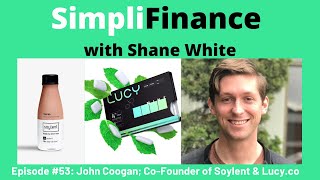
This is a recorded interview with John Coogan, co‑founder of Soylent and Lucy Goods. Coogan recounts Soylent’s origins (YC/accelerator roots, rapid crowdfunding, press attention, and D2C/e‑commerce lessons), his role leading technology and marketing, and why the founders moved on. He then explains Lucy Goods’ mission to offer non‑inhaled, non‑tobacco‑leaf nicotine products as alternatives to cigarettes and vapes, discusses PMTA/FDA regulatory strategy, retail vs. DTC distribution (including Gopuff and planned Amazon/retail expansion), and how COVID affected demand and public perception.
My name is John coogan. I've founded two kind of startups over the past 10 years. One was Soylent, a meal replacement company. That company is based in Los Angeles. My current company is called Lucy Goods. We sell smoking cessation products and new kind of next generation tobacco products to help people move off of cigarettes and vapes. So most of my background is in consumer products, e commerce technology. I usually run technology at these companies. Marketing functions, usually on the E commerce and demand side. Not a lot of experience with the formulation of these products, but I love kind of using technology to amplify our message, amplify our distribution, get to market faster. All of those things are interesting to me.
Awesome. Yeah. And you have quite the. I obviously did a lot of research on both those companies. You were there like at the very beginning of Soylent, weren't you?
Yeah. So before Soylent existed there was two separate companies. One was going through YC, the other was going through Imagine K12, which was in accelerator. That was then like assimilated into Y Combinator. So for if your audience isn't aware, Y Combinator is an incubator program. They give you between 20 and 200K. Over the past, this has been, you know, 15 years, so the dollar amount has changed. But they're basically the first money in, usually the first investor in the company, help you get it off the ground. It's a three month program. @ the end, you do a demo day, you present your idea to a bunch of investors. So we had two different going through two very similar programs. Both of those companies failed. One was in education technology. We were building a iPhone app and mobile app to kind of quiz yourself, do flashcards, that type of stuff. Never really got traction on it. The other team was doing something much more hard tech focused on wireless networking, trying to build almost like 5G networks. Before they were 5G, it was supposed to be a mesh network that went across the TV white space, which was a big opportunity back in 2012. But it's very capital intensive. They weren't able to get the right funding together. So pivoted and those two teams kind of joined forces and started working on new ideas. A bunch of those ideas failed. But Rob, the CEO of Soylent and kind of leading founder with the idea, had been thinking about biology from a computer science perspective. He has a CS background, so he started thinking, well, we've pivoted a few times. We're running out of money. What are we spending money on that we can really change? We paid our rent in advance, we you know, we owned our laptops, We. Our Internet bill was fixed. But food could be wildly varying depending on whether or not we went out to eat or made our own food or tried to, you know, go to Costco. There were all these different constraints. So Soylent was a way to get all the nutrition that, you know, he needed, all the macronutrients, all the micronutrients for as cheaply and as conveniently as possible. So minimizing time and cost while maximizing nutritional inputs and outputs. So that really took off in 2013. Started blogging about it. There was a lot of attention, and for a while, I didn't really understand that it was a business or a startup idea because we were so focused on technology and building software and websites and apps and signups. I didn't even really realize that you could do a consumer packaged goods startup. I thought that startups were, you know, technology and software. But then obviously it grew into this huge industry. And once he kind of pitched me the name and told me a little bit more about the product, I think once he told me that he was calling it Soylent, I was like, that. I think that has legs. And I think that we should sell that because at that point I saw it more as like a brand and an idea that could be shared as opposed to just like his weird experiment that he was doing on his own.
Definitely.
That makes sense. Yeah. So, I mean, wild ride. We did a crowdfunding, got a ton of Press, raised over $75 million in venture funding, and have grown the business really significantly. It's, you know, in like, you know, tens of thousands of stores. And. Yeah, I mean, there's a lot that we could talk about. I'm happy to take the conversation wherever you think is interesting. Okay.
Yeah, yeah, no, I appreciate all that information. I thought two things that stood out to me. One, as I mentioned at the beginning, before we started recording, E commerce is a big focus of mine. And it's where a lot of my career has been spent at Rx and when I was at Walmart and you guys were one of the first. When I came to Rx, you guys were kind of like our. I would say, like our North Star. As we were thinking about, like, Amazon success and grocery, we always looked at you guys, like your marketing on Amazon and your placement. We were like, damn, these guys know what they're doing. So it's cool to talk to you because it was something I've been focused on for a couple of years now.
Yeah, it's interesting. I've Actually done the same thing the opposite way with a lot of the recent RX social ads, the ones that are just like, really to the point, like, food, bar, eat it, buy it. I really like that. And then some of the. Just some of the really simple, like, lay flats with lots of products, nice colors. Like, when I was looking to kind of think about positioning the Instagram brand for the latest company, rxbar was definitely one of the north stars. That's cool. So it's funny how things kind of like, you know, go around the other than the other inspires the other. It's kind of a complete circle.
A hundred percent. Yeah. When I was looking through some of the Soylent stuff, I realized, like, I wasn't a part of any of our, like, photography imagery. But I did the rebranding. It looks like a lot of just like the color schemes and shadow placements of stuff is very similar to, like, what Soylent does. So it's fun.
Yeah. I mean, it's always like, you know, one informs the other, which, like, loops back around. That's how these trends develop.
Right.
And you see it in all sorts of products. You just need to, you know, bring your own to it. And I think RX has always done that. And Soylent certainly, certainly has. But, you know, you never want to be just like a direct copy. But I think it's okay to take cues from, you know, other folks.
Yeah, exactly. That's so cool. When you were at Soylent, and I think it would be fun to spend time Soylent and then definitely with Lucy too. I would love to get in some of that. Did you. What do you remember, like, the specific conversation when you were like, okay, I'm in. I'm joining Soylent. I'm always interested to ask people that.
Yeah, I mean, it was interesting because the, like, the structure of the company was three guys living in a one bedroom in the Tenderloin of San Francisco. Rob was living in what was technically a closet, but it was kind of like a bedroom. It just had no windows. Matt, another co founder, had a very small bedroom with an actual window. And then I was in on like a mattress in the living room. So not a lot of like, oh, let's talk to the HR department about your job offer. You know, more. More. Just kind of like we all had an understanding that we'd help everyone else with whatever they were working on as necessary. So there were times when I was working on like a machine learning project and I would ask Rob about, you know, oh, have you ever touched on this particular technology or strategy within your CS background, Because I had an econ background and then he had a CS background but was interested in biology all of a sudden. So he was talking to David, another one of the co founders, because David has a biology background. So it was kind of this, like musical chairs going on. And I think that really helped in some ways because it helped people think about, like, bring a fresh pair of eyes to things. So. So everything that I did with technology, I was coming at it from an economic perspective. Everything that, you know, Matt had like some civil engineering background, but he was doing some design stuff. And Rob, obviously with, you know, the entire Soylent brand was built around this idea of like looking at biology as a computer scientist would. And that's why it gained a lot of traction on hacker news and in tech communities, because the way he was talking about the product and the way he was designing the, the brand was as a software engineer would. So at the earliest stages, it was unclear what it was, whether it was just an idea. We had a whole wall of sticky notes with like hack projects, things that we'd build in like a week or two, and then we'd post them online, share them and see if we'd get some traction, see if we'd get sign ups, see if people would use them. We built all sorts of different little tools and apps and tried to get traction on them. You know, he would also, he was also a prolific blogger and that's a lot of what helped get the idea out there was that he had a blog that was writing out things and sometimes he would just write, you know, a technical tutorial or a thought piece or a lot of times like just satire or, oh, that's cool. So it was unclear where Soylent sat. In some ways it was just a, an experiment that he was running and sharing. In some ways it was satirical and there was some humor in there. And in some ways it was like, this is a roadmap for a business. But as he started to collect emails and put up a very basic website to learn more, the subscribers kept pouring in, the press kept pouring in. And I think he put out a survey to folks. And it was a very, very long survey. And he got like 10,000 people to fill it out without any promotion, no paid ads, like, nothing, just like general interest. 10,000 people signed up. And in the survey he asked questions, like, the craziest questions, you know, like, obviously, like, what are your fitness goals? What are your health goals? What's your current diet like? But also like, what's Your height? What's your weight? Would you be willing to go and get blood drawn and send me the blood so I can analyze it? Or would you be able to. If you've done 23andMe, would you send us your DNA so we can analyze your DNA and try and create a better Soylent for you? Whoa. Stuff that's like theoretically possible, but we didn't really have any idea how we would do that. We just wanted to see what the level of interest was. And like, I think 97% of people said that they would send us their DNA.
That's nuts. Like an MVP, just like a minimal viable product. Just trying out what people would or wouldn't be into.
Yeah. In a huge. A huge demonstration of just the level of interest. Like a person who drops their email on a form is pretty low intent. But someone who says, yes, I will send you my DNA, it doesn't get much more high intent than that. So that's where we started thinking, okay, well, maybe we could do a crowdfunding around this. Maybe we could sell this. There were also people that were just hounding him to buy it directly from him, which is obviously a great result. So he was like driving around the, like, driving around the Bay Area or like commuting around. I don't. He didn't have a car, but moving, like, moving around, trying to like, give people, like little samples that he'd made and like hook people up. He was almost like a dealer of this. Okay, yeah, very funny. And there were a couple moments when it was like, when, like we, like, I, like we wouldn't have the money to go to Burning man or do anything, but there were some people that were like, oh, we need this before Burning man. You got to hook us up. Like, it's going to be there in two days. Like, you gotta. You gotta get it to us in time, you know, like this type of.
Stuff, even like as a small little in. I mean, that's like a true Silicon Valley startup story that you guys. You guys had demand.
Yes, exactly.
That apartment, like a very cult following.
Super. Yeah, super early. So at that point, like, it was like there was a moment when like Matt and I were working on kind of a different idea. And so it was just like this concept and. And then, and then it was like, okay, well, like, clearly there is massive demand there. Like, stuff just changed so rapidly. Let's, like, we should put the team together and really focus on this one thing. Put all the wood behind more like one arrow.
Right.
So at that point it was like okay, well, like, what can what? Like, you know, John can hop on and build the website. Matt can start talking about, you know, manufacturing and fulfillment and scaling this. And he built like a little beta program. He could fulfill those early customers. And then David, the bio guy was able to put us in touch with some professors who could advise on the formula as well as he brokered some early manufacturing business development deals. So it happened pretty quickly. And then I think in. So like, I think he posted the first blog post like February, like around Valentine's Day. Okay. And I think we launched the crowdfunding campaign in like late April, or like we were starting to work on it in April. So there was probably like a one month period where we were kind of like, is this, where is this going? Where is this not? But like, like in that time, like, things were really like moving because there were just more and more press, more and more interest and signups. And it was pretty clear that it was like, okay, this is going to be a thing.
Yeah, definitely. And were you doing anything, like, were you working anywhere else during this time or were you like just living there, solely focused on building something? You were an entrepreneur from the start, it sounds like.
Yeah. So I thought I was going to go into finance after college. I'd interned at a number of hedge funds and private equity shops and venture capital firms and thought I was going to be on the finance side since I studied economics. Yeah. But then like, I just didn't really like the large organizational structure and the idea of like trying to climb this ladder and a lot of the top like, hedge funds, like the people that were on the fast track with like the PhDs in physics, doing like high frequency trading, at least at this one firm that I worked for. And so I was like, you know, just coming in with like a bachelor's and econ. Like, I don't know that I'm going to be able to be on some like, you know, rockstar trajectory. I really liked the smaller firms. I'd interned at a couple startups and then I was also very interested in software development and technology because I'd done a little bit of that in high school because my dad was a programmer, learned like PHP and some basic technology stuff like Flash. And then my junior and senior, senior year of college was taking like econometrics and some of the more advanced econ stuff. And in there you're doing like regressions and you're, and you're starting to use like R and Stata and like more advanced, like Visual Basic stuff. If you really want to like, analyze a lot of data. So I was interested in coding, but I was like, well, I can't just walk into Facebook because they want a computer science major who's, you know, who's, who's graduated from Harvard. Like, and I talked to somebody who went to my high school who was like an early employee there and was like, yeah, at this point, like, you're not going to get what you want, which is like learning a new skill, growing. Like, you should just, you should just like go and do entrepreneurship full time. And that's what was like, great was I was able to get to Silicon Valley and spend like, you know, full time, as many hours as I wanted, which was often like 80 a week, just learning software development, learning whatever skill I needed for whatever challenge came up. And that's something I've always enjoyed about entrepreneurship, is that at the early stages you're, you're, you know, the de facto individual contributor. So you can, you can really, once you pick your, you know, your industry, you can really focus on learning whatever skill you need. So, yeah, I mean, we were all full time, but making no money at all and just paying for food and like room and board, basically.
Got it.
Wow.
So you even. Okay, so you, it's amazing to me that you didn't really even have like a programming background. I mean, you pretty much taught yourself all that.
Yeah, for the most part. I mean, my dad taught me a little bit of PHP and stuff and I hacked some projects together when I was younger. But then I did this book, learn Python the hard way.
Okay.
Pretty pretty straightforward. And then from there it was just like, okay, what, you know, how do you want to apply yourself? I did like a Rails book with Michael Hartle and like, and then after that it was mostly just like, you know, hack on something until you get it working. I never got amazing at like low level computer science, like object orientation programming. Like I'm not very good at, but it was enough to like solve the problems until I was able to hire people. That's still kind of where I am. Like, I can write, I can like script in Python, but I'm not really comfortable like writing like, or I don't really enjoy writing like, you know, tested code for large code bases and you know, using like, you know, building whole like libraries and stuff. That's not like my primary level, like point of interest.
Got it.
Okay.
And then at Soylent, you were basically the one that led the teams that built like the website, am I right? Your E Comm background. So what was it like? I feel like you guys were building that kind of in the heyday of online E commerce, like the explosion, totally online stores. What was that like?
Yeah, I mean it was interesting because there weren't a ton of, there weren't a ton of reference points to look at in terms of best practices because we were kind of trailblazing there. There was obviously Warby Parker, which was the earliest one of these like D2C E commerce companies that was really kind of high flying, but they hadn't exited. And it was unclear if their approach really worked or how generalizable it was. Right. Like a lot of the big thing was like they had an at home trial and they're at a high price point. It's like $150, $100 checkout. So does their strategy immediately apply? Maybe, maybe not. And then lot of other companies that we looked at at the time, which wound up not being very good proof points. Like I remember I pulled together a spreadsheet of. I did this analysis to see like the question, the big question is like, how much should we be spending on the website? It needs to make economic sense and it's very expensive to build like the custom website with subscriptions and whatnot. And I pulled together a spreadsheet where I looked at the revenue of various companies and then I estimated the amount that they were spending on technology by looking at the LinkedIn for the company, finding how many people were in the software engineering or technology department and then multiplying that by an average cost of a fully loaded, you know, technologist, which is like 150, 200k fully loaded. So and I was able to get like okay at Blue Apron. I think my estimate was like they spent 10% of revenue on technology, which is like really high. Yeah, super high, I think. I don't know, don't quote me.
Right. But I mean it's a good, it's a good way to like at least ballpark.
Yeah. And a lot of these are like, are like, you have to go to like. Oh, at their last funding announcement a year ago, they said that they were doing 100 mil. And then I went online and it looks like they have 30 engineers. So that's, you know, maybe 3 million a year or 6 million a year in spend. So this is the average. And I found that like there were a lot of companies that were spending like 5% of revenue maybe on technology and it was like high. And a lot of those companies wound up not performing that well. So we knew that we needed to Be more conservative. So we did benchmark towards the low end. But even then it was extremely like we're lucky that we benchmarked as low as we did because I think that anyone who is higher than us, you know, we were looking at like Loot Crate, Birchbox, Dollar Shave Club, which is still around. But Blue Apron and all those companies have kind of gone through rough patches, but they were very like high flying at the time. Like they'd broken the hundred million mark in revenue. They had you know, engineering teams of like 10 to 30. A lot of them were doing custom stuff. Like I know Birchbox had like, they were on like Magento, but they built this like custom installation of Magento. And like at Dollar Shave Club they'd done a bunch of like custom, like they built their own like email distribution system instead of using mailchimp or Klaviyo. And a lot of that stuff is like really enticing to technologists because it's like, oh, we can build it exactly the way we want, but then the ongoing cost of maintenance is just so high that it doesn't make economic sense. So I think that's a big, that's a big issue. And now we're seeing kind of like D2C 2.0 where the tools have kind of caught up to what big companies need. Like you see like Kylie Jenner for whatever you want to think about her. Like she's clearly dominated a Shopify site. Right?
Yeah, right.
She's, she's just pushed so much volume through that system. Clearly like the system scales. And now I think vc, VC backed companies in the DTC space are more comfortable saying, you know what, like let's see how far we can get on off the shelf tools. But when we were doing subscriptions there, there weren't these off the shelf solutions really like, and that's why there were like, there were a few plugins, but most of the plugins were designed for, were designed for software subscriptions. So like, like Stripe had subscriptions, but it didn't have the concept of like an order generating an order that needs to be fulfilled. It just had the idea of like you have signed up for a New York Times subscription and every month we charge you and that's it. And you have access, binary yes or no, you have access to the website or you don't. So there weren't a lot of systems that were aware of the idea of generating an invoice that needs to be fulfilled. There were some, but we had some trouble integrating them. So we wound up building Some stuff, some custom stuff. And then when we looked around it was just like, the question wasn't do you build a custom subscription system? It was like, how custom do you go?
Like okay.
At Blue Apron they built a custom warehouse management system to manage because they have so much like real time inventory. The question of like when is that romaine lettuce going to go bad? Is a huge question.
I was gonna say they have a.
Much more complex, it's super complex. So they, so they built, you know, so they have probably 10 to 20 engineers working on that project because it's, you know, they're pushing hundreds of millions of dollars through that system. But the question is like, does the industry and the business strategy actually support that investment in that technology? Or, or are you going to get kind of smoked? Because in a couple years everyone's going to want that technology. So there's going to be a full time company that just does that technology and it doesn't make sense to build it in house because you're going to be falling behind to the company that's also VC backed but only focused on that problem and now has like, you know, if you try to rebuild, you know, Shopify, look at what Shopify has done in the last couple years. Particularly like they, now they're at a point where they have like unlimited funding. They're gonna be able to build anything. You're never gonna be able to surpass them.
Yeah, no, they've kind of monopolized. Monopolized. Monopolized, yeah. Whatever. They've, they've definitely like corner themselves in that part of the market.
Yeah. So it's gonna be hard to overtake them. So.
Yeah. Right.
I think it's good because I think it, I think it allows D2C companies to focus more on what makes their product unique. Really focus on the product development, really focus on the brand and, and then not worry about the technology. I think that that's a big advantage and that's why with this latest company I've, I've shifted to not just focused on technology, I also do a lot of the marketing.
Okay. Yeah, yeah. Is your, doesn't say at Lucy Goods is it? Is your like tech and back end website team a lot smaller than it was when you guys built Soylent? Just because of the capabilities now?
Definitely. I mean we're not at the same revenue level yet but, but in general it's, it's a lot smaller. We, we have, we have one full time software engineer and he's remote instead of being in LA and we Made that decision partly due to cost, partly due to just like the talent that we found. We found someone really, really great. But yeah, I mean, we're able to use a lot more off the shelf tools this time around, which is great. Got it. Okay.
Okay.
Yeah, there's still, there's still definitely opportunity for innovation and like ways to accelerate by using, by thinking in a technology way, I guess. I don't know what you call it, but usually there's like a no code solution. But you might find that, okay, you want to. There's some weird behavior that your customers are exhibiting that if you talk to them in the right way, you can like increase average order value or revenue or something like that. And it used to be that you would have to like build software to satisfy that, to create that button that does this bizarre thing. Like it might be with our X bar, it might be like people want to customize their box and they want, you know, all the different. They want just two of the peanut butter one and just three of the blueberry one or whatever.
A very, very timely problem where we still are working on, so.
Yeah, yeah, exactly.
Right.
So the nice thing is that it used to be you had to build that from scratch. And increasingly there are ways to at least test that in a no code way with like a survey or a flexible form or some sort of text processed input or chatbot. Like there are so many different ways to attack that problem and then use like a no code solution, like a zapier or an airtable workflow or even a lambda function that's like light code.
Okay.
To kind of get you halfway there and see. Okay, you know, now we have invested just $5,000 in this initiative. What's the real value here? Is it worth. Are we sure it's worth building something custom for 100k or something?
Right. Okay. Okay, got it. No, that's wild. That's wild. At one of my questions was going to be. I know we've talked a little bit about Soylent. Now we haven't talked much about Lucy yet for Soylent, I was curious. I mean, you were there during, I mean you were there during the explosive growth phase, obviously. And then. Do you remember when I was always curious when I talked to people that started companies and then left and started new ones? Like what was the, what was the moment or time or conversation that happened where you decided like it was time to move on and start something new?
Yeah, I mean, I think a lot of it had to do with the business strategy changing and us kind of Fulfilling our initial goal of reaching market saturation or market penetration in the D2C meal replacement space. Like the meal replacement category is a couple billion. The online penetration of that is high for food, but low for E commerce as a whole. People still buy that stuff at GNC. They still buy it at 7:11 and vitamin shop. And at a certain point you get to a place where you begin growing at the industry overall rate. So if the industry is growing at 5 or 10%, that's going to kind of cap out once you reach your saturation. And I think that we saw that coming down the pipe, but we saw how large the food market was overall, really wanted to. It was becoming clear that for a number of reasons that retail was the future. Not just from a market size perspective, but also from just our personal experience. Like we had satisfied our ability to subscribe and order online and we could get it next day with Amazon or we could have a subscription that was super customized on our website, but we couldn't get it when we were traveling. We couldn't go and hop into a store and grab one. And so it was. We felt the need to go into retail. And yet we knew nothing about retail. And it wasn't particularly interesting to us, and particularly me, it was not particularly an interesting problem to solve. I'm much more fascinated by technology and marketing and design and there just is very little of that. It's all about who you know. It's all about networking. And it's. And it really is one of those things where reinventing the wheel can hurt you. It's really. It's so much better to just bring in someone who, oh yeah, I brokered the Vitamin Water Coke deal. I know everyone in the space. I've done this before. I've worked for Muscle Milker, I've worked for Red Bull. And I know everyone and they trust me because in my last job, I was the one who brought Red Bull to Costco or something. So the Costco guy knows me and loves me because he was on the other side of that. He took a chance on me when I said Red Bull was going to be the next hot thing. And they have sold so much Red Bull. Right, right, right. And he has a little. He doesn't get a percentage, but he has, you know, he's the guy that brought in that product that made them a ton of money and they're super happy about that. So he trusts me and he's going to be able to easily push my next thing. So. So hiring those people seemed like an Obvious best strategy. The company was getting bigger. There were, you know, obviously the need for, you know, more experience management. So it just made sense to bring on experienced people, be able to step back, do what we love, work on smaller projects. And so, yeah, all the, all the founders kind of were able to go and move on to other things. Rob's doing some investing and some R and D projects. Matt's doing another CPG company that's D2C called Kin. And then David and I broke off and started working on Lucy and.
Yeah, yeah, that's awesome. And then I was gonna say, we can jump right into the next thing. So then I started looking at Lucy because I had. I'd actually seen your guys packaging before. Just being in cpg. I'm always looking around and. But then I didn't realize until I started looking into it that it was a couple of you guys from Soylent and you guys left and did that. So that's so cool. Would you mind just kind of walking through the concept and what it is for everyone listening?
Yeah. So I mean, the idea was pretty simple. Very similar need to Soylent. The analogies are all over the place with this one. But, you know, David was smoking kind of casually. He was, you know, having a few cigarettes whenever he'd get a drink with friends. His wife told him he's a smoker. But he, of course, you know, insisted like, no, I don't smoke all the time. I only smoke when I'm getting drinks with friends. But she said, you know, yeah, but you get drinks with friends five nights a week. So you're still smoking a bunch. And there's a bunch of studies that show that even like a single cigarette a week is bad for you. And there's really like no level of moderation that's acceptable. So he started looking at the problem from kind of the more scientific perspective. He's the one that. He was doing a PhD in biology. Our other co founder has a PhD in biochemistry and I think biophysics. So they started looking at the nicotine as the chemical, the molecule and what the science was behind it found that, you know, the harm in cigarettes, although nicotine is addictive, it's not what gives you the cancer. What you get cancer from is like the burning ash or the additives or the, you know, the other chemicals. It's. Nicotine is not actually carcinogenic, which is very interesting. Not a lot of people know that. So then he started looking at other data, like the snus research that came out of Sweden. So in Sweden, there was this product called by Swedish match called Snus. It's a pouch of chewing tobacco that became very, very popular there. Not exactly sure why. People think it's maybe because it's very cold, so they don't want to go out to smoke. So they put the pouch in and no one cares because it's not smoky. But the important part about the study was that that product was banned from being imported into the rest of Europe, continental Europe, for, like, decades. So for a very, very long time, they have basically an ab test on. On a very large population of what happens when you have a high density of snus users who aren't smoking versus a low density of snus users because they can't get it because it isn't imported, it's not popular. So they're all smoking. And you can just look at the cancer rates. And the cancer rates for Sweden are way lower than in continental Europe. So you can see that oral tobacco products are healthier in this great snus example. So he started thinking about, you know, how can we make that idea popular in America, where we still have cigarettes killing half a million people a year? Cigarettes are killing 50% of people that use them on a regular basis. Like, it's a horrible product. And we really haven't done anything other than just put some light restrictions on advertising. And of course, there are vapes. And at the time that we started the company, we were kind of interested in vapes. We thought that we. Our hypothesis about vapes was that people would, as they matured, want to stop vaping because they saw it as an immature habit. We didn't think that there was a health risk there. Then when the vape crisis hit, we were kind of like, we were a little bit skeptical about the health stuff. We weren't sure because there just wasn't any data. But then the vape crisis hit late last year, and there was some evidence that, you know, vaping was maybe worse for you than people originally thought. So in general, you know, David starts thinking about how he can, you know, use oral tobacco products to get off of his cigarette Hapid. He starts using Nicorette, but it's not the right product for him. You know, everyone thinks, oh, you're trying to quit. He's not really trying to quit nicotine. He's more just trying not to smoke but still enjoy the nicotine that he likes because it gives him this calming, focused effect. You know, coffee and a cigarette. There's a reason why, you know, name a great American novel that was written by someone who wasn't using nicotine. It's very hard to because it does have a stimulant effect. It has a nootropic effect. And that's why people smoke. If you ask a smoker, if you ask somebody like, why does that smoker smoke? They'll tell you, one, because they're addicted, and then two, because they think smoking is cool and that those two are true. But the underlying reason why people start smoking or start using this plant in the first place is because it has this. This, you know, it's a chemical that interacts with your nicotinic receptors in your brain. It has an effect. It's similar to coffee, it's similar to alcohol, similar to stimulants. You know, these. All the, all these things change your brain chemistry. And for some people, that's. That, that's good and they like it. For some people, it's terrible and they hate it. It really just depends. But if you. It's very controversial, you know, to say, you know, you should be able to control your brain chemistry in the way that you want to. It's kind of like maybe a libertarian idea. Yeah, but, you know, we do this every day with caffeine. Obviously, caffeine is not as addictive as nicotine, so they're very different issues. But nevertheless, you know, he was in the situation where he wanted to continue to consume nicotine was found, found Nicorette unsatisfying from a taste and a taste texture, just nicotine release perspective as well as the packaging and branding. Everyone thought, oh, that's a medicine. So we saw an opportunity to kind of do what we did with Soylent, where, you know, ensure existed before Soylent meal replacements had existed for 30 years. There was a lot of data that showed that those products were safe to consume and that the, the idea wasn't going to hurt people. So being able to leverage that idea and being able to leverage some of that and then bring it over. So we've taken kind of a hybrid approach. We've white labeled some smoking cessation products and then we've also developed new products that are not approved for smoking cessation. So they're not designed to compete with Nicorette at all. They're not designed to be benchmarked against smoking cessation products, and they're not designed to help you quit smoking. They're just designed to go head to head against cigarettes and win on the basis of being like the best nicotine product. So the whole idea is not to. Is not to reduce your nicotine you know, consumption to zero. You of course can do that. And there's plenty of customers that do do that. It's one of our main sources of churn is that customers say I have quit using nicotine. But that's not how the product is, is designed to work and that's not how we market it. And that's also not what it's been evaluated for. So we couldn't make that claim if we wanted to. So in summary, you know, there's a problem, the solution is a better nicotine product. We work on designing and developing it. We bring that to market in kind of August of 2016, I believe. And then we raise some money in, in 2018 and then start scaling 2019 and really growing the business with some more, some bigger manufacturing scale. And now the company's in a really great spot. We did a series A for $10 million. We have about 10 people on staff, we sell multiple products, we have subscriptions and one time orders. We're working on Amazon and retail expansion. Bunch of things. So happy to dive into whatever you think is interesting out of that.
Yeah, I mean I think that's wild. I. It's funny, I think honestly from this like founder series that I'm putting together, I think I'm starting to also like dive into a lot of different spaces that I hadn't thought that people would create brands in. And obviously that's the whole reason some of these concepts work. I think it's interesting, I mean that I think the like smoking and just nicotine space, it's such an interesting one to dive into because to your point, I mean, yeah, growing up, I remember my grandpa smoked always try to get them Nicaragua, those patches. But there's not, there really hasn't been any brands that at least that I'm aware of that really try to like have a millennial like brand spin to it and try to like a tool. Yeah, right.
No, no, no, I said jewelry. Oh, jewel.
Yeah, yeah, yeah.
Is the big one, right? That's true. But yeah, I mean in terms of, you're definitely right that like there aren't a lot of venture backed companies in the space. There aren't a lot of high growth companies in the space. It is a very monopolistic space. It's a very consolidated space and it's becoming more so because of new regulations by the fda. So we saw that as an opportunity as well as a risk. And so we thought that, you know, there are so many DTC companies and after Soylent, it's been what Seven, eight years since the start of that company. Like there are so many D2C companies, you must hear pitches all the time. It's very easy for anyone with an MBA to think about that as a project. It's very easy for people to start it as a side project. And they're. For a long time there was, and probably still is a lot of venture financing. So people were able to scale companies very quickly, but there weren't a lot of barriers to entry. So we were interested in the space because there were significant barriers of entry and they were going to get more significant specifically with the regulation that was coming down the pipe. So we're about to submit this, this pre market tobacco application, this PMTA process. Once we submit this filing, if we get approved, we will be like an approved product that can sell. And anyone else that needs, that wants to come on the market has to do this before they even sell a single dollar of their product. So it becomes much more like a traditional pharmaceutical project. And that's going to make it extremely hard for competitors to come into the space because they're going to need to raise serious money, I mean millions of dollars before they sell a single dollar of product. And so a lot of investors that only invest, they'll only put a million dollars into a company if they can look at customer acquisition cost, lifetime value, churn rates, acquisition channels, look at the scale and customer feedback. Imagine trying to make a million dollar investment with none of that information. Yeah, just a prototype. It's going to be a lot, a lot harder for competitors to raise money. So we said like, look, if we can get through this, it's going to be grueling, it's going to be really hard. But we think we're in a unique position to be able to because we're coming off of the Soylent Series B, $50 million from Google, a lot of like heat behind that deal. We've been experienced as founders. We've spent five years building a D2C business. We know the basics of E commerce, product formulation, distribution, manufacturing. We got that. Now we're bringing on this new co founder who wasn't a co founder at Soylent but ran our R and D team there. And he has PhD, he's put cancer drugs through IPO and FDA stuff. So he has a ton of experience on the regulatory side. And for the first time the tobacco industry is going to look exactly like the pharmaceutical industry. So let's, let's get in early and be kind of the first one in and hopefully we have a Barrier to entry. And we've talked so many times about like, oh, we should do, you know, a shoe company or something, like early on. And now we look and we're just like, there are 25 shoe companies. Like, I'm so glad we didn't do that because that would be so stressful. Um, but, you know, obviously there are a ton of problems that come with, you know, the space that we're in. And it's just a different set of problems. It's not like it's.
Yeah, yeah, every space has problems. Right?
Yeah.
That's so interesting. I didn't even think about just like the hurdles of, you know, the fda now that you guys have gotten. Have you said, you said you're almost there. You haven't gotten that approval, but you're close.
Yeah, we have. I mean, it's like a hundreds and hundreds of page filing, tons of consultants. We are. So the date has moved a ton. It was originally 2018, then it went to 2022, then it went to March or May of 2020. And then because of COVID they moved it back. So we are like 99% done. And then that last 1% Polish is expanding to fill the time because we're like, oh, if we have an extra two months, like, let's just put a little bit of extra on it. But yeah, but we're, but we're in a good, in a really good place with it. We're very, very optimistic. There's been a lot of guidance that suggests that this is what the FDA wants tobacco products to look like. They want it to be non inhaled. So our product strategy and our guiding philosophy around this space, because obviously nicotine is incredibly controversial. Obviously, you know, this is an industry that has killed millions of people. There is a huge moral obligation to have some sort of guiding compass to create products not just that you would use, but that you would give to your parents or your grandparents or that you believe are safe and that you believe are, you know, morally that you. So just so you can sleep at night. Right. And so the way we think about it is we never want to use the tobacco leaf in our products. So if you think about the difference between a pure nicotine product, where the nicotine has been extracted versus like a chewing tobacco. You've probably heard about baseball players getting jaw cancer from chewing tobacco. Well, that's, you know, there's a lot of evidence that suggests that that's because there are nitrosamines in the tobacco leaves and it's not the nicotine that's giving them the jaw cancer. It's the other additives in the tobacco leaves and other ingredients in the tobacco leaves that are causing those. Those. Those cancer rates. So we stay away from using the tobacco leaf. We never use that in any of our products. And then we also stay away from the lung. We never have any lung interaction. So if you look at a vape product, it doesn't use tobacco leaf. It uses a pure nicotine product. But then there are other additives that then go in the lungs. The lungs are very sensitive tissue. It's not. It's really designed for just gas exchange. It's not a delivery like, you never hear about, like, inhaled alcohol or inhaled. Like, it's only like, the kind of, like, harder core drugs that are administered through there. And even a lot of pharmaceuticals don't use the lung as a delivery vehicle because it's very sensitive. So we said, you know, look, the jury's still out on the vape stuff. It's probably. It is our belief that you could probably make a safe vape and that companies will be incentivized to and that at the very least, they're probably. They're probably safer than cigarettes. But we don't want the risk of putting the wrong additive in and then constantly having this tug of, you know, oh, is this good for lung health or is this ingredient. So we have basically just said, we'll never formulate a product that goes in your lungs and will never formulate a product that uses the tobacco leaf. And that has been a very, very good guiding principle and guiding philosophy for us. And that does mimic a lot of what the FDA has said. They expect the future of nicotine to look like and that they would like to see. Now, there's been some turnover at the fda, so who knows if that guiding principle will stay the same. But in general, the scientific consensus is certainly that, you know, avoiding lung interaction and avoiding tobacco leaves is. Is a net positive.
Oh, wow, that's awesome. Yeah, I'm learning a ton about this just talking to you.
Yeah.
This is an industry that I would think. Have you guys gotten a lot of heat just from, I mean, Big Tobacco? It reminds me of, like, one of the few industries that seems like they try to push people out that are innovating.
Yeah.
Especially the cigarette industry.
They are famously litigious. Most of that comes. They're usually suing the government.
Yeah, true.
We have not had any lawsuits, which is very fortunate. We are also very careful and use great regulatory counsel for everything and great legal counsel for everything. And yeah, it's interesting. I don't know if. I mean, we don't. Our ads and our marketing is focused on, you know, our product being a, you know, a discreet form of nicotine that you can use. You know, if you. If you show up to Thanksgiving and you're ripping a vape or you're smoking or you're stepping out to smoke, like you're gonna get criticism. Our product is discreet. You could use it on a plane, you could use it around your family. Like, that is a very, like, very safe benefit. You know, we're not saying it's gonna save you from lung cancer, right? But, you know, you. You kind of have to ask your doctor about that. You need to make your own decisions about. About the health and safety stuff. But we'll tell you that our product tastes great, it's affordable, it's satisfying, you know, these types of things. So I think. I think we play it pretty safe there. Now, it would be interesting if we ran an ad campaign saying, like, you know, Big Tobacco is the worst thing ever. Would they try and sue us or would that create even worse press for us? And would they just amplify our message? It's interesting. I've thought about doing like, you know, some sort of, like, pranky, you know, anti smoking, you know, campaign and seeing if we could kind of, you know, provoke Big Tobacco into doing something that would then amplify our message. Just because we're so small, how can it go wrong? But we just haven't really focused on that because, like, the more. Just the cleaner, more traditional, like, let's just focus on our product and why it's great has been fine, but it's fun to think about. So, yeah, I mean, fortunately, Big Tobacco hasn't come for us. I think that they are still on their heels a little bit, just negotiating with the FDA and the US Government and then also local jurisdictions that are constantly changing the rules on them.
Right. No, it seems like a fun space to be playing in. To your point. You kind of have a. You kind of have like a clean slate to kind of figure out how to go about it. So, yeah, I get the whole methodology of, you know, let the. Let the product speak for itself and keep doing what you're doing. That makes a ton of sense. Is. Is there a story to the name?
I was curious.
The name. I couldn't find out how you guys named it.
Yeah, so, I mean, it's named after the product that gets a lot of smokers hooked on cigarettes. A Lucy. A Lucy is a loose Cigarette usually sold as a single cigarette out of a pack. A lot of people, they stop. They don't start by buying an entire pack. They buy a single cigarette, or they. Or they buy a few cigarettes, and then, oh, they're just buying Lucy's, and then all of a sudden, they're a pack a day smoker. And that's why it's now illegal to sell loose cigarettes, because why. I mean, I think that's the. I'm not exactly sure what the rationale behind that was, but, I mean, obviously there's. There's also just like, a very tragic story. Like Eric Garner, he was accused of selling Lucy's. But aside from that, I think the. I think the idea was that it's like a gateway drug. So the. Anything that they can do to restrict that. But honestly, that's probably a big tobacco lobbyist saying, we will give you this one. Because they don't make the money off the Lucy's. They make the money off the cartons. So. And actually selling cigarettes as a. Like a corner store, it's a terrible business. You make no money. The margins are super slim. And every once in a while, like, a representative will come by and, like, you'll turn in, like, receipts, and you get, like, stamps, and you can redeem those for some money. But, like, you make, like, 2.2percent margins. It's really, really low. So. So by selling. By breaking open the pack and selling Lucy's, you're now selling. Because usually you sell a cigarette for. It's. If the pack's $5, it's 25 cents a cigarette because there's 20. But if you sell individuals, you sell them for a dollar. So you're making 75% margins. Right. Obviously, the volume's a lot lower, but the volume being lower hurts the big tobacco company. And the margin goes now in the pocket of the corner store owner. So I feel like at a certain point, there was probably a conversation. This is a little conspiratorial, but there's probably a conversation between a big tobacco lobbyist and a legislator where the legislator was saying, look, there's incredible pressure to regulate big tobacco. You got to give us some things that you're okay with us banning that we can go and say, we have now banned X, Y, and z. So.
Right.
You know, it's. So you get a lot of these things where it's like, oh, now they've banned the, you know, the Camel crush, and, you know, maybe Camel. That's only 5% of their revenue base. So they're like, yeah, that's fine, we'll take the hit on that because it's better than you saying ban Camels as a whole or ban loose leaf tobacco use or whatever. So, you know, these are all like negotiations and the more it's going to hurt the industry, the more, the more, the harder the lawsuit is going to be, the more time it's going to be in front of the Supreme Court, you know, and the government ultimately wants to kind of mitigate some of that. So it makes sense. Like find what the democracy and the citizens will find acceptable while minimizing cost to the taxpayer, I guess. I don't know. That's kind of cynical. Who knows?
No, that makes sense though. I mean, totally makes sense. Are you guys. So currently, when you guys been doing this for a couple years, you've raised some money, you guys obviously have your own website. Your website, it's very crisp. I love it. I was on there today, looking through it. Where else are you guys selling this? Are you guys selling anywhere else yet? Are you allowed to sell anywhere else?
Yeah, so we're allowed to sell everywhere in America for the most part. I mean, there we're looking at some international markets. We haven't launched there. We're looking at Amazon. Hopefully that'll come later this year. We're in some retail stores. We're on Gopuff.
Oh, nice.
Which is a good one. Yeah, like delivery and. Yeah, I mean, that's a good one for your brand. Yeah. The name Gopuff came from people delivering tobacco products. So they, so yeah, I mean, we obviously people aren't in, like they aren't using those products as much because I think a lot of people have like kind of stopped using delivery services for small things like that. It's unclear what the consumer behavior is. And we're still early.
Right?
But yeah, I mean the, the, the, the forces that governed Soylent's decision to go into retail are even stronger. Like you, if you look at, you know, nutritional products, they are actually pretty widely bought online. You know, it's, it's probably double digits. Tobacco products is like low single digits, like 1 to 2%. People buy them online.
So most people are buying them like a gas station.
Gas station, for sure. Absolutely. And it makes sense. You know, people don't think, oh, you know what I like people will say, oh, it's January, New Year, new you. I'm gonna do a diet. Let me go get that 50 pound bag of protein powder. Right. That's something people will do. No one's like, you know, What I'm gonna do, smoke more cigarettes. I'm gonna go find the cheapest. And cigarettes are illegal to sell online. The ATF has a federal law against that. So. So already, you know, cigarettes are 80% of the market. Like, or maybe more. You take all of that on offline and then vapes. There's a lot of, you know, people do buy those online. And like the customizer people, like the mod community, they do stuff online because they're very price conscious. They're more like the hackers. But a lot of people are just like, oh, I'm going out for tonight. I'm going to go get some. Like, I'm going to go get a case of beer, maybe some Doritos, and, yeah, throw a pack of Vape Pods in the bag and I'll have those. And a lot of people have a relationship with nicotine that's like, oh, I just bought my last pack. And then they get drunk and they're like, okay, I'm going to buy one more pack. So it is an impulse buy since even though our product behaves a little bit differently because it's a little bit more aspirational, we still need to be there to compete. So that when somebody is in that moment of saying, hey, maybe I'm going out tonight, I'll buy that pack of cigarettes, we want to be right there with more satisfying product, something that's a better offering, that in that moment, in the last five seconds, they can move their hand over and buy ours. I'm sure you're aware of that with. With our X bar. Like, you know, that last impulse is, you know, where you win a lot of customers.
Definitely. That's so cool. What a wild. Yeah, what a wild challenge and, like, opportunity that you guys have. The other question I wanted to ask you, I'm assuming that Covid, I mean, obviously it's a horrible thing, but I'm assuming it's probably helped you guys in some way. I would think with people wanting to, like, be careful with lung help and health and respiratory, things like, this could have been a good opportunity for you guys.
Yeah, I mean, fortunately, the company's grown. We haven't had to lay anyone off. We've made some good hires. It's very interesting because as the COVID thing has evolved, I mean, it cuts both ways. Like, all of the science has gone on our side, which has been very fortunate. At the same time, the COVID news story has been so all encompassing that it's not like the New York Times is going to call us to say, oh, do you want to talk about your product? Because that's not on the. There's such a big. There's so much. There's more. There are bigger fish to fry. Like, we got to talk about COVID Like, we can't talk about this thing that happens to be tangentially related to Covid, because that makes sense. Name of the game is a lot.
Of, like, that type of media just kind of fall to the wayside during all this. I even thought about that just because read the news.
Like, every story is Covid related. Like, in a normal. In a normal day, in a normal news cycle, you know, you get a lot of different angles on. Okay, there's some international news, there's some domestic news, there's some local news, and, oh, you know, there's a technology trend, there's a societal trend, there's some new media trends now. It's just everything is Covid. So there's no, like, you can try and kind of slot yourself in, But a lot of times it feels tone deaf. A lot of times it feels immoral. And, you know, we obviously don't want to, like, distract people from, like, staying safe and socially distancing to, like, you know, focus on us. Like, if someone has to choose between reading an article on how to wear a mask properly and reading an article about how, you know, Lucy is a great product, I would rather them read the mask article.
Right, Got it. Yeah.
But on the science side, it was very interesting because so initially, Covid starts hitting and people start stocking up. Obviously, we sell primarily online, so that was good for our online business. And we saw increased orders because people are stocking up on the products that they. That they, you know, they want to, you know, that they're worried about going out of stock. We were. We were very fortunate. We did a manufacturing run. We were able to fulfill all that demand, so that was good news for the business. Then we saw some data out of China that showed that smoking was the number one CO factor. Comorbidity for Covid progression and ultimately death. So if you came into the hospital having been. Excuse me, having been a smoker, you were like, 10 times more likely to advance into the ICU or a ventilator than if you didn't. And it was even more so than, like, other risk factors, like having an existing fever or obesity or diabetes or all these things that we've heard about or advanced age. Smoking was like, the number one thing. So that was very, like, you know, shocking. And obviously, we want to move people off of smoking. We have a smoking cessation product specifically designed for that. It's our nicotine lozenge. So if you are a, you know, a smoker and you're looking to really think about quit smoke, Quitting smoking, highly recommend our nicotine lozenge for that. And then there was an. And then like a couple weeks later, there's a very weird story out of France that suggested that nicotine use could reduce Covid exposure. Oh, wow. So they were testing patches as a way to reduce the likelihood of COVID onset. The idea being like the coronavirus latches onto the ACE2 receptor in your lungs and smoking can both damage those receptors, but also down regulate them so you maybe have less of them. So there's an idea that if you're using nicotine, maybe you have less ACE2 receptors your lungs, which means there's less opportunity for the molecule, the coronavirus, to actually latch on to something and like spread and hurt you. I have no idea. It was all very preliminary. It's not peer reviewed, you know, like, we don't want to go out and like, make claims off of this. And even then, you know, it would be very weird to. And what are you gonna say? You know, obviously we're not gonna run an ad on Facebook that's like, oh, it's the code. Miracle Covid cure come by this. And then also just like, I'm pretty sure that on most of these ad platforms, like if you say the word Covid, you get flagged. So we're not doing that stuff. We're not going to risk that. So, yeah, I mean, in general, we've been fortunate that we're not in an industry that's been negatively affected. But it doesn't take away from the fact that it's a crazy time and it's a crazy adjustment, right?
No, a hundred percent.
That's. It's.
It's a wild time. I think the one thing that's been pretty obvious is just that we don't know a lot. And so the information's changing all the time. It's confusing. It's gotta be confusing for brands like yourself. Just trying to figure out where you put your tone of voice and how you go about it. But John, we've been going for a while, so I have a couple last questions. I want to be cognizant of your time. I like to ask a couple last things. One, this is just one I ask. Everybody on here is. And you're. You seem like a super smart guy, so I'm sure You've got a good one. What it would be if you had one book to suggest to the listeners, what would your favorite or most impactful book be?
Just generally.
Yeah, just like if you had, you know, you had to gift one book, only one, to anybody, what would that one book that pops in your head be?
That's a really hard question. Maybe the Power broker. Okay, that was a good one. I mean, it's really long. Like there's probably a better short one. I mean, if you're entrepreneurship. If you're thinking about entrepreneurship, like the Lean startup is a good one to read early, early on. I really like Shoe Dog about the founding of Nike. That was a cool, like non traditional, non, like, you know, long, long path to huge success. I think that that's very inspiring. But yeah, I don't know that I have like one book that I keep going back to.
Okay, that's fair.
I'm kind of in the. In one ear, out the other with a lot of this stuff.
No, it seems like you're a kind of person that likes to just learn and test things and try things. It's very interesting. So I appreciate those suggestions. Yeah, let's see. And then if someone's interested in Lucy, what's the best way to kind of get involved or try it or what do you suggest?
Yeah, we have a couple introductory offerings on our website. You can go and you can try three packs for $5. That's. And then you get one of each flavor. So if you're not sure, that's a really great way to get in the. In the. Like try the product. And then we have the same thing for our lozenges, we have a $9 trial. If you're interested in quitting smoking, that. That's FDA approved for smoking cessation. So that's a great option if you're looking for that. And then, yeah, you can just go to our website, Lucy Co. We're on most social as Lucy Nicotine. And yeah, people can always reach out to me directly. I'm John Coogan.com or Johnucy Co if they have questions or anything. Perfect.
That was my last question was how do they get ahold of you? So awesome. Well, John, it was a pleasure meeting you. I feel like we could talk for a lot longer. I'd love to have you again sometime, man, but it was really nice meeting you and appreciate all the info and I'm sure people are gonna get a lot of value out of this, so I really appreciate it.
Yeah, thanks a lot, man.
Awesome. We'll have a good one.
Cool.
Thank you.










