Tiger Global's Control
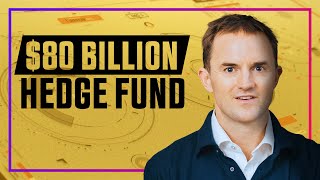
Chase Coleman's Tiger Global brought hedge fund speed and scale to late-stage startup investing, offering founders patient capital and fewer board seats while paying higher prices. Their streamlined research and willingness to deploy massive capital at once disrupted how traditional VCs compete for deals.
If you want to start a company and need money to do it, you usually pitch a venture capitalist. I've raised over $100 million for my two startups, and essentially all of that money came from VCs. But now everything's changing. Venture capitalists have long been the masters of Silicon Valley, with their casual outfits, low slung offices on Sandhill Road, and sometimes outsized personalities and fancy cars. Guys in this town don't have the.
Balls to drive drive a car like this.
They're billionaires and they drive fucking Priuses. Why? But what if it wasn't this way? What if a bigger fish entered the startup funding world and completely ate the venture capitalist lunch with a new and disruptive funding model? What would happen to all these VCs and their amazing returns? Tiger Global is a hedge fund that recently dove headfirst into startup funding and is now announcing a new deal every 48 hours. They're beating venture capitalists at their own game and winning deals left and right. But how are they doing it? When you think of hedge funds, you probably think of rich guys in fancy suits barking orders into phones and causing massive swings in the public markets. But the term hedge fund is actually quite fluid. I don't know what a hedge fund is. I really don't know. Some people are value investors, some people invest in bonds, some people invest in stocks. People do all different things within a structure called a hedge fund. That's Ray Dalio, the founder of Bridgewater Associates, which is the world's largest hedge fund. And even he doesn't know how to define the term precisely. That's because at the end of the day, a hedge fund is just a pool of capital that aims to make the best possible returns for its investors. And in 2021, the best returns are coming from technology startups. Traditionally, hedge funds have operated primarily in public markets, buying and selling shares of public traded companies, Apple and Facebook. But in the past few months, there has been a massive wave of hedge funds crossing over into private markets and pouring billions of dollars into startups before they go public. Tiger Global is the biggest of these so called crossover funds, and they do all of their deals from this skyscraper in New York City. Even though they aren't headquartered in Silicon Valley, they've become the biggest venture capital firm, seemingly overnight. So what does Tiger know about venture capital investing that all of the traditional VCs don'? Let's dig into their strategy to find out. Tiger Global was started by this guy, Chase Coleman. The firm has been posting incredible returns for the last two decades. In fact, they've only lost money twice, but they keep an extremely low profile. Most Silicon Valley investors do podcasts, talk to the press, or at least maintain a blog. But Coleman is extremely secretive. In fact, this is the only picture of him available on the Internet, and he's never been quoted directly in any press story. I had to learn more about Chase Coleman and how he became the biggest venture capital investor seemingly overnight. So I analyzed every deal he's done in Silicon Valley to boil his strategy down to three key points. Everyone knows that hedge funds have a lot of money. Tiger alone manages more than $30 billion. And Coleman himself has amassed a multi billion dollar fortune of his own. But more on that later. Even though hedge funds have always had the capital to make big bets, they have traditionally focused on public markets where plenty of financial data is available and they have the option to or short based on their assessment of a particular company. But Tiger has developed a unique edge when it comes to identifying fast growing startups. And this is their first key advantage. Tiger has optimized the research and due diligence process. When an investor meets a company, they typically have a series of meetings to get to know the founders, learn about the market, and understand the financials. This often takes weeks, and even after the investor is ready to make the investment, the company will still need to spend more time going through a due diligence process that involves turning over extra financial information and having long calls with lawyers. Tiger has optimized this whole process so they can move faster than traditional VCs. Despite doing more deals than Andreessen Horowitz, this year, they have one third the headcount on their investing team. Everett Randall, who's a VC at Founders Fund, recently explained their outsourcing process this way.
But it starts with outsourcing. So they outsource basically anything that is not an investment decision. And so for research, you know, they hire consultants. I think it's Bain. And so Bain is just coming to them every month and it's saying, hey, here's this market that, you know, all these good VCs just invested in. Here's every single competitor, here's all the emails of the CEO, here's everything that you need to know. And then also on like the NDA diligence, I think they have, you know, probably like an army of lawyers to do all that. You can kind of just go in, meet a founder, say, hey, I want to see X, Y and Z, and then you can kind of make the decision right there.
This has a big impact on founders. I've had first meetings with Tiger folks that feel like partner meetings with traditional VC firms. They show up completely prepared and know everything about your business and the market already. So things move quite quickly. There have been plenty of other big investors who have come to Silicon Valley with billions of dollars and made very impulsive investments. So that can't be the only important factor in Tiger's success. WeWork famously pulled in a 4 billion dollar investment from SoftBank based on a single 28 minute meeting. But that turned out to be a disaster. Closing a big investment extremely quickly like that is kind of like a shotgun wedding. Both parties involved are going to be working together for years, so it's important to be aligned. But that's where Tiger's second key advantage comes in. They offer great terms to companies. Instead of requiring a board seat and negotiating for extra control of the company, they trust growth stage companies to just continue what's working. When you're just starting out, landing a big investor and having them join your board can be incredibly valuable. They will help you strategize and grow your company. This is often referred to as value add investing. But at the growth stage, it gets harder and harder to add real value. When you're running a company that's making $100 million selling a product, there's a good chance that you are a world expert in that market. A new investor who hasn't run a company in that market at that scale might not be able to add that much value. The founder of WeWork eventually got into a massive battle with SoftBank. And that board seat turned out to be really important. By not requiring a board seat, founders of companies who take money from Tiger don't have to worry about whether or not they will disagree about the direction of the company in the future. The ability to have more control over your business is important, but at the growth stage of your business, there's more at stake. Anyone who gets an investment from Tiger has a clear path to going public. But the IPO process is often tumultuous. Early investors want to sell their stakes, which are sometimes worth billions of dollars. But Tiger is used to owning public equities, so they don't sell immediately like other funds. This is a great thing for your company. It means that your stock price is less likely to fall after you go public because your investors aren't immediately selling their shares. This is all good news for entrepreneurs, but quick due diligence and good terms can't alone win an investor every deal. And that's why Tiger's third Key strategy is so important they aren't afraid to overpay. By the time you're ready to raise $100 million for your business, you've already probably already done a seed round, a Series A, and maybe even a Series B. It's common for founders to own less than half their company at this stage, so when Tiger offers a big check that only requires 10% ownership instead of 20%, it's a great deal. But how can Tiger afford to overpay to win deals and still earn high returns on the fund? The answer ties in perfectly with Tiger's other key strategies. Speed. By deploying capital much faster than the competition, they can accept low returns and still make more money. A typical venture fund might raise a billion dollars and then deploy it over three years. If they're able to earn 3x money on money returns, this will yield nearly $700 million in gains per year. But Tiger is taking a more aggressive approach. They deploy a full billion dollars every year, and even though they accept a lower return of 2x money on money, they wind up making more money. $1 billion per year. You can see this strategy in action with Tiger's investment in Coinbase. It originally looked like they overpaid, but they wound up making a killing when Coinbase went public. This rethinking of the venture capital equation flies in the face of everything traditional venture investors believe. But unfortunately for these VCs, their preconceived notions of how the venture world should work don't seem to hold up in practice. Everett Randall compares Tiger's strategy to that of Bronn in Game of Thrones. During a trial by combat, Bronn has to fight Ser Vardis to the death on behalf of Tyrion Lannister. Ser Vardis is a traditional knight, bound by the rules of honor and duty to the crown. He fights Bronn head on and expects Bronn to abide by the unwritten rules of noble combat. But Bronn knows that this would be a losing battle, so he uses every possible strategy to get an edge, jumping over railings and dancing around until Servartis is exhausted and he can strike a fatal blow. In the end, the court is outraged, but all that matters is that Bronn was victorious. You don't fight with honor. No, he did. This is what's happening in venture right now. Tiger is breaking all the rules, and it seems to be working. But what does this mean for startups? Fortunately, only good things if you're running a growth stage company and looking for tens or even hundreds of millions of dollars to expand your business on the path to going public. Just having Tiger in the market at all will make your fundraising process much smoother. Even if they don't fund you directly. Other funds will have to move quickly and offer good terms because they are living in fear of losing deals to Tiger. Now, most people aren't at that stage yet and that's totally fine, but you're probably asking yourself if this trend is good for early stage entrepreneurs or even people just starting to think about launching their first venture. The good news is that a rising tide lifts all boats in this situation. The additional capital that Tiger is bringing to the late stage market has made earlier stage investors more aggressive. Angel investors know that if they find the right company and the business starts taking off, there will be plenty of support from later stage investors like Tiger to help the company scale well past a billion dollar valuation. The only people who this really hurts are the traditional late stage investors that Tiger competes with for deals. Everett Randall works for Founders Fund, which was started by Peter Thiel and has a legendary track record. Entrepreneurs will still want to work with top tier firms like that because they actually have a powerful brand. But there is a whole category of firms which Everett called JCPenney funds. They don't have fancy brands, but they also don't offer the Walmart style experience that Tiger can give entrepreneurs. Increasingly, these J.C. penney funds are getting squeezed. Andreessen Horowitz is building a massive media arm to differentiate themselves and there are no signs of Tiger slowing down their pace. So firms stuck in the middle will likely struggle to win deals over the next few years. But what about Chase Coleman, the founder of Tiger Global and the leader of this venture capital revolution? I for one hope he starts opening up a bit and doing the occasional interview, but for now we'll just have to settle for gawking at the insane properties that the Tiger team is buying up in Palm Beach, Florida. If you'd like to chat with me about this video, just leave me a comment below or message me on Twitter and please check out this recommended video. The YouTube algorithm thinks that you'll really like it. Sam.










