Waymo Has More Pre-Launch Funding than Quibi! | Can they win in self-driving?
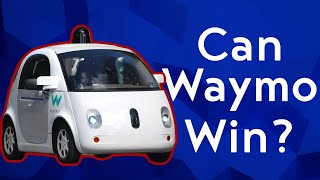
Waymo has raised roughly $10 billion before launching a commercial service, more than Quibi spent in total. John Coogan questions whether its slow rollout and Level 4 approach can compete with Tesla and GM's faster Level 2 strategies, especially when riders might not accept slower, cheaper rides.
It's common knowledge that raising too much money before you launch can be extremely dangerous. Quibi is a great example of what can happen when you delay launching a product to real users for years and then find out that no one wants what you're building. But what if I told you that there was a company with over five times as much funding as Quibi that has yet to launch a commercial product? As crazy as the idea of pouring $10 billion into an idea before launching it is, it's actually happening. And it might not be as crazy as you think. I'm John Coogan and today I want to talk about the self driving car company Waymo. Founded in 2009 by Google, Waymo has had its sights set on developing a fully autonomous vehicle for the past decade and they've made some really incredible progress. But the fact that they have yet to get a fully self driving car in the hands of consumers raises some interesting questions about the best practices we often assume to be true about startups. Is it okay to spend billions of dollars on research and development before launching, or do you always need to be incorporating feedback from real customers in order to validate your idea from the earliest possible moment? Let's start with a little history. Sebastian Thrun and Anthony Levandowski started Waymo as an internal project at Google. Most of the early team members had been part of the 2005 DARPA Grand Challenge where they competed to race fully autonomous vehicles through a complicated course of obstacles and unpredictable terrain. After six years, in what was essentially fully stealth development, Google spun off the project as its own division under the Alphabet umbrella and renamed the company Waymo, a nod to its mission of creating a new way forward in mobility. It's now been over 10 years since the project started and the company has evolved significantly. Waymo has driven over 20 million miles on real world roads, yielding tons of data that they use to train their autonomous driving models. They have also released five iterations of their self driving vehicles, each with improvements to the core self driving systems. And perhaps most significant to our discussion today, this year they raised outside funding for the first time. By raising $3 billion at a $30 billion valuation, Waymo ensured that they have the funds to continue to develop the technology and potentially set themselves up to one day be fully independent from Google. But despite all of these milestones, we Waymo has yet to launch a consumer product that actually delivers a rider to their destination without the involvement of a human being. To be fair, they did just recently launch Waymo one, which allows users of their app to hail an autonomous Waymo vehicle in the Phoenix area. But each Waymo vehicle still has a human safety driver at the wheel, ready to take over if the autonomous systems fail. Now, I don't want to be unfair to Waymo, since they have clearly accomplished something remarkable, but it remains to be seen if this is a true violation of the axiom that you should always launch early. The crux of this debate revolves around the market for fully self driving cars. And in order to understand what that market might look like in the future, we need to talk about the different levels of autonomy. The Society of Automotive Engineers has divided self driving capabilities into six levels. Level 1 autonomy includes basic assistance features such as adaptive cruise control, but level two is where it really starts to get interesting. At level two, the car should be able to adjust both acceleration and steering, but it still requires a human driver to be alert and ready to take over if the system can't handle a current situation. This is where most of the commercially available autonomy Systems sit. Currently, Tesla's Autopilot and GM's Super Cruise are both Level 2 systems that have received amazing reviews from users. Level 3 is similar to Level 2, but it does not require the driver to monitor the environment. But Waymo is going beyond this, jumping directly to level four autonomy, which is where the vehicle performs all driving functions under certain conditions. While other companies have iterated through the lower levels in order to improve their systems, Waymo has targeted level 4 self driving from the beginning. And while level 4 sounds amazing on paper, there are some serious drawbacks to consider. First is what sets it apart from level five. At level five, the vehicle is capable of performing all driving functions under all conditions, but Waymo isn't there yet. The system works great on the wide open and typically dry roads of Phoenix, Arizona, but driving on the icy and congested roads of Boston is still a long way off. Driving on clean roads in good weather looks like a solved problem at this point, but in messy conditions with aggressive drivers, the problem starts to look a lot more like game theory than pathfinding. The second major issue Waymo is facing is the speed of their vehicles. Although the vehicle can reliably go the speed limit, safety is the first priority in these systems, so the cars tend to yield more often than a human driver would. Most people tend to bend the rules a bit when they are driving, rolling the occasional stop sign and cutting someone off to get ahead in a traffic jam. These little shortcuts do wind up saving time, but they come with the additional risk of a crash when you're at the wheel, you can make the decision to trade safety for speed based on your own risk tolerance. But when you're in a Waymo, you only have one option full safety. And this could be a real problem for Waymo. Let's assume that Waymo's vehicles are as safe, if not safer than taking an Uber or Lyft, but are slightly slower due to the less aggressive driving style. Even if Waymo can reduce the cost of a trip by removing the human driver, will customers be willing to trade speed for this cost savings? Fortunately, we do have some data that can help us answer this question. Uber has started a ride sharing offering called UberPool, which is cheaper but slower than a direct trip since you're sharing the car with someone else. Despite these rides being cheaper, only 20% of Uber's customers select the UberPool feature. The market for robo taxis that are cheaper but slower might be significantly smaller than the overall ride sharing market. Taking these two issues together paints a bit of a risky picture. Waymo may only be able to operate in uncongested cities during good weather conditions and and even then, many customers may still opt to pay a premium to be driven by an aggressive human driver who can get them to their destination quicker. Now, to be fair, both of these issues can be solved by improving the core autonomous systems, and we might eventually see fully autonomous robo taxis tearing through the streets of Boston during a Snowstorm safely at 40 miles per hour. But that feels a long way off, and the question of how we get there is still an open one. Even though waymo has amassed 20 million miles of driving data, Tesla recently hit over 3 billion miles driven with the Autopilot system engaged. It still remains to be seen which approach will deliver a full, Featured and profitable Level 4 autonomous vehicle business. The conventional wisdom of the tech industry would suggest that iterating directly with real world customers like what Tesla is doing would be superior to the Waymo model, but only time will tell. I personally hope Waymo winds up working. $10 billion in pre launch funding creates some pretty huge shoes to fill, but if anyone can stick to landing on a project like this, it's the team at Waymo. I'd like to hear from you though. Who do you think will win in the battle to produce a fully autonomous vehicle that can be widely used by consumers? Let me know in the comments if you think Waymo, Tesla or another company entirely has the best shot. And if you enjoyed this video, please consider subscribing to the channel. Thanks for watching.










