Who Is Palmer Luckey?
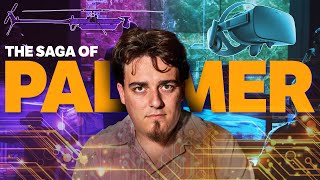
YouTube video (April 2021) by John Coogan profiling Palmer Luckey. It traces his Long Beach upbringing and early hardware tinkering, the creation of the Oculus Rift and its $2.5M Kickstarter, subsequent VC funding and the $2.3B Facebook acquisition, the 2016 political-donation controversy and his departure from Facebook (followed by a $100M court award), and his founding of Anduril to build autonomous defense systems. The video situates Luckey’s work within themes of entrepreneurship, technological foresight, and American liberty.
Questions this video answers
$2.5 million
$2.3 billion
$10,000
September 14, 2019
$100 million
My name is Palmer Luckey. I started my career when I founded a virtual reality company called Oculus VR. I sold that to Facebook for a few billion dollars, and when I got fired, I started Anduril so that I could work on autonomous systems for national security.
Palmer Luckey is one of the most important technologists of the 21st century. He's the youngest person ever to found two different unicorn companies. And he's personally accelerated both VR and and defense technology through sheer force of will. But really understanding Palmer requires internalizing the American dream and what it stands for. Because his story is much more complex than a simple rags to riches tale of a hacker making a fortune. Palmer has a unique ability to see the future with particular clarity and vision. And regardless of what you may think of him now, I promise you that it's worth understanding his worldview in its entirety. So stick with me. I'm John Coogan and this is the saga of Palmer Luckey. The Palmer Luckey story is so fascinating to me because his story is pretty similar to mine, although he's been vastly more successful in his endeavors than I have so far. We both grew up in California, never worked traditional nine to five jobs, and founded multiple companies in our 20s. We even wound up both raising money via crowdfunding and then from some of the same venture capitalists. I followed his career closely over the past decade and always loved his work and how he approaches problems. So I'm excited to dive into his story today. Palmer was born and raised in Long Beach, California and experienced a very middle class upbringing. His father worked at a car dealership while his mother homeschooled him at a young age. Palmer developed a love of electronics and engineering and would spend hours tinkering with any piece of hardware he could get his hands on. He worked his way up to more complex projects involving lasers, railguns and Tesla coils, sometimes resulting in personal injuries. After saving up some money working on a dock in Long Beach, Palmer built a top of the line PC gaming rig with six monitors. This immersive gaming experience was impressive, but he found himself wanting more. So he began researching virtual reality in hopes that he could find a headset that would allow him an experience as engrossing as the Matrix.
Holy shit. Hey Mikey, I think he likes it. How about some more? Hell yes.
Over the next few years, Palmer began collecting VR headsets, tearing them down and learning all about their inner workings. He eventually grew his collection to over 50 different head mounted displays, many of which cost thousands of dollars when they were released, but could be Picked up for pennies on the dollar during rare auctions and liquidation sales. At the age of 16, he began building VR headsets of his own designs and funded his R and D efforts through odd jobs, fixing iPhones, coaching youth sailing, and working as a groundskeeper. Palmer's educational pathway was extremely non traditional, and I think it's a big part of why he became a founder so young. Being homeschooled allowed him to focus on the disciplines that were most interesting to him. And at age 14, he started supplementing his learning with community college courses. Even though he clearly had a brilliant mind when it came to engineering, he wasn't able to find a home at any of the top engineering universities like Stanford or mit. Instead, he attended California State University, Long beach, where he majored in journalism. A big part of his motivation for wanting to become a journalist was that because he understood technology so deeply, he would often notice errors in tech reporting. And he thought that he could raise the level of rigor in the discipline and by applying his engineering skill set to tech reporting. But his college experience would be cut short by a higher calling. He had to finish his work on VR in 2009. Palmer was just 17 years old, but that wasn't stopping him from building his dream. He'd identified a few key areas that seemed to be essential to creating a quality VR experience. Things like 3D stereoscopy, which would give the viewer a sense of depth to what they were looking at. Lighter and more comfortable headsets to make prolonged usage more viable for average users, and a wider field of view in order to give the user a sense of peripheral vision and increase immersion. Fortunately for Palmer, these technologies had advanced significantly since the last real attempt to commercialize virtual reality. So a low cost, highly performant VR headset aimed at consumers seemed like a real possibility. But there was really still no VR industry. That didn't matter to Palmer, though. VR was just a hobby for him, and he hadn't set out to build a startup in the traditional sense. He just wanted to make a great VR headset that he could enjoy personally. So he just focused on building. He iterated through a number of prototypes, each time, learning what worked and what didn't, until he reached the sixth generation, which he called the Rift, because the experience was so real that it created a rift between the real world and the virtual. With a functional prototype, Palmer started growing a community around the Rift. He had lots of experience building hacker communities since he had founded Mod Retro in 2009, which focused on hacking old game consoles into portable versions. Even Though the Rift was better than the current competition, that wasn't saying much. It was clear that the only people who would really enjoy the Rift at such an early stage were developers and hackers like Palmer. So Palmer started growing his team and planning a crowdfunding campaign on Kickstarter. Starting a company wasn't Palmer's original goal, and he was actually considering a number of job offers from big companies to go work on the Rift as an in house project. But Brendan Aribe convinced him that entrepreneurship was the only way to guarantee that VR would become a reality. Aribe was more than 10 years older than Palmer and he had already grown a tech company into the hundreds of millions of dollars. He'd also seen the inner workings of big companies and knew how pet projects tended to die when they didn't perfectly align with the profit motives of the core business. So with his founding team in place, Palmer incorporated Oculus VR as the company that would bring the Rift to market. A few months later, In August of 2012, they launched a Kickstarter campaign that raised $2.5 million, more than 10 times the original goal. When I launched Soylent with Rob, Matt and David in 2013, we analyzed the Oculus crowdfunding campaign to see what worked, and there was a lot to like. First was authenticity. You could clearly tell from the Oculus Kickstarter video that Palmer had a unique passion for VR and really wanted to make it happen. The same was absolutely true for Rob and Soylent. He had been prototyping Soylent formulas relentlessly and was obsessed with learning about human biology and nutrition. The second important factor we identified was the community. Oculus didn't just flip the switch on their Kickstarter page and expect people to show up. They had tons of hackers excited for the launch and ready to help build the future alongside them. We followed this exact playbook at Soylent, first by blogging about our product, then talking to press outlets to spread the word, and finally by building a community of early adopters on a Soylent focused forum. One area where the Rift Kickstarter campaign really stood out was in terms of endorsements, though given that many developers were going to be skeptical that a young hacker had finally solved the challenges that had plagued VR for years. The Oculus team worked hard to get industry heavyweights to co sign the project and lend their credibility. Palmer masterfully networked with dozens of leaders in gaming and wound up getting a slew of endorsements for the video. John Carmack, a legend in the video game industry for his work on Doom and Quake had already built game demos for the Rift, and Gabe Newell, the managing director at Valve, called the Rift incredibly exciting. With the Kickstarter now fully funded and excitement beginning to grow around the company, Palmer began growing the team and planning for manufacturing. It's common for Kickstarter projects to encounter cost overruns, and the Rift was no exception. They had priced the unit extremely competitively at just $300, and there was little room for profit. Additionally, they had promised that every backer would get a copy of Doom 3 BFG Edition, but Rift's support wasn't available at launch, so Oculus had to compensate all their backers with gift cards. Given the growth of the company and the need for more cash to help scale manufacturing, Palmer and the Oculus team set out to fundraise. The first vote of confidence Palmer received came from Peter Thiel's Founders Fund, who's famous for investing in controversial founders trying audacious things. Thiel says that the best founders often have nearly opposite skill sets, like being highly idiosyncratic but still able to work with others in a team, and this perfectly describes Palmer Luckey when they set out to raise their Series A, everything didn't go perfectly smoothly, though. Early in the raise they wound up pitching Chris Dixon at Andreessen Horowitz and Chris actually passed on the deal. Andreessen wound up leading a massive Series B not long after, so it still worked out, but the story of how this deal fell through is still informative. At the time Palmer was pitching Chris, many Rift users were still experiencing fairly severe motion sickness. The Andreessen partners asked Palmer when he thought that the VR sickness issue would be solved, and Palmer replied honestly, he didn't know. Around this time I started working with Chris Dixon personally. Andreessen Horowitz led our seed and Series A rounds at Soylent, and we were both on the board of directors. In talking with Chris about his investment philosophy, he pointed out that you should never discount the power of Internet communities. Soylent and Oculus had both developed cult followings and and these dedicated early adopters would help the company iterate through issues as they grew. This was also the same year that Chris invested in Coinbase, which is expected to be worth over $100 billion this year. Incredible results. All three of these companies were built on top of dedicated communities of hackers who helped work through issues and amplify everything the company was doing internally. The power of community really can't be underestimated at the early stage. If the Internet wants it to happen, it will eventually happen with a $15 million Series A from Founders Fund and Spark Capital, as well as a $75 million Series B from Andreessen Horowitz. In the bank, Oculus rapidly iterated on their headset design and was able to ship the oculus Developer Kit 1 and 2 before preparing for their consumer launch. But before they could even ship their first consumer version, the company was acquired by Facebook. To say that the Facebook acquisition was unpopular in the VR community is an understatement. It was downright rejected. The indie hackers and game developers that signed on for the Rift's Kickstarter hated Facebook's focus on advertising and data collection and were worried that Oculus would become less developer friendly under Facebook's management. Palmer tried to get out in front of this by actively promising the community that he would be heavily involved and prevent mismanagement of the Rift. But it was too late. The community had turned on him. Despite the obvious risks of the Facebook acquisition, it's hard to fault Palmer for his decision to sell the company. After all, Oculus was only two years old. There was no guarantee that VR would become mainstream, and the deal would make Palmer wealthy beyond his wildest dreams. The $2.3 billion acquisition was criticized on both sides of the deal. VR enthusiasts thought that Oculus should remain independent no matter the price, and the tech industry analysts thought that Facebook was overpaying for such a small company. In order to understand why Mark Zuckerberg was willing to pay billions of dollars for Oculus, it's important to remember his experience with mobile. Even though Facebook is generally a massive success story, it wasn't always so obvious. When Facebook first launched, the iPhone didn't even exist yet, so the entire company was oriented around desktop. This became a massive liability once app stores became popular and new social networks focused on mobile started to take off. Facebook had incorrectly predicted that they wouldn't need an iPhone app and focused instead on developing a mobile web version of the site that failed to match the functionality of other native social media apps. They wound up having to buy Instagram for a billion dollars to stay competitive on mobile, and many people think that this decision basically saved the company. In 2015, Mark Zuckerberg wrote a memo to the Facebook team about his decision to move aggressively into virtual reality. He wrote that VR will be the next major computing platform after mobile in about 10 years. Now, we're about halfway through his prediction, and ubiquitous VR computing seems unlikely in the near future. But Zuckerberg had learned a valuable lesson from Facebook's failure on mobile, and he wasn't about to make the same mistake again. Even though Palmer and Facebook both wanted to bring VR to the masses, it wouldn't go exactly as planned. Debates raged in the Oculus community about whether or not Facebook would require Rift users to have a Facebook account or start tracking usage across VR apps for targeted advertising. But all those product focused disputes took a backseat in September of 2016 when the Daily Beast reported that Palmer had donated $10,000 to a pro Donald Trump political action committee. The organization was called Nimble America and was focused on running billboard attack ads against Hillary Clinton. Supporting Donald Trump in 2016 was an extremely controversial position in Silicon Valley. Peter Thiel was essentially the only major tech figure who had publicly voiced support for Trump, and he wasn't directly tied to any specific consumer products, although he was and still is on Facebook's board of directors. But Palmer was in a much more delicate position. The Oculus Rift was now in direct competition with the HTC Vive, and developers had a choice of which VR platform to release their games onto. Palmer may have been able to ride out the storm from a few small donations directly to the Trump campaign, but the Daily Beast article detailed the inner workings of the now banned subreddit r TheDonald. They also unearthed the connection to Milo Yiannopoulos, a far right political commentator who had recently been banned from Twitter. Unsurprisingly, the story caught fire and people started demanding that Facebook fire Palmer. VR developers like Skruta Games, Newton VR and Tomorrow Today Labs all said that they would stop supporting Oculus in their games as long as Palmer was employed by Oculus. The core issue was whether or not Palmer had explicitly paid for hate speech, but the actual billboard designed by the Nimble America team didn't seem to meet that criteria. Eventually, these companies reversed their positions because the link was simply too tenuous. Palmer might have given money to some people that they didn't like, but ultimately he wasn't breaking any laws. Interestingly, just like after the Facebook acquisition, Palmer actually received criticism from both sides of the aisle. Liberals hated that he was supporting Trump, but many members of the Donald subreddit hated the Nimble America initiative as well, because they thought it wasn't focused enough on Donald Trump. Specifically, because Nimble America was incorporated as a 501 organization, it couldn't support a single single candidate exclusively, which many Trump supporters were upset about. Everything Palmer had done was completely within his rights and above board in terms of campaign finance law. But public relations is hugely important to big companies like Facebook, so Palmer had to leave the company Facebook insists that it didn't fire Palmer due to his political positions, but Palmer disputes this, and the facts seem to be on his side. After he was terminated, Palmer filed an employment lawsuit against Facebook, alleging that the company had violated California law by punishing him for political activity. The court sided with Palmer and awarded him $100 million in damages, which I think tells you a lot about what really happened here. I personally think every American should be free to support any political candidate they choose, and oddly, have actually been in a similar position myself. In the run up to the 2020 election, my Soylent co founder, Rob Reinhart, endorsed Kanye west for president. This set off a series of critical articles in outlets like Vice, which ironically, had been one of our biggest sources of organic growth at the early stage. Rob faced a similar wave of demands to step away from Soylent that Palmer faced at Facebook and ultimately stepped down as chairman of the board. These campaigns to pressure people based on their political beliefs are deeply un American. Even when I disagree with someone on a political issue, I defend their right to hold that position, because free speech is a huge part of what makes America so great, in my view. After his departure from Facebook, Palmer didn't waste any time getting started on his next project. He left Facebook in March, and by June he was ready to incorporate his next startup. He named the company Onderil after the sword carried by Aragorn in the Lord of the Rings, and the goal was to break into the defense industry. Fortunately, Palmer was uniquely suited for this task. Historically, defense startups have not done well. In fact, Palmer likes to quote that there have only been two unicorn companies in defense, and they were both started by ideologue billionaires Elon Musk with SpaceX and Peter Thiel with Palantir. But Palmer had secured a fortune from the Oculus sale and had a political track record that aligned with life. Lots of important people at the Department of Defense. Palmer's approach to defense was radically different from other defense contractors. Instead of issuing competitive bids for projects that the DoD was already working on, he focused Onderil on building technology that the DoD didn't know existed yet. Things like drone networks, sensor towers, and artificial intelligence systems to tie it all together. Once the Onderil team had a functional prototype, they would immediately film a simple demo video and then start showing it to people at the dod. And pretty quickly, government officials would find the money to pay for the systems Palmer and his team were building. It's easy for people to dismiss Palmer Luckey as another conservative rich guy who loves the military. But I think the story is much more complicated. There is a growing consensus among government officials that the United States might be focused on the wrong things when it comes to national security. Instead of thinking ahead to what the next conflict could look like, the US Seems focused on building up ever larger stockpiles of conventional assets like aircraft carriers. On September 14, 2019, the Houthi movement in Yemen attacked the state owned Saudi Aramco oil processing facilities. And they did it with a swarm of drones. These drone swarm attacks are a relatively new development, and the United States hasn't really been preparing for this type of combat. But fortunately, Anduril has. Less than two weeks after the Saudi Aramco attack, the US Military announced that they would be buying interceptor drones from Onderil designed explicitly to stop these types of attacks. Palmer has clearly built some incredible technology at Onderil, but his motivations are still questioned by many in the technology community. Increasingly, a small but vocal minority are pressuring the tech giants to stop working with the Department of Defense. But Palmer has been extremely clear on his reasoning for supporting the US Government in recent interviews.
No matter what your reservations about the US Military are, and I think they're not perfect, but they're definitely better than Russia or China. And I would definitely rather have the US Military have the best technology than Russia or China. And I think you also need people to understand that this idea of cultural equivalence is a lie. There's this popular idea in certain groups of people that all cultures are different but fundamentally equal in some way. You know, our culture is not better than theirs, it's just different. And I totally disagree. There are cultures around the world where it is a legal norm and a cultural norm to execute homosexuals, not give women equal rights. Lock up people of a certain religion in re education camps. Kill journalists, Kill journalists. People are focusing on this one Saudi Arabia thing.
Sovereignty was bad in every possible way. It's been bad forever.
And there's countries all around the world where they are regularly executing journalists. And the ones where they're not regular executing journalists are often because they've so effectively scared everyone out of doing good journalism that there's nobody left to be killed that's willing to oppose the state. These are things that are not just legally accepted, they're culturally accepted in the United States. Our culture does not tolerate that. We believe in strong Western values of a liberal democracy, strong checks and balances, freedom for everybody. And there are, of course, pockets and problems here and there. But fundamentally, I think the US Is nearly ideal as a culture, and that.
Idea of American freedom is incredibly important. Palmer recently recommended a sci fi book named the Unincorporated Man. It's a great book and I highly recommend reading it, but without going into spoilers. Summarize it. A few hundred years in the future a man is revived from suspended animation in a universe where the entire world treats every person as a corporation from birth. Every action from buying everyday goods to earning an education requires trading shares in yourself. But the hero of the story is Unincorporated and therefore owns 100% of himself. He is the only truly free person person in the entire society and he has to fight to keep it that way. In the book, this ultra libertarian society isn't particularly demonized. In most situations, the system works quite well. Shareholders are incentivized to maximize their profits, which usually means helping anyone they own shares in to improve their living conditions. But no one is truly free. Having started multiple companies and then slowly sold shares in them over time, I can see why Palmer likes this book so much. It really illustrates the value of independence and free thinking. The Unincorporated man could easily sell shares in himself and become fabulously wealthy, but there is an intangible value to being completely independent. You can already tell that Palmer is trying to build something bigger than Oculus at Onderil, and I think he will remain independent a lot longer. It's common to think that money alone creates freedom, but even as Palmer sat at Facebook with hundreds of millions of dollars to his name, he still wasn't free. He had to start over, take on a bigger challenge, and own his own destiny. I've definitely felt similar things, and I think that's why the Unincorporated man spoke to me so much. I've now been working on my second venture, Lucy, for longer than I was working on Soylent, and even though we've sold shares to raise money, we think about the process of ownership and control in a completely different way. If you're running a startup, I'd encourage you to read the Unincorporated Man. It will really help you think about your business in a new way, and I don't think you'll regret it. Thanks for watching the video. If you liked it, please consider subscribing to the channel. And if you are interested in more of these Silicon Valley sagas, I've left links to my videos on Chamath, Palihapitiya and Naval Ravikant for you to check out. As always, feel free to leave me a comment below or message me on Twitter if you'd like to get in touch. Thanks for watching.










