Woolly Mammoth Cloning Pays Off Unexpectedly
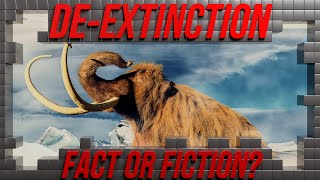
This content was created by John Coogan. This content was uploaded by John Coogan. This is a YouTube video titled "Woolly Mammoth Cloning Pays Off Unexpectedly" created in October 2021. The content features John Coogan and Dr. George Church discussing the scientific, ethical, and economic aspects of cloning woolly mammoths. The video explores the potential environmental benefits, the genetic engineering techniques involved, and the commercial opportunities surrounding the project, including the company Colossal founded by Church. The discussion includes multiple speakers and expert commentary, focusing on the intersection of biotechnology and conservation.
So you want to bring back the woolly mammoth.
Bring back woolly mammoths.
Maybe you love elephants, maybe you love science, or maybe you just want to make a lot of money. Either way, we are remarkably close to being able to do it. And the opportunity here is a lot bigger than most people think. Naturally, though, there are tons of skeptics. Bad idea. Did no one see Jurassic Car? And sure, no one wants a group of woolly mammoths charging around killing people. But this project could have a profoundly positive impact on the world. So let's dig into it and figure out how it would work, what the benefits are, and lastly, how much money it could actually make. Genetic engineering is a complex issue, and I don't think we should ignore the ethical questions. Yeah, but your scientists were so preoccupied with whether or not they could, they didn't stop to think if they should. So let's take Jeff Goldblum's advice and stop to think about whether or not we should actually resurrect the woolly mammoth. First up is the why these creatures have been dead for thousands of years. Do we really need them? And could they even survive if we did bring them back? Well, unlike the dinosaurs, which died off millions of years years ago, mammoths and humans coexisted for millennia, at least until we killed them all.
Early man ate the woolly mammoth out of existence 12,000 years ago. Most of them went extinct because we ate them.
So you could argue that humanity has some sort of moral obligation to bring them back, since we were the ones responsible for their ultimate demise. But there's a bigger reason for bringing them back, and it's a lot more selfish. Bringing back the woolly mammoth could actually help prevent climate change, and that benefits us directly. See, the permafrost is melting, and that's a big problem for us. We need to keep these icy regions frozen as long as possible if we want to control carbon emissions.
And the reason we want lower temperature in the tundra is that there are 1400 billion tons of carbon locked up not too far from the surface in the icy soil and is melting very quickly.
Woolly mammoths accomplish several really important tasks up in the tundra. They knock down trees and clear whole forests. This is a bit counterintuitive because we think of trees as generally important to environmental protection. But up in the Arctic, clearer grasslands usually reflect more sunlight and stay colder. As mammoths walk around the tundra, they pack down the snow and create sheets of ice that actually keep the permafrost colder. There are bison up in the tundra and they do a pretty good job of clearing smaller shrubs, but they can't knock down whole trees. So repopulating northern Russia and Canada with woolly mammoths is might actually be able to slow the permafrost melt and buy us some extra time to fight climate change. It isn't going to solve everything, but it seems like it's worth a shot. But there are other great reasons to support this project. It's just plain inspiring. I firmly believe that seeing astronauts go to space is incredibly inspirational. Any child that sees a rocket launch immediately wants to learn more about the science and technology that made that possible. That's really important. Since physics isn't exactly the easiest subject, this woolly mammoth project could do the same for the biological sciences. Seeing this ancient creature reincarnated would undoubtedly inspire a new generation of biologists. And they would go on to do all sorts of great things. We shouldn't discount the application of de extinction technology. More broadly, though, the woolly mammoth is fun to talk about because it's such a striking creature. Everyone knows what a woolly mammoth is, and who doesn't want to see one in real life? But the same genetic technology that will help create a new mammoth will also help restore other species on the brink of extinction. And this is actually happening already. The black footed ferret is one great example. This species was declared extinct in 1980, but just last year, scientists were able to clone a black footed ferret that had died decades earlier to help bring the species back. And this happens all the time. A particular species becomes so rare that there isn't enough genetic diversity in the remaining animals to continue reproducing. But cloning older animals can help prevent outright extinction. Clearly, there are risks to any cutting edge science. But we aren't talking about resurrecting deadly dinosaurs. After all, these woolly mammoths are remarkably close to elephants. And elephants have been outmatched by modern firearms for decades. But you're probably asking yourself, how would this even work?
Can you bring back the woolly mammoth?
Because I would love to see one.
I'd love a woolly sting.
Well, if you've seen Jurassic park, you'll probably remember that the original dinosaur DNA was found preserved in amber. And something remarkably similar happened with the woolly mammoth. It's basically impossible for us to find intact dinosaur DNA due to the natural decay that occurs over millions of years. Even if blood was preserved in amber, radiation would have ripped the DNA sequences to shreds over such a long period of time. But the mammoths only died off thousands not millions of years ago. And many mammoths were frozen in ice as soon as they died, which preserved them remarkably well. And the story of how we found these incredible specimens is actually pretty crazy too. Ivory is one of the most valuable materials in the world, and the only way to get it is from elephants. Or at least it used to be. With elephant populations dwindling, governments started restricting the sale of elephant ivory. But Russian ivory hunters figured out an alternative.
After embargo for elephant people start to sell mammoths.
There were no restrictions on digging up frozen mammoths and selling the ivory from their tusks. So a small industry started to flourish.
Life finds a way.
As these mammoth hunters dug deeper and deeper, they started finding bodies that were so perfectly frozen, they appeared to actually bleed when they were cut open. This was an incredibly promising breakthrough since these preserved specimens might have enough DNA left in them to piece together a complete sequence.
This is the stuff that could possibly be cloned and bring back the mammoths from its extinction. So in other words, I'm literally holding a plot line from Jurassic park in my hand.
Now, to be clear, we haven't found any living mammoth cells, just DNA fragments. And that's an important distinction. Scientists essentially need to piece together these fragments to understand what genes produce the traits that allowed the woolly mammoth to thrive in such harsh environments. It would be great if we could just relocate some African or Asian elephants to the tundra and call it a day. But they wouldn't last long up there. It's just too cold. The woolly mammoth is genetically similar to today's elephants, but has a few key traits that allow it to survive in low temperatures. Thick fur, extra layers of fat and hemoglobin to carry oxygen in the blood are all critical differentiators. But the DNA sequences that code for those genes are pretty well understood now.
Right now, a team of geneticists at Harvard run by a narcoleptic dyslexic genius named Dr. George Church are on the verge of bringing back the woolly mammoth.
George Church is at the center of this project and just co founded a company named Colossal to commercialize the effort to clone a woolly mammoth. And he's not just some crazy scientist. Well, maybe he's a bit crazy, but he is definitely well respected within the scientific community. In 1984, Church published the first direct genome sequencing method and played a critical role in the Human Genome Project. He's been working on this mammoth project for the last six years and, and he clearly really believes in it.
This is real, not science fiction. And is potentially applicable to endangered and extinct species.
There are two major trends that are simultaneously accelerating to make something like this a real possibility. First, the cost of DNA sequencing is falling incredibly fast. Twenty years ago, sequencing a single genome cost $100 million. Now it costs less than $1,000. Biology is becoming drastically more accessible, and that's opening up tons of new opportunities. The second major trend is in gene editing technology. CRISPR is the latest development in this area, and the creators just won the Nobel prize For their work on it last year. You can think of these two developments, like reading and writing. In order to clone a mammoth, we need to be able to read old mammoth DNA and then write that DNA to a new embryo. The cost of reading DNA has fallen precipitously, and now the cost of writing DNA is also falling. But even with these advances, Directly, cloning a mammoth is still a bit out of reach. Luckily, scientists have found a workaround. Instead of trying to create a perfect replica, they are just going to focus on adding those key genes I mentioned earlier into an Asian elephant, Essentially creating a hybrid.
This wouldn't be an exact replica, because the short DNA fragments that I told you about Would prevent us from building the exact structure, but it would make something that looked and felt very much like a wool image mammoth did.
And this is a really key strategy. The team working on this project Isn't getting hung up on satisfying some vague technical notion of what constitutes a mammoth. They just want to make something that will get the job done in the tundra. But now to the really vital part, the economic opportunity. Church spun out his research into a full company, and they just raised $15 million. So they have to start thinking about turning a profit now. The first and most obvious way for his company, Colossal, to make money Is just to sell cloned mammoths. This is pretty straightforward. Countries that have melting permafrost could buy mammoths from colossal directly and then turn them loose in areas that are the most affected by warming climates. But there could be plenty of other buyers. Zoos already spend a fortune on rare animals, and a cloned woolly mammoth Would clearly be the rarest of all. Pandas routinely sell for over $1 million, and they're only endangered. There's also a long history of cloned animals selling for incredibly high prices. Sir Lancelot Encore is a cloned dog Estimated to be worth millions of dollars. And a company named cynogene clones cats and dogs regularly for around $50,000 a piece. Missy the cow sold for $1.2 million in 2009. And she wasn't even cloned. So there's clearly a market for rare animals with very specific DNA sequences. I could definitely see the market for cloned mammoths being extremely lucrative, even if it was only for a few years before the novelty wore off. After all, one of the investors in Colossal's funding round was the TikTok star, Josh Richards. He hasn't disclosed how much money he put in, but I wouldn't be surprised if he could make it all back just by being the first influencer to do a dance on top of a woolly mammoth. But there are still other ways that this company could make money, and they might not even need to sell any mammoths to do it. Church teamed up with a serial entrepreneur named Ben Lamb to found Colossal. And Ben has an interesting history in startups. His last company was an artificial intelligence business named Hypergiant. If you've never heard of them, that's to be expected. Even though they have a really slick website, they don't make consumer facing products. Instead, the company focuses on partnerships with big companies who operate in the aerospace and defense industry. So this project could be an attempt to do something similar. Attract a bunch of really incredible talent to an ambitious project and then make money licensing out intellectual property and contracting with other biotech companies. Either way, Church clearly takes the implications of his work very seriously.
We are taking more and more control over our biological destiny.
The ability to both read and write DNA is a truly incredible breakthrough and one that we shouldn't take lightly. We need to be careful about the second order effects of these projects, but that shouldn't slow us down. Big problems require big ambitious solutions and I for one hope this project succeeds. Thanks for watching.










