Ecosystem Restoration (Camps) Communities - John D. Liu interviewed by Puria
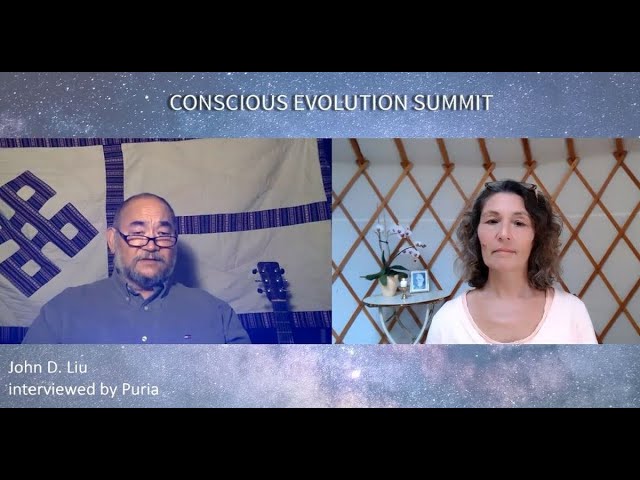
John D. Liu, a former TV journalist, left geopolitics to restore ecosystems after visiting China's Loess Plateau in 1995. He runs Ecosystem Restoration Camps where people live simply in yurts, build swales and ponds, and learn soil science. A camp costs €250-300k to start and costs €10 a month to join.
Chapters
Dear John D Liu, I want to warmly welcome you to the Conscious Evolution Summit.
Well, thank you very much. It's my pleasure and honor to be here.
I'm so happy to have you, and I also want to Welcome you listening and watching this conversation with John D Liu. I never met John personally, I never met you, but I saw really a few videos on YouTube from you and I heard about your initiative, the Ecosystem Restoration Camp, where you are the expert to share more about it and it really touched my heart because I'm so convinced that we the people need to really step in our role as caretakers of the land and of the Earth which nourishes us and giving back. And I'm also deeply convinced that our personal development is so dependent on the environment and on the land we are in. Not separate. And I chose you to share about your experiences and your wisdom you collected from, from your activities in that.
Well, thank you. I guess I would say that we're all flawed individuals. We're not really perfect, but I definitely feel that my experiences have informed my own life and chosen a path in life for me, because I think you can't— once you know certain things, you can't unknow them. So you're compelled to go in a certain direction because of things that have happened to you. So when I was young, I'm now 65, but when I was young, I went overseas to be a television cameraman. First for CBS News for about a decade and then for Italian state television and then for German television, Zweites Deutsches Fernsehen. And in this period of journalism, I was covering the geopolitical events, the rise of China from poverty and isolation, and then different kind of social economic developments in China, the one-child policy, the reform policies, the rapid industrialization, and then the Tiananmen tragedy in 1989, and then the collapse of the Soviet Union and international terrorism and that sort of thing. So That was my life. It was hectic and kind of confusing. There was a lot of data flows and we didn't have the internet as powerful as it is now, but we had all sorts of sources of information that would flow in and we were forced to process tremendous amounts of information all the time. And I met many of the world leaders, was very close to them because I was taking their pictures or filming them. And I listened to what they had to say. And I found them not really massively impressive, generally speaking. I think they were acting— many, many of the people on the international stage are acting from egotistical reasons. And this is really concerning because I think we're in a very serious moment in human history. So to observe the leaders up close and to find that, oh, they may not know what to do, is not a very satisfying feeling. And I mean, on the other hand, I would say that looking at what they have to deal with, you know, better them than me, you know, because I wouldn't want to have to deal with many of the things that they're trying to grapple with. But in 1995, the World Bank asked me to go to the Loess Plateau. You saw this film, apparently, or one of them. And when I went out there, I suddenly had a type of a realization. I felt as if I could look through time. I felt that I had been thinking that the contemporary events were important. And I guess, you know, for the people who were affected, they're very important. But when I went to the Lis Plateau, I thought I was looking through history. And human history, this was the cradle of Chinese civilization. So the The Chinese race emerged from this place, and then it was fundamentally ecologically destroyed. So you had this huge place that looked like a desert, but it must have been very nurturing at one time because it gave birth to the largest ethnic group on the planet. And I noticed that when I had been covering the geopolitical events, there would be hundreds or even thousands of journalists and politicians and, you know, interested people. It would be crowded. But when I was there, I was all alone, standing on a mountain looking out over this landscape. That was fundamentally ruined. And I started— it gave me a lot of time to contemplate, what am I seeing? And I thought, oh, I see that the rivers once flowed here, that the trees were once magnificent and huge. And had reached climax. And then I saw, oh, I can see beyond that. I can see even earlier that through evolutionary time, this place was again just geologic materials in the beginning of evolutionary time. And then it began to be colonized by bacteria and by fungi, and then more developed plant life came, and then animal life, and I mean generations and, you know, eras of time with different kinds of species— dinosaurs and all sorts of things. And then I thought, oh my goodness, I can look even further back. And there's, there's the formation of the Earth from cosmic dust. And, you know, that, and it was molten and the atmosphere was completely different. And as I started to, I realized that I didn't know enough about these things. And I started to study them. I thought this is more important than the than the geopolitics that I'd been following. So I started to study it. And because I had really dropped out of college to be a TV cameraman, so I really had— I was naive about what this kind of study would entail. So it didn't bother me that I was starting to learn about geology and chemistry and hydrology and microbiology and botany and atmospheric science. I just said, "Oh, okay," you know. And I'd been a professional professional journalist, so I was gathering data and I would look through the data and say, this is important, that's not important, you know, and I pretty soon I felt like, oh, I kind of understand what's, you know, I'm starting to understand what I'm doing. And then because I was working with the World Bank to document this restoration project, I was working with the top scientists who are working in this field. So I would be asking them questions, well, what about this? What about that? And they would be telling me what they thought and what they didn't know as well. And, you know, so as I, as I went on and I saw all the techniques that were used and the, the, the things that happened, I, I kind of, and because I was also making these films, I needed to synthesize all this information. So I started to gather all this information. I started to synthesize it. And then I started to communicate about it. And when I started to communicate about it, I was doing it in popular ways with filmmaking and so on. But I was being supported by the World Bank and then later by the British government, the Department for International Development, British Department for International Development. And at one point, after about 10 years, the British said, okay, That's enough study. You have to give a scientific lecture. And I was like, really? A scientific lecture? So I hadn't done that before. I'd, you know, been a TV cameraman. So I thought, okay, well, I'll do that. And I went and gave this scientific lecture. And it was kind of interesting to see how the audience reacted to this because I had broadcast video. Behind me as I explained what I was thinking, but I was talking about evolutionary theories. Well, I don't think it's a theory. I was talking about evolutionary outcomes, the trends that— of total colonization of the planet by biological life, the massive increase in biomass as first Microbial communities are processing geologic materials and making minerals available to botanical life, basically. And then that biomass grows up into huge, huge amounts. And all of that is absorbing— about 70% of that is water. And then each of these beings is respirating. And at some point I realized, oh, this is the creation of the atmosphere. And this is the creation of the hydrological cycle. And it's the constant filtering of this and the continuous renewal. It's basically an eternal process. So as I was looking at this and I'm seeing it, I'm seeing it form, you know, microbes and algaes and fungi and then plant life and then respiration and then all the different layers and up to huge high canopies. And I'm, you know, it's like, that's a profound thought. And then I realized that each generation of life dies and gives up its body, and that the earth, the soil on the top of the earth, is the remains of all life since the beginning of time, and that every living thing is connected to all life since the beginning of time through its DNA and that, you know, we— that all the cells in our body have actually been in other living things, that reincarnation is not a theory, it's a reality, because it's— it is impossible for our— for us to be here without reconstituting the same materials that have been in other living things. And so these types of thoughts you know, made me very philosophical. It made me judge what I was seeing in ecology in comparison with the leaders of the political leaders and the economic leaders of world society. And it made me consider how people are living their lives. That primarily what's happening is we're participating in a transactional economy and that passing back currencies back and forth are the social organization for the world. It's as if the meaning of life were to go shopping. And, you know, this has some profound sadness in it, but it's a tremendous realization because when you see the evolutionary forces and you think, well, actually those are eternal forces. And then the other thing that I've seen is that actually the landscape is reflecting our consciousness. So when people are unaware of the things that I've just been discussing with you, then that's the cause of deforestation and desertification and toxic pollution and war. So gradually, as I was, you know, learning these things, and I was documenting the fact that you don't have to accept degraded states, that our task is to heal the earth, and our task is to heal the human spirit. So we're, you know, this is what I've been calling the great work of our time. So I think this is a Thomas Berry title, but when I heard that, I thought, this is the great work of our time. This is what our generation and all the generations that are alive today and those to come must do in order for human civilization to survive. And this was, for me, um, fascinating, obviously, but it also felt like it's a huge responsibility. Because I noticed that what I was talking about, what I was thinking about, what I was talking about, what I was documenting was not the norm. It was far away in an obscure part of, you know, few people thought about it at all. And I began this path, on this path away from journalism 25 years ago now. And so, in taking this path, it was rather interesting to— because it was when I just said, "Well, I quit," you know, my family, my friends, they were all like, "What? What are you doing? You're going to make films about soil and poor people? Are you crazy?" they really didn't grasp what I was experiencing at that time. So I think this also makes me— at one point, it kind of made me a bit nervous or something, like I needed to change them or something. But then I realized, well, I can't. They're not going to listen to me, so there's nothing I can do for them. All I can do is work on myself and to continue to study this because it's clearly important. And as I was doing it, it's actually become the most important thing in the world at this point, I guess, because either we learn this and we restore all degraded landscapes on the planet or we're going to face, and in fact we already are facing very serious consequences. We will not survive these consequences if we don't, certainly in the type of civilization that we have now, we will not survive these consequences unless we can learn how to mitigate them and to adapt to them. So we need to, to avoid the worst possible outcomes and we have to change in order to survive the inevitable outcomes, which are already happening and will continue to happen and will continue to increase in intensity and in frequency unless we learn these things and change our our behaviors. So this is, this is, you know, how I got to where I am, and I guess why you're asking me to be on your, on your, your, your conference.
And what I really heard when I was listening to you, this sentence, the moment when I knew I couldn't not know it anymore. And that it really entered you so strongly and you took all your, your energy, your time, your resources to, to engage in that, to study, and your whole life became it. And I guess many people are in this point where in, in maybe in different areas, but where something starts really to touching them and where they get a sense, I'm called to change, I'm called to inform, I'm called to contribute in a different way. And I just want to point that out because there are so many different areas in a way how we can contribute, but we need to open and to be available to be touched in order to find our direction. And I'm, John D Liu, I'm very curious to hear from you in a very practical way how does restoring the land look like? What can each of us do to contribute that we restore this planet? And I also agree because you said how the land is really connected to our consciousness. What I always say is that how conscious we are, we can measure how clean our water is. This is because I'm also very concerned about the situation, how our— the ocean is, the rivers, the lakes. This is— I have it here in front of me. I'm not so connected seeing a desert, because I'm living in the Bavarian forest. It's a lot of forest. Green, but what I can see is the situation of the water. And it's all connected. And I'm very curious to hear from you, how, what can we do?
Well, I think, I think first of all, it's, it's necessary to note that we are all being called. I think this is, this is absolutely true. We are called. To act now. And if we are— if we fail to act now, then there will be very serious consequences. It's not exactly like this is really different. I think we've been called to act in the same way for all time, but we have somehow failed continuously. So if I look at the— so I started with studying evolution and ecology, and at some point I realized, wow, the evolution and the cosmologies of our religions agree because human beings emerge in paradise. So there's an oxygenated atmosphere and a freshwater system and fertile soils and wonderful biodiversity and everything is edible and it's clean and beautiful. It's been, you know, constantly filtered and continuously renewed and it is a symbiotic relationship. Between all living things. But then in the cosmologies— so if the cosmologies and evolution agree that human beings emerge in paradise, then it's kind of interesting to wonder, well, what does it mean that human beings sinned and were cast out of the garden? So in this, you know, I think it also becomes relatively clear that— and that also speaks to my experience as a journalist as well as my experience studying ecology— that human beings have generally valued what they made more than the natural systems that created and constantly renew life. So people valued things more than life, and this was a gigantic mistake. And it's a mistake which allows the creation of an economy of things, an economy that says that extraction, manufacturing, and buying and selling things is more valuable than the air or the water or the oceans or the animals or the plant kingdoms. Well, this is simply false. So until we really— you know, until we really have a profound conversation as a society or as a civilization, then we can't have another result because the result is always the same. If you believe that things are more valuable than life, then that allows you to extract parts of the web of life and use them to fashion into things. And then when you fashion them into things, you look at your things and you say, "Oh, isn't that lovely? We've made this lovely thing." Well, that lovely thing ends up on a pile of trash because it's junk. And the natural systems are symbiotic relationships which are eternal. So no, the things are not more valuable. Learning this and understanding this has led me to see that our task is also— I mean, each of us is called to understand this, and then each of us is called to consider, well, what could I do? And the answer to that is, well, you can do something. You can You know, you can pick up garbage or you can compost or you can, you know, use renewable energy or, you know, all of those things. But actually, the thing that we have to come to realize is we all have to work together, that we have to act as a species on a planetary scale, that as individuals We can do a little bit for ourselves and our families and our communities, perhaps. But that's not what we're called to do now. We're called to do that as well. I mean, I'm not saying that we can't, we shouldn't do that. We must do that as well. But we're called to a higher purpose. Which is to restore all degraded lands on the Earth, which is essentially to redress the sins or the mistakes of the past. So if we don't take on this task to restore the degraded landscapes, then we're on a downward trend. Which lowers the, the, the ability of the Earth to support life. And we're doing that at a time when we're adding a billion people every 12 years to human population. So the— there is an inevitability about this and an urgency about this, which when you fully understand what the data sets say, then it's very difficult to be complacent about what's happening right now. That isn't to say that we should, you know, be upset or we should protest or be angry or something. It's more that we need to come to this realization so that we can act. And when you ask, what do we need to do? Well, in my studies, I began to differentiate— first of all, you mentioned environment a few times already, and I think I felt that way when I began. I created something called the Environmental Education Media Project, and I created the China Environment and Sustainable Development Reference and Research Center for the Chinese Ministry of Environment, and I did some other things, but in my studies I started to differentiate between environment and ecology. So the environment is something which is culturally based. It's reflecting what we understand. So if we understand, well, we don't really like to deal with human feces or urine, so let's just put some water pipes in and some ceramic bowls, and let's put our feces and urine in the ceramic bowls and then flush them down the pipes. And put it straight into the fresh water. Well, you're kidding. You know, what are you saying? You know, so the thought of this is dramatically stupid. You know, I mean, if you're conscious of what this means, then you— it's either, you know, it's either you have to laugh or cry about this level of ignorance. So, you know, obviously in nature there is no waste and everything is recycled and there is no pollution. You know, the microbial communities in the animals' feces are the main triggers for fertilization of soils that allow for the growth of botanical plant life. And now we've completely messed that up by trying to introduce artificial means and by chemicalizing all this stuff and and massively changing, destroying the mycorrhizal nets, which are the communications of all these life forms. So what I'm trying to say, in a relatively complex way I suppose, is that there is a hierarchy of function. So there are very high levels of functionality in natural evolutionary systems. Let's just say biodiversity would be something like that. So biodiversity is a potentiality. The, the, the trend evolutionarily is to the infinite potential variety in genetics. So it depends on all sorts of combinations of, of genetic material, and it's somewhat infinite, but it's not infinite variety. It's infinite potential variety in genetics, and mutations happen you know, purposefully or malignantly, you know. So you want to be very careful about manipulating that because we don't know enough to manipulate that. If, if someone 200 million years ago had manipulated DNA, we might not exist. So anyway, that's a high level. So that's a very complex— the level of complexity. And we can study it, we can know it, but when we get to the point where we think, oh, it's a good idea to start manipulating in the genes, then we're really in another place where we just don't have enough information to make those choices. But there are other levels of function that I think we're better placed now to deal with. So I would say soil fertility, or infiltration of— and retention of moisture, or biomass itself, or succession, an understanding of evolutionary succession. These processes we can pretty much fully, fully inhabit. And we can marvel and wonder at biodiversity. And we can marvel and wonder at death. And the relationship between mortality and life You know, so I think the interesting thing is when you get to the edge of the mystery, it's okay. You know, it's kind of nice, you know, that it's there. It shouldn't be something which causes uneasiness. It should be something which causes awe and that we see, oh, it's beautiful, it's magical, it's mysterious. We're beyond our understanding and that's okay. And that, you know, but what's really sad now is that we're not using what we understand. So the answer to your question simply is We need to infiltrate and retain all moisture where it is on the planet. We are now creating— one of the most interesting things that I've observed in studying this are temperature differentials. So part of that is because of the climate change discussions that they're worried about 2 to 4 degrees and will this behavior or that behavior changes to 1.5 or 2 or 3 or, you know, what are the consequences of reaching 4 or something like that. Well, forget about all that as far as I'm concerned because I've seen 45 degrees centigrade temperature differentials, you know, that are happening because of human activity on the surface of the Earth. So if we're causing 45°C temperature differentials— now that's admittedly, that's an anomaly, that's an extreme example, but 10, 15, 20 is normal. So, you know, this is ridiculous. So when we know that, if we understand this, if we have enough understanding of physics to understand that the temperature differentials are causing wind, They're causing wind direction, wind speed. They're causing vortex activity in the air. The amount of humidity determines the density and the weight. You know, all of these things are affected. So when you start to study this and you go, "Oh no, I understand that. Oh dear." You know, this is— This is, this is really interesting because I hear a lot of scientists and they try to explain what they're talking about and I don't understand what they're talking about because I don't think they know what they're talking about. They're talking about, they're talking about the levels of complexity that go beyond their understanding and they're looking for tiny little connectivities or something like this. We need a broad view right now. Because— and we have such incredible instrumentation, we have so much information, we have satellite imagery going back to the '60s, you know, and now it goes down to tiny— we have submicron measurements, you know, unbelievable levels of knowledge, and we have the capability to make the sum of human knowledge available to every individual on the planet simultaneously and instantaneously. We're in a very special moment in human history. But we're also at a moment where you can see that we might go extinct from our ignorance. So we have, on the one hand, tremendous amounts of information, not necessarily wisdom, not necessarily understanding about what this means. And we, at the same time, we have tremendous ignorance and terrible risk from a number of things. I mean, obviously creating nuclear weapons was not such a brilliant idea, and nuclear energy and radioactive waste from nuclear energy is not such a good idea. Mountains and mountains of toxic garbage everywhere. So there's a lot we need to do. But what— in the beginning, as I started to realize, oh, we don't have to accept degraded states, we can change it. I started to think, oh, we'll need this giant machines and we'll need institutions and we'll need all this. And I finally came to the conclusion, because I spent quite a lot of time with the United Nations and the World Bank and the university systems and different places and talking to all these people and like, what are they doing? And I don't think that we need that anymore. I think we need to simplify our lives. We need to treat everyone with equality. We need to make sure that everybody eats well. We need to make sure that everyone is happy. And then we need to restore the basic ecological functions on the planet. And we have to— in order to do that, we have to value them. When the ecological functions that created life and— renew life continuously for all time— are valued higher than things, then any amount of investment which is required to restore them is justified. We have to also get to the root of that, which is that we have misrepresented wealth. We've said that wealth comes from from scarcity, but wealth actually comes from abundance. And we also have to realize that that abundance is not for individuals, it's for all living things, that the rights of all living things are intrinsic because all living things are connected to all life since the beginning of time. And if they are alive, they have the same rights. But of course we haven't acted that way. And in terms of the physical things that I've been thinking about, and I hope you'll tell your— the people who join this that the ecosystem restoration camps movement is really where I think we need to go. We need to take the understandings that we've been discussing. And we need to sit down together around the fire, as we did in ages past for millennia in the past, and we need to talk about them. And we need to share our understandings with one another. And then we have to say, well, so can the river systems flow again? Can they be clean? So that we can drink out of them? And the answer is, yeah, of course. If we stop putting feces and toxic pollution into them and we clean them, then of course they'll be clean. But if we keep believing that our wealth is coming from factories that are pouring chemical ooze into our hydrological cycle or into our soil or into our air, then of course we don't have any hope to resolve this. So how do we reach this level of understanding collectively? And, you know, at some point I also realized, because in the early days as I was studying this and I was realizing a few things, I wanted to grab people by the shirt, you know, and just shake them and say, you got to listen to me. I have learned something. And, you know, that doesn't work. You know, forget about it. So what we have to do is we have to, we have to make it so rational and so beautiful, so, so clear, so succinct that everyone can understand. A child can understand. There's no difference between the president and a child. They need the same information. We all need the same information so that we can all make the same decisions, so that we can all make the same choices, because we are choosing the future of the, of the planet. We're choosing the future of human civilization right now and every day and everything that we do. So Having come to this point of view, you know, it has caused my life to change. And I started to see that if we don't have a transactional economy, we don't have this complicated society, what else is there? And I think having spent quite a lot of time in Mongolia, and in Tibet and in some— in Africa and South America, actually been all over the world. So I've been very fortunate to see that there are other ways of life. And these ways of life, besides the modern kind— I'm not really keen on getting— I mean, we're talking over the internet. That's pretty good. So I'm not really saying let's throw away technology or something. I'm just saying that we need to slow down. We, you know, we don't need to get into traffic in a rush hour to go to a cubicle to buy and sell things and to become deeply unhappy. We need to, we need to be in the sunshine and play and eat good food and be together with friends and family, and we need to spend a little time every day infiltrating and retaining moisture in the ground, and we need to restore the soil fertility and restore the biodiversity. So, you know, once we understand this, we have something that we need to do. We need to, to all come together and work together to do this because we can't do it alone. It's not possible. We have to work on it individually, but we really need to collectivize and come together. So the Ecosystem Restoration Camps movement is not about a single camp. It's about camps all over the world. The idea is to make ecosystem restoration camps where we can live in simply. You're in a yurt now. Yurts are a very elegant way to live. And to be able to live simply but comfortably, to have really good organic food, to be with friends and family, and to have love and joy and meaningful work. And a lot of play and a lot of art and beauty, well, that's a pretty good life. So, so we need to go camping, and in order to go camping, we have to build camps. And so if we create a movement where hundreds and then thousands and then tens of thousands and hundreds of thousands and millions of people join this movement, it's not very difficult to build camps. We think a camp is going to cost €250,000 to €300,000 in terms of the capital costs. That'll be very nice yurts with floors and lovely stoves, rocket stoves in the, in the inside and composting toilets and gray water systems for all the things and saunas instead of showers in places which are more water scarce and then organic gardens which are collectively managed and everybody eats and, you know, everybody eats and nobody pays. I mean, it's— there's There's no transaction. There's no one in our communities who should go hungry. Everyone is equal. Everyone should eat. So, you know, we— that's the way. And this is a— the ecosystem restoration camps are also a practice. This is what we need to do. But to really just sort of leave the existing society and say, and now we're going to live in your forever, and we're, you know, that's going to be pretty difficult. So let's try it out, and let's see what it's like. Enjoy it. Go for a week. Go for 2 weeks. If you go for a month or 2 months, you're going to learn a lot. You're going to be working in the nursery system, and you're going to be planting out non-commercial plants. You're going to be planting all the things we need to survive, and you're not going to be planting out just the types of things that are in commercial nurseries that are just sort of ornamental plants or fast-growing plants that you can sell. And there won't be monocultures. They'll be massively diverse. And everyone is talking about taxonomy. Well, what species is that? You know, so do we, you know, do you know that the willow branches exude a root stimulating hormone? You know, like that. And then everybody will know these things. Everybody will know, okay, an animal has to eat the seed from the annual grain or grass in the field, and then it has to send it through its digestive system and plant that seed in order for that species to return next year. Okay, so the animals have to— they have a role to play. Without them, this doesn't happen. The birds, the pollinators, everything is connected to each other. And we're all respirating, and this is the atmosphere. And the temperature differentials are regulated by the vegetative cover, by the height of the canopy, and by the grasses. And below this is moist and cool. And if you take that away, it's hot. And what happens when it's hot? Then thermic drafts drive moist air high into the atmosphere where it no longer precipitates. And it's a greenhouse gas. It's more of a greenhouse gas than CO2. So suddenly, we are the direct link between holding the moisture at a lower level by regenerating the vegetative cover and the canopy that holds it in and creates a microclimate. Below the canopy. This is our task, and this, this should be a fun task. It's fun to know this. It's fun to study this. We need to do this.
And John, I know because I'm member of this movement since it started that you have now a camp in Spain since more than a year. Do you want to share a bit how, what, what you kind of, what happened in this year and what already is possible in just one year or one, one and a half, that people can get an idea how impactful such a movement can be?
Well, in, in one In one year so far in the area, we have done earthworks first. I think about the— we have a lot of permaculture designers and practitioners, and so I try to stay out of the conversation as much as possible because they have a lot of their own thoughts, and they're They're right, you know, they're practitioners in, in, in a lot of things, and I just put in my two cents occasionally. But what has happened first was pretty big earth-moving machines were brought in to create swales and ponds. So there's a series of ponds that are there. This is similar to the work of Sepp Holzer. So it's inspired by the work of Sepp Holzer to create ponds to hold water. This is a hyper-arid, or well, semi-arid, I guess, but if you lose all the vegetation and you don't have any water harvesting, it's hyper-arid really. And then, so these ponds and swales were put in and then ground cover was sown. So that it's— the old agricultural fields are just— look like rock. You know, they're like little pieces of gravel and uncovered earth, and it's desperately hot and dry. One of the things that I started to consider is that UV radiation is what we use to sterilize fruit shipments when we send them across the world in airplanes. And what's happening when you remove the vegetative cover is you're hitting the earth with UV radiation, which is the habitat of the microbial communities which created the soil. You know, so I mean, this cannot be right. The level of mistake is is dramatic. Anyway, then we built— there is a dormitory now. It's about 4 kilometers away from the campsite, and it has a little apartment with a kitchen and bathroom and men's and women's dormitory. So there, I think they 8 people stay there. And then we built 2 yurts and there are 3 bell tents out there. And there's a number of composting toilets and they're working on a new kitchen thing. They'll have, by this autumn, they will have 8 and 16, they'll have about 24 people living at the camp, or at the camp or in the dormitory and the camp. And so they planted out gardens, there's orchards, so they're working on food forests, but they're also working on irrigated plants, and they're doing construction, so there's a lot of work on the infrastructure for the camp that's not finished yet. And What I think is important now, as for the movement, the camp is one thing, and there was also another significant thing. Ecosia, the browser service called Ecosia, donated a lot of trees to one of the partners in in Spain, it's called Alvalal Cooperative, which is working with— the owner of the land is a member of the Alvalal Cooperative, and so the Alvalal farmers, or the volunteers at the camp, work sometimes with the Alvalal farmers. But this was a restoration as opposed to a regenerative agricultural activity. They planted, they helped the Alvalal to plant 50,000 seedlings in public spaces. And that was very hard work because on the sides of rocky-faced mountains, it's very difficult. And they have a polytunnel, they're building an underground and above-ground, an above-ground roundhouse which is over an underground room. So that underground room is going to be very cool in the summer. It's very hot in the summer in the altiplano in Spain. Mm-hmm. So there's, you know, a lot has happened, but it takes time for regeneration. They're going to bring in 500 sheep for 3 days and do a rotational grazing across the campsite, which will be very important because of what I just mentioned about the seeds needing to go through the digestive systems and so on. And especially interesting is that we have so many bright and interested people who can talk completely knowledgeably about everything that we're talking about. So essentially everyone who goes to camp is going to reach a level of understanding about ecology that is enviable, and it makes them possible to lead in terms of restoration of the planet. And that's exactly what we need— thousands and tens of thousands and millions of people who reach— I mean, the type of things I'm talking to you about need to be basic ecological literacy. This cannot be expert information. And if we don't know these things, then we're in trouble, because these are the things which are determining the future of life. Anyway, I think the next stage is more about the camp's movement. The camp in Spain will be about the level of consciousness and the creativity and the hard work of those people who go to the camp in Spain. And there can be, at the, at the, at the high point this year, it looks like 25 or maybe 30 is maximum. For that number of people. But for this movement to work, we need to grow this movement enormously. So about, as you mentioned, more than a year ago, we created a foundation, and that foundation now has hundreds— I think it's about 550 supporting members at this moment. Now, that changes every week. We get more members, but what we really need is for this to grow rapidly. And if we go to thousands, we're, we're hoping to have 2,000 members by the end of the year. So if we can have 2,000 members by the end of the year, each donating €10 per month, then as individuals, it's not a huge sacrifice. It's doable. It's about 3 cups of coffee at Starbucks. And, you know, your entire annual donation to the Foundation is less than a than a really good meal in Paris these days. So as individuals, it's not really, it's not really huge. For people who are too poor to pay that, you know, they should not join as supporting members. They should go to camp and they should enjoy learning about ecology getting a position and meaningful work in that and getting really good food and having a great community and health, you know, if they're not able to compete in the existing economy and society, then they should definitely go to camp. But as this supporting members grow, we can have more camps, and we're looking at different methodologies. So if we just totally deal with each camp, we think the capital costs are €250,000 to €300,000, but that's all in the first year. Maybe in the second year we might want more propagation units or other things, so there might be still be some capital costs, but But the main part would be then to have operational costs. So how much does it cost to feed the people? How many people are you going to have? Are you going to have 50 people? Are you going to have 100 people? Where are you? Where are these camps? You know, so we're starting to consider, so we're getting a lot of data. When you get this data back, then you start thinking, well, how does that work? Okay, now We can see that they need help with automobiles. They need 4x4 trucks or they need tractors or something and they need water tanks on trailers and they need— you know, what do they need? They need flyaway solar energy systems so that they can just open it up. They need kitchens. Maybe the kitchens arrive on a trailer, on wheels. It just arrives and you don't have to build it up. It just opens up and there's your kitchen. So then, you know, we can— once we get to this level, we can start to build camps rapidly. And once we have a cohort of people who know how to infiltrate and retain moisture, to grow organic soils, and to propagate and plant out indigenous and endemic plants, and understand the methodologies for classification to understand exactly which species exist in what biome. And, you know, they're really good at what they do. And they love to camp, and they're good at camping, and they live harmoniously together. That's the time when the camps movement takes off. That's the point where you can say, all right, there was a disaster somewhere, and in Italy or in Greece, and now a town has been wiped out, earthquake or flooding or something, and the people can't feed themselves, they don't have fresh water, they don't know— send these people in there. With a kitchen system, with their own ability to filter all their water, with their ability to set up their camp in a day and begin to help. And when they do this, they can teach regenerative agriculture, they can teach water management in the watersheds, and they can restore the soils, they can And if you go a little bit further, you can put in earth architecture and you can rebuild everything organically. So suddenly you start to see that could work with the refugee situation. That could work when, please, God willing, the wars are over in places places at the edges of degraded ecosystems, because then you can put these camps next to them. These camps would be perfect for the post-traumatic stress disorder population who are coming back from the wars.
Hmm.
Sorry, I have to—
Yeah.
You know, this is exactly what they're for. So homeless people are people who are troubled and unable to fit in the existing society. We need millions of people to be working in restoration.
Ja, so, and I have this vision, I would love to have maybe one whole city the citizens from a big city just joining this movement. You say that, as you said, it's €10 per month and almost everybody can afford that. And, or I also have this vision, maybe everyone listening to the summit feels called to join this movement because it's also What I like also, it's not difficult to sign up. You made it very easy. You don't need to sign a huge contract. You are not binded. You can leave it whenever you want it. It's very simple. And as you said in the whole conversation, a lot is about becoming more and more simple. And yeah, so you can contribute, you can give 10 euros a day, you can share this message, you can share the website, you can watch more movies in the internet, you can maybe join a camp, because then you really can be touched and can collect the knowledge. It's not that difficult. And I really, I really like also the idea that we are not waiting for the government, for new laws, for for something. We, everybody can contribute and can do something, not waiting for something. And this is what really touches me with this movement, and I so much want to support it growing very fast.
Well, I think it should grow organically. I mean, if people don't understand it, it probably shouldn't grow. If people start to understand it and they want to participate, then it should grow. I mean, one of the things that I've been trying to deal with in my own life is to not have desire, you know, not to want too much, because— and that's part of simplification, you know. So the more we, we, you know, we want things You know, I think desire is, is setting ourselves up for disappointment because we, we may get what we want, and then when we get what we want, we find out, well, that didn't really satisfy me. And we might not get what we want, and then we're like not satisfied because we didn't get it. So either way, it doesn't really work for you. But if you don't have any desire Then when something wonderful happens, you go, oh, how wonderful is that? I'm so grateful. I feel so blessed that, you know, this could happen. That's great. So that's a much better position than to actually want something and even achieve it. So to want something and to achieve it, you, you know, it's less wonderful than if it, you know, if it's, if it's a gift. And I think that, you know, now we are talking about different models for camps, which I think is quite interesting. We think that the local people must be the driver when there must, when there needs to be a camp. So some place in the world that needs a camp must say, "We want to have a camp here. We want your help. We want the Foundation and the movement to focus on us and help us now." And when that happens, then that actually is the way it will work well in the local areas. Because if a bunch of foreigners go in someplace and they, you know, they're not going to be able to do anything. So really, it's like we need to realize that actually there's no us and them. There's just us. So in the local places, we now have in Mexico, in San Miguel de Allende, they're asking us to work together and they already have a— it's called There's an organization called Via Organica, and they have a beautiful organic farm, a beautiful training center, a beautiful restaurant, and a beautiful store selling organic food. What they don't have is a camp, and what they also don't have is anyone working on restoring the natural zones. They're working on regenerative agriculture. Well, all that work in regenerative agriculture are the techniques that we need for propagation and plant out and for soil creation. And we just have to add watershed management high in the, in the public and surrounding mountains and land. So a camp could take that on but also benefit from the existing infrastructure in regenerative agriculture. So that's a lovely place. Another place is in Nepal, and in Nepal it's, it's challenging, but it's beautiful. It's just extraordinarily beautiful. So from the glacier, which is 6,000 meters high, to 56 meters above sea level where there's a Ramsar site. This is a wonderful place, and there's a hidden valley which is like a Shangri-La kind of agricultural area.
In which area in Nepal is it?
The place, you can look it up, it's called the Virtual— the Vertical University. If you look up the Vertical University, you'll find out all the details about this. But what's interesting about this. And I— the guy who got in touch with us is so wonderful. He was a Peace Corps volunteer from the United States, but his name is Rajiv. So I think he's ethnically Nepalese or very close. And so he was sent there 17 years ago. And so the guy really resonates with me because it's 17 years later and he's still on the job. You know, obviously he's not a Peace Corps volunteer anymore. He went back to graduate school. He studied. But he never gave up because he realized in the 1 or 2 years he was going to spend there as a Peace Corps volunteer, he couldn't restore the hydrology in the village. But because he he was called to take on that task, he's continued it for 17 years. And now they have this vertical university that's going from 6,000 meters at the, at the glacier down to 56 meters and everything in between. So what he wants to do is connect to the International Ecosystem Restoration Camps movement to have very specific volunteers to go and, and work there. And they're already working, and their main focus is to take care of the Nepalese people. But the Nepalese people don't really have too many opportunities to get higher education. So many of these people don't have a tremendous higher education. So by connecting to the ecosystem restoration camps movement, we can identify exactly the types of volunteers that he needs to go there. They can be connected to universities in all, all over the world and be in exactly the, the type of of area that are needed. And then 5 or 10 of these people all the time, so they can go for 6 months or 2 months or a year or whatever they can, but we can just keep them coming. So there's 7.5 billion+ people on the earth, so, you know, if we grow this movement, We have all the permaculture practitioners and designers and people working in other camps, and they say, "I want to go to Nepal." Then we just keep lists of everybody who would like to go to Nepal and organize it, and there, you know, here's your people. And imagine in certain places, if you understand how it works to infiltrate and retain moisture, you can see spring's returning. So, you know, there's nothing more wonderful than to do this work for some time and then see a spring return. So let's pray, you know, that that's the kind of outcome that is possible in these kinds of places. And certainly if we don't do anything, we already know what the outcome will be. But if we, if we take all the knowledge and and all the goodwill and all our energy and we go and we work on it, then the chances are we will have a different outcome. In my experience, wherever you try to restore degraded landscapes, the earth is happy, becomes very happy when you do that. So there's that. Then there's the In the Hopi— I'm sorry, in Kenya, in the Maasai land, there's been a terrible drought and the Maasai's cattle are dying. And they are connected symbiotically to their cattle, so they don't know any other way of life, really. So it's very, very difficult for them. Well, now they're kind of thinking about, well, we must understand this. And so a camp in the Maasai land where there are some specific experts who can help them with grassland systems. And that could be of enormous importance for an entire cultural group. Of people. And of course the Maasai are a big, a big group, so they will actually spread any knowledge which comes, which is useful. And then in the Netherlands, in the Netherlands where the Foundation was started, actually there's a pretty big group of young people. I would say the Netherlands is something— probably Germany is a little bit similar— It's, it's postmodern in some ways. It's a post-industrial type of situation where now you can even see that they're building strange buildings, you know, that are like crooked and wonky and strange just because they can. You know, there's no real reason for it. They just do it because, well, we have too much money and we don't care about anything. So let's make it sideways or something. All right. Well, for young people who are looking at their future and maybe considering having children or having children and they think, oh, wait a minute, what is the world going to be like? They just experienced drought in the Netherlands. You know, that's crazy if you think about it. You know, this is the wettest place I've ever been to practically, except for maybe the— in Norway or in, you know, Washington State in the West Coast of the United States. So, you know, it's ridiculous. And so these people, the young people and even the older people, Imagine retired people. Retired people are kind of interesting to me. If they're still strong and vital, do they want to play golf or do they want to go fishing or would they rather, you know, manage the ecosystem restoration camps movement and help the, you know, ensure that future generations have a life? Anyway, in the Netherlands we've got this wonderful plan to work with the Waldorf Schools, and they, they have their 100th birthday next year, and they— so 2019 is the 100th anniversary of the Waldorf Schools, and their theme internationally is trees and bees. So what we thought about was, well, let's work together Actually, the Bee Foundation came up with the idea in, in the Netherlands and suggested it, and they suggested building nursery systems with the Waldorf schools where the children will participate in creating the nursery and then grow up with the trees. So it's very similar to to the way the Waldorf school, they don't really have, it's not so much graded as individuals growing up. So the trees are growing up and the children are growing up and then those trees that are in the nursery will be planted all over the country. So they're building their country, you know, the forests for the future. In their country. And, you know, that's so exciting and so interesting. So we thought, well, that's a really good idea, but isn't that a little bit difficult for school children to, you know, undertake building very successful tree nurseries? Might be, you know, a few, few Waldorf teachers in the class. Might have a hard time, you know, with that. It's a good idea, but it could be tough. But now imagine ecosystem restoration camps working with the Waldorf schools, with retired people and young people and children and teachers all working together to do this. Then it's thinkable. And this type of participation, I think this is the future for the ecosystem restoration camps movement. But we still need to have members. What I, what I would really love to see is that the membership is growing by a lot every day. If more and more members are growing, are joining every day, then we really are turning into a mass organization, that this is a realization that, well, yeah, if we don't do it, who will? So let's go, let's go fix the Earth. And I think that's a great idea. Let's do it. Let's go and restore the Earth. We don't have to ask permission, permission to restore the Earth. You know, it's ridiculous. We have the right and the responsibility to do this. And we can only do it if we do it together. We can't do it alone. So there's no possibility for any individual to, to do it. We can only do it together. We need to act as a species on a planetary scale. So this is our chance to just make the bare infrastructure and then the people can do it. And I really, I think that this is our, you know, this is when I had this realization, because before I thought we needed research training and innovation centers for ecological restoration. And I sort of realized, well, this sounds a lot like those collaborative group of agriculturists research centers that are all over the world, and they have tens of millions of dollars of investment, and the cost-benefit ratio is not very high. They have high costs and some outcome, but, you know, but what I think is interesting about the ecosystem restoration camps, it's like upside down. The cost is very low, but the outcome is that then suddenly you can see, well, this could spread all over the world. Suddenly you can imagine that we could restore all degraded landscapes on the planet. Now that I had never felt was possible using the giant project expert-led top-down idea. The only way I think we can do this for the whole planet is if the people choose this. If the people choose this, there's nothing that can stop us from restoring the Earth. We will restore the Earth if that's our intention. If we choose it, then that's what we're going to do.
Beautiful. And I really love how naturally, because we are really at the end of our time, in our interview, John, is that you, you started also that the power we have is to choose. And there we are at the end of our interview, you came back again to this, we can choose where we put our intention, our attention, our money, our energy. And yeah, I just want to send this out, that we make really meaningful choices for us, for the land, and for people to come, for the future.
Well, let's hope that we are all— I think we are all called, but it says in the Bible, many are called but few are chosen. I'm not sure how to interpret that, but I think we, you know, more people need to do this. It's good for not only the earth, it's good for us as individuals. We can live in a camp with a more simple lifestyle. We don't need to have transactional economics, and we don't have to kind of do that at, you know, trying to do that in one go. We can do that as a practice. We can go there and practice how to live simply and how to live in harmony with each other and how to work together. And that, I think, that's what we need to do now. So I'm cautiously optimistic and hopeful that this movement is going to grow rapidly. And when it does, then imagine if you have a million members of the foundation, suddenly it's not difficult. There'll be camps in all of the— every continent will have camps and people will be going to camps for weeks and months and wherever they want to go, They can go to South America, Africa, or India, or, you know, Russia, any place they want to go. They can go to camp and help to restore the earth. Well, that's what we need to do. So the sooner we get on the task, the better. And I think the basic infrastructure is what the CAMP Foundation can do. And then it's up to the people to restore the earth.
Yeah, and I so much thank you that you, you share about that, you started that, you make it possible that it's becoming more and more easy and simple to join and to grow. I really want to appreciate your dedication and all the people which are joining that. I, I can imagine that also a lot is is needed with administration, organization, putting this all together, and the website, and the communication, and the funding, and all of that.
It's a wonderful thing if people, especially the retired people, choose— you know, those people who are retired but still capable, if they wanted to lead and choose to lead this, I think they would That's what should happen. That would be the ideal situation. They should call me immediately.
Cool. So please, if you feel touched and if you feel called, please act and take this invitation from John D Liu really seriously. And I hope that we, with this summit and you joining, we can make a difference and make this movement grow. And I thank you so much, John D Liu, for taking this time, because I can imagine you have so many spots where you could bring your energy and your wisdom, and I'm very happy that you chose to join this summit. Thank you.
Thank you for asking me.
Thank you, and all the best to you, and I just want to remind you, you have the responsibility and you can choose and take care where you put your energy and think about what contribution you do. Thank you.
More from John

John D Liu & Chris Henggeler on Kachana, China & A Blueprint For Restoring Earth



From Despair to Collective Action: John D Liu on Community, Survival, and the Path Forward

Restoring Degraded Land for Economies, Communities, Farmers, and Health with John D. Liu



Webinar: When life springs up where we tread - Partnering with soil biology in ecosystem restoration


