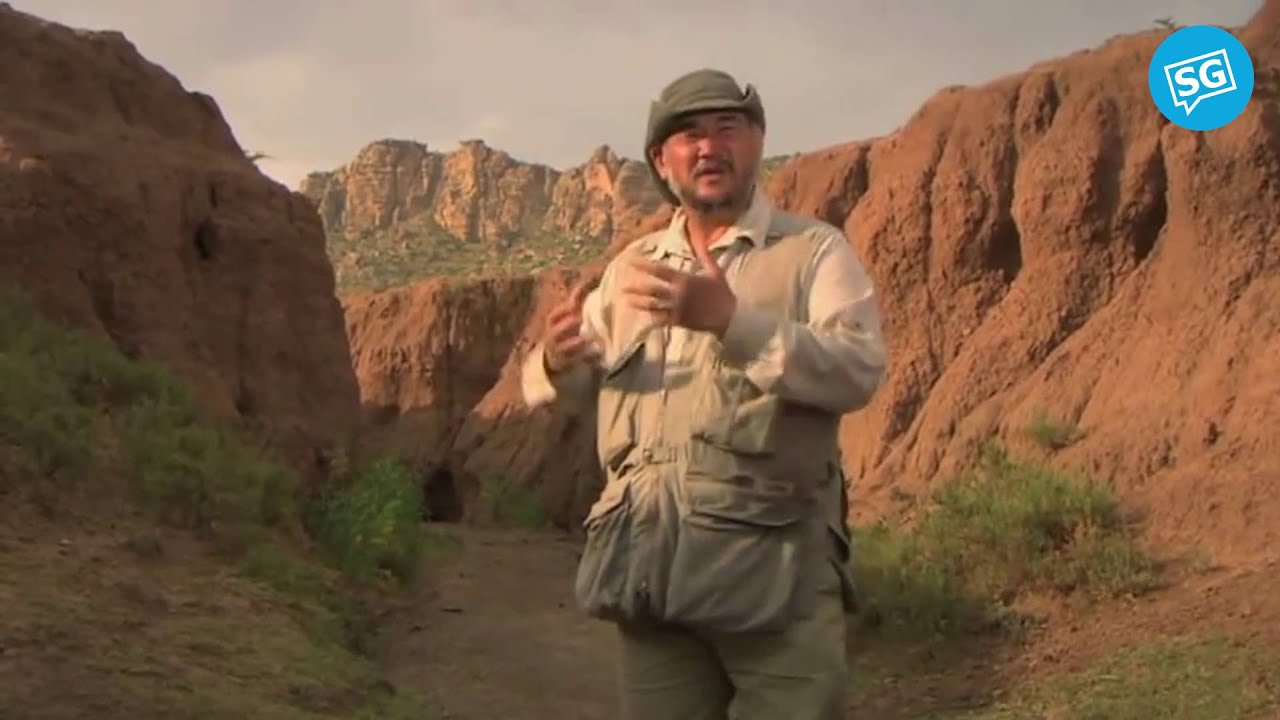
In this talk and extended Q&A, John D. Liu expands his vision of large‑scale ecological restoration beyond the well‑known Loess Plateau and Great Green Wall projects. He argues that true hydrology is a trans‑disciplinary field that integrates botany, microbiology, and atmospheric science, and that restoring the planet’s water cycle depends on rebuilding organic soils and biodiversity. Liu critiques the current commodification of knowledge, insisting that ecological function—not profit—should drive funding and that knowledge is a human right. He highlights the Netherlands’ unique water‑management expertise as a potential catalyst for global ecosystem repair, while warning that the nation must shift from a commodity‑focused mindset to a duty‑oriented one. Liu also expresses deep skepticism toward genetic modification, emphasizing the unknown long‑term ecological consequences of altering genomes. Throughout, he stresses the need for community participation, low‑tech soil‑building methods, and the integration of monitoring technologies to create resilient, self‑sustaining landscapes. The session ends with audience questions about local Dutch conditions, GMOs, and the role of money in ecological work.
Chapters
So, watch this. Maybe. This is China's Loess Plateau. Until recently, this was one of the poorest regions in the country. A land renowned for floods, mudslides, and famine. But with the fanfare comes the hope of change for the better. My name is John D Liu. I've been documenting the changes on the plateau for 15 years. I first came here in 1995 to film an ambitious project where local people were constructing a new landscape on a vast scale, transforming a barren land into a green and fertile one. The project certainly changed changed my life, convincing me to become a soil scientist. The lessons I've learned in the last few years have made me realize that many of the human tragedies that we regularly witness around the world—the floods, mudslides, droughts, and famines—are not inevitable. Here on the Loess Plateau, I've witnessed that people can lift themselves out of poverty. They can radically improve their environment. And by doing so, reduce the threat of climate change.
Hey!
One thing that became apparent early on is the connection between damaged environments and human poverty. In many parts of the world, there's been a vicious cycle. Continuous use of the land has led to subsistence agriculture, and generation by generation, this has further degraded the soils. The vital question we have to ask is, can this destructive process be reversed? When I first filmed Mr. Ta Fuyuan and his colleagues back in 1995, I had no idea this initiative could achieve such dramatic results. The effort that people put into converting their slopes into terraces has resulted in a marked increase in agricultural productivity. The higher yields are directly related to the return of natural vegetation in the surrounding ecological land. As a result of its success, the lessons learned from the Los Plateaux rehabilitation are are now being applied all over China. But could such projects work elsewhere in less centrally controlled societies, with fewer resources and different soils? Ethiopia, perhaps more than any other country, has come to symbolize the vulnerability of humankind to environmental catastrophe. This is a country whose problems have been increased by war and civil conflict. And now, human-induced climate change is predicted to make matters worse. As on the Luss Plateau, centuries of subsistence farming practices have stripped the land of natural vegetation. The dry gullies bear the scars of drought. The scars of flash floods. These gullies are evidence of the enormous power of runoff during the rainy season. Without vegetation cover on the hillsides, when the rains come, the water doesn't soak into the ground but flows away in a flood. Then it's not available for agriculture during the rest of the year. This leads to drought and, famously for Ethiopia, famine. But just as I've witnessed in China, there is hope that the situation here can be reversed. In just 6 years, Professor Legesse-Nagash and local villagers have transformed a severely eroded terrain by planting indigenous trees and plants. Almost miraculously, Suddenly, a clear flowing stream has emerged where once there was a muddy trickle. How is it that it's possible for you to get the stream to flow throughout the year? It is because of the vegetation cover, which has been regenerating on this mountain. This water is maintained in the landscape because as soon as rain falls on the canopy, on this vegetation, That rain then infiltrated gradually into the ground, ending up with this steady flow of this river. If we were to restore the vast areas of the planet where we humans have degraded the soils, just think what an impact we would have in taking carbon out of the atmosphere. As much as a quarter of the world's land mass has been degraded. And much could be rehabilitated in the way we have seen on the Loess Plateau. And we've only just begun to recognize the real value of natural capital. Surely investing in the recovery of damaged environments is a cost-effective way of solving many of the problems we face today. What we've seen in China, in Africa, and around the world is that it's possible to rehabilitate large-scale damaged ecosystems. If we can transfer the capital, the technology, and empower the local people to restore their own environment, it'll have enormous benefits. Restoration can sequester carbon, reduce biodiversity loss, mitigate against flooding, drought, and famine. It can ensure food security for people who are now chronically hungry. Why don't we do this on a global scale? Good question. Why don't we do this on a global scale? So I started to study the Luss Plateau in 1995. That's some time ago. By 2009, when we made Hope in a Changing Climate, that was at the time of the COP 15 in Copenhagen. I think it was rather interesting because the political discussions about climate change in Copenhagen really didn't do very much. But the concept that we could— there was something that we could do on a planetary scale and as a species to sequester carbon, to reregulate hydrology, and to restore some kind of meaning and purpose and food security and engage everyone has become more and more understood since then. So this has led to— I think I was looking at, I would say, principles, and the principles that I found were if you reduce it to very simple levels: biodiversity, biomass, and accumulated organic matter. So generally speaking, in our urban industrial economic thinking, we're just not considering this at all. We're thinking in abiotic systems— governance, finance, telecom— communications, manufacturing, buying and selling, transport, abiotic, lasts for a short time, ends up on the trash heap, is often toxic. But biodiversity, biomass, and accumulated organic matter are long-term evolutionary trends, which I would say are the indicators and determinants of survival and sustainability for human civilization. So this is more or less theoretical, a little bit philosophical. You can also go further with the economic theory. We'll talk about that maybe if you want to later on. But I wanted to tell you about Common Land. So in 2009 when this was made, just before this was made in June, I spoke in the Tallberg Forum in Sweden. And I spoke after Gro Harlem Brundtland, who wrote the Brundtland Report, the former prime minister of Norway. In the audience were people like the undersecretary general of the United Nations, the head of the European Environment Agency, and the country director for IUCN Netherlands. Willem Verwerda. So Willem then spent— Willem and I spent the rest of the Talberg Forum together talking to each other, and we agreed that we needed to work together for the rest of our lives, and that this would not— we would not see the results of our work, but we could make the transition in human society towards something which could be sustainable for future generations. So Willem left his job in the IUCN and started the Commonland Foundation, which you can find a lot of information at commonland.com. And I'll just play this short clip. The world.
Once there was plenty of space. But the population is rapidly increasing, and people are consuming more and more. That has a big impact on our environment and ecosystems. A quarter of the once fertile land on Earth is now dust and sand as a result of human activity. The quality of our future depends on our ability to change these developments. The good news is, it can be done. With landscape restoration. That's more than just the recovery of land, because a landscape is also a community. People can revitalize an area. An economy that restores and uses the landscape with sustainable business cases. That's the goal. It all begins with inspiration, with a new future perspective for all those involved, and a common plan for restoration of the landscape. From this, jobs are created, and that leads to social bonding and, for example, education and security. Restoration also leads to the return of natural capital, such as biodiversity, fertile land, water, and a stable climate. That attracts financial capital, first as an investment, later as a return. This is what we call the Four Returns. Return of inspiration, return of social capital, return of natural capital, and return of financial capital. To achieve these 4 returns, we developed 3 landscape zones: a natural zone in which biodiversity is restored and maintained, a combined zone which is rehabilitated with farmers working the land, and and an economic zone for sustainable business activity. It takes an average of 20 years, in other words, a generation, to restore a landscape. If we start now, we will create the basis for a different world. This is what inspires us.
So, I think we don't have very much time. Today. So I want to interact with you. So ask questions, please. He's in charge of the mic.
Thank you. I'm Walter and I'm studying in Delft and Wageningen University about land and water management. So I have two questions. The first one is the project you showed, are basically landscapes where there is a certain climatic condition that has some precipitation and there is some vegetation. And sometimes your mission is phrased as regreening the desert. Do you agree with that phrase, or do you feel more like comfortable with restoring degraded landscapes, from which I think that that's more correctly, because that has the biggest potential where there is a certain capacity to restore. And regreening the Sahara is a nice utopian idea, but maybe not the best option to choose for.
Is that one question? Yeah.
How do you see, uh, how would frame your mission? Is it regreening the desert or restoring degraded—
Restoring degraded landscapes on a planetary scale. What's your second question?
My second question is, I like the vision of Common Land and I know it, but what I'm— I do not see really what their business model is because Yeah, they have about 4 returns, but do they want to start companies? Do they want to start programs? Do they want to start corporations? Because I think, yeah, degraded landscapes like in Southern Europe, it's socially, it's also degraded. Villages are completely empty, there's no social activity anymore. So how would you restore that if you don't make the connection to the big city where all the people and all the economic activity is? So that's also a question.
Okay, first question I think we dealt with, but I just, I just add, this is a vegetative corridor that goes through the Taklamakan Desert. The Taklamakan means You go in, but you don't come out. There is an enormous aquifer below this. The water is saline, 2 to 20% salt solutions. The Chinese Academy of Sciences identified salt-tolerant species. They put solar-powered pumping stations every 4 kilometers. For 427 kilometers through the middle of the most incredible sand desert on the Earth. So I would not recommend trying to do this. But because they did this, we know it can be done. So there is now a plan called the Great Green Wall of the Sahel. Going from the Indian Ocean to the Atlantic. This could stop the movement of sand. And once you understand these concepts of biodiversity, biomass, and accumulated organic matter— and there's one other leap which also speaks to the business case, which is ecosystem function is vastly more valuable than products and services. And it's certainly more valuable than speculation between the cost and price of commodities, and it's wildly more valuable than interest-bearing debt because it's real. So real wealth is something which is completely different than what our economic— global economic system is advocating and is doing now. So we need— I would say that this is a moment in human history similar to the flat earth, round earth period, or the end of slavery, where there are institutions and laws which are maintaining a worldview which is essentially false. We can't go on. This is the end of the fossil fuel era. So let's get our mind around that. You can't go on, you can't burn the known remaining reserves of fossil fuels. That means that the valuations of industrial corporations which are based on these are false. If that's true, what is real wealth? We are breathing air. We are like bivalves. We're taking in any poison that is in the atmosphere, in the soil, or in the water. So we're part of a symbiotic process with all living things. The source of life is more valuable than everything that has ever been made and than anything that will ever be made by human beings. So this is what real wealth is, and this is what we need to understand and ensure that future generations will have functional ecological systems. So, uh, business case for common land is that they're— the Common Land is a foundation and it's dedicated to catalyzing a movement to restore the Earth. And it's working with communities to create a number of pilots. They're using something called the Theory U. People know about this? Presence Theory U, MIT? If you don't know, go look for it. It's co-creation with a community. You have to have consensus in order to do things. There are 3 projects already started: Spain, South Africa, and Australia. The communities discuss what they would like to do. They use this 4-return, 3-zone, 20-year idea, which works very well for farmers, for other people. And in Australia, it's quite interesting because they're using migrant populations. So this could be a model— refugees, migrants. They could learn things which, when they're able to go home— let's pray that there's gonna be peace and that they're gonna go home to their countries— they could go back with skills that show them how to restore soil fertility hydrological regulation and plant out enormous amounts of vegetation. I'd also put in one thought: the highest canopies on the Earth are over 100 meters high. Have you been seeing huge trees lately? We won't— we won't see this in our lifetime, but in 50 generations from now, they'll thank us for this. And in 200 years, 300 years, the Earth will, will be in a much better shape than it is now. And we won't believe that making some shiny objects and buying and selling them and advertising them and promoting them and marketing them is the way to create wealth. That creates poverty. And it creates poverty on a planetary scale. It's disenfranchised billions of people and it's created deforestation and desertification over vast areas and it just can't stay. Anybody else?
Yes, we are here at the Technical University, so I was wondering what is the role of technology? Is there a role for technology?
Absolutely. I think, you know, we need the best possible technology, but we have to realize, I think what we're doing is we're evolving, we're becoming human. So if you look at the historical thing in the Loess Plateau, they started to do settled agriculture approximately 10,000 years ago. If you look historically, we are all the descendants of hunter-gathering societies. We are all the descendants of, of Neolithic agriculturalists. We're all the descendants of semi-nomadic herders. We are all the descendants of urbanized communities, settled communities, and then industrial all of these things. So we are growing, and now we look at our technologies— lovely building you have, you know, we have these cars and airplanes. In 100 years, everything that you see is gonna look ridiculous. Everything that we saw from 100 years ago looks ridiculous. You know, it's just a joke. It's that technology— mechanics and steam engines or something. You know, we are evolving, and we need to have some humility. Let's not be too proud of our humility. Let's be, you know, realistic. Human beings have a tendency to hubris. We believe we're superior to other living things, and there's no evidence that that's the case. In fact, there's a lot of evidence that we're a rather venal sort of species. We're representing characteristics of parasites that destroy their host. But I don't think that's what our evolutionary position is. We're supposed to be the sentient being. We're just not very good at it. So we use our ability to have complex language and communicate across generations to buy and sell things? This is ridiculous. And the guy who dies with the most stuff doesn't win. We need to realize that actually the scientific evidence is we're all related to each other. We are a species. There's a huge role for technology. No, you're thinking In terms of abiotic systems, I would also say that there are abiotic systems and biological systems. And in the abiotic systems, they need to get better and better and more and more efficient, and they can and they will and they do in a rapid way. But what is actually happening? We're understanding a little bit more about physics. But we're not inventing physics. We're not inventing these things, we're just discovering what has been here forever, you know, since billions of years. So gradually we're becoming who we can be. We need to live, we're biological beings, we're going to die. So don't put too much faith in technology. Realize that we're alive for a short while and we're going to pass on. But do the best you can with technology. We need it. Yeah. Thank you very much.
My name is Dick Vandenberg.
I'm impressed about your presentation. Thank you very much.
My question is a bit different, not so technical.
We are facing a huge crisis in the Middle East, migrants coming from Syria. There's a nasty war going on there. Is there any relation between this crisis and degraded landscapes? What's your vision about that? We just did a film on this for the— that was shown in Paris. And absolutely, it— I think competition for scarce resources is one of the most obvious sources of problems, but it's not the only one. So I think with all of our problems, we need to look and realize that they're not isolated incidents. They're not singularities. That to deal with any of our problems— we have climate change, we have biodiversity loss, we have desertification, we have migration, we have war, we have huge amounts of poverty, we have food insecurity, we have depression— All of these things are sort of like symptoms, and they're symptoms of systemic dysfunction on a planetary scale. And if we treat the symptoms, it's unlikely that we'll get well. We need to treat the disease. So now, where our socialization is suggesting to all you students, "Go to school and get a piece of paper and learn as much as you can to differentiate yourself from other people. Outcompete the rest of the people so that you can have a better job." And you can, you know, this is not what we need. We need to realize we have to live together, we have to find a way forward, and we have to act as a species on a planetary scale. So restoring ecological function in the Middle East or Central Asia is definitely going to reduce a lot of the tension. Because if you're sitting under the fig tree drinking lemonade with your grandparents and your baby, you know, you're unlikely to strap on a bomb. But, you know, if you're humiliated, especially if you're an adolescent or post-adolescent male, and you've been humiliated for years, you have no thought that you have any opportunity whatsoever. You see on television or in movies these outrageously decadent lifestyles in other parts of the world, and you feel left out. Well, to that kid, putting on a black suit, getting a really big gun, which by the way have now just proliferated all over the place, and they didn't come from them. So who did this? Look at this carefully. Who spread enormous amounts of weapons all over the place? This is, this, this needs a serious look here. But, you know, for that kid, this is empowering. Put on the black suit, get the gun, you know, you're only gonna live for a couple of months after that, but, you know, you're gonna be completely filled with adrenaline the entire time. And you're gonna believe that you're, you know, you're gonna get whatever it is, you know, after you get your— after you die. But, you know, we need people who want to live, and we need to realize that there's no difference from those people in the Middle East, or in Africa, or in South America, or anywhere else. The old people stay home, the working-age people go to work, the children go to school, everybody eats food, They want to have fun. It's exactly the same. And something happened a few hundred years ago, and, hmm, this is hard to talk about, but okay, the economy that we have going now, in a business case, I mean, the economy that we have going now derives from divine right, feudalism, slavery, imperialism, colonization. And mercantile expansion after the Industrial Revolution. And those people over there have been oppressed for a long time. And it's amazing when you go there, they say, "Come in, have food, here's something to drink." And it's like, "Wow, they're great. There's nothing wrong with these people. We need to treat them with equality." Yes, somebody back there. Just a sec, I'll get to you later.
There was a question pending. Yeah, thanks for painting a really clear picture of your vision. I'm not really sure about the who and the how. Can you expand a bit more on what the organization looks like and what the activities are?
On Commonland? Yeah. Okay. Common Land is a foundation and it stimulates for-return development corporations. So the foundation is one thing. It's funded by private money to stimulate a movement to restore the earth. Development companies, for-return development companies, are co-created using Theory U with local communities. In Spain, Territorios Abandonados, 500,000 hectares, many, many, many landowners and other people, they meet together, they create a development corporation. That's funded separately and that is a business entity. There's a third thing which is happening which is is investment funds to support development companies, to invest in them. So that's the kind of structure. But I'm more the theoretical, philosophical inspiration guy, sort of. And they're very practical business managers, and I am definitely not a practical business manager.
A regular person, a regular Joe's role could be in achieving the mission or vision of—
Well, I think we're at a turning point in human history, and what's necessary is a collective consciousness that recognizes what is true. Right now we're all part of a system, and that system suggests that we're consumers. And, you know, we may consume things, but if our identity is based on the fact that we consume things, this is a very pitiful outcome after however many, you know, thousands of years of evolution. That's ridiculous. This. You know, we are human beings and we should recognize this. We should understand that that's kind of a responsibility. And you also have to realize we're in the largest species die-out. And when you're in a species die-out, the top of the food chain is seriously at risk. We're the top of the food chain. So, you know, we need to come to grips with certain things. Fossil fuels are finished. We need to process that rapidly and look at a post-carbon future. What does that look like? Where does wealth come from if you don't just suck out pure energy out of the ground and blow off hundreds of millions of years of evolution, of photosynthesis? In 100 years. What does it look like? Well, it looks prettier, you know. It doesn't look like a bunch of pipes going out spewing things and with poisonous gases and leaking toxic stuff into everywhere. Doesn't look like that. That's good. That's good. Let's do that. You know, I prefer it. You know, I want— let's have the streams flow. Let's look at wildlife. Let's breathe clean air. I just came from Beijing. Let's breathe clean air.
Yeah, you were saying that this evolution is happening after the Industrial Revolution, but isn't it true that humankind has for thousands of years thrive for money and power, from earliest regimes, Egyptians or Romans, there was always an emperor and there's always a thrive for money and power, and we've just become more efficient at getting towards that goal.
Is it even possible to change that sort of way of life, that the things that we get pleasure out of in all levels of society is, you know, buying a house or buying a car or getting a new cell phone. These are things that we get pleasure out of. How do you change that from people getting pleasure out of seeing new grass grow or an oak get old? And aren't we even with too many people on the Earth to even achieve that? Well, I think because we have so many people, we'd better get some joy out of watching grass grow, maybe. Because if we all want the latest cell phone, then, you know, we're fueling wars in the Congo. We do. We all want the latest cell phone. Well, then we need to get our technologists to design them with the non-toxic materials. But, you know, I think that what I see is that we have free will, we have choice. The fact that Romans and Egyptians were greedy is not really a justification to maintain human greed into the 21st century, is it? I mean, really. So, you know, can humans evolve? Absolutely. You know, so, you know, in the imperialist period, you know, a country could go, "I have some guns, I'm going to go into your country, now your country, you know, I stole it and it's mine." What? What are you talking about? How did that end? Rebellion and revolution? No! A man in a loincloth said, "By the way, you have no justification for what you're doing." You can't argue, you can't stand up and say, "Yeah, it's fine, I have a big gun, so now your country is my country." What? A guy in a loincloth! And he brought down not only the British Empire, but the whole concept of colonization. So go defend it, stand up and say, "Yeah, I want to take over your country." Not so on. What about slavery? Holland, slavery. Laws, institutions, people, human beings on sale in the market. Not so good. You know, and it's over. You can't do that. But now you have another way of enslaving people. So now they have to go make money. And we say that, "Oh, we have to have growth, more growth, you know, we need more manufacturing, more sales, more cell phones in order to have more wealth." Well, this is assuming that wealth and value comes from scarcity.
What if it doesn't?
What if that's completely false? What if natural ecosystem function is vastly more valuable than anything that has ever been produced and sold or anything that will ever be produced and sold? If that's true, then our money and our economy should reflect it. I learned this in Mali. In Mali, the human development indicators suggest that the people in Mali are the poorest people on the Earth. This is a country of 1,200,000 square kilometers, France and Spain combined approximately. 14 million people, that's the population of Los Angeles in an area the size of France and Spain combined. The Niger River comes out of the Ghanaian Highlands. It floods to 6 meters across the entire inner delta every year and then recedes. Up and down, up and down, every year. What is that? Is that nothing? Because our economy says that's zero. Well, look at the NASA animation And you see, that's the water which rises up and circulates between the Tropic of Cancer and the Tropic of Capricorn. That is the natural climate regulation of the Earth. It can't be zero. And we're telling those people to cut down their trees, destroy their system, in order to buy a bicycle, a pair of tennis shoes, or a cell phone. That's insanity. We're facing climate change, and the biggest regulator for the climate is being destroyed because we don't value it at anything. Those people are not the poorest people, they're the richest people on the Earth if we get this right. And you don't have to manufacture things to have growth. You need growth in biodiversity, biomass, and accumulated organic matter. Matter, because that's the indicator and determinant for survival and sustainability. Right, we have about as many hands in the air as minutes left, so let's try and do a little quickfire round. For those who want to stay, I'm not leaving. But this was the question pending.
Yes, I'm also curious, do you have some consideration of projects in the city? Or to change the landscape of a city? Like you mentioned Beijing, the air pollution. If we treat the city as a basement, can we also do something to really change the climate within the city?
Well, apparently the Chinese government can, because I just spent February in Beijing, and it was the most beautiful month because it was the Lunar New Year holiday. And there was no pollution at all, it was wonderful. And then as soon as everybody went back to work, the air quality just went terrible. So, you know, obviously you can do a lot, but you have to understand what are the principles of functional ecosystems. Now we are valuing abiotic systems, so manufacturing, buying and selling things, higher than the ecological function. If the ecological function is more valuable than manufacturing, buying and selling things, you can't do anything, you can't pollute. Polluting would be a loss. In fact, it already is a loss. The only way you can get a black number in accounting in any industry right now is to externalize climate change, poverty, disparity, desertification, toxicity, I mean, everything. You take one thing and put it inside, it's bankrupt from day one. And I learned something in Lima last year at the COP20, that we can't possibly burn the existing known fossil fuels reserves, because we'll wildly exceed our most egregious climate predictions for catastrophic outcomes. If we can't do that, those assets, those supposed assets, are not assets. That means the industrial economy is based on really flawed logic right now. So we need an answer to this. We don't want to wait until everything goes crazy. We need to look at it and say, "Wait a minute, we made a mistake." What's correct and what's wrong? We said that if I just dig a hole and suck out this substance, it's mine. What? Who? What? What are you talking about? It's yours. Wait a minute. Huh? And then, you know, okay, so wait a minute, that's the Earth's and its photosynthesis that took place over hundreds of millions of years. It's not yours. And You know, by the way, humanity is not much different than all the other species too. All of us want to live. Urban areas need to be functional. We can design function into all the buildings, into all the streets. We can live in a very beautiful place. You don't need to build the types of non-functional ecologically functional cities. But it's a paradigm shift. Think about this. What is Beijing going to look like in 50 years or 100 years? Where is energy going to come from to reprocess these? You know, it's a very difficult thing.
Thanks for your presentation, by the way. I have a question about the Green Wall of China.— and I'm just using it as an example, because the increase of biodiversity and biomass is a good thing for sure, but do you believe in projects such as those? Because sometimes I have the feeling it might be especially symbolic. You talk about burning up the fossil fuels in the ground, pumping up an aquifer, streaming it 450 kilometers to the burning sun, I'm, I'm not sure that's the way to go.
Well, I would not recommend doing this, but the fact that they did it, for me, is a very interesting because in July last year the Chinese Academy of Sciences measured 50 degrees centigrade on the sand and 25 degrees centigrade below the canopy. That fact alone is enormous because we have 25% of the Earth's surface which has been de-vegetated. If we can physically change temperature differentials by revegetation, then I definitely think that's an important thing to know.
For sure, that's an important thing. And maybe that's the question I want to ask: do you believe in the, uh, fact that this can act as a catalyst, because that's what we want in a desert, right?
Well, I think we, we don't need to go to the natural deserts and to the worst places exactly, but we need to see where did human civilization destroy natural ecological function. I think we need to work in the Mediterranean. This is a dehydrated biome. So basically you've artificially elevated the evaporation rates and artificially elevate invaded the temperatures. And there's very good data over 30 years. There's a wonderful professor, Professor Milan Milan, who's got all the data, knows everything about it. And he also predicted exactly what would happen if you release all this water from the Mediterranean, that it would go to Central Asia or Central Europe and it would flood. And guess what? You know, he's right. So he's a kind of bitter man, not a very happy man, because nobody listened to him. But, you know, he's right. It's kind of interesting to be right.
Thank you a lot. You really inspired me. And wow, that was very wonderful. I had a lot of questions, but I will ask you one. I was wondering, how did you get where you are now? How did you come up with your vision and how did you start working towards it?
Well, I was a journalist. I worked for CBS News and for Radio Televisione Italiana and Zweites Deutsches Fernsehen for about 15 years, and I covered the rise of China from poverty and isolation, and I covered Tiananmen tragedy, and I covered International terrorism and the collapse of the Soviet Union. And these geopolitical events were so captivating. I would get up every morning and I would work all day and I'd fall asleep exhausted at night and I'd do it again the next day. And I had 5— we had ticker tape machines that would put out, you know, information all the time. So I was completely stuck in this news cycle idea. And— but I was trained as an observer to do this. And what I found when I was sent to the Lhasa Plateau was that I wasn't— in the geopolitical events, I was looking at what now I consider to be an illusion. It's like what they say in Indian philosophy that this is— This is just an illusion. And what I was seeing in the Loess Plateau was a removal of the Earth's pedosphere. All of the evolutionary things, the giant canopies, the enormous biodiversity, the accumulated organic matter and soil, had been removed by human activity. And this had completely destroyed the hydrological cycle, the fertility, and, you know, it was just a mess. And the people were miserable in this place. So what happened was that I sort of realized, "Oh, this is much more important than Brezhnev." Or, I mean, you know, Deng Xiaoping was an interesting character. But, you know, I did an interview with Deng Xiaoping in 1986. I thought this is enormous, huge, you know, collapse of the Soviet Union. Nobody talks about these things. But all the things that I've been doing in ecology are used in universities all over the world. They're in the United Nations and all these agencies, and it's basically turned toward an idea that Hey, you know, if we can restore ecological function on a planetary scale, we ought to do that because we need to. We've got hydrological disruption, we've got toxicity, we've got biodiversity loss, we've got climate change, we've got ocean acidification, thermal expansion. I mean, it goes on. So, you know, if we can't realize that there's another way, then we're in in trouble. So what happened to me was I compared human systems to natural systems, and the human systems were not— there was no comparison. They're flawed, every one of them. Our politics, our finance, our economics, our design, our everything is flawed. I mean, you You see some great things. Frank Lloyd Wright was onto something. He was doing organic architecture. So all of his buildings fall down. You know, and everybody says, "Ah, his buildings all fall down. Why would we want that?" It's beautiful. They're gone. He's gone. I'm going to be gone. We're all going to be gone. Why would we want these, you know, Please don't pump my body filled full of formaldehyde and put it in a titanium tube. You know, let it degrade. Let it become the cells of other living things. Hey, that sounds like reincarnation. The cells of other living things. The cells in your body have been living cells in other living things before, and they will be living cells in other living things in the future. I had an opportunity. I was exposed to these things. It made me do what I do. I have an economic question. You already addressed the externalities and the complete disrespect of our current economies for the ecological things on our planet. And there are a lot of initiatives that somehow try to incorporate the biosphere into our current economies. And it's not the carbon tax stuff, but it's other things like EcoCoin, for instance. I don't know if you know it, but I hope so.
But how do we fix this? Because our current economy is just disrespecting the biosphere completely and there's no way we can now earn money by respecting the biosphere.
And are you suggesting maybe that all our assets in the old economy also become stranded assets or is that the possibility? Well, certainly some of them. Certainly some of them, but no, I think that what we, we have to be very careful because some of the, some of the ideas are to monetize nature. So, you know, the TEEB report and some of these things, they're putting prices onto different ecosystem services. I never talk about ecosystem services. I think the concept of ecosystem services is anthropogenic. It's, it's, it's suggesting that they're there for us. Well, they're not there for us. It's either a functional or a dysfunctional system. And so we don't need to commoditize nature, we need to naturalize the economy. So the fact is the real wealth is in abundance. It's in the abundance of an atmosphere. It's in the abundance of the flow of natural hydrological systems. It's in the abundance of microbial communities releasing nutrients from geologic materials and making them available to biological life. So if we, if we start to study this— now it's not up to an individual to determine what happens in human civilization or society. We need a profound conversation, and we need to be right. We need to really see, is this selfish impulse that is gonna benefit an individual or a group, or is this something which is intrinsically true which will benefit and expand? The consciousness of human civilization. That's where we need to look at it. Now then, we have to ask a question: What is money? And when you get to that question, then there's quite a lot of interesting things. So I would say, to simplify that, money is anything we say it is. It could be It could be rocks or shells or it could be pieces of paper. It's a trust mechanism. It's an abstract concept. It's a storehouse of value and it's a means of exchange. And if human civilization came together and said, "Our money is gonna be based on ecological function." And you wouldn't have to have a majority. You'd have to have a critical mass. Because all the rest would go, because they're not actually thinking about these things, they're doing whatever is happening. But if the critical mass of thought leaders decided, "Well, I think we better," you know, what would happen if ecological function was the basis of our economy? All human effort would go to conservation. And restoration. That doesn't mean we wouldn't buy and sell things. It doesn't mean we wouldn't make anything. But it means we wouldn't make as many as we wanted. We wouldn't just mass-produce things and waste them, dump them off, and try to market them and sell them. That wouldn't create wealth. That would destroy wealth. Yeah? Oops, sorry. Back here. I'm going to work backwards. Thank you, Dr. Liu. I'm Weiwen, I study industrial ecology here in Delft.
I would like to ask a practical question. So you did a lot of projects, for example the one in China. It's a huge project, no matter the area or time-wise, and a lot of local people were involved. So I would like to ask, how do How did you get their trust and their collaboration in the first place?
Well, first of all, I was documenting. I was asked by the World Bank to document the program. So the Water Ministry, Shuili Bu, the Chinese Academy of Sciences, the Soil and Water Conservation Institute, Soil and Water Conservation in Yangling, the World Bank, they were the the theoretical people. What they did for participation was something called participatory assessment. It's a social science thing where you basically engage the whole people and you talk about what's happening and what's going to happen. And that works very well. But they also used another method. They paid them. That works very well too. So if you have— what happened for the Chinese people in those areas were that their behaviors were causing the damage, and they had been for a long, long time. So their negative behaviors were banned. So they couldn't do slope farming, they couldn't cut trees. After '98, they stopped allowing people to just cut trees. You couldn't cut a tree. So then you— you— and you couldn't free-range goats and sheep. So those were the three behaviors that they were using for their living. So they couldn't do that anymore. So then the government said, well, you can't do those things anymore, so we're gonna pay you and teach you to do something else. So they went in with experts and they had these ideas like we're gonna put check dams and gabions and meanders all into all the watersheds, because that's gonna infiltrate the water. And then we're gonna differentiate and designate ecological and economic land. So now you can farm if you can make it flat, you can farm it. But if it's sloped, you gotta release it to nature. That means 40-50% of the land is returned to nature. So if you just allow that to happen, natural succession will restore vegetation, especially when you change the runoff from these gullies. So this is just pretty simple stuff, but you have to make these decisions and you have to understand it. So they paid them, and then after 10 years of paying them, they had other behaviors. They lost their old behaviors. They didn't need these. Thank you.
My question is quite in line actually with the last one. We just heard that you need a big team of actors and quite a strong political system to make it actually work. And in China, of course, this is available, and in Spain and in Australia as well. But how do you scale up in a country like Ethiopia or another African or Middle East country?
Well, I've been about 7 or 8 times to Ethiopia. And Ethiopia has very large programs. On ecological restoration, they're mainly run by the international aid agencies, and they replace failed programs which were set up to feed people. So it turns out that free food is not a very useful thing, you know, so it just disrupts the agricultural systems, disrupts the marketing systems, and makes people sort of go beg for food. So they, instead of doing that, they took $380 million a year in Ethiopia, which they were spending on food aid, and they transitioned it to a kind of, they call it like, safety net program. Where they employ people who are at risk, and then they teach them to do exactly the same things that they were doing in China: restore hydrology, revegetate areas, new sustainable agricultural methods. And it works. So— and in Rwanda, actually, they had a genocide. In '94, I think, '95. And I've been there 13 times. And they rewrote their land use policy laws, and they're restoring the entire country. So you can do a lot in those places. In fact, in those developing countries, you may be able to do more. Because like in developed countries, people don't work in the same oil, or, you know, many people think that, that, you know, it's dirty, you know. But in Africa or Asia or South America, Central America, they don't have any problem. And so they may be better suited to do restoration. Yeah, thank you. Great presentation, actually.
Also, I had a question regarding the differences between the different zones because You mentioned the transition zone, the middle zone, and the economic zone.
But could you explain a bit better what the purposes are of those zones in specific? Well, I think the ecological landscape is necessary. We have, over historical time, and certainly in those places where the collapsed systems exist, we basically said, "It's all for us. We can exploit anything we want everywhere." Well, that's not a good strategy. It doesn't work at all. So when you looked in China, so what they did was econometrics, actually. So they looked at slope farming, or they looked at tree cutting. They said, well, what's the value of these trees? You know, so you can actually say, well, I'm gonna make this much money, or I'm just gonna burn it, or, you know, whatever it is. And then Slope farming, well, those yields are terrible. You know, 'cause all the soil fertility's going away, and so there's nothing there. So they're just scratching out a living, and they're desperately poor. So they can calculate, that's not very much. That's a little bit. So then they can look at, well, okay, this is all revegetated. What's the value of that? Ooh, you know, that's huge. So the entire restoration of the LISP Plateau $500 million was justified by sediment control. So mitigating annually the sediments into the river cost more than doing that. That means the actual return has never been fully understood. So if you can justify the entire investment simply by sediment control, you don't have to calculate What is the return of 4 times agricultural production or the social impacts of everybody moving up and everything about it. So actually there's a lot of academic work that needs to be done to understand exactly what the value of these things are. Enormous. The mixed areas— you need to grow food, you need to have agriculture. But in the agricultural systems, you need to have functional systems. So if you're plowing up everything and you're putting in monocultures and you're using chemicals, you've got a lot of impacts. You're exposing the soil to UV radiation, which is sterilizing the microbiology. Populations. Can't be right. You know, you're having wind erosion and water erosion and this UV thing, and you're not accumulating organic materials. So if you do polycultures, food forests, polycultures, multi-story cropping systems, what happens? Huge organic layer. Change from 1% organic or less, 0.5%, to 17% organic material if you try hard. So that, I mean, that's really good. I mean, if you have a farm, an industrial farm, and it has 5% organic material, they're going to say, "Oh, that's wonderful." But if you're a serious permaculture person and you're fanatical about your composting, you know, you're gonna have enormous organic material. You know, this is carbon sequestration. Every, every person who does this is contributing to mitigation and adaptation to climate change. There's one, Rattan Lal at Ohio State University, says if we increase soil carbon by 2% on a planetary scale, we can mitigate all human emissions. So let's grow carbon soils. You don't need to grow more products.
Thank you for being here today. I have a question a little bit different. You use a lot of movies in your work. How do you feel movies as a medium could contribute to creating ecological restoration?
Well, I mean, you know, here we're in a university, but what percentage of the population is studying in universities? I think if you look at human history, what you find is that there's a cultural transmission of knowledge from from earlier generations to another. Actually, you can go and look at primate research and you can see that this happens in chimpanzee colonies. So a chimpanzee colony that's separated by 500 kilometers will have different traditions. You know, two different groups of chimpanzees will make tools and do things with their tools, but they won't be the same. Because they taught them this culturally transmitted knowledge. So how many people read books? How many people study, you know, do real observation? In fact, I would suggest— I'm in a university, so I probably shouldn't— but, you know, there's a lot of socialization going on. You know, like if you have children go in and you say, "Sit down, stand up, sit down." "Go here, line up everybody, go sit down, get up, get up." How much are they learning? You know, really, what are you doing? You're conditioning them to do what you tell them so that they don't make trouble. And that's one thing, socialization. There's a lot of socialization. Does it, you know, I don't know. I went to high school in the United States and definitely was not worth 12 years of my life to do that. And so then you have vocational training. So that could go up to like brain surgeons or lawyers or architects, anything. That's vocational training. You get a certificate, you understand these things and get a job. What is education? You know, this is a completely different philosophical area, you know, and we really need education, but how many people are engaged in this now? I don't think we're necessarily encouraging that right now. Well, I don't know. I mean, I think I'm— I'm an individual who, you know, went overseas to be a news cameraman, and, you know, I was asked to go to Rwanda, and they rewrote their land use policy laws because they looked at some movies, you know. And I could have told them, I could have talked to them for a long time, but they looked at the movie and they went, "Oh, I get it." Biodiversity, biomass, accumulated organic matter. That's the basis, you know, that's the indicator and determinant for human survival and sustainability. Shall I repeat that? You know, so if you look at it, you go, oh, well, I, yeah, alright, so I see that, you know, there, This concrete out here is impermeable. It has no organic matter. It's dead. And, you know, I can see in the rainforest, there's like a huge organic layer. You're, you know, you're sinking into the, you know, there's nothing but organic material. You have to dig down until you get to any geologic materials. Well, I wonder what that's about. That's nothing, you know, we can't make any money with that, so I don't know what that is. Well, wait a minute, I study this, I know what that is. That's a living, breathing organism. That's the basis of fertility. That's the basis of life. It transformed the entire planet. Transformed a molten rock surrounded by poisonous gases into the Garden of Eden. So yeah, that's pretty valuable. Maybe we ought to look at that. You know, that's concrete. You know, this we could actually put a value on. We say, well, it's going to cost you €50 per, you know, square meter. And this zero? Bulldoze it. Get rid of it. We don't need it. Well, this is wrong. We made a mistake. We'd better talk about it. And we better use every method to talk about it that we possibly can. So if I write about it and put it into the journal, then probably my 50 people who read the journal will know about it, but that's not really going to help us. We probably need 20% of human population, about, you know, 1 billion, 500 million, somewhere there. Yeah, my question kind of follows on from this.
Yeah, we know we need to value natural capital more and shy away from consumerism and capitalism. How do we do this on an individual level and on a societal level? And you have some examples of maybe on an individual level of how you've actually got people to change their minds.
So how do we actually do it?
How do we get people to start to value natural capital? And like that guy mentioned earlier, you know, we all love to have technology and cell phones and new stuff all the time. How do we make the natural capital more valuable?
Yeah. Well, I'll tell you, you know, for me, I don't have to worry because my son always gets the latest cell phone and he gives me his old one. I think what we really have to look at is whether materialism brings joy or not. You know, we really need people to sort of experience what it's like to live in community. To have time, to lose the pressure that's connected with the consumption economy or the idea that you have to stress in order to—
why?
One of the great things in Peru is there's a story where they tell this man from the city comes out and sees a fisherman. And the fisherman is lying in a hammock under a palm tree. And he says, "Hey, you're young and healthy. What the hell are you doing in the hammock? It's daytime. Get out there and work." And the guy says, "What are you talking about?" He says, "Well, you're healthy. You should work." And the guy says, "Well, why?" He says, "Well," If you work really hard, you can make money, and then when you're old, you can retire, and then you can lay in the hammock. And the fisherman says, "Well, I'm already in the hammock." And so really, hammock time is a good measure, really. People who have some kind of program or people who go to experiences like away from civilization or away from the noise? I think we have to figure out— you can do it in cities too, but we have to learn how to be in communities. And we have to learn how to, you know, have some— you know, we're in a transactional economy now, so a lot of people don't look at each other. They go and they buy things, and so they have an interaction, it's a transaction. And that is keeping society going. But we need to have a society that goes where in some cultures people come out and they go, "Oh, hello, mm," you know, all this, you know, and in other cultures they don't do that. But we need to have a culture where there's humanity, life has a meaning, and money is somehow not as important or secondary. We have a real problem, and the technology guy, I think, probably, yeah, you know, you don't need people. You can mass produce with computer numeric control and robots and things, and you do a better job in these sorts, you can mass produce any number of things, but we don't need them. What we need is for our work to be meaningful so that we go to work and we're doing something that we know doesn't hurt anybody else. We know that our children are going to be very proud of us and that future generations are going to look back and say, "That was the moment that changed this insanity." this brutality which comes from, well, divine rights, slavery, imperialism, colonization, and mercantile expansion after the Industrial Revolution, and crushed the worldviews of people who said the Earth is sacred. How, you know, let's go revisit that. Let's go sit by the stream and see if that isn't more joyous. Than running around trying to make money. I think everybody can do that. Princess Irene runs a program, I guess only for well-heeled people, but if you want to, you can go down to South Africa and sit in the bush. Just looking around quickly, we do have very little time left. I think I've counted 3 more questions. For which we can allow a little time. One of— You can go ahead and say I should make my answers shorter too. I wouldn't dream of it. One of the questions was Technology Guy, in fact.
Technology Guy reporting. While listening to your story, I kind of saw two main things, or at least I thought there were two main things, and one is the kind of like the carbon sequestration, or that's what I like to see in it. And the other part is like changing the entire world and changing our views and changing our perspective on how we perceive life and what we value and whatnot. And although I think that's really good and although we should work towards it, I don't see it happening in the near future. And so the only thing I can do to change it is kind of like say what you I have to say as well and communicate it to other people, but I don't think it will change. So then my only way of doing something good would be the carbon sequestration, basically. And that is where the technology then comes in. Is that— yeah. Do you agree with that? It's kind of like a fake. It's not really a short answer, I think. I'm afraid. Do you see where I'm— Did you get my email? No. Your email?
You should, because the long answer you can get in other places. In fact, the long answer probably exists in— on this site where there are vast numbers of papers and films and so on. I would say that the carbon sequestration thing is immediate. And we can do it and we need to do it. And I would say that actually transformational change is coming. And it's gonna come real fast. I covered the collapse of the Soviet Union. Nobody, nobody thought this was gonna happen. And from one day to the next, it's gone. Nobody even remembers it now. It's just, you know, what, what? Soviet Union? So transformational change. I went to China in 1979. They were emerging from the Cultural Revolution. It was desperately poor. And they had a kind of victim psychology where they thought they were desperately poor and miserable. And you come from America, why would you want to come here? We all want to go to America. What are you doing? And now of course, China's maybe a little way too arrogant about its accomplishments now. And the rest of the world saying, "Please save capitalism." What? That's ridiculous. They're exposing the flaw in the economic system. You can't infinitely grow based on finite resources. It's not possible. So what is gonna happen, I think, is that we're in this transitional moment in history. And we really need to get our mind around the idea that this is happening. This is happening and it's going to happen. And we ought to consider what kind of world do we wanna live in? Do we want to live in a world where people go to work and the people who make the most money are the arms dealers or the people who like totally cheat and destroy the financial system or who suck ancient photosynthesis out of the ground and pollute the sky? Why would we want to do that? You know, so if we don't want to do that, then we better envision another way. And I would say that what I see from research into natural ecosystem function is that they can't be zero. Those are not zero. In fact, the number is so high that it, it's beyond our understanding. So it's not a question of absolute value, it's a question of relative value. Ecosystem function is is always vastly more valuable than anything that we produce and consume. Oh, I'm sorry. Okay.
Thanks, first of all. It was very inspiring and interesting to listen to you. I'm a student of hydrology. And yes, and what sometimes frustrates me, especially in the field of hydrology, is that you have this— a lot of research is is done. A lot of knowledge is available on hydrological stuff and also how it connects to the ecosystem. So I would say we are smart enough to understand the problems. Yeah, that's what I think. But I see this huge gap between all this research and all this knowledge and the actual application and actually what is being done. So it also connects to previous questions. And I always wonder I mean, it's also often commercial companies, of course, that do the research, so it's also maybe even part of the problem. But how can this gap maybe be closed between research and knowledge and between the actual implementation and people working on it? Is it that scientists need to go to the fields and work themselves? Or is it that the communication has to work better? I know it's a big question, but maybe—
Well, yeah, I think this is an important question because I think a lot of people have some of the wrong ideas about hydrology. For some people, it's pipes and, you know, it's delivery, it's systems, or it's services. Even there's environmental services, or there's ecosystem services. But actually, I see it from this concept of all available moisture, infiltration, retention of all available moisture, and then circulation. And, you know, it's a vast, vast field, and you can't study hydrology without studying botany and microbiology and atmospheric science. So, you know, it's not an individual field. It's part of a transdisciplinary thing. So that's first of all. Then the next thing I would say is, you know, people who are interested in hydrology are not like littering the ground. Soil science is also something, I mean, they're closing soil science schools. They think they know everything. It's outrageous. You know, this is probably the, well, I would say the best method we have for mitigation and adaptation to climate change. And they're closing the schools because, and these crusty old men say, "Oh, it takes thousands of years to make an inch of soil." What are you talking about? It might take, you know, evolutionary time, a long time to weather stones to create sediment layers, but if you're talking about organic soils, I know some people who can make really huge amounts of organic soils really fast. And we need to do that. We need to maximize and optimize the ability to do that. Everybody needs to do that. And what's interesting about this concept of money, if ecological function is the basis of money, well, everybody could do— all human effort would go to these kinds of things that we need. Now, you can, you know, I make environmental films. I give them all away. We don't sell anything. We don't have any products. So I don't think knowledge is a commodity. I think it's a right. And I think that the responsibility is to expand human understanding. And, you know, what happens with this is that people who make pornography or advertising, they make a lot of money. Try to get somebody to fund a film on soil and poor people. You know, it's ridiculous. But what's more valuable for human society? What do we need? But anyway, I get great satisfaction from what I do, so I'm independently poor. Final question.
I'm a local farmer, a bit further away. I'm Rod Ramseve. My question— I've got a few, sorry for that. But I'll keep it short. You talked about different places in the world. Can you say a little bit about your point of view here in this little frogland below sea level? You know, nearly all the trees are planted. Losing control is, for a lot of people, hard to do. At least that's what I think. So, and the other part is, what do you think about GMOs?
Okay, well, just an easy one to finish on. Yeah, well, I actually think that Holland has exactly the right skill set for the new economy. So if you— if water management, but if you understand ecological function and you emulate natural systems with hydrology, you get a much better result than if you try to canalize everything and control it. Soil creation, you know, who does composting well? Propagation, propagation units, maybe not so many flowers, but you know, a bit more diversity. So Holland's a small country, but there's a very big world out there, and 25% of it at least is massively degraded. Who's going to lead to restore degraded ecosystems? Who has the ability to do that? The Dutch have the ability to do that, but they have to get their mind around what the thing is. It's not a commodity, it's a duty. There's a lot of karma in Holland, a lot of karma. Yeah, yeah, absolutely. I think, I think this is exactly what we have to do. I mean, if you, if you add electronics and monitoring systems to hydrology, you can have very efficient water systems. That's what the Chinese have done that allows them to build a a vegetative canopy through the Taklamakan Desert. But, you know, this requires a worldview. If the purpose of life is to manufacture things and buy and sell things, which the Dutch have a long history with, then, you know, then that worldview, it doesn't actually look like the one that I hope the direction of human civilization will go in. But if the Dutch were to get another idea and say, "Hey, you know, mistakes were made in the past and we made some of those mistakes and maybe we have some responsibility, but we also have this great skill set and let's go do our best." Well, that's a good thing. Then, you know, it's of enormous importance for the development of the world. So I think there is a way forward which incorporates this. I just got the GMO thing. So in terms of GMOs, I think if I look at what I have observed in the field, biodiversity is extremely important. There is, you know, I would say it's a higher order of functionality. So there's a hierarchy of function. Hydrology is not the highest level. I think biodiversity is a much higher level, but it's all interconnected. But what, what it seems to me is that over evolutionary time— so we have geologic time and then we have evolutionary time— and over evolutionary time we see microbial communities begin to differentiate and speciate. And that seems to lead to the infinite potential variety in genetics. That's not infinite variety. That's infinite potential variety in genetics. Now if we look at our technology— sorry, technology guy— but if we look at our technology, we have to say we really don't know know that much. We can make shiny, shiny objects. We can make, you know, carbon fiber aircraft, and we can put together— we can lift up a 150-ton vehicle into the sky, and we can do all this stuff. But, you know, 100 years from now, that's all junk. In fact, 10 years from now, that particular aircraft has to stop flying and be taken apart. But we just don't know enough to muck around in the genes, in genetic modification, because we don't know the outcome in 200 million years. Humanity, human civilization doesn't have enough knowledge to— anybody, nobody in corporations or governments or individuals, we don't have sufficient knowledge of what is the outcome of changing the genes. So we can say, let's say we want to implant an insect gene into a plant because we're gonna try to drive away the insect from the plant, so it's gonna repel the insect from the plant. Well, okay, maybe we can theorize what that's gonna do in the next generation, but what's that gonna do in 200 million years? We have no idea. And if somebody had been mucking around in DNA 200 million years ago, we might not be here. So, you know, I just don't think we have the ability to do this. And I actually, I went home to my hometown and I met this girl. I don't remember her at all. I didn't remember her. And she said, hey, John. And I said, who are you? She said, apparently we went out on a date once. And she said, 'How have you been?' I said, 'Well, I'm okay.' And then she started to tell me a very sad tale about failed love affairs and, I don't know, divorce and unemployment and all that. And I was like, 'Oh God.' And then I said, 'Well, how are you doing now?' And she said, 'Well, I'm much better. I have a new job.' And I said, 'Well, what are you doing?' She said, 'I'm doing gene modification.' for this company. I'm like, what? You know, and so I said, well, you know, what are you talking about? Did you have any training? And she said, yeah, yeah, yeah, they gave me 2 weeks of training. They gave her a very powerful microscope and a little thing, and they said, right there, see that? You take that and you put it over there. And I thought, oh my God, you know, I hope I hope that there's a supervisor in this laboratory of people doing that who has a direct feed from all of their devices and has an automatic monitor that goes "uh-uh-uh" or something if they do something wrong. I hope they're having little meetings to say, "Well, what the hell are we doing here?" But my feeling is if this type of person is doing gene modification, that they might think, well, if I'm supposed to put it there, what if I put it there? Or if, you know, what if I put something else there? Or, you know, I mean, I think that the potential of very bad outcomes is extremely high. That's why. So I'm not in favor of genetic modification. Okay, thank you. I'm afraid I'll get into real trouble if we keep going. I have to— we have to end there. However, thank you all for coming and sticking around, and John, thank you so much for indulging us, and thank you so much for your answers. Please, a warm round of applause.
More from John

John D Liu & Chris Henggeler on Kachana, China & A Blueprint For Restoring Earth



From Despair to Collective Action: John D Liu on Community, Survival, and the Path Forward

Restoring Degraded Land for Economies, Communities, Farmers, and Health with John D. Liu



Webinar: When life springs up where we tread - Partnering with soil biology in ecosystem restoration


