Daniel Pitrone and Outsourcing for Real Estate and Realtors
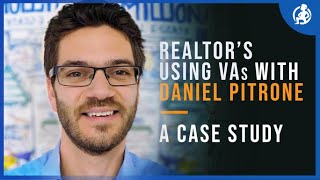
Daniel Pitrone hired a virtual assistant six months ago and overhauled how he runs his real estate business. He walks through his recruiting process, training workflow using Asana and BombBomb screen recordings, and what his VA handles: social media, video prep, emails, and database work. He says the consistency and time savings alone make it worth doing.
Questions this video answers
About six months before the interview.
Asana.
BombBomb.
LastPass.
Mailchimp.
Chapters
I knew that my business had a lot of inconsistencies in it because of my time restraints, and so I needed to get some of those off my plate.
Hello and welcome today to this case study with Daniel Petrone, which is. I'm super excited to do. Daniel emailed me recently and just told me about how he had hired this va, and it's been so good for him, and so I wanted to get him on to talk about it. So welcome, Daniel.
Thank you much. Good to be here.
You had your first outsourcing experience, your first VA experience, like, six months ago.
Yeah. Yep. Correct.
Sweet. Who did you hire? What did you hire them to do? What kind of a person? What are they doing for you?
So if I can back up even a little further than that. I kind of learned about virtual assistants inside the real estate world through my company, Keller Williams. I started doing some research on them, and I was like, man, this is really interesting. I came across your YouTube video, actually. And so I. I think I watched all of your YouTube videos on all the ways to hire a BA. I went back and talked to my wife and everything. And so I knew that my business had a lot of inconsistencies in it because of my time restraints, and so I needed to get some of those off my plate. And so ultimately, that's what kind of started the process. And so you gave some really great tips on how to just go through and interview things, which is my biggest fear. And so we went through the whole interview process with a bunch of different VAs, and we kind of landed on the one we selected. So it was a really good process. So that's kind of going back a step further than you started. So if you want to repeat your question for me, I'm going to answer your question specifically. No.
That's awesome. So I know that, like, Keller Williams is really big on getting help.
Right. It's all about kind of leveraging through systems, tools and technology. And then obviously, people.
And obviously, this is something every Realtor should be doing.
Yeah, absolutely. I mean, absolutely, because. And we can jump into some examples later, but it's like, yeah, there's so many important things that we have to do in our business to keep our business on the right trajectory. But we allow the urgent things to take over the important things, and then we don't do the important things, and we ride the waves of real estate. Right. And so that's what I'm really loving about this last six months, is that I have been more consistent in my business in the last six Months than I ever have been before. Sweet.
Yeah. So getting someone else to do some urgent things lets you do some important things.
Yeah. And. Or vice versa. What's really great about is my va. You know, he can take care of some of the important things that need to happen in the background constantly so I can focus on actually being in front of clients, which is where my dollar per hour activities are the highest. Right. So those are the urgent things that you never want to get rid of. But I gotta be doing the important things to constantly be filling my pipeline and run a consistent business and serve my clients consistently throughout their process as well. Yeah.
Sweet. I've done this before, and this is a tip that I'll give. Like, don't talk about your VA's names. Right, right.
Maybe you're giving that tip. Yeah.
Cause people know like, oh, you have a great va. Let me go find him and try and hire him.
Right, sure.
So who is he? Why did you h. What was your process for finding hiring?
So I did what you recommended, and I kind of put the job description out there and I kept. Was not super, super specific, but I kind of listed the things that I really anticipated my VA taking off my plate, kind of the bigger items that I envisioned. And I had a ton of applicants through the online jobs that ph. Or. And then I kind of filtered through them kind of the way you. The way you suggested. I started interacting with them, and I would ask them three to four to five questions per email. And it was amazing how many people kind of weeded themselves off right off the bat by either not responding or whatever the case may be. And it came down to, like, probably eight or 10 that I got into a conversation with. And then I would communicate with them were six or seven different emails, all asking them a variety of questions. And through that process, I was able to say, you know, their responsiveness, how good their English was, and whether or not they had the skill set that I was kind of looking for. And so it pretty soon got down to about three. About three people that I kind of eliminated it down to. And that was really hard, kind of making the final decision. But I sent them all just a website with a disc personality. And then I kind of utilized that to see if they fit that. That VA assistant role that I really wanted them to fit. And then three or four scrape interviews with those last three or four to really get to know them. And my wife was part of that because she's pretty influential in my business as well. And we landed on. So it was great. That's kind of how I narrowed it down to the right one.
That's so cool. I mean, the process works. I love that you modified even my process. I don't do Skype interviews, but the more I talk to other people, the more I see the value in. A lot of people often want to do a Skype interview up front.
Yeah.
And I love that you just asked some questions, and they weed. It totally does. They weed themselves out, and you get down to a final few, and then you did the Skype interview. So I love that. That sounds so good.
Yeah. I think I did a Skype interview with four candidates, and then I did. And then the next. Then it was down to three. After that first round, I did two more with each of the next three, and that was really tough. And. And those last little bit, I kind of. I really wanted to help. I wanted to hire them all, honestly, but it wasn't there. It wasn't in the business plan.
So it's hard after you've communicated with people so much to not hire them, you know, I do. Yeah. So what is so. Okay. So you get to this point, you realize, okay, who's the one?
Right.
And there's two others that you're like, oh, boy, I want to hire you, too. But what did you tell them?
You know, I was very honest with everybody that I was interviewing and said, hey, you are one of the three last kind of final contestants, final candidates. And I just shared them all an email and said, hey, you know what? I really appreciate all of the effort you've put into this and all of the communications and all the time. You were and are a rock star. And I'm confident that you're going to be. You're going to find the perfect person to work for and that you're going to have a great relationship with them, because I can tell they can see how amazing you are. But I let them know that I did end up selecting another candidate for the position, and I wish them the best of luck.
Great. So let me give you something to do now. I want you to send. After we're done, I want you to send me an email with those two people's names, because I'm going to get them a job.
Okay.
Knowing that you've gone through such a good recruiting process, I can get anybody a job. Right. Like, we have thousands of customers. What does he do for you now?
Sure. So one of the things that I asked all of the VAs that I was, at least when I got into the Skype interviews was like what software have you used in the past as far as project management software in your other VA roles that you really liked? Because I didn't have one. I didn't know, I don't know Trella from Monday from Asana, from all these different things that are out there. And I think you even recommended Boot Camp that I looked into. And so, and so I kind of went on and explored research for that right software. And so with help we kind of went through a couple different softwares and tested them and we got to know each other just talking. And the first couple of weeks we were on Skype most mornings from about 9 to 10 or 9 to 11 even sometimes just kind of getting to know each other and working well together and communicating. And then so we ended up selecting Asana, which is like the way that it's laid out and the lists and the tasks and the subtasks that go into it. We can create some cool templates in there. It was a little expensive for just two people because they basically have a five person minimum when you buy their paid thing. So it's a little expensive for us. But I liked it enough that I said this is the one. And then what I do is I do a lot of screen recordings where I record myself. I use a software called Bombbomb where I send video emails. I think I may even send you one of those.
Yeah, I'm going to write this down. What's it called?
It's called Bombbomb and I didn't use it for this. I've been using it for years, even prior to hiring a va. And it is actually a video communication tool where inside of Gmail integrates. I can click on send video, I can record a video and I can send it to them, to my clients. Really it's a great way to interact with clients, but they also have a screen recording, a screen capture tool. So it's really great for me. So what I'll do is from my Chrome hot bar, I'll make a quick video screen record and then I will walk through what I do and I'll explain it. Hey, this is what I want you to do. Yada yada yada. You know, this is the websites you need to save. You punch in the address here, download the reports, put them in this Google Drive folder and keep this video on hand because you're going to be doing this a lot for me. So I use that tool quite a bit to show him how to do the work. And, and then also for those tasks that are somewhat repetitive we just kind of create a template. So those instructions are always in that task and that video. You can just open it up and always refer to it if you need to.
Because I want to clarify this for people. So this is this tool, which. This is bombbomb. B O m bom.
Yep. So for that same thing, bomb, bombs or B o m. B. Okay, B O m B.
Okay, B o m B. All right, got it. And I use Snagit for the same thing. Whatever you use doesn't matter. But what you just described is so critical in this whole process. And I think a lot of people miss this or they don't understand how important this is. It is either recording you, which. Then you're talking to your laptop and it's recording you, and you send it to them. Right. And the sending process is super simple.
Super simple. And so I should probably provide a little more clarity so I can record the video, whether it's just a video of me or whether it's a screen, record video screen, capture video. And then when I click Finish and Save, BombBomb creates a URL for me and it says you can either send an email or copy the URL. So I just copy the URL and then I go over to Asana and I create the task and it says property research, whatever it is. And in the description, I just drop that link. Depending on what the task may be, I might make that task a repeating task or a template task. And it might have some subtasks below it, so some different due dates, however you have set that particular task up. But then if I ever need to assign him a property or whatever the case may be, I can simply click duplicate that task, grab the template, and he has instructions on how to perform that task at the top of that task, more or less. So even if there's a month in between where I have him do those things, it becomes a system and he has the instructions there.
My process is almost identical. So, like with Snagit or bombbomb, you record. You open it up, and it lets you drag out on your screen a rectangle area. And then you can walk through and talk at your screen. Like, hey, I want you to go do this. Click on this website, pick up this piece of data, take it over here, and it's recording your screen and your voice talking. I think people just need to know what the software is actually doing. And then what a lot of people don't realize is like, oh, man, it's quitting video. That's scary for me. No, like the Software deals with it completely for you. You don't deal with the video. It just gives you a URL and you just click paste.
And it's exactly right.
It's done. Awesome. I love it.
Cool. So, yeah, some of the things that he does for me right now, I'm using mailchimp. And so he gets into my mailchimp account. He preps my monthly emails and any holiday emails that I have going out to some of my clients. One of the things that I absolutely love, and if I could just get into a little bit of detail on this one, I do a Thursday thought video for all of my clients. And it used to be I put the phone up on my tripod, and I would record myself, and then I would go to the video. I cut the ends off the video. I dropped my logo on it. And then from my phone, I would upload it to LinkedIn and Facebook and all the places that I want to distribute it and upload it to my YouTube account. And that process used to take me, like, two hours, because doing it all, I could put it on my computer and use a different software, but it wouldn't save me that much time. So I just do it all from my phone. And now I literally put the phone on the tripod, I shoot the video, and via Google Glink or Google Drive, I send him the video, and he does all of that for me. Now, my video editing is not complex. He's not a video editor, but I showed him how to do it. So I trim the ends off, drop a logo on it, blur it at the end. I mean, that's it, right? It's a pretty easy thing to do. And what used to take me probably about two hours now takes me about eight minutes. And so it's a pretty drastic difference that I can now move on to my next task. I apparently have Instagram and Twitter now.
He set those up for you?
Yeah, he set them up for me. I gave him. It took me two months to build the trust factor. And let's talk about that for a second. I'm using a program called LastPass. I'm not sure if you're familiar with that, but basically it allows me to have this password vault, which I love. It goes across all my devices. It's great. But it also allows me to share passwords without actually giving him the password. And so he has access to my Facebook account, which is kind of weird at first. When somebody else is kind of controlling your stuff, you're like, this is kind of weird. My family was super Weirded out by it because they weren't sure who was reading what messages. But anyway, it was pretty great. And now I can literally, I have more exposure because now it's going on Instagram, it's going on Twitter, it's going on YouTube, it's going on LinkedIn, it's going to YouTube, and it's all going consistently. And used to be if I could get it to Facebook and LinkedIn, that was a win for me. And then later I would maybe try to get it up to YouTube later or something. Right. The extent of it. So now I'm doing three times as much, and I am. And it takes me, you know, a 20th of the time, whatever. It's just great, great time saving.
That's awesome. But I've used LastPass for like 10 years, maybe more, and it's. And it's such a great. You're right. It's such a great way to share passwords and where you like, there's always this concern like, oh, my gosh, if I give them this and then they don't, then I have to fire them, then what?
Right.
Well, you just take it away. It's super simple.
Yeah, super simple. And now, even after four or five, such trust in him that it's like, I wouldn't even mind sharing a password now. But maybe getting over that first hump for people, it's a great way. And Pat and LastPass is a great, A great piece of software for that. Yeah. And so, yeah, so he prepares all my monthly communications, any type of repetitive tasks that I was doing or wasn't doing because I didn't want to or because I didn't have the time he's doing. So for an example, in the real estate world, we kind of have our database and it's like our gold mine. We have to really maintain it. And. And some of it's tough. And so one of the things that I have him do is I have them kind of compare my databases to make sure that they're all consistent across the board. And so I have an A list that is an A list kind of in my. In my contact management database. And I also try to keep a mirror of that in a Facebook group, a Facebook link. So he'll compare those. And once a month he'll go into my office back end and he'll pull all of the agents who are in my office and I have a special group for them, too. So if I ever want to email the office, it literally takes me five seconds now, rather than trying to Go into the office, going into the back end and trying to email everybody that way. And so there are other reporting things that he does for me. He goes and pulls my numbers for my month. How many deals did I close, how much did I make? Those types of things, he puts them all into my spreadsheet things along those lines he's doing on a monthly basis just to keep me more organized than I've ever been. Kind of helps manage my chaos a little bit.
I love it. Well, did he have real estate experience before?
He did. He did have some real estate experience before, so yes, he did. So it's been really good. It's been really good experience. I mean, saved me a lot of time and like even I'm not the best social media poster. But now I just open my phone, I'll attach three or four photos and I'll say social post, give them a due date and then I'll say this is the text I want you to put. And they'll take those photos and they'll take that social post and they'll put it on all of my stuff. So it's like now I don't have to go to all these different platforms. I can just make one post to him. He does it for me and it's like he's really good on social media stuff. I mean, I've never had such a good social media presence ever in my business.
That's awesome.
That's awesome.
Just so you know or other people know, training is a big deal here. You have to train people that you hire and I love that you've done it. I love how you did it. Inside of OnlineJobs, we have a training plan specifically for this for realtors, for managing your sphere of influence presence. When you log into onlinejobs on your account page, there is a training that we sell there that someone else, that a realtor that we know created. Any last things you would say to a realtor watching this, like you haven't hired someone yet, you're on the fence.
Anything you would say, I would say, before you hire, spend some time really thinking about what you're going to give to your va. And I had done that. I created this four page Google Doc that just said, these are all the things that I'm going to give to my VA and then slowly start giving them those things. And then I would just say those first couple of weeks I think are really critical to kind of build that relationship. Just dedicate some time to training. They're not going to know they're not going to know your business on day one. And it takes a few weeks of just constant talking training for the VH to really kind of capture what you are trying to do with your business and so they can kind of join you on that journey. So just prepare well. And I would say also just make sure that when you're ready to make that jump, that your business is ready to have that trajectory. Because, you know, you don't want to bring somebody on for a month or two months and then not give them the time and then not have a workout. So just plan it out well and you won't regret it because, man, for the amount of money you spend, they just take so much off your plate and make you so much more consistent in your business. And you'll stop riding the waves of real estate and you'll start, you know, you'll have that. I say riding the waves. I've done it and I've seen realtors do it all through my office. Right. We just. We get busy and we stop our severe influence up and we just ride the waves. And this. This provides some real. It's a really great way to get some leverage in your business, provide some consistency so you can have a constant upward trajectory.
I love it. And there was two things I wanted to highlight there. Number one, give them one task and then give them another task. Super important. And I love that you wrote them all out and then you didn't give them all to that person all at once.
No way.
The second thing is so many people are like, oh, but I'm too busy. That's exactly why you should. I think you've shown this. That's exactly why you should go through this process.
Right? Absolutely. It's like you're too busy not to do this. Yeah. That's the reality. You have to get any semblance of life back. You have to do it.
You're working 50 hours a week. You have to work 60 for three weeks, and then you get to 45.
Then you get to 45 and then to 40.
That's right. I love it, man. Daniel, this has been amazing. Thank you so much. Well, this will be helpful to so many people.
So awesome. My pleasure.
Much. We'll talk to you later.
Talk to you soon.
More from John









Stop Being the Dispatcher, Start Being the CEO: How to Scale Your Field Operations 🛠️

