Drew Grimm and hiring his OFS for Network Marketing and Coaching
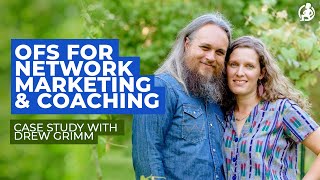
Drew Grimm built Schoolhouse Life, a homesteading and homeschooling business where essential-oil network marketing now makes up 80% of revenue. He hired Filipino virtual assistants starting in early 2019 to handle video editing, web development, and ads, which let him run online summits and travel. Communication gaps and vetting took work.
Questions this video answers
15 acre homestead.
Four children.
Three (have had up to four or five at times).
About 80% (since the beginning of 2020).
Around the beginning of 2019.
Chapters
We've tried to build a team of US people, but one, they're very expensive, and two, I mean, it's. I'd say it's the same for Filipinos too, but the Filipinos, I just, I love their attitude.
Hey, welcome to this case study where we're going to cover network marketing and coaching with virtual assistants. So today I have Drew Grimm and his wife Lacey Grimm, who have worked together for the last 20 years to create what they call the schoolhouse life. As natural wellness educators, they teach others the fundamentals of homesteading and homeschooling and nature based medicine. They're in Greensboro, North Carolina, where they have a 15 acre homestead and their four kids. They currently have three online Filipino specialists who work with them and help balance all the moving parts of their business. And they're a great example of how online Filipino specialists can help you grow and live your dream. So let's get into it.
Drew, tell us what your business is.
Okay. Our business is self sufficiency. Coaches or mentors is kind of like what we like to think about. And the idea is that we can help you go from not knowing how to do any kind of like self reliance, self sufficient task, all the way into like creating a plan and developing that plan that's like realistic for your life and then kind of walking you, walking along with you as you develop that. That's the virtual kind of part of it. And then the online or the in person part of that is actually we have a homestead where it's education based. So we teach people how to do permaculture, regenerative agriculture, and just kind of more of a hands on. So our goal is for people to understand where their food comes from, understand where medicine originated from, and let people experience that. So kind of along the way, like our four pillars is homesteading, homeschooling, natural medicine, and entrepreneurship. So not necessarily those separate, but those four together. So someone that's kind of interested and those four is like the person that we really jive with, it can really help them see a big difference in their lives.
And you do this with your wife Lacey, correct?
Right? I do, yeah.
How'd you get started?
We have been homesteaders for almost 20 years now. We went to school at a super hippie college and met there and grew all kinds of garden vegetables and stuff like that in our little apartment and over the years have kind of moved to like an urban area where we had like a quarter acre and we were growing vegetables and selling produce at the farmer's market out of our backyard. And bees and eggs. For us, it's always been about like, kind of two things. One, the ethical parts of it, like, if you consume meat, I'm a strong believer that you should be witness at least to how an animal butchered, how an animal is raised. You know, I think a lot of what's wrong with our society today is that we are disconnected from life and death. So that was one aspect of it. And the other was we just wanted to know where our food personally was coming from, like taking the responsibility of raising vegetables and that kind of thing and making sure there weren't, you know, chemicals and other things that can create, know, illness or disease within ourselves. So that's kind of how it developed. And as we got going over the years, it's just been, you know, people kind of kept reaching out to us and there's only so much time in the day. So at a certain point we were like, you know, we need to value our time. And by us valuing our time, we can also give more to people. So we're big fans of, you know, volunteering and offering charity for people that don't. Can't afford our services. But at the same time, if you can, we really try to a good value for both sides.
Tell us about the entrepreneur part of your business. That. That fourth pillar.
Yeah. So it, alongside of that, my wife Lacey, she developed a network marketing business that's in essential oils and really grew that to the point where I also at the time owned a business that was a home theater security system business, which is completely different than anything. But I started that business from the ground up, grew it. She, at the same time she was growing her aromatherapy natural medicine business. And hers really got to a point where if you've been in network marketing or mlm, like it's, it's serious and it's like, if you really want it to be a business, you've got to treat it like a business. And you go through a lot of personal development and hardcore like, I mean, it's, it's a hard, hard business. But she actually grew to a point where I was able to sell my business and just come and work with her full time and then work on the homestead full time. So through those years of doing that, we both have a passion for entrepreneurship and you know, we encourage that with our kids. Like, they. Two of our kids now are like selling eggs off our front property and, you know, another one is selling elderberries and wool. And you know, so everybody, everybody in our family is entrepreneurs. So being able to Help people in the homesteading realm realize that, like, you can create a business at the same time that allows you to have the life that you want. Really, only entrepreneurs can do that. You know, if you're working a 9 to 5 for somebody else, this might sound a little extreme, but I'm gonna say it is. You're creating somebody else's dream. You know, you're working for somebody else. And it's not until you're an entrepreneur that you're developing your own dreams. That's kind of our passion for it.
So what's your main source of revenue in your business? You've got all these different facets.
Right now, our main source is still the essential oils in natural medicine. I'd say that's like 80% of our business. And this lasts since the beginning of 2020. So it's been a while now. We've really been working on developing the online portion, and that's. That's coming along to get closer to our revenue in the other area. But, yeah, still a lot of it is the natural medicine area.
And that's something that you incorporate into your coaching and your homesteading program, correct?
Right. Yeah. So, you know, you can. You can grow plants for food, you can grow plants for regenerating the soil, and you can also grow plants as medicine. So, you know, all. Basically all the medications we have out there in the world today are just synthesized from a plant at some point. So we're just bringing people back to those plants and giving them the power of, like, you can grow oregano in your backyard, and it's one of the strongest antivirals in the world, you know, so you can consume that and take that and pick it out of your backyard, and it cost you, what, like, you know, $5? Rather than depending on antibiotics that do all kinds of crazy things to your body, shut down your gut, biome and all this other things. So just kind of educating people on that and giving them the power to be able to bring health care back to themselves. Obviously, I still think there's a place for doctors and for hospitals, but again, just kind of like food. We need to take the responsibility for our medicine and for our bodies first. And then, you know, if you run into trouble, then you can consult somebody else, but you have the power within you.
What's your favorite thing about your business?
I love all the aspects of it, but I love being able to do it from wherever we are. Like, we back when people traveled back in the old world, you know, we would travel and we'd take the whole family. And like, we went and lived in Jerusalem for a month with the whole family, and we were able to, you know, same amount of income because we have some. A team of online people, and the majority of our revenue comes from online. We could do it, you know, anywhere in the world. We can kind of pick up and go. So that part's fun. And, you know, thankfully, our business hasn't suffered due to Covid or anything like that.
Also, how many Filipino vas do you have working for you and what do they do?
We have three right now. We've had up to four or five, kind of, depending on what we're working on at the time. So we have someone that's been with us for almost two years doing video editing. So, you know, very much like this interview. I'll just take the raw, send it off to him, tell him the vision or whatever. He cuts out all my ums and ahs and all that kind of stuff, you know, and makes it sound good. If we need an intro or ad, commercial or whatever, he does all of that for us. He's awesome. Then we have someone that does web development. WordPress mainly. I'm working on her learning more of. Kajabi is the platform that we use for most things now. And then we have someone that is working alongside of me doing Facebook ads. So just kind of. He's kind of, at this point, just kind of double checking. Been doing ads on my own for a long time, so I'm kind of working towards passing that off to him. And at this time, just kind of, you know, working on training, working on making sure we mesh really well on that. Oh, yeah. So we've had someone also that did Google Ads for us for a while, and then we also had somebody that did blog posts for us for a while. So those are kind of all the areas.
When did you hire your first va?
Oh, man, I want to say, like, the beginning of 2019 was the first. That's. And that was the lady that helps us with the website work now. So it's been a while. That seems like a long time ago, but it's kind of funny. I was listening. I listened to that podcast, Screw the nine to five show. They were talking about it on there. I can't remember if they were interviewing. Is it Jonas?
John Jonas?
Yep. Yeah, I think they were interviewing him on there. I can't remember. But anyhow, I heard about it. I was like, man, this is like, perfect, because we've tried to build a team of us people, but one they're very expensive. And two, I mean, it's. I'd say it's the same for Filipinos, too, but it was very difficult to find somebody that wanted to work. And the Filipinos, I just. I love their attitude. I love. For the most part, you know, it's like anybody else. You have to kind of. You have to interview people and vet people. And we've had some people that generally, I'll give them, like, trial tasks and then just kind of see how it goes. And, you know, but I'm always. I think he gave some tips, and I always have used his tips. Like, I always tell them that no matter what, I'll pay him. So, like, you know, like that. That seems to go a long ways. And then I just. I mean, it's always been our kind of role, but, you know, just trying to be fair and ethical with everybody and making sure that we probably kind of over communicate. We have a WhatsApp group for each individual person. We have like a. And then we have a group for the whole team. So everybody can kind of communicate amongst themselves. We do everything out of Trello, so everybody has their own Trello board. They can drop tasks, you know, across different boards, depending on what needs to be done.
And how have you seen your business change in the last couple of years since employing Filipino VAs?
Really, we wouldn't be able to do everything we do if. I mean, I would be working nonstop, you know, and it's. To me, again, it's that entrepreneurial. Like, I'm not a video editor. I could go edit videos. But Roberto, the guy that does it for us, he does it way better. And I can, you know, way faster. And by him doing that, I can work on something else on the business. So, you know, that's still where we're trying to develop our team, too, is to the point where we can just kind of create the ideas, be in the idea space, the zone of genius that we're at, you know, and let the team run the rest of it.
Yes, well, that was. My next question is, what do you find yourself concentrating your time on now?
Yeah, so we've done. Over the course of 2020 and the beginning of 2021, we've done some online summits that were really successful. So in August of last year, we did one on homeschooling. So in the team, you know, we would not have been able to pull that off without the team. So we do have one American VA that's kind of like. I'd say she's kind of like the General manager of everybody else. And then so we used everybody together to kind of create this online summit. A little over 2,000 people attended. So I mean, to me that's super successful, you know, and it was a paid summit, so it was $9 or $29 if you wanted one year access. But we started it from scratch, found 20 other homeschoolers, put it together, built it out in Kajabi, sold it. And then this past March we did the same thing, but for homesteading. And we had a huge show up rate on that also.
So when we were first communicating, you mentioned I don't know if we're fitting the mold, if we're what you're looking for, because we've had some issues. I would really be interested in discussing that if you don't mind sharing.
Unfortunately, not too long ago, I had to let go the lady that was doing the blog post for us. It was this. There was this. All of a sudden she just kind of disappeared. And it was like for like two months, you know, and I was like messaging like, hey, where are you? Like, you know, she was supposed to generally we were checking in like every day. She came back and she just said, oh, I was out of town and that was it. And you know, when I went back to kind of, I hadn't been checking over her work like I should have been. And when I started checking over her work, she had, I guess, like my excuse anyhow is at the beginning her work was solid and I was just like, okay, like, let's just let this run. But over the past like couple of months, she had been kind of half halfway doing it, you know, So I don't know if it was personal issues or what, but that was one. I'd say that's probably my biggest challenge is the communication aspect, like owning other businesses. I don't think it's fair to say that that's just Filipinos. I think that's across the board with employees. It's sometimes people just fail to communicate or people just disappear and you're like, man, I was really counting on you for this aspect of the business. And now like, you're gone. I have to pick up the pieces and make this work until I can find somebody else. And you know, going through the interview process and hiring somebody and all that is, it's. It's exhausting. So I think that's my biggest challenge. The guy that did ran Google Ads for us, he did great for a little while and then he just put the Google Ads on autopilot and Disappeared. And I just went in there, you know, and it was like $500 of spend in one week and no results. And I was just like, man, I'm glad I looked, you know, so those kind of things that I don't know. But again, I think that's just people in general that happens with.
So how would you advise other business owners to avoid those kinds of things in the future after experiencing them?
I think with the Google Ads guy, I was kind of slightly in a desperate situation. Like, I just wanted someone to do it and I was kind of. I didn't vet people as much as I should, should have. And I think the communication aspect is very crucial. Like now if I hire someone, they've got to respond to me. I keep everything on WhatsApp because I feel like that's just an easy way to communicate internationally. And you can have that feature where you can see if they read it or not. So, you know, like, you know, are they getting my messages where email. It's kind of. It can be iffy. So my suggestion is like, really vet people. Like, how much do you want them to communicate with you? And if you want it to be like daily or, you know, within a reasonable amount of time, then communicate with someone like that, a bunch at the beginning and see if they're going to reciprocate that kind of level of communication. And if they're not, then they're not a good fit because once they get going, it's not going to get better, in my experience. And then like with the lady that, with the blog, I should have been checking up on her more often and I wasn't. So either assigning that responsibility to somebody else on the team to be checking up or, you know, just remembering that they are just people, like, everybody makes mistakes and you have to communicate and, you know, share your expectations.
Is there anything that you found works really well with you said, you know, communicating can be a challenge. Is there anything that works really well with communicating and. Or with connecting and motivating your VAs?
When we did these online summits, like, they kind of blow our revenue out of the water. Like, we have these like huge spikes and honestly, like, we have a little bit extra income. So I'm a firm believer in sharing that wealth. Especially when they like put in, they go above and beyond. So I kind of, I don't tell them, but in my mind I kind of have, like, how much did they go above and beyond? And like, let me reward that by that level of above and beyond. Does that make sense?
Like, absolutely.
So every time we have a something major like that, I don't even tell them. I'll just like, you know, the next time payday rolls around, I'll just throw in, you know, extra 300, $400, and just say, you know, thank. Thanks for your hard work on that, you know, and to me, it seems like at least in the Filipino world, like, an extra $400 is like, you know, that's a huge amount. So I had one lady tell me. She. She's like, you don't understand. I was. It's funny because she started out and working for us, and she's like, you know, after working for you, I've, like, started to grow my own food. And with this bonus you gave me, I'm going to be able to buy some pigs that I've always wanted to try growing, raising, you know, and it's like, I was like, man, if I would have known that, I would have given you double, you know, so, you know, that I feel like that's a great way to kind of help motivate. And then within Trello, we have, like, a very detailed flow. So it's like, there's a column where I'll drop in, like, a task, and every task has a card. And then it's like the next step is kind of like, over communicating again. Like, you know, once they see it, they move it over to, like, working on this and then, like, ready to review and then completed and then Drew checked it over, you know, so it's like, the flow is very detailed. But to me, again, like, I've found that, like, if you can, that way you can just visually pull up their board and just be like, okay, where is everything? Is there something bottlenecking?
Is there any advice that you would give to someone who's just come across the idea of outsourcing or just getting started?
Yeah, I mean, I would say go for it. I like, and you guys aren't paying me to say this, but I love onlinejobs. Ph. Because it feels like, like, if you go on, like, a Facebook group and just look for, like, a remote person, it just feels so shady. But, like, at least through this website, you can kind of look at the people's credentials and you guys vet them a little bit. Right? So, I mean, there just feels like. It feels way more legit. And I've never had any kind of a scam or anything like that where I've heard horror stories from, like, Facebook groups and things like that of, you know, people losing their ads, accounts, or you know, various other things. So I would just say, like, start with one VA and really kind of learn the process of what it. How it looks to work with somebody basically on the other side of the world. Because, like, the time zone thing is. Is like one slight issue, and it's not for our team really an issue at all, once you understand it. I kind of like it because when I'm asleep, they're working, I wake up and they've got a day's worth of work done, and I can fill in their trello board while they're sleeping. And we kind of meet, I guess, like, usually 7:00am or 7:00pm Eastern Time. Like, we're kind of talking at those times. Seven to, like, I don't know, usually 12. Our one, the one lady that does website work, I mean, she stays up until like, 3:00am her time. So I think it's great. Just kind of start slow, learn it. And a lot of times you can ask. If you find a VA you love, you can ask them, hey, do you have a friend or do you know somebody that can do this work? And you can kind of grow your team that way some, too.
Thank you so much, Drew. It has been a pleasure. It's so, always so good to hear, you know, when things are going right and when the experience is positive. What's the best way for our people to connect with you? Anyone who may be watching this?
Oh, sure. Yeah. The best is the. We have a podcast called the Schoolhouse Life with Lacey and Drew, and you can find it on Apple or Google. And we put out a weekly podcast all about self sufficiency, homesteading, kind of all we talked about. So that that's a great place to connect. And from there, you can kind of follow the trail from the podcast. Okay.
You've got website, you've got a Facebook group, you've got a blog. Awesome. We'll include the links to all of those things with this as well.
Thank you.
Thank you so much for your time.
Oh, you're welcome.
More from John









Stop Being the Dispatcher, Start Being the CEO: How to Scale Your Field Operations 🛠️

