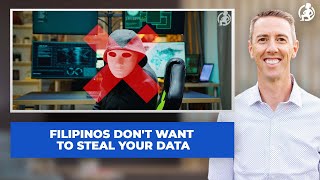
John Jonas argues that Filipinos working in outsourcing generally do not steal employer data, based on his long experience hiring OFSs since 2005 and observing few theft incidents. He gives cultural (high Power Distance in the Philippines) and legal (stronger penalties for digital theft) reasons why data theft is unlikely, contrasts hiring directly versus through agencies, and recommends precautions (recruit carefully and report incidents to the Philippine DOJ). He also cites large-scale trust in the Philippines evidenced by major companies moving call centers there and points listeners to onlinejobs.ph and testimonials.
Chapters
Welcome to the Secret Sauce of outsourcing podcast that's dedicated to making you better at outsourcing to the Philippines. This is episode 128, Filipinos don't want to steal your data. So I get asked this question all the time. People always want to know, John, how do I protect myself? What about sensitive data that I have? And I get it. I understand why you're concerned about it. I was concerned about it, too, when I started. In my opinion, you are more likely to have someone in your office steal data from you than you are to have an OFS steal data from you. Now, that's a pretty bold claim. Filipinos don't want to steal your data right now. I don't. I don't have no empirical data to support this, just anecdotal. So you'll just have to take everything I say with a grain of salt. I hired my first OFS in 2005, and I've worked with my team since then. I've never had any of them steal any of my information or money or whatever. And I've seen literally hundreds of thousands of people hire people in the Philippines, and I have seen so incredibly few times of someone stealing something from an employer. And basically, every time I've seen someone steal something from an employer, it was because that employer tried to get the person to do work. They weren't real happy with the work, so they didn't want to pay them and didn't pay them and told them they weren't going to pay them. And the Filipino felt like, no, I've done the work you asked me to do exactly how you asked me to do. You want me to spend more time. You want to pay me so little than stealing something from them. So it's. It's like, it's really, really an odd and rare situation for it to happen, at least in my experience. Now, obviously, should you listen to everything that I say about this? No, you should not take whatever precautions you need to take to protect yourself. Let me just give you some reasons why you might consider this, though. So most of the world's outsourcing has. Is moving to the Philippines or has moved to the Philippines. And there's a good reason for that. Big businesses are moving call centers to the Philippines, and frankly, the people in the call centers have access to so much personal data, it's ridiculous. I have people on my team that have worked at call centers before, and they said they had access to everything. Social Security numbers, credit card numbers, addresses, birthdays, whatever. They had access to all of it. So why are these big businesses moving to, moving to the Philippines and trusting people with this data? And not that they're just trusting them because they have all kinds of safeguards in place, but why would you not be able to trust someone if they can? So here's a, here's a couple things. Number one, the Philippines is, this is interesting. They're very high on Hofstede's Power Distance Index. And if you don't know what the Power Distance Index is, it's pretty worth, it's worth learning. It's worth understanding. It is a measure of how much a culture respects authority. And the Philippines is very, very, very high on this index. In fact, they're the fourth highest country where the United States is like 47th or something like that. So the United States, we do not respect authority very much. In the Philippines, they very much respect authority, which means if it is their responsibility to protect data, that's their responsibility and that's what authority says and they're going to do it. So on the other hand, when they're put in a position where they have responsibility over something, the idea of stealing, that is, it's, it's foreign in, in the culture. Not that there aren't theft. There isn't theft or there aren't thieves or there aren't dishonest people there. There definitely are, but they very, very much respect authority. Next. And I've talked about this one before, but the Philippines government is fully on board with this virtual work and the outsourcing in the BPO industry. And they have made digital theft laws carry twice the punishment as normal theft, which already carries a pretty strict punishment. So it's just unlikely. Here's where I think the mistrust comes in. Historically, people don't hire for themselves. You haven't had the ability to hire for yourself until really onlinejobs. Ph. Because before that, I didn't really have the ability to hire for myself. I just had to go through an agency. And when you don't hire for yourself, you don't have any reason to trust the person that, that you're working with. You have had no interaction with them. And so, and frankly, someone else hiring for you has very little incentive to do a thorough recruiting job, because even if they do do a thorough recruiting job, it doesn't work out half the time. And it's not because they're crappy at recruiting or it's because you're hiring a personality and you're working with a person, a human. And if you don't do the recruiting and someone else does the recruiting. Well, who knows if your personalities work together. And personally personalities not working together is a big cause for problems. And especially in a virtual relationship in the Philippines it causes all kinds of problems. When you recruit for yourself. Number one, you're hiring a personality. You get to see, do we work together? Well, you get to build trust with that person as you start the initial hiring process. And that's, it's kind of an interesting thing that how that trust starts to build in the hiring process. Whereas an agency, none of this applies with them. And I've seen this over and over and over again. Actually I haven't seen it in a long time now because I haven't used agency in a long time. But in the beginning and when other people I knew were hiring from agencies, it was like, what? Man, this is so painful. They just pulled someone off the street is really all they did and gave them to me and said, hey, here's this person that is really good at what? Which they were not good at anything. So all of this is stuff that I talk about in my 1vaoa.com program where my recruiting process for finding someone great kind of evolved over the years towards taking advantage of the virtual piece of it and the Philippines culture and easy for myself because I'm lazy. And so it turned out to it works really, really well and it's really, really easy. So in all of this, I don't want to say that someone in the Philippines will never steal your data. There are bad apples out there. It happens. But most of the people, and I would go so far as to say like 99.8% of people on onlinejobs ph maybe even higher than that. They're not scammers. They just want a job and they want a paycheck they can take home to their families. You're just not running into people trying to get a job to try and steal information from you. In fact, I've never seen that happen. However, if this happens to you, here's your recourse. You report them to the Department of Justice in the Philippines and I'll post a link to how you can do that. Give them your OFS information, give them a link to the profile on onlinejobs phone. Give them whatever information you have. We will have a government issued ID from that person and the government is very, very likely to do something about this. They take theft seriously and they are going to certainly launch an investigation into this person. I talk about this a lot because a lot of people ask about it. People are scared. Really. The reason I talk about it a lot is because I see too many people that don't hire someone because. Because they're scared of having a bad experience versus the potential, like, amazing good experience that they're going to have when they do it. Filipinos do not want to steal your data. You don't have to take my word from this. You can read from hundreds of others who have had this, had good experiences doing this at onlinejobs.ph realresults. It's real results where we just post kind of things that people have said to us. And I, I don't post them all, but I get an email about every single day from an employer who says, thank you so much. This has changed my business or my life.