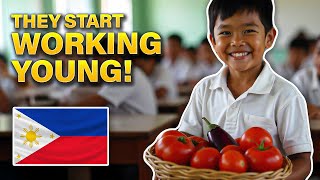
John Jonas explores how Filipino work ethic starts young, with children running ice candy stands and taking jobs at McDonald's. He compares it to American lemonade stands but notes the Filipino version is more serious, citing his own eighth-grader doing video editing and social media work.
Questions this video answers
419
John Jonas
October 7, 2024
Chapters
Welcome to the Secret Sauce of Outsourcing podcast that's dedicated to making you better at working with OFS online Filipino specialists. This is episode 419. Filipino values start in childhood. So one of the reasons hundreds of thousands of employers have found success in working with Filipino workers, at least hundreds of thousands through online jobs, my website, is because Filipinos just generally are hard working and industrious. Now, I'm not saying that all Filipinos are hard working, because that's definitely not true. They're definitely lazy Filipinos. And I'm also not saying that other people are lazy. I'm just saying that most Filipinos you encounter are hard working. And you're more likely to find someone great in the Philippines than in other countries. And I've talked about this a number of times. But then I got this email from Julia, and after watching my son come home and hearing things from him, I want to explain. And some of this will explain why they're hard working. Some of it will explain how the culture is just not that different than yours. And that can help you understand why people have such a good experience hiring in the Philippines. So I'm going to read what Julia said about. She says now that school break has started, the kids in our neighborhood have started setting up small businesses or doing odd jobs to help their parents or earn extra money for themselves. One popular small business in the neighborhood, Kids. Kids would set up Halo. Halo or Halo. Halo or ice candy stand. They'd set up shop in front of their homes and make these icy treats themselves, which, you know, that's pretty dang similar to here in the US at least where we set up lemonade stands, we do it all the time. My kids have done it so many times. Another popular side hustle for them would be to go around the neighborhood and sell homemade snacks like fried bananas and peanuts, which is another thing that we do here in the US Kids will make treats and go sell them or they'll go sell candy on the corner. At least I see these things in my neighbor. So she continues teaching kids the value of work is so important to Filipinos that McDonald's Philippines even has a yearly program where they teach kids what it's like to work in fast food restaurants. Now, this is where this diverges from here in the US where McDonald's would never hire kids during the summer here in the US to work for them, but that's what they do in the Philippines. She says parents actually pay McDonald's for this. For one week. They're taught to talk to customers Cook and serve food. This has been our culture for as long as I can remember. When I was a kid, my job was to watch over my grandfather's sari sari store. As I got older, I started tutoring younger kids in math. My cousins would go to work with their mom and she would have them do odd jobs around the office like making coffee and stuffing envelopes. My husband did the same for his parents. He was tech savvy even back then. So he became the unofficial tech support for his parents office during school breaks. We do this because we want our kids not to be afraid of hard work, because there's nothing like the thrill of getting that first paycheck. Knowing that money is going to help your family or that you can treat yourself brings joy. And we don't want our children to take that for granted. So there's a couple things here and then I'm going to add to this. So number one, they teach their kids the same way that we teach our kids. And those kids are learning to work hard and they're learning honesty and they're learning diligence and they're learning how business works. And that's one of the reasons why you find such a great experience when you hire people in the Philippines. Next you see the cultural similarities between the Philippines. So often we think, oh, the Philippines is like this faraway alien world. It's not that different. There's so many things that are the same and they're really just like you. And so people were often afraid of them when reality is, you know, they're not that different. And there's not a lot to be afraid of in terms of can I trust them? Can they actually do good work? Are they smart? Are they going to think, yeah, yeah, they are. So then let me add one more thing to this. So Julia's daughter, who is in eighth grade, has been working for me this summer. She's been editing videos. In fact, she's been editing videos from my videos, either from this podcast or from other things that I do and making reels for Instagram out of these videos. So she takes the video. I don't actually know, but I just know that she sends me videos back. And she sends them. She cc's me on these emails because I'm not actually dealing with them. She's sending them to other people, but she's taking a video, cutting them up, finding the correct places, the interesting pieces. She's taking them, cutting them up, and making a reel that's going to get posted on Instagram. So Julia's 8th grade daughter is learning social media marketing and video editing. And frankly, I think she's doing a really good job with it. Now, I haven't looked at very many of her videos because I don't look at things that people do very often, but the ones that I've looked at are really well done. And this is something so instilled in the culture that when Julia asked me if she could work for us, we said, yes. Great, well, how do we pay her? She said, oh, no, we don't want you to pay her. We want her to work. Really? Like you just want her to work for free even though we're offering to pay her? Yes, we just want her to work for free. Great. Well, I think we've paid her anyway. I don't actually know that because I don't do payments, but I know that we've tried to pay her and I also know that I recently said, hey, I think school is starting for you. We would like her to continue working for us. We would like Bianca to continue working for us. Can she? Yes, she can. And so now Bianca is in eighth grade and still working for us. This value of work starts young in the Philippines. They're learning things and you can find people that started working when they were young and that know English since they were young and they're really great. And in fact, not that you can find people. Most people you will find are like this. They started working young, they figured things out for themselves, they have learned English, they understand the value of learning English and you're going to find people that are hardworking and they want to do a good job for you.