Ep. 421: The future of the Philippines
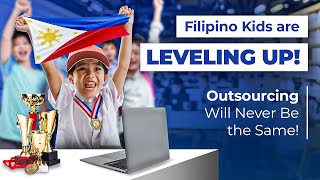
John Jonas (Secret Sauce of Outsourcing, Ep. 421) argues the future workforce of the Philippines is increasingly skilled due to a "YouTube generation" who grow up fluent in English and digital tools. He supports this with personal anecdotes — his son's observations from missionary service and an employee Julia's report about her daughter winning international academic competitions and working as a summer video editor — and concludes demand for Filipino online talent will remain strong as skills outpace wage growth.
Chapters
Welcome to the Secret Sauce of Outsourcing podcast that's dedicated to making you better at outsourcing to the Philippines. This is episode 421, the future of the Philippines. So I actually just want to talk about the kids in the Philippines in terms of the future workforce of the Philippines. So this is going to start with my son who just came home from his, from serving as a missionary in the Philippines, spent two years there, and he talks about the kids. Some kids grow up watching YouTube and they speak perfect English and some kids don't. Now, years ago, as I was talking with people, I learned that one of the good questions I would ask people when they were interviewing was, did you grow up watching Sesame street or did you grow up watching Batty Bot, which is like the Filipino version of Sesame Street. And Batty Bot was in Filipino language where Sesame street was in English. They grew up watching Sesame Street. Chances are their English was going to be better. So my son now says that there's this new YouTube generation, these kids that grew up watching YouTube and those kids, English is perfect. In fact, he met some kids that didn't speak Filipino at all. Or Tagalog. They didn't speak Tagalog at all. They only spoke English, which that's pretty different. But that's the world where we live. And those kids are growing up with computers and iPads and phones and their skilled and talented, and they're growing up with parents and neighbors who are working online. Growing up skilled, like they're, they're learning skills. They're learning these skills at a young age. So I've talked about Julia quite a bit on this, on this podcast. Julia writes my newsletter. She's one of my right hand people. Like, I trust Julia with anything. She doesn't like to go on vacation. And so recently when she asked me to go on a vacation or to take some time off, I was like, huh, there's something more going on here. And then she, she also asked if her husband could take the time off because he works for me too and he's really great. So both of them taking time off, I knew something had to be going on, which something was going on. They were traveling for their daughter to go to a competition. So I'm gonna read what she says because this is interesting about the future of the Philippines and what's going on there. Julia says, I can relate to John talking about going to bike races with his kids because my child also competes, but she's more of an academic athlete than a regular athlete. And like John, I Will not hesitate to show off when my child wins a trophy. Hopefully you can see this picture of her daughter winning. So she says. My child participated in the Philippine International Math and Science Olympics this year. She competed against kids from the Philippines and other countries such as India, Malaysia, Thailand, Hong Kong. She was awarded the world champion for grade eight science. I didn't expect her to enjoy academic competitions. Who wants to do more schoolwork on top of existing schoolwork? But she's signing up for these contests on her own with the help of her school and has been doing really well. She's doing so well that I'm starting to run out of space, she shows. Hopefully you can see this picture of all of her daughter's awards. This was an especially poignant moment for me because I know this was something that I always wanted to do when I was a kid. I knew I had the smarts for it. But competitions at this level can be expensive. It's not required. But most academic athletes pay for coaches and take extra classes to stay competitive. If you don't have a sponsor, you'll have to shoulder your expenses. Usually fair food, accommodations to get to the competition venue. I never did it because we never had the money for it. So when my child started competing, I was so ecstatic. Never in my wildest dreams did I think I'd be able to do this for my child. But now I can. I can pay for advanced math and science classes. I can afford flights and hotel accommodations so my child can do more schoolwork under even more pressure. Which is really funny. I'm happy that we have the same interests. It fills my heart with pride because she's better at it than I ever was and enjoying it more than I did. Because she's been doing so well at these competitions, it's opening up many doors. She's getting the tools, skills and opportunity that will help secure her future. As a parent, I want my child to enjoy what I never had. It's my job to give her what she needs to prepare her for the future. Having a great online job made my job as a parent much easier. So now I want to add to this because this was. Julia sent this to me months ago. And since then she asked if her daughter could work for us. Over the summer, and I think this was a couple episodes ago, I talked about how the culture in the Philippines brings people, brings kids to work where they're doing lemonade stands or working at McDonald's where parents will pay for their kids to work at McDonald's and they start at a Young age. So Julia asked us if her daughter could work for us this summer. And she said, oh, she doesn't need to get paid now. We have paid her, but what she's been doing for us is editing videos into reels. So she takes content that I make and she turns it into a reel. And I think I talked about this on a recent episode. The point isn't that she's working for us, which I recently asked if she could continue working for us even though school has started, because I really like the work that she's doing. The point is these kids are learning. They're learning young, they're learning really well, they're talented. And this isn't, this isn't, you know, Julia's daughter, I don't know, she's in 8th grade or 10th grade or I don't know. But this has been going on for years now where, like, I hired my first people in the Philippines in 2005. His child has got to be about 16 now, and she's grown up with this her whole life. And this is so all these people that, that have gotten jobs since 2010 and they had teenagers. Those kids now have learned and they're now in their 20s. And the kids that they had when Those kids were 6, 7, 8 are now graduating from college and are, and have grown up watching YouTube and have grown up watching their parents do things online. So their parents were at home and they saw, oh, you know how to do this and this and this and this. I'm going to learn that too. Point is, the future of online work in the Philippines is really, really bright. There's a lot of talent. There's a lot of kids that grew up with this. They have learned young. They're better than their parents were. Who their parents are now in their 30s and 40s and 50s and these kids. Yeah. So you can find the talent that you want in the Philippines and that talent is just growing now. Salaries, wages have gone up in the Philippines, but the wage increase has not kept up with the talent increase. So, yeah, wages have gone up quite a bit, but the talent increase available has skyrocketed. You can easily find really, really expert people at whatever it is you want. I mean, expert at. Yeah, expert at graphic design and expert at video editing and podcast editing and social media marketing and SEO. Those are all fine. But even expert at like, go high level software or whatever software you're using, you can find people who have experience using it because they've seen other people use it and they've watched their parents, and maybe their parents weren't using it, but then they got a job and realized, oh, yeah, I can learn this other software. And so they've learned it and they've become really good at it. So, yeah, whatever it is that you're looking for, you can find people in the Philippines to do that. Now, if you have people working for you already, I would, you might want to offer to say, hey, are your kids looking for a job this summer? What could they do? I just want to support you and supporting your kids. Maybe we can teach them some things. Things. And maybe they can learn to edit videos. Maybe they can learn to do some SEO, some content writing. Maybe their kids speak fluent English and they can learn to do some linking for you. Whatever it is, it might be worth encouraging them because that's the future of it. We just asked her if. We just asked Julia if her daughter would stay with us. And yes, she is. She's staying with us. And I would hope this super smart girl continues to work for us in the future, maybe for like the next 40 years. That would be my hope. Right? Because she's learned our culture from when she was a baby and she's really talented and really intelligent, and that's the kind of people we want working for us. So the point of all this was the future is really bright. The future of hiring talent in the Philippines is really bright. The talent is getting better. The talent is getting better at a faster rate than wages are increasing. I would say that talent is getting better at a faster rate than it is in the US It's a really good. It's a really good place to be.
More from John









Stop Being the Dispatcher, Start Being the CEO: How to Scale Your Field Operations 🛠️

