Foreign Bosses vs. Filipino Bosses: The Truth About Work Culture
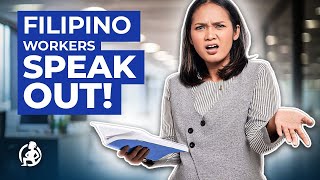
Filipino workers adapt quickly to foreign bosses because direct, ego-free feedback is a shock compared to their home culture's indirect management style. Julia and Joven, staff members since 2005 and 2010, became highly loyal once they adjusted. Fair pay and straightforward communication create retention rates far higher than U.S. firms at a fraction of the cost.
Chapters
Reason number six, why hiring from the Philippines works so well versus anywhere else in the world. Working for you a foreign boss is actually easier than working for a Filipino boss. So I've done 450 episodes of this podcast. I've been doing this for 20 years. Well, almost 20 years, since 2005. And recently I learned something new about working for a foreign boss. So in my last episode. So in the last podcast, I talked about why having an online job is a dream for a Filipino. When you give someone in the Philippines a job, they're very loyal. They'll be very honest with you. They want to work really hard, especially when you treat them well and pay them fairly. Now, when I talk to Julia about this, Julia, who works for me, is one of my main ofs. She helps write my newsletter. She helps me with these podcasts. She just deals with so many things for me. I talked to her about. About why this is a dream job, and her response was actually really shocking to me. She told me that compared to working for a Filipino boss, working for a foreign boss is actually easier and refreshing. So when she told me this, I was like, wait, what? Because I. Over the years, I've had a lot of conversations with people in the Philippines about how Americans are abrasive. We're up front, we're brutally honest, we don't mince words. We none of this. Right? And so I was. I said, hey, will you write me something about this? Let me tell you what she wrote about this. She said, before working for John, I had already worked for about 10 years. I started freelance writing and joined a tutoring agency in college to help with expenses. After graduating, I worked for the government and a few companies. Back then, Philippine work culture was all I knew. Now, just so you know. Wow. She started working for me in 2010, so it's been like 14 years now. So she had 10 years of work experience before that. So here's what she says. When I started freelance writing for an Australian employer, I experienced a big culture shock. And just so you know, US employers and Australian employers and UK employers and Canadian employers were all about the same from the Philippines perspective, you're not different than this Australian employer. She says he was kind, but very direct and very frank. There was very little small talk. Like, yeah, it's. I'm not. Yep, no small talk for me. At least. Very little small talk for me. And I'm not this employer. But he was genuinely concerned about me and my work. He wanted me to do my job and nothing else. I didn't have to feed his ego. I found his attitude refreshing and learned to appreciate it, which, there's the sentence in this that really opened up my eyes to this. I didn't have to feed his ego. Now let me continue with this. I initially thought this might have something to do with my personality. But when I asked other OFS friends, most tell me the same thing. Once they get over the culture shock, they find foreign clients and employers easier to talk to. Now, that culture shock is that we just want you to do your job. We're going to give you instructions. We're going to be frank with our feedback. Like, you did this wrong. Why did you do this wrong? What are you thinking here? Where? In the Philippines? Okay, so I'll just keep reading her thing and you'll understand why she was so shocked. Why they're so shocked. Working with Filipino bosses involves a lot of small talk and ego stroking. We worry about how we say things because a Filipino boss might get offended. We have to decipher what the Filipino bosses are really telling us indirectly. We have to laugh at their jokes and listen to their long winded stories. During meetings. It's hard to say no because they could take offense. Culturally, we're all so afraid to offend that our message is buried under multiple layers of politeness and indirect references. I only remember a couple of Filipino bosses of mine who weren't that way. The rest were challenging. So if given a choice between going back to a regular job and staying as an ofs, the benefits? Working from home, no commute, better pay, less stress, way, way, way outweigh the cons. So my advice to you is to be the dream boss. Now, let me tell you. Let me, let me go into some details here on some of the things she says. Working with Filipino bosses involves a lot of small talk and ego stroking. So, look, this is partly why Filipinos are so good at the hospitality industry. Because they're really good at suppressing their upset feelings, their meanness, whatever it is. And in hospitality, that's a really, really important piece of it. If you're a nurse, yeah, you want to have really good bedside manner. If you're working in a hotel, you want to treat people really, really well, even when those people are jerks, which Filipinos are really good at that. However, if you have someone working directly for you and you're the one interacting with them, you have to do things to draw out what they're feeling about their work. Otherwise, they may just suppress it and suppress it, and they get. Their work quality can suffer. They can get worse and worse. Now, she says, culturally, we're so afraid to offend that our message is buried under multiple layers of politeness and indirect references. Now, I'm experiencing this sometimes, too, where if I have some questions about, maybe not about their work, maybe about their work quality, maybe about how they feel about their work, really often I really have to dig and say, hey, how are you feeling about your work? Oh, I love it. It's great. Well, okay, but that's not the answer I'm looking for. I want to know, are you bored? I want to know what ideas you have. Oh, I think you're great. No, no, no. That's not what I'm looking for here. I want to know exactly what you think about this thing that you're doing, like, the reality. Well, I do find it boring, and it's kind of hard sometimes, but I'm just glad to have a job. Okay, well, at least now I got an honest answer out of you, that sometimes you find it boring. So just understanding this, that Filipinos, typically, they are not upfront. They're not confrontational. They don't want to bring it out because their culture is, oh, you have to be friendly and don't offend someone. When you go into this, you know, okay, like, this is how they're going to behave. So I need to do things to draw it out of them, and if I can be kind to them and treat them well, then they're probably going to really, really want to work with me, because there's no ego stroking. They don't have to code their messages, and they know that you're not going to code yours. All of this is one of the reasons why working with the Philippines is so good. Because, yes, there's this initial culture shock when they start working for you. In fact, Joven, who hired in 2005, has told me, wow, when I started working for you, I was so scared because you were so direct about things. But after a few weeks, I realized, oh, this is just how he is. He's not mad about anything. He just wants me to do a good job. And once they realize that, then they really do just want to do a good job for you, because it's easier to work for you than it is for a local boss where they have to bow down and they have to do all this weird stuff. Well, it's not weird to them. It's weird to us. So the beginning of the episode, I said, this is reason number six, why it's so good working for a. Working with a Filipino Other reasons include that they're honest. And I'll go into these on another episode. Honest, they're super loyal, they're very hard working, they speak American English, they're not entrepreneurial. There are other reasons why this works super well. Those are six of them. And think about this. In the US when we hire people, we do everything we can to keep that person. We pay unbelievable amounts of insurance and time off and benefits just to keep that person working for us. Well, here's what Julia says. I mean, the very end of this. So if given a choice between going back to a regular job and staying as an ofs, the benefits, working from home, no commute, better pay, less stress, way, way, way outweigh the cons. Which means if you treat people well, they'll work for you for a really, really long time. And you don't have to do all of what we do in the US to keep people now. It's really good and we do a lot of it with our team in the Philippines. It just costs 10 times less than what it does in the US to keep really, really amazing people. I mean, Joven I hired in 2005 and still works for me today. Julia I think was about 2010, still works for me today. And that's super common. We have about 50 people. We've hired a bunch in the last few years, but I can really only think of like eight or ten people ever that, that I've hired in the Philippines and I've let go. It's just not, it's not that much. And part of that's because I'm a good boss. I mean, I don't want to toot my own horn, but I've been told by them I'm a good boss. I treat people well, I treat people fairly. Yes, I'm direct, but they, they really want to work for you, which is such a big thing. As a small business owner, when you get people who are loyal and hardworking and they want, they want to work with you. And that's why hiring in the Philippines is so much better than other countries around the world.
More from John









Stop Being the Dispatcher, Start Being the CEO: How to Scale Your Field Operations 🛠️

