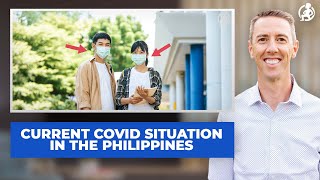
John Jonas explains how Covid lockdowns and healthcare costs in the Philippines shifted hiring practices. Routine hospitalization costs $450–$900 with PhilHealth; severe cases without insurance run $18,000+. He now requires employees to maintain PhilHealth enrollment and provides private insurance to protect workers and the business.
Chapters
Welcome to the Secret Sauce of Outsourcing podcast that's dedicated to making you better at working with OFS online Filipino specialists. This is episode 163, the current Covid situation in the Philippines. So I remember when Covid started, and we used to think that in the future, Covid would be a thing of the past, and we would get rid of it and things would be back to normal. That was. That's a thing of the past. That thought we are mostly back to normal. But normal is different today. I remember my wife when this, like, March 18th or March 14th or whenever it happened in 2020, she said, oh, we'll be back to school in two weeks. And I was like, I don't really think so. But she just kept it up. Two more weeks. Two more weeks. And then we all know that. We all know the story now. So now we look at Covid like it's the common cold or the flu. Like you don't want to get it, but you're gonna get it at some point. Everybody's gonna get it, and we just have to manage it when you do. So in the Philippines, they were slower than in the US to manage this and not slower to manage it. But. So here's what happened in the Philippines. Covid happened. They shut the country down instantly. Do not leave your house. And they started giving out passes to people like, here's the one person in the house who could leave the house. Here's the time of week that you're allowed to leave. Here's where you're allowed to go. And they had police arresting people in the streets if you violated it. Their lockdown lasted longer than a lot of the world. The Philippines still has the mask mandate. Masks are still required everywhere, but businesses are now back to. Back to being open. Basically, every. All businesses are open. Travel is acceptable now because of the mask mandate. Case spikes are much less. People are still being hospitalized, but there's enough beds now to handle it. So Covid is manageable in the Philippines. So because of the. Because of global supply chain issues, the Philippines still struggles with, like, normal things they can't get. Pharmacies will run out of ibuprofen still. Or vitamins are more expensive than in the past. So there's. There are still definite effects from COVID So let me talk about hospitalization and costs. So costs are manageable in the Philippines. If you're hospitalized with COVID it's still more expensive relative to how much people make than in the U.S. first of all, if people are up to date, on PhilHealth, which most people should be, but not all are. You don't have a severe infection, then the cost is going to be like 450 to $900 for that infection. So that's manageable. It's just not cheap. If you have private health insurance, your health insurance should cover this for you. However, if you have a severe case and you don't have Phil health, you get confined to the hospital, then treatment is expensive. And we're talking like, I mean, there's an article that Julia sent me, like $18,000 or more to cover this, which, you know, that's not reasonable. And so that's why I add a st to my workers for their Phil health and I expect them to pay their Phil health. And then we add on health insurance on top of that. And really we add on health insurance because it's cheaper for us because we have a big team. We have people that have worked for us for a long time. If they get sick, we want them to go to the doctor, we want them to go to the hospital, and we don't want to pay the full cost of their health care, which, you know, if they can't pay, then they can't work. And that's a problem. That's worst case, that's worse for us. So we pay for health insurance. It's actually quite reasonable. I have other podcasts about it and I have a blog posts about it that you can find. Hopefully we can link to it in this one. Hopefully my team will hear this and then link to it as I talk about it. I don't really know what they'll do, but hopefully that happens. If it does, then, you know, my team's doing something right. They're listening and they're paying attention and they're getting links in.