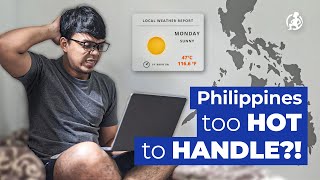
John Jonas describes how extreme heat reshapes work in the Philippines, from rolling power outages to people waking at 4 a.m. to beat the sun. His son's two-year mission there showed him why Philippine team members need flexibility when heat makes work impossible.
Chapters
Welcome to the Secret Sauce of Outsourcing podcast that's dedicated to making you better at outsourcing to the Philippines. This is episode 418, the heat in the Philippines. So my son just returned home from the Philippines from being there for two years serving a mission for the Church of Jesus Christ of Latter Day Saints. He was a missionary. Yay. I feel like I got my son back, which was so great. He was there for two years, never came home. We talked to him every week, which was really amazing. But having him home is just so, so great. And he's not even going to be home for that long. He's 22, and he'll be going back to college in a couple weeks. But it has been so great to have him back, and he's changed and different and amazing. So while he was in the Philippines, he lived with the people. Like, he lived in poor places. He spent his time in people's houses. He walked the streets, he rode the jeepneys, he spoke Tagalog. I mean, he's very fluent in. He's very fluent in Tagalog. And when he got home, one of the questions that my wife asked him, I mean, you know, we've talked to him every week. We've. We've seen it. We've. We've asked him all the questions my wife asked. So what's like, the biggest. What's one of the biggest things that impressed you with the Philippines? And his answer was the heat. He said, oh, I love the people, and they're amazing, and they're like such good people, and I have so many good friends, and I love the food. I love the chicken and the rice and the Sing Sing, I think, is what it's called. So much of the culture is great, but the heat was just constant and oppressive. Just so hot. And that, to me, was really interesting because, I mean, we hadn't. We talked about the heat, but not like this. That wasn't my impression of what was so impressing upon him. So he gets home, and the next day we go up into the mountains, and we were prepared for this. It was about. I mean, we were high up in the mountains. It was about 65 degrees, sunny, calm, so not windy. And he put on his ski jacket and put his hood on and sat in the sun shivering. And then he finally got into the car and turned the heater on. For the last couple days, he's been walking around our house with a sweatshirt on. It's like 85 degrees. He's walking around with a sweatshirt on and all of these things have just kind of combined to let me know really how hot it is in the Philippines. And I've talked about this before. I've sent emails about it, I've talked with my team about it. Occasionally I've had people complain to me about the heat, saying things like it's too hot to work during the normal day so I'm changing my schedule. I hope that's okay with you. And when I was in the Philippines, this was 2010, it was hot and I remember that the time schedules were different. At home I almost never get up before 7am I do not like getting up early. But in the Philippines, for the month that we were there, it wasn't uncommon to get up at like 5am because the sun was up and it just got hot really early. So this is a part of the culture that I didn't really understand. And I think it's good to understand the culture. The Philippines is close to the equator and the sun's heat, I mean I'm in Utah, we're pretty far north. The sun's heat when it's close to the equator just does not go through that much atmosphere. It's more intense than it is here. So Even though it's 90 degrees there, it's you know, 32, 32 degrees Celsius or 35 degrees Celsius. It's just the sun is so much more intense. He talks about another missionary who arrived, who he was, he was pretty white. This missionary was very fair skinned and his companion is walking around with an umbrella. And my son talks to him after a few days of being there he's like, oh, I'm not going to do that. That's, that's not, I'm not going to stoop that low. It's really hot, but I'm not going to stoop that low. And a week later my son sees him in the. And he is just fried, completely fried from the sun, sunburned. And he starts using an umbrella. Like walking around the streets with an umbrella covering him. Which I never talked to my son about this. That he's like, oh yeah, people walk around with umbrellas all the time. I did it my whole mission. Well, I never saw a single picture of you with an umbrella. Oh yeah, I wasn't gonna take a picture with an umbrella but I definitely used one every day. I had no idea, I had no idea that you're walking around with an umbrella to shade you from the sun and it's how intense it is. So the point of this is that when you have team members from the Philippines that are saying, hey, it's really, really hot here. I'm not working normally, or it was too hot to work today, it's real. It's legit. There are actual things going on. Recently, Julia sent an email that said, hey, we're having a heat wave here, and people are dying from this heat wave. There's just very, very little air conditioning, and the power grid is just not really strong enough to handle the air conditioning needs that they want during the middle of the day. And so they'll schedule rolling brownouts where, like, your power's going out during this time. You know that they're going to rotate through these 12 different areas. Yours is going to be off for an hour, or they'll do it through four areas. Yours is going to be off for four hours during the day, and then theirs is off for four hours, and then theirs is off for four hours. So they'll schedule power going off because it's hot, and the amount of electricity it takes to handle that, there's just not enough. Their infrastructure isn't the same as it is in the US or in Europe. Just be aware and be sensitive to this as you're working with people that when they say it's too hot, then it's like, yeah, okay, it's a real thing. It.