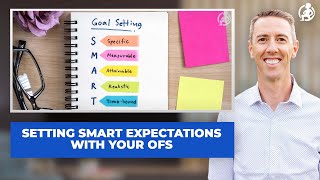
John Jonas (speaker) advises managers of Online Filipino Specialists (OFS) to set SMART expectations — Specific, Measurable, Achievable, Realistic, Time-bound — to align goals, keep VAs motivated, and improve project outcomes. He gives examples including requiring daily reports, using Basecamp for discussion and task assignment, and promoting successful hires to management roles.
Chapters
Setting Smart expectations with your OFS so I recently talked about setting smart goals in another podcast episode and in my newsletter. And I recently finished with my daughters their race calendar for 2022. So hopefully we can get a picture of it here where you can see my daughter posing and she blinks in the middle of the picture, but posing with her race day calendar, which she's pretty excited about, and the smart goals that she has on it and the plan for her racing year. I I feel like setting goals is pretty important and I practice what I preach here. Like I we set smart goals and now I'm going to talk about it in relation to an ofs. So you want to see your projects completed. You want to see work continually improving. For that to happen, you should set smart expectations with your ofs. Goals and expectations are two sides of the same coin. The goals of your OFS is to meet your expectations. That's what they want. So setting expectations for them that are smart, so specific, measurable, achievable, realistic, time bound, you give your OFS a really good idea of a goal that they can achieve. Like you give them the right expectations for what you want. When you do this, having smart expectations ensures that you and your OFS are on the same page. It lets them know what you want. It lets you hopefully know exactly what you're getting. And this is just kind of how the human mind works. When you know what the goal is and the process and there's a smart expectation involved, then any progress is really successful. So it keeps your OFS motivated because they're making progress, because they can see what's expected of them. So a really great example of like a smart expectations with your OFS is with the daily report. So I require my team to give me a daily report every day. So even when they're having a bad day, when they didn't accomplish anything, when they feel like things are going wrong, at the end of the day, they still get to report on what happened. And in that report I ask them also, Well, I asked them to say, what did they accomplish today? What did they do today? What did they work on? Number two, what problems did you run into? So if they had a bad day, they at least know. I can say, here's what the problem is, here's why I didn't accomplish anything, here's what's going on. The expectation of having that at the end of the day really helps them stay motivated to say like, oh, hopefully this problem gets solved tonight by my boss. It also helps them to not disappear because they have an outlet for letting you know what's going wrong. Usually this is how we get stuff done on Basecamp. Here's. Let me just tell you kind of how our projects work for us. So I start by telling the team what I want. That's number one. Number two, then we talk, we exchange ideas, we send screenshots, we discuss it, we debate it, we go back and forth a bunch of times. When we decide on how we want this to look, then tasks get assigned to the right people. Usually there's more discussion at that point, but then deadlines get set, feedback is exchanged, and then we repeat the process as the work gets done. And it's a system that works. It lets them know what's expected. It lets me know what I'm getting. And it has worked so well that we have so many things going on there. I recently turned someone into a the project manager for Onlinejobs pH, like the overseer, the general manager. And he. That's Joven, the first person I ever hired, and now he's the general manager of online jobs. So I don't think you need to go through this smart acronym with everything you do with your ofs. Like, there are things that are just small and just get this done and it's fine. But being clear and having realistic expectations and goals with them will be really helpful to keeping them motivated, to getting good work done, to helping manage your expectations and their expectations for you.