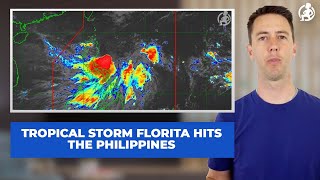
John Jonas explains how Tropical Storm Florida flooded Manila and other Philippine cities in August 2022, forcing government work and school closures. The Philippines gets hit by roughly 30 typhoons yearly. He advises employers to check on remote staff during storms, ask about flooding, and not penalize missed work.
Questions this video answers
Episode 181
September 20, 2022
Late August 2022 (around August 22, 2022)
Chapters
Welcome to the Secret Sauce of Outsourcing podcast that's dedicated to making you better at outsourcing to the Philippines. This is episode 181, Tropical Storm Florida hits the Philippines. Okay, so this is going to be a short episode because this news is a little bit outdated, but I wanted to use this to take an opportunity to talk about typhoons. Tropical Storm Florida was the sixth typhoon to enter the Philippines this year, and it happened in late August. So depending on when you're listening to this, it happened in late August 2022, like August 22 or so. It was stronger than expected. And so it caused. There was a lot of rain and a lot of flooding in Luzon, which is the main kind of the. It's the main island of the Philippines, the main province. It affected Manila and Quezon City and Makati and all kinds of big cities. And this particular storm was strong enough that the Philippines government canceled work and canceled classes along its path, which its path was. It was pretty big. So if you have an OFS in Luzon, then you might want to ask them like, hey, what happened with Tropical Storm Florida? Are you okay? Were you affected? Was there any flooding where you are? So now let me talk for a second about tropical storms in the Philippines. Typhoons. So a typhoon and a hurricane are the same thing, different names because of different geographical regions, but it's the same thing. It's a super strong storm, super strong windstorm that usually brings a lot of rain and causes a lot of flooding. The Philippines deals with something like 30 of these per year. It's a lot. Not all of them are category five. Like, like we would say like in the US where you get a category five hurricane is going to cause all kinds of damage that happens in the Philippines. I don't, I don't want to give a number, but I would say every year, once a year, and they call it a super typhoon. And then you have, like, lesser, you have a typhoon and you have a severe tropical storm. And so you have, you have a bunch of classifications of this. In any case, the Philippines is well prepared for it, but they're also prepared for it to cause a lot of destruction. And typically it causes a lot of destruction. And then people rebuild. They don't build things so that it doesn't cause destruction. That's not how the Philippines works. And they are just not set up to do that. So every time there's a storm, just be aware that if it's in the path, if you're ofs is in the path of the storm, it's going to wreck things for them and it's going to cause a lot of pain. And they're going to rebuild and they'll do it pretty quickly, but you could help them in the rebuilding process. Ask them, ask them, how are you doing? What do you need? See if they have anything. In terms of Florida, if your ofs were in the Visayas or Mindanao, which are the southern regions of the country, then this wouldn't have affected them at all, which is nice. And then that's similar to, like in the US When a hurricane comes, it's going to affect a specific area. And the Philippines is like that, where this one affected a specific area. And they always all do. So if your people are above it or below it, then it's not going to affect them. The reality is that if you have ofs working for you, you're gonna have a typhoon affect your people. There's no way to avoid this. It happens. We just don't know if they're gonna come. If the storms are gonna come to the northern part or the central or the southern part of the. Of the country. It happens all over the place. It's just something you have to prepare for or you have to know that it's going to happen. And when it does, which, you know, maybe once a year, maybe not once a year, maybe once every couple years. Just be aware, like, oh, this is a serious issue and I should probably help rather than get mad at people for not showing up to work.