Jimmy Roberts - Without employees, there's no business growth
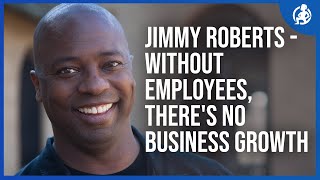
Jimmy Roberts, founder of Renaissance Appraisal, hired Filipino virtual assistants through onlinejobs.ph to grow his business. He pays $2–$8 per hour versus much higher US rates, but had to work through trust issues and two bad early hires. His advice: respect remote workers, communicate clearly, and use them to scale new ideas.
Questions this video answers
Michigan, United States.
About $2 to $8 per hour.
Chapters
Hey there. This is Jimmy Roberts with Renaissance Appraisal here in the United States. Over the next few minutes, I'm going to hopefully answer a few questions about why I chose to use onlinejobs.ph okay, just to give you a quick overview, I'm gonna tell you about again, why I chose online jobs, what I've learned from using online jobs and working with the Filipino workforce. Some of the things that I've learned about getting the most out of my remote team members. And finally, I'll end up with some opportunities that I found that some opportunities that I've learned about when working with Filipino workforce. Okay, so first off, again, my name is Jimmy Roberts. I am the founding member of Renaissance Appraisal here in the United States, Michigan in particular. And I was initially introduced to online jobs by my friend and mentor, Mr. Roy Meyer, who's also, he's a appraiser and marketing master, for lack of maven, for lack of a better word. He's currently engaged in a lot of different businesses and like I said, I learned of you all first through him. The first thing he taught me about was the idea that as an appraiser, I could actually have a reasonable work schedule and not be tied to my appraisal office. Now, if you know anything about real estate appraising, that is not the traditional way of how the business runs. It just is not. This is a very, can be a very time intensive and time intensive business. Until I met Roy, to be honest with you, I was probably working 60 to 80 hours a week easily and very little time. For me, the company was lucrative, but like I said, very little time and just draining. Roy showed me a better way and he showed me how the benefits of using, we call them virtual assistants at the time, how using virtual assistants in your business could really help basically generate time or create time for you. Gotta admit, he initially told me about you working with virtual assistants probably 18 months before I actually did anything about it, because it was a concept that I just wasn't really ready to get my head around. I understood it intellectually, but the actual practice was just too far from where I was mentally since that time. It was, well, since that time, you know, I've since changed my mind. Not only do I believe in the idea of using remote employees, whether they be in the Philippines, Costa Rica, India or here in the US I'm all for it. I'm all for it for a lot of different reasons, and we'll talk about some of those in a little bit. But I will say this, working with A virtual assistant or team member, or remote team member as I like to call them, has its challenges and it's not always been easy. It requires a level of preparation, organization, and quite frankly, trust that many people I've found don't really have. At least not at my level. Again, like I said, I work as a real estate appraiser. I own a real estate appraisal firm. And now I can honestly say that I'm moving more towards the owner role. But the reality is most real estate appraisers or most people in my industry are one or two person shops where they're the owner, operator and everything is done by them. And it is very little trust or expectation that they could even trust anybody else to do the job to their standards or whatever. And I know that sounds really bad, but you know, that's the truth. Most people don't believe that they can find anybody else to do the job as well as they do it, let alone find a Filipino citizen to do it. That's just not a concept that many people are willing to accept. And you know, to be honest, that's their shortfall and that's their short sightedness. The reality of the situation is, as you and I both know, that many of the functions that happen in the business, you don't actually need to, you know, they're business process items. Once you're trained on what to do, as with everything, once you're trained on what to do, you can do it whether you are in the Philippines, Costa Rica, or even here in the United States. So that's kind of how I got into the whole idea of using a virtual workforce to improve my business. Now I will say this. Working, having a virtual team member, at least my first few, was a bit challenging. And it was challenging for all the main reasons that any business hiring anybody is challenging. There are questions as to whether or not the person that I was hired was actually doing the work because, you know, again, they're halfway around the world. How would I know? I wouldn't. I don't know if they're doing the work. I don't know if they're doing anything for that matter. And from a trust standpoint, I had to get over that. Fortunately for me, it was easy to do. That is not the case for many people though, and I recognize that. So that is one of the things that I had to do. And then you compound that by the fact that my first two hires were not good hires. They came with good recommendations. But the reality is that even though they came with Good recommendations. The people themselves were actually not very good. And they actually did try to take advantage of me, especially as one gentleman in particular after about as lenient as I tried to be, especially knowing that he was recommended from someone I trusted. You know, he just clearly was trying to take advantage and I had had enough. Of course, as with every employee around the world, regardless if they're virtuous or not. Of course, when he realized that the end of the road had come, had come and gone, all of a sudden now he wanted to change his ways. But you know what? From that experience, the one thing that I learned is that he was no different than any other employee that I had hired in the past 10, 15 years. And I mean that to say that over the past 10, 15 years, I've had the opportunity to work with people from around the world as well as in the United States, and all of them whenever it was the end of our working relationship. The one thing that is pretty consistent is when they realized that I had had enough and that the end of the road had come. Everybody always wanted to clean up and do those things that I had been asking them to do all along. So what that taught me was that employees are employees. Around the world, there are good employees and there are some. I'm not going to say bad employees, but that's what I'm thinking. That's the term that I'm thinking. There are people who will do what they say, and there are people who will try to try to abuse your trust as a business owner, as a professional. It's up to me to figure out who's who and deal with them accordingly. But again, that's not specific to the Philippines. That is a worldwide epidemic. Sometimes you run, you come across jokers, regardless of the nationality. So that's what I learned.
Okay, so now I'd like to talk about some of the benefits of working with online jobs to hire a Filipino person to help you with your business. Really, in all honesty, based on my experience, which may not be the greatest or the most, but based on my experience as a small business owner, I can tell you this. For me, the difference is really economics. For the tasks that I need done, which are in some cases rather complex, I can get them done and I can find highly, probably even overqualified personnel to get it done for anywhere between two and eight dollars an hour, depending on what I'm looking to have done and what I need to have done, versus $20, $50 an hour. If I were only to hire people that were near to Me here in the US now, from a business standpoint, and hey, let's forget business, just from a internal pressure standpoint. The reality is if I know that if I hire somebody at say three or four dollars an hour and they're working 30 to 40 hours a week on my behalf, I know I can generate enough, I can consistently generate enough income to pay that person. I can do that assuming that the work is there. I know I can generate enough income to make that person, to make sure that that person is paid. Now if I'm paying somebody 30 to $40 an hour, again as a small business person right now, my company is just not there. I just don't have that type of bandwidth at this point. And that makes hiring anybody extremely daunting. It makes it, and to be honest, and because of that, it really strangles, puts a stranglehold on the growth of my business. Because of course, with any business, if you can't hire people, you can't grow your business. And ultimately that's what it comes down to. No matter how much technology you use in your business, eventually you're going to need to hire people to help promote your vision and get things done. And again, at two to seven dollars an hour, the seven dollars thing, some of the, some of the more executive type tasks, you know, I, I just, I just can't, I just can't pass that up as a business owner. The other thing that it gives you is again, if you're hiring someone at that, at the higher end of the range that I'm talking about, which is kind of where I am right now, the people that I've hired have been extremely skilled. They come in the door knowing how to get done what I need to get done. And, and I can work with them as a partner, not as somebody that I gotta train and teach every little itty bitty piece. So the higher costs are associated with them, are justified. And again, at those pricing points that bring so much value to my business, it's easy to pay them. So there you go. It just makes sense financially to bring on somebody if they can provide value and bring value to your company at these pricing points. The second thing it does, and this is one that it took me a while to get here, but again, I'm opening up to it. But now that I have had some experiences working with a virtual team of varying ability levels and different ability levels, the one thing that I see is as an entrepreneur, which I consider myself, there are a lot of other businesses and business ideas that I want to have done. I just never really had the time and energy or even heck, resources to really put into. Well, again, going back to what we just talked about, if I'm paying somebody, say, three to four dollars an hour to implement an idea that I have, I can do that. And I'm comfortable with that because now I can. Again, working on building our businesses here, I can get that done. And nine times out of 10, the skill set that the person that I'm going to hire, they already have that skill set that I need. I don't have to train them. Because nine times out of 10, again, at this point in my business, I'm looking to do things outside of my wheelhouse. So they already have experience in my wheelhouse. It just becomes a matter of personnel management from my vantage point. So again, that's a huge benefit. Again, that's something that I realized that something that was brought up to me by, again, my mentor, Roy. I mean, it's amazing now, from an entrepreneurial standpoint, the freedom that this gives you is very difficult to explain. But now all of a sudden, all of those ideas that you had in the back of your head, now they become viable. They become things that you can get done if you have the right personnel. And again, like I said, it's easy to find the right personnel if you're willing to take the chance to go beyond your border in this case and look for some people who can do the job that may not live next to you. I'd like to talk to you quickly about how I get the most out of my team members. Well, first off, I'm going to start with team members. It's much more common today to have to have remote employees. Every business has them. My wife works for a Fortune 100 company and she works from home two days a week. Essentially, she is a part time remote employee. And there are people in her company that work away from the office all the time. That's just what they do. That's part of their work arrangement. So what this tells me is the whole idea of going clocking into a specific location to do your job, unless you're in the manufacturing business, which I am not, is an idea that has kind of come and went. You can also see this with many of the millennial workforce. That's not something that they're interested in doing, plain and simple. I'm not part of the millennial group. A little older. But the reality is, if you could get everything done that you can get done in the office at home, why go in the office? Right. It's that philosophy that allows me not to have a major office. I can work, you know, in my home office, or I can work from the library or Starbucks for that matter. As long as I have my computer and phone, you know, I can work anywhere. And that is ultimately where we're going. I don't even know if we're going there. I guess we're already there. That is ultimately where we are. And, you know, it's just an acceptance of that fact. Now, I'll go through all that to say this. The idea. To really point out that the idea of a remote workforce, not only is it. Not only is it accepted, but it's common. It's almost expected by many people. So the only. The only thing that we would have, the only issue that we're talking about here now is not whether or not you're dealing with a remote workforce, but we're dealing with where is that remote workforce located? In my case, with online jobs, I'm choosing to have many of my team members come or live in the Philippines. Okay, now, there are some challenges with that, but you know what? Again, there are challenges with everything. The challenges with hiring anybody at any time, so that that alone should not stop anybody. But some of the things that we do to. To make sure that we are maximizing our relationships with our team or our extended team members, our remote team members, is simple. First and foremost, we treat them like the humans that they are. I know that sounds funny in it, and it seems like something that we shouldn't talk about or we shouldn't even need to say, but in the short period of time that I've been working with virtual employees or a virtual team, I have heard many colleagues and many people from other and just many lay people, people who have no idea what it's like hiring a remote workforce. I've heard them refer to people, virtual people, in some of the most derogatory terms you can imagine. They don't. And the reason for this is because the virtual employee is somewhere far away from us. And by being somewhere far away from us, somehow or another, that removes 90% of their humanity in some people's eyes. Well, that's the first mistake. If that is how you perceive your virtual teammate or remote employee, then you probably shouldn't have them. You probably shouldn't be working with them, because it's not going to work out for either one of you. Remote employees, virtual team members, whatever you want to call them, are human beings first, and they need to be treated as such. They need to Be treated with the respect that you would give anybody. And that's what needs to happen. Unfortunately, you know, we all watch the news that that doesn't always happen the way that it should. But so, number one, treat your. Treat your team members, whether they be remote or in your office, like people. That's the best way. That, that's the best thing that I found. As long as you do that, that's, you know, everything else. You know, people cut you slack, including your virtual team members. Number two is communicate. Communication is so absolutely key in my company. I overlook a lot. If you can communicate. If you communicate to me what's going on, and it helps mitigate the expectation. One of the things that. One of the things that I do not tolerate is I do not tolerate not communicating. And that comes in a lot of different forms, to be quite honest with you.
Some of my.
The reason I've had the opportunity of working with so. With so many different. So many different people over the years is quite frankly, some of my employees, some of my teammates, employees from other countries have gone dark. Right? Going dark. We all know what that means. That means that they stopped communicating. I talked to them on Monday, everything's great. Tuesday, don't hear from them. Wednesday, don't hear from them. We go by, you don't hear from them. Right. And that is a stainless steel, everybody involved. Because again, since we have this virtual relationship anyway, or this remote relationship anyway, it really affects the trust level. And I'm not big on. Once the trust is gone, the trust is gone. And that should go both ways. As an employer, if you're working for me and I don't do what I, what I said I was going to do, you should be looking at me sideways. I expect the same, and I do, because I do the same thing with the people who work with me. When they don't do what they say they're going to do, they get the sideways look. And I don't believe in working with people that I can't trust. So, you know, ultimately, you see what ends up happening. They don't work for me for very much longer after that. That said, communication is absolutely key. And by communication, if you're listening to this and you happen to be a remote employee, here's what I mean. I mean communicate over communicate. It means that if you've got something to do and it's going to take you away from the time that you're. That the person you're working with is expecting you to be working, then you need to say something. You need to tell them up front, you need to tell them what the deal is and you need to tell them and you need to tell them beforehand. And when the time arises, you need to remind them, right? Because when that person, because ultimately if they try to catch up with you and they can't, if you haven't built that relationship and built that trust bank, then the first thing that they're going to think is they're going to think that you were trying to get overrun. And nobody wants that. Nobody wants to feel like they're being suckered, period. It's not fair, but it is what it is. I had a recent scenario where a young lady was working with me. She was there on day one and on day two she was supposed to be meeting with me at 9 o' clock or teleconferencing with me at 9 o'. Clock. By the time 11, by the time 1 o' clock came around, I made multiple attempts to contact her. So had my office manager and neither one of us had heard from her. So at 105 the decision was made that, you know, we need to move on and we need, and I understand things happen, but you know, in today's, in today's age, she had five different ways that she could have contacted me personally and she had another four that she could have contacted my office manager. She chose none. That's not on me, that's on her. That's about being a professional, period. And to be honest with you, and just to be clear, if, if I'm working with somebody here in the United States and on day one they're there and on day two they don't show up, they're getting fired too. I keep it, that's, that's just the way it is. If you can't do what you say you're going to do and you prove that you are unreliable, I'm not going to have you in my business, period. I'd rather move, move on and find somebody who wants to be here than to screw around. And that's just the way it.
More from John









Stop Being the Dispatcher, Start Being the CEO: How to Scale Your Field Operations 🛠️

