John Jonas and JLD - Add Value!
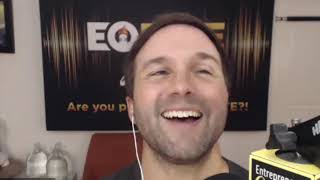
John Lee Dumas built Entrepreneur on Fire into a daily podcast with over 100 million total listens by becoming a person of value and staying consistent in a niche. His new book lays out 17 core principles for what he calls uncommon success, written over 480 hours across 273 pages.
Chapters
What's up, everybody? I am super excited to have jld John Lee Dumas from Entrepreneur on Fire here. What's up, man?
I am fired up to be here, brother. Sweet.
So here's my story with you. You started Entrepreneur on Fire, I don't know, six, seven years ago, something like that.
Try nine. Go ahead.
Nine years ago. Okay, so I think I was like, guest number 20.
You were early, brother.
Right? Super early. And when you do something like that, you just don't know what. Like, you never know how it's going to turn out. Like, is this going to be dumb or is this going to be helpful or. Because people will do 20 interviews and then they're like, oh, this sucks, I'm done.
Right?
And then it never gets any traction because they're not. They don't. You don't provide any value, any consistency to people. It just sucks.
Right.
So in your book, which I read, which is so awesome.
Thank you.
One of the first things you talk about is provide value to people. Can you go into that a little bit?
First off, let me just say, like, you are so right. Can I tell you how many interviews I've been a guest on that have never even gone live? So, I mean, talk about, like, just completely on the other end of the spectrum of wasting time, you just never know. But, you know, hey, I look back and Pat Flynn was my first guest on my show, and I interviewed him before I even launched. He took a chance, and now his show's been listened to over a million times because he's the first guest of entrepreneurs on. So sometimes you just never know and you've just got to kind of follow the gut, go with it. And to your point of value. Like, listen, there was a quote that smacked me in the face back in 2012, about three months before I launched this podcast, and it was a quote by Albert Einstein that said, try not to become a person of success, but rather a person of value. And I was like, whoa. And I looked in the mirror and I said, what are you doing to be a person of value? And the answer was nothing. I wasn't being a person of value in any way, shape or form. I was chasing success. I was failing. I was falling flat on my face. I was unhappy, I was depressed, I was broke. All the crap was happening. And I said, well, what if I actually took this guy that his name is Albert Einstein, I took him at his word and I actually followed his advice and I became a person of value. And, John, I didn't know what that meant at the time, to be honest. But it led me down a path, planted a seed that eventually bloomed into the idea of launching the first ever daily podcast interviewing entrepreneurs. And that was the goal, was just, I'm going to provide free and consistent value to my audience every single day. And we'll see what happens. We'll see if this Albert guy is full of crap. And brother, for a year, it looked like he might have been because I made like 20, 27k in a year, which isn't terrible, but, you know, wasn't going to lead the lifestyle that I necessarily wanted. But then everything did start to happen. It was like this snowball effect. And as you and I are now talking, I have over 3,000 interviews, over 100 million total listens, 1.4 million listens a month, and 90, I mean, 90 months in a row since that first year of generating over $100,000 of net profit in our business, which we publish every month in our income reports. So it worked. And it worked in a massive way by simply doing this, becoming a person of value. So that's my challenge to people that are listening right now. Like, what are you doing every single day to be a person of value? And I'm not saying launch a daily podcast. Like, what is you? What is your zone of fire? What can you do to be a person of value every single day?
You hear this thing in network marketing, Fake it till you make it.
Worst advice ever. By the way, when people say, john, what's the worst advice you've ever heard? I always use that quote. It is disgusting advice. Because, listen, people can smell inauthentic a mile away. People want the real, raw, not good stuff. Like, why do you think reality TV is so big? Seriously? Because people want the real stuff. They want genuine. They want authenticity. They want real transparency. That's why they love my income reports, because I show the good, the bad, and the ugly every single month. And there's ugly, believe me, in my income reports. It's not all pretty. And guess what? People loved the fact that I sucked when I started as an entrepreneur and as specifically a podcast. I didn't know what I was doing. I was a terrible interviewer. Luckily, I had enough sense to ask five questions and then step away from the mic and let people like John actually provide value on the show. Like, that was the one thing I did right. But I got a little bit better every day. And guess what? They liked hearing me get better. They were now rooting for me because I was being real, raw, authentic and genuine. And like that is so important. That's so key. So sorry to interrupt you there, but like, I'm so passionate about that. I hate that quote.
No, I don't have anything else to say about it because it's so. I hate it too. Like, it's such terr advice. When I read this, I was like, dude, I've got to do this interview about talking about value. Because that's the one thing that I've always told people is if you want to start a business, that's awesome. Where are you adding value? Because especially on the Internet today, it's so easy to be fake. It's so easy to create something that is garbage, doesn't add any value, doesn't contribute to people's lives in any way. It just is there, right? And so many people, when they'll buy a course or they'll find something and then they'll follow it and they'll just think, oh, I just have to do these 26 things and then I'm done.
And that's it.
No, dude, you have to think about why is someone's life better because of this? And if you don't, well, then you're not adding value and you may make some money, but it's going to be short term, it's not a long term thing. So talk to me about the consistency because this is something I personally have always struggled with. Dude, you've done things. 3,000 interviews, unbelievable. And so the more I've seen online, the more I've seen that consistency is really like the key. If you're consistent with whatever it is you're doing. People talk about the biggest YouTubers. What did they do? Dude, they were just consistent. Talk about consistency with us.
It's everything, brother. You're choking me up right now. I'm just kidding. Swallowed my tea the wrong way. But listen, consistency is everything now. It's everything for a lot of reasons. Not just the reasons that a lot of people think it's the biggest thing for getting better at something. Like that's what a lot of people don't understand about consistency. It's like, oh yeah, when you're providing value every single day, like your audience gets more, this gets more, that gets more whatever, but you actually get good at doing the thing you're doing. Like those YouTubers go back to their early videos, they were terrible. Go back to my early podcast, I was terrible. Everybody was terrible when they started doing anything. And those people that do a once a month show, they stay terrible. You can't get good doing something 12 times a year. Where's the consistency? Where's, like the actual repetitions? Where are you putting in the reps to get better at the thing that you hypothetically want to be getting better at? So that's where I was just like, well, instead of doing four episodes per month like every other podcaster is doing, and getting better really slowly and oh, by the way, also just talking with four people a month and only connecting with four people a month, what if I 10x'd the quantity? Like, what if I went all in and did a seven day a week podcast? Now I'm getting better every single day, just a little bit, but it's going to add up exponentially over time. Like, that compound effect is so flipping real. And that's what comes with consistency. Look at any athlete that you respect. Did any of them get good practicing one time per week? No. They put in the reps every single day. And that's what I was committed to do. I wanted to become a great podcaster, a wonderful interviewer, a great communicator, presenter, public speaker. I wanted those things. There's one way to do it. Put in the reps, be consistent. That's an added thing about being consistent. A lot of people don't understand, and that is so key to winning in this world. Because when you can become the best, and this is playing off something you said earlier, you're going to win. Now, what I mean by the best, it means identifying a big idea, discovering the niche within that big idea that's not being filled, and then becoming the best solution to that problem in the world. My big idea was a podcast. I niched down to the business podcast. There are hundreds of them. I niched down again to an interview of entrepreneurs of entrepreneur podcasts. There were seven other podcasts at the time. Did I want to be the 8th best podcast interviewing entrepreneurs?
No.
So I niched down a fourth time to be the best daily podcast interviewing entrepreneurs. The day that I launched. I was also the worst daily podcast interviewing entrepreneurs. The day I launched, John, I was the only daily podcast interviewing entrepreneurs. That's why I won.
I love it.
It's.
It's such good advice. And that's why I love the book and why, why I was like, dude, I gotta get you on here. I don't promote things.
I know.
That's why I'm honored I stopped doing it. I don't know if you can hear that. Hear my.
I've got a puppy too. Look at little Gussy poo. He's sleeping like A good dog. Your dog? My dog's amazing.
Your dog's amazing.
Yeah.
My wife just got home. She's exercising, which is where I should have been, but I scheduled this with.
You, by the way. Some people would be like, we gotta cut this out. Like, this is the real stuff right here. This is awesome. This is the stuff you keep in. And when people come up to your conference in three years, they'll be like, dude, like, when your dog started barking and you and Josh started talking about his dog and that stuff, like, that was cool. Like, I felt like I was part of something there.
It's totally. I mean, for years and years, I did webinars and I work at home. I mean, I've worked at home since 2004.
Yeah, since I interviewed you for sure.
My kids would come in in the middle of my webinars and be like, sorry. Like, you know, this is.
This is life. Home life. Right.
So I read your book, and it was so good and real. Like, here's the actual. Here's the advice I'm giving. And I agreed with all of it, which is not normal. When I read something, usually I read something, I'm like, well, you know, okay. But I agreed, which is awesome. So tell me about your book. Tell me about what you're teaching and why you're teaching it.
So I've interviewed those 3,000 entrepreneurs that we've talked about, John obviously being one. And I've been the mentee to those 3,000 plus mentors. I've learned so much from all of them. And in fact, applying their principles helped me build this multimillion dollar a year business for the past eight years in a row called Entrepreneurs on Fire. I've learned a lot from these interviews, and my audience. Fire Nation, is now massive. I have over 100 million listens of the podcast, 1.4 million listens every single month. And I get essentially the same 10 questions from my audience. And I can't answer independently all these questions because there's no time in the world to do that. And I wanted to sit down and say, what do successful entrepreneurs all have in common? Because I know there's a lot of commonalities. And when it boiled down, John, there were 17 core foundational principles that successful entrepreneurs share. 17. I tried to make it 18 to make it an even number. Couldn't do it. 17 core foundational principles. And I looked down and kind of being the military guy that I am, I'm like, okay, I can put these in a step by step roadmap. Step one to step 17. And I created that 17 step roadmap. And I said, this is the roadmap that will lead people to financial freedom and fulfillment. This is the roadmap that will lead people to their version of uncommon success if they're willing to put in the work. So I sat down over my nice 2020 quarantine time and I wrote. 480 hours it took me to write the 71,000 words, the 273 pages you see that comprise this book. I wrote every single word. I'm not gonna lie. Like, I considered going the ghostwriting routes. I interviewed a couple people. At the end of the day, I said, maybe in the future, but I want to write this book. This is my book. And that's why I love. And I'm very honored when you say that you felt it, it was real, it was raw. Cause I wanted to bring that kind of energy to the book. And I really was. Was very intentional about it. And this book is just that. It is that 17 step roadmap to financial freedom and fulfillment. And I know you can respect this because you've been doing this since 2004 and you know, you've still making it happen. This is a common path. This is a simple path. It's not complicated. It's not hidden, it's not scary. It's common. Now, does common and simple, does that mean hard? Yes. Yes. Well, yes, we're going to disagree here. I love the fact we're disagreeing. So this is what I want to repeat myself and say. Does simple mean easy? That's what I meant to say. And no, no, simple is not easy. Common is not easy. It is hard. It is hard work to build a right business, in my opinion. Maybe John has a different opinion. You can talk about it later. This is my show now. Just kidding. Listen, what I want to let people know is it was hard work building entrepreneurs on fire. I put in hard work. I really worked hard. But you know what else is hard? It's hard being broke. Like, it's hard living paycheck to paycheck. Like, it's hard not being able to support your kids, your family, your loved ones. It's hard, John, waking up every day doing something you're miserable about doing. Like, it is really hard, in my opinion, to do those things because I lived that for the first 32 years of my life. Being broke, being miserable, not liking what I did. That was hard too. So what did I do? I chose my hard. And my hard was to build a business that I Loved. And it was hard work following a very simple and common path that I've now been able to put into a book, into the common path to uncommon success. And I'm passionate about it, brother. I want to get this book into as many people's hands as possible, but I don't want them to think this is like a three step cure. This is just like an overnight thing. Like this is a 17 step roadmap that's gonna take you time and energy and work to implement in your life. But if you're willing to choose this hard, this book is here for you. I love it.
Where can people get it?
So listen, I have five amazing pre order bonuses because I want people to take action and not wait for the actual dates, but to pre order this book. So these five bonuses disappear on March 23rd, by the way. But if you pre order before March 23rd, I'm shipping you all three of my journals, the Freedom Mastering Podcast Journal, to your door. Like I'm literally on my expense shipping it to your door for Everybody in the U.S. outside the U.S. you get immediate access to the beautiful digital packs of all three of these journals. There's four other insane bonuses. There's personal endorsements from Gary Vaynerchuk, Seth Godin, Neil Patel, Erica Mandy, Dori Clark. There's the first chapter so you can read it and see like what my writing style is. There's a video there of me jumping in my pool with all my clothes on describing what the book's all about. All of that and the ability to pre order is@uncommonsuccessbook.com uncommonsuccessbook.com Awesome.
I love it. Thank you, man. Thanks for coming on with me. I appreciate it. Yeah, I cannot recommend for people to get this enough. Uncommonsuccessbook.com it's good. And if you'll follow the 17 things, it requires work, like you said, it requires hard work. It's not a magic bullet. It's not going to make you successful overnight. But with the work, this is a pretty good blueprint for it. So thanks, man. I appreciate it.
Appreciate you, brother.
Talk to you later.
More from John









Stop Being the Dispatcher, Start Being the CEO: How to Scale Your Field Operations 🛠️

