Mike’s OFS Journey
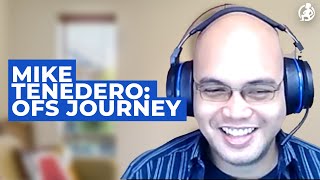
Mike de Nadero, a Filipino graphic designer, left office work for online freelancing. He built his own desktop, shared a neighbor's internet connection, and now works flexible hours using Illustrator. His advice for foreign clients: be honest, clear, and direct.
Chapters
Hello everybody. Today we'll be talking to Mr. Mike de Nadero. He's a virtual assistant for Toby Brockner. So good morning Mike. Mike, can you give us a bit of background about yourself?
I am a graphic designer technically. So I provide graphic design as a virtual assistant to Toby. He has his own business on different kind of types. And besides working for tobii, I work for freelance jobs as well. And most of them I find contracts on online jobs which is to be honest, nowadays is more effective versus the other sites that I have search search to. So about me. Yes, Stuck in quarantine, suffering from extreme alcohol, which is, I don't know, it sobers me sometime because you have this a lot of energy in you that instead of going to the gym you got stuck. Especially now we have another lockdown and businesses are still closing. And yeah, after this I'm gonna grab a whiskey and I don't know where I'm gonna go after that. So yeah, I'm sober right now because I have an interview.
Can I ask when did you first hear about online work or working from home? And how did you get started?
Way back, I was really working in the office. You need to stay on a corporate office, get promoted. The longer you stay, the better, the better the resume looks. I just like to. I just, I just hate the traffic. I just, I just thought the, there's something more and then so I search Google, I search it and then I just, I just gamble and say okay, screw this, I'm not gonna, I'm not, I'm not gonna, not gonna stay for the traffic. I'm not gonna squeeze myself every morning. I'm not gonna do that. So yeah, I look for a job. I will look for something more comfortable. I'm not saying that it's for everyone, but for me it works.
Well, now that you work from home, can you walk us through your typical day? What is it like?
Basically I just wake up in the morning, check my email. Sometimes maybe if I don't have enough that enough tasks or assignments. I look for jobs or projects, different platforms. But most of the time from 6am to 9pm I do work still with breaks in between. To be honest, as an artist, I don't feel like working at all. I mean imagine that time, 6am to 9pm One moment I will be sitting here the next when I realized that all my task is done, I would just see that the sound is almost down. I mean it just. The time passes like I don't know, maybe I just love my work. So that's basically all I can say because when I cannot tell you the everyday routine sometimes I go to lunch to eat but that's basically it. My life is boring if you. If you summarize it but it's just that I go in and then I sign out and then on weekend again you will probably hear this more often I go drink whiskey.
What was it like when you first started working online?
Very difficult because I don't even have a really decent computer when I started working online. But the very good points that I have learned is I learned how to construct my own desktop because I don't I used to work on on office so of course office provides the desktop for you to work on. What I did was I have a brother in law who has this stocks of computer, unused computer. I just explored the equipment and then I don't know, just search on ask people how to do it and then fortunately I constructed one. So when I was working online I don't even have an Internet that time. Like Internet that time is really scarce. I mean you don't really have. Unlike right now we have wireless most of the time the most common Internet connection is wired. So I have to set arrangements to the neighbor that I will be buying this really long LAN cables and then attach it to them and then I'll just pay the fee for a monthly like I will pay for the Internet connection just let it stay there and then it poses many problems to be honest with you because sometimes the one that the neighbor is really acting weird or sometimes I don't know yet he or she is in a bad mood and then he was just turning it off and then okay, my work is gone, my life is gone. And then until when I gathered enough money and yeah I started to yeah, I won't be connected with you anymore. I would be calling my, my Internet subscriber to have an Internet connection in the house and then yeah, now I live in my own apartment and I'm happy that I decided to go online.
Since you started working online, what did you notice are the unique opportunities and unique challenges when it comes to working online compared to when you work in an office.
Like I said earlier, I work from 6am to 9 9pm I mean imagine if you will work in an office that long. I mean you would basically say that you really hate your life at some point. But I mean what I notice about. I mean I have nothing against people who work in the office. Maybe they are really good at what they do, they are productive. I'm not saying that they are not productive compared to me. But on my experience when I was working at the office, I feel like I am more productive because in the office you have a break of 1 hour, 15 minutes in the morning and 15 minutes in the afternoon. And then as soon as the time ticks five or six, everyone is rushing through the biometrics to sign out that experience. Here I am more on the output, so if I can finish the task earlier, I'll get paid so I can do more. So the challenge is how fast can you do all these jobs in order for you to get another job? Which for me it's much more productive. It feels like I am somehow running my own business without an employee or a business permit, of course. But for me, that is more. I feel more complete versus going on a regular day shift. I feel like I'm in control of the money that is coming through. If I want to earn more, I just have to spend more time working or looking for a job that could be also applied to a regular office job. But as a graphic designer, as a designer, as an artist. No, you need to find your own jobs in order for you to earn more.
Especially for those who are thinking of working online. What is it like to work for a foreigner, especially foreign clients?
Toby working for you is like embracing the cross. No, I mean Toby is really cool. Don't get me wrong. I mean, we have same interest. He. He loves cigars and whiskey as well. That's why. I don't know, there's something. He was once a cage fighter. I mean, it's just really. Yeah, it's awesome. Awesome to have a boss like that. It's like, yeah, he's really cool. He's really. He's really letting me do something like be. Letting me be creative on some things. Sometimes I present myself, hey, can I explore in this kind of software so we can promote your brand more? One thing that I can give a straight advice to people who want to work with them. Don't just say yes all the time, Be honest. Because most of the time when I work with Caucasian, American, Australian, they would really like to hear straightforward. What would be your issues? How can we help you achieve this goal? Because I have seen a lot of Filipinos work like yes, yes, I can. Yes. Even though he doesn't know or she doesn't know how to do it. So just be honest, Just be straightforward. If you can do it, or at least if you have this somehow small glimpse of you can do it, just say, I will do my best.
Yes. Because I think within the culture, then we have this. Fake it till you make it. There's nothing wrong with it, but you have to be honest. Like, if you don't know this task but you want to try it, I would like to try it. I haven't done yet. I'm going to learn how to do it. Can you give me time? Can you help me with resources to do it? Rather than, yes, I can do it better. You Google furiously working on a short deadline, then expected that you can do it within the normal deadlines.
Yeah. And then another thing. A lot. I don't know if there are still people, but during my time, we are so intimidated to speak in English. The thing is, they understand that we are in a different. We are from a different country. The most important thing, you just don't have to be so conscious about your accent or how you pronounce it. As long as you deliver the message clear, that's good for them.
Yes. Yes.
Because we Filipinos, we care so much. Like, for example, I pronounce something wrong, and then a friend of me, oh, that's wrong. This is the right way to pronounce it. We become embarrassed and ashamed of it. We criticize ourselves. Although it's not necessary for them, as long as you can deliver the message, you can say it to them. They will find a way to understand, and you can basically work in harmony with them.
And if they don't understand, they would just say, again, I don't know what you said. I know it's. Sometimes it's easier to talk to them because they tell you out right now. What did you say? Can you write that down? Can you spell it out?
Yeah. Can you share me your screen and show me what you're trying to say?
Yes. You mentioned you started working online some years ago. I think you probably noticed the difference between getting work back then and getting work now. So what advice can you give to Filipinos who want to pursue working online now? And how is it different from when you started looking for work back then?
Actually, it's not so different. The most common mistake that I did before is that when I apply to the. This is the habit. Most of us, which is understandable, we flood every single post with our resume and everything else like that. And then we. We kind of lost track of what type of company we applied for or even. We do not look at the company background itself. Like, we just send resumes to people, to companies, because we want to land into a job. I'm guilty with that. I'm not gonna lie even up to date, I mean I even do that. But the thing is, at least at some point I've learned my lesson. I look into the company, I look at what type of company it is. Especially now, way back before there's Internet but it's not accessible. Unlike today, you have actually a smartphone, a mobile phone, an Internet, a laptop everywhere. You can basically google every company that you apply for and while you are at it, you're applying online. You basically just simply add another tab and then just google the company. So I would advise that you do search and at least, at least know the company initially and then once you know and let think of it like this way, the position and the company. Is it really something that you want to be involved with? Is it something that you want to be a part with? What if I am a graphic designer and I saw a company that is more on creating graphs and bar and for me I find it really boring. Do I want to stay with that? Because my concern here is I want the Filipino people to have really good standards in terms of employment. Because if you don't like the job, if you don't like, don't feel like you know, if you don't based on the knowledge you have gathered, if you don't think that you want to be part of this team, then don't apply for it. Just look and look and research about the company. That's very old. That is the advice before when you are walking into a company and submitting your resume with it. That will always be the case until.
Today given your experience as a graphic designer. Mike, because we also get this question a lot. What are the minimal minimum technical requirements if you want to start working as a graphic designer online? What do you need? If you want to get started on.
My case, I started using Pension four when that was the highest technology there is. Cortoduo I was using pension for that is really bad to do it but I managed to do it out of I don't have money. I mean there are cases if you are. If you can grind yourself into that, then sure start with a really low specs PC But I do not recommend you work on a tablet laptop. That's okay laptop most of the time their recent release they're actually good. But to give you at least, at least a specs technically at least i3 specs with really good graphics card. Basically if you bought a laptop and you find something that sometimes it's okay with with the. With its video part but sometimes you have to improve it. I'm not that Very accurate on, on the gigabyte that you, you need. But basically, if you can start with a really good processor, that's better. But if you don't have money for it, make sure that the first job that you will be jumping into can support that software that you will install to that laptop. On my case, instead of using Photoshop, I use Illustrator all the time, which that time Pension four can support, no problem. But if I use Photoshop, that will really screw up my desktop, like really slow. Slower than slow. Yeah. So yeah, that I started that way. You have to do like, that's why I'm proficient in Illustrator, because that's where I started. That's how I started my freelance gig. But some people would really use Photoshop, like design on Photoshop, which is really, you need really a hard requirement for that.
That's good advice. You have to look at what tools you're using to determine the computer that you're using. Thank you. That's actually very valuable. In addition to that advice you mentioned earlier, what else do you think we should do to make ourselves more globally competitive?
Don't just say yes all the time. If the time frame, for example, their night shift. Right, night shift. If you don't think that you would fit on that criteria, then don't enter the job. Don't waste anybody's time. Just be honest with that by yourself and please don't, don't, don't, don't, don't stay like two, three months. Don't do that. Because I mean, it's really embarrassing. If, if you have other things to do and you don't. I mean, unless you have really problem with the company, then okay, leave the company. But if the problem is you, please check yourself first before you get into yourself into, get yourself into something like involving yourself into work, please check yourself. If you're really fit for this, if you want to go on night shift, then it, or at least before you start you say give me one week to adjust and then I don't know, maybe watch Netflix until the morning so that your body could adapt. I don't know. I mean, there are a lot of things. And then situate that three days. I don't think I'm gonna, I don't think I feel good. Okay, then just reject the offer.
Yes. And don't apply for those jobs again.
I mean, they can try. I mean, there's no problem with it. They could just basically say that I could apply, but then just basically test yourself, dig into it. If you think this is not this is not for me. Or maybe there's another way, like maybe confront the. Confront the employer. Say, I'm not really, as I mentioned, be honest. I'm not really well adapted to this. But what if you give me at least two weeks of trial and then if you don't find. If I'm not happy with it and you're not happy with me, and then you can find another. Another VA or employee or artists or employee.
That's actually good advice because it's a way to establish the expectations without reaching the point that after the end of two weeks, at least you have an agreement that, okay, we're both that happy. So if we end this arrangement, no hard feelings, because we both tried. Rather than when you wait for the employer to tell you it's been two weeks and you haven't performed well, actually.
I did that previously. The problem with that employer is that he's not expecting me, that I will bring that trump that card. Because I think into his perspective, we are doing well because I'm meeting the deadlines, I'm meeting the job requirements, I'm doing the stuff. But he didn't check if I am okay. He's happy with me, but I'm not happy with him. So I told him, okay, I don't think this is one for me. I mean, that's brutal of me, sure, but that's just me being honest. So when I told him that, hey, we had an arrangement, I have to start with you in two weeks, and then if I don't, the arrangement is not just to make you happy, but to make myself happy as well. So if one goes the other, then the deal is off. I told him that. And yeah, he accepted it.
Any closing statements, final words before we end?
My closing statement and advice to people is there is a saying from a guy, I will not say his name, this author of the book, because I'd be basically butchering his name. So there's a saying in his book, says birds born in cages, thinks flying is a disease. If you feel like you are in the norm, for example, way back, we are in the norm of going to the office, staying there for a long time, and then this pandemic happens. Everyone is adjusting to online jobs. And I basically was ahead of my time during this. During that time, I was ahead of the curve. And I am already on an online job, guy. If you think out of this, for now, we are all online and some of you think that there is a much better way to do this. Just grab it, just go for it. Don't just stay with the norm. Of course I would be. I would be behind my days. Okay. I mean, I would basically not explore. I would not be as courageous as before when I was working in the office. Because I believe I would. I would definitely say this. This is my legacy stops. This is where the exploration stops for. I can still explore, sure. But I have established roots here. I have clients. I mean, I would be basically contented with it, but I would, I would like to grow. But if people, fellow Filipinos, if you have other things that you have in mind that you think would click no matter what other people say to you, even though they say way back in my time, they say online jobs is not real job, if they say that to you, then disregard them. Because people, at the end of the day, they don't really care about how you, how you do things. They don't care how you work hard. They just care about the results. If you're successful, they will like you. If you're not, you're just everybody else.
Thank you so much, Mike. So thank you so much for your words of miss them.
More from John









Stop Being the Dispatcher, Start Being the CEO: How to Scale Your Field Operations 🛠️

