Outsourcing: India Vs. Philippines | How Philippines Outsourcing Is Different From India
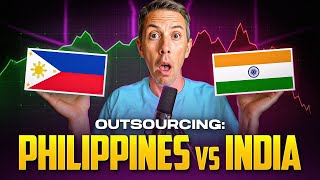
John Jonas compares outsourcing to India versus the Philippines across communication, work ethic, cost, and cultural traits. Philippines workers tend to have better English accents and stronger loyalty, while India has deeper technical education and lower wages. Both countries face different challenges as AI reshapes the outsourcing landscape.
Chapters
I called Amazon one time for a problem with an order that I had and I got someone in India on the phone. I didn't really understand him very well. He didn't understand me. He couldn't solve my problem. I got frustrated and I hung up. I immediately called back hoping to get someone else. And this time I got routed to the Philippines and the person was super helpful and they solved my problem really quickly and I was done. Outsourcing to the Philippines versus outsourcing to India or which is better in 2025 and beyond? Let's talk about it. So for about 30 years, from 1980 to about 2010, India was the go to place for outsourcing. If you heard the word outsourcing, you thought the country India. That was how it was. And people had figured, well, there's over a billion people in India and they're pretty well educated. So you've got to be able to find good people there and get good work done. Starting around 2005, things started to shift towards the Philippines. In 2010, there was kind of an inflection point. There's only a hundred million people in the Philippines, which is 10 more than 10 times less than India. Can you find good people in the Philippines and does it make more sense than outsourcing to India? I have over 20 years of experience in outsourcing and in hiring overseas. So let's talk about the key differences between India and the Philippines. So the first difference, the primary difference you're going to notice, the biggest hurdle is communication. You're very familiar with Indian English already. Oftentimes as Westerners, we struggle to understand them, they struggle to understand us. Very often they're not able to help solve our problems. And this is the first reason why people really started moving to the Philippines was because the English in the Philippines is very Americanized and the culture of the Philippines is Americanized, which allows for really, really good communication. In fact, the Philippines has two official languages. One is Tagalog, the other one is English. And most people learn English starting from preschool or kindergarten. The Philippines is an island nation of over 7,000 islands with over 130 languages spoken, not different dialects. Those are actual different languages. Like they don't understand each other. So the way they overcome that in the Philippines is by speaking English to each other. So if you're from one island, you go to another island, you're going to speak English to the people there. Now in India, they're also taught English, but typically they're taught British English. Where in the Philippines they're taught American English. And like I said, you recognize the Indian accent because you've talked to people on the phone. You don't recognize the Filipino accent because. Because while there's an accent, it's probably the closest accent to an American accent of all the other English speaking countries outside of Canada. Then when you combine that, Filipinos watch American tv where India has a lot of their own media production, you get Filipinos who are very, very westernized. They watch the NBA, they watch Dancing with the Stars, they listen to American podcasts in the Philippines, they're very accustomed to American culture, which is very different in India. So in communication, you'll probably never have a communication problem with someone in the Philippines where communicating with someone in India, while you may understand the English, the cultural differences of actually understanding the meaning behind what's being said is very difficult. So really quickly, then let's listen to some Filipino accent and then we'll listen to some India accent. So here's someone in the Philippines who works for me and his English.
Hi, I am John's video editor. Pleased to meet you. Internet. This is an example of Filipino English.
And here are people from India and their English accent.
It is less challenging than to reach near the track. So to go up up to that time, so much energy you will lose that you required minimum one hour to recover.
Hopefully in hearing that, you can understand the difference between Filipino accent and India accent, which is not the real difference in their English. The real difference in communicating with the Philippines versus India is in the ease of understanding what is in intended in the communication with the Philippines. You'll never have a problem with India, you're going to have problems consistently. So that's communication. It's the first thing you're going to notice. It's very easy in the Philippines, it's much harder in India. Next, let's get into cultural differences as well. English is a cultural difference. There's a whole bunch of other cultural traits that make this significantly easier in the Philippines versus in India. While English is a cultural difference, there are a whole bunch of other cultural differences that make outsourcing to the Philippines much easier than outsourcing to India. So one of the very first things you'll notice with the Philippines is they're very polite and pleasing. They want to make you happy and India doesn't have this cultural trait. Next, in the Philippines they're very loyal almost to a fault. Where in India they're very oriented towards freelance work or how can I get ahead versus the Philippines, where they really just want to Stick with you and have a long term stable job. In an outsourcing situation, that loyalty is a really, really big deal where you can teach things and train things that you really have a hard time teaching and training. In India, in the Philippines, this means you can have high level people working for you because they're not quitting. Where in India, you really need to maintain it to low level people who can learn what you're offering really, really quickly and easily because they don't stick around. Next in culture is the problem solving mindset. So one of the things people think about when they consider outsourcing is that these people can only follow instructions. I've been told that so many times over the years. Where the reality is that in India they struggle to do things that are outside of the box. And in the Philippines they're thinkers and they want to think through problems and processes and solve problems. Now, in both countries they're very intelligent and very well educated, including in India. However, the culture of thinking through and solving problems that exists in the Philippines is not there in India, at least not when there's a hierarchical structure. At least not when there's a set of instructions to be followed or when there's a boss to be pleased. This makes getting thinking work done in India very difficult. Another really important cultural trait is entrepreneurism. In the Philippines, they're very not entrepreneurial by nature. They don't want to steal your idea, they don't want to take your business and implement it on their own. They don't want to try and create this business for themselves. Whereas in India they're very entrepreneurial. So here's a really good example of this entrepreneurial nature versus non entrepreneurial. I have a good friend, he's hiring someone in India. He's interviewing this guy who has a company with a whole bunch of people working for him. And his first question is, well, what's your business model here? And my friend was like, well, how does that matter? Oh, I just want to know. I just want to understand your business model. He hires them, later, they steal the business model, implement it on their own. So the question of, well, what's your business model here? Isn't, oh, we just want to know. It's really asking, can we steal this from you or not? In the Philippines, I've seen hundreds of thousands of people do this and I've never seen someone steal a business idea. And that stems from they're very not entrepreneurial. Now there's definitely some entrepreneurism in the Philippines, but typically they think of it as opening a little tiny store in the front of your house, which they call these sorry, sorry stores that are on every corner and everybody does this. The idea of, oh, I'm gonna buy my own domain and steal your business idea, your software idea and sell it to the world is really not a thing in the Philippines. But rather they value a stable long term job where they can support their family versus the risk of starting something that might go really big for them. It makes Filipinos much less likely to steal clients or steal customer data or steal ideas. The incentive structure just isn't there in the Philippines. Next piece of culture in India. While the caste system was mostly eliminated years ago, the culture around the caste system still exists. That culture prevents people from interacting with one another. It prevents someone from a lower status from interacting with or questioning someone from an upper status. So, and this is where the term yes man comes from. If you're from a lower status, you're not allowed to say no to someone from an upper status. So when you hire someone, by nature, they are in a lower status than you, the boss, and they don't say no to you. So when you ask, how's the project going? Yes. Are you working on it? Yes. Is it going to be done on time? Yes. Well, yes, they have to say yes. That's part of the culture. And it's very difficult to overcome that piece of the culture in most situations. The first time I was told this, I was surprised. The second time someone came to me and said, oh yeah, I figured this out years ago that I couldn't hire people in India. The second time someone from India came to me and said, oh yeah, I figured out years ago that I can't hire people from my own country. But hiring from the Philippines has been amazing for me. Second time it was less shocking. So this isn't some just random person in America recognizing these cultural differences. The recognition of the cultural difference in outsourcing to India versus the Philippines has even gone as far as inside of India itself. And while we're talking about culture, let's talk a little bit about work ethic and stability. I already mentioned that Filipinos are very loyal, almost to a fault, to where? Like the very first person I ever hired in The Philippines in 2005 still works for me today. The first person I hired in India and the second person really only lasted a week or two. It never worked out for me. Whereas I have people from the Philippines that have worked for me for over 20 years and then people that have worked for me since 2007 and 2009 and 2010 and 2012 and on and on. They really value that long term stable job and they'll do a lot of things to keep the job once you provide it. That loyalty provides stability. Now with work ethic. This is a really interesting one that nobody tells you until you figure it out for yourself. But in India they don't really love foreigners. They don't really like America. They don't care for you as their boss, they make fun of you behind their back versus the Philippines. It's really interesting. They look up to foreigners and actually they really like American bosses. They will brag about you, their American boss to their friends on Friday night when they're out at a party. Their job working for an American company becomes a source of pride in the Philippines versus a source of oh my stupid American boss in India. Slight difference really changes the way they want to interact with you and the effort they're willing to put in when working with you. Now education in India versus the Philippines, actually there's not a whole lot of difference. Both countries have very good education systems. Most people you meet are going to have a university degree and this is a real post high school, three or four year university degree technical certificates are highly sought after in both places. You're going to find really highly educated people in both places. The next really big difference in outsourcing to the Philippines versus outsourcing to India is cost. When I started hiring in the Philippines, when I started hiring in the Philippines in 2005, it was because the cost India was already approaching the cost in the US at the time the wages I was finding was about $10 an hour versus the Philippines was about $1.80 an hour. Now wages have definitely gone up since I started. You're not going to find people at $1.80 an hour. The low end wage starts at around $4 an hour. It's still quite a bit better than the low end wages you're going to find in India. Now the last really key difference that you're going to find is gender equality. The Philippines is a very high gender equality country where you will find that people in the Philippines do not mind working for a female boss versus a male boss. They don't care. They'll work just as well. They'll work just as hard. Also you have no problem finding female staff members versus male staff members. In India it's a different picture. They don't like to work for a female boss. If you're male, that's acceptable. Also you have a really hard time finding female staff members in India. The culture just doesn't lend itself towards females in the workforce. When you add all this up, you start to see why the world's outsourcing moved from India to the Philippines. Around 2010 was really the inflection point. And around 2010 was when I had my really eye opening experience of what was actually happening. I called Amazon one time for a problem with an order that I had and I got someone in India on the phone. I didn't really understand him very well. He didn't understand me. He couldn't solve my problem. I got frustrated and I hung up. I immediately called back hoping to get someone else. And this time I got routed to the Philippines. And I only knew that I got routed to the Philippines because I recognized the slight accent from the Philippines and the person was super helpful. And they solved my problem really quickly. And I was done. Right after I got off the phone, I recognized Amazon is testing a call center in India versus a call center in the Philippines. And in India I got frustrated and hung up and immediately called back. And in the Philippines they solved my problem. Since then, I've noticed the world's call centers transitioning from India to the Philippines. You would be really hard pressed today to call up a major corporation and get someone in India on the phone. They're just not doing it anymore. Today you get people in the Philippines, you just don't recognize that they're in the Philippines because the accent is slightly, because the accent is slight, they're helpful. Usually they solve your problem. So this is all true in 2025. What about moving forward? Where's the world's outsourcing going? Well, in about 2012, the Philippines government really woke up to what was happening across the world and outsourcing and how important technical skills, English and education were. The Philippines government is very on board with having this be a major sector of the Philippine economy. They're incentivizing it and they're building up programs to help educate people both in English, in English writing and then in technical positions. Accountants or programmers or design. Government is fully on board with helping Filipino citizens get jobs working online, but also with helping companies outsource to the Philippines efficiently and easily. When you combine all the cultural advantages of the Philippines along with the government backing, the Philippines is going to be a major, major player in the world's outsourcing for the foreseeable future. Now, if you like this video, I have another video about AI and how it's affecting outsourcing. What it's going to do to the future of outsourcing and virtual assistants and how the Philippines is uniquely positioned to take advantage of it rather than being taken over by it.
More from John









Stop Being the Dispatcher, Start Being the CEO: How to Scale Your Field Operations 🛠️

