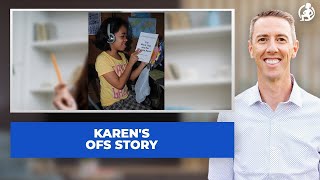
John Jonas tells Karen's story, a Filipino worker who balanced family and job through remote work. Her experience shows how flexible arrangements help workers in cultures where family obligations run deep, and what employers miss when they ignore these realities.
Chapters
Welcome to the Secret Sauce of Outsourcing podcast that's dedicated to making you better at working with OFS online Filipino specialists. This is episode 337, Perrin's OFS story. So we've had an emphasis recently on telling stories of people in the Philippines. I've had this emphasis with my team. We are creating videos. We're just trying to tell people stories because some of these stories are really fascinating and as a from a marketing perspective, storytelling works really well. So we're trying to tell the stories of people in the Philippines. So I get this email, email recently from Julia, one of my ofs about her friend Karen. And she asked Karen if she would tell her story. And Karen's story is. It has so many classic Filipino elements in it. She grew up in a small. In a small town. And when she graduated from college, she was super excited to get a job and move away and live independently. So she moves from her small town in South Cotabato and moves to Cebu, which is where the jobs are. She moves to another island because there are no jobs in South Cotabato and there are jobs in Manila and there are jobs in Cebu. So she moves to Cebu, where she can get a job. So she's away from her family, she's in a new place and she's excited to be living on her own. Her career is going well, but then within a year, a family problem at home forces her to quit her job and move home. So there. And I'm going to read this story from Karen in just a second. But so many things here. Number one, when you hire someone in the Philippines, you let them stay at home in the first place rather than moving away from their family to work so they can send money home, which is such a common experience in the Philippines. Number two, quitting a job because you have to go help your family is so common. So if you have someone in the Philippines who's working for you with a problem, or if they try and quit their job because they have a family problem, you now know and understand the situation so you can work through that with them. I mean, I had a really good person once try and quit because they had a family problem. And I was like, yeah, no, that's. I don't want you to quit. I'm willing to wait for you to help your family and to work part time on the side as you're taking care of people. So there are things that you can do to prevent just losing someone because of this cultural thing in the Philippines, which is such a different cultural thing than in the US where we're like, oh, we'll just hire a nurse for you and I'm not going to quit my job, I'll just pay for a nurse. Well, in the Philippines, that's not how it works. So let me now read to you what Karen wrote her story about what happened. My name is Karen. I'm passionate about learning new skills and love watching movies and listening to music. In my free time, you can often find me cleaning the house. I also enjoy watching new videos and staying up to date with the latest advancements in the online world. Moreover, I'm a responsible daughter and a caring sister who is eager to help my family's needs. I decided to transition to online work primarily due to the unique circumstances and responsibilities I needed to address. My sister was diagnosed with bipolar disorder and schizophrenia, requiring significant care and support. Hopefully you can see a picture of her sister here if you're watching it on YouTube. Otherwise podcast. Sorry, you can't get that. Working and caring for my sister simultaneously has been unique and challenging experience that I wouldn't trade for anything. It's a delicate balancing act that requires careful time management, adaptability, and a lot of patience. It's not without its difficulties. Juggling work demands and caregiving responsibilities can sometimes be overwhelming, and there are moments when I feel torn between the two. It can be emotionally challenging to witness my sister go through difficult times while trying to stay focused on work tasks, but I've learned to be compassionate with myself and understand that it's okay to take breaks when needed. Communication and support from my employer and colleagues have been essential in making this arrangement work. Being open about my situation and understanding the work environment has made a significant difference. Their support and empathy have reassured me that I can effectively manage both aspects of my life, which so I'm just going to interject here. What a great employer. To understand you're a good worker and you have family problems and I'm going to support you in that taking care of your sister who is significantly needy and you're doing a good job for me and so I'm going to let you be flexible in in the work that you do and in the hours that you do and the time that you spend and how you communicate with people. What a great employer. Despite the challenges, this experience has taught me valuable life lessons about empathy, resilience, and the importance of self care. I've grown as a person through the process. It's a journey that constantly reminds me of the significance of compassion and the need to find a healthy Work life balance. I still want to work from home even if my sister didn't get sick, because working from home offers certain benefits such as flexibility, reduced commuting time, the ability to create a comfortable and personalized workspace. It allows me for a better work life balance and provides opportunities to be more present for my family members and personal commitments. So that's the end of what she wrote. I'm going to interject a piece about this working from home thing. So whenever we are interviewing people in the Philippines, we always ask them about their lives and they always bring it back to working from home or working because of onlinejobs. Ph every single time they want to talk about their career as a online worker. And I don't have a great answer for why they always do. No matter what we do, we say like, we don't want to talk about work, we want to talk about your personal life. We want to know about you. Always bring it back. Some of that maybe has to do with what she just said, the flexibility and the reduced community time and how life changing that is that work is life. Often in the Philippines, there's, if you're a farmer, if you're in a rural community, you wake up and you work and when the sun goes down, you stop working and you go to sleep and that's it. And life is hard and just the ability to work and have a work life balance is a really big deal for a lot of people. So every time we ask them to talk about their life, they're like, oh well, I like to listen to music and my job is like this and I like my job and I do this and I want to learn more. It always comes back to their work. And then for Karen, man, she's so caring, which is so common among the Filipino people. Like, she's compassionate and she wants to help her sister and she wants to help her employer. She wants to do a good job, she wants to contribute. This is why the Philippines is so different than any other culture that I have experienced in the world in terms of outsourcing and hiring and finding great people there. We'll continue to tell stories. Hopefully I can. I have another one coming up soon. Podcast that is really, really good that we've been working on for a little while now. So thanks for listening.