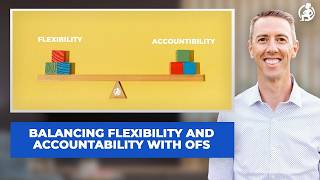
John Jonas explains why Filipino virtual assistants work best under flexible managers who balance accountability with understanding. He contrasts rigid corporate culture with remote work freedom, showing how schedule leniency and input solicitation build loyalty while project management and daily reports maintain results.
Chapters
Welcome to the Secret Sauce of Outsourcing podcast that's dedicated to making you better at working with OFS online Filipino specialists. This is episode 299, balancing accountability and flexibility with your OFS. So one of my office wrote an email about this, about flexibility and accountability, and she had seen some things from employers. She goes through my email and she wrote this whole big, long piece about it. And I just thought, you know, before we talk about balancing flexibility and accountability for a lot of employers, I think we need to ask, why are we even talking about this? Because isn't accountability the only thing that matters? Or at least that's what a lot of people think. Now, in my experience and from my perspective, accountability and flexibility are equally important if you want an OFS who's reliable, who delivers good work, and who wants to work for you. If they want to work for you, they'll be more loyal. And I talked about this in the last episode. If they're loyal to you, they're more likely to work just for you and for nobody else. But this requires flexibility. So if you're all about accountability and no flexibility, well, just be aware. I mean, this, It'll. It can work, but just be aware that their loyalty greatly diminishes if you're just about accountability and you're not willing to be flexible with them. And I know there's a lot of employers that really like, harp on accountability. I mean, this is why we have time trackers. This is why we have project management. This is why we do daily reports. These are all accountability things. Now, I don't use time tracker, but I do use project management, and I do use daily reports. But some bosses out there can't help but micromanage, like to the minute what is going on with their workers time, because they feel like everything needs to be exactly fair and they need to be accountable for everything they did. And I don't feel that way. And a lot of employers don't feel that way, but some do. So here's where flexibility comes into this. In corporate culture in the Philippines, there's very little flexibility. The corporate structure is very vertical and it's very, very rigid. And like, even in some places, bathroom breaks are regimented and timed and measured. This is why job titles are so important, because the more important your job title is, the more flexibility you get in your job in the Philippines. So when given a chance to work from home, it's kind of like winning the lottery. They don't have to commute, they don't have to go out to eat all the time. They don't have to spend, spend money on transportation or clothes. There's all kinds of things where that save them money and so much time. They can be comfortable at home and even when working on a schedule. And then very often they only have to deal with one boss rather than multiple levels of management breathing down their necks like in a corporate job in the Philippines. They get to work on pleasing just you, just one boss. They also think that life is going to be more flexible. And when you start working from home, a whole host of other problems exist that don't exist in the corporate world. For example, you're working at home and you have kids and kids scrape their knee and they have problems and they get sick when, if you just go to work, well, you don't deal with any of that. You just, once you leave, you're gone. And your kids are being raised by their grandparents and so you don't deal with any of those things. So flexibility there with your kids doesn't really matter. It's also painful because you don't get to see your kids where now you're working at home and you get to see your kids, but your kids have demands from you. And if you're there and your kids see that you can be there for them, but you have a boss that says no, you can't be there for them. You have no flexibility. You have to be at work at exactly this time and you have to be this many minutes. And so you don't have that flexibility with your kids. Well, that's a really, that's really hard on that relationship. And it's not just kids. There's lots of other things where there are time demands or flexibility demands for the person working. And then because they feel like they've won the lottery, usually when they get to work from home, they really want to make you happy. They want you to be this dream boss that is really good to them. And then they, they really really want to do things to keep their job and to make you happy. And then if you come down on them really hard, all of a sudden they lose that motivation of wow, this boss is really amazing and this really is a dream. Working from home, they start to get the same feeling of the corporate culture again and some of that dreaminess goes away and that decreases motivation to do good work, to show up, to go above and beyond now that they won't do good things. But it really decreases their motivation to make you happy. And then on your side, it really doesn't take a lot to be flexible with them where the benefits are really high. If you're flexible with them, it shows that you trust them. It shows that you trust them to get their work done. It shows that you're confident in their abilities. It inspires morale. So in our case, we let almost all of our people work whenever they want. They get to work the day shift. A lot of them will work really early morning. Some of them will work like starting in the. Starting at midday and work into the evening or in the night. We let them work whenever they want outside of a couple shifts. Where we are, we're trying to cover shifts for specific things like customer service. But even then, we have multiple people to cover these shifts. And so we let them overlap and we let them work with each other and saying, hey, I'm going out of town, can you cover? Or whatever it is. We try and be really flexible with that. We also. We don't fire people for making mistakes. We try and work through mistakes with people. We ask for feedback from all of our people. We ask for their input on the processes that we have and the things that we're doing and how we could improve. And the website and our systems, we ask for their feedback so they're part of that process. So that's how we show flexibility with people. And what we see is in exchange, they show accountability to us. When we're really good to them, they really want to be good to us. And they show their accountability through their daily reports. I see really amazing daily reports. Even when maybe I'm not interacting with them every day, they're still showing up and doing their stuff and telling me exactly what they're doing on a daily basis. They assign tasks to themselves. They give suggestions on how our business can improve. They don't just disappear. Typically, they're really loyal and motivated. So in the end, it's definitely. There's definitely a balancing act between accountability and flexibility. If you just let someone go and they never work and you're just trying to be flexible and they don't do things and they're not helping your business grow. Well, there's not a balance there between accountability and flexibility. So I would be interested in how do you balance this? What do you do? What are the flexible things that you do for people? And then how do you hold people accountable? What is working for you and your business? Send me an email. Johnnlinejobs phone.