Why Your VA Thinks Double-Checking Is “Wasting Your Money”
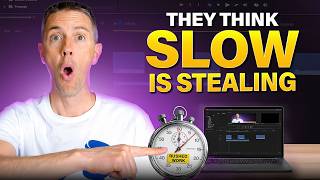
John Jonas's Philippines-based video editor published work full of errors because the team prioritized speed over quality, viewing double-checks as wasting billable hours. He fixed it by reframing expectations, adding a QA role, and shifting the culture from "do more, faster" to "do less, better."
Chapters
And my mind was blown. I couldn't believe what I just learned. Like, I'd never considered that maybe the cause of this problem was a different value system between the two of us that I just didn't understand and I had no idea of. And they were just opposites of each other. And that was a super easy thing to fix that was causing poor work that I just had no idea. Welcome to the Secret Sauce of Outsourcing podcast that's dedicated to making you better at outsourcing to the Philippines. This is episode 469, the mind-blowing Following value system change. So, I had a crazy experience this week that blew my mind so much. I continue reeling over it. I've had people in the Philippines working for me for 20 years now. It was 2005 I hired my first person. And this was something that I had never thought of. I had never considered. Not that I had never thought or considered that, "Oh, maybe there's some differences." I had. But this particular situation, I just had no idea. So, let me take a step back and tell you what happened. So, A couple weeks ago, I sent an email to my newsletter about a video that got published that was really, really poor. And my editor editing this also edited that video at the time. And so, this video gets edited and published and I just happened to see it the next day. How I saw it, I don't really know because I don't usually see anything that gets published. And I looked at it and I was like, "What is going on? This video starts mid-sentence." It's not even close, like not a purposeful mid-sentence edit. It was horrendous. And as I watched a little bit more, it just got worse and worse and worse. And I was mad. And I sent an email to my team saying, take this down immediately. This is so embarrassing. And I didn't do what I would normally try to do, which is try to understand what's going on. Because I was just mad. It was so horrendously bad that I was like, what What happened here? Why would you publish this video? And that was when I implemented impressive work. Like, if you're going to do some work, I want it to be impressive. I want you to impress me with that work. And I want you to look at it and say, is this embarrassing to John? Is this going to embarrass the business? Is this going to embarrass the Philippines? Is this high quality or is this poor? And that was my response to this really bad video. And it has worked really, really well. I sent this email, this newsletter about this telling this story a couple weeks ago. And I got an email back this week from Mary. And Mary said, and gosh, I have to read part of this email, but I'm just gonna summarize really quickly. She said, I had my own poor published video experience. So now let me read to you this email that she says, and I'm gonna interject some of my own stuff because this was like so eye-opening to me. She says, the person that worked on it done all the edits and had not rewatched it. She quote, did the tasks, and then posted it. The cultural part, when I work with her or anyone, I always say, "It's all good. We're just learning to work together to smooth out our processes and communication. No blame, just open conversations." So, in the open, all-is-well mode, I had a live chat with her. And her cultural belief was that it's best to do the work, exact tasks, edits requested, and then post it as efficiently as possible to not cost me more money in her time/hours. And she capitalizes "do the work," exact tasks as it's requested, and "not cost me more money." I'm reading this, I'm like, wow, wait, what just happened? So your OFS, this video editor who you've been working with, is so conscious of what's going on and of her not costing you more money that she did the work and then published it as quickly as she could so that she didn't bill you extra. And that's why it was a poor video. It was a poorly done edit because she didn't want to go back through it. And not that she didn't want to go back through. She thought that going back through it was worse because then she was wasting your money. So then I'm going to continue with what Mary says about this. So in learning that, I told her that it is actually a very valuable investment, an extra expense to have her rewatch an entire 45 45-minute video to make sure there are no problems. She thought that would be sort of falsely adding to her work hours and falsely increasing her paycheck. I let her know that even if the video is perfect and she is just sipping tea and relaxing, watching a 45-minute video, it is a very valuable investment and I consider it actually part of the whole thing. So it was actually about giving her permission to take versus just be a good compliant checkbox doer. And that permission gives us a new sense of agency and ownership. So there were good intentions, as you see. It just took some seek to understand and encourage judgment to use up extra time to ensure quality. Like I said, I hired my first person in 2005. And why I had never considered this, I don't know. But Mary does such a good job of seeking to understand the situation that she got this and I never had. And as I read this from her, I just started considering and thinking, what's the value system here? Like, they value the money and time efficiency probably because that's a cultural thing where I value things being done really, really well. And those 2 are conflicting when you think about it. So, for them, it's about being efficient so that they look like they're not being lazy or so that they can check more boxes. And for me, I'm like, "Well, in order to do it really well, you have to take more time. You have to do less." and do each of those fewer things more well done, right? And those two value systems conflict. And I've spent a lot of years trying to figure out how to get better work done, and I have succeeded at it. I get really, really great work done. And in fact, that video editor is just spectacular today. And obviously he's editing this and he's seeing this, but I send him anything. I don't even watch it anymore. I don't look at it because I know what he comes up with is going to be amazing. I know that. And I have that same feeling with multiple people who write content on my team. Or all kinds of people, right? And so here's what I did. I went to my team, I went to our Basecamp where we do all of our project management, and I posted a message. I posted her email and I posted my commentary on it. Like, I never knew that there was this value system discrepancy, what you value versus what I value. And I just want to make it clear that I value high-quality work and I want your feedback on this. Like, I want to hear what you think, or if you've had this experience, or if you felt like this, or if you still feel like this where like, you need to be extra efficient or you need to check more boxes versus doing it really well done. And I even made a comment like, hey, you guys are all participating on another task where we're talking about vacations and everybody wants to participate and send their pictures. But when I post something like this asking for your input, you guys, you don't want to participate, which is super common. That's my common experience at least. So I got a bunch of responses to this and I want to read some of these because this is really indicative of what you might be experiencing and why you might be experiencing it. Why you might get poor work back that you're like, this is so obviously poor and wrong. Why? Why is it like this? Okay, so here's what I posted. At least here's a sentence of what I posted. And then I'm going to read a couple responses. I said, so now that I've made this clear, I hope, maybe it's still not clear. It's just clear to me that I want you to spend more time on quality versus quantity. I want to know how many of you have felt like this or still feel like this. You feel like you shouldn't You need to spend more time on X thing because that's time for which I'm paying and you don't want to waste my money. Okay, so the first person to respond was actually my video editor. So I have 55 people on my team, maybe 56, I guess. He was the first person to respond. Elijah says, I had a similar sentiment when I first started, but I wasn't finishing work for the sake of finishing. I had an impression that I needed to turn things in as fast as I can because I wanted to show I was efficient with my time. Not because I was lazy or trying to get rid of difficult or boring tasks. Turning things slowly to me meant that I might be perceived as lazy or having a second job. I wanted to show I was active in work and hardworking, which is— I mean, that's almost exactly in line with Mary's experience and something that I just didn't know. I didn't understand this. He says, over time, of course, this was corrected and I now understand and value time differently. I'm not lazy, but I prefer to do things much more slowly and with intention. "I'd rather send things right and quote late than wrong and fast." Now, we don't really have late in our business. He's amazing and he does it right and it's spectacular. Okay, so here's a designer. This is a really high-end user interface designer on our team. He says, "I don't feel like I'm rushing things at all and I've never thought about it in terms of money relative to time spent. I guess sometimes the work feels rushed because of the nature of work and my style of working, which is to keep the feedback loop as fast as possible." not really about having myself spend extra working hours to perfect everything right off the bat. But over time, I've gotten way more critical of my own work before I submit it. Now I catch myself double-checking, spending more time on things like different states, layouts, spacing, etc., before sending things over, because I've realized these are all things I could have and should have addressed earlier rather than waiting for feedback on. I mean, that's one of the things that I've worked with him on over the years. Like, hey, look, I want this to come back right. Where his assumption was, "No, I should do it fast and then get feedback." Meaning, it's the boss's job to correct this, not mine. And he's really, really good at this now at getting it correct the first time. And then he says something interesting that I've always thought was the case. And he's confirming it now. He says, "Also, I think working together over time has helped a lot. I've picked up on what you like and don't like. So now, I can make better calls instinctively." and the quality is just naturally higher. It's a constant work in progress, but I hope to keep improving that. Which, that is my experience over lots of years. I mean, I just told you it with Elijah, and here's Avery saying, yeah, working together for a long period has definitely helped improve the quality. Here's what my developer says: I realize I sometimes default to moving fast and sticking closely to what's asked because I don't want to overstep or feel like I'm wasting time or money. It comes from good intentions, not from avoiding quality. Hearing clearly that taking extra time to review, rewatch, and make something truly solid really helps. That permission changes how I think about ownership and quality. I appreciate you opening this up and wanting to understand where people are coming from. This conversation itself already helps a lot, which is exactly what I was hoping for. I mean, this developer's amazing. In fact, earlier this week I just commented to him about how much I love his work, and yet he's still saying, hey, look, I still just tend to work fast rather than working well. Here's Julia, which, you know, Julia, Julia helps write my newsletter. I've talked about her a lot. She says, for me, I did feel like I needed to give myself permission to take my time. For a long time, I've associated rushing and productivity with doing a good job. That's what they taught us in our corporate jobs. Ticking off more boxes on our Basecamp task list is also more satisfying than spending the day reading and rereading a newsletter that I wrote. It's the productivity hustle. Yep, there it is again. She felt like more is more important than better. Mark John, an SEO guy on our team, says, before I had a natural tendency to work fast just for the sake of completing the task. That's it. Get it done efficiently so that you're not wasting more time, so that you're perceived to be doing more, working hard. He continues, I used to think that working more slowly might be perceived as laziness. Over time, that perception changed. So all of these— there's more comments in here that I skipped, but yeah, the whole concept is I wanted to be perceived as being good to you. That's how it is. That's the cultural value system, is do more, work faster, work harder, rather than work smarter, work better, do less, and have it be higher quality. And that value system, I'm pretty confident it's fairly ingrained in a lot of people. Now, not everybody on my team is like that. I have some people that from day one were outputting really, really amazing stuff and it's been so good for me and for them. But a lot of people, in fact, I would say the majority of people that I encounter have this other value system of fast, efficient, don't look lazy. So how do you change this? And that's really where this is all headed. And I'm just going to give you some things that I have done to change this. So number 1, just have this conversation with the people that you have in the Philippines. Recognize there's a value system difference and not in everybody, but in a lot of people, Just by letting them know that you recognize that value system difference will probably go a really long way and help them recognize, "Oh, you actually do want me to do this better rather than faster." Number 2, I have tried and tried and tried over the years to say like, "No, I want you to do good work." And a couple of things that have really helped was giving people responsibility. A responsibility, a title. So, like your title is social media manager and your responsibility is to make sure that that before I see anything, it is perfect. It is done. I'm not going to be the one to correct grammar mistakes. Or your title is senior video editor and your responsibility is to make sure the videos that we edit are modern, current, correct, start to finish. We want an opening 1 minute that's interesting. We want an intro. We want a very short video graphic introduction thing. We want the audio to sound great. It is your responsibility ability to make sure of all of these. I don't want to watch your video and be like, well, this edit is poor, or this one, there's like a really long delay here, something like that. No, that's not my job to catch. That's your job. That type of thing has really helped. Another thing that has really helped was adding the word impressive, where I just told my team, I want everything you do to be impressive. I want it to be impressive to me. I want you to impress me with your work. I want it to be impressive to our customers. When someone sees this, I want them to be like, "Yes, that's the kind of work that I want in my business." Because if you do poor work, then someone seeing that, they're not like, "Oh yes, let me hire someone." They're like, "Well, that's just kind of poor," right? And so that has been a big changer for me was using the word impressive. The work you do needs to be impressive and you are responsible for that work. Not me. Another thing that I've done was I put a quality assurance person in, and this has been less effective, maybe because of his desire towards efficiency too, and I haven't addressed that with him until now. But he often catches small things that are like, well, you know, this isn't right, or maybe we should think about doing this, or maybe this should be going this direction, or something like that, where I gave him this ability. I also have people managing other processes and giving them the responsibility of being like, hey, they're going to do this work and then you're managing that work and it's your job to make sure that is correct. I don't want to see this anymore. And not that I don't want to see it, but when it gets to me, I want it to be flawless. I want it to be perfect. And yep, I might be like, hey, look, you don't understand the customer as well as I do, so I'm going to change this. But at least it was super well done when it got to me. The other thing that I feel like I've done kind of well, although not as well as Mary obviously, is seek to understand what's going on, Why is this happening and what can I do to help? So, one of my reactions to poor work is almost always, what have I done to cause this? What did I do? I have a guy on my team right now that's just not doing very well and like the work, he's not stepping up, his work quality is not great, he's not proactive, and I just said to him, hey look, you and I both know this is not going super well, you're not super invested, What have I done to cause this? Like, what can I do to help change this? What is wrong with your work situation? Or what would you rather be doing in our company? Where do you feel like you could contribute better rather than where you are right now? Because I feel like this guy, I mean, I recruited him pretty well. He's pretty intelligent. I've seen him do really good work, but he's not there right now. And I'm trying to understand. And that's something I feel like I've done pretty well over the years, although Mary has obviously done better at it than I have and gave me this really amazing insight of ticking more boxes is more highly valued to them than is turning in fewer things with better quality. So as you work with people in the Philippines, just the fact that you recognize this is super likely to change this experience for you of poor quality work. You'll get poor quality work once and you'll be like, I see what's going on here. Hey, I actually value higher quality work rather than you doing more work quickly. And maybe there's a situation where they're not doing enough work, they're doing very little, and maybe there's something else going on that you'll be like, okay, you're not doing enough, I bet there's another situation here. Like there's something holding you back. It's not just, "Oh, I'm lazy." Because they're not lazy. That's the thing. They're not lazy. At least for the most part, they're not lazy. I mean, I would say like 1 in 50 that I find is lazy. And so, if you're having an experience of like, "Oh, this person's lazy." Well, there's something else going on unless you're just exceedingly bad at recruiting people over and over again. So, that's it. That was my shocking discovery this week. My mind blown. And the action that I took on it. I hope this is helpful to you as you work with people in the Philippines.
More from John









Stop Being the Dispatcher, Start Being the CEO: How to Scale Your Field Operations 🛠️

