The Mind of Josh Wolfe: Founders, Riskgaming, and the World Ahead

In this interview, Lux co‑founder Josh Wolfe discusses his investment philosophy, the qualities he looks for in founders, and how Lux creates value by reducing risk. He explains Lux’s three‑pronged approach—thesis‑driven, people‑driven, and special‑situations investing—and describes the Lux Lab incubation model. Wolfe contrasts science‑fiction visions with emerging “sci‑fact” technologies, citing examples such as Osmo’s scent‑capture device and Kurion’s nuclear‑waste remediation that grew into a $180 million Fukushima cleanup business. He shares stories about backing Palmer Luckey, building relationships in Japan, and the cultural nuances of Japanese entrepreneurship. Wolfe emphasizes the power of storytelling for founders and investors, and details Lux’s “Risk Gaming” workshops that use mental‑model frameworks (Twain, Fitzgerald, Schopenhauer) to explore low‑probability, high‑impact scenarios. Finally, he reveals his intellectual influences—Charlie Munger’s Poor Charlie’s Almanac and Steven Pinker’s work on human cognition—highlighting the enduring value of human connection and psychological insight in an AI‑driven world.
Chapters
You need people that believe in you, which is arguably the most important thing we give somebody after we give them capital. We always like to say that we believe before others understand. And I remember the people that believed in us, and I also remember the people that didn't. And it's like a chip on your shoulder. And I always like to say that chips on shoulders put chips in pockets, right? I love finding people that have something to prove, something that made them disaffected in their youth or something about their identity or something about a broken family, whatever it is. I have found that it doesn't matter how much money people make or how much success they achieve. But when they have a chip on their shoulder, it is like this fire that burns in them and it propels society forward. It's not great for the individual because they're often disaffected and messed up, but it's great for society. It's great for society and it's great for investors.
Right. Hello everybody, this is Tetsuro from Off Topic. We're here for another episode of our video interview series. Today I'm super excited to be here with Josh Wolfe from Lux. And this is the Lux office in New York. Yes. Um, and you have, you have offices here. Do you have an office anywhere else?
Uh, Silicon Valley in Menlo Park. Amazing. 40 people and 10 on the investment team and then 30 that help with everything from capital formation and PR and comms and platform and recruiting. Uh, but half New York and half Menlo Park and then punctuated investments all around the world, but no office yet in Tokyo, but, but one day soon.
Soon. Soon. Um, can you, for, for, for our audience who doesn't know who you are, can you explain, can you introduce yourself and introduce what, what Lux does?
I'm a New Yorker. I grew up in Coney Island, Brooklyn, which is a very special place if anybody comes to visit. It's home to the Cyclone, which is the scariest roller coaster in the world. Not by virtue of its speed, it's not super fast, nor its descent, which is not the steepest, but it is so old that your ride might be the last, and that makes it terrifying. Coney Island was a very interesting place to grow up because it's a very diverse set of people in Brooklyn, and it's very dense, and you have every ethnicity that sort of comes to New York as immigrants, and they're all mixed. But you also have a lot of hustlers. And so it made me grow up sort of squinty-eyed and skeptical and a little bit cynical, which has always generally served me well in assessing people and their motives. I'm terrified when an entrepreneur walks in and I think they're going to defraud us and fool us. So I'm always in black and I expect the worst in life. And it's a useful psychological coping mechanism because this way you get positively surprised. If you expect all the bad things that can happen. And a lot of people here have been trained with a quote that I have, which is that failure comes from a failure to imagine failure. And that's a complicated thing, but it's playful and it's intended to basically say, if you can identify what can go wrong in a company or in life and anticipate it, then you can throw time or money or talent at it to prevent the bad thing from happening. So in my world, it might be understanding technology risk. Something can go wrong, it doesn't work. Financing risk, you haven't raised enough money or they can't raise money. Product risk, people risk, market risk. But every risk that you can identify and kill, mm-hmm, a later investor that follows us after we invested should pay a much higher price. And I think about value creation as risk reduction.
Mm-hmm.
My partner who I co-founded Lux with, Peter, is way more positive and optimistic. He might be wearing like a mad happy sweatshirt like yours, pastel colors, right? He's more smiley. He's expecting the best. What if it works? And so people joke that he invented the airplane and I invented the parachute, and it's a good yin and yang together.
But it works because it's a complementary thing.
Totally.
Right.
And we trust each other and we like each other.
And entrepreneurs need, need some sort of complementary feature like that as well.
100%.
Right.
You need people that believe in you, which is arguably the most important thing we give somebody after we give them capital. We always like to say that we believe before others understand. And I remember the people that believed in us, and I also remember the people that didn't. And it's like a chip on your shoulder. And I always like to say that chips on shoulders put chips in pockets, right? I love finding people that have something to prove, something that made them disaffected in their youth, or something about their identity, or something about a broken family, whatever it is. I have found that it doesn't matter how much money people make or how much success they achieve, but when they have a chip on their shoulder, it is like this fire that burns in them and it propels society forward. It's not great for the individual, right? They're often disaffected and messed up, but it's great for society. It's great for society and it's great for investors.
Right. Um, but how do you find those chips? Right. Cause you have to, you know, not, not everybody's willing to kind of share their complex, right? Their, their issues.
You get to people's life stories. What is driving you? If somebody comes in and says, you know, I just want to change the world. I roll my eyes. I don't believe it. If somebody says, you know, I was the gay kid in a neighborhood where there were no gay kids, or I was the only Black kid in a mostly white neighborhood. Or my father left when I was 2, or I had a stutter until I was 11, or my teachers told me that I would never be good at math, or something where basically people doubted you and you somehow develop, not in spite of that, but because of it, this drive to basically say, I'll show them. And some people say it's a petty thing, let it go. And I just, I love finding people that have that sort of affliction.
'Cause it gets you through all the different hardships.
Adversity. To be able to go through something that is truly painful, feeling ostracized, feeling unloved, feeling rejected, to be able to get through that, then when you're dealing with the rejection of raising money or trying to recruit somebody and they say no, or somebody not wanna buy your product, it's like, who cares? You've been through hell. You take somebody like Palmer Luckey, Palmer founded Anduril, now one of the leading defense companies in the US, but arguably increasingly in the world. That started as a crazy idea. Palmer was very young, started a company called Oculus, which Meta bought, and it's now the basis for their VR. And he got fired for political views that he held at the time that were more right. He was like a Trump supporter when everybody at Meta was like mostly left-leaning. And he's like, I want to start this defense company that almost was inspired by Stark Industries out of Iron Man. And he's like, this doesn't exist. There is no secret Q James Bond room where they're developing these cutting-edge technologies for warfighters. And I want to create that. And today, to this day, now that he is a billionaire multiple times over, both from the sale of Oculus and from his stake in Anduril, now valued over $30 billion, When we first invested, it was like $60 million.
Wow.
He is still picking fights online with third-rate journalists from CNET from like 2012 that wrote something nasty about him. And he's still like, you still never recounted or recanted that, take it back. And people are like, let it go. And again, I'm like, no, keep going because he's got this fire that will burn, I think, until the day he dies.
And so, you know, you talk about Andrew, like you've often talked about this concept of science fiction, science fact. Can you talk about that? And then is that gap kind of narrowing? And why do you think it's narrowing if it is?
It's a great question. And yes, I would say that the gap between sci-fi and sci-fact keeps shrinking. So science fiction, if you think about it, instead of imagining failure, in most cases, people are imagining what if the world could be this? What if you could 3D print or conjure your coffee mug? What if you could fly a drone and race it like, you know, drone racing in pod racing in Star Wars?
What if you could build the replicator Star Trek.
Yeah, what if you could do robotic surgery like when Darth Vader cuts off Luke Skywalker's arm? And so all those things were basically somebody that imagined, and if it obeys the laws of physics, it should be possible. And I can't tell you— I mean, I can tell you how many entrepreneurs we have back that were inspired by something in Star Trek or Star Wars or a graphic novel they read or some sci-fi space opera thing. And even Mark Zuckerberg As he transitioned Facebook from being social media into the metaverse and now into AI, he was totally inspired by Ready Player One and the entire canon of the technologies and the stack and the ecosystem that would enable a world where people were basically opting out in some sense of reality into this metaverse. So I keep a presentation of all of these amazing sci-fi scenes. That map almost perfectly to some technology that Lux has funded in a company that became real. And so—
I love Osmo, for example.
That's a great one.
That's a great one.
Osmo is, you know, these devices, our phones, have eyes and cameras. They have ears and microphones, but they don't have a sense of smell yet. And smell is our most evolutionary salient scent. It's, if you think about Proust in "In Search of Lost Time," when the character bites into the madeleine, it hearkens back to his childhood. And the story unfolds. And we've all experienced that where a smell brings you back to the first kiss you had or the first boyfriend or girlfriend you had and the smell of their shampoo or the smell of your grandparents' home or home cooking. There's all these things that trigger these memories that in many ways are difficult to share with other people. But if you had something like Shazam, but instead of detecting a song that's playing in the cafe that you're like, oh, is that Drake or Kendrick? And instead you're like, oh, is that bergamot or vanilla or whatever? And be able to record it and then play it back. So that became the essence for Osmo. Which we actually spun out of Google and then funded. But yeah, I love finding things where the gap between sci-fi and sci-fi fact is shrinking. Your earlier question, why? Either our sci-fi authors are becoming less creative, or our scientists are benefiting from the compounding use of technology and accelerating. And I think it's probably a mix. Got it.
Yeah, like going back to Asma, my podcast co-host, like when she arrived in the US, she's like, this is the smell of America.
Ah.
Right, and like, I think a lot of people won't realize it being living here.
Yeah.
Right. Or, but you might realize it when you come to Japan, right? The smell is different. The sound is different.
So look, I just got back from the Middle East and I was in Saudi and UAE and Kuwait and oud is a very distinct Middle Eastern smell and you get almost inoculated to it as you're there because it just, it just becomes part of the background. The first time you're there, as you're leaving, you're like, oh, you know, you smell it. And if I, if I describe oud right now, people are like, well, what does that smell like?
Right.
But the ability, if I was like, oh, let me send it to you. That's going to happen in the next few years.
Very cool. So I was actually talking to Palmer about this, but like, are you worried at all that, you know, some of the most more recent science fiction, especially in the US, tends to be a little bit more dystopian?
Yes.
Tends to be kind of, you know, let's get back to nature. Let's get back to, you know, the past. Are you worried at all about that?
I think that's always been the case, even going back to War of the Worlds, that people sort of imagine the failure. They imagine the dystopian. I would say there's a whole genre over the past 10 years of climate dystopia where everybody imagines climate change has wrecked the world, and it's almost like an old book called "Canicle for Liebowitz" where the world is destroyed, some nuclear event or some climate catastrophe, and then it has to rebuild, and you go back to this analog basics. And those are all meant as like portended warnings of climate crisis. And I just don't buy it. So to me, the most likely catastrophes come not from our technologies, but from people that use them, right? And so social media is arguably to me more destructive at creating chaos or bad actors with malintent exploiting it to influence people and change the way that they think, to undermine the nation state, or those are more dangerous technologies than, anything that we've ever funded. So yeah, I do think that there's a dystopian default, but I also think that the people that sort of can imagine a pro-social world where technology is helping to reduce human suffering, to create more opportunity to express, allow people to express their genius. There's this great thought experiment that I love, which makes the case, the moral imperative for why you have to invent and imagine new technologies. And what it imagines is imagine person X existed, but technology Y that made them famous didn't. So imagine Mozart or Beethoven exist, but the harpsichord was not invented. The genius that they were able to express through this physical technology, this instrument, changed people's lives, expressed emotion, made people feel things, evolved music. Imagine Steven Spielberg, but, or Stanley Kubrick, but the 8mm camera did not exist. Imagine Bill Gates, but the personal computer did not exist and the ability to create an operating system that would change the world. Imagine Jimi Hendrix, but no electric guitar. Imagine, I don't know, Diplo, but no DJ equipment. Whatever it is, there's all these instruments and technologies that people use to express their genius. And today it is happening with people using Runway ML or Veo or Sora. An entire new group of people that might not have been filmmakers, right? But now can express their genius by prompting it and conjuring in their imagination and then physically manifesting it for somebody else to actually see. It's amazing.
And I mean, Lux does this in some way with their incubation arm as well. Can you talk a little about what, you know, the Lux Lab does and why you decided to also do incubation, not just investments?
So if you zoom out for a second, we're a $5.5 billion fund. About a third of what we do is in healthcare, and that's everything from like robotic surgery to biotech to med devices. Another third is aerospace and defense and industrial. And then the final third is what we call core technology, which is more defined by what we don't do. So little in like internet, social media, mobile, and lots in non-invasive brain-machine interfaces, the AI/ML compute infrastructure stack, all kinds of crazy stuff, field programmable gate arrays, edge inference, really hard technical stuff. Sometimes that seems like sci-fi. So sometimes we do 3 different styles. We do thesis-driven, which is my favorite, which is understand the consensus, read as voraciously and competitively as you can. And that would be my advice, by the way, to anybody is just read as much as you can so you can understand. And I read like 30 papers every morning. When I say read, I'm flipping through them. I'm not like reading every article, but I'm trying to get the zeitgeist. And I wanna see what is the editor saying on A1 of every, the front page of every paper. And what are they saying on C22? Meaning like the third section of the 22nd page where there's like a little tiny paragraph and they have decided that it's not worth your time. But I actually have a differing variant perception. I'm like, wait a second, this is a really important story and nobody's paying attention to it. So I get interesting theses. I read a lot. I'll give you an example of the thesis and then I'll tell you about the two other styles, which are people-driven and special situations. Um, actually I'll do those quickly. Special situation, late-stage business, early-stage price. How do you find it? Corporate spinoff, a divestiture, some capital market dislocation. Basically, you get to invest in a less risky company because something is screwed up in the cap table or the investor base, and you get to sort of restart it.
Right.
People-driven, the more investments you make, the more people you have. Somebody like Palmer, we just actually backed Palmer in a new bank. Yeah. And there's people that we've backed multiple times, sometimes 2 times, sometimes 5 times. But we call that the Lux family. And it's almost like Japanese style, the karatsu, of a sense of trusted web of companies that you like and trust and want to do again and again. But the thesis for me is the favorite because it's a virtue and a vice of my personality that I like to be right when other people are wrong. I'm very intellectually competitive. I want to know what do they believe and what are they missing? So 15 years ago, people were going crazy about like clean tech and green tech and alternative energy and solar and wind and biofuels. And I look and I'm like, okay, nobody's focused on nuclear. And with nuclear, I look and I say, okay, there's uranium miners. They're mostly like hucksters in New Mexico and Nevada and mining companies, not for us. Modular reactors. This is a good idea. Instead of building a gigawatt power plant for $1 billion, mm-hmm, could you build 10 100-megawatt in less time, less money? Turns out you have the paradox of you need the regulatory bodies to approve it. In order to get that, you need a customer, but the customer won't commit unless you get the reg. Right. So there's this chicken and egg. Paradox, we said no. And the biggest unsolved problem is what do you do with the waste? Now, at the time when we came up with this idea, almost 15 years ago, we named it Kurion after Madame Curie, spelled with a K. And there were 104 domestic reactors in the US, and you can make $1 to $2 million per plant treating low-level waste with chemistry and material science and robots and dealing with this stuff. There are 440 globally, and China in particular was starting to ramp up. But the biggest unsolved problem is what do you do with the waste? And a lot of that waste was for pre- and post-Cold War bomb making. Hanford, Savannah River, Idaho National Labs, Sellafield in the UK, La Hague in France. And we were like, okay, who makes the money doing this? And the answer was these big engineering companies like CH2M Hill, URS, Fluor, Bechtel. So we said, let's start a high-tech company that goes after this with material science that could grab the radioactive elements technology to vitrify it and turn it into glass and stabilize it so it couldn't get into the environment, and then robots to be able to handle this stuff because it's dangerous. This would have been a phenomenal business, but it became a spectacular one because of a negative black swan in Japan. And I remember I was here in New York when the CEO of this company that we started called me and said, we just got a call from TEPCO because earthquake, tsunami, Fukushima disaster, March 11th, 2011. And we became the only US company picked for the cleanup. And we went from $1 million in revenue to like $180 million of revenue. Wow. $40 million of EBITDA. And what this team did, and we ended up selling that to Veolia, a big French giant. What we ended up doing was building these giant engineering systems. We actually had to get Ukrainian military planes called an Antonov. Russia actually destroyed a lot of them during the war. It cost us $1 million a day to rent these planes.
Wow.
We would fly things over to Fukushima. and it was a water treatment facility that would remove 99% of the radioactive cesium, strontium, technetium, uranium, plutonium. And I felt very proud of what we were doing, but it was also very intellectually rewarding because we had the insight to say, this is going to matter. We never anticipated there was going to be a disaster, but, and so I feel very honored to be able to serve the people of Japan to help that, that, yeah, I mean, small way.
Was that kind of your first relationship with, with Japan?
Like, Kurion was our first foray. Um, we might have had some Japanese companies that made small strategic investments, but that was the first. And then I say the, we've had, you know, companies like we just announced Nozomi, which is an OPSEC, uh, industrial security company that Mitsubishi just bought for a billion dollars. But Sakana and the team there is really the first pure Japan-based company that we funded that most of the great Japanese companies have now become partners and co-investors. And this was backing Ren Ito and David Ha and Leon Jones, who came from Google, and they wanted to build the sovereign model for Japan in Sakana AI. And they've taken this very interesting evolutionary approach. They've attracted some of the best and the brightest people, and we're very proud to be part of what they're building.
And is the goal to hopefully continue kind of building relationships in Japan as well?
I am so bullish. Um, I mean, I've met young entrepreneurs that maybe they trained here in the States and then they went back. But the criticism that was not always correct, but was that it was a very conservative culture and it wasn't apt for entrepreneurship and risk-taking. You have this amazing guy, Swamy, who started effectively like the LinkedIn in Japan. And I got introduced to him and so impressed by him and a lot of his friends. And I'm just amazed at the entrepreneurial talent. And it's exactly that kind of ecosystem where those people will become angel investors in the next generation. And it just starts to build. And you typically just need 1 or 2 or 3 stories to rally around. And it becomes the almost diaspora of entrepreneurs who leave and go. And you see this in the US. You know, people that were at Meta or Google were now Anduril or Palantir, and they're leaving and starting companies, and it just creates this beautiful ecosystem. Yeah. Yeah. So I'm very bullish on Japan, not just for like traditional internet and tech, but hardcore AI, really deep tech, aerospace and defense. I really want to fund something, as long as the country will permit us, that is US and Japan allied. And we share some common enemies and threats. And it's the only other country where baseball is the national pastime.
And, uh, we have Shohei Ohtani.
Yeah. And, you know, we got so lucky. We went, um, as a family, and it was our single best trip. My best friend is Andrew Sorkin, who's the CNBC journalist in New York. He's just got a book published, 1929, just came out. It's amazing. And his family and our family went, and it was the best family trip. We travel all the time together. The best family trip we've ever taken. Everybody loved it. I've got 3 kids. He's got 3 kids. We go to, with Swimmy, we go to the opener of the Dodgers.
The Dodgers night. Yep.
And the Dodgers-Cubs. And we're there and it's amazing in the Tokyo Dome. And my son is there and one of Andrew's sons is there. Ohtani hits a home run. Yep. And it was so amazing. Anyway, the next day we're in, or 2 days later, we're in Osaka and a car pulls up and it's a Rolls-Royce. He waves my son over, an outstretched arm comes, and he hands him a ball, and it's a signed Ohtani baseball.
That's crazy.
My son was like the luckiest kid in the world. I'm like, what is happening? So yeah, we're, we're all in.
That's amazing. What, what's, you know, one thing that, you know, you've experienced in Japan that you think could come here that, that you don't see here right now?
Well, the one that our family loves is 555 Horae, which is the dumpling place in Osaka and Kyoto. Those are really good. Um, Look, street art, street fashion, you know, is coming here. I think there's so much Japanese style. So food, fashion, art, music probably will come next. Like, you know, if you look at what's happening with like the K-pop phenomenon, like why can't, you know?
Definitely.
There's like Japan hip-hop and there's cool. So, but most importantly to me, which is where we live and breathe every day, is science and technology. I am just sort of amazed at the arc from the industrial to the microelectronics boom and then sort of to the consumer boom, financial services and financialization. But now I think we're back to like a hard tech ascendancy. So I'm very optimistic about Japan's role in that.
You've, you've talked a lot about the importance of storytelling. Um, and Lux is an incredible storyteller. Um, you know, all the investors, including yourselves. Can you talk about why it's even more important now and then also in the categories that you invest in?
Well, it's a noisy world where you're competing for attention, right? You know, your interview series, your podcast, like it has to stand out from others. And so you're constantly trying to be distinct and distinguished. So that's number one. But if you're a CEO, the number one thing that you can do when you walk in here is we're hearing 10 pitches a day. So how are you going to stand out? Right now, if you come out again, if you say, I just want to change the world, like I don't believe you. But there's something about somebody that is so passionate and has such a strong grasp on their content and their material. I call it the Pampers effect, which, forgive me because it's a little inappropriate, and one of my late partners, Larry Bach, who started 17 companies from scratch and took 14 of them public, he used to describe this as the Pampers effect. Pampers is a form of diapers or adult diapers or kids' diapers where you're sitting across from the founder and you're like, oh my God, and you're trying to keep it cool. But that feeling is something that you can predict that the first 3 people that they're going to hire are going to feel that when they go to raise their next round of funding.
Right.
So the people risk, the financing risk, will investors be excited? I want somebody walking out every time that they hear me pitch Lux, if it's a limited partner that's investing with us, and I want any of our companies when they walk out to say, wow, that was the most interesting meeting I had and that was the most impressive person. So storytelling hits your emotions in a way, especially if it's true, 'cause you can also have a story, but you feel like those people are full of it. Right. That can get people to pick up and move across the country or across to another country. It can convince people to invest with you, can convince a customer to prioritize you, can convince the media to cover you. If you can't tell a story, if you can't stop somebody and capture their attention, you're at a disadvantage from the people that can.
It makes sense. One of the last topics I want to talk about is Lux has a really interesting series called Risk Gaming.
Yes.
I was very fortunate to be able to participate in one in Japan. I think it was one of the few that you hosted there.
But which do you remember? Was this on China EV?
China EV. Okay, cool. Can you talk about what's the backstory behind the Risk Gaming and why are you doing this?
Well, if you go back to my failure comes from a failure to imagine failure, most of the great things in my life and the bad things are defined by low probability, high magnitude events, what people call black swans. And it could be a positive black swan or negative black swan. But too often most people are sort of incrementally thinking, you know, you extrapolate from the recent past. There's a mental model that I use of three famous authors, and I call it Twain, Fitzgerald, and Schopenhauer. Twain's, Fitzgerald's dictum was, the famous quote is, "The test of a first-rate intellect is the ability to hold two opposing ideas in your head at the same time and still retain the ability to function." So this might be like China. China is an engine of growth, or China is a government-propped-up, debt-laden commercial real estate disaster waiting to happen. People can debate that. Front page news. Mm-hmm.
Okay.
Gold is a shiny piece of metal, or gold is a great store of value in a fiat currency world.
Right.
Okay. The next one, uh, and so what you can learn from the Fitzgerald situations is everybody's talking about it. Everybody's debating it. It's front page news. It doesn't matter. The second is Twain, and his famous quote was, it ain't what you know that gets you into trouble, or it ain't what you don't know that gets you into trouble. It's what you know for sure. Mm-hmm. That just ain't so. When you have certitude, then you're wrong. Think about housing prices in 2007, 2008. Everybody believed housing prices could only go up, up, up, up, up, up, and then dead. The turkey before Thanksgiving, they're born, they get fatter every day, they're being fed, life is amazing. Wow, it's great to be a turkey. Thanksgiving, you know, off with your head, you're done. So it's not what you don't know, It's what you know for sure that just ain't so. So there you want to understand what is the consensus, what does everybody believe, and what if they're wrong? Okay. The third, which is really the domain we live in, is Arthur Schopenhauer, who was a philosopher that said, um, talent is hitting a target that nobody else can hit. Genius is hitting a target that nobody else can see. And so for us, the geniuses are the entrepreneurs like a Palmer Luckey, right? Uh, or a Wren and David and Leon that say, this is what the world should look like and I'm going to make it so. Against all odds. Risk gaming helps us imagine these scenarios by putting brilliant people together with game mechanics that trade off incentives and conflicts and scarce resources and zero-sum thinking. We don't reveal the game mechanics, but you sort of iterate over 3 rounds. And we've done shipbuilding in the US. Here's a big issue because you have China building 3,000 ships last year. We built 6. That's a problem. China in EVs. How did China become the runaway leader in EVs even though we had Tesla in the US? Um, elections, elections and AI integrity. So we've done two of these, one where you have, you know, teenagers in Florida that basically are running a hacking scheme to mess with the election, let alone foreign interference from Russia, China, Iran, North Korea. We've done scenarios where we had an AI candidate So somebody that was running on a singularity ticket to eliminate all of government and just run it on efficient AI. And so some of these are playful, but what's cool about it is we can get US senators and four-star generals and brilliant CEOs of tech companies and we assign them different roles. So the head of like the 18th Airborne, who now runs UCOM, guy Chris Donahue, is a friend of one of our partners who used to run special operations for the military. We made him the CEO of a tech company. We took the CEO of a tech company and made him the head of defense procurement for the Pentagon. You put them in uncomfortable roles where they have to make different kinds of decisions. You get to see who's really smart. And then you get to sort of unearth new theses that let us invest in new, new companies. So it's, it's, it's a lot of fun.
Yeah. And it's, it really reflects the real, real world in a lot of senses because there's so much information you don't know.
Totally.
You're not given and you have to kind of guess and you have to experiment a lot.
Hidden preferences, hidden motives.
That's right. That's right. Different incentives.
Sometimes you might. Be deceiving somebody, right? And so the game strategies, sometimes you want to cooperate, sometimes you want to compete, sometimes you want to be conniving, and that's the real world.
No, it's absolutely incredible. Well, Josh, I know we're running out of time. What's a, you know, a mental model, or I think, I guess you've already mentioned mental model. So last question, what is like a book or like piece of content that you keep coming back to?
Well, I really love Poor Charlie's Almanac, the sort of compendium of Charlie Munger speeches and wisdom. There's an adjacent book called Seeking Wisdom from Darwin to Munger. And I just, I find that rational thought is almost like Karl Popper's sense of a good explanation. It's hard to vary. And there's certain things that just click. And even though I'm a venture capitalist that is speculating on future, and most of the companies I have do not generate cash flow, and they're not value businesses like a Berkshire Hathaway or Warren Buffett or Charlie Munger would have bought. There's something about the way that he thinks, inspired by the way that Benjamin Franklin thinks, that I find super inspiring and almost polymathic, that you can take something from different disciplines and find the best ideas. So that's a big thing, number one. Number two, I would say anything that touches on human psychology. There's a new book by Steven Pinker about how we know what we know and how we know what other people know. And it's this idea of, some revealed preferences and hidden knowledge. And I think especially in a world of AI where generative AI and white-collar jobs are going to be under increasingly threat, what is going to be scarce and therefore what's going to be valuable is this, is a human connection, is sitting face-to-face with somebody, being able to read them, know when to cooperate, know when to compete, know when to connive, know when they're playing you. And I think in a world where people are just stuck on their phones and stuck in chat rooms, They're going to be disadvantaged relative to the storytellers and the truth tellers and the liars and the people that can connect and persuade and sell. And that is going to be one of the last human arts that are going to be less manipulable by just pure AI.
Interesting. Well, Josh Wolfe, um, I have like a million other questions to ask, but maybe next time.
To be continued.
Yes. Maybe next time in Japan.
In Tokyo.
Um, thank you so much for your time.
Great to be with you.
Great meeting you.
More from Josh

Winklevoss Twins' Big Miss on Crypto, Top VC Tech Sector Warning, Atlassian's 10% Staff Cut


Josh Wolfe & Brett McGurk – Venture, Geopolitics, and the Next Frontier (EP.476)

How Top Investors See the Future of AI | Chase Coleman, Brad Gerstner, Josh Wolfe at Robin Hood 2025

How the AI Talent War is Rewriting Deals ft. Josh Wolfe, Dan Primack & Dan Grossman


Josh Wolfe on AI and the Breaking of Silicon Valley's Social Contract | Odd Lots

Why Defense Tech Is the Next $100B Venture Opportunity | Josh Wolfe & Terry Monis


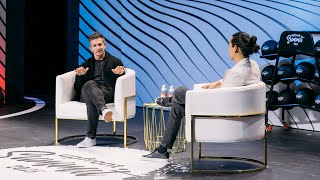
Josh Wolfe of Lux Capital on Turning Sci-Fi into Sci-Fact | 2025 Upfront Summit