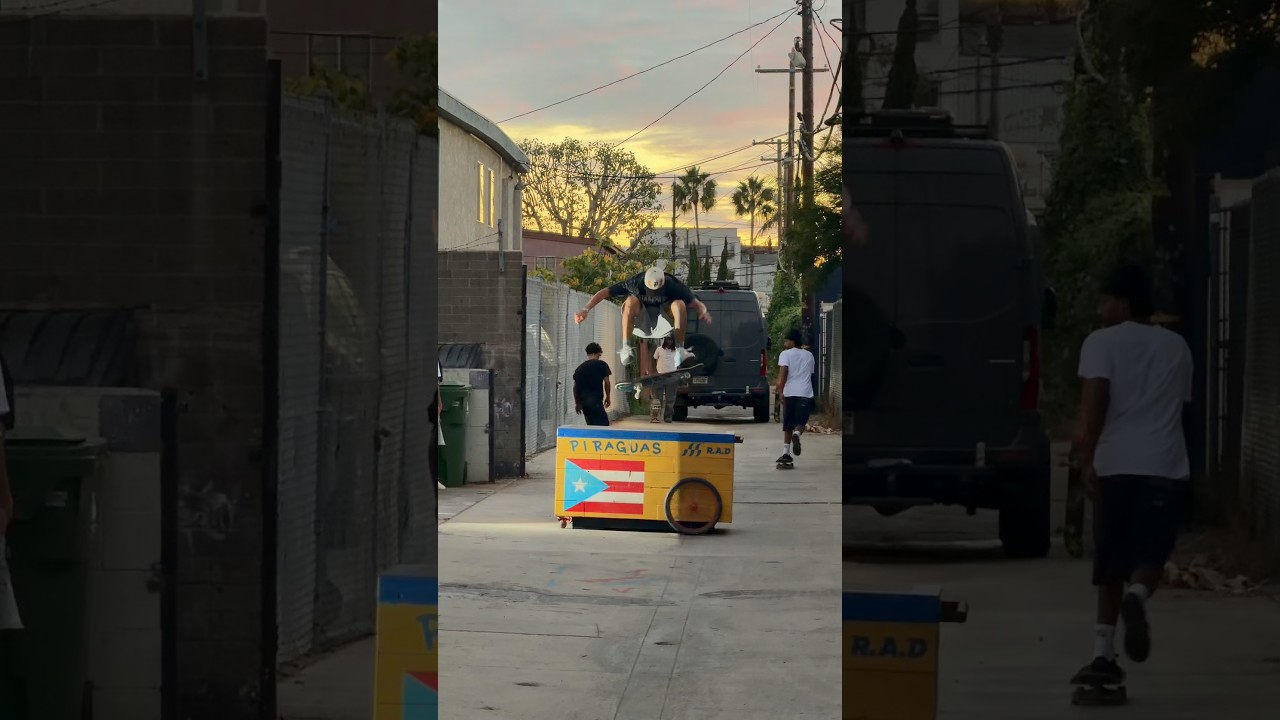
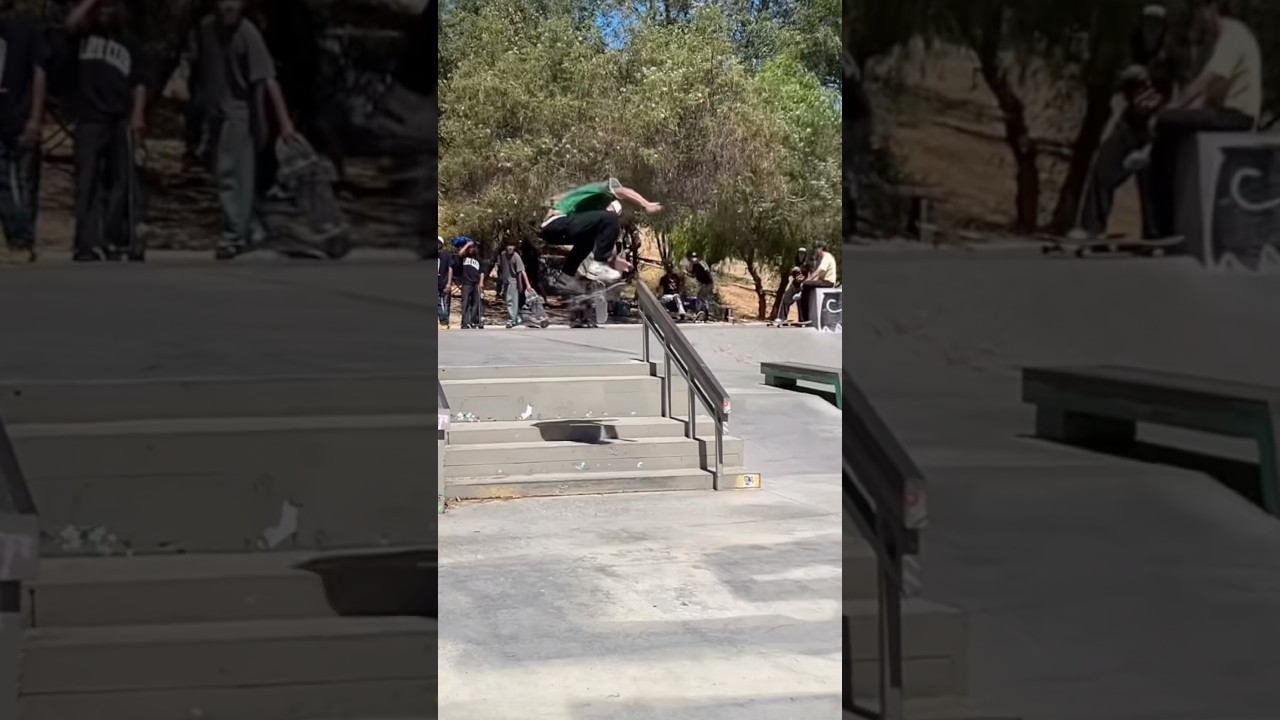
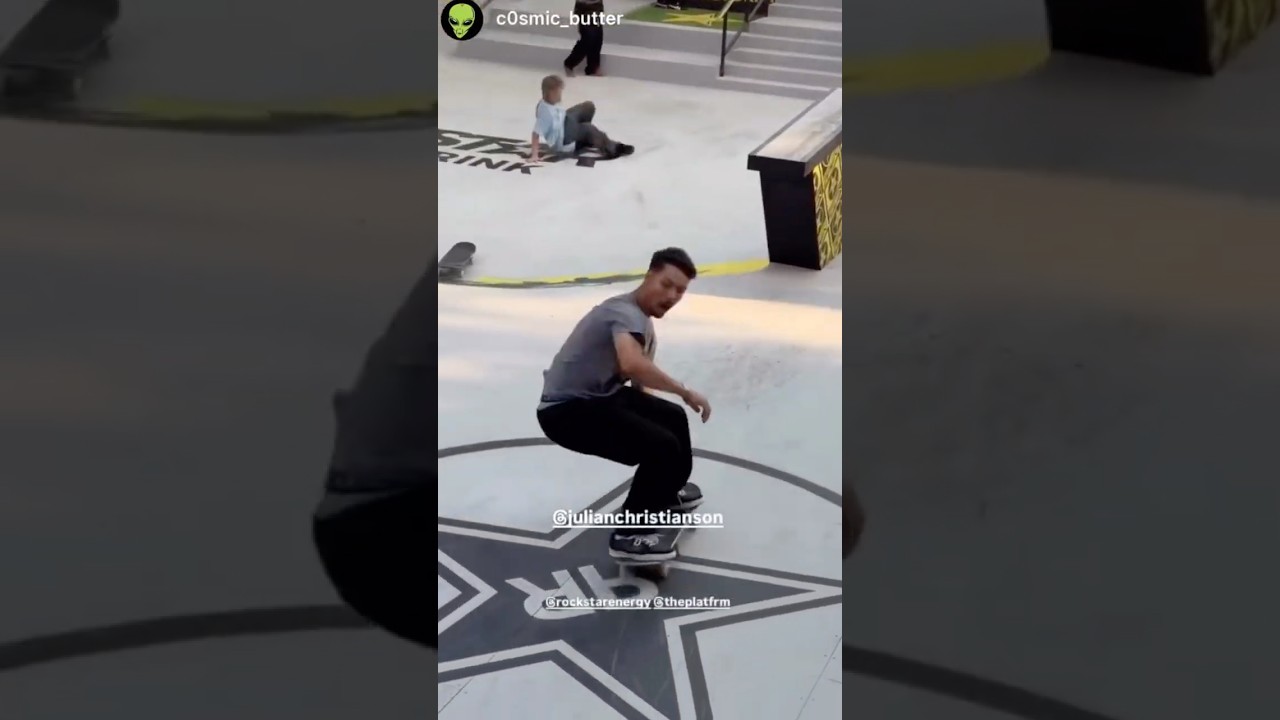
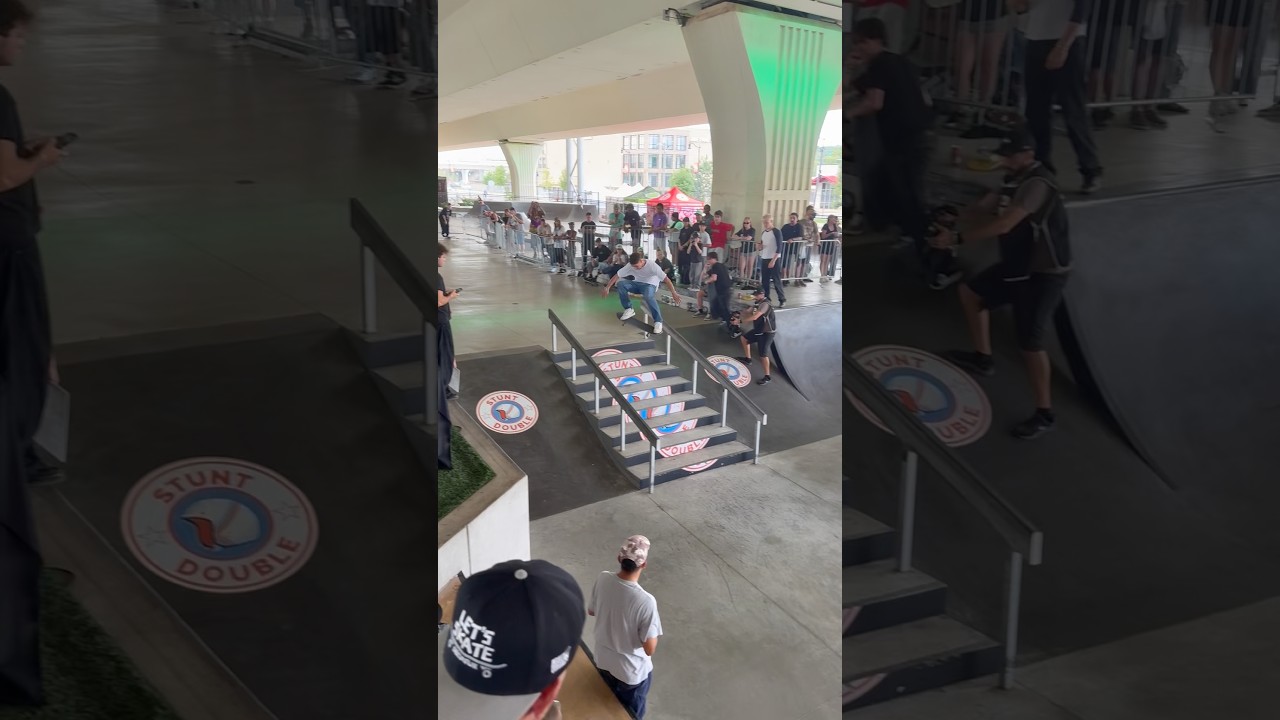
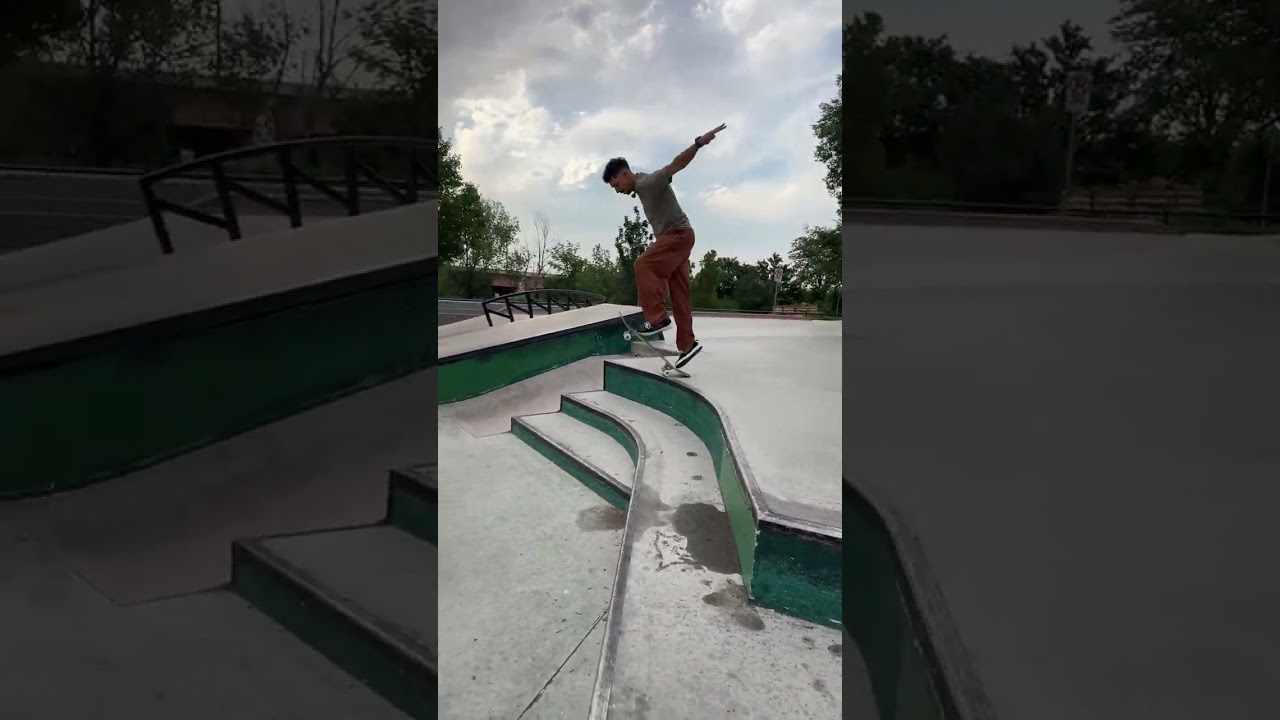
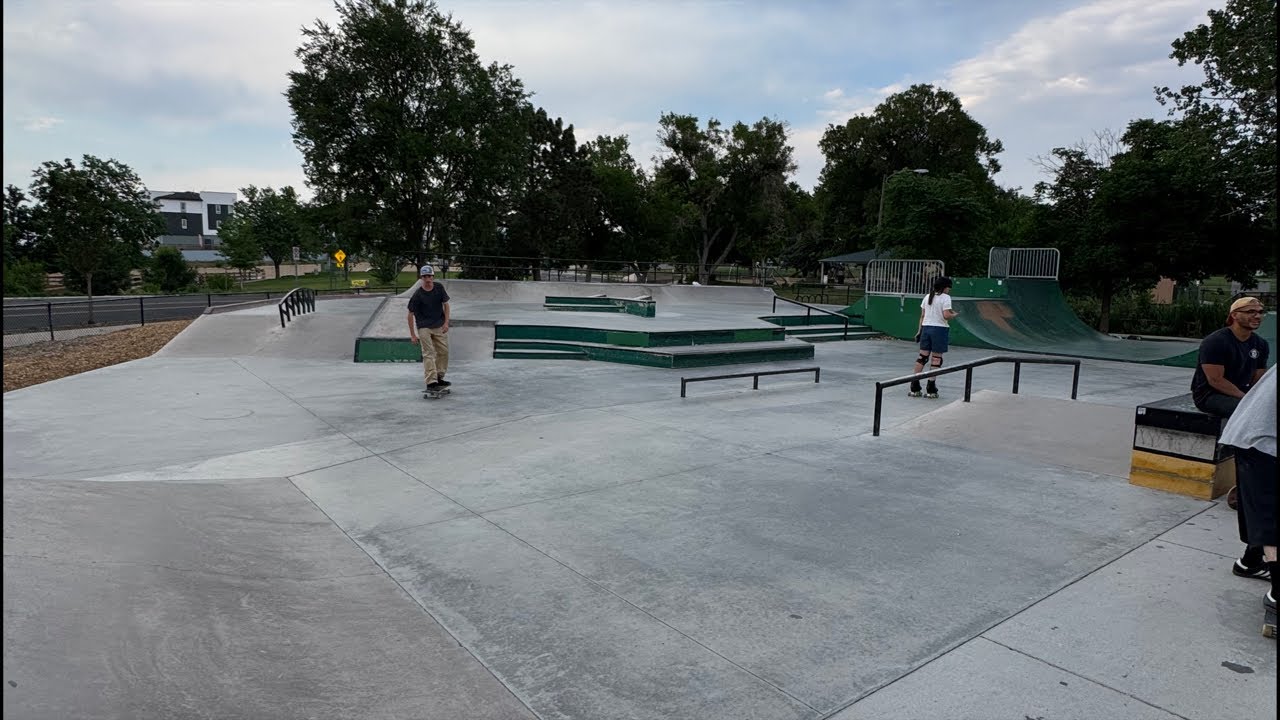
In this live YouTube session filmed at Cushing Skatepark, Julian Christianson walks viewers through a real‑time tutorial on the 360 flip (commonly called a tre flip). He begins by introducing the trick’s many names and emphasizes the importance of precise foot placement, describing his own stance and the subtle “swipe” that helps generate the board’s rotation. Christianson contrasts the tre flip with the varial flip, explaining how foot positioning affects the pop and flick, and advises beginners to start with stationary practice before moving to rolling attempts. He shares personal learning anecdotes, such as mastering the flip off a ledge at D‑Park before transitioning to flat ground, and discusses how obstacle type (stairs, ledges, ramps) changes foot placement and jump timing. Throughout the session he highlights body alignment—keeping shoulders square to avoid a front‑side shifty—and visualisation techniques for anticipating the board’s trajectory. He demonstrates multiple attempts, including regular tre flips, switch tre flips, and a switch “tray” (a tre flip landed on the front foot), noting common pitfalls and adjustments. Influenced by pro skater Carlos De Andrade, he strives for a one‑foot catch for added style. The video concludes with a promise of a future backside flip tutorial. The tone is conversational and enthusiastic, with live interaction from a passerby named Josh Love.
Chapters
Welcome back to the channel. That's always funny to say. So we're here at Cushing Skatepark and I'm going to show you guys how to do a tre flip instead of recording a tutorial and editing and chopping up. We're going to try a live one. So we're going to go from flat ground. Oh, look, it's Josh Love. Oh, shit. How much? You're on my live. What's up? Live? Yep. You're live. We're live right now. Hey, we're live. What's up, guys? Everyone, Josh Love. Everyone, hell yeah, I could see it. Chilling. But yeah, so always start with some foot positioning. Um, 360 flips, tre flip, three flip, many names, but most of the time I call it a tre flip. Uh, but originally 360 kickflip. Starting with just basic foot positioning. This trick is done mostly with the front foot being kind of poked in the middle of the board, and then my back toes I have about here. And then as I'm flipping— let me move this— as I'm getting ready to wind up, I know some people like kind of have their foot poking this way, but for me, I just naturally happen to do it like this, and I'm around here on the side, and I don't know why, but it just helps to get that swipe. And just over the years, that's just kind of how it's morphed. But it's about here. Sometimes as you're going to do a trick, you'll notice skateboarders sometimes do a little hop and their feet slightly change position. But with everything, you just kind of have to find the right footing and setup. But in the beginning, you're kind of going to go swipe that way. As I'm swiping, I'm going to start to kick down and forward. Sometimes it almost feels like you're kicking out that way in the beginning. And so you just kind of as a warm-up. I mean, most of the time now that I can do them, I'm just going to go straight into doing a 360 flip. So I'm going to set up, bend down and go for it. But if you're just trying to learn and you're trying to learn the rotation, Maybe first you're going to do pop shove. Maybe you're even going to try to do a varial flip. Most people learn a varial flip first, but with varial flips, sometimes people don't have their feet in the same spot as like a tre flip. For me, tre flip's more on the side, varial flip's more in the board, in the tail, so that when I pop, it doesn't swipe too far. So if you see a varial flip, you're trying to wind up too much, it overflips. So it's just kind of finding the happy medium. But also trying to learn a trick stationary is— it's good but bad at the same time. You're learning to do it only standing still. You're not really learning it rolling forward, but it's good to just get the mechanics of everything and feel it out. You know, flipping it, maybe not always going to land on it every time because you want to make sure you're actually doing the right motion and everything. But after a while, you know, you're like, all right, varial flip. I'm kind of overturning it, so if I swipe a lot harder, then tre flip's going to come around. Sometimes you can experiment with having a tre flip like when I was a kid, I probably did it was like very tippy toes, you know. And then I actually couldn't learn it off of— on flat. I had to learn it off a ledge at D-Park that was about that tall just because I wasn't able to get it to pop and rotate all the way around. I'd always land it maybe halfway turned like this and upside down. So when I did finally start to get it off of ledges, I then learned it on flat. But just finding the right spot. Sometimes, like, if you're doing it off of stairs, you'll have your, your toe not as far back because you don't want it to rotate as fast when you're jumping down something. You have a lot of hang time. So really just trying to find the right rotation. Sometimes you can have your foot here or here, here, here. But everyone kind of has to find their own way. But for me, it's about here. And then I wind up. After a while, you start to try to catch it, maybe one foot and add some flair, kick this foot out and land on it. But for the most part, that's how you 360 flip. It's just all in how long you're willing to do it, you know? And then if I do it rolling forward, it's actually easier. You know, you just have to find the right, the right spot. I'm kind of jumping over a little bit, but not too much. And then just the more you do it, the easier it gets over time. And then you can start flaring it out if you want, or you can just land on it. With both feet. In the beginning, I would just land on it with both feet, but once I saw Carlos De Andrade, Brazilian pro skater, catching it one foot, you know, it just looked really steezy. So over time, I just kind of wanted to do that same style. And when you're doing it at a ramp versus flat, it's going to have a different effect. Whoa. But then you can start to do fakie trays, or maybe you want to learn switch, but it's all the same motion. Sometimes the switch stance will be a little bit different from the regular. Maybe I have my feet a little bit more spread apart. And then nollie, just like fakie, but maybe slightly different. But it's all just feeling it out and finding the right rhythm. And then after time, you just start to feel it. And then you take it downstairs. All right, tre flip. All right, let's do a couple more. Should come to this side. How's it going? Showing the— showing some tre flips. Switch? Yeah, I'll do a switch one. Whoa! So right there I kind of rotate a little fast, jumped a little too high, but was able to save it. So kind of slow it down. I'm also trying to keep my shoulders and everything parallel. Like, I don't want to turn that way at all. I'm going to try to keep my body square pretty much this way or this way, because if you start to do it too straight, most likely you're going to start kind of doing that frontside shifty, which a lot of times When you're learning a tre flip or 360 flip, you will start to kind of rotate like that. So one thing to not do that is to stay sideways. You know, for me it's more diagonal, like the same way I'm facing my feet. I kind of have my mind and my shoulders aiming that way too, from here to here, about there. And sometimes when you jump off stairs, You're more angled diagonally, and then once you land, you want to land more like that. But it just, it just takes time. You just try to find the right spot for you. But a lot of times, like with a 360 flip, you jump over maybe a board or two length. So if I pop here, I'm probably going to land about here, and I can kind of measure it. Like, maybe I'll land right on this line So it's about a— I'm jumping about 2 boards length over, or 1 board length over, or board width. And this guy was asking if I was going to do a switch tray, so let's go for a switch tray too. If you want to come back to the side. All right, switch tray, first tee, hopefully. All right, so right there I wasn't feeling the flip, so I was like, all right, let me kick it out. So I used my front foot since I was going to catch it with the front foot to kind of kick it out and bail. That one was much better. I was kind of leaning a little more over it, but seemed like it was rotating a little too fast. All right, that one pops pretty high, but it kind of— I wasn't sure if my foot was going to come around to meet it, so I was like, all right, let me just kick it out. So maybe fourth try. Oh, so that one, it kind of landed it, but it smacked my foot because it came around fast and I went to extend to catch it quick. So it kind of did one of these things where right as I caught it, it left my feet. But I still landed pretty smooth. So it's just back to practicing it again. And same thing, I, I try to set up and then right before I go, final position, and then just think of the whole motion. Try to pop pretty close to the edge, but I don't want to wait till the last second. Think like trying to visualize it. I know I'm going to do jump over this way. So in my head, I'm kind of doing that with my hands. And then I set up. Sometimes you can even stand right next to what you're going to jump off of and you can just go, all right, setting up, boom. And I know I'm jumping over that way. So I just try to simulate in my mind, okay, as I'm rolling up, I'm going to jump about here. I'm going to land over a little bit, right? That, that 1 or 2 board widths over. And so boom. But it's always good to visualize first. Alright, we got to get a clean one. I'm like landed a little tippy toes right here, so want to land a little bit over it more and maybe not lean back so far. Oh, there we go. Oh, all right, get another one. Got to back me up. It's a lot harder to stay where you need to on switch tre, because like I was saying with regular, you tend to want to turn frontside sometimes. So staying square and keeping my shoulders that way, and then on the windup and everything, takes a few tries. Sometimes the first few lands are a little bit easier or end up being better than the second or third try lands. But the more you do it, it just becomes second nature and you just get used to it. But there you go, there's tre flip and switch tre flips down some stairs. Tune in next time for some more tutorials, but that's it for now. I know someone had reached out about having a backside flip tutorial, so that's the next one that I'm going to do. So stay tuned. Peace.