15-Acre Abundance: Permaculture Farm Tour (2025)
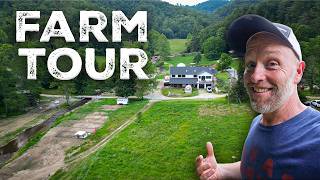
This content was created by Victor Justin Rhodes. This content was uploaded by Victor Justin Rhodes. This is a YouTube video titled "15-Acre Abundance: Permaculture Farm Tour (2025)" (recorded July 3, 2025). It is a narrated farm tour/vlog featuring two hosts, Justin and Rebecca, who walk through their homestead gardens and animal systems — kitchen raised beds, an 8,400+ sq ft crop garden and high tunnel, freeze-drying and food preservation, and a variety of livestock (chickens, turkeys, pigs, cows, sheep) — while explaining permaculture practices, composting/deep-bedding management, post-hurricane land restoration, harvest plans, and homestead projects and goals. The excerpt is instructional/informational in tone, focused on practical homesteading, food self-sufficiency, and on-farm infrastructure and planning.
Chapters
We got a pile of onions. Looks like we got broccoli and peas going in the freeze dryer. Eggs to be washed. Yogurt. Beef tallow. Lard in the freezer room. Broccoli. Beef. Liver. Pork. Lamb. More broccoli. A bit of chicken. We're coming into harvest season. Strawberries from a local farm. Pork. More pork. Beef bones. Pork. Lamb. More bones. Ground pork. We're going pork right now, aren't we? More pork, some beef, some peppers from the garden. So there's more chicken, beef fat, turkey, some ducks, more bones. There's another freezer at Big Daddy's. I won't take you up there. That stuff didn't just grow on trees. Well, I mean, it grew on plants, and that stuff eats plants. Anyway, this is our abundant farm tour. Is it early summer? Summer? Hi, summer! The beautiful one and I are gonna tag team showing you this abundance. For if you live a life of abundance, it's naturally a life of preparedness. So let's do this together. She's gonna— we're gonna tag team. She's gonna show you the kitchen garden, hopefully the 8,000+ square foot crop garden, and I'm gonna show you all the animals.
Welcome to the front yard garden, or as we call it, the kitchen garden. This is mainly just my raised beds. I have 6 raised beds made out of wood. They're 4x8, and then, um, we have our chicken run here. And so this is primarily small-scale stuff, so small-scale growing anything. So we had these onions left over from the crop garden, and so we decided to pop them in here, and they've been doing great. That's not really a small-scale thing, but we had a small amount. See, it's not even the full 2 beds around the edges, so we popped them in here. And then I've got like jalapeños, got some lunchbox peppers back here, I've got one poblano um, pepper because I want to just test it out and see how it does. Oh, we've got a basil in here, um, a basil. And then we had lettuce over here, it's bolted. This is a volunteer sunflower, isn't it gorgeous? I just love sunflowers, they're just one of my favorite, absolute favorite, um, plants. Here we've got cilantro Some of it's gone to seed. Some of it's trying to go to seed. I'm gonna rip that off. I mean, it's been pretty warm here, so the fact that these haven't bolted is actually really great. Got a couple more basils in here. We have Nash— I never say these right— nasturtiums. We have those in every bed. They're just gorgeous. These are actually seeds that were saved from last year, so that was pretty exciting to have those. Um, they were saved and then we planted them this year, so that was pretty exciting. To have, um, my basils. And then this is my tomato trellis, and these are all cherry tomatoes. So we have the red on this side, we have Sungold on this side with I think one red cherry in the middle. So I have two Sungolds which are starting to come in, which— that's so exciting. I've already eaten two of them. Um, but yeah, so I keep these heavily pruned so that we get Good airflow in here, and I'm pretty excited to see if we can get them to come, come and meet in the middle. We shall see. Who knows? No promises being made. Um, I've got 3 zucchinis here. Actually, I actually have 4 because there was 2 in that one, but I have trimmed these back. We've already eaten some zucchini. Oh, so amazing. I believe these are the Cocoselles. Um, they're my absolute favorite because they can get a little bit too big on accident because, you know, nobody ever leaves them on purpose to get big. Um, unless maybe you do, but they're still good. Like, you can still eat them well. They don't get spongy like those dark green ones do. Then we've got tarragon, oregano, sage, and thyme, and more basil. I actually harvested herbs today. That's why they're looking a little bit rough. Wow, is that Thunder. It has been tremendously hot today, um, so we are looking forward to the rain that is coming and hopefully gonna cool us down some. This is my death water. It's where I keep all my gross bugs that I want to die, I want to kill. So yeah, so I just keep this out here, and then when it gets too gross, I just pour it out and redo it. See, here's like an Asian beetle. All right, I had another yellow squash, crooked yellow, crooked, crookneck, crookneck. I had another crookneck squash. It died though already. So here is my dill forest. It's so exciting. I have a parsley in here, just one. I harvested some of that today. Tomatillos. Oh, I have some chives in here. I harvested some of those. It's in the freezer getting ready to go to the freeze dryer. And then my Tomatillos. Is that how you say it? Yeah, I think so. I have 3 of them. Lily really— well, I shouldn't say just Lily, we all love salsa verde. So we're hoping— we did, we did can it last year. It did not turn out. It was like really bitter. So we're hoping to at least eat some fresh, and if we can, can it. And I think we're going to— I think what we discovered the problem to be was the skins turned bitter. So we'll get the skins off. This is my cucumber trellis. So these are all cucumbers. I have cucumbers here as well. They are, um, these are like the English cucumbers, and then these ones are the homemade, homemade variety for pickling. And then I have on this side, we got some— it's called Quirk. So they're super little. Here's a larger one. It's close to being done. It's not done yet. I'll probably pick it in a couple of days. So I'm kind of interested to see— oh look, here's one. I'm interested to see if we can't pickle them and see how they turn out. Just a big experiment, see what happens. I want to keep these blooms so that I can make dill. I want to make dilly beans. I want to make dill pickles, and I would like to make dilly carrots too. My carrots didn't survive. We'll talk about that when we get into the crop garden. But here's the shirshims in each corner. I still have some space, and I'm going to put something here. I have some stuff in the greenhouse that needs to get out, hopefully tomorrow. Um, and then these are more volunteer sunflowers. So neat. Um, I've got lettuce in here. It may have turned bitter, I don't know. I need to test it and see, um, if it is. I've got more lettuce over here, but I've got lettuce in the greenhouse too that I need to plant out. I think this would be actually really good. I need to make a Caesar salad maybe tomorrow night for dinner. Caesar salad, just come and cut a bunch. We love Caesar salad. So the goose Are you waiting for me to bring you something? Some grass? She loves it when I feed her. This area we have tarped off. It has a ton of morning glories which I need to pull, and then I'm going to plant out like a ton of zinnias and sunflowers and stuff like that. I have them in the greenhouse. Maybe that's tomorrow's project, and then like, you know, filling in these other things. And then we have beets. So then I will go ahead and prepare them and freeze them and then vacuum seal them, and then we'll have those in the freezer for the entire winter. We don't eat a lot of beets. We do like some beets, but not, um, like probably more monthly or bimonthly rather than like weekly or daily. I love this having it here because like tonight's dinner we had, um, cucumbers cut up with some French onion sour cream. I just came out, picked a couple cucumbers, and that's what we ate. If we need a spice, like Justin today for lunch we had chicken and Justin came out and we picked like parsley, sage from here. And so it's just nice. It's still, you know, getting its bearings going but it's doing really well. I have some mint right here. This area used to flood horribly. We had it as an in-ground garden, just so much water in here. It was just flowing in, and so that was obviously a gigantic problem. And so that is why we decided to do raised beds in here, and I do not regret it at all. I love my raised beds. We may be doing something different in the future. I haven't decided 100%. Yet what that is. But, um, I have thought about doing like here around each post kind of like making a little garden bed, planting some zinnias, sunflowers, just like fun flowers in here. Anything that I would do would definitely be, um, like to beautify it, not necessarily to grow more food, because I feel like I have what I want up here. Just like the things that I grow just a little bit of, that's it. Now For the front yard, I actually have a plan, um, for in here. So this, this swath right here, I want to kind of— we used to have, before this used to be kind of like a wild garden, and I love that. And I would plant, like, I had yarrow, and my sunflowers would come back every year, and all of these things. Since we've changed the front of the house up though, Um, you know, things are just different. So actually what I want to do is do a wooden, like, boardwalk walkway to those stairs and kind of like have it angle, and then it would break up. So it'd be two big garden beds. And then I want to do just like kind of like the Back to Eden method, which is what we used to do. Lots of wood chips, they break down, build amazing soil, and then just plant things that will come back year after year. After year. Medicinal stuff, maybe, you know, put in— like, all this calendula here is all volunteer, you know. Have my calendula in there and it just self-seeds. And, um, lemon balm and just things like that that we would use and can be pretty in here. I will have some plants that are like more permanent in here and will kind of hold the space, if you will, while the plants that just come back every year and self-seed. For here, we have poison ivy in here. I would like to just like kind of redo this whole area, rip all of this out, kind of maybe bring it over, and then have like a spot where they can put packages because they will often frequently throw the packages into the bushes, and that's kind of annoying. These are all things that are— I don't know when they're going to happen. They're just things that I would like to happen sooner than later. We need to get this chunk of daylilies. There used to be irises in there. I would like to plant— oh, I should show you guys this. So like, for instance, I have my rosemary here. It's just sitting here. I need to plant it. Can you see it? So I need to plant it, um, and kind of have a permanent space for it, but I don't have that yet. So here I would like to also kind of just do this Back to Eden method again and just make it kind of like a wild— I have some irises here that I really love. Um, I'll probably put some sunflowers in here type thing. Um, my porch, I really want to have just like a lot of pots and plants up on the porches. I'm not there yet. Um, I feel like kind of we're— I just feel behind, you know. I'm gonna pick up my shoe, put it back up there so that if it does rain. Um, in this area I want to do kind of just like a nice little garden area. I don't know what I want there yet either. I have some ideas. I would like to maybe somehow, you know, that's our propane, cover that with some bushes, plants around it so that it doesn't look so ugly. We still have to put this— the, um, underpinning. I don't know what you call it, to hide the ugliness underneath the porch. I'm gonna— we're gonna move this. I would actually really like to maybe put raspberries along here. The only problem with that is, is that they migrate out. I would also maybe like to put some sort of fence on that. And then here we want to do a nice big fire pit, so that's probably hoping— hopefully happening this winter. We'll put a nice fire pit there. Also, I've seen it done like on Instagram and stuff where they put like brick veneer, and I would love to do that on all of the concrete that we have. I don't know, we'll see. And then, um, maybe do the boardwalk that I want to do up there in my wild garden. Down here, Jonah wants to do a driveway that comes down and kind of makes like a loop, and then in the middle have a fountain, which would be so beautiful. And I really like that idea. I think we're just, you know, still recovering from a lot of things, so I don't know when that's gonna happen. But again, these are just dreaming dreams.
Always right next to a garden, chickens. Get those chickens out of the backyard! Get those chickens in the front yard where they belong, front and center. Right next to the road. Why? Because we visit them often. Why? Because we come out and get herbs or whatever for the meal. You might want to come out and get some eggs. You might want to weed and throw the weeds in there. This is our little nursery. We got a few big hens in here to show them what's up. Water's a little dirty. I like to keep it on top of a rock to keep it up out of the mulch. Wood chips is critical. In a deep run, a carbonaceous diaper is critical. Also a plastic thingy-ma-jig. Jiddlers got a lot of chicks coming of age. You want to know what's wrong with your chicken? It's old and you don't have a replacement for it. That's what's wrong with your chicken. Just get replacements continually coming on to replace the fat old lady hens, or they're going to take advantage. They're on wood chips, they're stirring it, manuring it, absorbing that, and then turning it into compost. Look at this, just underneath you got compost. And the compost can be dug out and it's fed to our gardens every year. 1, 2 wheelbarrow loads per garden bed every year. And the weeds and the extra produce, and the— when the beautiful one's not looking, a few extra tomatoes. The garden feeds the chickens and the chickens feed the garden. These guys are raising up to replace the mamas. All they can eat because they're growing. This rain hood on the Premier One That's going to be me to fill it up tomorrow. They are in the Pretty Shawl. This design is in Homestead Builds. This design, this permanent run we call the Compost Corner, is in design— Homestead Builds. And these raised beds, guys, you can build all this yourself. Step-by-step plans at homesteadbuilds.com. Our 8,400 square foot garden, the biggest garden we've ever done before. Beauty is going to give you a tour of this indirectly. We are serious about quitting the grocery store this summer, this August, for personal health reasons. The loss of nutrients in the food at the grocery store, the preservation wax, the peel, the stuff they put on even organic produce— this is the most nutrient-dense stuff we can grow for our family. It's really important that we're successful. It's really important we have a big garden with lots and lots of animals. The breeder pigs— people say, Justin, how are you preparing? What are you doing? Prepare? I'm living a life in abundance. I have a boar. Look at that. We're prepared, buddy. We have a boar. We can reproduce. We have a mama pig. We have a rooster. We have a bull. We have a ram. That means these animals can keep on giving to us anyway. Whoa, we've got the breeder pigs here. That's our mama and papa. They give us pigs every year, sometimes twice a year. This year she's giving us— they got to each other and they're going to give us fall babies. They are in my pig port. This is a portable shelter, guys. Put your animals, if they're going to stay in one spot, on deep bedding, under shelter. Make a lean-to, slap together a lean-to. That's a place for wood chips. We're kind of running low wood chips. Come and throw it in, throw in a little bit every day. It keeps it fresh, it's so clean. And then when they're done, we hook this up, drag it, and then we turn our compost because the, the wood chips and their manure and urine makes compost. And that compost is right here by the garden, and we take our garden Okay, and we weed always, always animals by the garden. We're permaculturalists, okay? We got to be a jack of all trades and master of one, and that's permaculture. So we're gonna— the elements of the farm feed each other. They do the work of the farm. There's— you got some weeds. They have had a lot of weeds today. They've had wheelbarrow loads of weeds, so we're gonna feed them weeds. Looks like they need a lot of weeds here. Extra produce, you can grow things for them, and it being right here, it's proximity. Okay, I better get out of here. Rebecca's doing the garden tour. We're gonna cue that up in just a second. Let's do what we call the small animals, and then she'll do this big gigantic garden tour, and then We'll go up. The cows, 3 more days and they're gonna be as far away as the house as possible, so we're gonna go way on yonder to go see them. But first, the T-birds. Usually we can keep them in the pig net, but these guys must have a wild streak and they were jumping over it. This is a little more pain in the butt getting shore. It's harder for him to move. Looks like he needs to come feed them. They need all-you-can-eat feed. They're growing. They are the Cornish cross of turkeys. So these guys are done in 14 to 16 weeks. Big breasts, ready to go. It's what you're normally eating on Thanksgiving. We eat one a month, so our goal is to have 12, to have one a month, and then we give some away to workers and friends and family. They're on a special mission. We got blown away by Hurricane Helene. Water came up, actually took away the high tunnel. It was a little further over. And we had to grade this. This was turned into a bank and we had to bevel this. And you can see it's just crappy soil, okay? It's just crappy field dirt. We hay bombed it. We put hay out. Well, actually, no, we didn't hay bomb this. We just put down seed and we put hay on it. And now we're running the T-birds through and they're manuring it and mowing it, which will ignite this growth. The animals are helping us. Restore the land after the hurricane. Not only do the animals energize us with their food, not only are they medicine because they're the most— it's the most nutrient-dense food on the planet, the animals— they are now restoring the land. Bless them, bless them. You guys keep up the good work. They sure are dumb. We lost all our turkeys in the hurricane. I swear they must have lifted out their wings. They were all blown all over the mountainside. The cows and the sheep, they had sense enough, they ran to the top of the mountain, seek cover up high. Leaving the turkeys. Pull barn bedroom. Cows and sheep are in here in the winter, covering on deep bedding. You have two management choices, y'all, and only two if you want to have a regenerative homestead, which means it gets better year after year and not worse, and your animals are in sanitary conditions. Deep bedding if they're in one spot, covered ideally, although up in the chicken run they're not covered, so it's not a total deal breaker. And then we pull out all this material and we stack it right here, and we turn this every few days with our machines. The chickens help, they're manuring. And scratching on it. Carbon, which is the wood chips. Nitrogen, which is the manure. And water, which is the rain or a water hose. And they're getting it. We got a huge pile that either goes to the garden or— but this year it'll go towards hurricane relief. Oh look, we're just getting this done. Saw earlier in the vlog this week, we're bringing up the last of the material that was washed down and we're filling in all the way up to our pole barn. The creek, a little 5-foot-wide dinky 25-foot-away creek, became a roaring river. Came up all the way to here, ripped out underneath our concrete, took— we estimate about 140 tons of material was washed down there. And we collected what we could on our property, piled it up, and just brought it back one track loader at a time. And now we're gonna finish here. This stuff's a a little more fine, so that could be good. Might have some soil in it. See, we lost our concrete. We lost our concrete under here. We lost a quarter of our bales for the winter that last winter under there. It's gonna— ideally we'll have concrete again, but not yet. We're gonna pay off our house. We're just gonna make do. Y'all backwashing? I cleaned this out. I really elevate that because they are really stirring this up. And I don't want them to get in there. There's about 30 chickens in there. Everything must be mobile. The mobile coop, they have the Chickshaw Mini Me, that'll hold 24-30 birds. We actually have the, the Ramshaw or the Pigshaw, and I got a little dust box under there for them. They love it to get them out of this heat. They get in the shade, works good for the chickens. Multi-purpose everything, guys. Because they're on compost, their feet get composty dirty, dare I say. I'm trying this pallet, kind of a welcome mat. They dust their feet off before going in. Boy, look at that broody hen. Jeez, we need to break that brood. Now is not the time to hatch chicks. Anyway, it helps. It dusts it off a little bit before they climb up in there, and their eggs are cleaner. The sea monsters, the chainsaws of the livestock world. I say that because these birds, everybody likes them. And in just 2 weeks— 2 months, 2 months, 8 weeks— if you raised 100 with this Meat Shaw Premier One poultry net— it's been real hot, we've had to put 3 waters, 2 king feeders. These guys are restoring our land. The priority here is the cows. They are the centerpiece of our farm. So how can the sea monsters help the cows? We don't have to have a whole lot of grass for them, although that would be good. Their number one priority— our number one priority is not chickens, it's cow for its beef and its dairy. And so we're using these sea monsters to help build up the land after the hurricane. This topsoil just got taken away. And we're building it as fast as we can, but putting every single animal we got on it. The sea monsters, 100. If you raised 100— we raised a little more, 125, so we get 100. And that's 2 a week for a year. Come on, in 2 months. Come on, I know homesteading isn't instant, but that's about as instant as you can get. Come on now. Down the stream from them I'm calling them my Hurricane Posse. Normally they're the Pasture Posse. Sometimes we got them going behind the cows, 3 days behind them to stir the cow manure, eat out the fly larva before it becomes a fly, spread that fertilizer love. But downstream we got our Pasture Posse. These are the big old ladies. Look at that big girl! Look at that big girl! They're in the Chickshaw 5-point 5.0. That's officially rated for 36. I've had 70 in there. Don't tell the author. Build the Chickshaw 5.0 if you want 36 or 70 birds. Poop falls through, door is the ramp. They're here at the end. They're— they went behind the pigs, and you see the pigs, well, they divoted up, and they— the chickens help us make it smooth. They couldn't get to that because we had the fence on it. And you know, they don't do it perfect. But they smooth it some and we go in behind and then, uh, scratch it and sow cover crop. See, look, they're going— they're just constantly working. If anybody ever calls you a chicken, just stand up proud and say thank you, because nothing works harder than a chicken. They're going from dawn till dusk, okay? Never stopping, never stopping. They're workaholics. We got a DIY waterer for them, probably 20 gallons. Just installed some nipples on that thing, and that water will last them even in this heat a week. I put up a hook valve on it so you could actually hook it up to water if you wanted. It's got a float valve, so technically you wouldn't have to do any chores at all. Move them— we move them every week. The two rules of management, animal management: they need to be on deep bedding, vibrant decomposition, or rest and sanitation. Meaning they're in here, they leave, it rests, gets sanitized by the sun, and then they can come back. Cows and sheep, we do that every day. Chickens, at least every week. Pigs, every week to 10, 14 days. Turkeys, we're moving them as they're wearing out the grass, every other day right now. Hurricane Poshy is way down there. We are Three Little Pigs. Busy. What you guys think? You think I got some food for you, huh? You three not-so-little pigs. Finally, we crossed the creek with our little animals. They were over there. Boy, it was an escapade getting them over here. We got them in two pig nets. We got a shade shelter just in case they're under these trees, but once we get out there, there'll be no more trees. Feeding them grain on the ground to encourage them to till. They're working in the hay balm, y'all. This This is a lot of sand. It's heavier than soil, and it's, it's what stayed. And so we have them incorporating this hay into the sand so this, this earth will capture nutrients and retain it instead of it just washing out and away. So you guys are very important. You're more than just pork chops, okay? You're more than just pork chops and Boston butts and bacon and sausage. All right. Uh-oh, are we missing one? There he is. He's like, don't forget me, don't forget me. Very social, like the turkeys. We got 3 nipples on this. It could do up to 10 pigs. I'm really proud of this design. This is a 225-gallon tank, and it's great even just for 3 pigs because they can't push it, okay? They can't move it if it's full. It's super heavy. I even have it to where The drain valve comes up here, the PVC, if you want. And then you can do an overflow water situation. Water comes in, fills up, drops down through there, and comes back out and goes back down to the creek. We've done that in the winter before. You guys are looking fat and happy. We'll kill you in the fall. You'll be 250 pounds live weight. You'll end up being about 150 in our freezer each. So we'll have 450 pounds of pork for a year. What is it, 40 pounds a month? So what's that a week? 10 pounds a week. That's a lot of pork. We eat about 5, 6 pounds at a meal, but then we have leftovers, so we could have pork twice. 10 pounds, yeah, that's enough for 4 pork meals for us. There's the pigs and there's the cows. You can't even see them. They're over and on some newly cleared land. We are pasturing our forests and forestering our pastures. I'm gonna take you up there, but while we— while I drive all the way yonder, here's Rebecca in the crop garden.
This is our crop garden, our more serious garden where we're growing like a lot of food at one time. These 3 rows are 2 and a half rows. You can see where we we have, um, started pulling the collards there. These were— these 2.5 rows were broccoli, and I probably got all the broccoli that I need. We did strawberries. I don't know that we'll do strawberries again. I don't know if we're just gonna let them grow another year and see if we get a better harvest, or if we're just gonna leave it to the professionals and just buy a lot of our strawberries like we we did this year. That's what we did this year. So then I had my peas here, 50 feet of peas. I got a decent harvest, but I learned when Ruthann was here that we need to be, um, I probably need to be planting them like in the greenhouse in January and then putting them out here in February. We planted watermelons in here, so we'll see how that goes. I see that there's a whole thing of watermelons right there. And then this is where we were gonna do carrots. Honestly, I don't know what we were thinking because this— so our garden used to go to here. This is 50 feet that way, and so we extended it another 50 feet. What I was thinking, putting carrots on new ground, I wasn't thinking. I know better than to— than that. Like, I know that when you're breaking new ground in a garden, I would not ever plant carrots like that. Uh-uh, no, no. So we did use weed fabric. You know, I don't love plastic. I don't love it. It's not my favorite. But also, I know that I have goals that I want to accomplish, and without this black fabric, weed fabric, we wouldn't have accomplished those goals. So I'm also just being like, this is the season I'm in. Although I don't know that I'll ever not use it because it was that good. It was that good. Like, it was, you know, you have to set it up. We put drip underneath it, rolled out the plastic, you know, it took hours to do that, but it didn't take as many hours as it would have taken if we had to weed it. If we had had to do that, it would have been very, very difficult. I'm very pleased with it even though I don't love the plastic. My plan is to, um, these are acorn squashes, cuz we thought, um, we were going to use more of this row, but we didn't, so we just popped in some acorn seed. Um, oh, that's a squash bug. I'm going to kill that. Yes, I killed them. Okay, so we had just popped in those, so I'm just kind of training them to not run into the sweet potatoes. So we have sweet potatoes. We had this— I don't know why that row got plant got put into weed fabric. We needed to plant the sweet potatoes, so instead of pulling up the black weed fabric, we're just like, let's experiment and see what happens. So we'll see. I'm going to get all of— we're gonna pull all of this. I've got some cabbage still. Um, we just harvested onion. There was like a little bit of onion in there, but mainly garlic was there. We haven't used this row at all yet. We've got cabbage. I've been harvesting some. I started making sauerkraut. So excited. Um, these still have a little ways to go. I'm gonna just cover this back up just to, you know, deter this— the bugs a little bit. I don't know how much it will actually deter them. We had collards here and we ate this, and then I donated that to friends, people that I knew that would love them some collards. Here we have some onions still in the bed. Um, all my yellow onions did really bad. I think— I don't know what happened. I need to— oh, I just stepped in some water. I need to look at, see what a variety that I did, and maybe that's my problem because it seems like all my red onions are doing really, really great. I mean, we got them, they're just small. These are the red onions, they seem to be doing really great. Corn, we've got a good solid row of corn. We did how many? 3 in a 30-inch bed. That's looking good. It just started tasseling. Like, I feel like this literally just came out today. Here's our potatoes. Our potato rows are looking really nice. So remember, this half is new ground, so we have a lot more weeds in it. And it's fascinating when you get to the garden that we've been tending and, you know, really trying to be better the weeds. There's a lot less weeds over here. Weeding this side of the garden was way better than weeding that side of the garden. I'm— we're supposed to still have one more row of the high tunnel where I want to extend my arch, my pumpkin arch, all the way down. This is just not the season for that, so we're not doing it. My, you know, the, the, um, Hurricane Helene actually ripped all of the leaves off of my pumpkins last year. Um, the wind just took all of the leaves. I literally harvested the, the pumpkins the day before Helene happened because I knew it was coming. So I was like, oh, I'll go out and, um, you know, just get what I got. And then of course the vines were still here, and then the vines were just gone. I still have to plant in here. I want to plant pumpkins and I want to plant more winter squash. So those are the two things that I need. I feel like we're getting to the, you know, where it's getting kind of late, but it's okay. My potatoes were supposed to be here— my potato seeds were supposed to be here second week of April. That's when they were supposed to ship. They didn't come until the third week of May. So my plan was to have my potatoes in here and we would have already harvested them at this point, and then I would have already had my pumpkin, um, my pumpkin starts. And we would have just been putting those in here. So, you know, there's things like this happen. Like, my carrots didn't really work out, um, the potato seeds came late. Like, you know, things just happen and you just gotta roll with it in the garden. And I'm not just talking to you, I'm talking to myself because I struggle with that as well. Okay, so this is my high high tunnel. Farmer's Friends so graciously gifted it to us after we lost our high tunnel in Helene. Um, I wasn't expecting to get emotional, but I'm feeling it. Um, so yeah, we lost our high tunnel, uh, to Helene. It was actually right there, and you can see the creek is much, much closer than it was. I will say, because it now bends, the creek now like turns, it comes and it's much closer. It's beautiful having the sound of water. It like echoes in here or something. It's gorgeous. It's just, it's, it's lovely to the ears. Just a huge thanks to Farmers Friends. I just want to say that because, um, it was a gracious gift at a hard time. We were really thankful for that, to have that gift. And so thank you, thank you, thank you, thank you. Um, and I'm I'm just realizing something. Oh no, this drip is on. I wonder— yeah, the drip is on. It was just a really gracious gift to us, and, um, we're just really grateful that they gave us this, this huge gift. So we have 100 feet of beans all the way down, bush beans. Um, they kind of got leggy in the greenhouse, and I got really worried, like, oh no, did we, um, get Oh, we've got beans! We've got beans! All right, well, I know what we're gonna be doing— picking beans, the kids' favorite thing. Not really. Uh, we've got cucumbers, different varieties in here. Um, that's a— that's looking nice. I'm gonna take this cucumber. It's not huge, but I don't know how much more it's gonna grow. Um, we have like the hothouse cucumbers and then the homemade pickles. So we've got cucumbers coming on. I put grass clippings underneath them to kind of, um, help with that. But man, beans are on the menu! I'm so excited. Um, then we have paprika pepper plants. So I ordered paprika plants. I wanted to make paprika. Then we've got okra. So I've got some peppers here, not a whole lot, and then I've got some zucchini. I'm gonna have to walk in the— on the side because it's dripping still. I've got some zucchini and crookneck, and then I planted some flowers here because why not? We always need flowers. Um, and then on to the main attraction, which is my tomatoes. Oh, it's so lovely in here. So we have— these are Grandero. They are like a big Meteor Roma. And then I have Carolina's. Carolina is like an oxheart, which is what I grew pretty much exclusively last year. And then, um, this is 123 tomato plants. I mean, is it not gorgeous? And let me just look at this! What?
What?
First tomato! That looks amazing. So you may say to yourself, what, what are you gonna do with all of these tomatoes? We love eating tomato products, so I'm going to make salsa. I'm going to make tomato sauce. I'm gonna make diced tomatoes. I actually, um, Carolyn Thomas at The Homesteading Family— sorry, there's like water in the walkway— she told me about, um, hold on one second, I will get back to that thought in a second. But these are Mountain Fresh, so we have this little row of Mountain Fresh, and these are, I think, like NC State made them— not made them, but like crossed them. I buy them from Johnny Seeds, but they do really well in North Carolina. Carolyn Thomas told me about a food processor that dices your, your tomatoes, or dices whatever you put in it, and she says it doesn't like chew them up either. It like dices them nicely. So my plan is to— I'm still gonna can, um, salsa and some tomato sauce, probably. And then I plan on dicing a lot of the tomatoes and freeze drying them. So yeah, I'm really excited about that. I'm new to freeze drying, but I really like it. And so, um, I'm excited to be trying out— I actually have peas and broccoli currently in my freeze dryer. And then I have, um— I'm gonna come sit over here— I have, um, herbs that I harvested today. So I harvest— harvested thyme, dill, basil, chives. I have all that in the freezer waiting to go into the freeze dryer, um, in 2 days because you have to freeze them for 48 hours. So in 2 days I will pop those in, and my broccoli and peas should done by then. And so yeah, I am really excited about that. And blueberry season's coming up. I found a blueberry farm, very excited about that. So yeah, preserving is in full effect and I'm really enjoying it. I think that it's going to be a lot of work, but also it's so very rewarding. I'm really trying to feed my family what we grow most of all. And I shouldn't say because obviously I'm not growing blueberries and I didn't grow strawberries, but, um, buying from local farms and making a difference in those farmers' lives by— it's not just a transaction, but it's, it's, it's, um, a relationship with the farmer. And so I want to continue doing that. And then the farm that we got strawberries in, in, um, west of Asheville, 10 Acre Garden, that's where we got some strawberries. They do blackberries, so I think we'll go back and probably get some blackberries from them and just have a nice variety of, um, fruit preserved for the winter. Um, let's see, crop garden. We were actually crop garden garden down below the house where the pole barn is. And, um, Casey Ostewich, Honey Tree Farm, they're friends of ours, he said, why are you doing it here? You should do it over there. And so we switched everything over there and we love it. I think it was 2019 when we started doing that, so we've been gardening in ground over here since 2019. And, um, I love looking out my window and seeing it, and I feel like we are trying our best to stay on top of the weeds. And, um, because if you let a weed go to seed in your garden, it's 7 years of struggle. So it's important, it's important to weed. We're trying to really stay on top of that. I'm trying to think of what I don't like about it, if there's anything that I don't like about it? No, I love it. In fact, if anything, I wish it was bigger. And I know Justin would probably be like, what? I just wish maybe it was less hot, that we could work in it longer. Um, it's cooling down. Next week it's going to be back to our normal mid-80s, which is like, yes. Um, that is why I live in Western North Carolina, because of that. Raspberries have been coming in. Um, we'll have to walk over there and look at those now. Raspberries are across the street. We have black raspberries and red raspberries and also like yellow golden raspberries. Um, the kids have been over here. I feel like everything is coming, coming in slower than it has in years past. Here's a black raspberry. I'm gonna grab that, try not to get The little bit of black raspberries that I have had are delicious. The kids have been asking me for a cobbler, so I'm like, if you guys pick them— but I think we have enough for a cobbler because I'm seeing quite a bit. I feel like everything's kind of growing together. The red and the black are kind of getting involved with each other, if you will. We have a blueberry bush, which we actually are getting some blueberry bushes from our neighbors. They're thinning out their and they asked us if we wanted them, and we were like, yes, we would love some. So see, we've got some black raspberries over here. We've got some weeds in here too, though. These are like the golden ones, are so good. Mmm, yum. So yeah, we need to do a trellis. We haven't done a trellis yet, but I'm happy to see that these are growing. They are kind of like first year, so I don't know. I don't know how that works, you know. That's going to be bitter or tart. Yeah, but this is our fruit. And then we do have blueberries too, but I think they've kind of— they kind of have succumbed to drought and stuff like that. Um, The blueberries that we're getting are like obviously thriving here. I don't feel like any of the blueberry bushes that we have purchased really have thrived here well. One thing that I would love to do right here is do like a cut flower, um, like a couple rows of cut flowers. I would also love to put just like have like a thin row and just do like flowers all along the fence on both sides over here too. Um, I don't know about that. We'll see. I have lots of plans, but also like, Justin's like, I can barely keep up with what we're doing. Thank you so much for coming on this garden tour with me. Um, I had a lot of fun. I love talking about all this, and I hope you have a great day. Dorks!
They flipped their water. He-Man, dude, you're real close to being a cold cow, buddy. Steps in the trough, flips the trough. He's an ornery teenager right now. Miss Stud Muffin trying to get over the fence while it's on is definitely a, uh, work better with the camera kind of feat. An Abundance Plus member, Jeremy— thank you, Jeremy— has given us an idea for this, and maybe this is our project tomorrow. We've had to put step boards over it so they don't step in it. Now we're gonna have to do something about him stepping and flipping it. Cows have zero delayed gratification. He thinks it's funner to flip this thing, and then you don't have no water. Neither does anybody else. She's a prized milk cow. If you are pregnant, you sure are waiting to the last minute. We tested her, but she must have just gotten pregnant. We give her a month, and if not, she's not pregnant. She's not been coming in heat as far as we know, and she might be a cold cow. Cold cow means we have to harvest them and eat them. But Jonah seems to think she is pregnant. These are our prized possession. There's the other one. There's our milk right now, honey. And He-Man breeding them. Oh, she's in heat, I bet. He's kind of on top of her, isn't he? Yep. Who's afraid she wasn't coming back in heat, but she is. He's a little more subtle than, uh, Stud Muffin. Stud Muffin was all about it. There was no doubt they were in heat. Heat. He just tried to mount her. She's not in standing heat yet. That's probably why he's turning over the feed trough, sexually frustrated. We got a bull, we got a mama cow, we got another mama cow, and hopefully a mama cow. She'll get bred too, and then we'll have 3 cows. She just came of age. That stud muffin descendant. She is A2A2. That means her milk is going to be easier to digest, just like our other two cows there are A2A2. She's from Stud Muffin, which is our patriotic bull. We culled him because he was getting old, but it's cool that he lives on because we really liked him. And he was A1A2, so he— there was only a 50-50 chance a female cow would be A2A2. So we're excited. And Minty there So we're gonna have 4 milk cows. She's not ready to be bred yet, so she's over here with the sheep. The calf has gotten put up. We put the calf over here in the evening. There's a fence separating the, the sheep, a steer, a heifer not ready to be bred, and a calf. So she can't get the milk, so we can get the milk in the morning. It's just beautiful over here. This was all forest and we cleared this out. We We clear out about 2 acres in a winter, and we cleared this, we seeded it, we put, um, hay down, and this has just come back wonderful. Look how well they've eaten that. They've eaten that down. Sheep go behind the cows, second priority. They'll eat things cows won't eat, and we give the cows the choice grass. Just look at that view. Oh man, I need to get back on cow duty. We didn't always have this. This like could be the very first time I stand on this very spot. I mean, I worked all this land with the chainsaw helping getting these trees out of here, but we have, I don't know, 20-something-odd sheep. And relax, you sensitive animal lovers. I mean, I'm, I'm an animal lover too. They taste great. Relax though, we don't eat these sheep, we eat their babies. Okay, so we're gonna eat these guys. We're gonna eat these these little lambs. I don't know whether there's 10 or 11 of them. We want 12 once a month. So we have like 7— 7, no, I think we have 9 mama lambs. So that gives us a good chance because some of them have twins. If we get 12 that make it through to the end, that gives us a lamb a month, 40 pounds. That gives us 5 pounds a week. I didn't need to do math, I had already worked it out. The lambs are also eating parrot, eating grass. Any of the cow parasites, some of them die, die off in their system. They share some parasites but not all of them, so they're a bit of a vacuum cleaner for each other. Our prized possessions. This farm is a lot of work. We're a big family. We eat a lot of food. It's worth it because we have no other choice. You just can't buy this kind of food, and we want to live long healthy, happy lives to where we see our grandchildren, our great-grandchildren, and we're strong for them. And that only comes through growing our own food. And we found out in Hurricane Helene, living a life of abundance lends itself to a life of preparedness. We were suddenly without electricity for 15 days. Because we had a generator, we kept going. We got a Starlink, we kept communicated. And we had milk on tap. We had eggs overflowing. We would have been very good for a very long time. We had meat in 7 freezers and salt. And we share this with you because it makes us so happy and it completes our joy to share it with you. So in some way, hopefully this inspired you, the good and bad and ugly of it, because you can do this just one step at a time. We You didn't have this homestead overnight. We've been doing this for 20 years. We used to have one net, few gardens, one posse of chickens. And I, I should write a book someday called The One Net Chicken Stead, okay? Because that's what we were for 10 years, with a wheelbarrow, y'all, hauling hay to the couple of cows with a wheelbarrow all over this farm. Humble, humble days. And we got there by just 6 days a week, 1% better every day. Putting in the work, putting in the chores, putting in a project, taking a rest once a week, and just getting with it and just planting. Not overanalyzing, just planting. Doing things wrong, even doing things even if they're wrong— I mean, inadvertently, not intentionally on purpose. We can do it. Rebecca growing up in Florida, never touching the dirt, swimming pool to concrete to me. 6 days a week off the farm. I grew up in the country, only had a little bit of cows, going to school, going to church. All my brothers and sisters have nothing to do with growing food. They're all educators. If I can do it, if Rebecca can do it, you can too. All right, we'll help you. We've mentioned some of our builds. You can learn how to build these. Check that out at homesteadbuilds.com. Happy day, y'all.
More from Justin






If I had to start my Homestead all over again, it could only pick one animal… 




