15 Quick WINS I use Everyday to Grow My Own Food
Victor Justin Rhodes shares 15 practical techniques for growing more food on a small homestead. Soaking chicken feed cuts consumption by 15%, mobile coops let chickens fertilize beds while protecting plants, and sheet-mulching with cardboard and wood chips suppresses weeds. He also covers using chickens to spread compost and employing cats for pest control.
Chapters
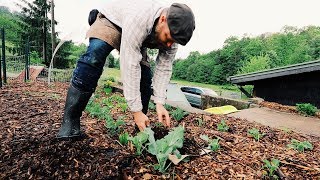
That scarecrow, quick win for us so far as the crows were getting our chickens, and so would the hawks, I imagine, if he pocks away. Another quick win, really quick win, one of the easiest wins, is soak your feed. When you soak your feed, even just overnight, you can feed them 15% less. So say you had 30 chickens, layer chickens, they need 10 pounds of feed a day, that's a third of a pound each. You could cut down to 8 8.5 pounds of feed for them. That saves you dollar bills, y'all. I'm just gonna pour out the extra water on spot. There'll be some grain and chickens will pick it up. Also, by soaking it, you absorb what you call the powder. There's a lot of powder, particularly in starter feed, that gets lost because the kid— the chickens don't eat it. But when that's wet, it's more clumpy and editable. Edible. And you lose a lot less feed. Look at these ones getting my spilled. I withhold their feed because these are called Cornish Cross. They're a 4-part hybrid and they're bred to just grow really fast. They grow phenomenally fast. They're mature and ready to harvest at 8 weeks. I think a lot of the times people have problems with these because they're getting fed 24/7. We restrict food after 5 days for 12 hours. Just in the evening. They don't eat that much anyway. That encourages them to, in the evening, search and eat more grass, which they can get 20% of their food from the grass, guys. I see 3 quick wins just right here. Number 1, electric poultry net around the area where you want a garden. Put the chickens in there to prep the garden. That's a quick win. 2, a mobile house so that you can do that. A chicken coop with wheels that can move on to the next job. 3, build a compost pile in where the chickens are, in where the garden's gonna be, and then you don't have to move that compost pile once it's finished. Once it's finished, the chickens then help you spread it. And the, the other quick win I see in here is just simply putting the water up. Here I have it on just a tub upside down, putting the water up because the chickens scratch and that gets into your waterer. In this case, we keep it clean. Right here we have a garden that our cover crop was ahead of our crops. No big deal. We've got ways for this still to thrive. You could use this in any situation. Look, we planted our onions, and to either side we did a strip of cardboard. Let's see what it looks like. Oh, here it is. A strip of cardboard to suppress weeds. They weren't— look at that, that, that grass under there is— or that, that cover crop under there is dying. It will add nutrients to the soil. Put a layer of mulch on top of it. The fragile onions are coming up right here. We turn a problem into solution. Our dishwasher broke. We eat a lot of meals at home. Used compostable paper plates and said, wait a minute, we could use them out in the garden. Just put 4 around each plant and then mulched around it. That's spot mulching. Here we have our cover crop. We have some lamb's quarters. Some people call that weeds, but the chickens love it. It's growing up for the chickens. When this garden is done, we'll let the chickens back in here. They'll eat the COVID crop, they'll eat the lamb's quarter, they'll eat the crops we don't eat. But in the meantime, we're protecting the crops we want a little bit so they can win in this jungle race This paper plate method, it's actually called sheet mulching. You could use cardboard, you could use newspaper. You put down that sheet of cardboard, newspaper, or plates in this case, and then put over, uh, some mulch. In this case, it's wood chips. You could use leaves, you could use organic straw, stuff like that. This is a classic example of how to weed, like quickly weed. And if a weed does manage In here we have planted in mulch and our potatoes are growing all by themselves. Oh, except look, there is a weed right here going. But look, when you plant mulch, weeds are easy to pull up and lay them down and they become, they become more mulch. Right here, this wind is so quick you actually don't have to do anything. Well, I guess you got to make sure your chickens have— your garden has— what do you need here? I don't, I don't even know because look what happened. Uh, I know what you have to do. Give them compost like I mentioned over there. Let them spread it. Then you have to give them your food scraps. Can you commit to that? Like food scraps with— that contain seeds. And you know what they'll do? Give them a little bit of mulch, wood chips to spread out. And this is what you get. You see how we have compost intermixed with these wood chips? And look what's growing. We didn't plant that. That's some sort of squash. There's another one. Bang! 2, 3. We're gonna let those grow up. The chickens have planted this entire garden area before just because they had compost that they spread themselves. Have you ever seen a garden grow by itself? That's permaculture. Arthur was just speaking of that. You see a lot of talk, but this is just doing. Actually, this is just not doing. This is just putting in chickens in the area, giving them your food scraps, and leaving. Is that just too easy? Is that just too easy for us? And that was it that year. We didn't even have mulch in here. So they had 4 different composts, they spread it out, they were fed food scraps, and the food just grew on its own. Another trick is in a feed room, especially with kids, you're gonna spill. Oh, pigs are low. Don't throw it away. These are low on their food. These chickens are fed only food scraps. They're scavengers. They're gonna have no problem picking through that and getting the grain out. And what they don't eat goes to the garden because they're Position on a future garden bed. Mom, I want you to talk about seed starts. I think that's a really neat trick. Why grow up plants like this instead of just direct planting?
Well, then you actually know what you— how much you have, and you can space it properly in the garden.
In the last 2 days, we've killed like 3, 3 rats and 1 mouse. 3, so 4 rodents. Yeah, basically eliminating your problem. Well, this is another one of your things. You built that in one day? Yes. This, this hinges up. You want to show them? Yeah, this is a rat mouse-proof cage over seed starts. See that? See that big old seed? That's what the mice like, so we put it under this cage and they can't get in there. That's not the quickest win in the world, as it took about half a day to do. But I'll tell you what was, uh, really quick. Here's the quick win in the greenhouse: 4 mice or rats in this thing. Here, Beauty, you want to clean out this waterer for me? Notice where she's washing the waterer. Why wash over there? Why not wash right here? Why? Because the garden gets the water. And the organic nutrients. When I say that, I mean some, some manure, very little, and any, uh, any bedding, anything like that. It's going right here. Okay, ready, Beauty? Yeah, Beauty, that stanchion is empty this morning. Tell them why.
We take a break on Saturday mornings so that we don't have to milk 7 days a week. We use the calf to drink all the milk on Friday night so we don't have to.
Yeah, it's called calf sharing. You heard these nightmare stories about how dairy men have to milk twice a day. Not on a homestead. One, we only milk once a day, right? We put the calf up at night so she can't get a hold of her mama, and the mama builds up milk, right? And then we can milk in the morning, right? And then the calf has the milk all day, right? And that allows us to skip a day, even 2, 3. If it could go away for the weekend if we needed to.
Yeah, these ones are the worst.
Hold on, I'll fix that. Okay, that's a, that's a prickly weed there.
I know.
So you, you're just picking, you know, in a mulch system there's just a few and you just pick them. Yeah, it's easy. Let me show you how to quickly weed if there were more weeds or if they're nasty like briars. I'll actually go to my recycle bag. This will work. Opt for paper at the grocery store, certainly over plastic. Me no weed. Almost done. Got some mulch. Happens to be wet because we rain— because it rained. Oh look, pests! While we're at it, pests, grubs, particularly in a mulch garden. Quick win for that: put your chickens next to your garden. I could have thrown this, but for effect, I'm walking I'm walking over here. You still got room in your crop for a grub? Watch. You don't— as Bill Mollison would say, he's the founder of permaculture, you don't have a slug problem, you have a lack of ducks problem. But in this case, we're using chickens. Look at all these volunteers! Oh my gosh, I'm just noticing this, Rebecca. Boom, boom, boom, boom! Boom, boom, quick win! Put your chickens on mulch or compost, feed them your food scraps, move them out, let the garden grow. Oh my God, oh my word, Becky, you seeing this? Let's just give up. We should become the volunteer gardeners and not do anything but move the chickens and feed them their scraps. Okay. Okay, back to the mulching. Those are just a few of my quick wins. Hopefully you can implement at least one of those, at least the soaked feed one if you have chickens. Use all those you want. I've got many more of those tricks, short-term wins, long-term wins. I guess a long win would be my Intro to Permaculture 12-part training series. On how to design and create pretty much your best homestead ever. More abundance with less input. That, along with hundreds of other videos, is inside my Do It Yourself Abundance member area. I recently surveyed some of you guys and asked, what's your number one struggle? Do you know what it was? The number one struggle was time. And of course, money is in there, and then knowledge. Those are like the top So as I create content in my member area, you know, the, the vlog is fun and entertaining. You, you watch it with your family, you laugh, you cry, you learn. But the member area is specific and to the point. So you'll see the stuff I'm implementing in the vlog. You want to know how to do it? Not everybody wants to know how to do that, understand. But maybe you're the person that actually wants to grow something or improve on that and in a quick, speedy, efficient way. That's why I created the member area. That's why I continue to invest in the member area, because folks are getting the specifics quick and they're implementing. They're learning how to grow more of their own food in a better way, in a quicker way. Like this morning we talked about quick wins. There's a lot of quick wins inside this thing with the videos, with getting help, and the Hey, even in just recently, you know, we're getting cats. Yeah, I just said it. We're getting cats. They're going to be kittens. It's going to be awesome. They're going to help us with this rat and mouse problem. We've never had cats, kittens before. So where did we go? Where was the first place we turned? We didn't ask Mr. Google Pants. We went to our membership community and asked them, what about cats? Hey, Rebecca.
Yeah.
When you asked the member community about cats, Did you get any help?
Yeah, I just wanted to know like how to— I don't know, we've never had cats. I don't know anything about them.
So what did they— what did you learn?
I learned, well, I was concerned about maybe them going to the bathroom in our gardens.
Okay.
So I got some good help on that. I haven't made a decision on what method I'm going to choose, but we have lots to choose from.
Wow.
And I do— I learned how I want to teach them to live in a certain area of the barn and how to do that. And yeah, they just— a lot of people gave me their experiences and I learned a ton.
Yeah, you can learn really quick. You didn't go ask Mr. Google Pants about cats.
No, I did and I got really overwhelmed and I was like, you know what, I should ask the community.
Yeah, Mr. Google Pants. Mr. Google Pants can be overwhelming because it's not necessarily from like an organic homestead, right, approach, right? You don't know what you're getting, you know. But our community has the same mindset. Yeah, so that's why it's a safe place, right? Changing up some things. I've been doing this for a year. It's so successful. Even the very first people, the vast majority of them are still with us. They're so happy after a year. That's unheard of in memberships. I'm excited about that, so I'm going as strong as ever, adding at least one video a week, interacting with an online private community where you don't feel so crazy. You can show off to others, get help from others, get help from us. Something I'm adding now is actually a spring enrollment. I'm actually going to close down membership May 27th, 10 PM Eastern. No, I'm not accepting any more members. I want to keep it intimate so I can pay everybody enough attention. I think it's going to be really neat. I've also added a premium level where folks can get more access to me. What if you have very specific questions that are hard to research? I think I figured out a solution to that problem. We're going to do live every other week webinars for just those members. We can get on, chat with you specifically, interact with each other, ask your specific questions, hang out. It'll be great. Inside the premium area, there's actually going to be more access to me. I become more like that food-growing uncle that you never had. I want to help you. Spring enrollment, guys! Spring enrollment! Join me on this 100 Days of Growing Food. I'm going to help you make that happen. Do it! Let's do this! More info in the description.
More from Justin






If I had to start my Homestead all over again, it could only pick one animal… 




