30 Hours with the Amish: This One Thing I Learned About Farming Changes Everything
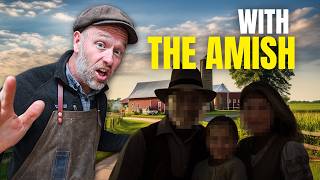
In this 30‑hour field vlog, host Victor (Speaker A) and co‑host Rebecca spend time with an Amish community and the regenerative‑food operation Prairie Roots (also called Prairie Foods). Victor first lists common misconceptions about the Amish—photography bans, uniform agrarian lifestyle, lack of travel, no electricity, perfect health—and systematically disproves each with on‑site observations and an interview with Amish worker Willie. Willie explains that the farm’s products (meat, dairy, cheese, yogurt, eggs) are grown without chemicals, using regenerative soil‑management and 12‑volt off‑grid power. He shares his personal health crisis in his 20s, which led him to adopt a health‑focused, soil‑centric farming philosophy rooted in Christian belief. Victor reflects on this revelation, concluding that humans are literally made of soil and that tending the land is a divine purpose, offering a new, lasting motivation for homesteading. The video also includes sponsor mentions for New Country Organic feed and practical details about product sourcing, packaging, and distribution.
Chapters
Most of what I know about the Amish is a huge misconception. I'm gonna share the 5 or 6 things where they've lied to us about the Amish. They've lied to me. But I'm also gonna share you the one thing that may deliver me from my 2-ish year burnout and give me new purpose for homesteading. That should last a lifetime and then even forever. It might be the missing piece. You like how I look around, make sure nobody was seeing me? Oh God, I hope nobody was seeing me. But I am excited. It's like all those wild people at a soccer game rushing the fences.
Flooding in as the events were unfolding, where you can see thousands of people Rebecca and I are back checking on things.
We just spent— I actually spent 30 hours at an event with the Amish. It was 98% Amish people. The guy running it was Amish. We were the speakers sharing the aspect of the health. It was a really cool event. We were in charge of the health aspect of it. Dr. Sina McCullough, you might know her from the podcast with Joel Salatin, the book with Joel Salatin, Beyond Labels. She was the health aspect of it. Open up our sides. It was 80 degrees yesterday. Let's see how they did on getting the eggs. Jeez, they haven't been around me in a while. Oh boy. Yeah, yeah, they don't collect the eggs without a reminder. Piled up to the laying area. Jeez, get in! For some reason it just doesn't click in his head. Shall that lead us to myth number 1? About the Amish. We've got to get a really big egg basket. Myth number 1 for the Amish: just like us, just like they call us the English, just like the English, they are very individual. But I should probably give you some context here. So there's a big sponsor of this event, it's called Prairie Roots. That was to be Winnie's food while I was gone, and that's what stinks in here. Hey, what? Why didn't you get the eggs?
I did.
You're surprised? We're so backed up. Can you go get the big yellow basket? It's so stinky. The event organizer wanted to give us this— wanted us to get this sponsor some attention. Go tour their facility. They ship foods all over the lower 48. You know, I'm thinking I'm gonna go to a— I don't know, some sort of warehouse. English. And we arrived at this place. This young Amish man just comes out with this biggest smile he's ever had, I've ever seen. He comes out and he greets us, and he knows we're coming, but he doesn't know why we're there. And we soon just back and forth try to figure out, and then we figure out they— he doesn't get on camera. The, the Amish don't get on camera. And that was one thing I thought I knew, I did know, that actually turns out to be true. And they are very uniform about that. But as I began to talk to this guy, I mean, right out the gate, I'm finding out that these people are individual. I expected in my head it's gonna be uniform across the board. And the way I found that out was this own— and it's Willie. This guy's name is Willie. Gosh, I wish I could have, uh, took a picture from— or, you know, had him on camera. But I do have some video. He allowed me to video as long as I didn't capture him. You'll hear his voice in just a little bit. He's going to give us a tour of Prairie Roots. Now don't expect some clean-cut, glamorous thing. Think more rogue, rogue food, which Rebecca and I are all about. And we totally stocked up and we're probably going to order from them. This is going to stink. I'm not bringing this in. One of the myths you guys might have is that they're all agrarian. Many of the Amish have like us moved away from farming and have taken up other jobs. A big misconception Willie blew out of the water right away is— I hate to say this, but I didn't think the Amish liked us or wanted to have much to do with us. Or maybe it was because they couldn't have anything to do with us. But they like us so very much and are so kind and so friendly to us. Absolutely blew our mind. We walked away at that event with several phone numbers and 4 or 5 friends and invitations to come visit us. Yes, that would be the other myth. They do travel. I'm sure there are some hardcore that don't get in cars, but everybody else all there got in cars. They don't drive cars, but they'll get in cars, and many of them travel, and some of them even get on airplanes. Again, this individual aspect. Another myth is that they live without electricity. That's not true. At least these guys, they live without the grid. They'll have battery-powered devices. I've even seen some on battery-powered bikes. They run chainsaws, so they run fuel-powered equipment. They'll run generators for their shops and businesses and for freezing their harvested chickens and things like that. They'll usually have a shop and the generator is ran there, and that's where they charge their batteries for using them at night. It's just like blowing my mind. You stay with me, okay, bud? I don't even know if this gigantic basket is enough. Here's a big myth that many of you have bought into. I knew it was different, uh, that they are all living off the land. That's not true. We found that out a number of years ago when we went to an Amish grocery store, and honestly, they were just selling junk food. And so, so then I assumed that was the uniformal norm. Another myth is that the Amish aren't sick. We hear that all the time from modern health— What are you doing? Don't do that! You have to crush that egg. You have to crush it if you're going to feed it to them. Are you going to train them to eat eggs? They're already trained. How many eggs are we going to have here? 1, 2, 3, 4. All right, let him do that while I talk with you guys. What do you need, Henry? Sure. All these modern health influencers saying, uh, the Amish are healthy. I was getting talking to Willie and I learned really quick he's doing this in a regenerative way, and not all his neighbors are. He says we are individual. So I meant— I mean, I guess that's a common misconception that he runs into. You know, it is still confusing because they are very uniform and not getting their picture taken. And they— the men all have the beard, but it starts under their chin. Their face is shaved. The women all wear the bonnets. So there is some uniformity, uniformity. But as far as the ununiform, I saw some with flip phone cell phones. And there are some that get on the internet once a week, like the, uh, he goes to the library, like the event organizer. And they're like the doctor there that was also one of the speakers, Amish, gets on the internet every day. But Willie was telling me, I said, well, how did you get into this regenerative farming. He knew about Joel Salatin, Greg Judy. It was because of his health. In his 20s, he crashed. And I said, wait a minute, I thought the Amish were healthy. He said, we're getting sick. We're getting sick just like you all. This young man hit the precipice. He's only 30. 84. You definitely getting these eggs. 86, 88, 90, 92. Get my picture. Get in.
That is a—
hey, I just looked that up, why maybe they don't get their picture taken, and it's the whole graven image thing. So we definitely wanted to respect that. That's probably a good leeway into going to the Prairie Roots shop and seeing what these guys do, what Willie does. He came at this from a health conviction. He's had to start eating better. It's not certified organic, but everything he grows is without chemicals, so you know, it's organic. It's beyond organic. He grows it himself, or he gets it from his neighbor, employing them, and they ship all over the lower 48. What are you doing? It had a crack in it. Okay, before we give you a tour of his shop and you can hear Willie's voice, you'll hear how friendly he is. I want to make sure— did I name all the misconceptions? Here's one more that I forgot. Misconception: And then we'll get right into the tour, and then we'll follow it up with the one thing I learned from them that is drastically changing the meaning and purpose I have behind this whole thing. At one point he was saying he was, he was on this journey, and he likened it to God at some point, and he was talking about how he learns from Joel and whatnot. And I thought, I thought, should I ask him? And this is 5 minutes of conversation. This is how deep we're getting. I said, "Do you think you hear God's voice?" What I was getting at is, do you think you can, uh, that he can consult you in what to do? Because this man is telling me about his observations about how at certain times of the year he can leave cows in one spot more than 3 days and they not re-eat the regrowth, which can be terribly bad. But on other times of the year, they do eat the regrowth. And you know, I just wondered how much of that is he just learning from the land and then actually learning from a higher being speaking in its own way to him. And I imagine one of the misconceptions is perhaps one of— I hate the word individual, I hate the word personal relationship, I hate that phrase— but, uh, so I should say maybe individual experience. Perhaps you don't have to go through a priest or bishop in this case to get an experience. And he said, "Me and my buddies talk about this all the time." He lit up, and that broke the ice. And they talk about how do you experience God? What is that like? For them, very much on an individual basis. Okay, Austin, while I soak this feed, roll them the footage of us touring his place. When there's times that my camera is pointed down, just put up a— get a Grok image, get some sort of AI image so we're not really taking a likeness of any real Amish. And just put that up with, uh, you know, me, me and Rebecca on one side, them on another, when the camera angle is just so terrible, but you can keep the audio. All right, let's go, let's do that. See you guys in a bit. Speaking of feed, I'd like to thank our sponsor, New Country Organic. I'd like to share with you a little something about this. First of all, New Country Organic is certified organic. I've been using it probably nearly for 20 years. I like this whole grain mix. It retains all its nutrients. It enables us to buy it by the tote. We get it in 1,000 pounds or 2,000 pounds. Of course, New Country Organic also sells it by the bag. They ship all over the US. They ship these totes all over. It's a lot cheaper when you buy in bulk and get it all in one, a pallet ship shipment. But there are actually many dealers around here where we could get New Country Organic by the bag. You could— I would encourage you to Check with your local farm and garden— farm or, or, and/or garden supply to see if they carry New Country Organic, if you can get it there. If not, you can always have bags shipped to you. I've tested this side by side to other feeds and just let the animal choose. You know, the animals are much like the Amish. They don't have TV or internet or anything like that, so they are in tune with their bodies. They choose this over other feeds in my own tests over time. So I'm thankful for New Country because we wouldn't be able to do what we do without them, especially with our pigs and chickens who need a lot of grain. Well, our cows too, with the alfalfa, the organic alfalfa. Thank you, New Country. I encourage all y'all to check them out. How does this begin? Give me step 1 through 7, whatever it is. Okay, how it comes down.
Well, our food gets grown on farms that we source. They are all grown regeneratively, and each farm is on a is on a managed, like, soil management program. Yeah, based on whatever the, uh, the farmer can afford, and then the methods that we believe is true and healthy, especially to God's word, right?
Okay, so what are those? What are some principles of that?
Well, we need— we, uh, we feel that the plan of salvation goes into the soil too, so we need to be able to see that we are promoting life in the soil so that we provide life for life.
So does that mean no chemicals?
Absolutely no chemicals.
Okay. In Prairie Foods food?
Yes. Oh yes, no chemicals.
So what made you motivated? Well, it's not you who started it. You work here?
I work here, yeah.
Well, what motivated you to work here?
Um, so I met the owner through, um, my travels.
Okay.
We both were on the same journey of health and trying to grow, grow good food, so we just partnered.
Okay. Yeah, nice. And now, so now what happens? So you got these— how many qualified farms are there?
There are about, let's say, 11.
Are they all Amish farmers?
Yes.
Okay. And then what happens? Once they get the produce?
So then they get processed in a facility that also doesn't use any chemicals.
Is this mostly meat?
Meat and dairy.
Just meat and dairy?
Meat and dairy, yes.
This sounds like my diet. Yeah? Meat and cheese is what's for dinner at our house. Yeah, right.
Same here.
Okay, good.
Then it comes over here in packages. It's all pre-packaged when it comes over here. Then it goes into storage.
Okay.
Our storage is—
some of it, yes. So here's the storage room. There's no lights in there.
Oh, it's rather dark.
This cheddar, is it like— how is it produced? Like, how do I know what rennet was used? All of that stuff, right?
So there's, um, it's beef rennet.
Is it?
Yes.
Wow.
Okay, I'm gonna have to start ordering from you guys. Like, I'm serious. Like, I, I have— I'm, I'm in need, and I'm gonna share it with Tara.
I like this ingredient.
I'm gonna share it with Tara.
I know.
I am like—
I'm always, I'm always looking looking for because I'm not at a spot to make cheddar for my family.
So how much is it for that block of cheddar?
Uh, that is, uh, let me see here. I'm not sure about the reason.
It's about a 5-pound block.
Yes.
So retail prices and meat, um, are not very familiar.
Okay, so you don't know the retail, but that's okay. But I'll look it up.
So can I ask you on that, how do you get lights out here? Yes. So we're going to be wondering how the Amish get lights.
So this is just— these are, um, These are electric light bulbs. Okay, it's just electric lights, but they're hooked up. They're a 12-volt to a 12-volt system. Okay, so we've got 12-volt batteries that we use to power our, you know, to start our, um, diesels.
You're just not on the grid.
We are not.
Yeah. Okay, look at her.
Like, maybe we should move to Ohio.
We'll be your number one customer.
All right, can we be your friend without becoming Amish?
We grow our own. Absolutely. We have our cows, so we get our milk, we get our cream, we get, we get our mozzarella. Mozzarella, sour cream. We haven't got to where we can do our cheddar yet.
I haven't made hard cheeses yet, but I'm going to one day.
So I, I haven't made cheeses myself.
See, leave it to the craftsman, right? Leave it to the craftsman. They know what they're doing.
Well, my thing is that I just— well, I mean, we're growing our vegetables and then preserving them and all these things, so it's just a lot to also make cheese. And I know people are doing it. I'm not saying I'm there excusing, but I also have 5 children.
And I'm homeschooling, so like, okay, so, so the meat comes in here and it's stored. Yeah, I gotta wonder what's in that, uh, what's in those, uh, wooden barrels, those wine barrels.
Yeah, so, um, this stuff is, again, we're just like, we're just storing stuff in here. We're preparing for the move. It's not like it's, it's being—
Okay, yeah, you guys are in the middle of it.
We're in the middle of preparing for a move. Yeah, so this is going out to Western PA.
Okay.
And, uh, so the wine barrels are here to store apple cider vinegar, and then—
nice.
Yeah, we'll be selling those.
So you sell that by the 5 gallons? Yeah. Okay, we'll do that.
Um, so once, once we get that going this summer—
okay, do any people do co-ops buying from y'all?
Um, some, some do, yeah.
Okay, I have to do that back Okay, because if you order a pallet of food, that's probably going to be products. You ship it by the pallet?
Yeah, well, so we haven't— nobody's ever ordered by the pallet.
Yeah, leave it to the road to do that for you. So tell me what you have stored in here right now.
We have cheese and milk. Okay, and yogurt. That's yogurt. You can have one.
You can have one. All right.
Thank you.
You just made our day. You're welcome.
No, no, we didn't.
So that's drinkable yogurt. Okay, uh, we don't have any Greek yogurt in stock yet.
That's okay.
When you say raw yogurt, you mean you didn't heat it over 120?
Uh, that I'm not sure if that's your raw 100%, but it's still good.
Yes, it's gonna be delicious.
Yeah, we'll heat our— we'll do our yogurt at 100. 100 degrees for 24 hours. Yep.
Yeah.
And then keep it raw.
And it's, and it's, and it's, you would, I guess you would call it drinkable, but we eat it with a spoon.
So we do the same thing too. It's, it's, it depends on who's doing it to, you know, how it comes out, how it stores and all that. So we need something that is able, we're able to store for a couple days to where people can get it and, and not have it spoil.
Right.
No, I get it. Yes, he's become quite the master yogurt maker.
Yeah, well, you got to come work for us.
Yeah, yeah, I'm so excited. We should move here.
I'm always trying to move.
So we have, uh, drop points and we have pickup locations. So these orders that you see on this cart are, um, ready for the pickup location.
One bag for one order, or is this not one person?
Not necessarily one bag for one order, but whatever we try to fit what we can in the bag.
One order in And this is one glass jars too.
Yes.
Do they return the glass jars and you give them a refund?
Oh, so we haven't gotten to that stage yet. Okay. Yes, but that's the idea.
So what's the rule on the eggs too? They're not allowed to—
so no chemicals. So all the feed is grown locally.
Wow. And not using chemicals.
Not using chemicals. Regenerative practices. And they have to source the vitamin packs from legit sources that don't use dyes or chemicals, like manufacturer fillers, stuff like that.
Nice. So yeah, the business thriving, it is. Oh yay, good.
Not made with chemicals. Sign me up.
Okay, that's been one of our main challenges has been keeping it chemical-free. Yes, because we can, we can get Non-GMO stuff, right? But then you have these vitamin packs that have brewer's grains as fillers.
Yeah.
And they can even be labeled non-GMO.
Isn't that something?
Isn't that something? Yeah, but they're inflammatory.
Yeah.
It's just not healthy for us.
Yeah. Right. And how'd you get on the health kick?
Oh, I got sick.
Isn't that the story for everybody?
Yeah.
You fell off the cliff.
What'd you get? Do you know what you got?
Sickles. Oh, I got I got diagnosed with so many things. It was like Epstein-Barr, mono, degenerative diseases of whatever, right? It just didn't make any sense.
Young man, I'm just 30 years old.
So when I got diagnosed, I was 20.
Wow.
Wow, right? I was working and all of a sudden I couldn't work anymore. It's like my heart gave out.
I can't work.
I went to the dark doctor and He charged me all kinds of money. I spend it, right? And I got told, wow, you have some really wacky heartbeats, but otherwise you're a healthy man, and come back and see me if you have other problems. And I couldn't work. The next day I came home and I couldn't work, and I was like, this isn't, this isn't right. I'm 20 years old, my friends don't do this. So at the time I was training horses and learning about God's law in nature, all of a sudden it started clicking. Wait, I'm created from the same soil.
Mm-hmm, true, right? So wait, I must have made from the soil.
I must start to see this, right? Okay, so I kind of slowly by slowly I transitioned into this.
We're not made from the soil we eat from.
Oh, we do always, right? Yeah, we have science, we have labs, we can know things that the soil can't. Yeah, isn't that crazy?
Yeah. So you bag it up and the people are coming to get them, or these are going to the shipping boxes?
These are going to the Dropbox.
Yeah, so that's all you'd have to do if you make cheese. Yeah. What's the website?
prairiefoods.farm.
Okay.
The cheese that we have is made by a guy in Pennsylvania.
Pennsylvania too.
Um, no, it's Jesse Lapp.
So why the move to Pennsylvania?
Um, this business was started by a guy in Pennsylvania.
Okay.
And then it moved to here, and the farms here were not producing at the level that the business needed, so the business is going back At the same time, there's a new business starting here, so which is growing with the farms. Okay, so that seems to be working better.
So you'll still have a job? Oh yeah. Okay. Yeah, with the same company or with the new one?
So with the new one. So I'll be working with multiple companies actually.
Nice. Okay, okay, good. Rebecca and I were so impressed, she stocked up. We got honey, we got cheeses, we got all kinds of good stuff and plan on buying from them in the future. They have very reasonable prices. What if we took the blessing of this community and just blew them up? Prairie Roots. What if we just— you got to supplement your food, don't get it at the grocery store, get it from Willie. He farms it, he knows the people that farm it. Wonderful person, great individual. I met his family, just wonderful people. I hope to go back and actually spend the night, and he's invited me back to to spend the night with them and live with them for a couple of days. That's the kind of people they are. Let's, let's go. Hey Gideon, I don't want to take the mower or the four-wheeler. No, where am I going to put my legs?
Right here.
Where am I going to put this camera?
Right here.
How's the old man gonna put his legs over that? All right, let's go move these pigs, and I'll tell you the last and most impactful thing I learned from the Amish that will be an everlasting Gideon, how are we going to move the tractor with this? It doesn't have the ball. We're just going to move it by hand. That's another reason I wanted to take Sally. Gideon, there's a tool that fell off. That's why I don't like taking the foiler, bro.
I don't want to take it.
I said that. Don't I say that, Austin? Roll back the tape. Hey Gideon, I don't want to take the mower or the foiler. See, I said that. See why the foiler is not that great for this? We could just walk. I want you to drive over here by the creek. See, we're walking, we're Amish. No, we're not. Yep, yep, we're Amish. I'm done. Carry the other tool. And this? No, I'm not carrying it.
Come on, I don't want to carry it.
Building character. It's Ruth Ann Zimmerman said, and whining and complaining and grunting and growling over work, building sound of character development. We are restoring the soil washed out hurricane. I will never look at the soil the same way again. I will always cherish it so much more after my experience with the Amish and Willie. Some of our cover crops gone up behind the pigs. Yeah, look, look, that's a cover crop coming up. That's a bunch of green coming up right there. Let's move it before he gets to it. Hi! When you've been going that way and you want to start going this way, the wheels are turned. Oh, the water, dude! That's why it was so hard. Whoops. Okay, back up. In talking with Willie, he's been really fascinated with the soil, making sure we're growing in good soil. And throughout the weekend, I don't know if this was Willie or somebody else, or something else kept coming up that we are made from the soil. That is one part of us. The other part is God breathed life into us. That is the soul. We are body and soul. You know, when we kill one of these animals, when we kill these guys and they finally stop breathing and their heart stops beating, it's like what Temple Grandin says, "Where'd they go?" They're just not there. So we are two parts. But if we are made from the soil. I have concluded that we can be no better than the soil that our food was grown in. Drop the mic. We are soil. We are soil. We are soil. So that leads us to believe— I can only be led to believe two things. One is we ought to be tending it. And it seems as though that is our purpose in life. We've been made to cultivate, tend, have dominion over. And then the second part is to work with our hands doing what is good and partaking in the bounty. And that is where we find fulfillment. It's no wonder So many of you all are town folks drawn to this and want to grow a little something with your hands. It's your natural God-given instinct and purpose. There's a promise in the Psalms: when you eat from the fruit of your hands, you will be happy and it will be well with you. Okay, well, I just need to look around for that, don't I? I just need to look around and notice it, be aware. I pursued it. I'm there. I just now need to take a deep breath and smell the roses. This fills up, we're gonna rake this out. We forgot our cover crop seeds, bro. Just picking up of the rocks, it's no longer a distraction towards the end goal. It is my life's calling, all of ours, life's calling to work and commune with the land. It's when we trap our true self and God himself. The boys should dig this creek out. Oh, you're not allowed to dig in the creek. Yeah, an excavator anyway. I guess you could with a shovel. Come on, grab some rocks. Be careful on that section. Did you get the sage? All right, my man. Put the seeds down, then rake it smooth. Okay, to our overall purpose here, God giving us life and breath, breathing that into us, and then our bodies coming from the soil. So then when we work it and grow it and eat from the land, we are doing what we are destined to do, which is Heaven on Earth. And then this, just this, what we just did— mending the soil, communing with our bodies in a way, communing with God in a way— just that is success. Enjoy that moment. That's what it's all about. And it's eternal, so it's not useless. We get this job done, it's not done. We've experienced heaven on earth, and I'm hoping and thinking will have eternal implications. It's a reason if there ever was one, isn't it? Happy day.
More from Justin






If I had to start my Homestead all over again, it could only pick one animal… 




