48 Ways to Keep Your Chickens Happy This Winter
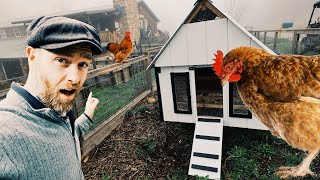
Victor Justin Rhodes walks through 48 practical ways to keep backyard chickens healthy in winter, from water management and nutrition to coop setup. Skip heat lamps and Teflon bulbs, which are fire hazards. Deep litter bedding feeds your birds while composting for spring, and supplemental lighting at 14 hours can maintain egg production, though letting them rest is fine too.
Chapters
I'm going to talk about some things that you don't need. First, let's consider your light bulbs. You don't want any Teflon-coated light bulbs. Not sure if this one is or not, but be careful when you go to the store. I stay away from this white covered light bulbs because just in case it's Teflon-coated, puts off a poisonous chemical that you don't want in your house or the bird's house. And if you look They won't advertise it very well. You actually have to look to the back and see a little sign. I saw a little fine print that said, "Not fit for indoor use." You want to stay away from that. So to be careful, I just always get a clear-coated light bulb for the chicken's pen and for my house. These are nice LED lights. Another thing you don't need is a heat lamp. That's very popular to use, but it can cause fire, and like I said before, the chickens are very hardy and they don't really need it. Another thing you want to be careful about is different sockets. There's different rated sockets and different rating light bulbs, and if you don't get the same, it could cause fire. So you want to be very careful about this. When you should have the rating on the package, these— and the danger is they all fit, but these are probably two different ratings. It can be dangerous. Another thing, a lot of people use straw bales, and I imagine that's okay in a really cold climate above America, but you want to be careful because a straw bale can mold. You see all that mold right there? And this can cause respiratory problems in your birds. And like I said, you're probably not going to need it unless you're extremely cold. A few other things you don't need is a sweater. A lot of people do that for their pet birds, but It's not necessary. They got wings that keep them warm. They got a metabolism. As they digest their food, it radiates heat into their body, and they keep each other warm at night. They don't need a sweater. If you look into how to keep your chickens warm in the winter, another thing people are afraid of is frostbite on their comb. Their comb will actually turn black. His is not. His is actually dirty. He does a lot of hard work for for us, but he's doing good. People will put petroleum jelly on this, and I say that's a big no-no because, one, I don't think they need it. You just need to keep them dry. Just keep more focused on keeping the bed dry. And it's petroleum. They don't need that. If you must put something gooey on there, use unpetroleum jelly. It's not as toxic. You also got to keep your water unfrozen in the winter. Oftentimes it gets very cold. One key point to know is that chickens don't drink at night, and that's most likely when it's gonna freeze. So what I do is I put my waterer up at night. I put it in the basement near the furnace. That keeps it warm. Chickens actually like warm water. They don't like really cold water. So in the morning I fill it up and bring it out, and it's reasonably warm for them and they enjoy it. It's rare here in the mountains of North Carolina in Zone 7 that the water freezes during the day. There are days So when that happens, I might check it once or twice a day at the worst, and that might be for 2 or 3 weeks spread out throughout the winter. But some people, if they don't want to do that, you can actually get warmers that, that you put under there. There's some do-it-yourself homemade warmers, there's some that you can buy in the store, but it does take electricity. There are automatic waterers that you hang and there's a nipple, and they have some devices that it causes the water not to freeze so fast. They're insulated, and so there's a neat something that somebody might want to try out. But for me, just old-fashioned, just not afraid of work. I just put it up at night and bring it out in the morning. That also puts me in the routine of cleaning it regularly. Probably the next most important thing to consider during the winter is food. Because the days are shorter and it's colder outside, there's a lot less live material around, and chickens have to work a little harder to find it with less time. So But you'll be surprised just how much is around you. I'm gonna unload the wheelbarrow here. First of all, this is just expired bread. You could go to the grocery store. I go normally to health food stores, they're the ones who will accommodate you in this, and just ask for their throwaway bread. They can't sell it past date, but it's actually fine for human consumption, and the chickens love it. Another thing to feed if you're on a homestead, for sure you might have some of this: hay. This is actually an alfalfa timothy mix. It's just dried grass. Just like cows will eat that, chickens will eat 20% of their diet grass. Of course, this is traditional grain. I don't actually use this, but most people do. I got this from my neighbor. You can buy this. This is We buy organic when we can, and it's just corn, peas, non-GMO-free. They love that. Feed them some of that at night right before they go into their coop, and it'll serve to heat up their— it'll kick in their metabolism and warm them through the night. But you can feed any of this just before bedtime. Another interesting thing is kitchen scraps. These are the things that you might eat, but you would throw out, not in your trash can, but to your chickens. Just had a banana for snack? Just feed them a banana. You might be surprised to know that you can feed them eggs. They love eggs. Great source of protein. Great thing that— look, she's running off with it. It's got some bacon in there, other animal products. You got to remember that chickens are related to Tyrannosaurus Rex, so they are They love to eat meat and protein. Actually, if a chicken is given a choice, they will eat 70% of their diet protein, animal feeds, 20% grass, and maybe 10% grain. Another thing you should do is— this is an eggshell, but you want to crush it up because if they recognize it as an egg, they might start eating their own eggs. And this is a great source of food, but for needed calcium. You see, she looked at it, but she didn't get it. She doesn't need her calcium today. They know when they need it. They'll eat that. That's an amazing source of calcium, much better than oyster shells. If you can't, if they're not in eggs and you don't buy eggs, get you some oyster shells. Some people say don't feed orange peels. We feed orange peels. They love it. I think you can feed a chicken anything you can eat plus more. Remember, they're the Tyrannosaurus Rex. They also know themselves what they can eat, just like you. Before you go eat some spoiled milk or spoiled meat, you know. You don't touch it. And I believe they're the same way. Some people say don't feed garlic and onions because it makes the eggs taste like garlic. I haven't found that, but if it does make the eggs taste like garlic and onions, that's a good thing in my eyes. It's a good flavor for the eggs. So I'm gonna just pour out the rest of these scraps. There's broccoli from last night. Sometimes people might say, well, should I feed chicken to chicken? Well, in nature, chickens will actually eat chicken. They'll actually eat each other. They'll eat the weakest I don't think there's any research on whether or not you should feed chickens to chickens, but it might seem a little strange. It's cannibalism, so you might want to stay away from it, but that is up to you. What else we got in here? Okay, so we got in here maybe some produce from the garden. This is a cauliflower. You'll notice a lot of these foods they'll eat right away, and some they'll save for later. We'll come back this evening and that will be gone. They kind of love how this crumbles. Look at the pecking order here. Some are showing who's boss. Another thing is in the winter you could actually grow your own mealworms. It's pretty easy. I'll show you how to do that in the other chapters of the video. But these are dried, but you can grow your own and feed them mealworms. Another thing I'll show you, and we'll definitely go into more detail later, is you can do vermicomposting bins where you actually grow your own red worms using compost. You just start with a bag from a dealer or some out of a cow patty. They come like this, but then when you harvest them, you've got nice vermicompost that the worms have created. It's such a nutrient-dense soil, and you can— since this is going to be a garden in the spring, I just throw it, throw it out, vermicomposting and all, and they eat the worms and leave the composting for the garden, and they add their, their manure to the mix. Another thing is actually grain and legumes, but I've done something special to it. I've sprouted it. I'm going to show you how to do that in a little bit, but it increases the protein level of any grain by 20%, any grain or legume. These are some beans, some corn, and you can see that they've sprouted and increased the enzyme level. It's all kind of goodness here, so I'm going to throw that to them. That's a good way if you are feeding grains, if you just buy your grains whole, I mean, you see what's in your feed mix and then just buy it whole, and then it's cheaper that way for one, and then you can make your own mix and then you can sprout it. This is some offal from our beef slaughter. This is raw. You could cook this if you want, but you don't have to. They'll also eat the things you won't eat from your animal slaughters. Notice I feed it to them right on the ground. That's how they would do in nature. They love scratching the ground, picking up their food. They'll show some interest in it and come back later. They know what they need and when they need it. Another interesting thing is acorns or tree crops. Of course, they can't eat this seed whole, And a lot of people say, well, how do you tell if acorn's good? Well, you can actually soak these overnight, and the ones that float are bad, and the ones that are good stay on the bottom. But again, the chicken can tell. I have actually tested these, so all these are good. But, uh, chickens will leave the bad ones. And what you could do, a feed grinder if you have one of those, or you could just— it'd be better if I had some jeans, but you could wrap it in a shirt Find you a rock, a sledgehammer, smash it. Okay. Smashed it up nice. Look at that. Put that out. And then they eat acorns. And how many acorns can you get off of one, one tree? I showed you that grain, but with all this food all around us, I'm not sure why you need it. Can't understand how this variety of things wouldn't be easily just as healthy if Certainly not, probably more healthy. I actually have— we also have a family cow, so I'm going to feed them this morning's milk. We have some extra milk. Great, great way to use your surplus. Put it back in the farm, recycle it back in there. You value your food. You are what you eat, so put your own hard work and food back into it. We went out this morning and just showed what you could harvest just off the land, just taking a walk around. We saw some grass, some green grass. That's rare in this chicken run that we're doing right now, so we'll throw them some grass. If you grow cover crops, you could grow cover crops, winter hardy cover crops for your birds, and go harvest some of that every day, enjoying the fresh greens. We also found some tomatoes. That was some volunteer tomatoes from some of the stuff we threw out a long time ago from our garden a long time ago. And the last thing is a dandelion. You can actually harvest weeds, if there's such thing as a weed. You can harvest the dandelion and you can actually eat this entire thing— flower, stem, leaf, and root. And so can the chicken. And certainly my main feed source throughout the entire year is compost. They love scratching it, tearing it up for you, breaking it down, but they love eating the biota in it. There's all kinds of life that you and I can't see, but they see it and eat it. And you can see it all around me. I've got 4 piles in here in my run, and they're cooking, and the chickens are enjoying it. And every week I get 3 square meters of compost out of it, enough for a huge garden. In one week I'd get enough for one garden to feed a family of 4 for the entire year. It's pretty amazing. Another thing is you'll see on the floor is what you call a deep bedding. This is also a feed source, and if you pile it on thick enough in the winter, the worms will stay active underneath. But you can see the chickens love it. They just go around and scratch all day, and I don't know what they're eating, but I imagine it's some of the breakdown of the compost, the biota of compost. They just really enjoy it. It gives them exercise, but it also gives them something to eat by creating life underneath the surface by warming up the soil. Another interesting thing is roadkill. If you find it fresh, you could actually get it and bring it home if you're that industrious, chop it up and serve it to them raw. If you've killed a predator, uh, be kind of neat to flip that, flip that around and not waste him and cut them up and feed them back to your chickens. Our third piece for winter management is housing. We've talked about water, we've talked about food, now we're going to talk about housing. In the winter, it's very important. It's not the cold that actually gets the chicken, it's going to be the moisture and the cold combination. If you can just keep your chicken dry and out of the wind, you're going to be doing pretty good. So we're going to take those precautions. I'm here in front of a coop. I do have a coop on my farm. Most people use those. Other people, you can use mobile shelters and you can convert those to winter housing. So I'm going to show you the process of how to winterize your coop. First of all, trust your chicken. Give her an option to go in or out no matter how cold you think it is. A door should always be open so she has the option. She knows And you'll see that on snowy or really crazy cold days, she'll stay in. And you also, if your chickens are gonna stay in all the time, God forbid, at least give them 3 square feet inside that and a deep bedding mulch for a floor. When you're choosing the placement of the coop, put it facing the south if you can. If you're in the northern hemisphere, facing the sun. You want all your windows and doors on the south, and you want your north side— you can have windows and doors back there too, but you want to make sure they can be blocked up in the winter to protect the chickens from that wind. Put all your ventilation up top above the chickens where they perch. Do deep litter on the floors of your houses. You need to have at least 4 inches. What I mean by deep litter is 4 inches of organic carbonaceous matter. It could be leaves, it could be straw, it could be wood chips. I use wood chips and leaves because I got all the free wood chips and leaves I want from the city the city of Fletcher, the town I live in. You want at least 4 inches, and that will age over time and actually turn into compost, and then you can harvest it in the spring for your garden bed. But as the time goes on, you want to add more material. If you start— definitely if you start picking up on some ammonia or if it's moist in there, you want to put down more material. Next thing you want to look out for is making enough roosts. The general rule of thumb is a chicken needs about as much as a surfer dude's hand. It ends up being about 9 inches on the roost. So you can calculate that out. I have 30 birds, so I ended up with about 3 roosts about 8 feet long each, and that ended up being more than plenty. If a bird's on the ground, you don't have enough roosts. And remember, it's key to keep them up off the ground because the ground can be moisture and they want to get up in the air and they want to get that air flowing and to stay dry. Also, packing in on the roost helps them stay warm from other birds. They just get their feathers and they wrap their feather around them. They get close to each other the colder it is, and they actually give off body heat. I'll come open up the coop in the morning on a cold day, and I'll open that up and I'll just be overwhelmed with some of the heat that's coming out of here. I'm always amazed at how much heat they put off themselves. You want to install vents as much as possible on the open side. So here would be on the south side, definitely as much as possible above their roosts. There are some people that don't do anything on that side, you just want to make sure it's protected from predators and you're probably alright as far up as America. Next, you want to make sure you block all rodent doors, any small crevices, because winter is more of a challenge feeding for chickens, it's also more of a challenge to feed wild animals, so they're gonna be extra hungry, so you gotta be extra cautious there. I use double protection. I lock them up at night and I have electric net surrounding their coop. Next, you want to make sure they have light on in their coop during the day. Remember, you don't want to use continual, continual light, but you do want to have some light on in their coop during the day, especially if it's dark. If you have natural light, that's great. Open up the south side windows and doors and they'll get a lot of natural light. That's best for sanitation and overall spirit of the birds and just great health and good natural light. If you don't have that, at least let the light bulb go during the day as much as possible. Be sure to turn it off at night when you tuck them in. Make sure that on your perches, or if they have to get up to go to their perches, or if they have to get up to go to their nest box, that you put ramps or ladders. I'll show you two different kinds of those because the chicken doesn't necessarily need help getting up. They'll fly up unless you've had to clip their wings, then they'll need the ramp. But they'll actually use it to get down because a lot of times they'll jump off and they'll actually bump their butt and it can get bruised. So you'll actually see chickens utilize a ramp more going down than actually going up. If you have high roosts, make sure you provide ladders. Make sure your bedding is dry. I keep the— I don't even keep the water in there because it— they spill it and it creates moisture in there. You're also getting moisture from their manure, and so you always want to make sure you're adding enough organic matter as they poop. Over time, you want to make sure you put down more organic matter. If it starts to stink, you start smelling ammonia, definitely you've probably waited too long. If you can smell ammonia, it's already going to do damage to lungs, especially on the little lungs of the chicken. So make sure you keep it. It might be helpful just to put at least as much organic matter as they poop during the night. And actually, they'll excrete half of what they're going to excrete during the nighttime. Stuff you can use in your bedding is any brown organic material. That would be straw, that would be leaves, that would be shavings, that would be wood chips, shredded paper, etc. The fourth thing we need to consider for chickens in the winter is their need for exercise. They need to be active, they need to keep moving, and sometimes that's limited in the winter, especially if people keep their chickens in a run. In the winter, you kind of want to slow down and just stop moving your chickens and just keep them in one spot. I understand. I'm going to go over some ways to keep them active in the run. So one of the things you can do is add stumps to your yard. It gives the chickens a natural option to get up off the ground, especially if it's wet or snowy. You can add logs. In this case, I added— I got so lucky that my stumps had forks and I was able to put a log across it and you can see they really like to get up on it and move around and get off the cold wet ground, especially after a rain, especially after a during a snowstorm, they're gonna really enjoy that. Sometimes on really cold or windy days, the chickens don't like to get out of the coop, and you want to encourage them to do that the best you can. One reason they might not is because there's snow on the ground and they really don't like getting their feet wet in that snow. So you could lay out straw on top of that snow and they could walk over it. Another thing to encourage them to get out is to add a sunroom. You can see I just found an old glass door that I just laid on the ground as a lean-to and just found some scrap 2x6s and just leaned the glass up against that. You could build a plastic contraption where they have a little sunroom outside. That encourages them to get out of the coop, cross the yard, and go get in the sunroom and bathe. You can also create a wind block. So what I used in my pen is a bush, actually. I used a juniper. There's very few bushes that chickens won't eat and devour, but they won't touch a juniper. It's got sharp edges, but you'll see that juniper is really thick, so it would be a natural way to block the wind and encourage them to get out of their coop and go hang out by that juniper and get out of the wind. You could also use something like a butterfly bush. They don't tear up that. Those things look good in your yard. The butterfly bush, especially in the summer, you just keep it trimmed back under control. One thing I do to keep them moving in the winter is throw their feet on the ground. Naturally, if they're out free-ranging, they're just gonna eat it off the ground, and they love to scratch. Another fun thing you can do for your chickens, especially if you don't have much room for them to play or much for them to do, is hang some cabbages. You can just put a tent stake in it and hang it up by a string some way around their coop, or you could get a hay— you could get a hay bag which you could actually put hay in it. That's what I've done. You could put— not only do you have to put hay in it, you could put cabbage, you could put cauliflower. They love picking at that. They love picking at broccoli. It's just a different way for them to eat. It's different for them. They kind of sneak up on it. They don't— they're not sure what it is, so they kind of flirt around with it and have some fun with it. Last but should have been first is perhaps put your chickens to work. If you put them on an area in the winter where maybe that could be your garden in the spring, You lay down a lot of organic material and they chop it up and it turns into compost over the winter. And then you move your chickens out in the spring to fresher grass and you have an area to plant your garden. And so they've done your work for you. And that leads me into the chicken— that's all our needs for the chickens. We talked about the special needs the chickens have during the winter and that's what we're giving them, but what do they give us? Let's talk about that. You hear a lot about egg production. It certainly goes down in the winter, especially if you do it naturally and you don't supplement your light. But in nature, everything kind of revolves like that. There's a season for everything. I like to call it egg season, and winter is not egg season. I think you're fortunate if you get several. If you absolutely have to, you can put some light on them. Do not use continual light. Just use 14 hours of light. Make it come on on an automatic timer in the morning. And don't go any further than that. Just let the chickens have their rest and store up for the spring. You gotta remember, as a species, they just want to recreate themselves, and so that's their end goal, is to produce offspring. And they know better than to do that during the winter, and they're gonna save up and you're gonna have a big harvest in the spring. And they're gonna live more natural, healthy lives that way and be set with their natural biological clocks. What you might want to consider is think of the chicken in a different way during winter. As far as production goes, winter is a great time to put them to work. It's a great time to get them getting your garden beds ready for the spring, which they'll more than make up for. You'll more than make up for the loss of egg production in the spring, but you'll also have the vegetables that, that you'll get from the bed that they've prepared.
More from Justin






If I had to start my Homestead all over again, it could only pick one animal… 




