7 Hacks to Cut Your Chicken Feed Bill
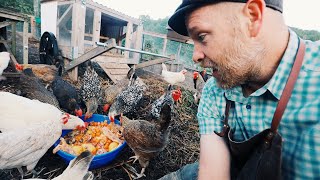
In this instructional video, the presenter (who references Rebecca) shares practical, low‑cost strategies for reducing the expense of feeding backyard chickens, drawing on personal experience of financial hardship and Lyme disease. The video outlines seven main hacks: (1) using food assistance programs and dumpster‑diving for discarded produce; (2) feeding chickens kitchen and garden scraps while noting what is safe or unsafe; (3) rationing feed and soaking grain to improve digestibility and stretch supplies; (4) buying feed in bulk or joining co‑ops to secure discounts; (5) rotating chickens on pasture with movable electric fencing or allowing free‑range foraging, and using the 10 % test to monitor egg production; (6) supplementing layer calcium with crushed eggshells or aragonite; (7) exploring alternative feeds such as worms or duckweed. The presenter also promotes a DIY Abundance membership site, describing scholarships, free trials, and a community‑funded scholarship program to help those who cannot afford membership. The tone is conversational, instructional, and occasionally promotional, with an overall sentiment of supportive optimism and encouragement.
Chapters
Rebecca and I were once very broke. Here you go, buddy. Oh, you can't eat on the couch. All right. So the way Rebecca and I got through that, the financial brokenness really from my Lyme disease, the ability to provide going down, bills going up, we're Kind of 3 major things. One, I don't know, I don't— I didn't like doing this, but food assistance. And I guess it's there if you need it, and we needed it. Food assistance, uh, dumpster diving, which means literally diving into dumpsters. More like jumping into dumpsters. Dumpster jumping, looking for discarded food. We'd go to, uh, health food stores and things like that looking for discarded food, that's perfectly okay. And 3, this is going to come at no surprise to you guys— growing our own food. I know that many of you are in the same boat that we were in, and you're growing food to save money. Well, you know, growing food can be expensive, but there are ways to save money. I'm going to show you like 6 or 7, 7 of them-ish. Well, with chickens, I'm just going to show you mainly with the chickens because they have— they can be ferocious appetites. I'm going to get them out of there really soon, but let's show you something. So number 1, feed them your trash, your food scraps, anything, anything. There's, uh, old curry in there, old pears, old apples, uh, tomatoes from the garden, some, uh, duck. Duck bones with a little bit of meat on it. Look what they go for first— meat. You guys watch them while I talk to you a little bit about this. What can you not feed a chicken? It's out there, guys. Oh, don't feed them onions, don't feed them citrus, don't feed them avocados, don't feed them moldy cheese. We feed it all to them. Don't feed them meat. We feed it all to them. And they love most of it. Here's the problem: if you only feed oranges, that's too much. Otherwise, there's essential oils in those oranges that are really good for them. They can come to their scraps, they can scratch around in this garden weeds we threw in here. They have grain that they can eat. If there's something in there that they can't eat, they just won't. Speaking of dumpster diving, actually, when I would go— I would go to some of these health food stores and say, hey, if you've got any throwaway produce that you can't sell, I'll take it and feed my animals. I didn't tell them we were eating some of it too, but there was so much we actually did feed our animals with it. I would say if you can get a half a pound of food scraps per chicken, like me for years didn't have to feed any grains. They don't lay as well, but there's no cost. So it's more cost-effective. The other thing you can do is feed them from your garden. It's not that much harder to grow more— let— this is lettuce— lettuce for your chickens than just growing some for yourself. We will never eat that much lettuce, so I am happy to turn that lettuce into eggs and delicious chicken meat, which I personally happen to like better than lettuce, so this is not waste to me. I was walking by this persimmon tree and look, falling fruit. Will you guys pick up a couple of those? Look, we pick up a couple of those for your chickens. We're gonna have so many persimmons. Yeah, we're gonna have to look. Yeah. All right, if you don't know if something is poisonous to a chicken, as long as they're not starving, as long as they have other choices, throw it to them. They'll tell you, they know. Here, look, look, throw that persimmon to him, guys. Let's see, throw him that really rotten one that's soft. Oh my gosh, that one's really soft. Here, look. Okay, we're too close. She's not— I bet that'll be gone by the end of the day. Here's some of the lettuce. Well, you don't want to eat your veggies first. They will certainly eat that. They'll have their grains, they'll come eat that. Here's another really easy thing, probably one of the easiest, is ration your food. If you feed your chickens too much, they will actually eat too much and it will actually affect their egg production. So their egg production will go down. I've got 18 chicken units we're going to feed out in the pasture, so 1/3 pound of a day. Is the rule of thumb. So that's 6 pounds. I know what a pound looks like in this because I've weighed it out before, and it comes up to about— I don't know, it comes up to about an inch away from the, the cup there. And the cup— cup, yeah, this cup. So it comes up to about right there. You weigh it out once, you note where it is, and you have to weigh it out again. There's 6 pounds. Let's say, well, let's do it. Let's do it for tomorrow. I did not soak, I forgot, but let's set it up. This, this will be tomorrow's feed. There you go, we filled it up with water. You can stir it in, get that grain good and wet. You say, how does soaking feed save, save money? Well, it actually— this water, it will break down the anti-nutrients in this grain, and essentially it just makes it easier to digest. So so it goes further. So now let's say it's the next day. I need to film this for you guys in one day here, so we got to jump to the chase. You get your strainer. We've got a stainless steel strainer that'll hang on a bucket really nice. This was from IKEA. You can get these anywhere. And then say it's the next day, we come in. So then, yeah, so it's the next day, you come in and do this. So really, best practices, I would go feed this. After I'm done feeding, go ahead and get the next day's batch going. So pour all that in there. We're getting all the liquid off. We have some— it'll be, it'll be wet, but you want to strain off all the liquid. That's gonna be where the impurities are. You got to work it a little bit to get the water to come through. It clogs up, especially because I'm using starter feed, which is very fine and powdery. So it's gonna clog up the filter real quick, but not too bad. And just, it's okay if you leave some water in there. Another way to filter this is just feed right on the ground, which we yard, so I'm not too worried about the, uh, the water there. With this, you could put it on a compost pile, water like your lawn, water your garden, whatever. Hey, before we go out— there's a weird hum in here, I think because of our furnace or air conditioner or something. Uh, I want to get a good shot of this. That's a bulk feed bag. We buy it by the thousand pounds. Buying feed in bulk is one of the easiest ways. I think we save 20 or more percent just by buying it in bulk. One key is we feed everybody chicken starter so that then we can buy a 1,000-pound tote and they'll actually eat it within 3 months. You want to— if grain has been ground up, you want to eat it within 3 months or it goes bad. So when you feed everybody starter, all you got to do for the layers, because layer feed has some calcium in it You'll want to make sure you're supplementing your layers with calcium. Breaking up eggshells is a free source of calcium. If you can't do that, you can buy some aragonite and then have it available to them all the time. If you can't buy a 1,000-pound tote, you can get in on a co-op. We've done that before. I don't know how we found them. I think we've seen them posted up at like health food stores and stuff. Feed co-ops where people are buying, making a big enough order that they can get it at a lower price, but then everybody kind of goes in, in on it. You could start a co-op, kind of easy thing. This is going to be a little more labor intensive, but when we switched from, um, we had to switch from GMO feed to organic feed, like the price went up 3 times. What do we got to do? We just simply started moving our chickens every day on pasture. You could do it in the yard. See the birds? The idea here is, I don't know, say you have 24 chickens. There's like 18 here. That's one Premier One. That's one Premier One. Electric fence. Keep chickens in there for 1 week, move it. You could have your energizer in 1 spot and move it in a quad system around that energizer. Last, you could go crazy and move it twice a day. You could go even crazier and let your chickens free-range. 12 chickens could free-range during the growing season and get fed nothing. What are they eating? Well, they're eating— they're eating bugs, they're eating grass. In our case, We put food on the manure. They actually spread this. They haven't spread this one yet. They were— look, let me see if I can give you a good example. Aha, they've started to spread this one. They've at least picked through it, and they're eating the fly larva. But you can see all the bugs here, and they see things we don't see, guys, and they eat it. What you do, let's call it the 10% test. So every week, so You're feeding them a ration, you're soaking it, you're— so quarter pound of food a day or whatever, and you're going to start moving them on pasture. Whether you move them a week, uh, every day, or there's 50 chickens versus 24 chickens, it's, it's gonna vary. So the best way to test that is every week drop your feed ration by 10%. Stick with your system. If you're moving them every day, move them every day. Stick with your system. Drop your feed, feed 10% every day. Mark your egg production. Mark what it was, mark what it is. As soon as you start getting an uncomfortable egg production amount, you've gone too far. You need to go back to your previous place where it didn't even affect egg production. Egg production is a good gauge if they're getting enough to eat. I have these gals moving every day. They're 3 days behind the cows, so they have this fly larvae, they have this pasture. Our chickens in our yard don't have all this available food, so they're eating more. These guys are eating much less. And guys, they can survive and even thrive. I would, I would venture to guess 18 chickens, 24 chickens in this system— look how big this is— would survive and thrive. Now, would they give us as many eggs? No, egg production might get cut in half. But you might be okay with that if you don't have any money. 6 eggs that cost you nothing is better than 12 eggs that cost you $5 if you don't have it. So in review, 6 things: we rationed our feed— maybe a 7, I don't know— we rationed our feed, we soaked our feed, we fed from the garden, we fed food scraps, we put them out on pasture or the yard, moving them regularly. And I think there was one more. Didn't we talk about one, one more? Buying in bulk. You can buy in bulk. There's more ideas, of course, like growing worms, growing duckweed in a farm, drying that out, feeding it to them. There's all kinds of ideas. Feeding weeds, going out and bringing greens and grass to your flock. But anyway, there's another one. And this one's close to my heart, and it's a shameless plug because I want to help you guys. So we've been there, we've been in a hard spot before, and we're launching our Do It Yourself Abundance member area, and we've got a lot of tricks to help you save money or whatnot. But some of you just don't have any, and our heart goes out to you. We know, we've been there. So what we're doing is, for those that you don't— for those that you that truly don't We've got a scholarship. I'm telling you, no one left behind because of money. Every once in a while, send out these emails promoting this and somebody reply, I would, but this and this situation, I just don't have the money. I, I have the time, I can do this, I have the energy, I just don't have the money. And I say, no one left behind because of money. We have a scholarship program, we have a free trial. Try it for 30 days. Get in there. Here's a hack, guys. Get in there for 30 days, consume all you want, cancel before it starts billing you. Did I just tell you to rip me off? I think I did. I think I just told you to rip me off. That's okay. I'm— I hope you see my heart in this. I really want to help people, guys. We do well enough. Uh, there are folks, there are plenty of folks who are doing okay and are paying for membership and they're very happy. Actually, guys, I got this idea for scholarships, official scholarships. I've always been— when somebody emailed me, I would, I would hook them up, but I've never made it public until one of our members actually said, can I give some money so I can help anybody that doesn't want— that, that needs in this but doesn't have the money? I'm like, oh, Members, like fellow members, are into this. At first you might think, oh, that's not fair to them. They're happy to contribute. They're happy. We're doing scholarships up to 20% of the seats, and they're happy, uh, to help people out. This is a loving community. And just recently, this blew me away. Someone— I don't even think they'll remember— somebody PayPal'd me a $1,000 gift. Humbling. I mean, really, really, they were thanking us for the hard work we put into this free content on YouTube. Thank you, thank you for that. I hope you don't mind that I'm paying it forward. Hope you don't mind that I'm putting that towards the, the scholarship fund. So guys, this is a loving community. If you can afford it, get in there. If you can't, do the free trial. If you, if you're nervous about that, apply for a scholarship. Get a year, an entire year for free at no cost. Just, you do have to, you still have to— I get tired, so I pull over here and put this up. You do still have to put some skin in the game. You got to put up a video somehow in your scholarship. You got to answer some questions. You— I find if people don't put some skin in the game they don't actually do it. And we want people in our member area who are actually going to do it. So if you can't afford it, that's one thing, but if you're not going to do it, that's another. So you got to show us that at least you can put a video up, unless you're a granny and you don't even have a smartphone or you can't even afford a smartphone. Part of it is figuring it out. I think it's easy enough with a smartphone, uh, to make a video, or even from your computer. And unlist it somewhere like YouTube or Google Drive, these free sources, Dropbox. And I'm giving you guys hints here on how to get a video. That's pretty much a shoo-in. Uh, it does take some work to figure that out. I understand that. I understand that. And if you can't absolutely do it, you need to explain why, and, uh, you still have a chance. So, all right, anyway, I've talked enough. Members.abundapermaculture.com. We're doing a fall registration right now, so there's some bonuses I think this year we are— this time we are going to leave it open because there's so many people that fall through the cracks in one end during the middle. So why not keep it open? We are closing premium membership though. So if you want direct text access to me, um, live webinars, we do have to limit that because I am— I can only uncle so many people, so to speak. So get in there while you can on that premium. We'll leave the free trial and standard open throughout the year. Links for all that down in the description, or go to members.abundantpermaculture.com. And we have a cow out, understandably, since the gate's just wide open. Come on, Miss Thing, let's go back. Come on. Say no, I don't want to go back, the grass is greener over here. Come on, come on. She wants to go anywhere but in there. Oh no. She's got it. Okay. Nope, that's grain. It's not for you. Come on. Oh no, you had it right. It's not the grain. Good girl, good girl.
More from Justin






If I had to start my Homestead all over again, it could only pick one animal… 




