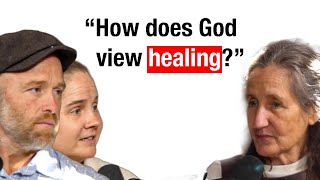
Health practitioner Barbara O'Neill discusses her natural-health framework called SUSTAIN ME, covering fasting, herbal remedies, and hydrotherapy. She raised six children on a rainforest homestead and shifted away from conventional medicine after a failed ear-infection treatment. Faith and strict time-keeping structure her approach to chronic illness, asthma, and hormonal imbalance.
Chapters
Okay, so Barbara, you just said you're a— I'm gonna put your books up. Is that gonna be in the way, Matt? So Barbara, you just said you're a time person. I am too, but you're also a health practitioner. So how do you let— well, practitioner, educator— how do you not let being a time person stress you out?
I just keep to time and I know how long I've got. And I've got a bit of an idea how long everything takes. And I break everything up into the hour, the 15-minute. I think, oh, I've got a bit extra, I'll throw a story in. Oh, I've gotta streamline it now. I just do that.
And when you're trying to keep to time, say, 'cause I'm dealing with this myself, trying to run a farm, a business. I have 5 children. They're all home. We're all at home. How do you deal with interruptions and being—
they come—
taken away from time, taken away?
They come.
And, and then, and do you, in that moment, is that the— well, I deal with it.
I have a priority list, and some things can keep, and some things we've got to deal with right now. And so in my brain, I have a priority list. But I kept a time. And do you know what I find interesting? All my kids were homeschooled way up in the rainforest, and they're all happy they were. But I meet some kids that weren't happy they were. And when I, when I assess that, it was all over the place, whereas I kept a time. School was the same time every day. Lunch was the same time. We kept a time. It wasn't a stress. It didn't mean that if we're 5 minutes late, it was a huge deal. We weren't often 5 minutes early, but we mostly kept to time.
And did you always keep this list in your head?
Yeah, yeah. I see, if you picture me in the rainforest, uh, no electricity, 6 children, um, to cook breakfast I've got to light the fire. Because it's a wood stove. And to wash the clothes, had to start the generator. I did have a washing machine, um, and I found the only way I got everything in was I'd keep the time. If I kept the time, I'd get it all in. So I did it really for that, but I found that the children were very happy in a time frame. So I found again that we had a visit One of the guys that lived on our property, someone from Holland, girl from Holland visited. And so we didn't do school that day. She just told about what it was like living in Holland. And, and, you know, you, you've, you've got that little bit of— you have to have that little bit of a leeway. And I had, I had a bit of leeway.
Yeah. I think you might be saying something different, but in some ways I say Margin. We also have to have some margins, some time in between.
Yeah, you've got your margins, but, um, I, I, uh, kept to time. And I know the health retreat— so I was the health director at the health retreat for 23 years. Kept to time, absolutely kept to time. But one day we had a guest and everyone looked at her and knew she was nearly dead. She's yellow. She's in her 50s, pancreatic cancer, not long to live. It's a bit hard. They've come way out in the middle of nowhere. And she was the last consultation of the day. She's there with her daughter who's 35. And I said, your mother's very sick. She said, well, what do you want me to do? Take her away? Well, you can't do that. And I don't want to do that. And, you know, so late at night, I said, we'll see how she is in the morning. Well, I'm in the middle— well, when I got to work, I start lecturing 8:30, juices are served at 8:00. The staff said, "Ah, she's taken some juice." And that was exciting. And I thought, great. Well, that's not a priority because something's happening there. So talk to a couple of guests straight into lecture. Lecturing for 3/4 of an hour and one of the staff come out and go, "Barbara!" And then you had to smile. Smile. Nothing stops me, but I knew I had to go. I said, I'll just be a minute. So I went into the room and there's a lady dying. And then just went dead. So what do you do? So I ran out and I said to the guest, ah, the lady's not very well. I will need to tend her. And I said to the staff, we'll go straight into treatments, da da da da da. And then smile like a Cheshire Cat, then run into the room and deal with it. And I didn't finish my lecture that day. But I said to the guests, I'll do the other half of the lecture tonight. So of course, that's a real crisis. But you quickly realise you can't go out and say, sorry guys, there's someone dying in here. You know, and I really do rely on God for discretion. But there's not much that stops me lecturing. But I, again, you've got your priority list. I'll tell you another funny story. I'm lecturing one day and the guests are in a lounge, you know, like we are here. And I looked up and there was a green snake hanging off the curtain rail. What are you going to do? So I said to the guests, um, 'Could you just come over here for a minute?' And they went like this, looked up, and they all screamed and ran. Yeah, we stopped lecturing that day and got Howard. Howard came in, our exercise guy, and 'Green snakes aren't deadly,' got it down and went away with it. So yeah, yeah, you've got— yeah, you call them margins.
Yeah, you said you had juice that morning. At that conference.
It was, it was at our retreat.
Retreat. I was going to ask if you, because in your book Sustain Me, you were, you're encouraging to sustain from, abstain from coffee or caffeine. So what do, what do people do instead?
Well, I just drink water, but I do know people love that, the comfort of that hot drink, especially on a cold morning. So there's peppermint teas, there's Dandelion. We have a really nice mix we sell. It's called Chai Dandelion, which are those chai herbs with dandelion. Because herb teas, you know, they're not coffee. They're light. And so for people that want something a little bit richer, in Australia we have some alternative cereal beverages, which are like roasted roots, roasted dandelion roots, roasted chicory. And if someone wants something like coffee, they could do that.
Yeah. How do you— so I fasted, I water fasted for a month and found that I would just drink hot water, uh, and got to where I enjoyed it. But I mean, took a minute before I even enjoyed that. But then coming off of that, and how do we deal with this? How eating anything was just glorious. Um, and one guy, I heard a podcast recently, he said at first you— he was talking about the dopamine hits from eating food. At first you like it, which is a really good thing, and then you want it. So talking about overeating, say peanut butter or something, uh, and then, um, then you need it.
Which is a problem, right?
So how do you deal with— how would you suggest dealing with that when you found something good and not to get caught up in that trap?
Yeah, I guess what I suggest people do is eat high fiber, generous protein, great fats, because they give the feeling of satiation or satisfaction. And I find that when people are eating a lot of carbohydrates, a lot of sugars. They crave a lot of carbohydrates and a lot of sugars, so gets into this vicious cycle. So if you well nourish the body, you, you don't quite have those cravings. So we just had a lovely meal of lentils and salad and veggies, and then there was a little slice the lady had made which was like a fudge, like a carb fudge, which was very, very nice. I'm sure everyone that had it will agree with me. If you have a little piece of that at the end of the meal, it's just nice. But if you were hungry and just ate that, you'd want another one and another one and another one. You see that?
So the key is to get full before you eat that.
The key is that— and I know that's what I always do with my children, you know. I didn't give them sugar, but we'd have dessert a couple of times a week. Yeah, but I always fed them very well.
Yeah, I'm always like, don't eat, don't eat that first. You have to eat this. Oh yeah, well, eat all your food.
Well, mine didn't appear.
Yeah, well, are your children, um, keep to time?
Ah, I, I think they, they mostly do. I just had my daughter with me for 3 weeks. She's 43 and She certainly kept to time because we had planes to catch. It was great because it can be very frustrating being with someone that doesn't keep the time.
Yeah.
Yeah.
Can that be changed if somebody out there listening doesn't?
You know, it can be. It can be. It all depends what you want. And, and I want— I don't want stress. I didn't want stress in life with my children, but I, I've just found if I kept a timeline, I'd fit everything. I remember we used to go to church and we used to throw through the hills 1 hour up in the rainforest to a little tiny church. And they'd say to me, we're just amazed. You've got 6 children. They're all so beautifully dressed. And you live way out in the rainforest with no electricity. Because we had the old cast iron irons, you know, that you put on the fuel stove. I used to watch my girls lift them up and bang them on the— but we didn't iron much. We probably only ironed our church clothes. And people would say to me, we've got other families that only are 15 minutes away. They've only got 1 or 2 children and they're always late. Do you know what I think? If you change their clocks, they'd be on time. If you can regularly be 5 minutes late, you can actually be on time.
Yeah.
So I, I, I love time. Because I use it, I work with it. And Ecclesiastes chapter 3 says, there is a season and a time for every purpose under heaven. I really like that because it's true. So I, I've always used time. It doesn't rule me, but I've used it. I love time.
Do you have time change in Australia?
Yeah, we do.
Do you— did you honor that? Did you keep time after that, or did you keep time according to the sun?
When we were in the rainforest, we didn't change our clocks.
Yeah.
So if we went to town, okay, it'd take us 2 hours, and if we came home, it took us no time.
So you'd have to figure out what time it was. Yeah, you'd have to do some—
yeah, when you have contact with the outside world, you know, you're—
what's— why are you living in the forest?
How was our living?
Why?
Why? We were back to nature hippie lifestyle. We wanted to get out of the city and grow our own veggies and do all that. And yeah.
Were you able to grow your own veggies?
Yeah, we did. We, we grew, we grew a lot. See, in Australia, where we were in northern New South Wales, there's no snow. So we, we grow all year. It's just that in the winter we just don't eat tomatoes and cucumbers because we do have frosts. And I remember we were traveling once and we went to this elderly couple's place for lunch and my children were just tomatoes. And the man told his wife, "Go and buy more, go and buy more." He'd never met children that loved tomatoes so much. And then I realized, oh, actually we're just coming into spring and the tomatoes aren't ripe yet. We haven't eaten tomatoes for a few months. You really value it. You know, you said after a fast, Food's very good. And our guests say to us, because we do a 2-day juice fast at our retreat, and on the 3rd day when they're eating food, they say, is your food really good, or is it just because I haven't eaten for 2 days? And we say, oh, we like to think it's a bit of both.
Yeah. What did you, um, pick up on while living in the forest that maybe you miss, or that was Conducive for a healthy lifestyle.
Well, what, what I loved about living there, you really live with the seasons. You know, in the wintertime, as soon as we've had lunch, we've got to run and get the clothes off the clothesline because, you know, you're losing your sun early. And also in the summertime, we do all our gardening straight after breakfast because it's too hot in the middle of the day, and I thought the beauty of that is it's always changing. It's always changing, which is actually really nice. You, you value, you value the seasons, and you're actually looking forward to winter and the, and the wood fires. And then when summer comes, oh, it's so nice. We don't have to chop wood every day now, and, um, and we can wear lighter clothes. So, um, I really like the seasons.
What do you miss?
What do I miss?
What do you miss about living out in the—
uh, I, I missed its simpleness. That was, that was really nice. You know, your life was all around living. Uh, it was about, uh, the, the potatoes are ready to harvest, we've got to put some new seedlings in. And also, once a year there was a fete. We call it a fair. And so my kids, oh, what they did to get ready for that fair. They'd have their own little stalls. And James would be, my eldest son, he'd be putting in little seedlings. He was going to grow them and sell the plants at the stall. And my daughter got tiny little dolls. Because you see, in the evening we just had one telly lamp, kerosene lamp, in the middle of the dining room. And the kids would all be either reading or knitting or making little things. Um, I love the industry that it teaches the children.
Yeah. Did you know that you were living such a healthy lifestyle by being out there in that?
Yeah. Okay.
How many years ago was that?
We left— well, I left there in 1993, and I was there for 12 years.
Okay.
Okay.
And, uh, well, what got you on this health path in the first place?
What really got me on it, because I was trained as a psychiatric nurse, I was brought up in a home where you get sick, you go to the doctor and get a drug. But I was getting into the hippie lifestyle because a lot of psych nurses do. We're smoking a bit too much marijuana. And, uh, I had my first little one, she was 16 months old, she got an earache, so I went straight to the doctor. But because that's all I knew. And everyone said, don't play with the ears, she'll go deaf. And over 6 weeks and 4 courses of antibiotics, it just kept coming back. And as the doctor's writing the 5th course, I said, well, will she be on this for the rest of her life? I'm so frustrated. But I'm actually thankful for that experience because I felt the frustration of not wanting to give my child any more drugs. Knowing it's not working, not knowing what to do, and yet not wanting to put my child's hearing at risk. And that really has been a great instigator, inspiration as to why I do what I do. So that other mothers, who I'm sure every mother's been, every father's been in that situation, that there is something else. So the next child, 2 years later, gets an earache. I don't go to the doctor. That's very scary. It's very scary when that's what you've been brought up with. But I've got to do something. So I went to the old lady next door. She's 85, I'm 25. So what did your mother do when you had an earache? She said, Mum would steam up an onion on the stove. Ran home, steamed the onion on the stove. James slept. He was 16 months, slept for 2 hours. No more earaches. I'm in, hook, line, and sinker. There is something else. So this is 1979. And I started asking old people. I started to get books. And I discovered that all through Europe, there were sanitariums that used water therapies. I discovered Dr. Kellogg's water therapies. I bought her books. No, no more did my children have drugs. No more to the doctor. My children have never seen a pediatrician, never seen a doctor. I did home births, did every— you know, that was our slogan, back to nature.
Yeah.
But it was about a year after that I became a Christian. I started to read the Bible, and then I thought, how does God view sickness? How does God view healing? And Then I saw so much more.
That was at 26 years old when you became a Christian?
Yeah.
And how'd that happen? It seems like a lot of people don't come to faith at that age.
Well, I had a young couple move next door. They were living in like a little van at the back of the people's house, and they just become Christian and they're just on fire. And they were just witnessing to me, witnessing to me. At first I was a little bit, whoa. But what interested me is they were vegetarians. They were into herbs. That really interested me, and I started to read for myself. And the more I read, the more I thought, you know, there, there is a God in heaven, and I, I want to know him. So I thought, I'm just going to try this. And I, I to this day still believe it's the best decision I made.
Were you vegetarian before that then?
Like, we, we started to become vegetarian, you know, we're hippies, back to nature, you know, don't want the cow to die, all that sort of stuff.
Yeah. So you began a health journey, and then you met these Christians next— or these Christians next door began to share with you.
Yeah.
And you were interested because they were also on the same health path that you were on.
It's true, but they They had a peace about them. Oh. Which I really liked. And—
You didn't have that peace.
Well, I had trouble in a few areas. So then I read the Bible. I read Matthew, Mark, Luke, and John, the stories of Jesus. And I surrendered my heart to God. And I had peace.
Do you still have that peace?
Yes.
How do you maintain that peace?
I talk to him every day. I read of him every day. Trouble all around us. Oh yes, there's trouble all around us. And there's one verse where he says, these things I've spoken unto you, that in me you might have peace. In the world you shall have tribulation, but be of good 'Here I've overcome the world.' So I started memorizing passages of the Bible. My grandmother, she was always a Christian, but I always thought this is for old people. And I had some troubles in my life, and this young couple, they'd pray for me and was really, really nice. And that's when I started to come to know God. But my grandmother, she memorized a lot, and that inspired me. So I started memorizing, and I find it really handy to present and yet to be able to just weave those Bible verses or things that I've memorized that I really like the sound of it, but I, I really can't repeat it. So then I take time to memorize it. It takes time.
Yeah. Um, well, I have a question. Yeah, go ahead.
With the onion, so you did the onion remedy and it worked. But then like, as you know, you progress, did you ever struggle with not having confidence in it? Like, so for me, I, I have all the books, I've read all the things, but sometimes like I get scared, you know? I'm like, because it's more serious, if you will, than an ear infection, you know? And I get Justin had cellulitis and we were able to treat it at home with herbs and all the things, poultices and soaking in Epsom salt. But I was terrified, I guess, because I come from, you know, you get sick, you go to the doctor, you just trust, you trust them. And so I think, what do you have to say about that? Like the confidence, did you ever struggle with confidence?
Well, I certainly did with my fifth child. I did say they've never been to the doctor. I did take him, he had severe asthma.
Okay.
And I saw it in my father, saw it in my younger sister. So that really scared me. And I, I knew that— I knew he was close to death. So I rushed him to the hospital. His nostrils would flare with every breath. You know, his whole body would go like this just to breathe. That is so scary. And we'd go in there and they'd give him a drug. And but I found that What helped the most was if I just held him. If I just held him. And then I read that the drug that they gave him was Ventolin. And I read in a newspaper that Ventolin reduces lung capacity. And I thought, the very drug I'm giving to bring him relief is— So I thought, I've got to find something else. And I was disillusioned with the medical profession. I think in a crisis, a drug can save a life, but drugs never heal. So then I went to a naturopath and he put Peter on a regime. There was water therapies and took a lot of work. But Peter was diagnosed with severe physiological asthma. And if I give you a photo of him today, he looks like a bodybuilder. He's just turned 40. And we conquered his asthma at the age of 2 and a half. Okay. With natural remedies. That gives confidence. Every time you do it and you see the result, you get confidence. So I'm at the point now where, well, it's going to work because it has been doing it for a lot. And then you think, well, what's the option, right? What's the alternative?
Yeah.
And, and I don't like the alternative. And especially when you realize you take a child to hospital and one of the nurses thinks you're not doing right, they have the authority to make the child of a At what other state? Ah, that's a bit scary. Do you know, I say to parents, if you're, if you're really concerned, please take them, please have them look at. But if they want to do something that you don't agree with, the best thing to do is to say, I'd like to get another opinion. You don't say alternate because they all freak at alternate. Yeah, just, I'd like to get another opinion on this.
I'm grateful we haven't had to do anything with the kids. It's always been him.
What about trauma? Did you have trauma for the kids, breaking their arms, something like that?
Uh, didn't have a breaking of the arm. We did have, uh, a little— do you call them a tomahawk? My daughter was cutting up, uh, big wood into little chips, and there was a scream off to the side, and the it came down on her hand. Well, we just cleaned it up. We saw all the 10 ligaments were there. We just really cleaned it up, put some herbs on it, and made it like a little splint, and it healed nicely. Yeah.
All right. Yeah, I, I mean, we've really tried not to go to the hospital. Our oldest son, which he wasn't here for a minute, he, um, dislocated his hip Oh, we didn't know that he had dislocated his hip. We just knew there was something wrong with his leg. It felt like it might have been dislocated. But, you know, I can't say for sure I knew that. I just knew there was something wrong and it felt like that might be it. Well, we went to urgent care just in case there was something that they could do there. And then we ended up at the hospital and, you know, he's, he's made a full recovery and That's what I say to people.
By all means, if you're— if you are really concerned, have an assessment.
Yeah, yeah. Um, uh, she's talking about confidence in, um, just helping your children and other people. What about confidence in that you're right? That however you're practicing your Christian faith is right, or that's right versus another faith, or, uh, that you're right in the vegetarian approach? How do you know?
I guess, well, we have a saying in Australia, the proof's in the pudding, that you, you see the results. And See, I was brought up a Presbyterian because I'm a fifth-generation Scottish descent. And I remember hearing the people in church say, well, we know Saturday's the Sabbath, but we keep the Sunday. And I remember as a child thinking, well, why? Why? But I was very shy and I was very quiet. And then when these friends were witnessing to me, I thought, well, I I want to read the Bible for myself. So I read the New Testament, and all through there I read that Saturday is the Sabbath. And I went to the Old Testament, and in the commandments it says, "Remember the Sabbath day, keep it holy." "Six days God made heaven and earth, seventh day rested." There were all these confirmations. So I saw that, and my mother had not long died, and we were taught that you go to heaven or hell when you die. But when I started to read the Bible, I started to see that that actually wasn't true. The Bible calls death sleep. And I used to be worried if I was going through a hard time that Mum would be watching and it must be hard for her. And then when I tell you I couldn't put it down, everything started to fall into place. It was like a jigsaw and all the pieces fitted in there. So finding the truth was so nice, so nice. And being a vegetarian, I saw that in the Garden of Eden they all ate veggies. And when we all get to heaven one day, there'll be no death, so it'll all be vegetarian meal again. And I also know that the meat today is not very happy. But if people say to me, well, we kill our own, and I said, well, It's the best, but it's your choice. And that's, that's a beautiful thing about reading the Bible. You see that God gave us all choice. He made us to be free moral agents. So having a choice. But, but I think it's important. There's a challenge in the Bible that's in 1 Thessalonians 5:21: prove all things. Okay, I like that. So I guess that's an answer to you. Prove all things. Prove it. I tried the potato poultice on a sprained ankle and brought great relief and got all the swelling down. It worked.
Yeah, it worked.
So it's, it's also looking at, looking at that, that I, I believe that as we go through life, we see things that we work and we see things that don't. That's why that first challenge with my daughter and antibiotics and the definition of insanity, I think this is Einstein, is to do what you've always done and expect different results. Yeah, if it doesn't work, don't keep doing it.
Yeah.
Yeah. So I think it'd be a good idea if somebody's searching that out to— there's conflicting information online, but you can look at, well, how did it turn out for this person who's done it for this many years? Yeah, I did that with a mentor of mine, more of a spiritual mentor, or no, a father. Type mentor. Yeah, I needed somebody when I had little kids. Well, I needed to talk to a man whose children turned out well.
That's what my husband Michael says. He said that he'd go to church and he'd look at the kids who were really well-behaved. Yes. And he'd go to the mother and he'd say, tell me a secret. And she said, your word is law.
She'd say, your word is law.
And if there is If there's not doing what you say, there's a consequence. She said very easy. And I do like that. The kids are comfortable in that too.
Yeah, and if they turned out well, then maybe there's something to be said about listening to her.
That's right. So again, the proof's in the pudding.
How do you live by these principles, these health principles in Travel. So today you spoke of a nice meal you ate, but—
Yeah, it's a challenge. It's a challenge, but where there's a will, there's a way.
Right.
Yeah.
So when I'm traveling, I know that the food on the plane's not gonna be great. I have to tell you, food in America's terrible. Sorry to say that.
We don't eat it either.
Because if in the United Kingdom, you can always get a nice plate of veggies in a British pub. And in Australia, you know, there might not be vegetarian options, but you know, there's always your side dishes. So, um, but here I've got to take steps. I've got to, um, maybe take an avocado and some crackers and some nuts. I always travel with a—
do you ever cheat?
No, I actually don't like fast food. And I don't like the taste and I don't like the way it feels and it makes me feel. But I love what I eat and my taste now is to fresh, always fresh. In fact, recently I was making like a guacamole and the lady had a jar of mashed garlic. She said, just put a bit of this in. Well, I did, but I didn't like the taste. I like fresh garlic. So, and that's one of the blessings of living in a rainforest. My first husband was a drug addict and an alcoholic, and that's why eventually the children and I had to leave. But we didn't have a lot of money. You become very resourceful, and everything we ate was fresh or we made.
Yeah. Now you speak of that, of England, right? And your assistant is, uh From the UK. We went there— what year did we go there?
It was '03.
Now I think you can go there now and it's not smoking in every pub, but then it was smoking.
We would open the door and it would just—
we had to go to McDonald's, God forbid.
We did. It was the only place that didn't have smoke. They still do smoking in there because I actually got bronchitis when we were in, in the UK because of all the smoking that was like around. I just—
well, there's still a bit of that in Europe.
Europe.
Okay. But, uh, not in Australia. There's fairly strict rules in Australia.
Okay.
Yet fine if you smoke in a car and there's children in the car.
Really?
I mean, Australia's gone a bit over the top.
I was gonna say, like, I am all for, like, libertarianism as well, but then, like, I'm also like, well, that's not terrible for the children. It's not the end of the world, right? I don't know, I have conflicting feelings there.
It is if it's day, because I've had, I've had some people, terrible lungs to smoking parents, and they've never smoked.
Did you give up the marijuana when you became a Christian?
I did, because I thought I want a clear mind.
Okay, so it was a part of the health.
The hardest thing was the social. You have dinner with friends and usually it all smoke.
Yeah.
So I guess then in, in the psychiatric wards, or where you were working as a nurse, they were using marijuana as a— No, no, they weren't. You guys were, the nurses.
Okay, I had to define that. I had a psych nurse get very upset with me one day when I said, you know, the psych nurses, they're the biggest druggies. She said, I'm a psych nurse and I'm not. I said, I acknowledge that not everyone Proof in the pudding.
You're right here with us. You've been living this lifestyle for 50 years, is that true?
Uh, yeah, yeah, yeah.
Okay. Uh, do you feel well?
Feel great.
You think?
Sure. In fact, as, um, my husband says to me, he said, uh, we've been married 28 years, so we married 28 years ago. He had 2, I had 6. But he says to me, you just say the word, we'll stop, we'll stop immediately if you don't want to do this anymore. But it's like today I'm, I'm speaking to 500 people. They're excited about the information that I'm sharing. That, that is so nice. And I still feel great. So when it gets a little bit hard, I might, I don't know, maybe slow down a bit or reconsider. Yeah.
How do you stay motivated and not burn out after educating for 50 years?
Uh, I really keep those basic laws of health. I get 8 hours sleep a night. I drink adequate water. I exercise every day. I'm careful on what I eat. Very careful. If there's not much to eat, I just won't eat because I know I'll eat again soon.
Yeah, I forgot that.
That's what he says. If there's nothing to eat, just fast.
It's So I, I, I keep to it because I've found that it works and it works well.
Um, what happens when you don't? What happens when you fail? You get 6 hours of sleep because you were traveling.
Yeah, well, I, it's— I read this in an old book and I love it. It's not the odd day you do it and the odd day you don't. It's what you do every day that matters. Okay, so if you're doing it right every day The, the body can cope with every now and then not, but most of the time, I would say 90% of the time, I get 8 hours sleep.
Okay.
And you don't beat yourself up too much about it?
I have to say, God has, has, has to have made a special mechanism in women for mothers who still have children that don't sleep through the night.
He has to have some sort of protection that's built in because it's absolutely right. And that's what I have read, that women can handle some broken sleep much more than men. And I remember when I had— because I had two babies 18 months apart. Well, geez, that's like you got two babies.
Yeah.
And some nights I'd get 4 hours sleep. If I got 4 hours in a row, I was real happy.
Yeah.
And I think that's got a lot to do with it. If you get 4 hours and you're happy, it'll carry you. If you get 4 hours and you're really annoyed, it does not help.
Yeah.
Getting annoyed never helps. It doesn't. People say to me, my baby's 2 and not sleeping through the night. I said, don't worry about it. My baby slept through the night at about 2 and a half years.
Yeah.
My—
this one right here, he was 3. When he started, like, literally he turned 3 and then within a month he was sleeping through the night. And I was like, oh, it happened. So it tricked us into having a fifth.
It does happen.
And he sleeps through the night now. It was about 3 for him as well.
So do you think God gives a woman a superpower?
I think— I think— I certainly think men and women are very, very different. Yeah. And I think women have in them this nurturing for the little ones, and they certainly can cope with broken sleep here and there. I think men and women are very different, and both have their strengths, both have their weaknesses. And I think if everyone accepts that, they work together very nicely.
Yeah.
Yeah. How do you not get— well, yeah, so that would be a way. So you're— if you know you're supposed to get amount of sleep and you're not because of a baby or for whatever, as any of these, any of these health tenets, if you're off because of some other reason outside of your control, how do you not Well, there's something to be said about stress. In some ways you can see, well, your dad, he's doing great at 81 years old. Just fantastic. He goes on a walk with us and just never really worried about this stuff.
Well, that's right. You can't— there's no use stressing about things you've got no control over. And I love the way the Bible says, "God gives you today and tomorrow you'll get tomorrow. The next day you'll get tomorrow." That, yeah, things might have all fallen apart today, but guess what? Tomorrow's another day. So I love that. I love that because it helps you to love the moment. And I think loving the moment, it brings you peace. So tomorrow, well, actually in a minute we'll have another minute. And in a minute we'll have another minute. So just love where you are. And I have found that past pain and future worries Aren't so troublesome when you learn to love the moment, love who you are, love where you are, love your age, love everything about your situation. What else can you do? And in 1 Thessalonians 5:18, it says in the Bible, says, in everything give thanks. So that's what I have learned to do, is I might not like it, might not be where I want to be, But I'm going to be thankful because out of this I may learn some things I never would have learned.
Yeah. Do you feel like you live in the moment?
I try to.
And when you get yourself away from the moment, what do you do to bring yourself back in?
Pull it back, because stuff happens. Yeah, there's stuff happening in my life in the background. Whenever you get to the recognition that I apparently have got. There are people that try to take that. See, a lady emailed me yesterday. She said, Barbara, I've paid already $1,200 for your products. I haven't got them yet. What's happening? So I wrote back and said, I don't sell products. She gave— she showed me the email. It was barbaraoneillprivate@gmail.com. I said, that's not my website. I'm so sorry for that. Yeah, I'm so sorry that, uh, that people are using me, people are eyeing me, but what can I do? So I don't stress about it. I'm sorry about it. And I've got a great team, um, who are employing people to take that down. But, um, stressing about it will not change anything. But we've got— we're in the process of trying to fix that.
Yeah, somebody was saying— I put out before my membership area what we should ask you, and they were saying that was— came up twice is how do they know you versus the AI you?
It's, it's actually a very good question. So we have a website, officialbarbaraoneill.com, and from officialbarbaraoneill.com you can get all my true social medias. That's the only one. Okay, that's the only one that's me, because many, many claim to be me. So I was very happy when Ricky's wife Naomi found officialbarbaraneal.com.
I was going to say, what is the biggest pushback you get? Because obviously you are doing things very, very differently than, yeah, regular normies. I don't know what you— you know what I mean?
Then the norm, you know It's, it's a good question. My biggest pushback comes from doctors, but my biggest support comes from doctors. You see, there are doctors and they see it. You cannot work in that medical profession and not see it. The people aren't getting better. The drugs just mask the symptoms. And a friend of mine works in emergency. He said 90% of people that come in, it's not an emergency. Yeah, it could easily be dealt with by everything in my book, but they have fear. Yeah, fear. So, um, my pushback comes from doctors and my biggest support comes from doctors. And I must have had 5 nurses come up to me today and they said to me, thank you so much, we know it, it's very hard to work in this system.
Yeah. When my son was in the hospital with the hip dislocation, we ended up in 4 days in the hospital. And I kept asking— they kept bringing food, you know, and no, we don't need it. We, we were bringing our own water, our own food, you know, like the whole thing. I was carrying in a tote every morning full of it. And they would say, that's the best thing. And my 14— he was 14 then. And she said— he said, Mom, if they know— if the nurses know that the food is bad, why do they serve it to us?
Do you know that's a child? Do you know the Bible says out of the mouth of babes you see the truth? They— it's like me as a little girl. Well, if Saturday is the Sabbath, why are they keeping it? That children are black and white.
Yeah.
And Jesus said, unless you become like a little child. And children have such this this trust. This is just black and white to them. It gets a bit gray when people become adults. But, you know, the nurses would acknowledge your child would have got better quickly. Yeah, because what we eat, the body's going to use for building blocks for our, our body that's constantly being remade. It's, it's common sense. I often say common sense isn't very common today.
No, it's not.
Was that the, the only question you had as a child was about the Sabbath? Or, and, and were you satisfied with the answer?
Um, I was not satisfied with their answer, but there's a lot of things I put on the shelf. Someone says you shouldn't do this, I'll put it on the shelf, I'll investigate. But I'm very thankful to my father who was an inventor, so everything that came into the house, Dad and my brother David took everything apart to find out how it works, why does it work. So I've got 3 sisters, they're all scientists. My brother's an engineer, you know. I don't know whether it's genes or the environment we grew up in. You know what I thought, looking back now, what I find interesting, there was one area we never questioned: medicine.
Really?
Never. Never questioned medicine. But you know what I say now? We got to.
Yeah.
We got to. Because it's actually not working.
Why wouldn't they question medicine?
I know. Isn't that interesting? Why wouldn't they question a lot of other things? So I think we're brought up to have total faith in this system. Total faith.
Wow.
I think people want to have faith because they want it to be there for them if they need it type thing. So my mom was diagnosed with ALS in '22. And she passed last year. And my dad kept saying, I just wish she could have had something where there just would have been a pill that she could have taken.
That's what we all want. Magic pills.
And I remember and I was like, but there isn't any, right? There isn't.
No, there isn't any. There's, there's only one thing that has the ability to heal, and it's our body. So yesterday I gave a class on the immune system. It's amazing. This immune system is this inbuilt process of how we heal, but it needs the right conditions. A lot of people don't wait long enough.
Yeah, they don't wait long enough for healing, healing, because they're— they want it so fast.
Her solution for my— with that, uh, infection, it was very intense. I was basically full-time healing. Whereas if I would've went to a doctor, they'd just put an antibiotic.
They would've given him an antibiotic.
Well, one of my first books was "The Ministry of Healing," and I love that book. She looks at healing from a Bible perspective. And she says in there, "Nature's process of healing and upbuilding is gradual, and to the impatient it seems slow." And she also says, "The use of natural remedies requires an amount of care and effort that many aren't prepared to give." And when I helped my son's body conquer his cancer, his asthma, that took time. You know, hot coals and herbs and, and hiding food from him when he had a cold. And it all took effort.
Yeah.
But you know what? At 2 and a half, he conquered it. That's, you know, it's like buy now, pay later.
Yeah.
Yep.
Some other questions my member had— members had were around chronic illness. What do you do with that? How do you deal with that?
Yeah, chronic illness. I always— I love to know why. So I always say, when did this start? I look at the triggers that may have started it, and you can't change those triggers, but it explains why this might be happening now. And then I like to look at symptoms. Symptoms are your body saying 'Can you please do something about this? Start here.' And then we try natural remedies, dietary changes, water treatments, whatever. And we watch the body's response. And if, if the person gets relief, the body's saying, 'I like this. Can you do that again?' And now that sounds very simplistic, but I think it's quite powerful.
Um, what are water treatments? I've never heard of that.
Very interesting. It's called hydrotherapy, which is water therapy.
Okay.
And Dr. Kellogg, Dr. Harvey Kellogg of Kellogg's Corn Flakes fame, he had a retreat in Battle Creek, Michigan.
Okay.
And 1,000 beds, and people from all over the world used to come to that retreat. And I read the autobiography of a Dr. Brown who worked with him there. She said Dr. Kellogg was an excellent surgeon, but he rarely used surgery. He would use exercise, water treatments, contrast baths. You know, if there's an ingrown toenail, hot for 3 minutes, ice cold for 30 seconds. And what that contrast does is it brings blood to the area, which drives the old blood out. In my book, Sustain Me, I've got a chapter on hydrotherapy. Just very simple treatments you could— because there are whole encyclopedias on it. And what I discovered is nurses used to learn it. And that's what Dr. Kellogg's doctors and nurses did. They used a lot of water therapies. Fascinating. And I've got the nurses' textbook. It's called Abbott's Hydrotherapy for Nurses. That was the textbook for nurses 100 years ago.
Right.
But it takes time and effort, so they don't do it anymore. Yeah.
You started out learning all this stuff from just going to older people who had proof in the pudding. Yeah. And then books and books. How are you still learning?
Oh, still learning a lot. In fact, I, I'm an avid reader.
Okay.
And I've just read Dr. Malcolm Kendrick's book The Clot Thickens, where he shows that it's not cholesterol that causes heart disease, it's actually damage to the arterial walls and clots build up. Oh, I've only just finished that book. So my heart lecture night before last, I, I explained all of that. You see, I read it, I get it, but I can't explain it. So then I write it out.
Yeah.
And then I read it again and I read it again and eventually I get it.
Okay.
And then, then I'll present—
Victor Justin Rhodes, write that down.
All right.
For my dad. I saw that you had that heart talk and I was like, Dad, you should really go. But he didn't go. So I'm trying to help him. I'm trying to help him as I can because I can't make him do anything.
No, you can't.
But I can support him and try to point him in the right direction.
And that's all I do. That's what I say to people. People come to these lectures or they come to our retreat. I said, don't go home and beat your, beat your family over the head with health. They'll run out the back door. You've just got to be an example of what, what you've learned, because people are not will not listen unless they want to. What's the old saying? A man convinced against his will will be of the same opinion still. And I found that to be true.
Yeah, you, you, you were fortunate enough— I'll say fortunate, unfortunate enough, fortunate enough— to have a precipice when you were pretty young, 25 years old. You went off this precipice because your child And that is a great motivator, and that's what got you on your path. Austin and I were talking, your, your videographer today, um, a lot of people, they don't go off the precipice until they've had the heart attack and it's too late.
Yeah, yeah.
How do people come to the precipice without the precipice?
It's very hard. I think it's knowledge. And in that little book I quoted, she says, the author says, the only hope of better things is the education of people in the right principles. And that's why I do what I do, because I give information. Because when you've got the information, they— you can make a better decision, because our decisions are only made according to the information we have. So the more information we have, the, the better the decision will be, because we've been able to weigh up the pros and cons and have a serious look at it. Because we should never make a decision on fear. Most people go to hospital on fear. Let's just wait a minute. Let's just, let's just see what's happening. Let's just look at this.
Yeah.
Um, what do you make a decision based on then?
Information.
Okay.
Information. That, that is the best. And what I like about Malcolm Kendrick's book, The Clot Thickens, he's got study after study after study, you know. So for those who need The one writer said that the magic of the MD, the studies— people say to me, but Barbara, where are your studies? I say, I haven't gotten it, just worked and I did it. But, you know, actually there are studies there. And for people who need the studies, my books are reference, right?
I want to say one thing in Sustain Me that I really like. And that I haven't seen in other health books is talking about like the love component. Like I was reading in the liver, you know, love your liver, thank it for all that it does, and the heart, you know. And it was like, oh, I really liked that. It was such, it was so refreshing. Sorry, this light is—
It is an important point. It's a very important point. You know, that's why I say love who you are, love where you are. What else can you do? What else can you do?
Yeah. Are all these— you have 1, 2, 3, 4, 5, 6, 7, 8, 9? Yeah. Are all of them necessary?
Yeah. Yeah. I absolutely think so. And my daughter and I brainstormed, we're having lunch in this lovely organic cafe one day brainstorming because, um, my husband's PA says Barbara needs an acronym for those laws, those basic laws. And, uh, we came at Sustain Me, couldn't get an 8-letter, an 8-letter word, so we split Temperance into Abstain and Moderation. Yeah, this is so, you know, it was so funny, and I wanted it to be fairly obvious, you know, the— and I used use of water instead of starting with that with a W because that takes in hydrotherapy.
Yeah.
So water can be used to drink, water can be used as a, as a therapy. And we'd got everything. And I, I split Temperance, which is not taking anything to the body that will harm it and taking in moderation the good things, into abstain and moderation. And we had I. And what we— the only one we hadn't got was air. And we're just sitting there, I. And then I went like this, inhale.
So we had our last letter, which, for those listening and don't know, it's from the book Sustain Me, and that's the acronym. And first is sunshine, And U is use of water. S is sleep, which I would ask you if we're missing one or two, and maybe sleep is it, but rest. You speak of the Sabbath.
I guess the sleep and the rest, um, sleep fitted better. Yeah, if I'd had an R there, it could have gone rest, and I would have said, you know, the stomach needs a rest, the The body needs a rest, stop one day a week, absolutely.
How long do you rest your stomach every day?
5, 6 hours between meals. And what I found, you know, breakfast like a king, lunch like a queen, supper like a pauper, it's an old adage. But I see time-restricted eating. Time-restricted eating is what they're claiming the best way to eat now. It came out of the 5:2 diet, the intermittent fasting, where they're saying eat twice, 6 hours apart in a 24-hour period. So I thought, well, looky there, diabetics are coming off their medication, people are losing weight. Yeah, brain's working better because that, that stomach needs a rest.
But there's no money in eating less. The food companies can't even make money in it, let alone the pharmaceuticals.
That's true, that's true.
Uh, sleep. T, trust in the divine power. I mean, now I realize you, you may have, you know, you're trying, you're finding words for this, but also You didn't just say divine power, you said trust. You didn't say belief in it either, you said trust. I don't know if you were just looking for a T or—
I was looking for a T, but I also like that. Yeah, because it's a choice. You can trust that there is a Heavenly Father who loves us, who oversees us, who has our best interests at heart, or You can choose not to. It's our choice.
Yeah, that's what it's gonna come down to, isn't it? Because I have a hard time with this. I have a hard time trusting that.
Yeah.
Trust is a big word.
It is a big word. And I say my grandson Lennox gave me an illustration of this one day. We were walking by the creek, he's 3, and he was a little unstable on the edges. So he turned around and he held my hand. And he immediately became invincible, leaning over the creek. Total trust. No doubt that I wouldn't hold his hands. Where did that trust come from? Yeah, it came from me rocking him to sleep as a tiny baby, of me being with him. You know, you, you, you build that trust.
It came from him testing it too. Oh yeah, and you're not failing him.
Yeah, yeah, yeah.
Um, I think of the verse or Jesus saying, seek first the kingdom and everything else will be added. You spoke about in keeping time you are setting your priorities. Yeah, that's basically, uh, seeking first the kingdom.
So that's what I always have done and still do. It's the first thing I do in the morning. It's a challenge do I pray first or look at my phone?
Do you sometimes look at your phone first?
I try not to. I try not to because when I, when I go to God in prayer, I give him everything. I give him my day. I give him my children, my grandchildren. Now I've got a lot of grandchildren. I got 26. The 26th was just born a few days ago. So I often say I pray for, for James. And all connected.
Yeah.
I was going to say, the only time you would look at your phone first is if there's a grandbaby that's supposed to be born.
Yeah.
You don't know yet. Yes. That's the only time.
Or if there's maybe a little crisis and I've just woken up and thought, what happened? And that happened a few days ago.
Yeah.
When the baby was born.
I could keep on going. I got lots of, lots of questions and things like that, but We've got 10 more minutes because I know you got to go. You're in the middle of a conference. We're going to do a little book exchange. So you wanted to give us some books.
Yeah.
And we'll give you a book. How about that? So tell us about these. We've talked a lot about Sustain Me. I already have. I already somehow have a signed book from you. I guess you handed it through Austin.
Yeah. From Ricky.
Ricky Austin.
To us? Well, I like to see Sustain Me as a handbook on natural remedies.
Okay.
And you know what's really nice? A lot of people are buying them for both birthday and Christmas presents. That's great, because I think every home should have one. Oh, I would have loved that book when I was a young mother because of this little bits and pieces that you look up in the index. Sore eye, sore finger, sprained ankle. Trot on a rusty nail, you know, it's all—
it's one cool thing about it is you're going by the symptom, the problem, but then you're running it through the Sustain Me filter. You're running how sun can help this particular ailment, how water— abstaining water.
That's what I endeavored to do was apply those basic remedies to each condition.
Yeah, there's someone I follow on Instagram and she had a baby recently and has been dealing with prolapse, and I was like, I think there's something in the book.
There is.
So I, I took pictures of it and I sent it to her and she was like, oh, this is so great, thank you so much, because this is a young girl and she should not have to deal with that.
So what's, uh, Self-Heal by Design? What's the difference?
You'll see the, uh The subheading for that is "The True Role of Microorganisms in Disease," where I show that germs don't cause disease, they're the result of unhealthful conditions. And then I show the danger of mold. I wrote that because most people don't realize how dangerous mold is. And then it's very well referenced. In fact, I would've spent easily $3,000 on all the books that I use for references. So I say to people, I'm not a doctor, but the people I reference, they're the doctors. They've done all the research. And it also stretches out a little bit further into what you can do to the body to help conquer cancer.
Did you self-publish this, or do you have a publisher?
I think we have a publisher. My husband does all of that.
Okay, self-publish.
I just write it.
Okay, so how many, how many words do you write every day?
I don't know. But this one here, the one in your hand, my husband wrote that about what they did to me. And when I saw the title, I said, Michael, that's a bit strong. He said, no, it's good.
That's right.
And the COVID is—
That's a clickable title right there.
The assassination of the Pope. I said, red. He said, no, it's good. And, you know, he's the boss.
Now I've got two more books to read.
So how do you not overlap as a, as a writer? How do you, um, do you make sure, you know, is there overlap between this book and that book and you worry about it?
Really, that's— that little red book is just the story of my summary of my life and what they did to me and why they did it.
Okay.
All the claims. And this one is Self-Healed by Design, is, is the true role of microorganisms that we don't need to fear germs. Do you know what I found interesting? I read— I wrote that in 2014, so you'd think, oh, it's getting a little old hat by 2020. Well, it just exploded in 2020 because if everyone had knew the true role of microbes in disease, they couldn't have shut the world down because it would have shown that virus is nothing to fear. We've got to find out why it's there.
Yeah.
So that's that book. Whereas Sustain Me, it's a handbook on natural remedies. And what I did, I was praying one day, Father, how do I put all this together? And I got the impression, start at the head. So I start at the head. I do eyes, ears, mouth, respiratory, and I go down through the body.
Yeah. How do you find time to write?
Yeah, it's not much time. I'm supposed to be writing another book. I have started, it's on the mind.
Okay, you see, right on the plane.
Yeah, I do do a bit there. Okay, see, as a psych nurse, I saw it wasn't working. Okay, same people come back again and again, but I have since learned that you can even manage, control, and turn mental illness around with natural remedies. So And my big inspiration for that was Dr. Neal Nedley. He wrote the book Depression: A Way Out.
Do people recognize you in the airport a lot? Do they, do they mob you or do they— are they respectful?
And this one's for her.
They're mostly respectful.
Okay.
Yeah. I mean, mostly, you know, I was in Biltmore. Is it Biltmore? We went in Biltmore. Built more.
Yeah.
And there was this lovely bush that had this scent and the gardener was there and I went up and I said, what an amazing scent. And he said, you look familiar.
I know.
That was the gardener.
That's fun.
And then we get the stairs.
I want to make sure I hear what you're wanting to say.
He's saying it's done. Oh, you're not.
Okay.
Oh yeah, the wild yam cream.
Oh yeah, definitely. So talk about the cream.
I want to know more about this because I've heard you talk about this.
Yeah, I gave a meeting last night, I gave a meeting this morning on it, and, uh, the one last night was mostly about women, a bit about women today, but some about men too.
Okay.
Because there's so many things that are causing imbalances, and those imbalances are getting girls to They get their periods at 9, you know, fibroids, endometriosis, even up to breast cancers, thyroid problems, so many things. And in Psalm 104:14, the Bible says that God gave herbs for the service of man. I love that verse because herbs come in to serve you. So what the yam does, you apply it to your skin, the fat cells take it up, and it little by little brings balance back into the hormones. And we've seen so many women, and men too, um, get quality of life by balancing the hormones.
Wow, this helps do that.
Yes, it does.
This will help during perimenopause. Yeah, everybody might be suffering from that, or somebody else might be suffering. Oh yeah, suffering.
Do you know one man, they, they were supposed to Suffering. There was one cream that I— that the first cream we used to use, and then it was stopped for a while. And this man used to ring up and say, is it there yet? My wife needs it.
He needs it too, darling.
And where do you put it? Is there a special, special place?
Like, it's usually 2 pumps inside of arms one time, chest another time, abdomen another time, inside of thighs another time. Okay. We've even seen 90-year-old ladies get their bone density back from this. Yeah.
All right.
Yep. So thyroid, insomnia, depression. You can have 100 people with hormonal imbalance. They all have slightly different symptoms, right?
Yeah.
So if someone says, what's the symptoms of someone having a hormonal imbalance? I say, well, what we say in Australia, how long's a piece of string? Can be an inch long, it depends, many yards long. And that's why I always teach that we should all be our own doctors. Yeah, because we're the ones that know what's happening and we're the ones that can see the response.
I will say, when we first started homesteading and sharing our lives with the world, and we were being a vet to our animals, people were like, "You need a vet. The vet needs to come." And I'm like, "I can read and I know what to do." And so I think that that comes from the trust of the medical system because we have taken, I mean, I do have a doctor that I visit when I need to and when I need more information or more diagnostic basically. And she's great and all that. But I don't go to her often. It's when I can't, when I've tried to figure it out and I'm just not able to understand what is happening, you know, or a trauma situation, you know, like a broken bone or, you know, something like that.
That's when I—
remember when Winnie got injured? She's our dog.
Yeah.
And we just observed and she just laid on the earth. She didn't eat for a few days. She was out in the sun and then I'm thinking I could learn something.
She probably even ate some grass.
Probably.
That's what they do.
And she was, and she was better in 2 days.
Yeah.
And Justin's like, see, she doesn't need us to heal her.
She doesn't know.
I mean, I was concerned. I don't want anything to happen to her. You know, I'm the nurturer.
That's her thing. She just fasted and earthed and got in the sun.
Yeah.
Is this new? Did this just come out?
Uh, it's relatively new. Yeah, we've just started selling it in the US.
All right, all right. Anything else?
You already said my two daughters make it in Australia.
Awesome. Yeah, you already said your website. You want to say it again?
Official Barbara.
That's the one on Instagram and all the things.
Yeah, it'll take you to all my social media.
All right, you said you didn't have any product, but you do have this product.
So if you see any other product, it's This is her product and her books. That's it.
All right. Thank you.
Thank you so much.
You're welcome. It's been a pleasure. Yeah.
More from Justin






If I had to start my Homestead all over again, it could only pick one animal… 




