Chicks are Hatching in My Bedroom!
Victor documents a Saturday on his Western North Carolina homestead with nine or ten chicks hatching, pigs trained to follow him with kitchen scraps, and two cows moved through a new 14-paddock grazing system. He also plants the garden, fixes a broken gate, and promotes his upcoming Art of Chicken Butchery Master Class.
Chapters
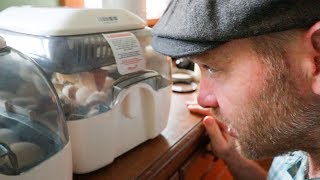
This morning we have 1, 2, 3, 4, 5, 6, 7, 8, and there's at least 3 hatching. That one, 9. That one dead.
I don't know if it's dead or if it's just going.
So what, we got 9 or 10? 9 or 10? 10. Okay, 10 or 11. Good, we want 16, right? Because we need 8, we need 8 hens, so we need 16 to make that happen. These have until what, tonight? Tomorrow morning? Do I have to call it? Welcome, day 3, 100 Days of Growing Food, where every Saturday we're gonna post an update video, special unique video on what's going on, how things are doing. Mama's raised bed garden is jamming. We've gotten 2 and a quarter of these plants. We do have cattle panels for our cucumber trellis here. These posts are going to go up about 4 feet, and then we're going to do the cattle panel trellis right here. It's going to go up, it's going to be really nice. Eventually the chickens are going to be here to partner with this garden system. Yesterday Beauty started to mulch her herb and flower garden. She's put down, uh, those are sunflowers along the edge there. That's going to be so beautiful going up on our driveway. Oh, but let me show you what that mulch job will end up looking like. How y'all doing this morning? Uh, not too good. What's the matter? It smells horrid. What does? He can't stand the skim milk. The older the skim milk gets, the more the pigs like it, but The more stinky it gets. I'm gonna help you with the pigs in a second. These are strawberries we had, I don't know, from last year. Mom put down that paper. It's a non-toxic sheet mulch. Found out cardboard, it's got toxins in it, so we moved away from cardboard as our sheet barrier. We put down this paper and then just put a light layer of mulch on it. Probably won't have to mulch weed that again, maybe once. And I should say, look, our persimmon. Our persimmon is coming back strong. We have 2 other trees coming on strong in our yard. Sure. Oh, don't jump too early. Ready? Go! You can do it. You can do it. I'll catch you, I promise. Here we go. Come on, trust me. Trust me, you can do it. On the count of 3. 1. Yeah, sure. 1. 1, 2, 3. Oh, come on. 1, 2, 3. Come on, just do it. Just— all right, here we go. Looks like Jonah got it poured in there. It's a mix of kitchen scraps, organic grains, and milk. Wanna see how nasty it gets? Look. Mmm, pigs love that. Mm, they go crazy about it. That's how I've been able to train these pigs. Just wait and see. They were so skittish, wouldn't come anywhere near. I need a straining bucket in case they get out. I want to be able to get them back in. Say, uh, uh, say give them a chunk of that. It's probably a hair too much for training, but I guess we're sort of done with training because this is gonna be like pretty much a day's worth of food. For training, what you want to do for the pigs is take a look. We went in there 3, 4 times a day with a little bit of food. They were a little hungry each time, and we started to like feed them out of the bucket and then walk around with the bucket until they would follow us. Just watch this. Are you ready, Mr. Brown? Yeah. All right, let's go. Let's go show them how these pigs are trained. Oh look, they start to come. I knew that they'd get so trained. They're gonna hear us coming, barely let us out the door. Can you open this door real quick, Mr. Brown? Yes, and let me in. Come on, go in, go in. Get their attention. Watch this. All right, here we go. Anywhere we want, anywhere we want. We got them trained. Next we got to train you to, uh, electric fence. Okay, here. Yeah, this barrel water is jamming. They've drank a foot, it's still clean, they're not spilling a lot. Splash a little apple cider vinegar in there for a little health boost. Have you boys fed these guys? Yes, they fed these guys our 100 layer chicks. Nobody's dead. Of course, these are very hardy breeds. I wasn't really worried about that at all. Beautiful, beautiful situation, Donald. You're killing it, buddy. You're doing a great job. I don't worry about these guys. They're enjoying the early morning. They need to be fed, but they're enjoying to— they like to get out and about in the morning when it's cool. What? Pop that chicken through the grass. Okay. Some people though, inside my member area, it's like this week a couple of people— okay— are having some problems with their guard goose attacking chickens. I said, do you have just one goose? Yes. Are you letting the goose out first thing in the morning? Yes. Um, is it happening in the coop? No. If it's happening in the coop, you're not letting them out. Maybe that's it. I don't know if there's anything you can do about to help that. I haven't experienced that myself. Of course, I've only gone through about 3 guard goose, so I'm gonna imagine it's a lot like roosters. Sometimes you get one— yes, okay, sometimes you get one that's just mean. And you're gonna have to sell it, give it away, or harvest it. Sorry to say, but I think with animals you run that chance. Textbook says it's going to be okay, but this is a real world, real animals. So, all right, you guys got the nets? Let's have an honest look at the ICs. Are they doing what we want them to do? They're 3 days behind the cows. We have fed grain on top of this manure patty. They did not— they did not spread that. They spread this one a hair, but not really. Have they spread any of these manure piles? Let's take an honest look. Speaking of textbook, what's supposed to happen is those chickens are supposed to turn that manure, find the fly larva, But what I think is happening— did they actually do one? They stirred around that. Did there used to be a patty there? They are stirring this old hay that was here. Okay, so overall I'm gonna guess that maybe the fly larva isn't crazy active right now. Pop that one. Yes, you're afraid of that one. Okay, it's still cool, it's like 47 degrees. Right now this morning. It is getting hot during the day, but that's an honest look at it, guys. We'll hope— we're going to continue to do it. Hopefully as the season warms up, we're going to continue to train them by pouring food on the manure, and we'll see what happens. New paddock set up. Go ahead, Mr. Brown, let them out. Now Donald and Waddle right next to each other. You lovebirds can flirt. You can flirt a little bit today, Donald. Show them your stuff, honey. Okay, about these sea monsters, would you guys like to raise them yourself? 58, uh, 58 days to raise these guys out to maturity. It's amazing. It's certainly not too late. We're going to be harvesting these guys all the way up through October 23rd. I got my act together this year and I'm giving you guys plenty of notice. We are gonna do workshops, the Art of Chicken Butchery Master Class, now accompanied with information, plans for the meat shop, all that kind of stuff included. That info is down in the description, guys. Come to a live workshop with us. We have 5 different to choose from. One is coming up in like 3 or 4-ish weeks. The others are throughout the summer. Would love to have you. There's only 12 spots there, guys, so it's first come, first serve. Also, there's digital versions for those of you far away that still want to do this. It's all down there together. Check it out in the description. Next up, checking out Beauty's greenhouse. Things are jamming in here. It's nice and pleasant in here. Still smells like cedar, which is rot resistant, which is a good thing since it's gonna get wet when these get wet. Good morning, beautiful one. Good morning. What you planting today?
Um, I'm just planting a bunch of different stuff.
I see you got your—
I planted some lettuce that's like really summer hardy right here. Yeah, and I planted some some white bunching onions. I've got the peas.
This is gonna say those are peas.
Yeah, those— the kids picked them out. I think it might be too late, but they're gonna climb your trellis.
Yeah.
Okay, this is chamomile that got, got a little wilted in the, uh, greenhouse.
Hey, it got fried, huh?
But it's coming back. Like, you can see it's, it's got strong stems.
You're probably getting over 100 degrees in that greenhouse now.
Oh yeah, it's too hot. That's why I'm like, I gotta get stuff out of there.
Rebecca, about these chicks, these Isis that are hatching, they're gonna go down in the brooder, brooder stall. Okay, so why don't we just set that up instead of— we were thinking about setting up a porta brooder.
Well, because in 2 weeks the Cornish Cross are going in there.
I was gonna make a third, oh, brooder in there that's smaller. Okay, the size.
Okay, for the—
yeah. Okay, there's gonna be two 100 chicken paddocks and then that's fine, brooders, and then another could hold up to 50.
Okay, that's fine, that's no problem.
So I'll spend my energy working on that thing this morning. Okay, and we'll get them out what, tonight or tomorrow morning? Yeah, where guys get your wheelbarrow. Oh, you want an ergo? Yeah, yeah, he asked for that. That's been a long time. You guys get the wheelbarrow, some pitchforks. There's some mulch right there. I want you to haul it around and pile it in the shed next to the pig— to the pigs, and that will be their bedding when it starts getting stinky. Hey, why you be digging? Come here, Laura, come. Look at you. She's digging over here next to your garden. What is she digging? I don't know, maybe she's getting a mole. So Gideon, you're almost 5, you're 4 and a half, so these ergo days are, are numbered. So I'm just gonna suck it up and ride you in the ergo. Oh yeah, we'll move those bags too. I'm putting this feed cage over here And that way we can quit guessing. We can quit throwing it on the floor how much they need. We'll just always keep this full and you guys can have all you want. These are the calves. Can you believe it? Look how big Nellie is. Look how big Bessie is. Are they big or what, Mr. Brown? Yeah, push this over here. Try it at 55 inches. We may have hit a stopping point because I don't have 2x4s. Hey, do you already know how tall your 2x4s are going to be right here?
I might need the excess, like maybe 4 feet.
So that's 4 feet from the top here. That's not going to do it, but what do you need? I need 33s and 55s. That's neither one of those, so That's not gonna work. Cows are way over there. We've got to bring them in for the milking. We need to close off this pasture. Problem is this gate is totally shot. Like, look, the wind just ripped it. There's not even a hinge there for it anymore. And we've got this idea anyway— do we need such big gates? We have this one big gate put a T-post in right there and then a small man gate from that post to there. This is gonna— this is gonna take like 3 minutes. Make our life so much easier right here. Can you hold this gate from spinning open? Thanks, Super Jerry. You guys carry around those chainsaws? Scrap wires for something. Boom! Tied to that post, tied to here. We will have to go through the bigger one for now, but I think you catch the vision. And the cool thing about that T-post is if we need to get something ridiculously big in there, we can just pull that T-post up. Otherwise, the tractor will fit through that big one. We're going to get the cows. They're waiting. I'm very excited about this system we're implementing this year. In the spring, grass grows so fast, and cows like it shorter. They definitely don't like it after it's gone to seed. They like it bladed. I'm looking for about 6 inches in the spring. That's tough. It's getting to be about 9 inches. In 2 weeks, we go behind them. This is yesterday, and what they don't eat, we mow down to 3 inches. And then what grows back is what you call— what Josh from our father's farm calls ice cream grass, and that's what's really helping us get these 4 gallons of milk a day out of these 2 cows. The cool thing about this system is I've divided my farm into 14 paddocks and lanes to all those paddocks. It's so easy. The boys are moving the cows, setting up the other— you know, getting Stud Muffin and Bear into the other paddocks, open it up for when we're done milking, these cows just go right back out in. And what I'm saying is an 11 and a 9-year-old, uh, can easily move these cows. So this is where they've been today. See how they've mowed it down? They've mowed it down to about 3 inches right there. Okay, and they're, they're done. But see, there's a lot of seed heads they didn't get. They grew up really fast. That will come back with the mower, and any weeds or anything they didn't get, this edible stuff will grow back even better. So this is where— can you see? This is where they were. This is where they're going. What, buddy? Yeah, the engine will be smoking. Yeah. And today we'll mow behind there. Oh, I see some briars there. They— I'm telling you, the weeds get cut in half, the edibles double in a season, easy. Probably faster than that when you're mowing behind them. And we've got mulch blades on our mower. Mulch blades are where you shut off the deck so the, the grass doesn't spit out, and it's a special blade and the grass gets cut up. It doesn't just get cut and lay down like on a regular blade, it gets shredded. So the smaller that grass can be and the more shredded it can be, the quicker it's going to turn into organic matter and feed the soil. So like Dennis at Full Circle Farm, he doesn't even like to call it mowing when he mows behind his cows. He likes to call it fertilizing. I like that. You guys, to look at this real quick— see that green spot? See that green patch? That is where the cows have been manured. Now the cows won't eat that this season. Even it's green, I don't know, it's just, I guess, toxic form or something. They know better than to eat so close to their own manure. What do you want? You want out? I want the—
this—
oh, I'll give you the hood in just one second. Okay, so anyway, that's that green grass though. Next season they're gonna love it and it's going to be green forever. But that's why we want the Icelandic chickens to go in and spread that love a little bit. Yeah, 2 gallons from Flossie, 2 gallons from Phyllis. Thank you very much, Miss Thing. You're starting to look very nice with your new coat. Oh, you like that? You like that? You feel nice with your new coat. She was looking rough there for a little while. Two more things— I guess three more things since they're right here. Guineas. We have had three guineas make it through the winter. We want more. We got some more from someone in our member area, actually. Thank you, Mike. Um, that are fertile eggs. And we have Jonah. Did the one broody hen stay Stay broody? Yeah. And the other broody hen did not stay broody. So we have one broody hen. Oh, we have up to 24 eggs, so we'll set those. If she stayed broody, Jonah, if she stayed broody in her broody box, will you set those eggs under her tonight?
Sure.
We'll set those guinea eggs under the chicken. Um, our blueberries from last year are jamming. We've got them remulched. The raspberries are jamming, coming back. We need to trellis these raspberries. But that's just one of 187 things we've got to do, so I hope it happens. All right, we protected our orchard, our trees, our little trees with electric fence. This time, instead, this is not a dummy fence. Every single one of these actually connect. It's a maze for the cows to come in here and graze, but they do it, and this has kept them off of it. We're gonna have to keep them off these trees for, gosh, probably several years. Didn't put enough mulch, didn't suppress that grass. We need to go back through with our paper that I showed you earlier in the video, put that down, and remulch these. Things grow like crazy here in Western North Carolina, but these are looking good. They're blooming. Not blooming, leafing. I'm very happy with this. Every single one of our apple trees have made it. And won't this be beautiful coming over here, grazing the cows in here when these trees are big enough, and then the fallen fruit bringing pigs through? This is going to be absolutely amazing. Shade for the cows. Oh, what a nice little habitat this is gonna be. All right, that's the weekly update. Don't forget the chicken butchering master class is up for sale right now. It's first come, first serve for those of you who want to come get your hands gutsy with us. Come on, we'll have fun, we'll hang out, we'll work together. It's such a fun day. We did these last year, they're such a success, we're bringing them back. I'm giving you plenty of notice. Links to that down in the description. 5 workshops over the summer. Also, if you can't make that, we have digital classes available. And here's the good news this time, guys. You buy the hands-on or the digital, you get the digital class right away. It's there. We made it last year. It's there. So buy it today. Butcher today. If you, if you feel so ambitious. So check that out. I think it's worth it.
More from Justin






If I had to start my Homestead all over again, it could only pick one animal… 




