COMPETENT | How ONE woman finds healing after Incredible loss
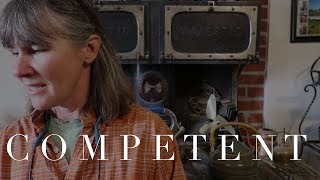
The video is an oral‑history interview with a Wyoming farmer (Speaker A) who recounts the multigenerational history of her 800‑acre Elk Creek farm, her return to the property in 1997, and the evolution of the operation from a modest cow‑calf and milk‑cow setup to a diversified, low‑input enterprise. After marrying John in 2007 they bought a herd of Jersey milk cows at an auction in March 2010, began planning a cheese‑making facility, and then faced John’s sudden death in a hunting accident in October 2010. Grieving, she used farm work as therapy, expanding the herd, adding chickens, pigs, sheep, bees, and experimenting with rotational grazing, closed‑loop composting, and minimal external inputs. She describes chronic water scarcity, drought, and the need for careful land management, including small‑strip tillage and grazing‑based fertilisation. Labor shortages are mitigated by family (her son Derek, “Papa Carl”), hired help, and a WWOOF program that brings volunteers. She discusses ongoing challenges such as herd size management, invasive weeds, and the transition of her sheep to black hair‑sheep, while affirming her deep commitment to staying on the farm despite occasional doubts. The interview also touches on her personal philosophy of a “lazy farmer” permaculture approach, the importance of community, and future aspirations including possible relocation of a new partner and continued diversification.
Chapters
I came back to the farm in 1997 and took over just being here in the place, started rebuilding the house that was the— not the original homestead house, but the second house on the property. The property was originally owned by Arch and Irene Merrill, but their dad actually homesteaded it. And my grandparents bought the property in 1957. They were able to purchase the place because Grandma Merrill wanted to live in this little house that I'm now in, and she wanted to stay in there until she couldn't live here anymore. And everybody else who wanted to buy her property wanted her little house, and my grandpa said no, he'd build his own house. It wasn't big enough for his family. And so they moved a house from Anchor Dam— or actually it was Boyson Dam. When they got done building the Boyson Dam, they had lots of extra houses from the, the housing they had for the construction workers. And so they moved that house out here, and my grandparents lived in that house, and she remained in this house. So then my grandparents bought this property, then they added two other farms to it until we had the 700 acres. In '73, my grandpa started to feel like he couldn't run the whole place by himself, and so he asked— he had four sons— and he asked if any of them wanted to come back and take over the farm so that he could have some help. And so my dad decided he'd come back, and so when I was in 3rd grade, we moved back from Lander. We were living in Lander at the time, and we moved back over here and started running the farm operation. And so I grew up, my dad had a cow-calf operation and we had a milk cow. We didn't have any other livestock other than that, and my grandpa always ran a string of horses, and he used to run sheep. My dad was not a sheep man. He got rid of all the sheep fencing and started tidying it up just for cows. When I graduated from high school, it was like, out of here. I don't want anything to do with farming. So I left the day after I graduated and, you know, did my traveling around, saw the world. And after I got married and we started having children, it was a case of where do we want to raise our kids? Well, grandparents would be nice to have close by. Well, we either had them in Boulder, Colorado, or we had them in, in LA, and we had my parents here. And so it just sort of turned out that, that this seemed like the most wholesome place to raise kids. So we moved back here, and my dad told me that I couldn't make a living farming here on Elk Creek because we have a water shortage. Our reservoir that we have up the creek doesn't hold water, and so it tends to be a real limiting factor for, for a lot of things on the farm. And so my husband and I at the time, we bought a business in town and got it up and running and expanded it, and we did that, and that was our livelihood while we lived out here. After he and I split up, we sold that, and I met a gentleman from Wisconsin, and then he came out here, and we started contemplating and working towards the idea of getting the farm going a little more. He had an oilseed press business. He was selling oilseed presses, and so for the— we were raising some camelina to process for biodiesel because it was a big thing at the time. And then in March of 2010, we got married in December of '07, in March of 2010, his mom got a hold of us and said that a neighbor was going to have an auction and selling their, their milk cows, and Jersey milk cows. And I said, well, I'd been looking for one, and that's why she called. And so my husband went out there to go to the auction to get us a milk cow. We got a loan, and we decided we were going to bring back some other milk cows in order to sell them to other people in the area because there just weren't any Jerseys here. So we got the loan, he went out to the auction, and when the young heifers started going through, they were really expensive, and he was like, we're not going to be able to afford to buy many of these cows. And so when the milk cows started coming through that were actually lactating at the time, they started coming in really cheap, and so he just couldn't seem to keep his hand from flying up in the air, and by the time he was done, he had 10 milk cows. And then the 2-year-old unbred heifers started coming through, and they were coming through at the same price as well. And so he ended up buying 11 of those. So after he bought 10 milk cows, 11 heifers, then he went around to all the little farms and picked up 14 little bull calves. And he, he put those on the cows while he was at the farm that, that they were on and got them milking the cows, because he knew I didn't want to milk 10 milk cows when they got here. So he got the calves to solve that problem. Well, those cows had never had calves before because they were in a traditional dairy. And so when he shipped them back to me, he stayed gone for another week. And so I ended up with a semi-load of 21 cows, 14 bull calves, and 40 or 20 feeder pigs. And they all got off the truck and looked at me and my place and said, "We don't belong here." And so trying to get them, the cows, into the milk parlor, they'd been 24 hours without being milked. Trying to get them in the milk parlor to get them milked was not a pleasant experience. So from 5 in the afternoon when the truck got here until 10 that night, I was trying to, to get them to get in my parlor and be able to get them milked, and I was having trouble with holding vacuum on the milking machine, and it was just— it was a disaster. So finally I gave up, I went to bed, and in the morning we— I started over and managed to get the machine working and get everything going well, but By the time that John came back a week later, you know, everything was sort of running smooth. But he was like, I don't know what your problem was. But during the, during the actual, uh, week-long process, it was, it was pretty ugly. But anyway, we got that going. We sold off a bunch of the, the cows right away. We advertised them and started selling them off. And then we just were thinking, you know, how are we going to make this farm work? How are we going to, you know, build a future here to not have to have off-farm income? And that's when we decided to go ahead and keep the cows and work on getting a cheese plant put together. We didn't have anybody making cheese in Wyoming at that point anymore. They'd all given up their cheese factories. And him being from Wisconsin, of course, you know, the land of cheese, that's the first thing that comes to mind. So we started gathering bulk tanks and milking pipelines and things like that to get that project started. And then in October of 2010, we got the cows in March of '10, in October of '10 he was killed in a hunting accident. And so that left me thinking, how am I possibly going to make cheese, do all these things? And it just was overwhelming. It was, it was too much. So I didn't want to get rid of the cows though, because we got them for such a price that there was just no way I wanted to give that up. And I had the dream that someday I would be able to get the milking parlor put together and be able to make the cheese. So I kept the cows, and then as part of my, I guess, my therapy for dealing with my loss, I started adding things to the mix. So we already had a couple of chickens, but I added a bunch more. We added pigs, we added sheep, just kept adding things to the farm and moving in buildings. Getting bees and just everything that I could think of until the place was pretty much completely diversified. I tried bringing things in occasionally. I brought wood chips in once and got scale in the trees, which is an insect. I brought barley in, organic barley in, to feed to my pigs, and then we decided to plant some of it so that I could, could grow, so I could replant some of my fields, and the barley had a lot of Canada thistle seed in it. And so now I'm fighting trying to get rid of the Canada thistle. So it's one of those things that, that I started to say, okay, I've got to keep my system closed. Bringing things in from the outside seems to perpetually cause me problems. And so I've pretty well kept it closed now. I don't bring in livestock very often, and I have them checked pretty good before I bring them in. We have our own compost and put it on our fields. I don't bring in any fertilizer or do anything like that. I rotationally graze the cows, so I'm getting that fertilizer back in. And I've talked to soil scientists and stuff, and the way I was doing to replant my fields, we'd bring the cows in, graze them during the summer over a specific piece of— we only did small strips at a time because without the water guarantee, you don't want to till up a whole bunch of land and then have a Dust Bowl situation. So we'd till up a little strip of land, And then I would, first I would graze the stuff in the summer, then I'd feed on it that winter, and then we'd till it up in the spring. So we got double the manure and everything on that piece of land during the two opportunities to put stuff on it, and then we'd raise our crop during that year. And so we'd get a little bit of grain and stuff, but I just can't raise enough grain on this place with the safety of not, you know, the fear is always there that you'll have a dry year and you won't have anything but dirt. And so I don't want to till up enough land that would actually feed what my livestock need as far as grain. And the grain is strictly for the pigs and the chickens. Cows don't get grain. They do get a little scoop of a ground mix that I feed to the pigs and the chickens, which is mostly hay with a little bit of grain mixed in. But I don't grain the cows. So I've had my milk cows on a where I'm selectively figuring out which cow does really well on my grass. I keep the calves on the cows, and so I'm trying to figure out who's going to be able to hold their condition over my winters in Wyoming on just hay and still produce a little bit of milk for us and raise a calf at the same time. And so I've ended up building my herd and building my herd and building my herd, and I'm now at the point where I need to start thinning my herd. We had sold some of those original milk cows. Well, I'm back up to 22 cows that we're breeding this year, so that's, that's a bit much. And then I have 11 heifers, or 11 calves this year, 7 of which are heifers. And then I have a couple of beef animals that I have as well, some Highland cows.
But my name is Derek Morris. I'm from Thermopolis, Wyoming. I'm on the farm for, well, helping out my mom until she can find some extra help, basically. And that's where I grew up. I love the place. I'll probably raise my kids here. There's really, really no better place to grow up than out in the country somewhere. Somewhere, and this was a pretty prime piece of real estate for it.
You want to be on the farm the rest of your life?
Nope.
I'm wearing this hat for a reason.
So you're in the Coast Guard?
I was. I'm in the process of re-enlisting.
You're gonna make a career out of it?
That's the plan.
What are you doing here helping your mom right now?
Well, a big part of it is the fact that she doesn't really have all the help she needs. She's got Papa Carl, and that's great, but two people on an 800-acre farm Kind of iffy, iffy proposition. So I'm back here in the meantime helping out. And you know, once I'm done with all the rest of whatever I decide I want to do, I'll probably come back here to raise my kids if nothing else.
What are the chances that your mom's going to keep doing this for a long while?
Uh, close to 100%.
How do you know she's so committed?
Well, she hasn't quit yet, and all things considered, that's a pretty good sign.
Has it been hard?
Yes.
What do you think some of the hardest things have been?
Well, the drought. We had a drought for about a decade that was really, really gnarly, and we couldn't get all the water we needed. We made it through that. John dying. That was her— her husband passed away, and losing that extra person was pretty brutal. That was why I came back here the first time. And, uh, and really it's— that's been the, the driving force behind all the problems is lack of people. Only her and Pop Carl and me on an ad hoc basis. It's— you need a fair few people to run a farm.
What's the plan to get more people?
Well, one of the things that we're doing is the WOOF program, which I don't know if you're familiar with, but it's the Worldwide Opportunities on Organic Farms, which is which is really cool. And what it is, is people volunteer to come and experience life on a farm. And they come out here for anywhere from a week to— we had one lady who was here for more than a year and then moved into Thermopolis and said, "Man, I like it here. I'm staying." And they come out and they work on the farm. They learn how to do things. They see how the farm works. And then maybe they go and build their own farm. And it's super handy to have just those extra hands for the work work, like milking, like pulling weeds, like planting, frees up some time for the big projects.
So my herds are getting big. I'm gonna have to start thinning those. Same thing has happened with my pigs. I've kept them and I've bred them and I've worked worked with them. And the sheep, the same thing. I've started to transition my sheep from being wool sheep to being hair sheep because I can't find a shearer for small numbers of a flock. And so I found that if I crossbreed certain combinations, I can end up with all these black sheep. And I grew up loving black sheep, so I'm getting a flock of sheep that is almost all black. And that's been loads of fun to just, you know, just for my own giggles. But, um, but I'm trying to get them to where they're all black and they're all hair sheep. And so that's been my project there.
What percentage of the farm work was your husband doing at the time?
Well, we didn't have but the milk cows at that point. I mean, he was irrigating and doing the haying and things like that, but as far as the other stuff, we had gotten some of the sheep. We had had some bum sheep. We'd gotten 2 pigs that my daughter had for fair, but they had come and gone because they didn't breed back. We kept borrowing boars and That was the reason I keep my own boars and my own rams and my own bulls, because we borrowed stuff and they wouldn't get the job done, or I tried to AI and that wouldn't work, trying to get the guy to come when my cow needed to be bred, and adding that to my list of things to do didn't, didn't fit into my plans. So, so percentage-wise, I mean, for the haying and, and that kind of part of the operation, but most of the milking and things like that I did on my own. And, and like I said, we didn't have much of the other livestock, and since it's pasture-raised there wasn't a lot of chores. The kids usually did most of that. So it was mostly the hang, and of course we were raising the oilseeds at the time, so that kind of stuff. We ended up buying a combine, and he would combine the grains and do that. So I'm not sure what percentage. I mean, we weren't very farm-intensive. Most of what became of the farm has happened since he passed away. And that— I left out the part of the story with the cows. With the gentleman that that was at the auction that was selling the cows was Papa Carl Anderson. And he was asking John at the time that they were, he was waiting that week to get all the health papers and everything so we could ship them out. He started talking to John about what it was like out in Wyoming. He'd never been out here and, you know, what do we do out there? And thought, well, maybe he'd come by and visit us. Well, we talked to him over the summer, but he had had other jobs that he helped his neighbors with and stuff like that. And in November when I went out to Wisconsin for the memorial service, he came up to me and he says this is the pushiest he's ever been, 'cause he's sort of a hermit and quiet kind of introverted sort of fellow. And so he says, you know, I just felt like I needed to do this. And so he kept coming up to me and asking me, and then he'd call me and say, you know, do you need help out there? Do you want me to come out and help you? And so in December he came out to help me, and he's been here with me for 7 years now. And so he just— anytime something goes wrong with the cows, I can blame him. It's like, that's your problem, they're your cows. But he's been the reason that I can do a lot of what I've done. He runs the tractors and he runs equipment. I mean, if he's gone, I have to do it, but if he's not, then I can get him to do a lot of the irrigating and the haying and grinding the pig feed and things like that. And so he's been And he's been a real asset, and he does it just because he loves to be here. I don't pay him, and he gets room and board and the joy of a retirement that he likes. So it's worked out to be really beneficial, and his family can all come. He's got a couple of sons and a daughter, and they get to come out and visit and bring their kids and enjoy the farm and stuff like that too. So it's been a real win-win for for both of us. So, but yeah, the, the, the work on the farm, um, we've tried to make the systems so that they are not maintenance intensive. I mean, when I first got the broiler chickens and raised those, we were packing water, we were packing feed, we were packing everything. And so trying to work out, you know, the drip systems and bringing the hay on the wagon or the feed in the wagon and that kind of stuff, just trying to make those systems the feeders for the pigs, you know, we were putting, soaking the barley and then hauling it out there bucket at a time and feeding everybody. And so if you get those systems to where they're easy and simple, it just, it makes life much, much more enjoyable when you have a farm and you've got so many projects and so many things you have to do that you've got to find management time-saving things, you know. And that, you know, permaculture philosophy, you know, lazy farmer, you try to work things in. And even though there's so much going on, I try not to get too bent out of shape. It's like my garden is a weed patch. Oh well, that's just the way it's going to be this year, and, and you do the best you can with what you can, and then don't worry about the rest.
How did you get through that first few days? The shock and the grief. How did you continue on and get the chores done?
You know, my personality is such that I can tend to focus in and just just, you know, do what has to be done. And that's a personality trait. I mean, every person is going to deal with grief and loss in different ways. And so my way of channeling that was just to actually push myself into the chores and into all the things that I had to do, and more pull my mind away from the loss. And, you know, you can say, well, did you deal with it? Well, yeah, I dealt with it, but I dealt with it over time, and in the process of doing so many other things and putting that energy into all those other creatures that needed my help or other projects that needed my time. And so it was just a process, and you know, it was 3 years before I ever started to think about dating or looking for someone again. It just— I needed that much time to deal with it and process it and move on.
Do you think the farm helped in the healing or distracted?
Oh, it definitely helped, definitely helped. Like I said, you know, you can say, well, should I have sat down and just, you know, dealt with my grief? Well, like I say, every individual is different, and so my way of processing it is not going to be the same as everybody else's way of processing it. And so, you know, I had Hackett, I had my son who was, who wasn't even 2 years old yet when his dad passed away, and so I had had something that needed my love and affection and attention, and so I put a lot of energy into him. I had my other two children were still here too, and so there was a lot, a lot that was demanded of me at the time, and that allowed me to just slowly process the whole grief and loss. And, you know, it was funny because John and I were two peas in a We really had the, you know, he, he brought his stuff out here and it's like, well, I have one of those and you have one of those and nobody else I've ever seen has one of those, you know. We just, we had collected the same toys, tools, everything. And so we were very, very much similar. And so this was going to be a real joyful project for us to run this farm. And so yeah, it was, it was a big It was a big loss. It really was.
Does the farm play a role in Hackett's adjustment?
You know, he— because of his age, he didn't have, I don't think, the dramatic trauma that a little bit older child might have had. You know, his dad went on trips and stuff with the oilseed presses, and so Daddy was coming and going and things like that. So I don't know that that there was an instantaneous understanding. He certainly is well aware that he doesn't have a father and he comments on that regularly, that he wishes his dad was still here. So that's definitely been something too that I didn't expect to be raising him the rest of this amount of time on our own, but that's just Wyoming isn't the easiest place to find a mate, especially when you want them to come here. I don't wanna pack up and move and most women men, you know, tend to go where their mate is as opposed to their mate coming here. And so it was a real, a real boon for me to find somebody that farmed and knew all that and was willing to come here as well. And so I'm actually seeing somebody right now, and he's not a farmer at all, has no farm experience. So it's, you know, it's going to be different, but that doesn't mean it's good or bad or anything else. He really wants to learn about the farm, and so we'll see.
He's not pulling you away, huh?
No, no, he's not. He likes the idea of what I'm doing, and he's said that he's willing to relocate if— you know, this is a fairly new relationship, so, you know, we'll give it plenty of time before we make any permanent commitments.
What are the chances you're going to stay on this farm and do what you're doing?
You know, I don't see anyplace else I really want to go. The only thing that ever draws me away is I'd like to go WWOOF.
Do you ever feel like giving up the farm?
Oh sure. I mean, everybody has a bad day when you lose stock or, you know, things happen and you're just like, you know, do I really want to keep doing this? Do I really want to fight with it? And so, yeah, my WWOOFing desires are because I want to pick other people's brains, you know. That's what you guys are doing. You're getting to see how lots and lots of people do it and then And that's got to be fun. But yeah, I mean, certainly you have— everybody has their ups and downs in any job that you ever get into. You know, there are times when you're just like, why am I doing this? And my cousin once said to me, why do you want to work so hard? And, you know, but it's not just work, it's a lifestyle. You know, you guys show up and I sort of detour my projects and I can put stuff aside and I can, you know, they're going to— all my projects are still going to be there in the morning when I get up, you know. But it's not like a job. Job. If I had a 9-to-5 job and you guys showed up, well, sorry, I won't be home till 5 o'clock. You know, it's that kind of thing. And so this is a lifestyle, and I very much enjoy being my own boss and whatever. But yeah, there are definitely times when it's like I'm by myself and I'm trying to figure out, okay, what do I have to do next? What are the procedures? What's, you know, now we got a head gate that blew out. Now we got to figure out how to fix it. I'm not an engineer. My dad did all that. Now I'm having to, you know, he's like, I'll help you if you need to, but You need to learn how to do all this stuff on your own so that you can run it, you know, without me. But it's, it's, yeah, it's definitely something that you, you go through ups and downs with. But on the whole, I mean, I've been, been milking cows since 2005, and, and I do it in such a way that I took off for Peru for a month. I took my two youngest kids and we went to Peru for a month. It doesn't have to be as binding as it could be. And of course, you know, having somebody that can manage the day-to-day feedings and things like that is necessary. But the cows tend to be the big thing that scares people with that. I mean, I've been told that I'd be great to date if I didn't have milk cows. It's one of those things that I've watched a lot of my friends that got all exuberant about milk cows, you know, get into the milk business and then And, you know, 3 or 4 years later, they've given up their cows because it's just too intensive to be there and be tied to that land. But I tend to be a person that does like to be solitary and quiet and peaceful. I mean, I go into town on Tuesdays and I do my deliveries and I visit with my customers, and then I do the farmers markets on Saturdays and visit with my customers. But I'm happy to come back. And just have it quiet and not have that many, you know, I talk about Papa Carl being an introvert. Well, I'm a bit of an introvert too. I do enjoy socializing and whatever, but then I like my peace and quiet, so coming back out here is great. I can't imagine living, I mean, I've lived in Albuquerque, I've lived in cities, and nah, I lived in Salt Lake City, and I don't need the traffic, I don't need all the people, people all the time. I don't need to go out to the bar or hang out with a social group. I don't need that kind of interaction. I enjoy better bringing a few people that are really fun to have around to bring them here instead.
What would John say about the farm now?
I think he'd be— well, so here's what he told Papa Carl when he shipped the cows back. Papa Carl was like, "You sure you want to be shipping all that back to her?" He says, "She's competent." I guess he would probably just say, "Yeah, I mean, I knew she was competent. She could do it." He was, too. He could do anything. He could break things, but man, he could fix them. You know, he just had that ability to deal with stuff. And, you know, what I tell people is that my dad forgot to tell me I was a girl. You know, I grew up, you know, just doing what my brothers did, and I didn't know that I wasn't supposed to. I didn't know that I couldn't pound nails or couldn't, you know, if my brother could carry 2 green buckets, I could carry 2 green buckets. If he could carry 4, I could carry 4, of course. My back pays for that a little now. And so it was just something we grew up doing. You didn't know any better, you know. So yeah, I think he would just say, you know, he would have figured that he knew that I could do it. And he was kind of like me. He would have got as many projects going. And we had a lot of the same philosophies on doing things. So it would have been a fun ride. But one that wasn't allowed.
Minds of gold. With a heart of gold, every wish can come true. With a heart of gold, you'll only work for you. But from now on, it's flesh and blood, that's true. With my heart of gold, my love is rich for you.
More from Justin






If I had to start my Homestead all over again, it could only pick one animal… 




