Don't Make This (Common) Mistake, Homesteading
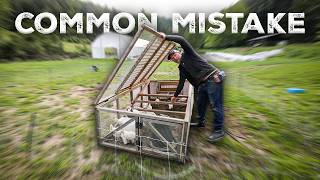
In this vlog, Victor Justin Rhodes explains why the most frequent error among homesteaders is failing to rotate their livestock. He demonstrates moving a variety of animals—turkeys, chickens, pigs, sheep, cows, and young brooder chicks (nicknamed “sea monsters”)—across different paddocks, showing how frequent moves (often every 5‑14 days) improve animal health, break parasite cycles, and prevent manure‑icing problems. Rhodes ties the practice to permaculture principles: moving animals spreads manure, which, when combined with wood‑chip bedding, creates the four essential compost ingredients (air, water, carbon, nitrogen). He walks through practical herd‑herding techniques using nets, cages, and “pig ports” placed near garden waste to feed pigs and fertilize beds. The vlog also features guests Sharon, Jay, and Andrew, who help with chores, illustrating community involvement and on‑the‑fly problem solving (e.g., turning a manure‑icing issue into a fertilization opportunity, using a goose as a guard, and relocating young chicks to a high‑fertility pasture). Throughout, Rhodes emphasizes that moving animals reduces disease, builds soil, and aligns with Joel Salatin’s “rest and sanitation” concept, while also providing a hands‑on learning experience for viewers.
Chapters
It's the most common, if not the most common mistake homesteaders make. They don't move their animals. Free the T-birds! Today's vlog, I'll explain why moving animals is so important and beneficial and worth the trouble. I gotta hustle and do morning chores before we get our very special guest today. We just moved turkeys. We've got to get sea monsters moved out of the brooder into the field. We're moving our weaned lambs back to the herd. The birds are getting out. We've kept them in the tractor for a couple of days out of the brooder just so they'll know that's home. Getting out and exploring. Happy day for them. We're moving the pigs and the chickens on their land restoration project. Of course, we're moving the cows and the sheep. We do that every day. How many animals is— how many moves is that?
8.
All before it rains, possibly, and this afternoon's webinar. We gotta go. Here's a benefit and a drawback. See all the ice, the manure icing? Most homesteaders I see are keeping their chickens and turkey in a manure-iced landscape. Not good. No wonder your chickens are sick. We're gonna put this feed back in there just to— hey, remind me, this is home. Although this is a problem this icing, this manure icing. You can easily do the permaculture thing, turn a problem into a solution by just moving them. Then they fertilize this area. It's a nice amount. And now they're going to fertilize this area. We're going to move them inside of this net and then move the whole net and keep moving the chicken tractor. Until they're big enough for the turkey shaw. They've about all gotten out. Turkeys, by the way, seem largely underrated. One, because they don't scratch like a chicken, so sometimes you don't want scratching because that tears stuff up. Like in, in this case, they're in our backyard protected from predator pressure. The other thing is they're staying in a little net like this. They're staying in a little pig net. So to do chores, I just walk over the net. So easy. Now let's do hope they stay in. It's sort of hard— couldn't be hard the first day or two to train them to that because they've never seen a fence before. They might inadvertently walk through it. We've got less than 30 minutes before people get here. Let's see if I can get these chore's out of the way. Now here's the thing, not all the animals need to always move, but there's a solution there too. Suppose you want to have the pigs in a pig port by the crop garden so you can feed them the garden waste. Same thing with the chickens, like our chickens in our front yard. They're right next to the raised beds, so the produce from the raised beds go to them. In that case, it's also— see, look, they've manured, they've urined. In the end, not only does that wood— in this case, wood chips— I've forgotten to turn the water on out here, but in this case, we're using deep bedding of wood chips. Not only does that absorb their urine and manure, make making it sanitary for them. We turn that manure and urine problem into a solution by absorbing it into that wood chips. And that combo of nitrogen, which is the manure, and the carbon of the wood chips turns into compost. Pigs turn it, adding air. We turn it after, after they're done to make it, you know, break it down even more. And you've got your 4 ingredients for making compost. Air, water, carbon, and nitrogen. Not only are we moving 7 sets of animals today— was it 7? We need to weed our garden and plant sweet potatoes. The reason I'm trying to get these chores done before folks arrive is these are kind of a one-man gig. And people end up just standing around and get bored. I mean, how many people you gonna fit in this brooder? A few moments later. And it's a little after 7:30 and we got our first guest, Jay. Hey, from Hendersonville. We almost finished. We lack doing those chores, but I'm sure people won't mind standing around for a second. Sharon, old friend.
This is my son-in-law Andrew.
Okay.
Hey bud, we're glad to have him out here. I drove up to Asheville to pick him up, man.
Good to see you again. I'm Jay.
Jay, hi.
Hey Andrew, and we didn't scare you off last time, I don't guess?
No, you didn't scare me. I've been up here a lot.
Your third or fourth time, isn't it?
I think it's more than that.
Is it? You're a number one fan. Okay, welcome to the Rhodes Farm Safari. Okay. Thank you, Andrew, Sharon, and Jay. All right guys, let me do these chores real quick and then we'll go. I would let everybody come in and help a little bit, but that goose is a little ornery. Y'all ready to move some animals? Yeah, we got pigs. You want to move pigs every 5 to 14 days, get them out of their own manure, their own parasite. They're always testing the fence, and these guys know it's breakfast, so we kind of have to hurry. Jay, if you want to Go ahead and open up that valve on that water and get that emptying. Other way. Yeah, that's good. Hey, y'all are moving. Should we have mercy on them? We're gonna move these sheep too, back to the flerd. We're going to, uh— it was too easy to move them and let them have some food. They were hungry. All that food in there, they still want to get it outside of the fence.
The grass is always greener on the other side of the fence.
Look. We gave them a new paddock, they're already sticking their head through. Draining the water. Next, let's put up some pig net. A little tricky moment here because the, the pigs are hungry and we don't want to feed them yet or they're not going to move over. We're going to use the food to lure them over. That's all that's left. There was 100 times that much. We thought it was more sandy, but look, it's been washed out and there's a lot of big rocks in there. We'll fill in our. We still need to fill in a little bit around our pole barn. All right. Sharon is on it. I think she could be the farm sitter. She's been here so many times. She's running this this morning. Hey, since there's two of us, we don't even have to drag that their sled over. We can carry it. Look at their blessing. Loads of manure right there. Oh, we're building soil back here fast. Let's check our water because we also want to get it over as soon as we can so that it can get filling up. All right, roll that over into place. This is one sign to know you, you're giving your pigs plenty to eat. They sit and eat. Sharon's put this on. It's hitting it 5-something. That is involuntarily scream for your mama kind of power. They've left us bunches of manure. They've left us a bunches of uneven ground. Yeah, start kicking that back in, Jay. Like this? Yep. Y'all can start kicking that soil back in. Sarah, if you ever need a natural swell, you put a pig line against it.
Nice.
See how they built this a nice swell?
Yeah.
Of course, we don't need a swell here. They have leveled tremendously. Bit of leveling to do by us right here, but for the most part, look at how well they've leveled this. Permaculture coming. All this, all this permaculture. Animals doing the work of the farm, building their soil. The animals working together. Had a chicken die. Don't know why, we just— shit happens. You just get replacements. And now we're going to turn this problem into a solution. Nothing goes to waste on the permaculture homestead. They'll save it for last. They'd rather, uh, the grain's easy eating. Look how rough this ground is. That ground over there was just as rough. That's how much the chickens help level it out with their constant Scratching. Let's start moving their stuff over. Yeah, look at that mean old goose. Here's a trick: you get a mean goose, it's a good guard, but it kind of sucks to be the human to go in there. Now it's about moving them without them escaping too far, so I'm going to open it up from this side. Because they're definitely not going to cross that creek. All right, as soon as they get through, Sharon, you put that net back up, go that way with it. They're into it, man. Look at them picking. Now we don't have too much time or they will wander. I am beyond pleased how the chickens took ground that was like this. It's just so uneven. And they basically— they leveled it. There's a few spots, we'll take care of those now, but they really cut down on our workload today. And the chicken's got to go somewhere, and we got the added manure of them manuring here. Let's do the weekly check-in. Pigs and chickens, okay. Pigs were here 2 weeks ago, chickens were just here. We go back, this whole area chickens were in. So this is after the chickens planted the COVID crop. We're getting some growth. We kind of hay bombed too thick for an immediate result here, but over the long term, all that organic matter from the hay, it will be better. But you can see the line here from the week before. The COVID crops had a little more time to grow. And then you walk on down, and yeah, there's some spots where there's some thick hay, like right there, but eventually That's going to be a very rich part of the pasture.
All the turkeys are out.
Oh my gosh, already? Okay. All right, well, let's go take care of that while we can. All right, let's go, crew. We'll come back to feed, but the turkeys are out. It's not a surprise. It takes a minute to train them. We're about to see why— another reason turkeys are underrated, because they're, they're easier to herd than chickens. It's okay, Winnie. It's okay, Winnie. It's okay, it's okay. Hey, hold on, he's— she's upset because you're messing with the animals. Hold on. Now you can— oh, whoa, got a runner! That's funny, that bird's crazy. What in the world? Yeah, get everybody in there and this one will come down. We're gonna have to pull this net, make sure this net is taut. Hey, good morning! Where you been? You doing gymnastics this morning? You coming? Yeah. Okay, we got our tools. Here you go, buddy. It's the only thing got him going.
Yeah, come on and show me where to do this.
Yep. We leveled this. That wasn't too bad. It's good to do that project. It's a project you do every week, 10 days, when you move the animals. It's not unbearable. If I had to do all this at once, it'd be unbearable. You broke our cedar, so we got it cover cropped. Let's hope for the best. You coming? We're gonna go do the sheep and cows. You coming? All right, we'll leave that here. Hey, we've had them in these pens weaning them from their— weaning the mothers several weeks. The mothers ought to be dried off. They're getting too big for this pen. We've been having to move it 2, 3 times a day. My idea is is to pull them over there in this to get them as close as we can before trying to herd them. Otherwise it might be kind of hard to herd them away from here up to there. Too many things can go wrong. I'm thinking we might actually be able to get through this, which would make it super easy because we could roll this cage right up to where we need them to be. Can you get me off the fence there? We're gonna pull all the way in. Really, guys? The door is wide open. What are they after? They're out bouncing here. Well, we got them in pretty painlessly. It's about getting this cage out here now. They seem pretty uninterested. In their moms, which is really good. Now the trick is going to be getting this cage off the mountain backwards. Can't pull it because it'll just run into your machine, so you gotta, you gotta back up. It's gonna be hard to steer it over that way. You guys are doing a fantastic job so far. Now the trickiest part. Gentlemen, good job! Oh, good job, Henry!
Look at you!
Thank you, you knew what to do. It's 10:25. So be done or move the sea monsters out? You're ready.
The little baby sea monsters are ready to come outside.
Planting needs to happen too, but let's put yet another animal on this lower pasture. Watch that was washed away on the hurricane. We've had cows, we've had sheep, we've had pigs, we've had laying egg chickens. Nate, what do you want? You don't want to be in the frame? Come on now, come on, be the video bomb back there. We're gonna now put Cornish Cross in there. Nothing like them to just an explosion of fertility. They'll continue to work this hay up, they'll add their manure to it, helping it break down. Okay, well, that was easy. We put the Premier One shocker knot up. It's got this fine mesh at the bottom which helps keep chicks in.
The bits with trash—
you wanted to know why I put it in the trashy spot? Because we're going to build it back with Sea Monster poop. Our secret weapon right here. Our secret garden. Plus we can get one of those ornery goose. Oh, you like that, Jay? That's a modern-day scarecrow. Hawks hate them. Yes. Oh, get it! In there. Get it, get it, get it, buddy.
It's like crust.
What happened from the tomato?
Tomato?
Yeah, that's how you treat your friends. The resin on the outside of— I guess. Yeah, is that where they get—
I mean, this is 120-something plants, so you can tell I didn't work as hard as her.
It's a lot of tomatoes.
It is a lot of tomatoes. I'm so excited.
What'd you do, prune them? I pruned, pinned Okay guys, this is the sea monsters' most happy day. They're graduating to grass. They're getting out of this cramped quarters. So look at this, Andrew, this is one week old. Okay, this is 3 weeks old. Sharon, why do you keep coming back on a Sunday?
Because I love farming. I love you guys.
Aww. Free the birds! All right, you guys get the The remainders? Yeah, I'll get the electricity out here. Yeah, you close that, Sharon. All right, we got power to them. We got Tube Man, Super Jerry, but we ran a ground cable so that we can still drive through here to our T-post. We lack one thing for these vulnerable little chicks. Let's get that ornery gargoose. Just back us up, buddy. Mean old gargoose in there. We got Tube Man, we got there Shaw. That's some happy, well-protected birds. We use them to— like the other animals, it's important to move them because one, you're getting them out of their poopy area and that area gets rest. And then as Joel Salatin would call it, rest and sanitation. It gets sanitized by the sun, so you wouldn't come back until— well, with meat chickens, you wouldn't come back for a year. So we're putting our Sea Monsters in the worst spot on the farm to bring up the fertility. Look at this farm crew. Okay, see you tomorrow.
We'll be back next month.
Thanks, Jay. Nice to meet you, Sharon. As always, thank you guys.
More from Justin






If I had to start my Homestead all over again, it could only pick one animal… 




