Dr. Said She’d Die, Instead She Bought a Farm
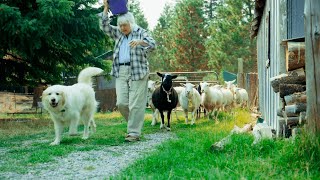
Tess survived two open-heart surgeries despite being told she'd die soon, then built a grass-fed sheep farm in North Idaho with her husband Rolf. She breeds Katahdin and East Friesian sheep, runs an Airbnb, and created the Carrie Wood Sheep Derby to teach sustainable farming to the community.
Chapters
I want to introduce to you a lady named Tess. Just like the title suggests, 2 heart surgeries, then given only a couple of years to live. And you know what she did instead of dying? Got a farm, and she's still kicking. We're gonna share this amazing story with you right now. This is a— I feel like giving, Gary. It's Thanksgiving weekend, everybody's out shopping, you know, I just want to give. So I want to give you guys this weekend, starting today, Friday, and then Saturday and then Sunday night. Free shows, free Netflix quality TV shows that we have on abundanceplus.com or any of the apps. We have a series show called Discovering Home that my friend Dan Omen does from Grass-Fed Media. That's his show that we're showing today. And Joy Tess, she'll be an inspiration to you in her 60s, kicking it, going at this farm alone, uh, is married but he's not necessarily Well, he's not involved, and so dealing with that and then these health issues and finding healing. I think you guys will really enjoy this show. Let's seek out the next day, our finale, our season finale of Rooted, our TV show. You guys are going to really enjoy it. I'm going to put it here on YouTube. And then Jess and Jeremiah's While They're Still, episode 2, very inspirational. No further— what do they say? No further ado. Until further ado, what do they say? Without further ado. Without further ado, Discovering Home, Episode 2. If you enjoy it, you want to get the rest of those series, any of these series, go to abundanceplus.com. Enjoy the show.
You can either give a man a fish a day, or you can teach a man to fish and he'll eat for a lifetime. When I came to farming, I could either grow meat and sell just the meat, or I can mentor people and have them— help them to be successful in farming and in utilizing all the wonderful processes that they can use. Earthworms can be your work crew, and ruminants turn sunlight into meat and into wool and into delicious milk. All of this can happen very effectively if they know how to read the seasons and farm accordingly. Both my mom and dad were farmers. My dad, he farmed in the Adirondacks in upper state New York. He was actually a botanist at Cornell University. He studied horticulture there. And my mom was from an Irish immigrant big family farm in Illinois, and so she grew up riding on cows and things like that. After the war, they met up in California and fell in love, married, and went on a honeymoon to the Redwoods. He started a landscaping business because he had all that horticultural knowledge, so I grew up riding around on the trucks and on the jobs with them, answering the phone for the customers and so on, helping mom with the bookkeeping. And, and when I wasn't doing that, of course, I was horseback riding and running around in the hills in the Arroyo Seco and San Gabriel Mountains. That was a really great way to grow up. I always knew that I, I wanted to be a veterinarian or do something with animals. I liked science, science projects and so forth, and, and taking care of our menagerie of various horses and critters. Everything was going along pretty well, and then it got complicated during high school. When I was 15, I got pregnant. It's hard for anybody nowadays to know how naive 15-year-old girls were in those days, but I said I can't possibly be pregnant, we didn't pray for a baby, because I didn't really know anything about it. The boy who was a little bit older than I arranged for there to be a termination of the pregnancy. And so he took me to the clinic, he paid the money and so forth, and I was sitting in the clinic and thinking, well, what do they do with the babies? And then looking around, I thought, oh, I don't like this at all. I realized that it was gonna be something that was gonna harm the baby. Though I was afraid, I grabbed my shoes and my clothes and I ran out. And we left the money and we were forced with telling my parents the deal. So my parents asked the pastor what to do and the pastor said, "Get rid of the bad apple because you're gonna spoil the whole bunch," 'cause we have a big family. And I was the bad apple, and so I was sent away from my family at age 15. That began some rough years for me. I realized pretty quickly that I couldn't feed or take care of my daughter, and so I relinquished her for adoption and sunk into the abyss of profound sadness that that entails. And I made a judgment of myself at that time that I just wasn't, wasn't going to do motherhood ever again. Forget it. No way. And so that's been a shaping effect on my life. But somehow I managed to get, get a high school diploma and then get a job as a punch press operator. I still wanted to go to veterinary school I took a vocational nursing training so that I would have the money to support myself managing, get to, get through school. So I went to Cal State LA, did all the pre-vet med prerequisites. When I finished the prerequisites, I applied for the vet school at UC Davis. I had good grades and I had references, but when I went to the interview with the advisor, it didn't go so well. They said to me, "Well, keep applying 3 or 4 years, and after sufficient time, we'll know that you're motivated. We only have a few openings for women because women have babies and then they wind up wasting the education, not practicing." My blood boiled. Oh, are you hungry? When he was a little colt, he was chasing his mother and through the forest or running with his mother, and he got a stick in his eye and he lost his eye. But because he trusts me, we ride all over the mountains. We ride on little narrow trails, whatever, you know, no problem. So after graduation, I got a job with American Hospital Supply, and I found that pretty easy money. But my primary objective during those next 3 or 4 years was that in every way possible, I would compete with guys. I would compete with scuba, with skiing, certainly with motocross. And I was a very good motocross racer, and I took particular joy at taking the trophies away from guys just because I had been thwarted from my dream because of not being a guy. I had a skiing injury on my knee and I heard about acupuncture and I went and had acupuncture to check it out, see if it could do anything for the knee. And it helped, to my amazement. And then I found out that acupuncture worked really well on animals, and so then I asked so many questions of my acupuncturist that finally Dr. Kim said, you should go to grad school and get your doctorate in Oriental medicine. I applied and, and got into the program, and I completed 3 years at CAC, California Acupuncture College. My internship, I was accepted to go to Guan An Men Hospital in Beijing in China. That was a tremendous experience for me to be in China in '83-'84. That just absolutely was a different China than what we know today. It was like going into the 15th century. Everything was bicycles and Mao jackets, and there was nothing of English. Had to learn the language. So I had a fantastic experience because I had, um, really, really good teachers. After I finished my, my internship time there, I decided to see something of China. I had the language, so I just put my things in a backpack and took off and went on the Silk Road. And I backpacked and ox cart and bus, and then I managed to buy a horse and ride some of the way on a horse. And it was great travels. There were a lot of scary moments too. I went down the Yangtze River on a pig barge, and that prepared me with a certain fragrance so that I would come into Wuhan and Guilin down in the south part of China, definitely needing a shower. And then there was the torrential monsoon rain. I took refuge in a cave. And who was in the cave but my future husband?
For about 6 months, I was traveling through Southeast Asia, and it was on the way home that I bumped into Tess.
When I first saw him, I thought, "Oh, that's a really attractive man. There's something about him I really like. But he probably doesn't even speak English." Because he's European, and most of the Europeans were, you know, from Germany or Switzerland or, you know, France. He definitely wasn't an American boy. Anyway, he spoke to me and he said, "Oh, would you care to sit here?" Oh my gosh, he speaks English, English.
Well, I was born and raised in London, England, of German parents, so I had very much a German home life, but grew up as a British person. And I went to school and studied dentistry in England. I was at a stage where I felt that I needed to be responsible, you know, buy a practice, get my wife, have my 2.1 kids. Before doing that, I wanted to take a year off and travel just to get rid of my itchy feet.
We spent the morning in the cave talking, and then I said, well, what are you going to do? He said, well, this looks like it's set in, the rain, and so I'm going to fly on the other side of the mountains where it'll probably be drier. And I said, Oh, change your plans because we came here to climb 7-star crags. That would be like climbing Mount Whitney. How many times are we going to have this opportunity? We need to grasp the opportunity and we'll get wet, we might catch cold, we'll certainly get muddy and it'll be a mess, but we will have done it and we will have done what we came to do. And so he said, Why not? And the rest is history. Next thing you know, we moved to Redlands, California. In Redlands, I started a private practice. It was really, really successful. I had several people working for me in the practice, and we had herbal pharmacy and a bookstore and massage therapist support. And, um, Rolf was working at the Loma Linda University. All in all, we had, we had a great life. I mean, we had a nice little house, we had the horses nearby, everything was going well. But we made a list, and what is it we really wanted to have in our lives? Because we kept vacationing to places away from there.
We were at a stage of life where, even though I was a city person, I've always enjoyed life, I've always enjoyed being on a friend's farm and working with the farm and animals. We were looking for a place where we could both work part-time and have time to spend to smell the roses. So we spent several years trying to make a list of what was important for us.
On our list, we put things like, you know, we wanted to have four seasons because we missed that.
Southern California was like two seasons smog and less smoggy. Whereas I missed the real four seasons.
We just put a lot of things on our list, and freeways and traffic jams and things like that, they weren't on the list.
It's an interesting process because we started off by making a list what was important to us, and then we started traveling. Northern California, Oregon, Washington, Idaho basically is where we were looking at. That list started changing quite radically as the more we traveled, and we pretty much decided that around here in North Idaho would be a nice place.
One of the things that was important to us was the ability to build our own place. We didn't want CC&Rs and all of that that goes on in, in big cities. We wanted to just start from scratch.
We knew some people who lived north of Sandpoint, so I started sending Tess up, and not just in the summer but also in rain season, mud season, middle of winter, and it was one of those trips she came back and said, 'Ralph, I bought a property.' And I thought, 'Oh God.' So that started the ball rolling.
We did the usual camp progression of things. First you camp on the land, then you haul the water, then you build the latrine, you get the trailer, and then you build the shack, the COVID over the trailer. And then you build the garden, and then, you know, and the whole progression that we all seem to do, or most of us have done up here. Then you take care of what am I going to do for income. We build this place to have a place for me to do acupuncture. And then fruit trees and put all that in. And then the horses had to have shelter and the hay had to have cover. And then finally we built the house. Oh, it was about 15 years from closing the door on the house in Redlands to going into the door and staying inside of our new house. But we had a great time with, with building. My career here was good. Acupuncture was doing really well. Notice how the end of the tongue is a little bit redder. And so that shows me that you've had a lot of mental activity lately and the dryness. Have you been sleeping all right? Not really. This isn't for your makeup. This is for your tongue.
Okay.
No, I'm not sleeping well. I wound up being asked to be the chairman of the license board in the state of Idaho, and then after doing that for a little while, then Idaho sent me to Washington, D.C., to the Federation of Regulatory Agencies to represent Idaho because we had a different way of doing things. At that time, I wound up getting awarded something that's important to me. The governor gave me an award for distinguished public service. Pretty soon, I was the chairman of the National Commission for certification of acupuncture and oriental medicine in the United States. So I'm going to, you know, this is the little tool, the finder tool. Okay, that's right. So that one doesn't hurt too much. Is that more tender or is that? They're tender in a different way. Your ear is telling me that your shoulder is giving you trouble. Oh my. But yet when I ask about your knee it says, well, yeah. Yeah, well, my shoulder is are way more painful than my knee. Yeah, yeah, yeah, I see that. Let's see what we can do to fix that. And that was a very, very big job and very involved and, and very enjoyable. A lot of travel, but there was a lot of strain involved in that too. The other thing that was happening in that time was that I searched for many years to find out whatever happened to my daughter and where she went and was she okay and so forth. And after many years, 36 years actually, I finally found out who her adopting parents were and I talked to her mother on the telephone. And her mother told me she is, she's fine, she's well, she's beautiful. Beautiful. No, she was not interested in knowing about her birth parents. She never asked. And, and I thought, well, okay, you know, that's, that's good that she's alive and she's well and so forth. And I just kept throwing myself into my professional work and all the farm things. In childhood, I had rheumatic fever, so I had damaged heart valves. So I think, you know, time caught up with me, or the pressure of travels and such. In year 2000, I wound up in the hospital with open heart surgery. I received a valve from a donor. During that time, I thought I'd better call the mother of my daughter and give her permission to get my medical records in case this was sort of relevant for her daughter and her family. I told her in that letter that I had received the gift of life, this donation, from beyond the veil of secrecy that I didn't know who. I just knew that somebody lost their family member and that I received that and that I lived on with that. Similarly, she had received the gift of life of my daughter from behind a veil, and so we had that in common, and that was my letter to her. And when I got home from hospital, I had a note and a photograph of my daughter and her 6 children. Wow! Eventually my daughter called me. We talked every week, and pretty soon I went to see her face-to-face. We have a great friendship. Over 20 years we've been able to talk with each other. There's really nothing we couldn't say to each other. It's great, but it was a great healing experience for that, for that injury basically that came about so long ago because it was better for both of us to know something instead of have a blank page. But the donor valve didn't last. It only lasted 10 years and then it failed, and then I was back in open heart surgery again. And they said, well, you know, we're gonna do this and this and this, and basically you need to not waste a lot of time doing things that aren't important. You know, you might have 5 or 10 active years, and, you know, don't waste time because you're probably not gonna get really old. After that second open-heart surgery, when I was told that I really might have only 5 or 10 active years to, to do things, I didn't want to waste any time and I didn't want to be stuck in a room. I wanted to have my farm. As I was recovering from that second open-heart surgery, I started riding again, and I rode up here. I was curious about the place being still for sale, and I looked at the land and I just loved it so much, and I was just dreading that it all of his work establishing this homestead would just be wasted, that it would be cut up and made into a subdivision. So I rode home and I talked to Rolf and I told him, look, you know, I have this short-term prognosis. I think this farm would be a really worthy investment to take everything we have and and just sell everything that's not nailed down and make an offer on that land and try to keep it as a farm. And it's just too valuable to let it get cut up.
She was at the stage where she wanted to shift her focus from practice and do more things that she liked, which is basically animals. I thought, you know, this is an opportunity for her to pursue her dreams and not have to struggle with mundane things of day-to-day life. So yeah, we said let's go ahead and buy it.
Jess, when he was alive, did timber production and also cattle, and the last of the last 2 years of his life, he couldn't do cattle, so the whole place became nothing but weed-choked and very, you know, needed thinning and so forth. He was really good with the earth, but when you're 96 years old, you know, it gets more difficult. So we thought about how could we do the right kind of thing by the land, and that started a whole study of ruminants and what ruminants can do. And they are the superb landscapers. You know, the plants capture the sunlight and put it into forage, and we can't eat that forage. Sheep, on the other hand, as ruminants, they eat all that and turn it into milk and meat and wool. And they make the landscape look really beautiful and get rid of weeds, get rid of, you know, fire fuels, and they're just a lot of fun. They're a lot smaller and more easy to manage than cattle, I think. They're not as clever at breaking out of everything and breaking everything as goats. And besides that, I like sheep's milk compared to goat's milk. So this little truck is really, really a great tool. It has sides that let down, so when I have a big 950-pound bale, I can fit it on here. I drop the sides down, load the bale, and then put the sides up again. I use some chalks to keep it from rolling around as we go up the mountain road to the farm. I started getting sheep and I thought they were really valuable as landscapers. and in the beginning I didn't know anything about the breeds of sheep. Understanding what makes a good sheep for this particular site, for this particular application, because not all sheep can be good for a grass-fed homestead. There was a real learning curve for that. I would get sheep that would require grain to stay fit, and that's not a grass-fed homestead. And I would, you know, get ones that were too fragile or prone to parasites, and that wasn't what I wanted to do because I didn't want to have to poison them all the time. So that was a while that I honed in on exactly what, what it needed to be, what kind of sheep it needed to be. And Katahdins were, were really wonderful. And then I had a few East Friesian sheep for the dairy. And so then I thought, what if I plan for them to be a certain way. And I started understanding about genetics, and it was quite a good learning curve for me. I'm going to just use this bale grazing opportunity to add nutrition into the earth. The drought has made it mandatory that I feed them, and so I'm going to have them fed in places where it's going to add something to the soil. So I'll just take that off. My customers started being more so than buying meat from me, they started being people who wanted to to buy those kind of sheep that I was developing. And that was a revelation for me because I saw that my niche is to provide the fishing equipment, so to speak, and to teach them how to fish rather than just the meat. That really made more sense for me, especially, I mean, we are on the side of this mountain. We don't have the luscious soil that other places have. We don't want to feed grain, you know, So it was very, very focused on a place where at 3,300 feet elevation and close to the Canadian border, you can deal with four seasons. So I had to understand about the grass date and to develop the calendar of when the food, when the forage was available for the animals and when to breed and how long, you know, what did they need for nutrition at different times in their life. And that's when I developed that whole grazing calendar. In a farm year, you only are going to have grass for a certain period of time. So what's the interval of time that you get to have grass? Because that is the feed that your need to capture. So the very, very important thing to do is find out what your grass date is at your location. In our case, May 1st. So in our grass date, that's the date that there's enough grass that I can turn the sheep onto it. There is some grass in April, but grass date is May 1st. So that's the time I begin the rotations. That has been so useful for not only myself, but for for so many people that have come into having livestock. They wanted to have livestock, but they didn't know how many sheep can I have on an acre, or when do I do this or that. And by understanding the calendar and understanding the life cycle biologically, then you know what to feed when, and you know the timing of things. So I found that, that I thoroughly enjoyed helping out the people who were new to farming and new to especially having livestock. And in the beginning, that was primarily 4-H people and their families. I was in the Master Forest Stewardship program, and the university educator said, you know, what's a good idea for new courses that that we need. And I said, we need to have 10 acres and a dream, because so many people move to Idaho and they get 10 acres and they dream, well, I want to do something with my land, and they don't really know how to go about that. So he said, good, and you'll be one of the teachers. So anyway, so I was a speaker at that, and that led into Cultivating Success, which is a different webinar that university did. And so that reached a few more people. The most interesting thing has been the results of meeting the community of Grassfed Homestead. There's a shepherdess that we're going to see that specializes in raising and breeding Katahdins. Come on, Daisy! Oh, Daisy, come here! Because when Dan Ullman started, when he came and bought some sheep and wanted to video this, and I thought, You want to make a video about, about what I'm teaching you about the sheep? Okay, well, I guess that's a good thing. And, and then it's, it's just has given such a broad reach of like-minded people that value the, the grass-fed meat, that value the grass-fed homestead life. And it was precious to me when I had to downsize. As I'll speak about, the drought this year is the very driest year. It's the biggest drought that we've had here in like 30 years. So that posed a problem because all these pastures that I so— that they were so beautiful, and then they all started drying up, and the creek dried up, and ponds dried up, and there was no regrowth. That's been terrible. When I had to downsize and I had these beautiful A-team girls that I had to downsize because I wasn't going to be able to feed them all, it was so fortunate because people who had seen the Grass-Fed Homestead videos that Dan produced and were like-minded and understood the value of my particular sheep were contacting me from out of the area, places like Whidbey Island and and far over in Washington and Oregon and in Montana. And they were coming and they were able to buy my A-Team sheep so that, that what all those genetics weren't wasted because the community had that awareness of, of what I had worked 10 years to do. So that was, that was a great treasure for me. So What are you doing? Are you making eggs? Oh, what a nice girl. Oh yeah, that's her little beginner egg. This is a normal size, and this is her, her early attempts. The challenges that I've faced as a farmer have been in two main groups: things that relate to farming alone, because my My spouse is a good spouse, but doesn't have anything to do with the farm.
I'm not really into the whole animal grazing, planning, and such like that. My interests lie somewhere else. I think Tess sometimes feels a little frustrated because she may be at arm's length from me because she spends her whole time at the farm.
Then the other one is that, that I'm getting older and there are things that I can't do the same way as I did before, and so I have to come up with some crazy way to figure it out how to do it. The answer to both of those situations is, is the way that I build community. There's the 4-H community people, and then there's the neighborhood community people, the forest stewardship program, very active in that. Recently I've been organizing the livestock evacuation program for our area to get— how to get the people out, how to notify people, made sure that everybody has name tags for all their animals, that They have trailers and we have plans and we do this as a community. The other thing I've done is to have events. Like we had the first annual Carrie Wood Sheep Derby. Something's gonna happen. We don't know what. 'Cause this is the first annual, the first annual Carrie Wood Sheep Derby. That's great! That was something we did in the fall a couple of years ago. Lots of people in attendance, and all the ladies wore hats, and we had hat judging and so on. And so forth. When we have the weigh-ins, we have a whole crew of people that want to be farmer for a day, and they come and help me with the weighing. Or there's a young man who helps me with the trimming the toes of the sheep, those kinds of things. I try to make it fun for them, and I think that's kind of a hint that I've noticed in getting old, is I have to make it sort of easy and little tiny bites that people can do that will actually help me and to make it fun. It's very different than the sort of, I can do it, leave, let me be. It's not that at all. It's we have to work in community, and that's a skill set that didn't come easy because I was so physically capable and I mean, I backpacked solo around the world. You know, I wasn't of a mind to need community that much, but I realized that that's really what the future needs. I started doing the farmhouse as an Airbnb. Mostly families came, and the families found my sheep interesting because my sheep are very friendly. They're very responsive. I move them with a whistle, and the kids really loved them. And so then I started developing a habit of giving the 9:00 AM sheep show. So this is George. George was a Bureau of Land Management donkey that was captured and sold off, and then he was sold to a farmer, and that farmer couldn't use him anymore, so than I got to buy him. And his job is to keep dogs from hurting his boys. These are his ram boys. He's not a young guy at all, but he is really good at caring for his babies, so we call him Uncle George. And so the sheep would move to another place and the kids would learn things about sheep, that sheep don't have teeth on the top, and all kinds of things like that. And that's turned out into quite a fun event. It's another piece where community comes in to save the day. You know, it's, it's the connections that we all have. So people ask me sometimes, what do you hope for for the farm after you're gone? Because we all have just a finite time on this earth. Rolf is no farmer. He's not going to want to do it. My daughter has her life and her community and her family. Very well, deeply established in Ogden, Utah. They've come to visit, but it's not their life. There's so much residential encroachment occurring on farmlands, and farmland is so precious that it really does worry me. And so I've thought about conservation easement. If I want to be here right up to the last, I don't want it to go away too soon. My influence on it to go away too soon. And I also don't know, you know, maybe I'll wind up in some little old fogey home and I'll need the money. I really don't know. My solution to that is if I make this farm so beautiful, the pastures so lush and lucrative, and the tree stands so well maintained and so so, so clearly a good farm. My hope and belief is that someone else will, will fall in love with it as much as I did and passionately fight to keep it as farmland because they'll they'll see just like I saw. So that's my hope.
I hope you guys enjoyed that show as much as I did. She's a big inspiration. If you want more of that, guys, abundanceplus.com. Free trial right now. You can get in there for 7 days, just consume the crud out of this content. If you like it, keep it, and if not, no hard feelings, no strings attached. And watch Discovering Home, Rooted, while they're still— the vlogs, ad-free. Just get in there, enjoy it, enjoy the community. Um, thank you very much. Hope you have a great weekend.
More from Justin






If I had to start my Homestead all over again, it could only pick one animal… 




