EX-Mennonite, RuthAnn Zimmerman on leaving her Community & Homesteading for Character
In this extensive interview segment, Victor Justin Rhodes converses with RuthAnn Zimmerman, her husband Elvin, and Rebecca Rhodes about the deep‑rooted mistrust of government within Old Order Mennonite culture, historical reasons for that distrust, and how it shapes attitudes toward food, medicine, and modern institutions. They discuss the transition from reliance on grocery stores to self‑sufficiency, detailing homesteading practices such as butchering chickens, managing livestock, and gardening on prairie soil. Parenting is explored through stories of teaching children conflict‑resolution skills, fostering shared experiences, and intentionally building character. The conversation also covers the family's experience with shunning, the distinction between community avoidance and family support, and how RuthAnn navigates relationships with her siblings. RuthAnn shares her journey to becoming a social‑media creator, the growth of her Instagram and YouTube following, and the launch of her homesteading book, which emphasizes heart‑centered spaces and character development over mere practical tips. The later part of the dialogue focuses on practical homestead challenges—predator management with a donkey, loss of chickens, calculated risks, and the importance of flexibility. They discuss family dinner rituals as a cultural anchor, language of grace, teen autonomy, work, and the concept of a "zero day" (rest day) on Sundays. Additional topics include arranging teen meet‑ups, handling online criticism, and promoting the book and social‑media presence. Throughout, the speakers emphasize flexibility, intentional family culture, and the balance between work, rest, and community building.
Chapters
You're known for— I know you as this, uh, someone who left the Mennonites, has maintained some of these traditions, a lot of these traditions, and are growing a lot of your own food, most of your own food, for care, mainly to build character in your family. But tell us, for those that don't know the Mennonites, so what, what, what is your cultural and spirit— spiritual heritage?
So most people wouldn't know the difference between Old Order Mennonites and Amish. It's the best way to explain it. It's what most people recognize as the Amish. Old Order Mennonites are very similar. So both Amish and Old Order Mennonites are considered Christian.
Okay.
But they separated from the Catholics way back in the Reformation because they didn't believe in baptizing their infants. So that's where the movement started. And then as the world progressively you know, got more modern, one of their convictions was to stay with the old-fashioned ways where, you know, let's not drive cars, let's keep driving a horse and buggy, let's not have our women wear pants, let's stay with the more traditional dresses as an outward symbol of being non-conforming to the world.
Okay, they're also— what then makes the difference between an Amish and an Old Order Mennonite?
Only Amish and Old Order Mennonites can tell you that, but there, there are slight differences. So the Old Order Mennonites do have telephones in their homes, and they use tractors.
Electricity.
And electricity. They have electricity in their, in their homes. You know, there's still no television, no media, no radio, no music, no cars, but they use tractors for their farming.
But spiritually speaking, probably the only big difference is The Amish practice shunning, physical shunning, if you leave their community.
It's part of their church rules, part of their rule.
Yeah, there's the Old Order Mennonites.
Don't— you can't leave the Amish and come back and say hello on Thanksgiving.
It's a, it's a fine line. Like, some families will say, well, you can eat Thanksgiving dinner with us, you just can't eat at this table with us.
Oh really?
Yeah, but then they could come back, they could come back, but like not sit at the same table.
And, and you don't partake with family tradition. So I have a friend who's Amish and they left, and so they will get invited to her siblings' weddings, but they won't be with the family, they'll just be guests.
Okay.
And another thing that makes it hard to explain this fully is every Amish community has their own form of government. Um, every Amish community has their own set of rules, set of rules, and they might differ some— sometimes widely in different states.
So when you say community, do you mean like the same sort? Because I know that like it was explained that the Amish, they have different— like they have this one and then this one and then this one.
There's—
is that like in just in that community, like just like location, or is that like if they have this, this order is here and then this order is over here, they would have the same rules?
No, it would be—
it would be location.
It all started out with the main Old Order Amish group, and then there's people that split off for many different reasons, and they'll start their— form their own group and have their own set of rules. The Mennonites do not do that so much. They tend to have a centralized government, and then they have satellite churches even in other states.
Okay, they're more like a denomination.
Yes, they are.
But then again, they also have different degrees of strictness. Yeah, you know, you have some ultra-liberal ones and some very conservative.
Really?
Yes.
What's an ultra-liberal Mennonite look like?
So what he means by liberal is not in today's— I was going to say, like, another word for it is progressive. Like they embrace modern—
Or women might be wearing pants? No.
Yeah, in the Mennonites, but not in the Old Order Mennonites. Old Order is the very strictest of the menites.
And then women will have head coverings?
Yes.
So how—
the bigger the head covering, the, the—
you don't have a head covering though?
No.
The bigger the head covering, the what? I want to hear that.
Usually the bigger the head covering, the more righteous you are. So, because you'll, you'll get a visit from the bishop if your head covering is not touching your ears. There's a size.
What will they— oh, like it has to touch your ears? If you don't let it touch your ears, then it's progressive.
Yes. Oh, it's not conforming because there's a certain size. That's very interesting.
Yeah, that's what happens when you have rules, right? You have to set rules and then you have to follow them.
So did you used to wear a head covering?
Yes.
Okay, so this is, uh, yeah, paint a picture of what life looked like then for you in the Old Order Mennonite. Now, were you a Mennonite too? Yes.
So we were married Old Order Mennonite. We already had two children when we when we exited. The Exodus happened.
So what did life look like as an Old Order Mennonite? Because one, one conversation we had on the farm is Rebecca and I grew up very conventional, and you guys grew up very— I don't know what you want to call it— traditional or different culturally.
Yeah, but in many ways similar.
Yeah, we don't understand where you're coming from.
Yeah, right. So it looked very— our life looked very similar to what it does now, like as far as everyday life. It felt a lot different. It felt a lot more like— so for example, gardening. Everybody in the Mennonite culture, the Old Order Mennonite culture, has a garden. That's what you do, right? You garden, you raise your own food. So when we left, I was like, I don't have to garden to fit in. Maybe I don't even like gardening. Let's try it. Let's see if I don't like gardening, you know?
Okay.
So for a couple years, I just did, you know, a little bit. And then I'm like, you know what? Then I picked up gardening because I loved it. Not because it was part of a cultural— yeah. So a lot of it looks the same, but it felt different.
How old were you?
27. Yeah.
Okay. And what else looked different? So that— so lifestyle, people are growing their own food, you had a horse and buggy.
Was it in the same house you live in now?
Yes.
So you had a horse, but I see you didn't go back to the horse and buggy. Like you went back to the garden.
So we— the beauty of it is we got to pick and choose from both cultures. Now. What do we want? The car we're keeping, right?
Yeah, we're keeping the car. Um, yeah, I mean, you might consider it— you might think of us as Mennonite or whatever because we're not quite like other people in some ways. Oh, but a Mennonite would never consider us a Mennonite ever.
Are you still a Mennonite?
Well, you know, there's a saying: you can take the boy out of the Mennonite, but you can't ever take the Mennonite out of the boy. Um, so culture really, really shapes who you are. And so a lot of the things that we do and the, you know, a lot of that was already shaped before we ever left.
Okay.
You know, because, because that's the culture that, that raised us. And because it's so separate from the modern world, it wasn't like a little blending, like it's just completely different.
Okay, well, what do the Old Order Mennonites do for school then? How did you spend your days?
So they have parochial schools, which is their private schools. And back in— oh, I had looked this up. Do you remember the year when they went?
It was like in the '60s when the homeschool thing was becoming a thing. It was illegal, right?
Yeah.
And parents were getting sent to jail for not sending their kids to school. It kind of came out of that same era.
So what happened is the Mennonite, Amish, Mennonite parents actually fought this battle together, and they didn't want to send their children to high school. They wanted to bring their boys home after— and their girls— after formal education and teach them skills and not send them to high school.
I'm not mistaken, it went all the way to the Supreme Court.
Yeah.
Before they were able to establish their own schools.
Yeah. So that's their— that's how they educate, and it's very, very simple, like, um, reading, write, just the basics.
Okay.
And then they graduated after 8th grade and they work as apprentice, and they hire each other's children to kind of, you know, help give them experience and keep them within the community. It's actually a very— I actually think it's a great way to educate your children. And in the—
it's a big agricultural lifestyle, um, and there again, that varies from region to region, but yes, that's primarily been their roots. Has been agriculture. But, you know, in modern day, the farms have gotten so expensive, and instead of— some of them move away to new areas for cheaper farms, but there's still so many of them that tend to have a small— some areas that have large concentrations have this giant cottage industry built around the plain people staying in this area and having, you name it, kind of business. They've got everything, um, if that makes any sense.
Yeah. Well, hold on, I want to— I want to go back to when— well, I want to know what it was like when you bought your car.
Well, we sold the horse and buggy and used that cash to buy a Dodge minivan.
How much did you sell the horse and buggy for?
I think we sold it for like $2,500.
I think the horse itself brought $1,500. I don't remember.
His name was Bruce.
I think we paid.
Did you tell the people that were buying it, you're done?
Yeah, you're out. Well, yeah, because who bought our buggy? Our neighbors?
I think so.
I think our Mennonite neighbors bought our buggy.
And yeah, was it like, was it a strange, awkward transaction?
It was a very, um, a very, um, life-changing event, you might say.
Yeah, event.
It was, or, um, string of events, really.
Yeah.
Um, one of them was, um, being able to put church rules aside and realize we can have a relationship with God and us and not have it have to be part of the church rules. Okay, does that make any sense?
So tell me then, what was it like spiritually then? Well, you, you talked about school as a Mennonite, and we talked about garden, so then church is probably a big part of it. Yeah, what's that like?
So church is very— it's very religious, very, um, traditional. Oh, what's the word I want to look for? It's like, um, they all— their services are always identical.
What does that mean? So same songs?
Yeah, well, the songs might vary, but there's always two songs, and then there's preaching, and then there's praying. Um, what, what's— I can't think of the, the separate Yeah, I can't think of the English word for it, but meaning like, there's—
what's the other word for it?
I don't even know the—
you see, are you looking for the word legalistic?
Yes, legalistic. But the, like, say, let's say the Catholics. What is it like, their church service ritual? Ritual, yes. Ritualistic, yes, ritualistic.
Where it's almost even more so. Yeah, they even have sermons for each week of the year. This sermon is preached this week of the year, the sermon this week of the year.
Wow.
Yeah, very ritualistic.
Yeah. So that's— but we grew up, you know, going to church every Sunday. Um, but part of the reason what drew us out, it wasn't just, you know, that cars are better than horses and buggies, you know, and that I'd rather wear pants than a dress. But part of the reason was we were introduced through a local homeschool group because we were homeschooling at the time um, to the presence of the Lord. And we didn't find that at the Old Order Mennonite Church, and we just knew that we needed to be where that was embraced.
What do you mean? Say that something of the presence of the Lord.
So what was that phrase? Yeah, so we got introduced to the presence of the Lord.
Oh, okay.
Or like the Holy Spirit and the power that the Holy Spirit has in our lives. And we knew that we had to be where, where that was. And in the process of drawing closer to a personal relationship with Jesus is where, where he started drawing us away from the Mennonite Church.
Interesting. Well, how did you get out? How'd you first get exposed to that then?
Well, I was going to say, was it you or was it him?
So what was the—
so what happened is, um, the homeschooling movement in that community wasn't real popular under the Old Order Mennonites.
Were you allowed to homeschool?
Well, because they fought so hard for their private schools, it's not really encouraged to homeschool. But I taught school in the— in their private schools, you know, in a little private school, all 8 grades. I was the teacher several years, for several years. So when our daughters were born and, you know, they start getting older, I'm like, I'm not paying to send my children to school when I know the curriculum inside out and I have all the skills I need to teach them, right? So, but it wasn't super popular, so I didn't have community. So I found a homeschool group that was not Mennonite, and we did a Charlotte Mason book study. Okay. And one of my friends, my new friends that was not Mennonite, invited me to a ladies' tea party at their church, which is ironically the same church we still attend.
Is that allowed?
No.
Oh, okay. So you're sneaking around. Do you need something, young man? Do you need something?
Kendrick, do you need something? What do you have in there?
That's fine, bring it here.
Come show us.
You can come right up through here. It's fine. If it's interesting, we'll keep it in.
You caught a minnow? Okay, it's a minnow. That's really cool. I see him swimming in there. Okay, you're gonna eat it?
All right, it works better on a camera.
Wait for us to film. They don't mind him showing. Yeah, don't eat it now because they'll want to film you eating it.
That's right, she gets it.
He got it too. You see how he nodded? So one day we were down at the river swimming and the little boys were catching minnows and their big sisters dared him, said, I'll give you $20 if you eat that whole fish. And they eat it.
Yeah. Oh, fun.
That's so funny.
He's like, I'm gonna eat it. Oh, I wanna— okay, so you, you started homeschooling, but are— well, I should say, are you allowed to talk to other people outside of the Mennonites?
It's not encouraged for you to have non-Mennonite influence in your life. But I was really hungry for community. And like, looking back, I can see that I was really hungry for community. And so she invited me to this ladies' tea party and I went. And I don't like, you know, you just—
In your buggy?
No, no, she picked me up in her car.
Okay, so like— So that wasn't too down south.
Like, oh, Elvin, and you were like, hey, so-and-so invited me to this tea.
And you're okay with it?
I think I'm gonna go.
You're okay.
We were on the same wavelength. He wasn't like, we have to follow all the rules. Because we, even when we were dating, we had considered running away to get married. Okay. But we didn't know how to get married outside of the culture.
The people within the community would have called us on the fringes.
Anyways, when you were a part of it, you were kind of fringe. Yes.
Yes.
So, but we didn't know how to get married without being in the community. And to get married within the culture, you have to be members of the church. So we wanted to get married, that's why. And to get— to become a member of the church, you have to become baptized. And when you're baptized in their church, you promise to follow all the rules.
Oh no, you did?
So that's why a lot of people are very—
in order to get married?
Yes, a lot of—
so this is after you're 18, you did?
So are you married? You got— the bishop married you. Yeah, we'll get back to the homeschool thing. Okay, we won't get too far. The brick— did the— he married you and now you're married as a Mennonite, but do you also go through the legalities too? Were you legally married?
Yes, we were legally married. We, okay, you know, had to acquire a marriage license and, and all of that. All right, that— so we were kind of on the fringes. We didn't know how to get married without our family's support. So we got baptized, which is also a promise to obey all the rules of the church. And so then we kind of settled in, you know, we had 2 babies and a lot of new things, you know, newly married. Yeah.
And then of course new kids.
So getting invited to the tea party, it was never a question if he would allow me to go. Like, we were on the same wavelength.
I didn't know if you like came home and like, hey, I think I'm gonna go to this.
And he's kind of like, I would have probably, um, been like in the back of my mind, like, yeah, maybe that's not a good thing. But I wouldn't have never told—
I've had personal convictions. It would have just been like, what's our community gonna do?
Somebody would have saw her get picked up.
They would just thought I'm— you know, because you hired a driver oftentimes in the winter to go to town because it's too far, too cold for the horse.
And, oh, okay, so that wouldn't have been strange because I'm thinking, yeah, I was thinking like someone's gonna see her get picked up and riding in this car.
Can get an Uber, right?
You can pay somebody. Yes, indeed.
What about the Amish? Can they get an Uber?
The—
they can get an Uber and fly.
And fly. Amish, some of them fly.
Old Order Mennonites do not fly.
Okay, those must have been a liberal one.
Yeah, yeah, I say that word because on the airplane we talked a little bit.
I mean, she wasn't Old Order, man.
Those liberals.
If she was, she was fringe. No, she probably wasn't Old Order. First thing that started me questioning as as far as all the rules. I was like, wait, why is it okay for me to pay somebody to drive me to town in their car, but it's not okay for me to drive myself to town in my car?
What was your first questioning of it?
That was kind of my first, okay, this just doesn't make any sense.
Are you an adult then, or were you a kid?
I was an adult. And part of the reason is our children became old enough to start asking questions like, why can't we drive a car?
And you're like, that's a good question. Yeah.
3 or 4.
Yeah.
Yeah.
Mine was— I had— yeah, I had that of like Sunday in we grew up Baptist, you weren't supposed to work on Sunday, but we could go out to eat and make the—
make other people work.
Restaurateur work.
Yes.
That was kind of weird to me.
Yeah, that was— that's also a rule in the Old Order Mennonites. You don't spend any money on Sunday, and you don't do any work. Like, you, you know, feed your animals and things, but you don't do any extra work.
Okay. They— did they light a fire?
Did they what?
Light a fire?
Light a fire.
Well, sounds like that's a remnant of keeping the Sabbath, which— yes, the Sabbath, you're not to work, you're not to spend money, you're not to light a fire. Yeah, but although they're just doing it on Sunday, right?
So I went to the tea party. You want to pick up?
Yeah, yeah, yeah, yeah.
Tea party. And there was a worship service, and I felt something that I'd never felt before. Like, I literally was— it was weeping, and there was just sweet presence in the air, and I didn't know what it was, right? But I also knew that whatever it was, I needed more, that it had satisfied me like nothing else had. So it took a couple weeks before I shared with somebody, and they were like, oh, well, that's the presence of the Lord. So I started practicing bringing that into our home, and then the re— and then it just gained momentum. Then Elvin, you know, got saved, and, and yeah, the rest all kind of—
the presence of the Lord. You guys slow down here. So the presence of the Lord, that, that was no sort of concept Nope, never ever heard about it.
I don't— I— we'd heard about the Holy Spirit, but we didn't know what it was, right? Okay, so we had to have it explained to us.
Okay, the Pennsylvania Dutch word for that is Heiliggeist.
That's actually very German, I think.
It is, which means what?
Holy Ghost.
Ah, Kendrick wants to eat his fish now.
Okay, come on down.
Where's your front?
Where's your camera?
Uh, it's up there.
Come on down, he's ready.
You're ready?
No, but you're not getting paid nothing. I heard last time you got paid.
Oh, but this one's a smaller one. Wait, he's ready. Why is this a little guy?
Wait, hold on a second.
Oh wow, wait, show him the fish.
Last time when I got $20, it was like that big.
Wow, how much they pay you to eat this one?
No, he's going for free, man. Okay, he's just doing it.
He's addicted.
Okay, carnivore.
I just swallowed it.
Good job, buddy.
I just swallowed it.
I just swallowed it.
I just swallowed it.
Beaver guardia. What is that, parasite, right?
You can keep all that in here, man. This is a pretty raw podcast. I don't know if he does any editing. He's editing as we go.
Good job.
So if there is anything you want to take out, you got to let them know because otherwise we roll.
Okay, I'll make sure and pick my nose a few times.
In the, in, in the church that you were attending, the Old Order Mennonite Church, they didn't— did you have a Bible? Did you like— were you encouraged to read your Bible? Like, do you know what I'm saying? Or was it like they had it and they just told you what you needed?
It was a lot like that, wouldn't you say?
Um, you were encouraged to read the Bible, and this is— let me step back and say that all services are done in High German, not Pennsylvania Dutch, but High German like they would have been before they came to the United States. Okay, like 300 years ago. So they've kept that, but nobody really understands High German anymore.
Wow, it's not even a spoken language, so it doesn't create that hunger for the word of God.
It is a spoken language, but we didn't speak—
we didn't speak it. Yeah, so I think that was one of the most refreshing things for us starting to go to a different church was hearing from the Bible in English.
Yeah, in your heart language.
You know what they call that? The heart language. Yeah, it's the language you pray in.
It was so powerful to hear Wow. The Bible in English. And we had English Bibles, you know, but we didn't have a hunger for it.
And we— right, you never really read it much because— so Bible studies, questions that nobody seemed to want to answer.
There's no Sunday school, um, but like group Bible studies are discouraged, highly discouraged. You will actually—
really? Interesting.
Because it's too worldly. It's the way the rest of the world does.
And what it does is it brings out questions to ministry that they really can't answer, so they'd rather not go there. Okay, if that makes any kind of sense.
So I guess— I'm guessing your Bible though was in English?
Yes, German and English. You get gifted a German— a side-by-side German and English Bible. Um, so a lot of it is to— so you can see how we, we got this impression like the culture is about being a member of the church and following all the rules more than it is about a personal relationship with Jesus Christ.
Okay, yeah, you had this tea, you visit her church. What kind of church is this?
What, the one that we go to now?
What kind of denomination?
Oh, it's a non-denominational.
That's just a Baptist church with a cool logo.
Okay, I go with that.
Yeah, I go with that. So I do think they've said we're charismatic in our worship style, if that helps at all, and maybe slightly Pentecostal.
I've heard—
yeah, I'm just trying to get people to picture—
Pentecostal but not legalistic Pentecostal. Yeah, like Pentecostal worship style, maybe, but it's non-denominational. Yeah.
Okay, well, when you say Pentecostal, people might think of— are people speaking in tongues there?
Yeah, at times.
Are they falling out?
What does that mean?
Where they like put their hand and then pastors touching people?
Sometimes when we have a revival, like a visiting minister. Yes. So yeah, I guess we have some strains of Pentecostal.
This isn't a Baptist church.
This is a Church of God with a cool logo, maybe.
Okay, I'm not familiar.
We all— we don't know, we just go because that's where we find Jesus.
Okay, no, it's great.
Yeah, we have a Church of God for everyone. Yeah, we are a total piece of going to this tiny church. Yeah, happens to be 3 miles from our house.
And the— and the youth— there's a lot of youth and young people, which—
small private school within the church.
Yeah, so that makes it very comfortable.
Are you still friends with This person who brought you to the tea?
Yes.
Okay.
They don't— they no longer attend this church, but I'm still friends with her.
And they play instruments at the church?
Yes.
Okay.
Um, it's a pretty tiny building, so we don't— and we don't have a cage for our drums, so the drums kind of are, you know, they get too loud, so they, they use like the—
do you sing hymns or more, or more contemporary Christian music?
Both. We do both. We, we sing some hymns and some, some contemporary worship songs.
Um, yeah, we're getting in there. Did you go to the concert on Saturday night at Homestead Fest?
Yes, until it rained. No, not Saturday night. No, we went Friday night.
Do you sing songs like I'll Fly Away?
Yes, sometimes.
Okay.
And the Old Rugged Cross.
I'm sure Amazing Grace. Old Rugged Cross.
Yeah. Um, and It Is Well with My Soul. Like, we sing some of the old hymns.
Yeah, these are the Baptist hymns. Okay.
Yeah, this is quite the, um, eclectic church.
Yeah, it is.
Yeah, a little country church.
I like that.
The pastor was from Arkansas. He grew up Baptist, I believe.
I think so.
Okay. And he's still the— he's still the pastor there? Yeah, from when you guys came over?
Yeah.
Okay, so what year was this that you came over?
It was in early 2007.
So tell us how it accelerated from the tea to the visiting this church to now. Then what?
It's like 6, like 6 months later, we're like, all right, we're done, we're out, we can't, we can't try. So what was happening is we were in secret attending the, uh, the new church's Wednesday night services.
When did he go? Next Wednesday?
No, it was a couple months before, before we went as a family.
But you kept going?
No, no, because we went together as a couple.
But after the tea party, I went to a couple of their women's Bible studies maybe. And then, yes, but it was probably 4 or 5 months before we attended as a family at the Wednesday night service.
Because I remember I kept feeding her questions about different things, you know, and I take it to the Bible study and ask, oh, you're doing the Bible study?
You were like trying to poke holes in the whole thing.
What were the questions?
They made sense.
What were the questions?
A lot of the questions were like, well, what about head coverings?
Yeah, what did you say to him?
So can you explain to me, like, why I don't need to wear a head covering? Can you explain to me what, you know, in the Bible, like, why you guys don't wear head coverings and how to become okay to them?
Did they answer that?
Yes, they did.
Really?
I don't remember the exact answer, but I remember them encouraging me that it's a personal conviction, and if I want to wear a head covering, I just should. Like, if I feel convicted— it's not a rule.
It's not a rule.
I did for a while.
So you're wearing the whole Mennonite garb Yes.
So at the time, going to the Bible study, Wednesday night service, I show up, I wore the full Mennonite suit garb.
Yeah.
And she would wear the dress and head covering. But we only did that for a few months.
Yeah.
We soon figured out that this is not going to end well. We need to make a break here.
Yeah.
Okay.
Well, that means leaving your family, maybe not ever having a relationship with them again.
Wow.
Wow.
It became that important to you?
Yeah, yep.
We knew this is something we had to follow.
Really? Why? What was so important about it for me to leave your whole family?
Like, I, I felt this drawing of God, and I had peace. Like, I—
we just kind of felt like you're drawn to a rushing river. I don't know how to explain it. Yeah, it was just something we had to do this. Wow.
And I remember—
yeah, so much so that we knew that we possibly wouldn't have a relationship with any of either one of our families anymore.
My sister. So I have five sisters, and I was really close with them. And so that was probably. I probably stayed hung up on the fact that I may never have a relationship with them again. That probably. I was probably hung up on that for a couple months. Like two or three.
I slowed it down a little bit.
Okay.
No, no, no, no.
That slowed it down because I had to.
Yeah, sure.
That this this is—
yeah. And I had to be okay with— I had to make sure that, okay, I want this, I need this bad enough that I can say, okay God, if this means that I'll never have a relationship with my sisters again, I still want you more.
Now wait a minute, you just talked to God?
Yeah.
Were you talking to him?
Yes. By this time I was having, you know, personal relationship kind of conversations with him. But in the Mennonite church, before, when I was Mennonite, so you— it was all just through the church.
You never, you never said a prayer like that?
No, it was more like ritual prayers.
I'm just kind of wondering if you knew it instinctively before, maybe you had some sort of prayer.
Well, it was more like, um, before I met the— you know, before the Holy Spirit, there was a lot more ritual prayers. Like, I knew the 23rd Psalms, and you know, Our Father, yes, and the, the Lord is my I mean, and the, um, what do they call that?
The Lord's Prayer.
Yeah, the Lord's Prayer. And, you know, we knew some memorized prayers, but there wasn't this, this personal conversation.
Okay, okay. So this only happened after the tea. When you guys keep— you guys keep saying we had to do this, you keep calling it this. Are you talking about being able to go to this church service?
No.
Breaking—
or what are you talking about? I know you're talking about breaking away, but what's the this? That you're running towards?
The this would be like a personal, okay, relationship and a like, okay God, we're here, whatever you need for us to do, we'll do it.
What would, what would the people have said if you, if you said, I just want to start praying how I feel led to pray in the Mennonite, in the Mennonite?
Well, number one, women would never be heard praying out loud. Okay, so that to me it wasn't even an option. It wasn't on our radar.
Okay, okay, so I just want to go back. So you did the tea, you started attending like a Bible, and he was feeding you questions, and then, and then what were some of the other questions?
Should we ask that?
Well, I want to— hold on one second. When you started, and then you eventually, you all attended as a family with your daughters, kids. We all know they say things to people that we don't want them.
Are you still being secret?
So what are you saying to your daughters so that they're not going back and telling anyone in the Mennonite community, hey, we're going to this church that's 3 miles down the street?
I don't think they were old enough to really realize what was going on at that point.
I don't think they would have. Um, yeah, I, I think you're right. I don't remember like telling them to keep it a secret. And, and also They didn't— they weren't going to school or anything like that, so they're, they're on it like they're being with other people in the middle.
You were super isolated.
Yes.
Okay, then what's this other thing? How were you getting to the church on Wednesday night? Were you taking your church— were you taking your buggy?
No, we had a neighbor that attended the church. She would pick us up. Okay, all four of us.
All four of us.
Wow. Okay, so you never took the buggy to the church?
No, there's no hitching rail.
How'd you know?
You couldn't get on the, on the internet and Google Maps and see if there's a hitching row.
Well, she'd been there.
I knew there was no hitching.
She's like, gotta take my horse.
And you're still wearing the garb? Yes, the whole time. Okay, so then you're like, we gotta do this, we're breaking up with the Mennonite community.
The thing that had to happen is we needed to tell our parents.
Okay, so that's what you guys—
this is the very beginning of it, right?
So this is the first leak, and the cat's out of the bag.
So you told your parents, and what did they say?
I want to know your parents and my parents a letter.
Oh, because I was just telling somebody this because they were like, why a letter? And I'm like, because you didn't have the kind of relationship where you could sit down and say, oh, this is what's been happening in our lives, this is what we feel like God really wants us to do. There, there wasn't that kind of relationship.
Is that a minute?
Yes.
Or is that a y'all's individual relationship?
It was— that's how it was in our family. There's a very— there's a— it's a very patriarchal—
wow.
And so to get it all out and tell them everything we needed to— for them to know, we had to put it on paper.
Otherwise it would have had to been a phone call because they lived 1,000 miles away.
This was in English.
So you wrote them in English?
Yes.
Did you write your parents at the same time? And did you send it at the same time so that they would get it at the same time?
Yeah. Our parents both live in Pennsylvania and we were in Iowa. That's 1,000 miles. Yeah.
So your parents get the letter and what happens?
And we get phone calls. They try to talk us out of it.
So now you're having a conversation.
Now we're having a conversation, but it's very one-sided.
Well, they had to be. They had to get their stuff out. And that was the only way to get there. Were you surprised to get a phone call?
No, was that missing protocol? Why didn't they write a letter?
Um, good question.
Well, because they had the authority to speak whatever they wanted to us.
Yeah, I can imagine. Like, I imagine your parents getting this letter, opening it up, reading it, like shock. Your mom, or whoever opened the letter, your mom or your dad, going to the other one saying no because they didn't live in the same—
you're missing it.
Oh, you mean going to the other parent?
Yeah, yeah, like your mom is going to your dad saying Ruth Ann and Alvin have lost their mind. They're doing this, and then your dad calling you—
or worse.
Absolutely.
Or worse.
Or worse.
Yeah, she's hardcore with your family.
Like, they're— someone's receiving the letter going—
I think his family blamed it on me, and your family blamed it on her, and your family blamed it on you. Absolutely.
I was the instigator. You know how those things work.
They weren't— none of you I guess none of your family was surprised.
I don't think my family blamed it on you.
What did you tell them in your letter? Did you say personal relationship?
We told them about, um, the presence of the Lord and how we want to have a relationship with Jesus and how as we've been seeking him and seeking this relationship, he's drawing us away from the Mennonite church. And they're just like, well, that can't be. Yeah, because you've made a, you know, you've made a promise when you got baptized.
Wow.
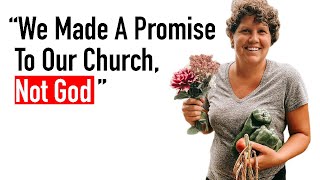
But the way I see that is we made a promise to a church. Oh, not, not really to God.
Yeah, it was a promise to the—
I mean, we promised to follow the rules of the church. What kind of church makes you promise to follow their rules for the rest of their life?
Yeah.
And not God?
Yeah.
If God leads you on a different path.
Yeah.
Like, you started feeling like Like God was asking you to do something that the church wasn't.
Well, God was calling them to him.
Yeah. Yes.
As opposed to saying keep going to this church and doing the rituals that they want you to do.
Absolutely.
Because I'm assuming you're reading the Bible at this point. You're saying, oh well, this doesn't, this doesn't have to be, this is, this is their rule or this ritual, but the Bible says something a little bit different.
And, and so when we took those questions and we went to our pastor at our new church and the pastor's wife, they would always turn it around and say, well, why don't you pray about it and see what your convictions are about it? And, and so that was very, very refreshing because we had always been told, oh, this is what you need to do.
And that's why you were going to the pastor. You needed him to say yes or no.
Yes.
Wow.
And they're saying, no, you figure this is between you and God.
They understand fully where you're coming from. Are they like, like our families?
No, no, your pastor that you went to.
Does he know where they're coming from?
Does he know the Mennonite ways so that he could say that to you, or was that just his conviction?
I think so. I think, I think he had enough wisdom and experience to understand that, that we're just going to substitute him for the, you know, yes, for the rules of the church unless he tells, unless he encourages us to find our personal convictions.
He'd already been a pastor for 35 years at this point.
Okay. Yeah, and we would have— we would have just substituted whatever he said we should do because we were that lost.
Yeah, I couldn't even see that ourselves.
Okay, so your parents call you guys and you're like, no, we're still doing this. Like, this is who— does he—
does—
do one of your parents call the bishop?
Probably over you.
Like, who, who go— where do you go to next? Like, what happened next?
So what happens in the Old Order Mennonite community is when you take partake of their twice a year communion, you're renewing your membership.
It's called a test of membership.
Yeah. So, so when you take communion, you must be following all the rules.
Okay.
Remember, these are outward rules, right? Right. Doesn't matter what, what all is going on inside, right? You must be obeying and following all the rules to be able to take part of communion.
As far as dress and, uh, things that are forbidden from you to own or not, you don't say TV or car or whatever it might be.
But as far as things of the heart or things that are hidden, you know, let's say perversion or pornography or, you know, all of those, it doesn't matter. It's not on the radar because it's not visible, right? So when a member misses 3 communions, they're automatically excommunicated. So then you use— lose your health insurance, your property insurance, you lose all of that when you're no longer a member because that's all tied in.
Because you're getting insurance through the Mennonites, through their church. So, so is that what happened? You missed 3 communions?
Yeah.
So actually, we didn't even do that when we go. Oh yeah, when we knew we were leaving, they have, uh, one minister, he's like over all the insurance stuff. And I went to him, I said, hey, we're leaving, we're not coming back.
What?
Yeah.
Um, he was a kind of a guy I knew really well at the time.
He was a— he was the father of one of our friends. Yeah. So we, we felt like instead of just letting our membership lapse, we owed him to come right straight to his face and say, hey, you can take us off of the— all the insurance benefits, we're done.
So what are you going to do for insurance?
It was a huge learning curve, almost as big as learning how to drive a car with the steering wheel instead of brakes.
The same neighbor that took us to church was an insurance agent.
They helped you.
Yeah. Okay, so I'm assuming you've gone to this guy and he's taken you off the insurance. Word is spreading in the Mennonite community.
Oh yeah, Zimmermans have gone off the deep end and we get dropped like hot potatoes.
What do you mean dropped?
Um, so you don't get invited to any functions. Your community is, is gone. Wow.
So yeah, I was gonna—
earlier you had friends.
You guys were already super isolated because one, you're Mennonites, you're cut off from a lot of outside things, and then you became homeschooled inside the Mennonites. So you guys were very isolated at that point, and now it's getting even worse. They're not even—
yeah, now we're gonna—
I mean, I'm assuming you have friends.
Did that— I made a lot of— oh yeah, yeah. Um, and I had, you know, my sister lived in Iowa. I have two brothers that live, you know, locally. The rest of my family lives out of state, you know. Um, but God's— God was really, really good, and he— and he brought me, you know, new friends. But also through that time, I really— we learned to really depend on God, and we got really close as a family. But leaving the only community that you've ever known is really, really hard. It felt like what I imagined moving to a different continent would feel like. The language is different. As far as— okay, so we speak English perfectly well, but the language of our peers is so different because they were raised on movies and music that we have no clue. So a lot of things still to this day, when at our church and we're at a Valentine banquet and they play this trivia game, we're lost.
Yeah. Wow. Pop culture.
Yeah, pop culture. Yes. So there's a— there's just— but you know, some of my best friends at our new church, we have nothing in common except the love for Jesus.
But that's enough.
Yeah. And that, that's kept us friends. And then, um, the relationship with my sisters, it did lapse. I lost, you know, I felt very lost for a while. But I would say in the last 5 years, as we've all kind of entered our 40s, God has restored the relationships in a way that I never could have imagined.
So it wasn't immediate?
Immediate? No, it wasn't. They were—
you were, you were, you know, dropped by your family.
The families were a little, you know, the families didn't drop us like the community did.
Okay.
Oh, community was quicker to drop.
Yeah, the community was quicker to move on and just drop us. But our families, you know, they, they stayed a little closer.
So it's— they dropped you, but it's not like they can say, get, get out.
They can't make you move from your property.
You own the house.
Yeah, we own the house and the property.
It's not that.
And we're already— we already live on the very edge of the Mennonite community because in the Old Order Mennonite communities, you know, they all drive horse and buggy, so their communities stay small. And then we live close to a river where the, you know, you have to go all the way down here to get across the river. So then that makes it too far for them to go to church.
Okay.
Because the, you know— okay, I have to back up. In Iowa, there's a road every mile. They're in square mile grids.
Okay.
Oh, but when the rivers come, then you might have to go 5 miles to get across the river instead of every mile. So then that makes it too far for them to take their horses, horse and buggies all the way to church. So we kind of, because we live close to a river, we're on the very edge of the Old Order Mennonite community anyway.
Okay.
Are you still there?
Yes. Oh yeah, we live in the, like, we bought the property when we were honeymooners before we had any children and we still live there.
Are they still shunning you?
Our neighbors, we have Mennonite neighbors that are very quick to help us if we ask them, like if we need to borrow something or something.
And have they been there long enough to know that you're ex-Mennonite?
Yes, they were there before we were there. Oh, um, but as far as like mingling on a social level, it doesn't—
you like to?
Well, we don't need to.
I don't know, I've never asked myself.
Did you need to at first?
Oh yeah, it was hard at first. No, now, no.
So you never asked yourself that?
I've known, but, but, you know, I have my family. I have my siblings. I have 5— 4 siblings that live in Iowa in our community. So I have my sisters. I have 2 sisters that live there, and we now have adult children.
Wait, they left too?
No, no, they— okay, no, no, they didn't. So all of this happened in the same location that we still are? Like, we didn't leave? When we say leave, it doesn't mean we moved physically? Yeah, and my sisters live in the same community. 2 of my sisters.
But they're not shunning you?
They're still Mennonite and they're not shunning you?
Yeah.
Oh, so like you go to the Mennonite store now and you might see somebody that you were friends with. Do they acknowledge you at all, or do they— or do you even— you probably don't try to talk?
I always wait until they acknowledge me first.
Okay.
Because sometimes it depends on who else is there.
Uh, you might see them, you might get them in trouble.
Yeah, like they don't want to— they might not want to appear too friendly to us if the bishop's wife is there, you know, or something. So I always them to acknowledge me.
And you don't know who that is now? You don't— I mean, you won't know who's who now?
Yeah. And, and the community, the Mennonite community, has grown to the point where there is Mennonites that I don't know.
Okay.
You know, because, you know, the next generation's growing up. And so there's a lot that I'm like, oh, I don't know that lady.
Okay.
But for the most part, I know who they are.
Yeah.
So you forsook the the cart, the horse and buggy, the horse and buggy, but you kept the gardening. What else did you forsake? What else did you keep from the culture?
So one of the things that I'm thinking of, that I've actually talked about this recently, is we were very intentional when we looked at the way the modern world was raising their children. We were like, okay, this is not— this we can't do this.
That was one of greater driving forces at the time.
What?
Yeah, who are our kids' mates going to be? Ah, and we knew that the way that we lived our life as teenagers at the 17, 18 years old was not really conducive to a Christian life, even though we were within the Mennonite community. And we wanted more for our kids than that. Yeah, that's kind of What kind of got us started, started—
was you say modern world? Where were you seeing this? Are you talking about the people at your church, or are you talking about, um—
and I, you know, I don't mean any disrespect, it's a cultural thing, right? In the Mennonite culture, children are not expected to be children for the first 30 years of their life. They're expected to start growing up immediately, you know what I mean? Like, there's just— they're expected to develop work ethic and character and, and all of that through you know, just the lifestyle, like a lifestyle of self-discipline and, you know, self-denial. Whereas what we were seeing, one of the biggest things for me was, and I know this is from my legalistic culture, is going to the modern church and the children don't have to sit. Like, there's 3-year-olds that do not understand sit and don't have the self-discipline to sit and be quiet, right? Mennonite, they were, they were You sit and you be quiet, and they can do that. You have 3-year-olds that can do that for 2 hours, and they'll just, they'll just sit there, and then eventually they'll lay their head down and, you know, take a nap. There's nothing else to do. So that was one of the— you mean the, the messages in German? They don't understand the thing. Yeah, so one of— that was one of the biggest differences with where children were just indulged and they weren't expected to be able to have self-discipline. And I'm just like, absolutely not. Like, I cannot live in a house where children get whatever they want. Like, so that, that was really, really big for, for me. And so like the teaching of self-discipline and work ethic and, and character in Elvin and I would be like, well, how did we learn it? Like, what it— what was it? Because we set out intentionally, even though we were part of the modern world now, is we are not raising our children in an indulgent manner, right?
That's what I've noticed about you guys. You don't do that either.
Yeah, I've noticed that too.
Whereas like, kids—
thank you.
Well, you make them come back and you expect what you ask them to do. And if it takes you 10 minutes longer because you're calling them back because you're going to do this correctly.
Yeah.
Even though you're, you know, 10 years old or—
yeah, like with Gideon this morning.
Yes, right. It's very—
very— he was done. We called him back. Yeah, you were helping I mean, you were calling the boy your boy.
Yes, come on, let's help finish this.
It's very normal, very normal.
Yeah, so we set out, we're like, okay, chores, they need chores. And that's kind of how our whole homestead began. It didn't begin with let's raise all our food. It started with our children need chores, they need to get up. Because where I could put the pin in for myself, where I first remember thinking this is too hard for me, but I ended up doing it was having to milk the family cow at 10 years old before I went to school. And I remember crying because I'm like, I'm never gonna get done, this is too hard, you know, my parents are so mean making me do this. But I remember all the chickens.
Yeah, and it's gonna be pulling teeth.
Yes. And, and they're gonna, you know, so I remember putting my stake in and being like, okay, that's a time where I can honestly say That was character building for me because by the end of that school term, I loved milking that cow and I could do it while daydreaming and it didn't even feel like—
oh, the milking part is wonderful.
Oh, I love milking a cow. So yeah, I love milking the cow. So that's how we set out like that. We, we bought baby chicks and our, you know, 5 and 6-year-old, that was their chores. And then as we got more children, the farm grew. And then, you know, now, now we're It's more, you know, it's yes, we're building character, we're having, you know, chores for the children, but we're very, very intentional about we are raising our food because we don't want to buy our food because we don't trust the food that comes off the grocery store shelves.
Yeah.
Why don't I trust the food? Well, do you want to go down that rabbit hole, Justin?
We got lots of time. What other rabbit hole you want to go down?
I don't even know where to start with that one.
Well, I mean, I'm— because this is where we're talking about, you know, like what you kept from your Mennonites.
Yes.
And like what you were going to take from the modern world, from the Mennonite world, that this health— it sounds like you got on a health kick.
Well, I was raised personally, my mom is very health conscious, so I was raised being health conscious.
Okay.
But Sorry, but generally speaking, in the Mennonite world, most people don't generally trust the government. Okay, so that was another element that might have played into this.
So you don't trust the grocery store either then?
Anybody that's filling their pockets? Yeah, yeah. So, so to me, like, if, if somebody is feeling— if somebody is filling their pockets, I know that they don't have my best interests at heart. Like, we're all driven to fill our own pockets, right? Right. But if it, if it comes to like food or medicine or something, if you follow the trail of money, you're gonna find corruption.
Yeah.
Wow.
Because people are just people, right?
And that's not a Ruth Ann thing, that's a Mennonite thing.
I don't know.
Well, I, I—
we're not trusting the government, we're not trusting the grocery store, we're not trusting—
they don't— they've always been very separate from the government, and we've heard it across the pulpit growing up that you don't take handouts from the government, that makes you dependent.
Okay.
You know, so that, that's been part of who, you know, part of the way we've held on to these.
I don't trust—
this goes back 300 years. When they first came to Lancaster, Pennsylvania, they were promised that they could come and settle here.
Yeah.
And they would never— they're pacifists, right? So they would never have to, um, do duty in the, in the army. Or any kind of military service. And that turned out not to be the case.
What do you mean not to be the case?
In years to come. Oh, the government made them fight? They would either end up in jail or working.
So now they're like, the Mennonites as a whole are like, we don't trust you.
And did they make them— oh, that's where they lost their trust?
Well, that's one large way.
And then the schools played into that. Government has nothing to do with their schools. Like there's no government teachers, nothing.
Do you have to pay taxes?
Yes, they do.
Did Amish pay taxes? Yeah, I heard they didn't.
Yeah, they do.
But now they're voting. Yeah, they came out big time for Trump last time.
Yeah, they did.
Like 100,000 people or something.
I think you have to like really—
you can't say the Amish as a whole.
Yeah, they're not watching this. They're not watching. Well, there's Amish that voted, probably are watching this.
Well, I mean, I've just learned a lot. Like, when we went to Layman's, like, just talking to— there was somebody at our talk and I started talking to her and she was telling me some stuff about the Amish, and I was just like blown away.
This was in Ohio, you know?
This is, this is the Ohio Amish though, you know? And she was telling me, like, talk a different Pennsylvania Dutch. They really do.
Like, it's so wild.
Like, I— like, when I just learned about some of the Amish things, I was just like, whoa, because like in that area there's like 5 different orders of Amish and they don't like each other. And I'm like, how can you not like each other? You're all Amish.
Like, more recently Rebecca found out that tomatoes have lost 85% of their nutrients because they're harvesting them unripe.
Oh yes, yes, I'll get on this soapbox.
Traveling.
Yeah.
So then we're coming from it this thing, and then she finds out about the appeal, which is like a preservation wax, even on organics. And then she and I are like, okay, we find out about this. Okay, we don't want this. This can't be healthy. But it seems like you are coming more from a more a core of like distrust for an institution.
It's not news to us that they're pulling one over on us. Yes. Like, yeah, to like, like, let's talk about the tomatoes thing, right? If I'm buying a tomato in the wintertime from the grocery store, it's simply for garnish to make something look pretty for guests. It is. I don't count it as nutrition. No, because I know that synthetic fertilizers is what that tomato grew on. And you're— you're—
it was picked green.
It was picked green. You're going to get nutrition from a tomato that's been grown in amended soil, nourished soil, and waited until the proper time to pick it.
Ripe and properly.
Yes.
Often, because then how would— if you want—
what's the believing— what's, what's this quote? You trust someone until they prove you can't trust them. That's—
you believe someone, it's like shame on, shame on you if I trust you and you break that, and then shame on me if I believe you a second time. Something like that.
So we're coming at from that angle, but it seems like Y'all's history is deeper. It's coming in from your culture. They got burnt a long time ago when they were made to go into war on that, and that's been passed down from grandma to grandma for, you know, where it wasn't here. We— my— our parents totally trusted the system. That's the problem. It was the age of the internet that gave us all the information, and we're like, holy crap, and we're figuring it out ourselves. Her mom will apologize.
Yeah, her mom— my mom used to—
for the way she fed her, because you know her mom started eating organic.
Yeah, well, also, you know, like, I had, I had ear infections as a child.
You trusted it.
And my mom trusted the doctor and fed me a ton of antibiotics.
Yeah, exactly.
And she was like, I'm so sorry that I did that. I had no idea you could use ear oil.
There wasn't a concept. We outsourced everything.
Yeah, it was lost in one generation. That's part of the thing that helps us be intentional about, like, let's say butchering our own chickens, right? Um, I hate butchering chickens. I really, really dislike it, but I do it. And I don't, you know, I'm not under any pretense that the kids, our kids, are all going to grow up and butcher their own chickens. But I do want them to know that if everything around me falls down, I know how to butcher a chicken. I can feed my family.
You also know how to ride a horse and buggy.
Yes. Do they know how to drive a horse? No, that's still too new. It's still too soon. Too soon, Rebecca.
Too soon.
You know, during COVID that's like, you know, these mandated vaccines, you know, were coming into some things. And I thought, what happens if they start making you get a vaccine to get a license? We're going to have people go back to horse and buggy. And Amazon Rivian electric vehicle vans are going to be passing them on. It's just going to be a weird world.
Yeah.
You know what our thought and the conversation around that time in our family was? We weren't worried about where we're going to get food, right? It wasn't a big deal. But toilet paper, like the kids brought up toilet paper because at the time I had, I had two daughters and a son-in-law working at a grocery store and the toilet paper trucks weren't showing up. Right. So I told my kids, I said, listen, it's not a big deal. Grandma had a stack of newspapers ripped in squares in her outhouse. We can do that. It wasn't a big deal.
But then the kids said, well, what's a newspaper?
Yeah. And then they're like, oh, we don't get, you know, because we just get the little flyer. And I'm like, oh, you know what else? Else they use? The really poor people, corn cobs. And we have lots and lots of those.
Yeah, just cutting up a towel.
The Cherokee Nation, the rhododendron leaves are great.
Yes.
Yeah, we had, we had a stint with family cloth. Yeah, way back a long time ago when the kids were small and nobody really used a lot of it.
Yeah, yeah.
Now it's like, I, I can't imagine.
So you had this—
actually, we have this weed going back to the soil.
Yeah, lamb's ear.
We have— no, not lamb's ear. There's this other weed, it's produces these gigantic leaves.
Oh yeah, buttonweed, or it's just ass gonna be on your butt. Yeah, I've seen them. They are huge here. They are huge here. Ours don't grow nearly that big. I've seen those, and they have real velvety leaves.
Yeah, and Justin's like, man, worst comes to worst, we'll just go out there and pick those and cut them off.
Scratchy they get when they're growing.
This might be the thing. This might— are you guys in the prairie, or do you have the woods?
No, we have some woodland, but we're mostly prairie.
Oh, so that's why it's not going straight to your heads, to wipe with the rhododendron leaf.
Yeah.
What?
So rhododendrons.
Oh, are they ever worried about toilet paper? Because it's just everywhere.
Well, it gets too cold where we're at.
Yeah, no, it's the best leaf ever. Like, if you're out in the woods here in the winter too, you have to go to the bathroom, rhododendron, because it's, it's nice on one side and smooth on the other.
So whichever, first wipe on the rib side, then the smooth side to clean it up.
Fine cleaning.
Whatever what you need. So, uh, yeah, that's, that's— we were not— we weren't worried about that because we have so many.
When you squat in the woods, you know, it doesn't even—
you don't really need—
don't really get that.
Well, corn cobs, we have plenty of corn cobs, you know.
There's thousands of acres around us. Yep, thousands of acres.
Funny. They probably weren't amused when you—
no, they were not.
They didn't think that was funny.
There's a— you, you kept that distrust. What else? What else did you keep?
I'm glad you brought that up because I never looked at it that way, because I always like my, my more modern friends, I'm like, how are you just asking this? You know, like even when, when COVID came, you know, when all of that, I'm like, it's a virus. Like, how are you— how, how—
you know, it's just waking you up.
Yes. But so you've brought out a point I've never even realized, that we kept the core mistrust of the government that's been passed down to us from our ancestors. And we, we were— we always lived with that mistrust, where a lot of other people are only now kind of starting a mistrust.
It hurt. We had a core trust, and 2020 really shook everybody.
I feel like I had started mistrusting it, like a lot of the systems, when we first had our children. Yeah, I feel like, you know, because we were— we are— I mean, we're fringe. Yes, of our, of our group. Yeah, we're definitely fringe. So, um, we're in good company.
Well, that's why I keep asking you, because usually On this side of things, it— you, you question one thing, so it might be the food, and we're switching to organic. But then before you know it, you're, you're changing out your clothing, you're growing it yourself, you're, you're questioning the chemicals you use to clean the house.
Before you know it, you're just putting tallow all over. I know, you're rubbing beef fat all over your entire body.
You're questioning everything.
So you must not have questioned everything because we ate, uh, mayonnaise from here.
You said they must not have questioned everything from the store.
Yes.
So, so there's a— here's kind of what happens from the stores. So there's the, the culture, the modern culture does leak in. Okay, it does leak in. The influence comes, but it's like 25 years later, right? Okay, so, so it, it's just more— it's the impact isn't as huge, but the, the modern culture does leak in. So for example, I never watched TV or radio or anything, but I knew all about Care Bears.
Okay, how?
Because I don't know, shirts or on shirts and in books and in advertisements maybe that came in the mail, you know. So it does trickle in, it's just not enough, enough to, to just really indoctrinate you.
Okay, okay.
So what else did they buy from the grocery store?
That might surprise you.
Um, or just that—
I mean, I've seen that too. I've seen almonds.
It's like mayo is so easy to make. Why would you buy it from the grocery store?
Well, also, like, we ate cereal, you know, things like that.
But yes, a lot of them.
But it was like how I said, a lot of them— it's 25 years later. So you think about your parents, right? That's what the Mennonites are like as far as their diet goes now. Like, if I compare how we're eating to the way my sisters are shopping, they're shopping more like your parents were. So it's a whole generation later.
So then why did you have the goal? Where did the goal come from to what we were talking about earlier, why you won't go to the grocery store at all? Like, you're making your ketchup, you're making your—
Yes, because I had got access to the internet and learned what I needed to know. So I'm now, like, in the Mennonite culture, I skipped the whole generation. So, so you know what I'm trying to say? So that— so the convenience foods are now like— the rest of the world is trying to get away from convenience foods. The Amish and Mennonites are embracing them. Yeah, they're a whole generation behind.
They're starting to do skim milk and low-fat cream.
You know, canned foods, like, why should we grow that? We can buy it for 25 cents.
Yes, yes. Because that was my dad's attitude. That's why he forsook the farm.
How much work it Yeah.
And that's why he would just say it's better to buy it in the store.
Yeah. So that's where my siblings are at now. But then for me to get access to the internet, it shifted a little bit because I already had all the mistrust, but I already backpedaled far enough to be like, yes, ketchup is cheap, but it's junk. Right. Ketchup from the store.
And you can back it up by looking it up on the internet.
Yeah.
But it's junk is what what you said. Yeah, like, because my dad was saying it's cheaper to buy— yes, blank— in the store than to grow. He wasn't considering it was sprayed. Yeah, the soil was crap that it was grown in. Yes, the environmental impact. Oh, he wasn't considering it, all that. And I don't know if he even knew to.
Yes, exactly.
He just looked at the financial side of it. Yeah, he didn't even look—
dollar for dollar would make sense.
Yeah. And then nutrition wasn't a question.
Right.
Right.
Like food was food back then. And nobody thought about the difference between filling your stomach or feeding your body.
Right.
And you could— he was right. He was better off going out and making more sales.
Yes.
Than staying home and tending a 3-acre garden. Yes, it was cheaper.
I also think back then, I've heard say that, you know, when the cigarette companies went back, but went away and all the scientists moved over to food, and that's when a lot of the shift came. Yeah, having all this ultra-processed food. Oh, now that you just want to eat it like you're on crack.
Yeah, because of all the flavor enhancers. My mom, when we ask her, she will say, well, Cheerios weren't like— the ingredients were— there was like 3 ingredients in Cheerios back when she was buying them, you know. So it was a little different, like it wasn't as corrupt of a food system as it is now.
Yeah, I mean, McDonald's was tallow.
Yes.
1992. 1990. I was 13.
Yeah.
So in a very short time, I was eating tallow fries, I didn't even know it.
We have gone from somewhat minimally processed foods to ultra highly processed foods.
When the other thing is, in the modern, you know, when they tested all this, you know, the additives and things. Maybe for the sake of, you know, being fair, maybe they never considered— maybe they did, but maybe they never considered that Americans would be consuming 100% of their diet with ultra-processed foods.
Yeah, yeah.
You know, when they tested them, like breakfast, snack, dinner, supper, if you think about what people are eating—
Goldfish.
You know, if they eat, if they eat cereal for breakfast, Goldfish for a snack, you know, and then it's for lunch, lunchables, lunchables, you know, maybe a mandarin orange that's been shipped halfway across the world, you know, every day. Yes. So that's a large concentration. It is. It's like 100%, whereas we're shooting more for like an 80/20, maybe 10, like personally.
So you do eat 20% junk?
Yes. Like, well, since we've left home, it's been 100% junk until we came here.
Okay, it's hard.
You know what, we try to, we try to help you detox.
Yeah, yeah. Um, my, my thing, my thing is I don't— I want to put relationship first, right? So like, say, you know, our teenagers, when they get their own license, they walk in the door with McDonald's or Subway, I'm not gonna raise a fuss. They know what, you know, I've, I preached it at them.
I tell them they're not allowed to bring gluten in the house. When we were—
we left the boys here and we went, yeah, we're going through that, Ruth Ann. It's hard, it's hard because We raised them on this.
Well, they brought burritos into my home.
You can't bring burritos into my house. And they, you know, our bad meal is Chipotle. I mean, at least it's Whole Foods, but it is ground and, you know, it is cooked in seed oils and it's not organic.
Well, I mean, this is it. I've given them a good foundation.
Yes.
They know. It's funny, my midwife, when, because, you know, we were having our babies, so we had little kids. And she was telling us her second child, um, went out and ate so much junk food, he got so sick he had to move back in so she could nurse him back to health. And she's like, I did it, you know. So what was Doritos and drinking Mountain Dew?
And like, so where do you draw the right line relationally? What will you absolutely not indulge in? A beer?
They can't Yeah, you can't bring that.
You'll drink a beer with people?
No, I don't.
So you'll draw the line there. So where else? Where's the line? Where would you draw the line?
Well, one of the things is it used to be you can't eat that in front of your little brothers, right? Because now they want some, and I'm not gonna have them eat that, right? You know, um, so they used to have to wait till the— you're buying your own junk food, I'm not buying it.
Yeah, 100%. Um, that's what I told him too.
Yeah. But now, like, let's say he walks in the door with a foot-long sub. He— and I've asked him, I've sat him down like, what are you thinking, right? And he's like, well, here's what I'm thinking, Mom. I'm gonna indulge while my body's still young and, and I'm working hard every day. And then when I'll know when it's time to go back to the way I know I'm supposed to eat.
That's funny, I got that same response.
I tell them, I tell them, now wait a minute, you're at the pinnacle of your health.
17.
Of course you don't feel it. You can't eat McDonald's 3 times a day for 30 days, burn through it.
Yeah, 17 is when your testosterone and your muscle system and all of that is at its peak. It's downhill after that.
Yeah, then you better feed it right now.
Not in a bad way.
I know that I didn't care a lick what I ate. It's a frontal lobe development, and I'm not gonna bash them about it because one day they'll wake up and their frontal lobe will be fully developed and they'll start making better choices.
What day? When do they probably—
it's about 30 years old.
Is it? I thought it was 25.
I think between 25 and 30.
It depends upon the child.
So what are some other battles you don't pick until they're 30?
I honestly— how old is your oldest? Our oldest is only 24.
You have them sit still in church, right? You take them— that is, they don't go off to separate Sunday schools.
Well, they do go to— we all go to Sunday school together. No, we have—
everybody has different ages.
Sunday school, big church.
We call it big church in the Baptist. Big church.
Okay, you—
okay, he's like, okay, it wasn't the official name for it.
Yeah, right.
But the main service, everybody has to sit together.
You It, yeah.
But you fight that battle?
It depends on the child. Like, you know, some of them are so intense and literally can't sit still as long. You just, you just, you don't— I don't have hard and fast rules. I just want to see growth wherever you're at. I want to see growth.
One thing you said to us over there, we were talking about dating or something, we were touring the farm, and you said, I don't set ages.
No.
Like, I'll see some people say you can have a cell phone when you're 16. One kid is 16 at 14 years old, if you know what I mean.
Yeah.
And one kid isn't 16 years old until they're 22.
We learned that early on when the girls were like 12 and 13 with, um, there's a little iPods.
Yeah, iPods. Yeah.
And one could handle it and one couldn't.
So you gave one one and the other one didn't know what we did because we were first-time parents of, you know, 14-year-olds. We bought them, yeah, at 14. We bought them one and we regretted it within 6 months. We were like, absolutely.
Why did you regret it?
There was just this shift of attention and focus and a kind of a separation. There was a separation.
Yeah. The phones can be very individual. I said that in my speak. It's an individual entertainment and learning.
You're not building relationships.
It would be better to watch a show together. I don't care what show even.
Exactly. But doing it together.
Together.
Yeah, together.
So yeah, and so we'll tell everybody, you know, it's no phones. Yeah, like get off your phone, stop scrolling. Yes, we're all watching this together. We're doing something.
We're being intentional about it.
Even if it's not— even if we're not even talking, we're just staring at a screen.
Relationships are built primarily built on shared experiences, and when you have screens, there's zero shared experiences. Everybody's living out their own experience right here. And so as many times as possible, if you can make a shared experience that bonds your, your family. Because— and that's what kept why I was so close with my sisters is because we had so many shared experiences. Nobody knows me as well as they do, you know, because we grew up together. And, and it's those shared experiences. And then as parents, it's our job to make sure those shared experiences are positive as often as possible.
So is that something you held on to then from the Mennonites? Is that the Mennonite culture, to have shared experiences?
I think it was just kind of a default because there's no media And you're bored a lot as children, and there's often large families, so those things are kind of—
you are close towards that already.
Yes, my, my siblings and I are, are close.
You still see them to this day, and they're still Mennonite?
Yes.
Are they shunned because they see you?
No, because the Mennonites don't practice shunning. It's not in their church rules that they have to shun ex-members.
Like, so your parents can still interact with Yeah. Oh, okay.
Is it the same as it would be if you drive horse and buggy?
But you said they wouldn't invite you to parties and stuff.
No, like the community. Our family does.
And that's okay. So the community will shun you?
The community—
maybe I'm using the—
well, it's not—
they don't call it shunning.
They just don't want us in there. They don't want to mingle with us.
Mingle.
We'll call it mingle.
Yeah.
So the community— so in that Mennonite community, it's socially acceptable that the community halt mingling with you, but that the family keeps mingling with you, and that's fine.
Yeah, that's right. How—
like, I know you've had, um, trips with your siblings. How do they get there? Because they don't have—
okay, I'm gonna confuse things a lot more by telling you this. I only have— out of the 9 of us siblings, there's only 2 brothers that drive horse and buggy. All of the others have joined a more progressive Mennonite church and now drive cars.
Okay.
So, oh wow, okay.
So then they just catch rides with you guys?
Yes.
So we want our children to get along when they're adults. So to people watching, what was the secret? Was it— well, you said it, in the Mennonite community it was default. You guys were just around each other.
Shared.
That was your choice of friends?
Yes. Yes.
You didn't have any—
I think parenting also plays into it. Yeah, um, like you can have kids that bicker among each other, and if they don't somehow overcome that before they're adults, they would grow up hating each other. And you see that sometimes.
Hold on, we had an explosion. Did you hear that explosion?
Hear that explosion? I hear everybody I thought it sounded like something on the port, on the deck.
I didn't hear any kids screaming.
Oh, maybe a board fell.
Yeah, sorry, we got totally distracted. You're gonna have to say that again.
That's bad.
What were we saying?
He was saying if kids are bickering— oh yes, they don't work it out before they're adults.
They need to figure out how to settle their differences.
How do you do that?
I know, please.
So my favorite way with the boys, and they, they've gotten really good at this, but from the time they were 2, I have this little stool, it's about this wide and it fits into the corner beside the fridge. And so they would have to sit there and communicate. And our kitchen is real tiny.
Yeah.
So they have to sit there and figure it out. And if they can't figure it out, I figure it out for them. And that usually means you lose what you're bickering over, or we're going to do chores or something like that. So literally forcing them. And when they were real little, I had to give them the words to say. I have to say, okay, you have to say 'When you're done playing with this, can I have a turn?' And then, you know what I mean? I had to give them the language, like the, the problem-solving language to use with each other. And I remember the one day they were playing with empty— this was probably one of the last ones that took a long time for them to figure out— the empty shell casings from a shooting night that we had. And there was some special ones from a special gun. And they were fighting over them. And I said, all right, you guys aren't leaving this little area until you figure out how you're going to settle this. And if you can't settle them, I'm just going to take them all and they're all mine. You have to figure this out. And so oftentimes though, they'll just sit there and not, you know, they'll just be, you know, we do that as adults. I'm not talking. You're the one giving in. I won't talk. And so then I'll say, okay, I'm going to set a timer and you have 5 minutes to settle this or it becomes mine. And they, they started counting how many they had, and they figured it out. Oh, well, we'll just divide it up evenly. Okay, we're all good now.
So you don't jump in right away? You don't jump in and judge? You don't jump in and become the judge? You let them settle it, and then of course they can't?
Yeah, oftentimes, like, I'll often give them ideas, like, well, did you say how many do you want? Or like, can I have some of these?
Give them tools to figure out.
Yeah, you have to give them the right tools. But I really practiced it hard with my 3 little boys because I felt like they were going to be a force that I cannot—
you know what?
Yeah, because they're very close.
The temptation as a parent is to jump in right away and be the judge and fix it and you'll be so wise and figure it out. But then that— what happens when you're not around? When they're 22 years old?
Yes, exactly.
They won't know how to work it out.
And you see this when parents die, everything— the family falls apart, right?
Because there's nobody there.
All of a sudden the parents aren't there anymore.
That. I don't even mean die. I mean, hey, they've grown up. We still want them to have a relationship.
Yeah, that's one of my biggest goals from my heart is that my children love each other even when I'm not there. Oh, and you know, when Harrison was born, I almost died. So I had a near-death experience with Harrison's birth, and that kind of like reshifted my parenting where I kind of was like, okay, when I'm gone, or if I'm, you know, die I want them to love each other because they only have each other. Like, they don't realize how special the relationship with each other is. And one day I won't be here, right? And, and they— I want them to have each other. So I became very intentional about giving them tools and encouraging them to, well, ask your brother, you know, or, or, you know, parenting from a— almost like from a removed, but then dropping the tools in and, and letting them work it out.
Why is that so important to Why is that number one? That's your first thought.
I think part of the reason is because I laid the relationship with my sisters down, you know, and I said, okay, God, if I don't have this— and, and he restored it, and it's now so, so precious.
Wow.
And, and I want that for my children.
Now wait a minute, what do you mean you laid the relationship?
Remember when I said that I, I said to God, okay, if this— if following you means I'd never speak to my sisters again. Like, I kind of laid that down on the altar and said, you can have this. And, and then God restored it, and it became so precious to me in its restored state, and I want that for my children.
Okay. Um, do you guys want to take a drink of your coffee? I noticed you haven't been able to drink anything at all. Um, well, what keeps you humble?
God. I'm doing it for him.
It's not What keeps you in check with that?
Like personal prayer, daily devotions. I literally— I wake up every morning and I say, God, if you take it all away, if the internet goes away, I will still serve you. Like if Instagram goes away, if YouTube goes away, I still live the same way because you've called me to live this way.
Yeah. So that's, you know, not only were you going out and on your own and gardening and farming and being on your own, then you become a social media influencer. They wouldn't even understand this. No, give them, give them— well, maybe pretty soon because it's been about 25 years since the internet.
Yes. So in October, I have an event in Pennsylvania, and 4 of my 5 siblings and my mom have purchased tickets for it. So that's going to be huge.
So are you feeling—
is that going to be Worlds Collide?
Are you feeling anxious?
Even stressed?
I'm very, very anxious.
Yeah, a wellness one.
It's the The Wellness Collective. Yes.
Because people there are going to be like, oh, Ruthanne, you've inspired me so much and you've helped me so much.
Hundreds of people doing that.
Yeah.
And especially because it's my hometown, so there'll be a lot of people that knew me from there. So yeah, it'll be worlds colliding. But I'm just trusting that God has a plan. Like, I would rather not—
the best event you've gone through.
I think it'll be a very growing experience for me.
You would rather not worlds collide?
Well, no, personally, if I had a choice, I probably would say no, I don't want to do that one.
But why'd you do it?
Well, because I don't—
like, if God brings me an event, I almost wanted to go, really, though, isn't it?
That the one I wanted to attend? I don't want to speak at it. I didn't— I want— I had plans to attend. Yeah. Oh, like, I don't— unless it conflicts with a schedule that I have, I usually don't turn down a speaking engagement because I just take it from bad. But right when it's time for me to step on, on stage, I always—
so many though that you turned down a lot.
I have been turning down a lot.
Yeah, now we're getting the word out here. Now you're going to get even more phone calls.
I know.
All right, are we, are we filming?
We've been filming back. I think we could have come back after that, right?
Yeah, I just didn't want the negativity about my mom.
Yeah, yeah.
Okay, so don't put that in there about the negativity about her, but you can keep the in the middle. Boy, we're making it hard for him.
Sorry, Matt.
We were talking about the kids and fighting and getting along. Hold on. Let me go to my notes.
I'm like, what is this?
Oh, I got plenty. Oh, we probably should. Okay, so we should talk about, well, your book. Hold that up. You're coming out with a new— it's already actually for preorder. And did you know, you probably know this, But that's what's counting towards New York Times bestseller.
Yeah, it's the preorders.
It's all the preorders to a week or two into a week after official launch. So preorder this book, everybody. Let's get— let's get this next minute.
If you go to the actual book, this is just a sample of it. The actual book is like 200-some pages. It's a hardcover, 200-page book.
I asked you in the vlog, but I should ask you this because it'll lead into a whole nother conversation. So what's the shtick of this book? How's this different?
So how's it different than all the other homesteading books?
Yeah.
So not only is this book about homesteading, because I do give a lot of practical tips and hacks and things that work for us, but more than that, it's about the heart of the people in your home and how to create spaces that encourage relationship, because it's through those relationships that you can influence.
Yeah, time out. What you need, buddy? No, because then everybody's going to want to jump off.
Yeah, no, no, sorry, Sam.
Okay. Yeah, so you, you alluded to that bit. That's— that might have been the first time, first time I've heard somebody say that's why they started homesteading. To give their kids something to do.
Yeah, it's to build character and to create spaces to have shared experiences, even if they're grumbling and whining and complaining. Because the grumbling and whining come and complaining, you know, Justin, that's really just the, the sound of character developing.
So we have a lot of characters. You woke them up at 1 AM because you heard the cows right below you in the Alba.
Oh boy.
Lily and Josiah get up and go put those calves in. Jonah and I, we're not there. Go put those cows in. Put the cows in.
My thought was it's 1:30 in the morning and they're going to get in my garden.
Yes.
And they're going to be in my garden all night.
Did you see that? When, when the cows are out and in the garden, it's her garden and it's my cows. Yes.
Always the case.
Your cows are in my garden.
I don't want them out when the weeds need weeding. It's time to—
Lily and Josiah, well, it's good to struggle together. There's this one, our family farm, or our father's farm. He's got a lot of kids. They're all together. They're older now and they're all in the business. And I'm always like this, how did you make that happen? I want that for my kids, right? He said, take them camping. Or he said, one old guy told me this a long time ago. He said, take them camping. I said, Dad, camping. He said, why? Well, well, you're all working and struggling together and you usually have a difficulty and you overcome it. You have a good time. And then this, this man was like, eventually, like, wait a minute, I'm raising them on the farm. We're all work. Yeah, I'm camping every— I'm camping every day, so to speak. Constantly.
Yes. Every day brings difficulties and they're struggling through it and making it work.
We were at a homesteaders event at a Q&A and somebody said, I want to hear everybody's What's your best, most joyous memory? Something like that. And then each and every one of us, it was some disaster. The cows got out at 1 PM and we drudged out of the bed and we all went out there. And by the end of it, we were laughing or something. It was something terrible.
It was something terrible.
The cows got out when we were at church and we had to come back and I forget, we laughed and we were wet and muddy. Yeah, it was always this ultimate struggle.
Yeah, I would say that. And, and see, that's the power of an intentional parent, is knowing that, okay, we got to get out and get these cows in, but, but from the time you wake up and you're putting your boots on until your children join you as you're walking out the door, you're like, okay, I'm— if I'm intentional, I can keep this from turning into a disaster, and I can make this a happy memory or a positive shared experience.
I don't know, I pointed this out in the vlog, I'll point it out here. I don't know if, if this is— because this is a sample, these could be very many pages apart. This says growing confidence and character. I can read upside down and backwards. And this one says right next to it is how to start a new garden. So you're gonna, yeah, that, I think that would be the first time I've seen a book approach it from a character building perspective.
I'm really excited. Yeah.
To get this.
I really am. Um, well, I'm a reader, but then what does that mean? Like, I love to read.
Oh yeah.
Yes. You love the written word. Yeah.
I like to read books.
Books.
But then also, just like, I was just reading this and I was like, oh man, this is so good. And like your story on the saffron—
who took the pictures?
I had no idea. Um, a photographer that my publisher hired.
So did you have a photo shoot?
Yes, two, two long grueling days of photos. And I was so proud of the family because nothing can really prepare a farm family for being bossed around by by a photographer for 2 whole days, right? And, and they just came through with flying colors. And then one of the things that I kept telling them at the beginning was, remember, it's only 2 days of your life, and you're gonna, and you're gonna change your shirt when I tell you to. Like, you're just going to, you know, a lot. And, but the photographer was awesome.
Like, he was—
because I was really worried about, okay, is this going to be one big city photographer and there's going to be mud and, and, you know, And it's gonna be children.
Yes, we got in a good habit.
Yeah, we did.
We need to get back in that habit of a photographer once a month following us on chores.
Yeah.
And then we had things from any season to whip out for any kind of thing, social media, right, right, or book or whatever. We need to get back on that.
Even if you don't really, really like reading, it would be a great book to put on your coffee table for—
yeah.
For the pictures alone.
There's the recipe.
They really are— the, the pictures are absolutely gorgeous. And yeah, I think it's just going to be— I'm— I think it's going to be a magical book. I hope I learned something. I'm sure I will.
There's recipes. Yeah, but I'm not gluten-free, so I can't promise.
Yeah, I know.
They're all for you.
I, I, um, I'm just like, whatever on that. But like, look at this beautiful picture.
That's my favorite. The garden picture is my— the garden one with the grass clippings.
She's talking about—
yeah, it's just gorgeous.
You know, I've been trying to think about how we can use grass clippings on, on our scale. I mean, that's 8,400 square feet.
Well, she's got 8,000 square feet.
How much? 8,000? You're using 8,000?
That's what it said on this box.
And just from, from how much lawn are you mowing to get those grass clippings?
Oh boy, I don't really know.
You guys kind of have a— you guys do have some yard, a quarter of an acre maybe.
And you have the boys collect them in their push mower?
So yes, that's the character building part of it. And then the practical— well, they still mow in the push mower.
Do you ever have to hoe? Or are the weeds so minimum you can pick just weeds?
No, no. Okay, so the one thing to understand about where we live is we don't have to coax anything to grow. The prairie wants to grow so viciously. And we have weed pressure from the skies, right?
Yeah, wouldn't weed pressure be intense?
It's so intense. So I, I do have to till in the spring.
Oh, okay.
And then as soon as possible, I cover everything up as I go, and I just keep cultivating a little bit until I get enough grass clippings to cover it, and then I cultivate.
But then to maintain it through the growing season, you don't really have to—
we'll see, our growing season is so short. Oh, that's the grass clippings, and by next spring, the grass clippings are all composted.
Yeah.
And part of the other thing that you have to remember with our short growing season and our long, long winter is our soil lies dormant Yeah. And so wood chips just don't work real well because the soil doesn't do anything.
Yeah. All the—
well, wood chips don't work real well here too, because it's so— here because it's so moist and you're growing mushrooms.
Yeah. Mold and— yeah. Yeah.
So I mean, there's definitely— because we did Back to Eden, we've done the Back to Eden garden. I can get away with a Back to Eden garden in like my flower herb.
Yes.
Where it's kind of like wild and the things reseed itself.
Yes.
Perennials.
Anywhere where you have annuals, I have to till. I have to till. I have to keep cultivating. Yeah, we have trees coming up if we don't.
Wow. We don't have it that bad. We can use the plastic cup, the cupcyrus.
These other pics prompt questions.
Cover everything. Yeah, we would like to experiment with COVID crops.
Yeah, it says right here, 8,000 square foot garden.
And one of the reasons I have to have such a large garden is because there's no succession planting. There's very little succession.
That's what I'm gonna get at too. We have 3.
Everything in.
We have spring, summer, and fall.
Yeah, yeah, we have, we have a lot.
And see, I can put something, I can plant short season crops up until about the 4th of July. After the 4th of July, anything I plant is not gonna make it. Yeah.
So what zone are you in, 3?
4.
Do you wear pants now?
Yes, I do. I've just in, in the last probably 5 years, I've just learned that I feel much more like myself in a dress.
I prefer to wear dresses, but, um, they don't all fit now.
At least that way.
No.
Well, you know, all winter long I'm wearing pants.
Yeah.
Because it's so cold. But as soon as the weather gets warm, I'm back in my dress.
Are these right next to each other in the book?
I think they are. I think. You see, I got my copy and then I left home and I didn't bring it. It.
So, so what is— what have you—
can— okay, go on. I have a question.
I guess I should say, how in the world did you start on social media?
I was just gonna start that. How did you decide to do YouTube? Like, you started Instagram first?
Yes, yes, I had Instagram for years, just as, you know, documenting, like, well, they were in the modern world.
You started getting the internet?
Yes, when I got the internet. And then when did you get the internet? 15 years um, what, what year did we get the internet? Probably by 2010, I would say.
Okay.
So, and I have to look, I think my Instagram account is probably 2012, something like that.
Okay. Um, and then what's really neat about you is you're doing the— like, you showed us dry canning. Yeah, you, you've— these skills got passed on to you, right, from family?
Well, dry canning I kind of discovered on my own.
Okay, but canning? Yes, canning, that got passed on to you. Gardening, putting a seed in the ground? Yeah. So you're kind of like— we all feel like Granny knew how to do that. It got lost between Dad, and for some people, it might be great-grandpa. And then here we are trying to learn it again. I'm not trying to say you're old, but you're kind of— you're like Granny.
I'm a generation ahead.
We haven't lost— here you are.
Like, in the modern world, like in our church community, I identify as an old lady. Like, with— I'd rather— like, I can— I'm—
you had the old lady skills.
Yes, I— and, and their lives, like, I'd say the 70, 80-year-olds at our church, their, their childhoods were the same as my childhood. Like, they're growing up like it was the same. So I have much more in common with them. So I identify as an old lady. I really do.
You have the old lady skills. Yeah. So what's that like going— so how does the old lady get on social media for the first time?
Okay, so really what, what started it all is— so I, I had a following of probably like 500 people, and there's this Instagram account called Homestead Mamas, and they hope they host—
Rebecca's posted that.
Yes, yes. So I, I've shared on there, and it blew up.
No, that's when she blew up.
That's when I had like 500 followers, and then by the end of the first day, I was like at 7,000 followers. And I'm just like, when?
Okay, so that, that didn't start till like 2018.
That was in 2021 when I did that first takeover for Homestead Mamas. Yeah, yeah, you've been playing around with YouTube in 2020. I started playing around with YouTube, not sharing that I was putting videos on, just kind of playing around. Because at the time, our son Mitchell was probably 14, 15, and he was like, Mom, you could make long-form videos and eventually get paid for them. Like, everything you're doing on Instagram, you could just make like a more teaching video instead of a 30-second video with words on it. You could do like a tutorial. And I'm like, okay, show me what that would look like. And him and I kind of played around with it.
That's so—
and, um, so then by— I don't know when— I, I think about 2022, '23, I was like, okay, what I'm gonna do for YouTube is I'm going to Okay, 2022. I said for a whole year I'm gonna put one video a week out, always going to be the same day and the same time, and I'm going to put one video a week out and I'm not going to check my analytics or anything. And at the end of a year, I'm going to decide if it was worth my time, and then we'll go from there and we'll say, hey, I've been looking at the analytics. Nope. If I— well, Mitchell did. Mitchell kept a close eye on the analytics, and by the end of 2023, I had hit 100,000 subscribers.
And now Wow, you decided it was worth it before you looked at this?
Oh yeah, yeah, because I got monetized and then it was hard to ignore that deposit that I got.
What were you looking for?
I— so what I was—
would have made it worth it?
Oh, I was looking for probably $500, $1,000 a month to make it worth it.
Okay, so for a year— oh, okay, so for a year you didn't look at your metrics, but then at the end of the year you had— you did look to make sure you met those?
Yeah, to be like, okay, this is worth the time.
That's probably smart. Because you might have been discouraged if the first 2 months—
I don't look at it.
Wasn't on pace to that.
He does. Elvin does.
Elvin's the analytics guy, and like Mitchell usually is too. They like— I don't like— I like the people. Yeah, I like the interaction with people.
That's why you read the comments.
She's a creator.
Does the comments crush you?
I, I don't read a lot of comments. If I start getting down about it, I know I've been consuming too many comments and not having enough of real life interaction.
So what do you do? Because Weirdly enough, your content is controversial. So when those people come at you, it doesn't bother you, and you're just trying to help. I don't care.
And they're consuming this for free, by the way.
Yes, right.
And you're just helping people, and you're just telling them how it is and what you do, and then you get attacked. How do you react to that?
Well, I mean, I don't— are people attacking your personal character? They're probably more attacking your, uh, methods or things.
I honestly—
they might say, yeah, you have a funny voice.
Yeah, they don't, they don't like that I touch my hair.
Yeah.
Or like, you know, people, people are just weird.
And yeah, people used to get mad because I would wear my hair down.
Stop saying, um, or whatever.
Yeah. Yeah. I, I've just learned that, you know what, it doesn't really matter. At the end of the day, it doesn't matter. If I've reached 2 people and touched their hearts and encouraged them to look to God, then that's all that matters. I don't really care what other— Yeah. But, but honestly, like, I wouldn't be human if I wouldn't say every once in a while there's comments that get to me.
Me.
But I've learned that I need to have a larger concentration of in-real-life relationship interactions than I consume comments. So on days when— on weeks where I'm just at home all week and I'm not getting out a lot and having real-life interactions, and I better not be consuming a lot of comments.
Okay.
I think that's why these events help us— help me.
Yes.
Because I go to Homestead Fest, every third person is saying I love that you show your mistakes. Yes, but our cows have been getting out and I'm getting these comments of like, when are you going to get to the point where it bothers you, you're not going to do this, you know. They're just shaming.
The thing is that those people is they don't have to enjoy this.
Well, and the thing is, and I don't mean the other thing that people don't understand is you cannot change the nature of an animal, right? You can only change what you're doing, right? And sometimes it It takes you a long time to be like, you know what? Now I know exactly how we're going to do this. You have to make enough. You have to deal with your mistakes long enough.
Wait a minute. You saw, you saw today, we saw today that chicken fly out of the—
Yes.
I thought I didn't know how to— I did not know how those chickens were getting out, Ruthann. I would go around the bottom because I've seen them get out of the bottom. Like, where are they? I put garden stakes in the barn bottom and this lady is jumping off the compost pile.
Compost.
And I'm like, I guess I'm not clipping their wings sharp enough.
Yeah.
Or that, you know, down enough. Or that one hasn't—
well, that's why I say this person does not have experiences with cows or like animals.
And sometimes it's just, it's not the hottest iron in the fire right now.
Right.
I know.
Again, somebody said, why aren't you putting that chicken in? I'm like, if I— because I'm documenting my homestead life— if you— if I film that, if I spend keeping chickens in That's going to be the movie. You're going to be bored to death again and again.
And chickens and eggpals.
And you're going to get nothing else done.
Our donkey works as kind of a livestock guardian because the smell of donkey yarn is enough to keep coyotes and raccoons at bay because they know donkey yarn means I'm going to get stumped. Right?
Right.
So keeping our donkey up around our little chicken tractor has historically kept, you know, predators away. But sometimes— okay, so now we're letting all the cows out to the pasture, and the donkey knows if I, if I squeeze myself in here and identify as a cow, they're gonna say he's not our problem right now, let's just move the cows where they need to go, right? So he got out, put out on pasture with the cows, and I'm like, yeah, we'll have to bring him back in. Well, the raccoons or coyotes or foxes, whatever it was, got— discovered it. And it was like a week later, I'm I'm like, man, yeah, we lost chickens, right? So the boys and I— and the donkey's not going to want to leave the pasture, so I have to take a crew, right? And I'm like, oh, you know what, I've got my phone, I'm gonna film this. So I filmed bringing the donkey up to the pasture and, you know, explained why, because we've lost some chickens. And I got accused of being a negligent animal owner because those chickens trusted me with their life and I didn't protect them.
Yeah.
And I, and I wanted, what I wanted to say is, okay, here's the other side of it. Raccoon mamas are weaning their babies right now and they want to take food to their babies. So they're going to get what's most accessible. You cannot take just the chicken out of this whole circle of life. Like it's a whole circle of life. You got to understand that, you know, and I'm not on the raccoon side. I'm on the side of, I want eggs, right? I don't want to lose my laying, but you have to understand there's a whole circle of life happening here. That you're trying to interrupt.
Yeah.
Anyway, those poor chickens. You got any left? I do have some left.
Oh, good.
And I don't know, I, you know, when we're gone, I try to make chores real easy for Hadassah. So I'm like, okay, we move the chicken tractor and it's gonna, you know, really be bare, but it's really tight, sitting really tight where they're at. You don't have to bring the donkey up because that's just, I'm just, it'll be what it'll be, right?
Yeah.
But it really isn't fun to lose laying hens.
No, it's not. It takes a lot of investment.
Yeah, to laying.
Matt, you can come back in here. So one thing I've noticed, and how it relates to other viewers here, maybe even aren't putting— this encourages me what you say. You have— there's so many other things to do. You're on a diverse homestead. Um, we had— if this one hurt because it was a fellow influencer, is another YouTuber, and they said, you know, some of our turkeys got got overnight, and it was because they had perched on top of the coop instead of in it. And it was— tell me why they weren't secured.
Came from another person who homesteads. You should understand all these things.
Well, really, because I was butt tired and because they had done that before and it was just fine, and it was just a few. I didn't come back and say this, but it's like in your head, yeah. Yeah, sometimes you just get tired. Sometimes there's other more important things to address.
Calculated risks.
Yeah, yes, calculated risks.
Uh, sometimes you're like, I don't really like turkey that much.
Well, and sometimes, sometimes you're also— you don't take action until you're like, okay, the predator now knows where they're at. Now I'm forced to take action. But we, we exhaust ourselves if we look look at every possible negative outcome and try to work. You just don't do that. Yeah, we cannot.
We went on a 100-mile bike trip, Pisgah Forest, Joan and I. This is rugged terrain on mountain bikes carrying our stuff. You guys should have carried bear spray. I mean, there's a lot of things we should have carried, but then our bikes would have weighed 100 pounds and we never would have made it. Yeah, same thing with homesteading, right? Yes, you can't be prepared. Yes, there was something else too. I can't even think what— there was another commenter that said something else. I can't even remember it. And it wouldn't— yeah, like, it makes sense to bring a bear spray.
Yeah, but you can't bring everything. That's the whole point. Yeah.
And you cannot foresee where every predator— like, but once you know there's a problem, you can fix it. But you exhaust— and I think what— that's what discourages so many people from even starting. Like, you with the How to Keep a Family Milk Cow book. And, and that's one of the things I try on my YouTube channel and, and in my book to be like, you're not going to know until you try. Like, doing it is going to teach you. Just like you went to bed and saw those turkeys up there. Yeah, but now the predator knows too, and that taught you that, you know what, the turkeys can't roost up.
Yeah, and I got— I'm gonna have to go out there, send a kid out there.
It's okay. Like, it's not real. Like, that's the nature of homesteading, is you learn when something— you can never—
and ultimately I came up with a better coop.
Yeah, but also I will say this, like, we also used to lock up our chickens every night and let them out every morning, and we don't have to do that anymore. We've now discovered a system, um, that we don't have to do that. And our chickens— for 10 years, we did that for 10 years. Yeah, 10 years. That's how many visits, because it's twice a day for 365.
We brought the cow back to the barn every morning to milk. Now they're—
now you take the bucket to the house.
Changes. Yeah, we put up perimeter fence. Along in that.
Well, also your workforce changes, like the age of your children and the support that you have changes. Because one of the reasons I milked in the barn as long as I did is because it took too long for us to— like, when I had toddlers, they always wanted to go with me.
Maybe that's what—
yeah. So it was easier to have the cows come to the barn because that's where the toddlers were content.
Yeah.
For a short amount of time.
Yeah. And I always had somebody on my back.
Yeah.
And you can set them down right there. I couldn't sit them down on the 30-degree slope.
Yeah.
Roll down.
So it changes, and you have to be willing to be flexible and change with your family, with your homestead.
So you, you grew up all your kids on homestead lifestyle?
Yes, we've— Alvin and I, probably nobody in our, like, in our, um, family tree has ever lived in town. Like, we've never lived anywhere but on a farm.
How old are your oldest?
23.
Okay, so give Rebecca and I some advice. So we're just now getting into that stage where the kids are becoming very independent, so much so they can kind of do their own thing. You know, I'm kind of in that— so at first, you, you take— we've been doing this a long time, so the kids come with us, and then I— so first the kids come with us, we do everything together, and then I give the kids assignments And now we're like, here's the time where everybody's gonna work till noon. What do you get the autonomy and go do something productive on the farm? Is that good? What else?
I think, I think it's wonderful.
How have you dealt with it? Did you notice it when it was happening?
Um, do you pay your, do you pay your teenagers?
Yeah.
So they don't have a need to to go get a job?
Nope, I pay them because, uh, one, we can write it off and they have to pay zero taxes on it. Yeah, they don't have to pay taxes.
Yeah, yeah, they like work for us, so they have like— yeah, I mean, they, they'll watch Henry for money too. Yeah, yeah, they'll say, hey, I'm gonna watch Henry this afternoon so I can make some money.
That's more for mad money.
Yeah, mad money for just like for when they want to go eat junk.
Yes, yes, you're indulging.
Play airsoft.
So the one thing about teenagers is, or like young adults, but they are working for their money. Sorry, I was distracted by the gleeful noise of the boys.
I just want to say, like, they're getting paid because, like, they're in the show. The boys, well, the boys are working until noon every day. I mean, especially—
they're not getting— okay, they don't get paid for doing the dishes. We know that.
Yes, right. Like, that's just your room and board.
They're getting paid because we're shooting a show and we're getting paid and they're part of it.
So yes, what— I can't— I can tell you what it looks like now, but with my 3 little boys, it could very possibly look different. Because right now I'm okay with Mitchell getting a full-time job, because if he doesn't, I won't bring the 3 little boys up and make them— okay, and teach them, right? So it creates a block because it's easier for me to just say, Mitchell, do it, because he already knows, because I put all of this effort. And the same with Hadassah, right? Um, it's, you know, she knows how to milk the cow, but if I don't allow them to spread their wings and get other responsibilities, other jobs, I'll never invest in as intentionally.
We need to make sure that Henry and Gideon are doing things on the farm. So that's the youngest.
Yeah, one of our, um, goals— like, we allow— like, Mitchell gets a full-time job, he'll work construction all summer long, and that forces me to rely on the younger boys and of course, yeah, it takes my time because I have to be there and teach them, whereas with Mitchell and Hadassah, I don't have to.
Yeah.
Um, so that's, that's one of the reasons we like for our 16-year-olds to, to get full-time summer jobs. Um, but like I said, it might look different with the 3 little boys because that's the end of my workforce unless the grandchildren come along and want to work for, you know, there again, every kid is different. Yeah, they have a different—
not one age is is perfect for all kids.
Yeah. One of the biggest challenges, I think, with teenage boys— and I've seen you do it well, and you know, Elvin works full-time, so he's not there— um, it's really hard for me to keep them productive when Elvin— when I'm the only one. And now I'm gonna, you know, now I'm gonna sit down and edit, and everything just goes—
it was all downhill.
It all goes— nobody, you know, where— yeah. So it's, it's very hard to have only one parent at home.
Yeah.
And, and to keep teenage boys productive. And, and yes, so it's, it's a good skill for— and, you know, our teenage daughters, they had jobs too, but I'm an absolutely not before 16 because I'm not driving you to your job. No way.
No. I'll say to them, you've got to have a vision.
Yes.
So if I'm going to sit down to edit or write, or it's usually in the afternoon, what's your vision for That's right. And it could be today that Gideon's vision is to play and go wild with your boys. Yeah, that's a vision.
It's a very age-appropriate vision for him. I mean, they're conquering their own world, and the big boys are doing the— they're working on the pond.
Working on the pond. And it would have been okay if they were gonna play airsoft. I just need you to have a vision.
Yeah.
So you're not aimless.
Yes, aimless. That's the thing. It's very hard for me to keep my teenage sons from becoming aimless. Less without him there.
Yeah.
And you know, but one thing you have to your advantage, you may not even know it because you've grown up in it, you're in the country.
Yeah.
And you have a homestead.
Yeah.
So we mix with people who don't, and we're getting softies. Yes, we're getting, uh, and what else would they do? I mean, they're at home. No wonder you're going around town and doing every single thing, because what else are they going to do? You're not on a farm, there's not not— they can't choose to go play soft airsoft or work on a pond. Or those boys just ran off just giggling.
And yeah, yeah, I, I, I think you're right. There's a, there's a cultural advantage that we have, and you guys are building it into your, your family culture, because your family culture is going to— and you may not know this yet because your children, you know, your older children are still very much at home— but when they go and they get spouses and they start bringing them home, the culture that you've created here is going to have more influence on your younger children. You're not going to have to work as hard to create, to keep that culture for your younger children because you've, you've built it so much into your older ones. It's just kind of going to leak down. Like our 3 younger boys, we don't have to work so hard with family culture because the influence that they're getting from their adult siblings, yeah, that's one really, really impacts them. And they see their, you know, their big brother and their brother-in-law is making very similar choices to what we would make, and it just becomes this really beautiful family culture.
Wow. One, one— I didn't know this, but it's happening. I wouldn't have put that pinpoint on it. Uh, Gideon Henry, little baby Henry, will go ride the mower with Jonah and Josiah. Well, that was our culture. I, I rode all them on the mower. Every kid, they go to work and they'll do it with their boys. Now they're doing it with their younger brother, and I'm not having to do that. I say having to. I didn't mind. Yeah, but I'm not doing that. Lily is reading to Henry at night. Yeah, when I read to everybody.
Yes, yes. But it's still precious, and that family culture has already taken root. And then the other thing that's very beautiful, and you're gonna relate to this more, is like the family culture of what words are allowed and not allowed in the home. Like, that sets the tone for generations. What, what words or what language is allowed? You know, like, like the 'I hate you.' Like, I'll say, 'Don't call it. Yes, whatever.
Don't call them an idiot.
Yes, like, like, just the, the language of grace, like a dialogue of grace and respect, that, that's part of family culture. They won't accept that from mates. They won't accept it from their children. Like, it just takes root. And I, I love family culture.
Who was telling us about family culture? Is that Darcy? Who was encouraging us to create a family, to have something that kids want to come back to?
Yeah, and it comes down to positive shared experiences. Because where, you know, you never want to go back to where you had a very negative experience, like the dentist chair or something like that. And positive shared experiences is what draws us back together. Like, you know, when we go home and, you know, the boys, they're gonna ask for weeks to go back to the Rhodes' house because they had such a great time.
They're gonna want to move here.
Yeah, they're going to want to move here. I don't know if I can deal with the hills.
The hills? I know you live where it's flat, right?
Dude, too. Yeah, we'd love for you guys.
The idea of this family culture is if you want your kids to come around and, and, and, and be adults with you, then you would have had to create a family culture early on.
Yeah.
So that they have something to actually come back to. You can't just— when they're in their 40s, expect everybody to come to Thanksgiving if that's not what you did.
Well, it's why it can't be just Thanksgiving.
Yeah, yeah, and that too.
We were listening to a podcast about this TikTok star.
Yeah.
And it was her family on this podcast, and the parents were like, yeah, so the— and she was only like 15 or something, like 17 and 15, the two daughters. And they're like on TikTok, famous, whatever. And, um, the parents are like, yeah, we should— we figured we should start having dinner once a week as a family. Like, we paused it it, rewound it to make sure that we literally understood that they're only doing dinner one night a week.
One meal together a week.
One meal.
We were like, starting point.
Yeah, it was a good starting point, but still, but they're 15 and 17. It just made me so sad.
There's gonna be no family culture.
There's no family culture.
No. And see, family culture happens in those mundane— yeah, every day, the Yeah, the concentration of mundane everyday moments is where family culture happens more than at Christmas and Disney vacations. And, and like, you know, so the, the family culture, you know, we have family dinner once a week. That's when all the adult kids come home and we're intentional. But that doesn't mean we're sitting down to eat together more than once a day. Yeah, you know, breakfast, dinner, supper.
So you call it family dinner?
It's because when the adult kids come home, the 22-year-olds. Yes.
And they're very much expected to come to that as much as anybody else's Thanksgiving.
Yeah. And it's—
what happens if they don't come?
Well, they can get out of it, but I just kind of make them feel bad when they— but I have grace for them because, you know, we, we weren't here. Yeah. Like, they'll show up.
Why do they want to come?
Because I make special food.
Because it's good food, man.
Oh, and then, you know, food, then strawberry pie. Then we'll sit around the fire and we have a conversation.
We want to come eat family dinner with you guys.
Yes, you have an age for our kids to marry into this.
So we have a 17-year-old son, then we have a— we have a 15-year-old daughter.
Oh, there we go.
I mean, so, but yeah, it's on our to-do list this summer.
We can do an arranged marriage.
Yeah, right, it's right.
I like to call it arranged arrange them, we expose them to each other.
Yeah, expose them to each other. I can relate.
You know, I get—
I, I asked you if your teen— teens were coming. Yeah, I want one of these events to do a teen meetup.
Yeah, that'd be fun. Yeah, I think a lot of parents are intimidated. Yeah, especially if it's their first, either their oldest children. But yeah, the family dinner is just fun. And I, I did there for a while. I, I kind of let it lapse. Not that people didn't come, but I waited to too late in the day to start preparing, and then the kids would come home from school and I'd need all their help. And it kind of— I started seeing the younger kids just be kind of like, oh my goodness, this family dinner, it's so much work. Whereas in the beginning, it started out with me saying, I'm gonna do this for you, you're not gonna have to help. Like, I'm gonna make this delicious meal for you, and I'm gonna serve it to you, and you're gonna be, wow, this is really good, without requiring it to be a lot of extra chores. For the kids still living at home. But then of course, you know, I don't really like to be in the kitchen. I like to be outside or with the animals. Then I kind of, you know, lapsed and I, you know, push it off. Oh, I can do it after 3 when the kids come home. So I'm trying to be very intentional this summer about picking it back up where it's my way to really intentionally make them feel loved with what I'm— the food I'm making. Mm, yeah.
Well, our family dinner, I'm like, I want everyone to help because, well, and takes me all day to do it. Yeah, by myself.
Well, then we have to make it a time of peace making it.
Yeah, I think we try to, definitely.
Well, I'll say camping, so to speak.
Justin comes in there with me.
Yeah.
And we kind of do it together and we will put on a show. And so everyone's kind of together while it's getting— and then like, hey, can you get the sweet tea out and get the cups going.
And it gives you an opportunity when the kids ask for something special, like, hey, can we have a fire? Or like, hey, can you make so-and-so remember? And you're like, hey, let's do that on family dinner.
No, that's what we've been doing.
We'll say, yeah, I want s'mores or whatever.
Make cookies.
Lily wanted to make cookies yesterday, and we've just kind of indulged being away, eating a lot of extra foods that we don't eat. And I was like, no, we're not making cookies.
Save it for family dinner.
Because once a week. And then, because I'm like, I can't say no. Yeah, to the cookies. And we can't have cookies every day.
Yes, exactly. And like, if I'm gonna make a cheesecake, I'm gonna make enough so that I know they'll clean it up on family dinner.
Oh yeah.
And it's so— it's kind of our indulgent night.
And we say, boy, we haven't had biscuits and gravy in a while. Well, oh yeah, let's put it on.
We want to eat pizza, or we want to—
Japanese steak and chicken.
We did chicken pot pie. I like— oh, Justin's like, oh, I really want to eat chocolate chicken pot pie.
I haven't had a family dinner.
I was like, so yeah, so we made chicken pot pie with biscuits. Yeah, because chicken pot pie really in itself is not that indulgent.
No.
But then I was like, well, I'll make biscuits because we don't eat a lot of biscuits.
Yes. So there's your family culture. Yeah, you know what, it kind of takes root like that.
Yeah.
And then the rest of the meals are just mostly focused on nutrition.
Yeah, everybody's is going to be different.
Yes, everybody's family culture will be different.
You know, uh, Darcy, our friend, big-time Catholic, so Sunday means extra— it's extra special for them.
Yeah.
So they have a big Sunday lunch for all their kids. She's like you, and if they don't come, they're ashamed.
Yeah, they get shamed. They, they need special permission to not come. Like, you need to come to me and say— but like, I— for— I do have grace because like this Friday there was no family dinner because we weren't home.
Yeah.
You know, so we're gone sometimes too.
That's neat.
For the most part, they really want that. You've been speaking a lot. Doing a lot of speaking. Well, I only have one more and then I'm done until fall.
Oh, that's good.
Yeah, I just have the Idaho one. So I, you know, I have grace, but I make sure that they know I really want them there and that it means something to me for them to make it a priority. But it doesn't mean that other meals of the week, we're not sitting down and eating together.
Right, right.
We, we still are all sitting down together.
I mean, we're eating 2 to 3 meals together a day. Yeah.
Yeah. Growing up, um, we set a family dinner table and all, like nobody ate until everybody was there and grace was said. 3 meals a day until you left. Until you left, yes.
Wow.
So whoever hung on to that, you hung on to that one.
Yes, that, that was very— it was a very important cultural thing that I loved.
Also, we don't typically work Sunday.
Yeah, that's the other thing that we hung on to.
We might move the fences on Sunday afternoon or something.
Well, we try not to.
We try not to also.
Yeah, I personally—
but obviously your cow is like needing help or, you know, the fences are down or whatever, you're out there doing it.
Oh, absolutely. You know, we just don't plan on doing projects on Sunday.
Yeah, we're the same way. We do Saturday.
We call it a zero day.
Yes.
Yeah.
Which is just chores.
Every person.
Yes. Just chores. Everybody gets to do what they want.
Sleep in a little bit.
Yeah. You sleep in and you just—
We actually have a friend who's been farm sitting on Saturdays for us, which is nice.
Yeah, that works out because they rest on Sunday.
They might.
We rest on Saturday.
They want milk and eggs, so they get milk and eggs out of it.
And you know, that's, that's really nice.
It's nice. It gives everybody a break.
Eventually.
There you go.
They can bring the kids and Winston can milk cows and gather eggs on Saturday.
Yeah.
So if they go to ruthannzimmerman.com. Oh, and then that's where they can get the book or pre-order it.
There's options on the website for them to pre-order.
On.
Yeah, all those.
RuthAnn Zim, but also social media. So Instagram, um, RuthAnn Zimmerman. They'll find it.
Yeah, it'll come up.
Big enough that they'll come up.
Yeah.
And on YouTube.
Yes, YouTube.
She's got lots of cooking videos.
Encourage everybody.
I do. Those are really popular.
This is— this would be my closing word for you. You are, um, granny skill— a skilled granny on social media.
Yeah.
Why would people not follow? I think that's You're, you know, you might be lured to think, oh, it's my ex-Mennonite story. No, I think we are all— for somebody who's had this knowledge for a while.
Yeah.
So thank you for jumping ship onto social media. That might have a rub on you sometimes. Thank you for going to social media because you're impacting so many that way. Well, you really are, because they've lost their Granny.
Okay, they can't go to Granny anymore, and, and yeah, the connections have to go to you. And the generation— the young grannies don't know it, right? You know, the, the next— the previous generation didn't know.
At this point, it's good grannies.
Yeah, it's great. Yeah, I'm great granny. I'm comfortable with that. I've got gray hairs, you just can't see them, they're underneath.
Are you called Granny by your grandson?
So the Pennsylvania Dutch for Grandma and Grandpa is Mommy and Daddy. Okay, so we are Mommy and Daddy.
Okay, fun.
Yeah.
Is there a word for the mom's side grandparents?
So usually dad's side grandparents, you attach the last name to it, so it would be Mommy Zimmerman and Daddy Zimmerman.
Wow.
But they—
but probably it's kind of neat, in some cultures they have whole different words.
Yeah, they do.
Dad's side.
Oh yeah, right, right.
You don't have to say Grandma on my mom's side. Yeah, there's a word word for it.
Yeah, yeah, that's interesting.
Yeah. All right, all right, thank you for coming.
You're welcome. Thanks for having us.
More from Justin






If I had to start my Homestead all over again, it could only pick one animal… 




