Expert on Growing Joy | Erin Benzakein
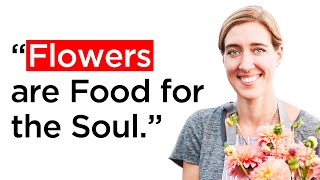
Erin Benzakein talks about her flower farming business, newly bred seed launch, and the emotional impact of customers growing her flowers. She discusses her documentary about gardening in difficult conditions, her abundance mindset, and how flowers serve purposes beyond food: beauty, pollinator support, and marking life milestones.
Chapters
Aaron, I was, uh, doing some research getting ready for this interview, and I, I'm inspired to make a movie with you right now. I'm, I'm inspired to write a treatment for a documentary about your life slash to the point of, to this seed launch project we going on. You ready for this?
Yeah.
I mean, you are a, you are an author, a filmmaker, a flower grower. Uh, so let's make a movie here, okay? Um, okay. And, and if, if you end up taking any of the ideas, just label me as co— as contributing writer.
Okay.
All right. Okay. So anyway, let's go to the happy ending. You, you know, I wanted to get you here in person, and I threw out the wild idea, and then I, and then I was scrolling Instagram and I saw all these carts of seeds going out the door from your, your latest project. Oh my gosh, what's going on? Did you— so, so right now we're going to tackle this happy ending for this movie, and it's all these seeds going out. Um, what— I saw you on the Flower Podcast. You weren't— this was a month before this was going to happen. You weren't so sure. Did you blow expectations? Are you Under what you expected, where are you with that?
It, we had an incredible response. So the last like 5, 6, 7 years, I've been working on breeding new flower varieties that I felt like were missing from the market. And it's been this epic project and so many setbacks and it's, it's been a long and winding road, but we finally released these varieties into the world where home gardeners could actually get seeds from them. And I had no idea what to expect. I know I was excited about it. I knew other people were excited, but I didn't realize just how crazy it was going to be. So yes, the, the Seed launch or offering exceeded every expectation. Um, unbelievable, really. Just the, the response was unbelievable. So we ended up— we had 2 years worth of Seed that we held aside for this special release and ended up taking next year's Seed and moving it into this year. So so that we could have enough for everybody.
Um, yeah, you were—
it's been wild.
You were thinking, oh yeah, we have, we're going to have plenty. We have enough. And now you're all, you're already pulling from next year. It sounds like.
Yeah. I mean, you have— so because we pulled from next year's to give everybody a chance because I just didn't— everyone was, went along on this ride with me and I don't want anyone to be disappointed.
Yeah. I envision. That is a really happy ending. I think what we're going to have to see play out and what, what, let's pretend we're making this movie and what you're going to have to document is, and you may already have it. Well, tell me, do you already have this of somebody getting some of your seeds? I mean, we're only now in the spring, so nobody's grown them yet. I mean, you're shipping this off. Nobody's grown them yet, but that's ultimately what you want to do. Because this story isn't just about you. You have the heart for the people and you want to see these other people grow these flowers. Has anybody grown your flowers yet?
Well, they're starting them. So there's— I've been seeing pictures of— I mean, hundreds and hundreds of pictures. People are starting to tag me in as their little seeds are sprouting in their, you know, little grow light setup or in their greenhouse. So it's the very beginning of the next leg of this journey where now this project that I worked so hard on went out into the world, and now Who knows what's going to happen next? But I'm really excited to see other people get to experience these flowers and kind of, you know, have their own story with them.
How does that make you feel scrolling through and seeing, seeing it in a reality from another person's perspective?
I mean, it's amazing. And it's also— I saw this many years ago kind of in my mind's eye or almost like a vision into the future of like someday I would love it if these went out into the world, and I wonder if they would bring other people as much joy as they've brought me. And then now to see that dream realized and happening, I feel like I'm half in reality and half of it still feels a bit like a dream.
Yeah.
Yeah.
And what would you say for some— my audience is going to be a lot of food growers. I'm a food grower. My wife is the one that's pushing for the flowers. What is the, what's the, the deep benefit for growing flowers? I mean, you can't eat them. So what's the—
Yeah, that's always the argument with food. I mean, I started when we moved to the country, we wanted to homestead and we raised chickens and grew a big vegetable garden. And then once I started growing flowers, the impact that they have on you, if you are a flower person, they do something to your soul. Like, they always say that flowers feed the soul, you know, food feeds the body, vegetables feed the body. I do believe that. So they're just— they bring so much beauty and joy into your life. And even though they don't feed you, you know, you can't make dinner with them, they can sit on your table, they can be gifted to other people, they bring pollinators into your garden, in your yard. They have so many benefits, but they're also very healing. A lot of people have talked about the healing power of gardening itself, but then flowers, like they have a special unexplained kind of magic. And I think once you grow them, you're like, okay, yeah, I get it.
Yeah. And I think what we're digging into here is the importance of flowers and why this is going to be such a happy ending as people are then growing their own flowers. What about, is her name Allah? In, in the Ukraine. Uh, she was in the film that you submitted to the Film Fest. Thank you, by the way. I think I had a very good chance of winning the long, the long, long film category. You know, she's in a war-torn— the name of the movie is Gardening in a War Zone.
Yeah.
And, and she says at one point, I'm working on the most important thing. Uh, always focusing on the most important thing. And it's flowers.
Yeah.
So, I mean, if you're— So, go ahead.
That's the thing is I've always had this personal belief or kind of theory that in the hardest times that flowers and gardening and nature really do bring us comfort and that beauty into your life and joy. And getting to work with Ala, who is living in an active war zone. I mean, the border of the fighting is just, you know, 30, 50 miles away from her and that she's still picking flowers to bring into the house and she's still collecting seeds for flowers and that that is still a key part of her, you know, staying sane and connected and positive. I mean, it really is. It's proof. It's undeniable proof that they really do make a difference.
That is changing my perspective on flowers. You're changing my perspective on flowers. Flowers. All of— certainly, certainly is. You know, Lily came in. Lily came in, I think— Lily is my daughter. She came in just today. You know, she went around the farm and just picked some flowers and brought them in. And there, you're right, there is a— I like that you say it's food for soul. There's like joy with it. It brightens the room.
They're also part of all of life's most important moments. If you think about it, when a baby is born, you gift flowers. At birthdays, Mother's Day, weddings, funerals, like every significant, you know, kind of life milestone that we often mark, flowers are part of it. So they— and then when you think back to your childhood, you probably have a flower memory.
So yeah, yeah, just Yeah, I do. I, my mom, well, I just, I gave away, I gave away the joke right there. Okay, so we got, I got called to the office after school. I'm in like pre, I'm in like middle school. And I have this flower arrangement and some chocolates from a secret admirer. And I'm thinking, heck yes, who's this? And I found out later, it's my mom. I got so disappointed.
That's a total bummer.
And the way I found out is my brother had some flowers and some chocolates from a secret admirer too. But anyway, I will, another part, uh, Val, okay. Chris, so he's, is, is Chris the spouse? He's helping you with the tech guy.
Yeah. Chris is my husband. He's like literally right here. Yeah.
Okay. So, so Chris. How in the world does— create for life's moments, for Valentine's Day and anniversary, what does he do for, for a gift? Does he give you flowers?
He still brings me flowers. He'll pick them, but then he also buys them.
Okay.
Yeah. Yep.
Okay.
Yeah, it's still what I want. That wasn't that crazy.
Okay.
Flower farm, and I still— I can never have too many flowers.
Okay, so, so, so when he comes in, you're not feeling well, or he messed up and he's sorry, or Valentine's Day, you're still excited about it. Okay. I totally forgot. I mean, we went to, forgive me for this, but we were like, we went to pick up something in the grocery store the day before Valentine's Day. And Lily was with me and she said, should we get mom some flowers? And I said, oh no, it's okay. And I wasn't thinking tomorrow is Valentine's Day. And, uh, then it's the next day and I'm thinking, and I figured out it's Valentine's Day. I'm like, Lily even said it. So, you know, we have a farmhand. I, I slipped her some money and had her sneak and go get some flowers. So smart. So, so tell me this too. Tell me this, for somebody who does not know much from flowers, what's wrong with those flowers? What's wrong with the Walmart or, or the grocery store flowers? Compared to your flowers?
In the grand scheme, there's nothing wrong with any flowers. I mean, they're beautiful. I buy them all the time when you go in. It's just, just like with food, if you can buy eggs from your local, you know, producer, or you can raise your own, the quality of them is so much greater than nutritional value. I mean, there's, you know, when you grow your own vegetables or you buy them from a local farm versus going to Walmart to get produce, they're just— you can't even compare the two. But in a pinch, or if that's all you have access to, it's still totally fine to, you know, go with the standard options. But so, I mean, I very much believe in supporting your local growers. So with— when it comes to flowers, when they're in season, if you can buy them locally, if you can find a local farmer, if you can pick them from your garden, share them with your neighbors, it's just— they're just so much more beautiful and vibrant, and you're supporting your local economy, and they aren't traveling all that distance, and you know who grew them and how they were grown. But I still buy flowers at the grocery store, just like everyone else. I buy a lot of flowers. Oh my gosh. I feel like Chris is always like, I think you buy more flowers than anybody, and we have a flower farm. I know, I know. But in the winter months, it's, you know, depressing, and you need a little cheer.
Yeah, yeah, that's right.
I'm not a purist. I'm not a purist when it comes to any of it. I think if it brings you joy and it brings beauty into your life, do what makes you happy.
I think there would be then something— and, and how you're setting apart here is you're actually— you, you've actually bred flowers and you're shipping it, and now people can grow it for themselves. So there's something to be said there too. It's one thing, uh, you know, it's one thing to Oh, I'm at the grocery store for something else and my little daughter reminds me Valentine's Day tomorrow and I'm like, oh yeah, pick it up. Here you go. Imagine I could take it another level if I would have ordered some from Ballerina Farmer or something, something.
Yeah.
You know, put a little more time into it and ordered it early and got a higher quality. But then, Erin, just like if you're growing food, Oh my Lord, what if I snuck in and, and, or took the, the effort and the, and, and took charge and grew Rebecca flowers?
I mean, you could even gift your seeds and then say, I'm gonna grow these for you, I'm gonna keep flowers on the table all summer long. I mean, that'd be pretty romantic.
Yeah, that's a good idea.
See, that's— you just can give me credit for that one.
Wow. Yeah, so she would love it.
She would love it.
You sent us some seed packs, so now I need to say for the gift, I mean, you sent them to us. So for, for then, for me to turn that into a gift is give her a little certificate. You know, I'm gonna, I'm, I'm gonna take charge of this and you're gonna have flowers all summer.
There you go. Yeah.
Okay. Um, so we're talking about happy ending here. We're still missing the maybe documenting some people, uh, growing it and, and discovering some of their own joys. You know, maybe it's, I could be an example. I could be, you know, maybe I do follow up on this and grow this and then I'm gifting my wife flowers all year that you were a big part of. And then, so yeah, give me a moment as I look at my notes. Okay, yes, this was, I think this is key and this is gonna, when you were on the Flower Podcast, you said you made a promise to the flowers. Like, if this works, I swear I'm going to— I think it was your breeding project. I swear I'm going to get you out into the world. You made a promise with the flowers or the universe. Tell me more about that moment.
I feel like that I've had that moment when it comes to anything that's important to me, when I'm trying to figure something out and I'm not making progress, but I know it's possible because I've seen it. I can often see what could happen before it happens. Um, I think it's that I make a vow to the plants or the project or the universe, or however you want to say it, that if I can find the answers or if I can move forward with this, that I kind of promise that I will be open and share what I learn rather than keep it for myself. And so far, that has always— every time the door opens, then I have to share what I've learned, and I want to share what I've learned because I feel like I was gifted an opportunity or a lesson or some type of learning. And what good does it really do if only I benefit from it? So that's always— that from the very beginning has been a big part of my process and my journey is that I set out to learn something that hasn't been figured out before because I just, I can't help myself. I need to know the answer. And I'd run into all these barriers and all these roadblocks. And then typically I make that vow, like, if I can figure this out or if I find the answer, I swear I will tell other people, I will share this. And then I find the answer and then I share. And there's something— I think the gift for others is in the sharing, but really, as the person who's sharing, you get the gift too. And it's, it's kind of the theme that runs through everything for me. So yeah, with the flowers, not only are they going to go out or have they gone out into the world, but then we're working on resources to teach people how to save seed, because when it comes to flowers, there is no seed saving information available. So we're working on that. And then when it comes to flower breeding, there's also no information available. So that'll be coming as well. So it's just part of my process always is if I get the answer, I promise to share what I've, what I've found.
It, I find that I've just, when I've discovered something or accomplished something new and I'm excited about it, it completes my joy to share.
Yes. Yes. But you're the same, you're wired the same way. Like when you and I first talked, you know, many months ago, you were so open and generous with what you have figured out and known, which is incredible. It's, it's very rare, but it was just like such a great reminder. Like there are still people out there that are this way. I love it so much. I mean, you give me the gift and then hopefully I can learn and then pass the gift on. If we all just keep passing it on. Things get better.
Yeah, it's an abundance mindset. It's a— yeah, you know, even, even with the film fest coming up, it's like, uh, well, we're really— there's some original films in it, but really we're curating. You know, there's some films that were on Vimeo and on YouTube, and we're curating and bringing that together. And then it's even free for the weekend. And then, um, but like when you say, oh, you know, your, your seed packs are— maybe it's high quality, you put a lot into it, there may be twice as what the people might be used to if they're buying seed packs, but the abundance there, the giving part is I'm teaching you how to breed and reproduce these seeds so you don't want to buy from me again. You've said that.
Absolutely. Yep. And I'll teach you how to save your own seeds, even if you don't get any seeds from us. Like, you don't have to get them from me. But yeah, I always want people to be empowered and to get more than they've given. And so my hope is that we keep that abundance going forward.
You know what that's doing? You're creating significance. That's the signif— you're at a significant role. You know, Zig Ziglar, a motivational speaker, um, businessman, used to talk about the 4 S's. First, you have stability— no, survival. First, you're working to survive, especially if you come from a rough background or a, a low-income state or whatever. Um, and we, we can identify with this story, just survival. I mean, 'cause we were, you know, jumping in dumpsters to get by, growing our food, renting out our spare bedroom on Airbnb. So, but then you get to stability and then you get to success. You're definitely at success. I mean, you've had a show on Magnolia, you've got a book out there, you have people working for you. Wouldn't you say that you're at success? Are you yet to, I mean, you're into some stability. Where do you think you are on this line?
Then stability is the first or second step?
Uh, second. Survival, stability, success, and significance.
Well, my goal is significance. That would be my goal. All the rest are like byproducts. I would— I just want to make sure I'm leaving more good than, you know, I, I want to contribute in the most positive way I possibly can. That's always the goal.
Aaron, my cousin out in California sent me— I'm in North Carolina— he sent me a picture of some beans that have been in our family since— some bean seeds that were sprouting, and he was excited. They've been in our family since like the 1800s, something crazy.
Isn't that incredible?
So imagine in 100 years from now, couple of cousins.
That would be pretty cool, wouldn't it?
Space— spatial commuting, uh, talking to each other and the, you know, standing there digitally saying, you know, I don't know what the future will be like, saying, look at these— but the seeds will still be there. It doesn't matter for, like, in this, uh, if they're with each other in a metaverse or whatever, uh, you know, they're communicating. And like, instead of this way, you know, maybe with those— those headsets aren't headsets anymore, they're glasses. Or, or, or neural link or something crazy. And there's— but, but the seeds still have to be physical. And they're saying, look, these are our seeds that have been in our family for 100 years and they're still sprouting and you're long gone.
Mm-hmm.
That's gonna happen.
But then I hope, I hope the knowledge, if we can figure out what the heck we're doing here and could share that, maybe there will be so many more seeds that come out of this whole project that had nothing to do with me. I just shared how to do it, and then other people will take it on, and then maybe their great-great-great-grandchildren will have some type of gift. But it— the spark of an idea, like, I don't even care how it looks, just that it happens, you know? Yeah, just that— I like that we put more good into the world. And yeah, I like that. It's a cool thought. It's a cool thought.
So maybe our happy ending is going even more into the future. Seeming, seems these generations down the road.
Yeah.
Um, okay, so you fulfilled that promise to the— it was interesting how the flowers then wanted to help you. They wanted to get into the world.
They did. Yeah, I, I mean, to me, yeah, they— it's, it's a collaboration. Yeah, they're very much, uh, beings. They're very much alive. They're not just this something I'm working on. Like, it has been a long-standing relationship with these plants.
Do you reckon they wanted to change? Like, what you were doing is, is, is developing a new variety. So they had to change. And at first they only changed by a small percentage. You know, in reproducing themselves, there's only a small percentage chance that they're going to be themselves, or they're their forebearer, and then finally you're at now like a, you got a 90% chance that it's gonna be. Do you think they wanted to change or do you think they're like us humans and sort of resistant to change or a little bit of both?
I mean, to me, in the experience of getting to work with them, I felt, I always feel like if I can just listen, they'll tell me what I'm supposed to do. And so it's more asking, like, not, not me pushing an agenda or an idea. It's actually like, who do you want to be and how can I help this be realized? And so they just become more and more of themselves the more I listen, the better I get at not putting my own agenda on, on them. It's like with children, like, you want to help, you want to help cultivate these qualities in them, but you're also like You are your own being and soul. Like, how can I help you, um, develop into like your full magnificent self?
And aren't we the most beautiful when we're just being ourselves?
That's the thing. Like, stop trying to change, right? Stop trying to change someone. Stop trying to change yourself. Realize your full potential. I think that's in like, what does it look like when you stop trying to be something else and just be more of who you already are? That's always my challenge. That's the thing I keep trying to come back to. Like, can I express more of myself and, and support other people that are in my orbit? Can I help support them being more of who they are?
That would be— I don't— I, I— so you've just now gotten on YouTube. You know, that's why you initially reached out to me. And, uh, that's a, that's a struggle I'm at after 8 years on YouTube and now looking at people who can take it to a whole nother level, like millions of views a video. There's people like Casey Neistat who create exactly what they want to create and who cares if anybody likes it, but they This is me. This is what I want to express. And here it goes. I feel like kudos to you and props to you, I think, because I believe you're doing that. I mean, you're putting up Gardening with the War Zone. You're putting, you know, you're telling these stories without boundaries, without permission, as you might say. You don't need the permission to tell, to tell these stories. You're just telling the stories you want to tell. And YouTube does give you that freedom. So, and you're early there, and I think I can get caught up in— I wouldn't, you know, but, but, but, you know, is it— I don't know if it's bad to— if, if somebody is coming in to approach and, and wanting to say, I want to serve as many people as possible, I'm going to make the films for them. That's one side, and I think that's good. It's still a servant attitude. But there's also something to be said for saying, like what you just said. I just want to express myself, and that's probably how I'm gonna benefit the most amount of people. What's your take on that?
Yeah, but I do, I do think— I mean, in so much of the work that I've done before filmmaking, it is really— listen, I mean, I feel like the— where you begin is by listening. How can I be of the great— like, how can I give the most, be of the most service? What do people need? What are the problems that they're encountering? And are— do I have answers to any of those things? So that's usually for me how it starts. On a quest for anything, for understanding. Because to me, the, the way the cycle is completed is the sharing. The sharing what you learn, or sharing the story, or, um, sharing what you've created. So I don't just do whatever I want and like whatever I wish. I'd long to do that. I long to not care, but I really do care because, yeah, ultimately I want my efforts to be making a positive impact. And if I'm just doing something purely for my own joy, I do that too, but that's not always those things that I put out into the world. But I try to choose projects that I feel will benefit others, and they're also something that I feel really passionate about. But finding the balance between those two is very challenging. And you can tip too far one side and tip too far to the other. Um, and then when it comes to filmmaking, for me, this is a whole new world, uh, this outlet for storytelling, which is incredible, but it's like has no boundaries and no limits. And at the same time, you could quickly like get yourself in a box. And I'm trying to figure all of this out as we're kind of venturing into this new territory. It's exciting. Um, but no, I wish I was like, yeah, we're just gonna do whatever we want. I don't even care. Like, no.
Well, what would you do if you didn't— if, if, if it didn't matter? You, you just came in all this, you know, you didn't have to worry about money, you didn't have to worry about— what, what would the crazy thing you would do?
I mean, I think I would just follow, uh, the things that I'm super interested in or want to learn that maybe no one else cares about, that are very like strange and bizarre. And I would just Follow those. I mean, that's how even flower breeding started. I was the only person I knew that had any interest in it, and then eventually it grew into something other people wanted to be part of. But yeah, I think if none of it mattered, I would just do what I want, which is, who knows, just follow my curiosity, really. And I'm so curious, so we would be very busy.
Yeah, it's like you, you have it, it's— but it feels like, yeah, we are— when we are serving, that's— it feels like that's what we're meant to do. And so that, that, that does bring a joy, you know, sharing that. So there is a—
and I don't know that everyone is born with that feeling inside of them. I don't— I mean, I've talked to so many different people, not everyone feels that way, that they owe anything to humanity or trying to make things better. Not everyone is motivated by that, but I think if you are, you feel that you were not chosen, but you're like, you're supposed to, and you want to, you have this deep desire to help make things better and contribute. And not everybody's wired that way, at least in my many conversations, but.
Do you think it's wired that way Or do you think somewhere it got stifled? Uh, so are we born growers and entrepreneurs or, and givers of content and sharers? Or, so are we born that way or do we grow into that? And, and what was it for you? Were you born this way or did you grow into it?
Definitely born this way. And then also had some really beautiful examples. When people were very generous with me that proved what everyone always said is don't give your best ideas away. Don't share what you know. Those are trade secrets. Keep them to yourself. I heard that all the way along. And I felt that that wasn't true or right, but I was afraid and I didn't want to be stupid and make mistakes. So in the beginning, I kind of kept what I knew to myself. And then I interacted with other people that had an abundance mindset and were very generous and open. And it felt so wonderful and I knew how good that felt for me and it seemed like it felt really good for them and I thought, that's, that's what I want to be like. What if I trusted that there was enough for everyone? That's how I feel anyway. What if I just went with that? But all the advice has always been, stop, don't do that. But I just stopped listening and life got a whole lot richer.
How long ago was that?
Probably 15 years.
And how did it get— what was an example of when you stopped listening?
Oh, there's been a number of them. Like in the beginning when we were growing flowers, if you figured out how to do anything, if you had any new techniques or what varieties to grow, you were supposed to keep all of that to yourself because then, oh my gosh, if someone else knew, then they would become your competition. And, and I believed it in the beginning. I was afraid that if I shared, then we would both know the same amount, and then what would make us any different? Um, I was actually in a conversation with Mary Jane Butters. I interviewed her. She was, she was a big deal back, you know, probably 12, 15 years ago. I don't know if you remember her. She's like an Idaho, um, she was a businesswoman, a homesteader, She wrote a couple books. She was amazing. But I got to interview her, and she was so generous with me in the interview and shared so openly. And she talked to me about marketing. At the time, I couldn't figure out how to sell our flowers. Nobody wanted them. I was kind of freaking people out. I was making cold calls, which is not my nature. It was going very badly, and I thought, I'm gonna have to close this business. I don't even have a business. This isn't even working. And in the interview I asked her some questions because she was very successful, had just gotten two book deals, and she was so open with me and so sharing and said that you need to become the face of your business. People don't buy flowers, they buy from the person who grew the flowers. Like, they want to know you. And she was so open and sharing with something that was so valuable, which was crazy to me. It was just kind of mind-blowing. And then I took her advice, I tried it, it totally worked. And that was like one of those first times when someone gave me gold. They didn't— she didn't hold it back. She had no reason that she should have shared that with me, but it benefited me, and it's since benefited thousands and thousands of flower farmers that have taken the same advice and done that and been very successful in their ability to sell their blooms. So that was like one of those first encounters where someone didn't hold back. But they just shared. And it was such a great model, and it's happened to me over and over again.
Where did you put yourself out there as a personal brand then, from that point? Was that Instagram?
Uh, it was a website. I actually, like, before— yeah, Instagram, I think. I don't know, I've been on there 10 years or something, but it was— I made my first website, and rather than it being just a big Flower, the opening thing was a photo of me holding flowers, and it was so risky. I was so uncomfortable, and it was like shockwaves. Like, I never had to market again. It was— I started telling our story. I started including a picture of myself holding flowers as my email signature when I would write to, like, the buyers at Whole Foods when I was trying to get an account. I got a call back in 20 minutes. So it was that all of a sudden I was the only person at the time who actually was a person, not a logo or a brand. Um, it wasn't just like a— everybody was really focusing on their branding, and we just— I just started showing up and stopped hiding. And it was terrifying and super uncomfortable, and it worked incredibly well. And that's just like the beginning. Yeah, from the beginning, it did. We did a 180 within That year we went from thinking we were going to have to stop and close to being— so couldn't keep up with demand and then had a waiting list forevermore.
And now I think one of your most recent posts on Instagram is even a picture series of your cat and people are loving it. And they love our cat. And then they're buying flowers from you and that cat.
But I mean, YouTube now has since like gone that, you know, it's that long story where people get to know you. I mean, they're going to follow you and your family with whatever you choose to do. So you develop your own network, they come with you. You write a book, they want to support it. But it's you that they want to support, and it's you that they're connected with. It's not some brand.
You're right. And yeah, they know, and they know who we are, you know, that we're putting truth out there. You know, it's not— we're not It's like reality. Yeah, TV. And, and people make a genuine connection because we're not telling lies. This is the truth. You actually do know us. And then it's like they're friends.
Exactly. But think of that, how many friends you have all over the world. That's incredible.
Yeah, so many friends.
Yeah.
Um, now we're going to have to, we've leaned into the happy ending here. We're going to have to back up and get to get dig into some of the struggle. I think I like what you said on the flower podcast. It takes a lot of ugliness to grow a plant. And you were talking about, I think if people want to get into that, they can go listen to that podcast, but it's like using flies and fly larvae to somehow, you know, breed these flowers and it's gross. And yeah, everything in order to live every day, something has to die, you know, and, and, and compost is coming from things decaying. So, but I imagine there was a, there's, there's a, the, that ugly side of the farming and the growing of the flower. But what about the ugly side? And I don't mean ugly necessarily. I mean what the difficult, the struggle, the— let's get up to that moment where you're saying, I promise, Flowers, if you, if you make this work, we're gonna, we're gonna share you. There feels like a sense of it might not work because we've put all this work in here before and we've had all this struggle. So what is the struggle, big struggles that come to your mind as I say this?
Our biggest setback on the, the journey to bring these flowers into the world was we had the worst growing season that we've ever had. It wasn't last year, but the year before. It was the wettest, coldest spring on record. And we threw out, because they died in their trays, more than half of our seedlings of these precious seeds, this breeding work that I've been doing. We had to throw them out. Like they, they just rotted on the stems of the plant in their trays. So before we even started, we had lost half the crop. And then the rest of the growing season was horrible. Um, lost another quarter of the crop. So we really, we had gone all in and I'm not a gambler. I'm not like a big risk taker. So this was like a big deal. Like we had built all these extra hoop houses. We had set everything up. Like, this is the year we're going to really like lean in and do this. And then. Slam, like we had our worst growing season that we'd ever had. Everything went wrong. Everything went terrible. And we weren't able to release the seeds. Like we had to start over. It was devastating. And all the costs associated were still there. So it's not that, um, it was no big deal. It was like we had invested in all these structures and soil prep and all the greenhouse work, all the labor, you know, all of the things. And had nothing to show for it at the end of the season. And that year definitely was one I considered, like, I don't know that I have the stomach for this. I mean, I'm used to like getting knocked down, but I don't know that I wanna do this anymore. Um, was that being a farmer's hard?
Was that taking you, were you actually backtracking from maybe stability to survival because of that? Or were you, or were you pretty okay? Were you going from success to stability?
No, we're still okay.
Okay.
Yeah, we're still okay in terms of just like general, like we can do another year of business, but for the plants, like we lost so much of that important seed stock. Yeah, I guess we kind of took a step back there. And it was just, the thing is I had shared with everyone out in the world, like this is coming, this is happening, and I should not have said that. Because then the whole thing got flattened and we couldn't. So it was like publicly humiliating, uh, as a farmer, like experience level-wise. I have the experience, but now I don't know what to do. I mean, it was, it was pretty bad.
What did you say? Did you, did you go on there and say— how did you deal with that publicly?
Well, I mean, what we are— the second episode in season 2 of Growing Flora, like that we follow. That was the worst part. So at the beginning of filming this, the season, we picked 4 storylines that were really close to my heart, things that I wanted to follow, and the breeding was one of them. And so the end of the story was supposed to be the big reveal, right? We had all the seeds were produced, we cleaned them, and the way we wanted that to end was they were going to go out into the world, but that did not happen. So we're filming a documentary and rather than a great ending, it was the worst possible ending we could have. And I had to sit for interviews and talk about it every 2 weeks for the entire growing season and recount the pain and suffering and then put it out publicly. That was— you couldn't just kind of hide that, sweep it under the rug and be like, well, things aren't going so good, but I don't want to talk about them. Like, oh, we had to talk about them. And there was no way to change storylines by the time we realized how bad things were going. So I'm sure it made for good, uh, TV, but it was pretty brutal.
I watched it. It did make good— it didn't get— it didn't— it did make TV. It made you real. It made this real. It, it made a good TV because the stakes were real and it was high, and it made it a legit reality series.
Yeah, but it did not feel good. Well, that's good. I mean, I'm glad that it— I mean, and I also think people should know what it really takes to grow things and farm and follow a dream and all those, you know, that was the reality. But man, it was brutal.
Um, yeah, I'll be honest, uh, we would go to events and be speakers and people would come through the line and meet us and They would say, oh, we like your show so much. Thank you for putting it out. So inspiring. And, and really, Rebecca and I would go back to the Airbnb that, that night and be like, what are we doing? What is it? We got to keep doing that. We didn't know. We did not know. And, and finally, because all, all we're, all we're doing with the show is just documenting our homestead journey. We're excited about it. Let's share it with the world. Uh, you know, finding their needs and then creating products and, and and trading, you know, selling those for solutions. Well, I started asking people, well, what do you like about the show? They liked that we showed the failures. That's what's inspiring to them. Okay. Showing my failures is inspiring to you? I could do that all day long.
I got plenty to choose from.
So, so you did. Kudos to you for being bold and brave. Enough to do that. I like that word brave there too. You know, that is— brave doesn't mean you lack fear, right? Brave just means, uh, you push through that fear, put it on your back and said, let's go, you know, piggybacked it. Yeah, totally did it anyway. So good job there. Um, but what are some of the— well, then were there any struggles outside? Okay, yeah. And I, I, I keep on remembering the scene where you and your team We're just clearing out a whole tunnel of just brown, done flowers and talking about this. And, you know, we want a happy ending. We're, we're even trying to structure a story here that has a happy ending. But, you know, in us filming vlogs every day, it, every day doesn't always necessarily end happily.
Yeah.
Every year doesn't end happily. I mean, You could argue, well, it depends on your perspective. You can always come to some sort of thankful and happiness conclusions. But, you know, for not unicorns, fart, and rainbows, sometimes it ends badly.
It does. And I think that was the big— so the director Rob and I, as we were creating the framework for what we wanted to share when we set out to film the whole season, Our pact was that we are going to be so honest, like so truthful. Like I felt like nobody ever talks about how difficult it is to run a small business and have a farm. Not, not really just complaining, but actually showing like what it really takes or following a dream and potentially failing. Like when you really risk something and it doesn't go the way you hoped, it doesn't have a happy ending. Then what? You just often don't see that. And so from the beginning, that was our, our agreement. Like, we're going to follow these stories, but we're, we're not— nothing's manufactured. And I think that was— it was terrifying because we could, you know, you could easily make it seem different than it was, but, but we didn't. And it was, it was, uh, hard.
How many years ago was that?
That was last season. I mean, so season 2 came out. Yeah. So it was not this last growing season, but the season before.
So 2022.
Mm-hmm. Okay. Yeah.
All right. And so then, then you may not know this yet, but well, uh, that was ugly. That was, that was ugliness. And, and, but, but you're telling us it takes ugly. To grow something beautiful. So have you seen what is coming out of that ugly yet?
Yeah, definitely. I mean, I think it— I feel like recommitted to staying the course. You know, when you really have to weather those storms, you really have to think about like, does this matter to me? So there was a lot of, I think, strength built there. But I mean, for us, like, think of flowers, the most beautiful thing, like they're decorations, they're They're beautiful. They sway in the breeze. They take manure and blood meal and fish meal, and we pollinate our seeds with fly larvae. So you're basically buying maggots and hatching them. I mean, it's a lot of cardboard and dirt and manure, and it's— and a lot of suffering and stress and sweat, and it's just what it takes to make something beautiful. I feel like none of the components are beautiful. But it doesn't mean that they're any less important. It's just, you know, it takes work.
Yeah. And, and, and I spoke earlier about our, my, um, uh, survival stage. Had we had not had that, being thrown into that from chronic Lyme disease, we wouldn't— I wouldn't be talking to you here today and wouldn't have this platform, and I wouldn't be blessed with the millions of friends that I have now. So it did take that ugliness. I did come to a point where I was finally thankful for it. You know, it gets behind you far enough, you can finally say thank you. Have you seen— have you gotten to that point yet, or are you still— are you still suffering from it?
No, I definitely— I mean, we, we've had so many— I wouldn't even say ups and downs, but I mean, we started growing flowers because we had gotten ourselves into a massive mountain of debt when we were very young, took out student loans, mortgaged the house, made a lot of bad decisions in a short amount of time. The economy tanked and we were buried. And so we started this journey. The flowers were a solution to the problem of not having money for groceries, having no heating oil. I mean, we were like, we had nothing. We were so, um, for many years, took us years, took us about 5 years to pay off all the debt. And clean all of that up. And it was like, I feel like it was the fire that like we were formed in. So we know how to do a lot with nothing, how to rely on ourselves, how to get back up, um, how to stay the course, how to be positive even when all things look like they're going against you. So from the beginning, we've started out in that kind of struggle place and then, you know, worked our way up. But I think all of those lessons were very good. They taught us how to be self-reliant and frugal and work with what you have and, you know, think outside the box. So I'm very thankful for it now looking back, but at the time I could never have imagined that I would think that that was a positive because it was so painful and so long.
Yeah, I don't think— yeah, I don't think anyone can think about that in the moment. Mm-hmm. But it's interesting how looking back though, then a lot of our pivotal moments are from the worst times.
Totally.
Our pivotal moments that moved us towards success are from the worst times or from the worst thing happening to us. It's wild, but that's how it is in nature. So I don't know, you know, we shouldn't be too surprised.
Mm-hmm.
Um, Is there, would you say that was the pivotal struggle that brought you here? If there's, uh, you know, struggles in life, struggles in business, struggles in the farm process, what do you think the, the pivotal one, uh, was? And this, this could be even, yeah, what was the pivotal struggle? Struggle. And it could be a long time ago. Well, maybe you just spoke of it. Maybe that was it.
Yeah, that was for us. I know for Chris too, that was really the It feels like the foundation of everything. I mean, it took— we worked so hard for so long to get ourselves out of debt and clean up the messes that we had made in our life and take responsibility for that. And it was so lame, it was so hard, but actually everything that we still use today came from that period of time, um, the discipline and perseverance and hard work and, you know, working with what you have and having nothing and believing in yourself even when everyone tells you it's not going to work. All of those things are part of our identity now, but that's where they all came from. So there it's— yeah. And then we appreciate every bit of success that we have because there were so many years that we were struggling.
Yes.
So we don't take any of it for granted, for sure.
And are you now— are you that— and flowers were an income source to help you get debt-free and get focused. Are you now, are you now still debt-free?
Mm-hmm.
Oh, heck yes.
Yeah. Yeah, I mean, I don't— I would never want to go back. So it's like in every decision, but your business grows slowly. If you pay as you go. And so even though I had big dreams, it took a long time to realize because we, um, each step of the way you can only do what you can afford and a little bit more and a little bit more. And so it's taken a long time. Um, but every decision we make, we kind of come back to those original lessons and check back in and like, nope, Yeah, gotta, gotta do it the right way.
And then, okay, so how though, when you were hustling so much, and even now, how did you prevent burnout?
Burnout has been— I mean, I don't know, because I've definitely experienced a lot of that feeling of just like you're, you're doing more than you think you can do, you're doing more than you probably should do, and for such an extended period of time. But when you're wired and you have a lot of energy, or you have to make it happen, like there is no other option, um, I don't know. I, I, I wouldn't be the right person to ask about balance or burnout because I don't— I just— we just do what we've got to do.
Yeah. And if then it came from a a fire of, oh my gosh, we've got to do this. And it was maybe more dire. We got to pay the bills. We got to get out of debt. Well, what is the— what's the deep motivation now? Oh my God, we got to do this.
Well, the hard part is that it feels like we kind of got set into overdrive. So in the beginning, we had done all the Dave Ramsey stuff to get ourselves like to understand finances and debt and money. And so we used those tools and he would always talk about gazelle intensity. Like you've just got to go like extra hard above and beyond. You have to have a side hustle like on top of already being at full speed. And we did that for more than 5 years to finally get ourselves out of debt. But then we like stayed at that speed. Like we just don't know how to quite do it any other way. So you, I mean, even if we could relax, we can't seem to figure out how to like downshift. Like it just happens. So, I don't know, it's kind of like we're trying to figure that out now. Like, we don't have— what is the motivation? I still feel like we have to survive even though we don't. Even though we've been in business for a long time and have an amazing customer base, there's still that, um, that drive that comes from that place. And yeah, it's tricky. I don't know if anybody else experiences that, but I do.
Oh, you spoke to me exactly. I have a hard time even resting, even taking a moment to just rest and watch a movie and not check the email or the phone during it or answer the text as soon as it comes in. That's where I was going to ask you next is then, do you have a hard time resting?
I do. I don't— I mean, what I'd consider resting would be actively working on something that interests me. That doesn't have to have an outcome, but it's still active. Everyone asks me if I get sleep, like, do you ever sleep? Like, I totally sleep. I go to bed early. I get up very early, but I sleep. But I work a lot, like 7 days a week, and I work on things that have nothing to do with work. But I'm just— okay, can't— I just not can't stop, but kind of. I mean, I have so many things I want to know and try and learn, and it's hard to be still.
I feel like that's okay. I feel like, aren't we made to be moving all the time? I mean, if you look at a toddler—
I think you are. I think I am, but I don't think everybody is.
Oh, okay. Yeah.
Yeah. I mean, I think that it's like how, how you're wired. If it fuels you and fills you up, it feels good. Other people, it doesn't feel good to be in a constant state of motion. Well, I don't think we're all kind of the same way. I mean, at least in my experience, Rebecca would agree with you on that.
She would call that bio-individual, right? Um, does— but I wonder what happens, because I'm pretty sure it's universal that all toddlers, all 2-year-olds, are balls to the wall all day long as soon as they wake up and fighting sleep till they go to bed and, and sleep long, 10, 12 hours. And then they're just all out. And then I wonder what some, some people maybe carry that on, and some people get nipped by the world, or they're just predestined to that. I don't know.
But I think like if you have that, that drive, that constant like need to know more or experience more or try new things, if you're just you're not, you're not at peace if you're not constantly taking in, then being still actually kind of hurts. But for other people, being still is like replenishing and grounding and calming. But it isn't for everyone. I think I could be a bit more still.
That's true.
But I think we're all so wildly different, and everyone I surround myself with is very still, and then I'm the storm. So I know that they are not wired like me. I don't think we're all the same.
Yeah, I noticed that. You know, I, I kind of want to say here, no, I think, I think people got stifled. I think, you know, whether it be the school system or something stifled their creativity or their situation, or they got crushed when they were young. Emotionally or whatever, and people can achieve more. But I also remember when my dad died and we were all in the room with him. We had all that privilege. And as soon as he was gone, his wife got up and started cleaning. You know, other people wanted to stand there and hold him while he was still warm. That was me until he was cold. And then brother goes out and drives his old my dad's tractor. One brother goes out there and just outside and just screams like weeping and gnashing of teeth style. And I realized that moment everybody grieves different. So yeah, I think what you're saying here is everybody rests different.
Mm-hmm.
And I can get behind it in that way. That— yeah, and the problem is coming in when we begin to push each our own selves on each other, isn't it?
Well, I think the, the biggest thing is that we think other people are more like us than they actually are, or that what would feel good to me, I think, might— would be good for Chris, or it would feel good to him. It wouldn't be. It's— you have to remember how different we all are, and when we try to get someone else to change, I think that's painful for them and it's painful for us. Like, I want you to be more like me is pretty much what you're telling someone.
Yeah.
And you're implying that the way you are is better than the way they are, but then you're denying all of their gifts and the things that they bring into your life and all the strengths that they have if you're trying to change someone all the time. So, but then I also don't want someone to try to change me. or want— I mean, my constant struggle is always feeling like I need to be less, less of who I am, less intense, like want less, feel less, have less drive, have less energy. There's just that always like, you're too much. Um, and not everybody feels that way, but for me, like, rest is actually just being alone, like not having to Okay, I can still be in motion and working, but it's like the alone time is actually what is replenishing. But it— like, in a group of people, I'm so introverted, it's very draining, um, where other people that are extroverted drink that up. And I watch it happen. It's like their battery gets filled as mine's going down. So I— the last couple of years, I've really been trying to learn how the differences between us all and what fills one person up, takes away from another. And what— like, I've been studying human nature and wiring, and it's pretty fascinating. It's very different than I originally thought. I thought we were all more, um, similar, and I find now that I think we're all much more unique.
It's, it's in— you're talking about two people in two different ways. If, if somebody wants to clean up after the death immediately and somebody else wants to stand there and savor it, it can be offensive that that one person is, is cleaning up. Oh, you're shooing him away. You're—
exactly.
Uh, that's the way they could see it. And she could see it, oh, you're just sitting around, you're, you're around. And so what you're saying, we gotta look at from the other person's perspective.
Exactly. And then to see that that's what you need and that's what she needs, that's what your brother needs. If we can all accept— not just accept, but embrace the way the other— what, what we each need and not try to get someone to change, it feels better for the person getting to experience it. But then you're also not trying to always change everybody all the time. I don't know. I'm trying to get to that place.
That, yeah, because you're managing, you managing, how many people are you managing?
I think there's 8, but without Chris and I, I think there are 18 people that work here and some remote, some on farm, but it's a big team and very different. We have very, we have a lot of different things going on. So from creative film projects to Growing seeds.
That's not even, you know, those are maybe people on the staff, but then you're dealing with the film producers and film guys. And so the outsourced people and then the delivery man and all this other stuff.
Yeah, it's a very busy world.
I was thinking while you were talking there, the golden rule seems very simple. Treat others the way you would want to be treated. But really, you gotta—
treat others the way you would want to be treated.
You gotta think deep. That's right. Treat— you got to think deeper. Well, how do I really want to be treated? Well, I would want people to treat me how I would want to be treated. So you have to then dig deep. So how do you do that with 8 people? How do you remember?
Well, we do. You get to know everyone individually and listen and take notes and find what seems to matter Like what matters to one person doesn't matter at all to another person. And so, for so many years, I thought treat others like you want to be treated. I totally went about that. But what feels good to me and what I like— I want to be pushed. I want that intensity. I want straight talk. Give me feedback. Like, I like a more direct, aggressive communication style. Nobody else does at all. Like nobody likes that. So, I had to start to learn like that doesn't feel good to them or they value this, this, and this. So it's actually getting to understand people on an individual level and then trying to tailor the way you're communicating with them to a way that they can receive it and is respectful to them. But it is so challenging. It's a lot of different— it's a lot of different, um, you have to adjust constantly. I still am learning so much about it, but I I do think it's hugely valuable, but very difficult.
Are you and Chris as equally driven in this, you know, always wanting to be doing something?
Well, Chris is driven in that we, he always calls it tasking. So we both like to solve problems. I like to solve problems on a more like conceptual or mental level, like moving the pieces around, brainstorming, problem solving. He solves problems by literally fixing the thing. Like, he will go fix the car, he will go build the thing, he will— he solves the problem on a very practical level. So we both are hardworking, but the way we express it is very different. He's very even-keeled, very calm, very peaceful, quiet, grounded, and I'm none of those things. But so we both— we, we, um, we share that like problem-solving nature, but it expresses itself very differently.
Yeah, that, that sounds like a good combo.
It is a good combo if you don't try to get the other person to be more like you, then, and you can both like be really grateful for the way the other person is, then it's awesome.
Yeah, this is helpful. This is good. This is helpful. To me and everybody listening, this is getting to the real important stuff, you know, of why it's important to grow food, why it's important to grow flowers. Really, it just comes down to people and relationships. And so flowers, why flowers are important is because it brings joy to the soul, to a person. So let's, we're going backwards in our creating of this. Treatment for the movie. We need to get to the seed of your journey. So, uh, give me— what was the pre-high school moment that you were going to become a flower farmer and a joy giver? What was the high school moment? What's the 20s moment? What was the 30s moment?
Like, where was I at at those times?
Or what was Well, when was the moment you realized you were going to bring joy to people through flower farming?
It wasn't until— so we moved out, we got married young, had the kids, like I was, you know, we were young and I had this craving, this longing to like, we've got to go to the country. I need to experience this. I'd always grown up in the suburbs and we lived in apartments and I just like, I wanted this country life. So Chris and I left the city with our daughter Elora and then bought our little house in the country. And we were like, we're going to homestead. We're going to figure this out. We're going to raise chickens and all of our own food and plant an orchard. And it was really exciting, but I couldn't figure out— so we needed money. And I tried out a million different ideas. Like, well, maybe I can have a rainbow egg business and I can grow vegetables and I can make candles. Like I was trying to figure out what did I want to be when I grew up? I was still very young. I have two little kids. I'm at home with them. And I just didn't ever feel like I was getting anywhere, or I liked these different things that I was trying, but it just didn't really feel like it was it. Like it didn't have enough meaning to it. Like there was the meaning of like, I'm feeding my family, but I don't know, it just like, it wasn't quite it. And my great-grandmother passed away and I was able to bring some of her ashes home and I put them in my garden because She had been this incredible gardener. There were all these stories about her. So I thought, well, Grammy will bring me not good luck, but I, I want to bring her home with me. So I put her ashes down in the garden and I planted sweet peas, which were her favorite flower. And it was actually the first jar of flowers that I ever sold. When I gave them to the person who they were ordered for, she started crying and she started telling me about her, her childhood and It was all of this emotion came rolling forward. Like, I'd never seen that when I delivered a dozen eggs or brought someone candles or delivered vegetables. Like, this woman was crying and I didn't even know her. And then I started crying. And it was like this— the power of the flowers, that they just stripped down all those defenses and brought all of that emotion and memory and and love forward in that instant second. And that was, that's when I knew that's what I wanted to do. It was the impact that the flowers had that interested me. And I've seen it thousands and thousands of times since.
I like that, the power of the flowers.
It's their impact. I mean, for me, everything is always about impact.
Would your, uh, pre-high school self be surprised at what you're doing now?
I don't think so. I mean, I always dreamed— I was, I was a punk kid there for a while in high school, um, like I was trouble. But when I was younger, I always wanted to live in the country and have chickens. And I would ask my mom— we would make vision boards every year at the beginning of the year, and always mine had plants and dirt and chickens and things cut out on it. So I wanted like that country wholesome life from when I was little. Little House on the Prairie books, you know, I've read all of them a million times. So no, this is very much in line with what I always wanted.
So if that little girl were to come stay with you for a week this summer, she would love it. She would love it. What about the punk? What about the punk girl?
Would she The punk would also be like, yeah, because you don't have to listen to anybody.
Oh, you can do what you want, right? I was gonna say, what part of it would the punk like? Yeah.
Oh yeah, that's being defiant, like, you know, calling your own shots, getting to being your own boss. Exactly. Not have to answer to anyone.
You get up, you get up early, but you get up whenever you want. You go to bed when you want. You Yeah, okay.
Yeah, the goal is to never have to answer to anyone, right?
Yeah, those two parts are still in you, you know, and driving you, I think. Yeah, the punk, the rebel, the against, you know, sticking to the man part. And then, oh, totally. And then the little girl, like, just happy-go-lucky on the farm, pure, let's just grow some eggs and bring some joy to people. And they're working together, I think.
It's a funny combination of like sensitivity and rebellion. It's like they are constantly taking turns.
Yeah. Do you see that they, uh, is that a common occurrence for you, those two, in button heads and your two personalities?
They don't butt heads at all. Like, it's a partnership, but it's like they take turns. Like, one goes, then the other, then the other. Like, I bring out whatever side needs to— like, if I need to handle it, it's that rebellious side. Or if I need to break new ground or try to, like, have thicker skin, there's that piece. But then if I need to, like, tune into what's the next big decision, that's that softer piece that's more feeling-based and intuitive.
Have you read No Bad Parts? Oh my gosh, the way you're talking, I need to— I would I would have figured you read No Bad Parts because the premise of that is you have yourself and that's the core of who you really are. But then there's these parts of you. So then there's maybe the anxious part or the bold part. And we tend to look at certain parts of us that are bad, right? But if you really look at it, they're not really bad. If you take a moment and talk to them and commune with them. You find out that they're really just trying— like the anxiety parts of us, you might be trying to get rid of that, but maybe you shouldn't, because the anxiety part is just trying to save you, but, uh, from something. But maybe it's too strong, and, and really boldness and anxiety need to get together, totally talk and compromise and find a, find a solution together. I would have swore you read that book. You're speaking—
no, I'm going to write that down.
You got to read it. No, it's called No Bad Parts. It'll blow your mind. And it'd probably be like nothing you've ever read before. So, um, I've even named my parts, like the, the, the scared, the scared little Justin. And you usually pick it up as some event when you're young. Usually these parts, if you take time to talk to them, they're, they're younger. You can even ask them how old they are, and they're usually younger when you picked up a sense of anxiety or fear and I call him Little Boots, and then my dad's name was Boots, and then the bold guy is Caligula, and they really need to work together because you can be too bold, um, uh, but you, but, but you, you, but you don't want the anxiety to shadow and morph that, you know? So they need to find a way to work together. So it's interesting how you're making the the— and you already are like, no, they work together.
So you're already like— the anxious part can kind of— that's the one that can get a little out of control because I definitely have that whole piece. Like, that is almost one of the biggest parts where it's like all that nervousness and fear. Um, yeah. And that's the one where you're like, okay, I want to hear some of this but not all of it. Yeah, that's the one I trust the least.
I worry about because we came from this hard place where, oh my God, where are groceries going to come from next week? I find myself anxious that, that even as far as we've come financially, something's going to happen and we're going to resort back to it. I mean, I have a business coach that helps me through this therapeutically, even often. But so then how do you— what is your fear? Is it, you know, putting yourself out there online or what? You know, what is it? What is it?
No, I mean, it definitely comes back to the— that survival. I mean, from the beginning, like, where will we have groceries? Will we be able to keep the house warm? Will we be able to keep our house? All those questions. And of course, now that's not the issue, but I still feel like it is. It still drives me. I have to talk myself kind of off that ledge, like, that isn't our reality anymore, but it's still right with you. It's kind of wild how that just stays around. But yeah, mine is always like survival, survival for sure, or not wanting to be controlled. Like, that one is always present as well. Like just wanting to have choices, wanting to have options.
Wow. Yeah, I'm dealing with having to figure out how to, what's going to drive me now that I'm past that. And I'm working that out with my coach. It's like, and we've come to joy and significance.
Nice.
And I have to continue to remind myself of that. You know, we're out of that. Struggle, and now we need to focus on the things that bring me joy and significance. Which is hard, right? Because if this is what's hard, you might relate to this. What, what worked, right? So the, you know, for us is the vlog and daily. Well, we're still doing daily vlogs and it's 8 years later. So I have to wonder and question, is that still the right thing to do?
I know, and it's just scary to test that. Exactly. Like, are you just, this is what got me here, so I need to keep doing it? Or is it okay to question that and test other ways? But it's terrifying to think about doing something different because look what it's kind of saved you.
You're right. So then not doing it then would unsave you, you know, could potentially put you back in there. So Yeah, so, so, you know, reading the No Bad Parts helps me talk to that anxiousness side of me and thank it and say, you know what, thank you. Uh, I know you're just looking out for me, and let's bring boldness in. Let's talk to them.
Really? You guys are filming a vlog a day?
Pretty much. It's 5 days a week. When I say daily vlog, I mean we are— yeah, and, and have done that, and we have been on a 7-day vlog.
Um, that's incredible. And you know, I knew you put out a ton, but like, I didn't realize it was that much. Let's—
it is 5 a week. But you know what, I, I go through this like, oh, maybe I shouldn't. You know, the trend on YouTube is the video is about what it says it is, and, um, it's, it's based off of an idea. That's what's really working on YouTube right now. So you come up with a big idea uh, it's super entertaining or super beneficial, and then it's only about that. The trick with the vlog is you have to title it something, but 3 things might have happened interesting that day. Uh, but, you know, I'll try to, you know, not— and then I just are so uncomfortable. It's like, no, I just really enjoy making the daily movies, and they— and the daily documentation is special. I mean, every day is special. Yeah.
Well, and I think you gotta listen to your gut. Like, look where it got you.
Yeah. Yeah.
Mm-hmm.
You know, and they say, well, what got you here isn't gonna get you there. And I don't know. I mean, you talked about Dave Ramsey. God, he's had a show for 30 years every day.
Yeah.
He's doing fine.
He's doing great. And look at it being all these people discover him many years later. Like he's, he's so, consistent and think all of those, you know, as people are finding him and cleaning up their life and finding him again. And, you know, I mean, yeah, I think it's— yeah, I know they say what got you here isn't— I don't know if I buy that.
Yeah, that's a question.
I like how you question everything.
I like how you question everything. So annoying. Well, that's what happens, right? You question one thing and then You know, it's off to the races. It's off to the everything.
You got to research it now.
So, so, yeah, okay. So what are you questioning now?
Well, similar, like what I have done all these years. Is this still what I want to do? Or what, what does that look like if we explore change things, you know? I mean, start to change, start to explore new things. Is that okay? Of course it is, but it still feels like it's not. Um, it's just like, I guess I'm in a time of asking a lot of questions and not having the answers. And I often don't like to have the— I mean, I, I don't like that feeling of not knowing, but just kind staying in curiosity. Like, what do I want to do next? Of course it will be connected to flowers. Of course it will be connected to growing and trying to, you know, do good. But what does that look like? What does this next chapter look like?
That's good. I think, I think that's healthy. And once— yeah, I think more about how to get normal people to question just one thing, because You're like, I know. You're like, oh, it's annoying. But it is so good too. You know, we found out milk, you know, Rebecca found out milk had hormones and GM. At the time it was just the hormones. And so we went to organic milk. But you know how that goes. You question the milk. Well then, oh my God, all of a sudden we have an A2, A2 daily rotation, grass, 100% grass-fed. Not one cow, but two. Raw. And then, and then you start questioning cleaning products and clothing and faith and politics, and you begin to question where you live and everything.
Yeah.
And you either get solidified in it, right, or you change for the better. At some point, if you've grown up in a religion, you— for it to be genuine for yourself, you have to then— you have to question it at some point, right? And say, is this my mom and dad's religion or is it mine, right? And you have to ask the hard questions. So now let's go to, um, uh, you said, you said in that The Flower podcast, the brave pursuit of your— you have a brave pursuit of your passion. So I think we got to fit this into the movie somewhere in here. Um, does anything come to mind as you say that? As I look at my notes for where I wanted to go with that, I don't—
I mean, to me, pursuing what interests you, whether or not other people are going to agree or like it, or it's a sure bet I think letting yourself follow those threads of interest or ask the questions or just pursue something just because— I do think it's very brave. It's so much easier to not ever venture out into that kind of uncharted territory. And so at least for me, every time I have been brave and allowed myself to like, no, Follow it. No, follow that thread. Ask those questions. Go down the trail. So much goodness is there, but it does always feel like it takes courage to kind of step off that well-worn path or what everyone else expects from you or what's going to get praise. You know, it's, it's risky. It's, it's risky to try something new, something that makes sense to only you and no one else.
What would you say to somebody who, who is afraid to question and try something out of the norm? What would you say to encourage them?
Oh, I would say just do it. You don't have to tell anybody. I think that's the thing is like, keep it— you can keep it to yourself. You can— I think when we announce to everyone what we're doing, I think that's where you get all that feedback and ice, and you're going to get it anyway. If you're trying something new, just by default, you're going to get everyone's fear, everyone's opinion. Um, I would definitely encourage, if you have that stirring in you of anything, a desire to change your life, questions that are unanswered, something you're so passionate about but everyone makes fun of you for, or any of those things that are like in you but everyone else is in disagreement, or it just seems crazy, It's not crazy. Just let yourself lean into that. Ask those questions. Try that. Go down that path and then just see what you find. It will probably not be what you think, but it will be even better.
Did you learn that the hard way?
Oh yeah. I mean, for me, well, telling people is always like a surefire way to kill a good anything. Saying something too soon, sharing it too soon, because then you just get all the feedback. Everyone's opinion. They dogpile on you with all their advice, and I don't need any external— that doesn't help me. It has to come from inside. So really, when I have something that matters to me, I try to keep it to myself, hold on to it as long as I can, and keep it mine as long as I can. And then I feel like it's sort of that seedling, and then it gets hardened off and it can transition outside. Like, it, it's stronger and it can take the criticism and the questions, but in the beginning, it's so tender and so untested and so personal. And I've, I've had a lot of pain. I feel like that's where I've had the most suffering, was having something that I wanted to try or do or experience or just a part of myself and then sharing it too soon and getting all kinds of like negative feedback. Mm. It just, you know, that's, I think that's been like the most difficult. So now I just don't say or I don't share until I'm ready. Yeah.
How do you, how soon do you share with Chris? So you have an idea while you're on a walk and how developed do you let ideas get before you share with your spouse?
I share with him pretty, he's very, he never puts any thing on my ideas or on me. He never snuffs anything out or doesn't like that. Like, he's very open. He'll just listen. And I talk a lot, so I'm just talking in all my— I thrash around and work a lot of my ideas out with him, and he just listens. It's like a sounding board. But he always reminds me, like, don't tell anybody, just like wait on this, sit on this, remind— wait. Yeah, because I will— you'll get so excited and you'll rush out to tell someone close to you, and then they'll be like, wait, have you thought of that? Or, I'm really worried about— or— and all of a sudden you're defending this idea or this interest, and that's not the right kind of energy in the beginning.
How have you taken that knowledge to your children when they don't have a filter and they're telling you all kinds of ideas and they're going to try all kinds of things? You gotta be so quiet.
It's hard. It's hard. And I'm— I know I have reacted, or like, that's not a great idea, or in my experience. And then that comes back to remembering everyone isn't like me. I need to not try to change people to be more like me. I want to just— what is it that feels so good to me? It's just having that sounding board. So if I can try to be if I can remember and be quiet and listen, I can get to know them better and hopefully not snuff out—
I know it's so hard just to remember, mhm, because they have so many ideas. So, so when they come to you and you know it's not going to work, they want to plant, you know, they want to plant this or this, or fly, you know, maybe it's you, you're just older and you know, mhm, what do you do? Do you say, well, you know, or do you just say, go for it?
Oh, I think if you're really in your higher self, it's like, keep the conversation going for multiple days. What I find is most of the time, the kids will give themselves the answer if they aren't completely impulsive, if they don't just go do it today, but then we talk about it tomorrow, and then the next day, and usually a few days in, if it's— they'll discover the issues on their own if they can just stay in conversation with you. Um, yeah, yeah. I mean, I know that for myself. If I can just keep in it with Chris, I can kind of work a lot of that stuff out if I cannot be too impulsive.
Yeah, I need this reminder. You know, it was easier when they were smaller and they— you know, Jonah wanted to plant We were up planting and I'm planting according to the book, you know, planting the seeds in appropriate spacing. And I'm like, here, he wanted to plant, here's a seed pack. He's just like, and I held my tongue. I wasn't going to say that's not going to work. And you know what actually happened was that close, dense spacing shaded out the weeds. The taller crops shaded the lettuce from the hot sun and his garden jammed.
Oh man, you're like, dang it.
But you know, I didn't say anything to him, so I was actually happy. I wouldn't— I won that moment because I just let him do it. Yeah. And the adult— but what we're— what the adults with good intention are, are going to try to save them from problems. We're going to try to— it's from a good intention. It's from like, oh honey, you've gotta, you've gotta space them out. Uh, I'm just trying to help you, you know. And that's how my dad was, but You know, that's why in the end I just wouldn't tell him anything, especially if I was so excited because I was just going to hear a recommendation or some sort of, you know, get fussed at or whatever. But what's the worst case? Go ahead.
Yeah, what's the worst that's going to happen if they ask you, Dad, do you think this is a good idea? Then you could say, yeah, right? If someone asks, absolutely, opinion. But I try to like, did they ask me?
And if not Ooh, that's good.
Try to be quiet. Then I also want that from others. Like, unless I've asked you for your opinion, I don't actually want to know it.
Right.
And I don't ask very often.
That's a good rule. Slowing down and letting that come through your head. Did they ask me or are they just telling me? And you know what's the worst?
They just want you to hear them.
It's one thing if Jonah was going to do something really stupid and get hurt, but it's another thing if— what would have been the worst to happen? That pack didn't make it. Well, then I'm there to comfort him and, and say, well, you tried, and what can we learn?
And then he'll be like, next time when he wants to dump it, he'll be like, actually, you know, don't. Yeah, that wasn't the best plan. Yeah.
And, and wouldn't we rather them just fail in those micro ways right under our fingertips and just watch them learn themselves. And so, yeah, that's hard. I need this reminder. That's good. They gotta, they gotta ask. And I think that may be the trick, um, for having our adult children. This is like my dream. That would be my complete success if my adult children come to me for advice and they actually want to hang out with me, right?
Totally.
What would What would be your complete success as a parent?
I think if the kids just want to keep being in our lives and us to be in theirs. For me, it would be like that you're invited into their life not because you're their parent, but because you actually bring value to their life. Yeah, not by default, but by choice.
Yeah, the next thing I have in my notes, and we're getting to it, you know, we're gonna, we're gonna, we're gonna— it may not make sense to you, probably makes sense to you, you're a storyteller, you're seeing what we're putting together here in a movie, but for the audience, we're getting to it. For those listening, we are going to come up with an outline here at the end. We're almost there. Um, the, uh, the movie you submitted, The Gardening in a War Zone, the late, uh Allah, she said the most beautiful thing. It actually made the long trailer. I'm going to do the most important thing today. And she's, you know, gardening in a war zone, and for her it's flowering these gardens. So what is the most important thing? Well, How, how does that resonate with you when she said that?
It definitely puts things into perspective, right? I mean, with everything that she has going on, that she's contending with, that's going on in her life, which is so different than any of us are having to deal with, and that how she's prioritizing what's really important was pretty eye-opening.
Yeah. Cause yeah, uh, I deal with a lot of people being, and myself being overwhelmed. And, uh, it, it really, if we wanna be successful, it's really gonna come down to us doing the most important thing, right? Cause we only have so much time.
That's the thing. And to know how to prioritize, and that kind of depends like on your intention, right? Like where you're trying to go or what you're trying to creating your life. But I think that's always the helpful thing is to have something to come back to, that North Star. Like, how do I realign? How do I know what is the most important thing, or how I want to be spending my time? Something to measure against when you get overwhelmed or you feel caught up in all of it. Like, how do you find your way back to know?
I like that you said that about the North Star. You have to have that overarching goal, that North Star. I found myself early on when I was launching the business and getting myself out of the financial woes, I would write on top of my, my Moleskine notebook the goal, and then I would write everything else that was in my head to do, and then I would prioritize it. And I think that made all the difference. Because I've never had the time to do everything that's in my head. What is your—
something about getting it out allows you to like, at least you have expressed it. But if you can't, like, for me, it's like, I land it all. And then I like let myself express it. And then I don't need to do all of those things. But I don't. I'm definitely very much like prioritizing what truly matters? What's, what's going to, what am I going to thank myself for doing in a year from now? And what will I not even remember that I did? It's kind of like a great way to check them. Like, is this not moving me forward, like, necessarily to the goal? But like, yeah, I guess, is this moving me forward towards the thing that really matters? Or is it just busy work?
Yeah, because a lot of those ideas, If you have this overarching goal and you have all these ideas, even though you might not, maybe some of these are sexy or whatever and you think you should do them or whatever, but if you're being real with yourself, are they really getting you towards your goal? You could mark them off.
Absolutely.
Or put them on a, postpone them. I like what you said.
Yeah, I have folders. Yeah, and I have, I have folders where I'll let myself develop an idea completely, like write the whole thing out, draw it all out, do all that legwork so I get that part of it out of me and then put it in a folder and file it for later. Someday if I want to, I can come back. Can't do it right now, but the idea was so clear and I just need to get it out and then I can always pick it up later if it's still, but then it stops haunting me. Because if I don't let myself like take it all the way in that, that kind of conceptual, like figuring it out, then I just feel bothered.
Oh, I like that. And then it's actually like, that's sort of what happened with the film festival. I have— I was going to add to that, if, if you keep thinking about it and it keeps coming up, then yeah, you probably just need to go get that folder out.
Yeah, but well, that's the thing is if you're back on it next year and you're like I thought I was talking about that last year, like, yep, you probably should pursue that one.
That's exactly what went down with the film fest. I'm like, this is going to be curation of all these films, you know, it's going to be a community event. That's what we're about. We're about the films, we're about the community. But I just kept putting it off, you know. I had other, other things, even doubts, you know, but, but, and even problems for it. And you— but I think if it gets in that mind and you subconsciously think about it and maybe there's a reason you're thinking of it again. And eventually you just got, ooh, I just read Alone. Have you ever read that? It's this guy hiked the Pacific Crest Trail. I thought one of the coolest things he did was he says, if you want to do something like this, if you want to hike the Pacific Crest Trail or whatever, your first step is to put it on the calendar.
Oh, interesting.
I thought that was brilliant. I underlined that, starred that. I'm like, ooh, put it on the calendar and then your, your mind and your body will find a way to make it happen.
Totally.
So if people are, are, are been putting off, so, so Aaron, I need to, after this show, I need to put that on the calendar.
Yeah. You need to put this sowing date. When do you sow these seeds?
That's right. You know exactly what I'm talking about. To get my wife these flowers, I need to have my little secret plan date because she's doing the seed time thing and planning the garden, you know, but we didn't put flowers in the seed time equation. I need to do that.
Yep.
I'm going to go look at the back of those seed packs and figure this out and Yeah, and do this. So, okay, so let's piece together this movie. So, um, you know, I envision this thing starting out with the big struggle. You know, those good Hollywood movies, they start out with the struggle. We got to hook people in. So, you know, we got this struggle of you guys following the American dream and, and, and getting into this debt, and, and, uh, oh no, you know, you're not happy. What are we going to do? So you're following, you're tracking with me. Oh, flowers. Okay. We're going to go sell these flowers. And then, um, this might be the, I might be speaking of the trailer here too though, because, okay, let's paint the trailer first. I think let's do the trailer first. Um, I rarely have the trailer first, but let's go. So, so we had this struggle, right? And then this, this like grind. And then, then you had this idea to the to do the flowers. And, and then we show the struggles of that too. These, these, you know, the, the, the plants dying and, and losing a year and, uh, and then it's— this is the trailer, and then it's the— you're, you're out in the field and you're making the promise with— it's the next year and you're making the promise to these flowers, if we make it. And, and maybe, maybe we leave the trailer with a hook. And people have to watch to find out what happens. Okay, well, it's your movie, so yeah, we'll leave it there. Or you could glimpse at a little bit of the, the, the packets going out. But yeah, we should probably leave it at the— we're gonna try it.
You want to see what happens, right?
That's right. You see, you're a good storyteller. So then the movie, we started out with the hook in the beginning, and then Throughout the movie, we, we, we start with the pivotal struggle in the beginning, but then we come at this— so, but then we backtrack to you as a little girl, you know, farming, and then at some point you get this desire for— uh, yeah, oh, that's it. When you, when you got the grandma's ashes and you plant it and you have the flowers That's the desire. So the character has to want something for it to be a good story, right?
Right.
And, and, and, but now you have all these struggles to overcome, um, and then we, we, we, you dive into the, your favorite struggles or your most pivotal struggles, and then it's the pro— finally, so, and then it's the promise to the— so we're going up and down in the story here, and then it's the promise to the flowers And then one more chance. And then this happy ending is shipping it off and finally documenting people putting your flowers into the world.
Totally.
How's that?
Oh man, that's pretty good.
How do you like that? Okay, I'll send you the notes. I love it. No, it's just, it's, it's, it's, it's your, your life is a good story. Thank you for sharing it and putting it out there and, and being brave. And now we have flowers in the world that we didn't. Isn't that something?
Yeah, isn't that cool? Like, that something new was born from all that pain and struggle, and but something beautiful came from it.
Flowers will adorn— as you say, born— some will, will be gifts to people when children are born. Anniversaries, uh, and then weddings, anniversaries, uh, then finally holidays, and then finally grave, tombstone.
Yeah.
So I'm gonna grow your flowers, give them to Rebecca, and adorn my father's tombstone with some by the end of it. How about that?
I love that. Yeah.
Okay, good. Okay, so now what's next for you then?
Hmm, I mean, the biggest— the— where we're really pouring a bunch of our energy right now is to figuring out what do we want to do with filmmaking, you know? What do we want to do with storytelling in this way? How do we How do we use this new tool that we got to, you know, be part of when we made the show? How do we bring that more into— I don't know, that this is what we're figuring out. So it's an exciting time, but it's also like, I don't exactly know what all— what, what exactly we're going to do, but we're figuring it out.
It's cool that you don't have nearly as— you're not going to have any limits. That's what's resonating with me, and that's what YouTube allows, or, or creating your own platform or, or whatever.
I'm so inspired that you created your own platform. I mean, Abundance Plus is incredible, and I don't know how, like, the amount of work that went into filling that space with so many— yeah, great stories and all of those people contributing and all of those resources and learning and the community that you've formed. And it's awe-inspiring. Like, I can't even imagine the amount of work that that was and what an incredible thing that you've done. It's every time I'm in there like, oh my gosh, there's more that I didn't— I have not watched and I didn't realize. And you guys are just— it's, it's amazing.
Yeah, it just is a matter of time and desire and a heart of service and, uh, doing the most important thing. I think that's why I really resonated with Allah. Um, prioritizing. We only have so much time, uh, money and energy in the day. And so just making sure, you know, it's that whole— another book for you is The 80/20 Principle, if you haven't read that. You know, it's just a natural phenomenon that 20% of your effort is going to get 80% of your results if you're, you know, you're focused on the right 20%. So if you have a list of 10 things, uh, I, I give an example for growing food. If you have all these ideas, if you have 10 ideas for things to grow, to grow your own food, to provide your food for your family, and you prioritize and you only had time for 2, and those were meat, chickens, and gardens, You're 80% there. You know, that's a, that's an example in farming. So I think you've done the same thing. And I think, oh my gosh, you just get, I mean, your movie, Gardening in a War Zone, it's going places.
And, uh, you know, it's a very special story. I'm excited for your world to get to experience it because it's, it's really a gift for us all.
And people can watch that on YouTube. And I'm straight up about that, you know. And, and what the film fest is doing though is we're a curation. So just like you curate and put flower— different flowers together, doesn't it make it so much more beautiful than you did if you just handed them one kind or one color? And there's time for that, but there's also time for the diversity and curation. And that's where I found the value that we're providing, is we've curated all these films and then they've Did people come together? So thank you for contributing that, but people can also watch it on your YouTube. I don't have to tell them that because that's going to get millions of views before it's over. It just is. People are— that's how YouTube is, just so you know. It doesn't necessarily go viral right away, but if it's good and people are generally watching 50, 60, 70% of it, of the film— and YouTube is liking long film right now, long form.
Interesting.
Everything I've done that's more than 50 minutes goes over 100,000 views. And so for me, that's, that's a, that's a banger.
Yeah.
Uh, when we're getting 30, 40,000 views on normal video, but if, you know, it can't just be boring, you know, it's, yeah. People say, how long should you make the video? As long as it takes to tell the story. Is what I say. I like that. But I'm finding, but you, you stick with it and you're, you're telling stories from the heart and they really are serving people. It's in, it's, it's no doubt gonna eventually soar and take you places you could never imagine. Yeah. So where, where can people follow you then? Then Florette Flowers on Instagram. Is that right? Is that the right name?
I think it's Florette Flower. And that's on Instagram. We post pretty much every day from the farm, and then we are, you know, working on things for YouTube. And yeah, I'd say those are the two main things. And our website is like filled with so many resources, videos and tutorials and blog posts. I mean, I've been doing that for years. So if you want to know how to grow anything, come over to there and you'll get lost and it will be so beautiful.
And that's where they can get the seed pack.
Yep, that's where the seeds are as well.
Okay, and then you tell me, okay, so you've texted me for YouTube advice. You're just getting into it. Well, I'm just wanting to lean into Instagram. So how in the world, I mean, you've got a million followers on Instagram. How? Okay, get me to a million. How do I do it?
Consistently posting, right? So you already know that, you already do that. But it's just my goal for many, many years has been just post something. Every day, 5 days a week, um, that I find to be beautiful or useful or interesting. And if I can't find any of those things, just post something, right? Like, just look for moments. I mean, really, it's like you've got to find something that's worthy of sharing, and there is. You just have to look for it. And I think the act of looking for it is the gift to us.
Yes, we are so similar in that way. That's what I've had to do with YouTube. And I don't always feel that it's in that, that going into the day, that's the day I get nervous thinking, well, I'm not really doing an exciting project, it's raining. Uh, but you look for it, and I think it makes our life more meaningful.
It totally does, because you're finding it's in the tiny small things that normally would go unnoticed. There's actually beauty or some type of value in it that but it's only in the looking that you find it. So I would say with Instagram, it's posting regularly and ignore everything else, like all that curating your grid and all that crap, or don't do videos or do reels or don't do reels. I don't do any of that stuff.
I just post.
Yeah, I don't even pay attention to that. I just do what I think is interesting. You know, always have.
I mean, that's great. How do I— I'm having a problem. I'm capturing it all so much on YouTube. I'm such a YouTube zone. What's— what would you, in your opinion, what would work good on YouTube versus what would work good on Instagram? Or what's—
Well, Instagram, it's definitely, you know how you were saying on YouTube, it's like that single topic, each video being a single topic versus the multi-topics. I think for Instagram as well, you could make 3 videos, each one being a specific topic, rather than one that winds, which might be harder or easier. I don't know which is your preference, but— and then they can't be as long, but they say you're supposed to post like 15 seconds. Most of my videos are like 5 to 8 minutes.
I just—
but it's— yeah, I mean, we, Chris and I, we just film what we think is interesting. We just share something that's helpful. Just do what, what comes naturally, but if you stay to a single topic, it'll be easier, and then you'd have more. So you could have 3 5-minute videos rather than one 15-minute winding one.
How are you finding fulfillment for your other interests? Surely you have more interest than flowers, so how are you finding fulfillment in, in ways sharing those, that part of you?
I mean, you know, my, my interest is flowers. That's what's scary. Like, everybody's like, don't you have a hobby? Like, not really. I mean, flowers is kind of— it's my everything. Like, I, I run out of interest for it.
Okay, but you do like the business side of it.
So I love business. I love business. I love marketing. I love filmmaking. I mean, I'm finding that I love filmmaking. Yeah.
So how do you share those then? Or do you, do you share the business aspect of things that are exciting?
Um, I share like the behind— what I've been doing more of and always have, but it's like the behind the scenes, like letting people see what it takes to ship all of their orders. Like not just the pretty front side, but I want to show you like, this is actually how it's done, or this is how we do this thing efficiently, or this is some cool things. So you're just kind of pulling back the curtain, which you already do, but just sharing things that would be interesting or useful, or it would give them— they would learn something new. If it can accomplish any one of those things, I think you're golden. And then just single topic and don't overthink it. Just post.
Ooh, that, that's some good advice for everybody. And the behind-the-scenes things. I'll go through it every once in a while. I'll, I'll just Google, is vlogging dead? Or what works for vlogging? You know, that, that's going to come with doing this for 8 years every day and having 3,000 up. And, uh, it come up— no, it's very much alive still, for one. But it, it came up just that, just a real brief thing saying Oh, it's a great way to show behind the scenes of your business. Yeah, that's why I did it. That's why I started this. I started this as a, you know, content creation for the business. And yeah, thanks for the reminder.
And I like how you just do your magic. Just do your thing. Don't— I think when we get to— yeah, don't overthink it, you know, just stay in motion and and then use your stories to share the videos that you posted. And then stories is a great place to give people links. Like, that's what I mostly use it for, is just like sending them to YouTube or explaining why they should go.
But, um, well, did you come up with a launch plan on your Instagram for your Instagram? Did you come up and execute a launch plan, or did you just show every day?
How do you mean? Like, did I— for launching Instagram?
Yeah, like, like maybe come up with a plan saying, well, I'm gonna, I'm gonna share or talk about, you know, maybe we're launching these seeds on Monday. I'm going to share and talk about this aspect of Monday and then Tuesday. Do you do any of that?
Oh yeah, that makes sense. But it's— yeah, for a big launch, like if I was launching a book or the seeds or— yeah, exactly, something. Absolutely. And, but it's not just Instagram, it's a combination of videos onto YouTube, newsletters, blog posts, and Instagram, like how those all work together. And then using social media essentially to push people from social media to your website or to somewhere where, you know, like send them or to go watch a video on YouTube. But yeah, I'm pretty strategic in figuring out each of steps that I want to share, but then I try to go about the putting things together in a very organic, natural way that I think if we make it too complicated or too polished or perfect, then you get kind of tangled up in knots. But I am very thoughtful in that kind of storytelling and building, but in it, but then the, the videos themselves are like casual and relatable or hopefully down to earth. Yeah.
Do you, uh, plan that yourself or do you have a marketer doing that with you?
No, totally me. And then, um, Angela, who is our customer service, who heads up all of our customer service, her and I talk very regularly about what she sees in the inbox, what I'm seeing on Instagram. So we're really basing our strategy. One, there's our strategy. This is what I think we should do. But then it's like, okay, and then what was the feedback about that? And then we—
yeah, exactly. Okay. Yeah, well, good.
But no, it's, it's totally, um, it's just us, just me, just— it's just— I don't— it's not, um— oh, I think your own marketing, being able to do your own marketing and photography and filmmaking video is like the best thing you could do for your business and not be relying on somebody else for that.
Yeah, and now you can. I mean, everybody has the, the smartphone in their pocket. It's an incredible age we're living in. Yeah, you can just talk about your passion. You can bravely talk about your passion, and you acquire a following, and you find out ways to serve that following, and you earn a right livelihood and live happily ever after.
Yeah, the end of the movie, and it's so good.
Yep. All right, well, thank you. So much. I, I, I tell— I, I'm, I'm sure everyone, you are worth a follow if they're not following you already.
I'll fill your days with more beauty if you want.
There you go.
But also, you know, like, there's a lot of, a lot of beautiful stuff happening here.
Yay! All right, well, thank you and have a great day.
You too.
More from Justin






If I had to start my Homestead all over again, it could only pick one animal… 




