EXPOSED: the Hidden Truths of GMO vs Organic Feed (What We Learned Switching)
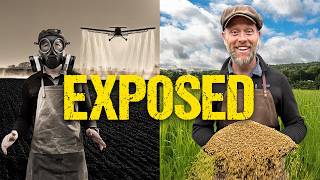
This content was created by Victor Justin Rhodes. This content was uploaded by Victor Justin Rhodes. This is a YouTube video titled "EXPOSED: the Hidden Truths of GMO vs Organic Feed (What We Learned Switching)", published January 29, 2026. The content mixes a personal narrative and on-site interview/tour: SPEAKER A (the host/narrator) recounts switching their animals to organic feed, shares five practical cost-saving tricks for feeding chickens (moving pasture daily, rationing, gradual reduction to force foraging, soaking feed, scaling flock and selling surplus), and conducts a factory tour and interview with Jim Campbell, CEO of New Country Organics. Jim Campbell describes the mill operations, organic sourcing and inspection/traceability processes, differences between non-GMO and organic, environmental and nutritional benefits, and quality controls. The video includes a demonstration comparing conventional/non-GMO versus organic feed, discussion of pricing and mindset around affording organic, and links/resources promised in the description.
Chapters
I literally had 1,000 pounds of local feed in the trailer and we were headed home when Rebecca burst into tears. What's the matter? I asked them at the farm if this was GMO and they said it was GMOs! OMG! What's a GMO? It means these grains contain pesticides that then can harm our are microbes inside of our gut. All right, so let's just take it back. I still don't know what that means, but she's upset. I want to tend to the garden in peace, make her happy. Let's take this stuff back. So I went with organic, but there's two things you have to think about when doing that. One, many people have this question: is it a gimmick?
Organic is a nonsense term. What if organic food isn't as healthy or as ethical as you think? I heard it's a kind of a scam.
Because is it going to be worth it? Well, that leads us to our second: it's more expensive, so how are we going to afford it? And now it's a $50 billion business. That's what I want to address now, and then we're going to go to the tour. We're going to take a tour of New Country Organic themselves and see if it's a gimmick later. But now, how did I afford switching to organic? After all, we were super stretched for cash. We were renting out a spare bedroom. We were taking the garbage to help pay for rent, and we were diving in dumpsters to supplement our food. I implemented 5 tricks that cut down on our feed consumption. Number 1, instead of moving my chickens once a week on pasture, I would move them every day. 2, instead of all-you-can-eat chicken feed— by the way, they can overeat and it can actually hurt their egg production— I would ration their food and start that out out at 1/3 of a pound of food a day. The third thing I would do is actually cut down from 1/3 a pound a day to 10% every week until it— that forced them to forage. I could find what was the minimum amount of food I would feed without affecting their egg production. I got down to a tenth of a pound of grain a day per chicken. The fourth thing I do, and this can— this cuts feed consumption down 25% because it makes it more digestible. I still do this today, is soaked their feed. It's winter, so now I'm soaking their feed inside, give them a nice warm ration. Just cover their feed with water. What that does is just soaking that overnight, in this case 24 hours. I do the chore, refill the bucket, and let it soak. That breaks down what you call the anti-nutrients and makes it more digestible. Therefore, it goes further because they're more efficient with it. The fifth one is this: if you need a dozen chickens for your egg consumption, it's not that much harder to grow 18 or 24 chickens. I would sell the abundance, and it actually paid for the feed. So then all I had invested was my time. And I've used New Country Organics ever since then with great success and happiness. Oh, well, except for that one time I tried a closer organic feed, but my animals failed to thrive on it, so we switched back to New Country. But I'm one to question everything, always, again and again. So I was happy to get the chance to go to Virginia, meet the CEO himself, Jim Campbell, New Country Organics, to investigate myself, ask all the hard questions.
It's a 100-year-old site, used to make apple cider vinegar.
Wow.
So we built the mill, we retrofitted it. Once the grains are in the bins, we keep a steady flow of ozone, low level, going into the grain bins to keep them clean for bugs. It's actually a sign of goodness, if you like. Yeah, that's nature, right? Yeah, that's— I mean, bugs— but if the bugs don't like what you've got in your pantry, you should be concerned.
Yeah, I know, right?
Also, in this process, it goes through an aspirator, so the grains are cleaned. Sometimes when it comes in off the fields, there's some debris or foreign material in the grains that we take. We only do organic here. In terms of feeds. And so there's no danger of contamination of non-organic with organic.
So the truck backs into here. Yes.
This gets into the auger here and then goes through the system, the aspirator, and then we treat it with some heat to make sure that any grain weevils are taken care of. Then from there into the receiving system and from there into the various bins.
Okay.
Those are used for, for boat trucks. Yeah, so if you've got a boat truck, you know, you can just pull off, we can fill this, this bin and fill up an entire truck of feed. Wow. Um, you know, to me, all the customers are important, and whether it's a £10 bag all the way through to that, we want to take care of people's desire to have this feed.
Yeah, I've noticed that.
Okay, so this is where the mixing occurs in the feed mill, and you can see the internal bins. Uh, we also do minerals off this machine here to my right. So you can see here we're actually bagging out Brought in from Iceland.
Okay.
And dried, it's essentially dried with a geothermal heat on the island of Iceland. So this is 50-pound layer no corn, made in Virginia on the 12th of, uh, 3rd of December 2025, today, on work order 9797. And so if someone calls and says, hey, I've got a problem with a bag from this batch, we can find the rest of it. We retain a sample of every single one we do. We retain We can go and look at it ourselves and see where we are. So this is part of the organic standard and feed safety. We have to have this backwards traceability so that we know exactly what is in every bag.
It's coming in, uh, 2,000 pounds?
Uh, metric ton, 2,200 tonnes.
Okay. So you're gonna fill that whole bin? It'll actually take 6 totes to fill that down there. Wow. What tote are you on right now? Uh, this will be number 3 here. Okay. It meandered on up there all the way to this huge bin down into here. This is where our kelp comes from. What? Catch this from the start of the bagging. You got it set up to stop at 50?
Yeah.
It's a nice sewing machine. So you, you mentioned in there about the thorn kelp being more expensive. So if people are investing in something cleaner, as in organic, how do you ensure that what you're getting first here coming in the big tractor trailer is organic and hasn't been, um, contaminated?
Well, there's an entire inspection regime associated with organic. And so when we buy from somebody, we need to see their organic certificate. We need to see that it's in good standing, that they've been through all the organic steps. They've been subject to the annual inspection. Yeah. And as well as random inspections as well are also things which, which people sometimes go through. And then there's testing associated with that. So it's a fairly involved thing. We only buy organic grains from the US. And from Canada. And in fact, generally the principle is we buy as locally as possible.
What is the advantage to the land then for folks buying organic? Because first we just think, oh, it's just healthier for us, right? We might know some of those things. We don't want pesticides, we don't want GMOs in our bodies. But what about the land?
Yeah, well, it's much, much better for the land as a whole, for the soil health particularly. People often say that organic starts with soil. Soil health, soil vitality, the life in the soil, the microbes and so forth. And so organic is much better at that than conventional farming. Organic also, of course, avoids chemicals, pesticides and insecticides and all this stuff. So the food coming off the farmland has actually not been sprayed or anything like that. So it's better for people that way as well as good for the land. Studies as well have shown that the food coming from organic land is more nutrient nutrient-rich, so it's better for people that way. And also it's been associated with more carbon capture. This is our, our main warehouse in Virginia.
I've actually done comparisons because we've tried to go more local where we are in North Carolina and have compared your— and I noticed my animals were underperforming, chicks, and I put your feed out and I put competitors' feed out They— the animals told me what they wanted.
Yes, yes, but they usually do.
They knew twice as fast.
Yeah, yeah, yeah.
So what the heck? What's the— what's the mystery here? What's the— what's the magic?
Well, I think it probably just depends on the formulation and what's in the feed, you know. So we do put a lot of special things in it that are organic and that the animals love.
So there's a big non-GMO movement and people wanting to just at least get non-GMO grains.
Yeah, yeah.
But they're missing something though. What's the problem with just getting simply just non-GMO versus organic?
Yeah, there's actually a fairly big difference between the two, and people often aren't really aware of all the differences. Yeah, non-GMO means that the seed is not genetically modified.
Right.
But that's it. It says nothing about how it was farmed. And so it is possible for you to get non-GMO feed, which is essentially conventionally farmed, Chemicals, the whole thing. And so it's not equivalent to organic at all. Now in the organic standard, you're banned from using genetically modified seeds. So non-GMO is part of organic, but organic means something much, much bigger, much, much more. So we tend to think of organic as the gold standard when it comes to that.
Another advantage of organic, I would imagine, is the EPA just approved two more chemicals. That have forever, uh, forever plastics and forever chemicals. Yeah, yeah, forever chemicals. And so you're not going to be— that's, that's, that's out of the question with organic.
Yeah, well, right, I mean, yes, I mean, certainly, um, it's not knowingly permitted, right? But with forever chemicals, I think that we are finding that there's a bigger issue in the society as a whole, and I'm really glad that we're taking steps to ban these things.
Yeah. What do you say to people who say Oh, why, why get organic? They're spraying it on us. Uh, how can we help it? Toxins are everywhere.
Yeah, yeah. Well, we, uh, I mean, you do— I do hear that, absolutely. And, uh, look, with, um, with any system, it is true that you can get a bad actor who might be doing something fraudulent. I mean, that, that can happen. Yeah, I'm not going to say that never happens. But, um, with this, uh, you have a whole testing regime, you've got a whole inspection regime, each person along the entire supply chain going right back is trying to meet that standard. And occasionally you've heard of rogue actors who have done the wrong thing, but they've been caught, found out, and actually sent to jail. Wow. So, oh yeah, and fined huge amounts. So they're trying very hard to make sure that when you buy something organically, it's of the highest integrity.
Oh, you soil test, Kev?
Yeah, so you can get this and it's done by Redmond. Yeah, it's really cool technology. You register it, basically send a sample in, they send the results to your email. It's really cool.
Oh man, yeah, that's what I'm gonna do. I'm gonna do that from now on. Avoid the state testing, which is a pain. What's the scale for?
Just as another, another scaling.
Okay. Hey, you want to check it, see if it works? Come on, Josiah, get on there, buddy. How much do we weigh? Whoa, we're 400 pounds! And neat to see the people that are behind all this work.
Yes, yes it is.
Feed orders.
Yeah, and they take a lot of pride in what they do.
Yeah, yeah, they do.
We try hard to foster a good, a good work environment. Yeah, um, I mean, people People spend so much of their lives working. It's really important that you enjoy what you're doing.
That's true.
Yeah, I mean—
Most of your waking hours.
Yeah, so we want people to actually enjoy coming in here and enjoying the feeling that what they do is important. And that's how most of them feel about organics and getting the good feed to people. So downstairs we've got— everyone's out for lunch really, I guess.
Is this where Katie works?
This is me. Yes, you can tell it's the marketing.
It's the most colorful. There's so many stories here.
Yes, business development over here.
This is the business accounting guy.
And over here we've got Derek in customer care.
Okay, I think I called Derek yesterday. Okay, maybe.
And you asked about non-GMO versus organic.
There's a poster over there, kind of explains in regular non-GMO feed they can use Pesticides, herbicides, fertilizers. Yep. Whatever all the rest of this stuff is. Human waste, oh my gosh.
Yes, they can use that in conventional and in non-GMO.
Antibiotics.
Yes, yeah.
Whoa.
So, and then in organic.
Synthetics.
Yeah, farmers are required to improve the soil and plant diversity as part of the standard. Increasingly animal welfare too, as part of the standard as well.
Okay, I was relieved and excited after this tour because New Country went above and beyond what I expected. Such clean and organized facility. Uh, Jim just so well-spoken, and the team so capable and happy. I couldn't be more pleased that that's what I've been feeding my animals, which my family eats, for over a decade and then long into the future. So I'm excited for companies like that.
You can see it's a nice big open office area. Um, we have company meetings and they're called wall sessions because basically we'll stand—
I like this—
and just, we all just stand around, get people snacks.
And this is a paint? This is a—
yeah, you can erase this, an erase marker. Yeah.
Heck yeah!
This is all the shows we're going to.
Whoa, you ramped up your shows, or is this normal?
Oh, that's, that's normal. So that's a plan for next year. And you can see, uh, different states that we're going.
HOA, there it is! That's right, yes, we know that one. Homesteaders of America. I was relieved and excited after this tour because New Country went above and beyond what I expected. Such clean and organized facility. Uh, Jim, just so, uh, well-spoken, and the team so capable and happy. I couldn't be more pleased that that's what I've been feeding my animals, which my family eats, for over a decade, and then long into the future. So I'm excited for companies like that. Why does it matter that their animals eat organic? Because we're not eating the feed, the animal's eating the feed, and what does that do for nutrition getting organic?
Yeah, well, I think that, you know, the phrase "you are what you eat" is the key thing here. And in some ways, you are what your animals ate. And I do think that, you know, through the food chain, if your animals eat certain things, that could find its way onto your plate. Plate. So if you've got poultry, you're eating the eggs, you want to make sure that the chickens have ate well, ate perhaps organically, they're not passing anything through. I remember earlier in my life I had a terrible experience where I was eating bacon and the bacon tasted like fish because the swine had been fed fish. It does come through. And so I feel that strongly.
I see.
You're much more likely to have the nutrient-dense, richer, safer, cleaner food for you and your family if you do this.
How can we help people justify the extra expense? Pound for pound, organic is more expensive.
It is.
So how can— what's the mindset shift that needs to happen here to make it worth it? I made this a long time ago, and many of them know my story. So what is your opinion on how to make that mindset shift?
Well, I think it depends on what your priorities are, you know, and where you're actually spending your money and what is going on. I think that if you are able to maybe spend less on some other things that might be less important to you, you can secure, you know, yeah, the supply of very good feed for your animals and for your family. I mean, if you get sick especially in this country, in the long run, that could be catastrophic into your, to your pocketbook and to your health and all that. And so I think that the, um, it's an investment in, in the health of you and your family, um, and in the environment around you. Yeah, um, you know, if you've got kids and grandkids, you want them to, to, um, not, uh, be in a place that's, uh, environmentally unpleasant. You want it to be good.
I don't think the question then is how can we afford organic feed. It's how can we not afford organic feed. If we find ourselves saying I can't, I can't afford this, empower yourself and either say I won't afford it or dare to ask this instead: how can I? And force yourself to come up with 6 ways. One might be robbing, robbing a bank. Throw that one out. That's no good. But it frees you up to think. And you might be like we were early on and we thought of many things. Soaking, moving them regularly, side hustles, selling extras, whatever. Make it happen for yourself's sake and your family's sake. I know it's been worth it for us and I believe it would be worth it for you. I'll leave links for New Country down in the description. Check them out. And I'll leave a resource on, I think, 20 other creative ways to feed your chickens from me. Free resource. Both those down in the description. Check them out. Hang in there, hang in there. We're not over. Let's do a little demo of GMO versus organic feed down in my feed area. Okay, two choices. Hey, One is— this is certainly not, not on my farm, but let's call this non-GMO. Okay, this could have synthetic herbicides, pesticides, fertilizers, all that kind of stuff. It could have bakery and candy waste, non-organic, by the way. Glyphosates. Antibiotics. Arsenic-based drugs. Do we really want to feed this to our animals and then to our children? Or do we want to feed this where we can actually pronounce the ingredients on the tag. Oh wait, here we are. Conventional, non-GMO. It's okay to use synthetic pesticides, synthetic herbicides, chemical fertilizers, radiation treatment, seeds treated with bee-killing neon— neonocytinoids. Austin, have Google tell us how to say that. Neonicotinoids. Wait, sludged human waste fertilizer used? What? Really? Antibiotics, synthetic additives. Somebody said in the comments in regards to something like this the other day, you're a buzzkill. I know, I know, I know, I know, it's a buzzkill, it's a buzzkill. Ignorance is bliss. I was there. But knowledge is know-how, and every day in every way we're getting better. Just be determined. Just insist. Just say, "How can I?" Just want it bad enough that you figure out how to make it happen and stop making excuses. Or own your excuses and say, instead of, "I can't," or, "I can't do it," or, "Can't afford this," just say, "I won't," and just own it. But otherwise, just do it and make it happen. You can do it. You got a brain in your head and feet in your shoes. You can do it. La la let, la la let me be free.
More from Justin






If I had to start my Homestead all over again, it could only pick one animal… 




