Fans Could Ask Me Anything about the Farm ~ this is what they said
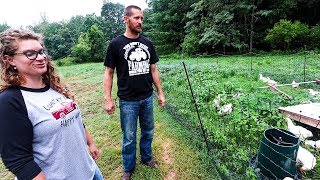
A farmer walks through his mixed-species operation and answers fan questions about poultry, pigs, goats, and composting. He moves chickens daily so they graze on grass, uses pig manure to fertilize gardens, and has 28 pigs with a freezer camp scheduled for July 15th. A guard goose named Donald keeps pests away.
Chapters
These are the guinea keets and the mama hen. Guess, Jeff and Laura? Yes. And eager helpers.
Yes.
Also have a farm in Texas. Yes. Okay, good. How's North Carolina different than Texas? It's not hot. Okay, so— oh yeah, we still got a good amount of water. Clean that out a little bit.
Do you like those waters?
Y'all love them. We go back and forth with what we feel like we would like and what we can't decide if we would like and Those can get kind of heavy. We have the 7-gallon, and it works out at the meat chickens because we don't have to move that much. I mean, just 10 feet every day. Yeah, uh, but the Icelandics, I wouldn't go more than 5 gallons because it's so heavy. Yeah, and they get moved. They could get moved across the farm. If you guys have any questions, let me know. What do we have planted in here besides squash? Well, squash, squash, and squash. No, there's beans right there, but it is beans and squash. This is it, the one row of beans and the rest is squash. We love our acorn squash. Yeah, and you can store for 6 or more months on the counter, room temperature. Okay, so we're gonna feed these guys for a little bit and then we'll let out the chicks.
I, I love the chick shaws. We have one, doesn't look exactly the same, but he built one that looks pretty similar.
Yeah, inspired by it maybe. Oh, very much so.
They wanted to know how many chicks do I have in there.
Actually 120. I guess that's too much for that little frame, not while they're this young. Half of them are going to be roosters. There's 100 layer chickens in there that are going to be in here eventually. 50 of them are going to be roosters. 50 of them are going to replace this flock and move into the Chickshaw. 20 of them, half of those hopefully will be roosters, and the other 10 will go out way out with the Icelandic flocks.
So this, uh, compost pile here, yeah, hay and waste.
Yeah, it's bedding from the cow bedding, from the cows being up at night. We've let them spread the top of it to have a mulch so this ground isn't bare, and we still haven't bulked enough tile that it's still going to break down compost. Turn that every week. They help us turn it, but we come in and give it a real good turn every week. Very good.
We grew up in the city I never thought I would fall in love with a cow or pig.
Yeah, you have a cow now?
Yes.
And a pig?
We have, we have 28 pigs.
Yeah, we have several pigs.
Yes.
Yeah, some, some of them more than others, but yes, we, we are cute. Yeah, all the pigs we raise for meat, but we still name them, we still pet them, we still, we, we love them, you know, we treat them like family. And, and they, they give us the, the ultimate sacrifice.
Well, we have breeder pigs too, so they'll be meat later down the line, but they make us little piglets and little bitty tiny pigs.
Are you guys making money from your farm then? A little bit, pretty much.
More, more so the animals feed themselves. They pay for their own way.
Okay.
Um, she makes a profit on stuff. I, um, but for the most part, pay silly money for baby goats, man.
Yeah, silly money for goats.
So you're raising goats to sell them and for milk? Okay, good. Yeah, good.
We'll get to meat chickens eventually, but we've got pork We've got the goats, we've got milk, we've got eggs.
Good.
We're getting there.
Bring that scrap, we'll feed the pigporks. So this is your first time seeing a pigpork? Yes. Yeah. So you know what my next question is, right?
What's the next?
Does it stink?
No, no, just smells like wood chips.
You look like honest people.
Wow.
Well, and we have—
we're not sure about him. No, no, but they believe you.
So yes, it does not smell bad. Okay, it's good.
I always have two sets of hands because I always have one cleaned out and sanitized in the sun. Put a fresh pan in every day. All right, Jeff, you'll hand me that over once I get in there.
Yep. Our road is like that.
Little apple cider vinegar.
Are you gonna pull any of this out before they get butchered? The, the bedding?
No, no, because it just—
it looks like it's, it's adding up quick, right?
It's only 2 feet over there. It could go double, right? And, and this is all piled up. And not even around, so it's going to be no problem. I mean, I could get up to the top of the tin. Yeah. And if I had to put more railings up— oh yeah, but I don't plan to. I plan— it looks like I'm going to get to this line.
All right, when are these guys getting butchered?
September 19th.
Okay, let me in there.
I would— you want to go in there? Okay, come on. I don't know if I can keep this door open, Mr. Brown, because They're wanting to come out. It's sunken down in the middle, so we can spread it out if we need to. It's probably going to get real high over there in the corner where they poop. Yeah, but it's 110 degrees over there, so it's composting. That's good. So there underneath that, there won't be manure. So we could technically, you know, scrape the manure off and then spread that out, because underneath it there's not going to be any manure anymore. It's going to be safe for them. Okay, Mr. Brown, let's see you do it. They're also asking me what am I going to do with this, um, during the winter, or the end product. Well, the end product is here. This is in the corner of a garden area, so as that— we're gonna let it compost at least, and we have compost for our gardens. Jeff's on the ball. Jeff's on the ball. He's got 28 pigs, he knows, guys. You have any questions about the kitchen garden?
We, we have a similar setup, not, not quite as pretty, but, uh, we found some, um, shipping crates. They're made out of untreated, uh, pine.
Nice.
Uh, not, not— we'll have to paint them to keep them, um, but they're all about— what are they, 30?
They're 3 feet wide by 12 feet long.
Yeah, some are 6, 9 feet wide. But yeah, we have kind of— we get them off the ground. Yeah, the tough part was is putting Is this putting soil in them?
Yeah, well, yeah, it is celery. Oh my gosh, it's jamming.
It's amazing.
We can pick off some of these, these things that we're not going to eat here.
Okay.
And that's the relationship here. There, yep. You put a garden— go ahead. Always, if you have chickens and a garden, you put them next to each other at the least for that very reason right there. It's all these cabbage leaves. I did that yesterday with cabbage leaves. Look, guys, they're gone. They're gone. So how often do you kiss your cabbage?
Oh, about once a a week. We have a couple that are getting really big. Oh, I'm very proud of that. Yes.
Okay, good, because I would kiss this right now, but Rebecca kissed one for me yesterday.
Oh well, then it's met its quota.
So here we have our— here, what we should do first, guys, is Jenny's moving it. And look at the difference. Look, I want you to see. See this grass, guys? See how well they've eaten that down? This is what it looked like. No kidding. No joke, they're getting more than 20% of their diet from the grass, no doubt. They've come through and they've taken down the lamb's quarter. Uh, we're gonna get there right before we butcher. Oh, this is gonna be some of the best tasting chicken we've ever had. Jonah's filling up the water. You guys got any questions about the sea monsters?
We're gonna do ours in the fall because it's too hot where we live to do them in the summer.
That's smart, that's smart. Thank you. They'll just Do them in the spring and summer or in the fall. Yeah, we did all winter.
Yes, Donald sound off as soon as we got here. A crane flew over.
Yeah, and Donald went off.
That was great.
We're debating whether to, uh, to use that guard goose as well, and that, that might have me sold.
Donald is worth his weight in gold. Yeah, and guess what Donald's eating? Donald's eating all this. No more added trouble.
That's good.
And he really does do— he bonds with these guys.
So do these birds not venture all the way down this, uh, this paddock?
They will, they will. I think they're sensing food is here and that's gonna be a little easier for them. Yeah, for sure. But that's the whole point of this, like they, they just have a shelter, no walls, and they can venture. Now it's a little longer, maybe they're happy getting the grass that they have here. Yeah, but yeah, by the end, by this evening, they'll be all the way at the end, but mostly right around there too. That's why we move this coop every day inside of this net, and then we move this net every— what is it, 8 days, Jonah? Yeah, 8 days. Very cool.
So they just kind of stick with what's safe and what's easy.
Yep. This is familiar to them. To move this net like over there— I just did it the other day— you just move this over there, and eventually it's kind of easier to herd them there because that's kind of where they want to be.
They were—
you can see where they were very easily. This was a week ago, 2 weeks ago, 3 weeks ago. See how quickly it recovers and even how much greener it comes back? So they hadn't been here yet. Look how much greener that is. Okay, what do you got? Oh, we got some pumpkins coming on. That is not ready yet though, Jonah, but it's coming on strong.
Yeah, that's a good one.
The kids' garden is just the winner. Listen, I want everybody to listen. Quiet. Do you hear all the bees? This is a good thing. What do you got?
Whoa, that's rotten!
Good job, guys, good job. This is just crazy abundance right here, guys, right in your front yard. I'm gonna get these weeds out before they go swimming. Uh, swimming? Well, you're a good sport.
This looks a little more familiar to us.
This is y'all's game. Yes, with 38 pigs.
Yeah, we have them in different groups. So we have a group of 9 that's, um, going to freezer camp July 15th.
Okay.
They're about 300 pounds. Um, and then we have, uh, 3 other groups. One group is just all the babies. They're learning about electricity. The other 2 groups are our breeders, uh, and they are— we keep them separate just because we want them breed them when, when we want them to breed. It doesn't always work out that way.
No. So we're going to dump this in areas they haven't cultivated yet. You can see they've, they've disturbed there. Okay, they actually haven't done— served here. I'm being careful because I don't want to just put it on poop. They don't want to eat their own poop. Look, barely drink any water. So easy, these guys.
This is pretty much, you know, the, the same thing we do. We, we have very little pasture, so we run them through the woods. They're kind enough to clear it out so we can see in between the trees and walk in between the trees, and they love it. And especially in Texas, it's very, very hot. They work very, very hard for us, and they taste very, very good. So I learned from your videos recently that, um, I know that they don't eat their own manure, but they do enjoy the cow manure. Took me a couple of days, maybe a week, to get, to get used to that, but, but they love it.
Hard to get used to it.
Yeah, they love it and it's free. Yeah, um, and that's kind of how we like to do things.
The old-timer dairies used to keep a pig for every cow they had, just for the skim and help them rid of the manure too. Yeah, this is perfect disturbance right here. If we're trying to encourage them to do this everywhere, uh, grass— they will uproot grass seeds here. I'd even already have some action.
Nice.
Cream separating bay. 1, 2, 3, 4, 5, 6. We've been really going through the milk and yogurt. Can you tell we're a Gaps family? Lots of storage in jars. All right, Becky, I set out 6 gallons plus whatever we get today. You'll need to set aside any of that for drinking or whatever. We got a lot of yogurt made, so 4 gallons of yogurt. We got, uh, Aunt Flossie in. You been a sweetheart, Aunt Flossie? She is. You got You guys want me to get her baby out? Yes. Okay, come on. Yay! This is Betsy. Hi, sweet girl.
Hello. Oh, they're so soft.
Oh my God, you'll be having a calf soon, won't you?
Yes sir, 165 days.
Are you counting it down?
Yes, I am.
164 days tomorrow.
I know it.
And if the timing is right, it should be on my birthday. Yes.
Oh, we'll have a baby cow. He got pigs last year for his birthday. Maybe he gets a calf this year for his birthday.
Cool.
You can, but my hands are like little kid size.
Look who's milking! First time milking a cow?
Yes.
Now you do have dairy goats?
Yes.
So tell us, goat lady. Yes. How, how does it compare?
It's much harder, um, to squeeze the teeth. The goats are a lot easier. But I have a couple of goats that are— have bigger udders, and so the size isn't much different. I have dwarf goats as well, like Danelle from Weed 'Em and Reap. Yeah, um, so it's very different from milking those, but it's not hard.
It's fun. How's it going in here, Beck? Good. That's your first round of milk. She kicked the last of it, so— but I did get a good gallon and a half. Do I see zucchini in my very near future? For supper. Zucchini and beets and salmon. The salmon, not from our farm. Spoiler alert, salmon's not from our farm.
I think the onion is in here too.
Yay!
Salmon go upstream.
Yeah.
Lay their eggs, die, then their babies come downstream, make it back up, lay the eggs, and the cycle just keeps on going.
Cool. Thanks for the science lesson, buddy. Check out Mama's plate. You like beets, Mom? I love beets. You like zucchini? Yes, I would say that's at least 75% of our farm according to your plate. And watermelon juice, just so refreshing.
I have some mint. Watermelon's not for myself.
Oh, I know, but the mint, yes.
More from Justin






If I had to start my Homestead all over again, it could only pick one animal… 




