Health Expert on Losing 100 Pounds w/o Diet (circadian rhythm, mitochondria + hormones)
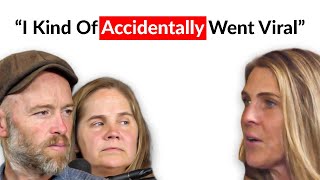
In this conversational YouTube interview, host Victor Justin Rhodes chats with his sister Rebecca Rhodes and wellness practitioner Sarah Kliner about unconventional strategies for dramatic weight loss and overall health. The discussion covers a 28‑31‑day prolonged fast followed by a GAPS‑style refeeding protocol that enabled a 100‑pound loss without traditional dieting, and delves into the scientific underpinnings—mitochondrial function, circadian rhythm, and hormone regulation (cortisol, leptin, estrogen). They explore Vedic/Transcendental meditation practices for stress reduction, the importance of sunlight exposure measured by lux, and introduce the My Circadian App as a tool for aligning daily activities with natural light cycles. The conversation shifts to women’s health, answering community questions about perimenopause, its typical ten‑year duration, and strategies for balancing hormones during this phase. Sarah shares her personal journey raising a non‑verbal autistic daughter, navigating school systems, vaccine concerns, and advocating for better services. The hosts also discuss the creator economy, describing the Abundance Plus community, after‑party Q&A, and how they manage audience feedback. Throughout, the tone remains informal, anecdotal, and supportive, offering practical advice, personal testimonies, and resources for listeners seeking a holistic, rhythm‑based approach to health and weight management.
Chapters
We were in Honduras.
Oh my, you're not doing it.
Get out. Um, we were in Honduras and I don't know, I'm sure that it wasn't like going into a septic tank or anything. Um, like we were living in an orphanage and, you know, like when we would walk to town, there would be the outhouse and then the pipe would go into the creek. So I have no idea where our pipe was going cuz we weren't in charge of it or anything. You can't see it anyways. We would take the, like the screen off so that we could shower.
Mm-hmm.
And the water would actually drain. But if you forgot to put the screen back on, you would wake up to nature.
I can imagine.
To nature taking over the bathroom. Yeah. It was so gross. Scorpions. Oh, like just so many things. Like just would, I guess would crawl up the pipe.
Yeah. I, I stayed in Bali for 10 days once. On a meditation retreat and I had an outdoor bathroom.
Oh yeah.
I had to check the toilet every time for scorpions. I was terrified I was going to sit.
I know, right? No, that one scorpion, there was one in particular that had gotten to the sink like thing. And when, if they were just in the shower still, it was okay. But it got to the sink somehow. And I was like, I looked at him and I was like, you have to kill it.
Do not miss.
We will burn the whole place down.
What were you doing in Bali?
Meditation retreat.
What'd you learn there?
Um, that I don't want to be a meditation teacher. Okay.
And I don't want to do yoga anymore. I didn't see any of that in the bio, which I'll read while we're at it, since— board-certified applied quantum biology, certified yoga teacher, and expert meditator. I was like, wait a minute, certified nutrition coach, circadian rhythm, circadian rhythm, ancestral health, understanding and optimizing hormones. So I want to ask you then, from a certified nutrition coach, did you see me that I had— I didn't eat for 28 days.
I saw— I was— I was worried about coming up here. I was worried you were going to be sick and not feeling well after your fast.
Yeah, why would you— oh, after I might—
after you break, because A lot of people break a fast and they will get sick for a week afterwards.
Why do you think that is?
The body just kind of detoxing, cleansing, still letting go. I think that's my theory.
But how long of a fast are you talking about?
I mean, I've seen that happen with 7-day fasts. Typically anything 7 to 10 days over that, I see people will get sick afterwards. Not always, but sometimes. Yeah.
Well, I wonder if you— I'm like, you must have had some deep healing. Because he's like doing really well.
Yeah, like, hopefully you look great. Yeah, I've been watching. I've been, I've been following along with their fast.
Yeah, a lot of people have been watching that. People are fascinated with it. Yeah, people are also scared to death of it.
So I'm sure—
yeah, I was scared to death. Yeah, I had never seen anybody say— my friend here who's, who's behind the curtain, his dad fasted for 30 days.
Wow, 40, didn't he?
No, no, the truth came out and told— oh, okay. And that was back when, I mean, nobody ever, I mean, there wasn't social media, it wasn't the cool new thing. He just did it. No guidance, probably no refeeding program. I think his first food was a popsicle.
Wow.
Coming off of it.
Oh, that's good. That's kind of, you know, that's a little—
No, that is good.
Yeah, yeah.
The thing is, once you're, you're not ravenously hungry.
No.
You have to be careful about 5, 6, 7 days. Yeah, I've been so— do you think I've been careful enough? I say I did 3 days meat stock.
Oh, that's good. That's really good. That's nice and gentle.
That's a little bit at first. He wants you closer to the mic.
Sarah, the cat just kind of knocked.
Mic check. Okay.
Okay.
So what else did you learn in Bali?
You know, I learned that my husband could take care of my daughter for a little bit, which was good. We have a nonverbal autistic teenager. She'll be 18 in December. And I had never left her for longer than 24 hours before that. But it was my 40th birthday and I really was— I was really into this type of meditation and I wanted to kind of take it to the next level and go on a retreat and just do nothing but that. So it was good for the whole family. And I feel like there was a shift that was in 2019. So there was a good shift in our family after that where my husband really bonded with my daughter a lot. And I think that was a step to us saying, I think we could handle another child.
Interesting.
We never thought that we could because she was always so difficult before that. So going away for me was like a lot of things that it, it answered a lot of questions for us. So that was— it was good.
Was that the goal, to get answers?
No, it was just— I just had this, you know how you just get this idea in your head about things of, I need to go on. I want to do a meditation retreat. I've never done one. I had been a yoga teacher for a while. I started teaching yoga in 2012 full time, and I'd never done any retreats, really anything like that. I had always just been helping other people relax, helping other people get centered, and I never really had done it for myself in that way. So it was just an idea that popped in my head. My husband said, okay, let's figure it out. And we did.
So do you still practice some of the things you learned there?
I still meditate. Yeah. I haven't been as consistent about it since my son was born. It's been a—
because they're crazy.
Because of little— he's just attached to me so much. But I'm getting back into it. I've had to this summer. I've had a lot of like, oh, you better start taking care of yourself again moments. And so I've been more consistent with it lately. But yeah, I still do the same practice that I did before I went. And yeah, it's helpful. It really is helpful.
Would it be helpful for Rebecca and I?
Yeah, I think everyone should do it, honestly.
What should we do? Nobody? No, we've never meditated. So what should we do?
I've done a little bit. I'm not like a daily practice meditator person.
What does your meditation look like?
Um, I kind of base it off of like Joe Dispenza, like the whole, like, patience, kind of like focusing out, like, you know, like you're, uh, this, and then you kind of like go out and like just kind of like imagining yourself and like getting bigger and like you're getting smaller and like you're kind of seeing more of the world. And then, um, like he does different ones where like you are imagining yourself well or you're healed or whatever, stuff like that.
So kind of like that.
Can you meditate with a journal?
I have a specific technique that I do. So the way I got started was in 2017, and I was going through a really rough patch with my daughter. I mean, it was a rough patch with her. And my husband was getting onto me about— he was really into podcasts. And I was like, if you don't stop talking about podcasts, I'm going to lose my mind. I'm not listening to podcasts. Now I have one.
What's the name of your podcast?
Tweety Tweety. But hold on one second. There is a bug. I'm going to kill it.
That doesn't mean edit. That just means just stop talking.
This cat is clawing into me. It's like she's making or he's making biscuits on my leg.
Okay, we're going to have to shut the door to get the cat out.
I know. That's fine. Did you get the bug? Yeah.
Need to get us, do we need to get, I told you he would take advantage. Need me to get the cat out?
He's okay right now. If he starts clawing me.
Because he knows nobody will kick him off. The guest never kicks him off.
I can't, I can't kick off an animal. Like I just couldn't do it.
He knows that. Because he never gets that from us. We would eat him if it wasn't socially unacceptable.
They do in Bali, they eat the cats.
Royal? I wouldn't, I wouldn't mind eating him. I mean, I didn't eat for 31 days.
Really good. I don't know, I know he— I mean, he's like, it's so funny because on his fast he's like, I'm gonna eat this and I'm gonna eat that.
You do that?
I came back in with GAPS diet, so I'm on GAPS. You can eat liver. I don't like liver, but I like liver now. Yeah, I'm boiling it. Boiled too. I know, because you have to boil it.
You have to boil everything so soft.
So I'll boil it for 15 minutes and just put a little salt on that. And I'm like, this is not bad.
Okay, let's go back anyway. Sarah, your—
oh, your husband's podcast. Oh yeah, now you have a podcast. So what's the name of your podcast?
Well, my podcast is called the Evolving Wellness Podcast. And, uh, but I was— my husband was like, you've got to listen to these podcasts. And so going through this rough patch with my daughter and I said, fine, I'll listen to this. What is this Rich Roll person? Fine. And so Rich Roll had a guest on and his name was Light Watkins, and I just connected big time with that podcast and with everything Light was saying. And I bought his book immediately. It's called Bliss More, and it's how to succeed at meditation without actually trying. And in the book, he has a very, very simple meditation technique, and I recommend it to all my clients and anybody who just wants to dabble in meditation and just kind of get a taste of it. And so it's a very simple technique. And I said, what do I have to lose? I'm going to try this. And the first time I tried it, I felt so relaxed. And then I noticed that night I slept so well and it was so simple that I started doing it every day. And then I said, I'm going to learn how to get like the professional version of this. So I found a teacher in Atlanta who was actually trained personally by Light and did a 5-day meditation class with her and got my own mantra and learned the technique. And that was 2017. So I've been doing that practice since then. And then Light actually came through Atlanta and he taught my husband how to meditate.
Oh, wow.
2018. And I've had Light on my podcast a couple of times, but that meditation technique has been so helpful for me. And it's, it's not religious. It doesn't have any, you know, 'Cause I know a lot of people have that hesitation with meditation that it's going against their religion. It's not religious and it just helps you just drop. It's like an ocean sound. Like you get your own ocean sound and you can just drop in and it's just really, really helpful. Interesting.
So how do you do it?
You have a mantra that your teacher gives you. Oh. In the book, Light gives a generic mantra that works, but your teacher gives you a mantra and they whisper it to you. You're not supposed to ever say it out loud or share it with anybody. It's like transcendental, but it's called Vedic meditation. So Tom Knowles, who kind of started Vedic meditation, he studied with Maharishi, who was, you know, the big Transcendental Meditation guy. So it's, it's basically like TM, but it's another kind of offshoot of it. But it's been— it has helped.
So you have to have a teacher to do this.
Well, Light has one in his book.
Okay.
So that it's not one of the trans— you know, one of the Vedic or transcendental actual mantras, but it's a mantra and it works.
Not to be— I'm, I'm not taking this lightly, but a mantra would be— the first one I think of is, I'm good enough, I'm smart enough.
And gosh darn it, people like me.
Okay.
Like that.
It's like a— it doesn't mean—
it doesn't mean confirmation.
It's kind of self-confirmation. It doesn't mean anything, your mantra. It's like a sound. Oh, yeah.
It's not words.
No, it's like a little— it's like a sound. It's words, but it's not anything that your brain needs to try to understand.
Oh, you're supposed to try to dwell on that?
You just repeat it.
No, you don't.
Oh, you whisper it. You like whisper it lightly in your brain. And then what ends up happening is you're just kind of like whispering this sound in your brain and it's like an ocean sound. You know, one of those CDs that we— we had CDs where you listen to nature sounds. Date it. I am 46. This is showing up.
We have YouTube Music now.
Yeah. Now we do YouTube Music and we do like the sleep frequency, 423 Hz for my 4-year-old.
Yes. Yes.
I put it on every night.
Yeah.
And it does, like, he'll be kind of crazy and then I'll put it on and it's just, I think it's a combo of like it and then also, because it's soothing, but then also habit.
Oh yeah.
His body's like, okay, yeah, this is what we're doing. I know what we're doing, even if I don't want to do it.
Yeah.
I have the autistic daughter. Is a daughter. How many other kids do you have besides—
I have James, who is turning 3 this Sunday. Wow. You guys were my inspiration with James. That's how I found you guys.
Really?
Yeah.
Wait, how did we inspire James?
So I was trying to get pregnant. At the time, and I was 41 and I had 2 miscarriages and I was just so distraught. And I Googled— I went on YouTube and typed in pregnant at 41 and up pops your videos with Rebecca. And so I was like recovering from— and I told her this— I was recovering from my second miscarriage and I was just in bed crying and I watched your documentary and I was like, it's going to be okay. I'm gonna have my boy. I knew I was gonna have a boy.
Interesting.
But you— I— so your videos that you guys put out about that were part of my inspiration to continue going on the quest of getting pregnant in my 40s. Yeah, that's—
I know. Well, so when I found her on Instagram, I went to follow her. I, I, I don't know what it was, you know, it was just like something you were talking about, and I was like, oh, this person I'm like interested in circadian rhythm and she does this. And so I went to like click on you and then you popped up and it said follow back. And I was like, oh yeah, why does she follow me?
So then what'd you do? Do you DM her at that point?
No, I didn't. I just was just like—
you had commented under one of my posts.
I did comment under.
And I reached out to you because I said comment XYZ, I'll send you the link to this program. And I wrote you back and I was like, or I think I voice texted you and I was like, listen, You helped me through such a dark time. Whatever you want of mine, it's yours. I'll give you everything. I don't care. Like, thank you for putting that out there because it just kept me going. And it's like a super dark time, you know? So that was cool.
That's what I was— it was just funny.
You're somebody who puts yourself on the line too. What do you think it is? Because Rebecca and I did not set out to inspire people to have a baby at 41 years old. That was just a killer title. '41 and Pregnant.' I stole that from Teen Mom titles, '14 and Pregnant' or whatever it was. So I said, okay, we're at the opposite extreme.
I typed it in.
I was like, oh, we're at the opposite extreme.
There's somebody who's doing it.
So what do you think it is about somebody putting themselves online that inspires other people?
I think it's when people talk about the hard things that they go through that we don't glamorize in society, like pregnancy loss and raising children. And there's, I think it's getting more and more where people wanna connect with people who are like them. They don't want the perfect polished, wrinkle-free Botox, you know?
Mm-hmm. Okay.
Celebrity. I think people really connect with everyday people and their stories. And yeah, you never know who's listening.
Yeah. So tell me more about your—
Good or bad.
I know, right?
Well, I mean, you have 200,000 or something on Instagram. What are the chances one or two of them are crazy?
Oh, no.
Or a lot more than just one or two.
Block. Yeah.
Do you read comments?
I do. I need to stop.
I really do. Well, you know, like with your business, whatever, you know what I mean? Like, it's like you're literally teaching people.
Yes.
You know what I mean? And so like people do lots of honest questions.
Yeah.
And so like you reading that and responding can be very helpful to a person.
Yeah.
And you read your comments?
I do on Instagram.
Instagram is pretty nice.
It can be.
They can be Brutal.
They can be. I have my comments limited to followers only.
Okay.
And that helps. That helps a lot. I still get the odd, like, what was that?
Well, but someone probably follows you just to say that, right?
Or they— you— the thing, I don't know if you would get this, but someone will make a comment the first time and you're like, mm, mm, that's not very nice, but you just kind of leave it. Mm-hmm. They always come back worse. Second, and then it's, why didn't I just block you on the first one?
My favorite is restrict.
Oh yeah. Though I do that a lot too.
Because they think they could just, that it's going out to like, not everybody's seeing it and nobody can see it. Right. And it's blocked. It's, it, it'll be, it says like restricted comment if they comment. But like no one can see it. Nobody can see it. And you can't really see it unless you click on it and wanna see it.
You ever click on that?
That's like asking for, no, I don't click on those.
You click on it? I do sometimes.
Oh my God, Sarah.
Social media influencer 101. Don't read the—
Don't click the restrict. I will occasionally because I'm like, what do they have to say about this?
I was like, why did I restrict this person?
And then usually it's like a really nice comment.
Yes, sometimes it is.
Oh, that's true.
Sometimes it is. I'm like, why did I restrict them? What were they saying? Because sometimes people, I'll restrict them just because I'm like, that's a warning. It's not bad, but I just don't like it.
Right.
I have a bad feeling.
Don't want it to go further, right? Yeah.
So you're under ancestral style living. How do you reckon this, this, these parasocial relationships and all these hundreds of people having comments in our life? If we were 150 years ago, our circle of people would be 100.
It's not good. It's not good. It's something I've really this year come to try to figure out how I'm gonna continue on.
Oh.
Because like you said, to read the comments is just not a good idea. But like Rebecca was saying, I interact because I'm teaching and I, I will figure things out. Someone will ask a question, they'll ask it 3 or 4 times, different people. Then I'll say, I need to make an ebook on this or content around this or a video around this. So I get a lot of ideas from reading, questions, and 98% of them are honest, kind questions. But then there's, like you said, that other aspect of this is not natural for us to share this way and interact this way. And my nervous system this year in particular, just as, you know, I'm 46, hormones are kind of doing their thing. I'm a lot less resilient to stress, and it's— I've definitely had to reconsider how I'm going to continue to show up online because it's definitely taken a toll on me this year in particular. Interesting.
Yeah.
Where do you think you're going with it then?
I think I'm just going to have to have someone else go in. You know, I already have somebody else that reads my emails and deals with all the customer service stuff because I always want to make sure if someone's bought something for me that they have someone that will take care of them. And I have a community where you can come and ask questions. That's— I'm accessible. I'm not inaccessible, but I need to probably limit my accessibility to the general public a little bit more, probably, because I, I'm not good with— I always want to try to help, you know. And then I, I always, on the flip side of that, I know I have a control issue where, you know, I don't like people saying certain things under my work that I've worked hard, you know. So I know you, with a million-plus YouTube Aren't you?
That's like, we haven't read YouTube comments in a very long time.
YouTube's comments are meaner than Instagram or X, or they're meaner than any of the other platforms or even TikTok.
Yeah.
I mean, yeah, they have been.
Of course I've had more on YouTube than any of those other platforms.
Right.
But in general, people are very nice. But you have that one that stands out really loud. And in general, those people aren't going to say it to my face. They're not gonna, they're not gonna say it to your face.
No.
Well, also, like, they usually— there is, like, we all have insecurities. There's one very skewed aspect of their comment that we already struggle with, right?
Exactly.
And so, like, it's, it's just hard because, like, it's skewed. It's not the truth. But we already are insecure about that, and it's like this very small portion of the whole comment, and then you're just like— then you think about it, you literally feel like you've been punched in the face.
Yes.
And you're just like— your stomach drops.
Yes. You just feel like nobody likes me, I'm not adding any value, I'm gonna delete everything.
Yeah. But it's not true. No, because it's skewed. It's not truth.
Right.
And then the other thing is, is that people think they really know you.
Right.
And your motive.
Oh yeah.
Like you're, they know, like, I think that's the whole thing with the internet right now especially, is that like, people are like, I know this to be true. Right. And I'm the, I'm so smart because I figured it out and everyone else is dumb.
Right. Right.
And I'm just like, cuz people will have wild, I mean opinions and ideas. Again, it's been a long time since we've read our comments. Um, wild, wild, um, opinions about what is actually happening. And we're just like, okay, wow, that's, that's a very interesting thought, right?
That's why I don't share a whole lot about my daughter online, because anytime I do, it is unsolicited advice that I just cannot handle. I did a video the other day just because of all this, like, Tylenol and autism stuff, and I just felt I'm so tired of all these hot takes of all these people who are not affected by this on a daily basis. This is my life. And I just really wanted to share our story. And most everything was very, very kind and very supportive and gratitude of me opening up like that, because it's not typically what I talk about on my page is her. But of course, oh, have you tried that? I'm like, I'm, you know, I consider myself a pretty smart person, resourceful. If it's available, I've probably tried it. I can't encompass that in a 3-minute video of what we've tried to do to support her.
You know, how does Tylenol relate to her?
Well, it's just only part of it. You know, we've— those in the autism world, we've known about Tylenol and depleting glutathione for 20 years. Like, we've all known, you know, 15 years I've known about it. That you don't give a child Tylenol before a vaccine.
But then also pregnant women.
And pregnant either, yeah. And that's what they tell pregnant women.
That's always been around, that you're not supposed to do that.
That's been a thing about it depleting glutathione in the natural world for decades. We've known about this, so it's not groundbreaking news.
But then there—
But because RFK said don't do it.
Yeah, so everyone's—
Had protests.
Right.
Tylenol, right? Whether they need it or not.
Yeah.
You spoke out against that.
I spoke out on our— I just told our story of how my daughter's vaccine injury, of what happened and what she was like before, and now that she'll live with us forever.
What was she like before?
She was a typically developing baby, you know, a 1-year-old. I have videos of her talking and playing games with us and interacting and speaking and just I've got the video proof if anyone wants to come to me and say it didn't happen. It's here. It is. I can show you of her speaking clearly at age 1 and now turning 18 in December, can't like speak at all. And the difficulties we've dealt with for the last, you know, almost 18 years because of this. I just thought I was doing the right thing. I really did. I thought I was just doing the right thing, taking you to the doctor. Mm-hmm. My husband actually took her that day for the flu shot because I was working. I was working full-time in an office and they said, oh, she's due for her flu shot. And he said, sure. And she spiked a fever. We called the doctor and they said, give her Tylenol. Okay. And then she kept getting worse. She was vomiting and we had to take her to the ER that night and she was just really sick. And the ER doctors said, Does she have any shots today? We said, oh, she had the flu vaccine this morning. Oh, this is just a bad reaction to the flu vaccine, but she's going to be fine. You know, now she has a double ear infection. She didn't have one that morning, but she does now. So we'll give you some antibiotics and you guys just go home. She'll be fine. And she never talked again after that. She lost everything. And our lives have been very hard because of that. And for years, you know, this was Jenny McCarthy. She was out talking about this. It's my dream to one day talk to her. I'm like, I just— she helped me so much during that time. And she— her whole career was destroyed because she spoke out the way that she did. And, um, we— you know, Jenny McCarthy was like the OG autism mom back in the day, and she was the only one talking about this stuff, that this could happen. Because anytime I told anyone about it, it was, that didn't really happen, that's what you think happened. That's not—
that's what did they say happened?
They say it's just a coincidence.
She was always like that.
Yeah, that she was born that way. It was a coincidence. I made it up. You know, it's everything.
Your husband on board with you?
Oh, yeah.
100%. 100%. We were both the most straight-laced, work in an office, 9 to 5, you know, whatever, beer after work. Kids. We were 28 at the time, and that changed everything for us. Everything. And then that's, that's when I started on the journey of, wait a second, this is all a lie. You know, all the, all this mainstream stuff is a lie and they are trying to hide it. And it was, it changed everything for me.
How long did it take you to get to that?
Pretty quickly. Pretty quickly. Because I was going to the doctor and saying, wait, wait, wait, wait. Like, why? What happened? What happened. And I was going to get autism diagnosis and speech therapy and occupational therapy and all the things. I mean, I quit my job, I left everything to just be with her full-time. And then I almost drank myself to death because it was so difficult. And I was grieving. I was like, what did I do? This is my fault. I shouldn't have done this. I should have known better. The information was out here, and I thought that these crunchy holistic people were crazy.
So at this point, you had already found some information. What was the first piece of light that you found?
I mean, it's been a lot of darkness, to be honest with you. Yeah.
No, I mean, what the truth?
Truth? What's Jenny McCarthy with?
Oh, it was Jenny McCarthy.
Yeah.
And that's when you realized, okay.
And I found a lot of what happened holistically minded people in the Atlanta area. Talk About Curing Autism was an organization I found, and they had a lot of kids in there that were doing detoxing and H-bomb, you know, all this stuff. And kids were getting better. We went to New York and L.A. and Florida. We went everywhere, tried, spent all of our money, you know, had no money. We were very poor. We didn't have money for Christmas dinner a few years because we wanted to heal her.
Right.
And fix her. And we just never could get the right thing. So it's been tough. You know, it's been— it's been a lot. It's been a long journey with her. That's why we— it was why we didn't have any more kids. Because how could I have any more kids, you know, when you were so maxed? Yeah.
What were you thinking? How can I have any more kids? Is it because you were so busy with her?
Yeah. And I wouldn't be able to take care of them properly. And she— we would go months without her sleeping. It's just the behavior problems, getting kicked out of schools. I mean, just everything. She sleeps now for the most part. She does pretty well.
She has to go to public school. No programs.
No, no. We got an attorney when she turned 3. That's the other reason we were broke.
Because you're paying for an attorney. What happened with the attorney?
Well, we went to send her to school, nonverbal, and they said we can give her 15 minutes a week of speech. That's all we got. And send her to a school that was on the other side of town when there was a really great little preschool kindergarten in our neighborhood that had great services. And they said, "Sorry, it's full. You can't go. We don't have anything available." So we hired an attorney and all of a sudden a spot opened up over the weekend. All of a sudden they could give 2 hours a week of speech and 2 hours a week of OT and all these services that were previously unavailable. We didn't qualify for.
These are public services? You've been doing that ever since?
Ever since, yeah. Now we've got her in a school that we have an agreement with the county because they realize they just can't really give her what she needs. And so I'm sure you guys have heard the telepathy tapes. There's a couple of the kids that go to the school she goes to that were in the telepathy tapes. We have an Atlanta community, so she— they're all— they all spell, they're all spellers, and it's a good place for her to be. So She'll be there for the next 4 years and then I don't know what we're going to do after that.
So, yeah, because I mean, she's going to be 18.
Yeah, she'll be 18 this December, but she can have services till she's 22 and then we got to go to the adult disability services.
Oh, wow.
So will she— will she be able to function by herself?
No. No, I don't see it. I mean, maybe I can't ever say anything is impossible, but at this rate, I don't see it happening.
Has it gotten any easier?
In some ways, yeah. She's the easy child now. I never thought I would say that now that I have almost 3.
You got a 3-nager?
She's turning 3 on Sunday. Yeah, it's like, whoa.
That's hilarious. Yeah.
We're always like fighting. I'm like, which one do you want? I'm like, I'll take Alexis. And then she's the easy one now. James is the one that's like, oh God.
All out. All out. Well, he's a boy too.
He's a boy jumping off everything.
There's a difference. The boy versus girl is so different.
Oh yeah, huge. I don't care, all the boy mom people or whatever, the fight on social media, it's real.
I mean, and, um, having a 3-year-old at 46 years old, yeah, isn't a joke.
No.
And yeah, it's just different.
Yeah, we have kids too, one your age at the top. And then we have all the middle ones.
So Jonah was born in December.
So we have a 17-year-old.
Wow.
All the way to 3. So we have a good idea about what it's like to raise all different ages.
Yeah.
Yeah, it's different.
It is different. It just hits different in your 40s. I don't know if it's because like we're in our 40s or if it's because like it's obviously the last one.
I'm afraid he's going to be so spoiled. You probably don't spoil. I don't know. It's your second. He's kind of your first.
He is spoiled. It's kind of your second.
It's kind of my first again, all over again, really. You say Henry is, he's our second firstborn.
Yeah. Oh, he's spoiled.
But we don't make him do enough. We're too tired. We don't train him. We're just too tired.
Like, there's no like—
He's supposed to clear the table, but enforcing that—
By the time Jonah was his age, he was—
He was clearing the table, doing dishes, folding his clothes, towels, milking the cow.
Doing things. He was not milking a cow at 4.
I was seeing if you were paying attention to me.
No. Yeah. It's hard because we have so many other children that are so very capable, you know, and fighting that battle of like, okay, let's clear the table or remembering. Yeah. Remembering to have him do that.
Got to remember him.
Yeah.
Hopefully he's not spoiled rotten.
He won't be. He's a good boy. He does love to help. He loves to help. Like, he, um, two nights ago he was like just melting down at the table. We were really trying, you know, like, was it blood sugar? What, what, like, why? Like, what is causing this meltdown? And then the next night Justin was wanting to read something out of a book. And then the next night he was just so pleasant and like being so cheerful and like And Justin says, I want to— or I said, hey, why don't we read what you were going to read last night and were never able to? And Henry stands up and goes, I'll get the book and runs and goes and gets it. And we're like, what a difference. Yeah, I don't—
you know, they do that. They do that.
So I would have thought then, because this was a huge part of your life. This was the part of y'all's life that changed everything. This was y'all's precipice.
Yes.
And I would have thought that would be your brand, but you don't even like to speak about it. You said—
I don't. I did. You know, it's funny. I started— I wanted to do something online, and I started a Facebook group, and I was doing all these lives. It was called Oxygen Mask Meditation. That's the name of my company. And I wanted to teach parents of kids who have special needs how to meditate and how to do self-care.
Was it— was that in reference to put your mask on first?
And I had my own podcast, and I— it never took off. It never really did anything.
Okay.
And then I— then I kind of accidentally went viral and started this whole—
what'd you go viral on?
Doing the carnivore diet.
Um, how many years ago was that?
2019. That's when I got my first— you know, I built my first 50,000 followers, started my podcast.
Everything was with the Oxygen Mask brand, was built on Carnivore Yogi. Oh, you switched? You already pivoted?
Yeah, I pivoted from, uh, from—
you said this is not working.
It wasn't working and it just wasn't catching. And so I was like, I'll just start sharing about this weird carnivore thing I'm doing.
And I'm a yoga teacher, so that's kind of You were a little early on that.
That is different because most—
Yoga people are vegan.
This is a very blanket generalization, but yes.
Yeah, well, that's what I was practicing and teaching yoga for a decade. And then I said, my gut is a disaster. I had all these problems, probably due to chronic stress of raising my daughter, and my gut was a mess. And so I did carnivore and all my problems went away. At the time, and I started just sharing about it. And then everyone was interested. And then I started this kind of—
Everyone was interested?
Not everyone.
You didn't get a lot of hate from them?
Oh, I got a ton of hate. Oh, Lord. Oh, yeah.
The vegans, man.
Women. You women.
I got ugly for a little while there. I like talking about light. I like talking about grounding.
Not carnivore.
I don't like talking about food.
What were your own doubts? What were your own doubts? What do you mean? Doing carnivore.
Doing carnivore on my own diet?
What were your own doubts? Weren't you afraid to eat only meat?
You're gonna have a heart attack? Yeah, I mean, I was friends with Sean Baker, I was friends with like all the carnivores. I was an early adopter of the carnivore diet, so I had the opportunity to really get to know all the people who are uber famous now that are carnivore. I was friends with Dr.— I'm still friends with Dr. Chafee. I think he's a fantastic person. I disagree with him on a lot of stuff, but he knows that. And he's cool with me. Uh, I, I was friends with a lot of those people back in 2019 when it all kind of exploded, and so I got a lot of reassurance that it was okay, that I could keep going.
Okay.
But it wasn't until I started trying to get pregnant and couldn't get pregnant that I really said this diet is not the thing anymore. It was not a fertility-promoting diet.
The carnivore?
No, it's interesting.
I heard it was—
people do get pregnant.
Yeah. Well, because I think it's the state that they're in.
What you're—
if you go into— if you have PCOS, if you have insulin resistance, if you have— if you're in a state of inflamed metabolic inflexibility and you go straight to carnivore, that will take your blood sugar down, that will bring your inflammation down, that will calm your gut down. So that could be a state that is fertility promoting. But I had done it for 2 years straight. I had already got my blood sugar good. I had already got my gut in a good place. And it was at the point where it was pulling down my thyroid hormones and sex hormones and all those other things to a place—
What happened to him?
Yeah, it'll do that to men too.
Oh yeah. It's just a lot faster for women.
So you—
Right.
So, so, so you only ate meat, animal fat, eggs, and occasionally some dairy.
Not a ton, but some.
You never had a vegetable or fruit?
No.
Or coffee?
I had coffee. I would quit coffee. I actually quit coffee when I was trying to get pregnant. Initially, that was the first thing I did.
And it was bad for you?
What, the carnivore?
Straight up carnivore for 2 years.
I wouldn't say bad, honestly, but it had diminishing returns. By the end of it, I had problems that I didn't have going in. Like the low thyroid was a big problem and the absence of a menstrual cycle or irregular.
With carnivore?
Yeah.
I love it. So what's the optimal diet then?
Honestly, locally seasonally grown food.
Is it?
I think with a base of animal proteins, eggs, raw dairy.
That's your food pyramid. On the bottom is animals and eggs. All the things in animals, fat, organs. And then what's above that?
What's growing, you know, the best that you can, what's local. I'm in Georgia, so we have good produce all year round. If you don't have an autoimmune condition, I'm okay with like soaked grains. I'm okay with those. If you have autoimmune, then I try to take people off those for a while, but I try to keep it as simple as possible.
Oh, you're a circadian rhythm person. This is— what about This is not circadian. What about— it's not circadian, but we'll definitely go there. What about, is there something to be set, which Rebecca would say bio-individual.
That's what I tell them all the time. That's true, though.
That would come from— maybe there's something from heritage as well, because you learn a lot about yourself when you fast, about your food habits. I mean, I missed 100 meals. If I eat 2 pounds a day, I missed 60 pounds of food. Now that I'm eating again, I'm getting brain fog here.
It can happen.
I overeat. I will kill a meal. I will stuff myself. Growing up, we'd have an all-you-can-eat pizza buffet. I would crush it. I'd beat all my brothers and sisters. My dad, same way.
It was a competition.
I'm wondering if my— and she can count on one hand how many times she's been stuffed.
Oh, really?
Stuffing myself.
So it hurts. Is this—
it does.
Do I come from a line of people who starved? Because, well, one, I'm third generation on this farm, and my dad grew up here. If you didn't grow it, you didn't eat. Yeah, talk about local seasonal living.
Yep. Yeah, you guys are all about this.
To get any kind of greens, they would poke salad. They would come up in the spring. It's like, you have to boil it 5 times for it to make it edible.
Yeah, crazy. But they were so excited for it.
Yeah.
And I'm just like—
But she can fatten up a raccoon. She can— or no, a possum.
Not me, his granny.
She can fatten up a possum.
She would catch a possum in the trash can.
Put it in the trash can. She'd tell you how you could fatten up a possum. Wow. Okay, so that's my people. I think she must come from some well-fed rich.
No, I think that I came from starving, starving people. I gain weight after I give birth. Like, once I give birth, that is the thinnest I will be for 2 years.
Ow.
And then once 2 years is up, then I start losing weight.
So is there anything for biovent— bioindividuality?
There's so much. I've done a lot of looking at genetics and mitochondria. There's the big one is mitochondrial haplotype. That's what I talk about a lot. And that's— to find that out, you have to do just basic research on your maternal line. So your mother is going to determine your mitochondrial haplotype. And if you're a northern haplotype— I am. I did, I did DNA123andme.com before I knew it was—
I am also a whatever, the northern—
yeah, yeah. So my mitochondria came from Northern Europe. So when you have that sort of mitochondria, you're going to be better at fasting, you're going to be better at keto, you're going to be better at carnivore, cold, dark, scarcity. You can really flex that AMPK pathway, which is that more metabolic fasting pathway, is easier for you to access. There are also— I also have multiple obesity genes. I mean, I bet I've lost 100 pounds 3 times in my life. I was always overweight as a kid. I've always been overweight until the last probably 5, 6 years since finding this stuff. Even, even on carnivore, I never really lost a lot of weight. I was 30 pounds heavier on carnivore than I am now.
What?
Yeah, with fat, with meat and fat, my body just was like, we're going to stay this way. Like, we just— we were not okay.
How did you kick it then?
Circadian and shade and—
what does that mean?
Hide an apple. Yeah.
What does that mean?
Circadian light is such a huge programmer of the metabolism and of the mitochondria. And so I really learned how to program my body and live in those rhythms, even in the middle of a city. And now I don't stuff myself, I don't overeat.
Wait, you don't stuff yourself 'cause it's discipline or because you don't want to?
I think both at this point. But I don't want to. I used to just eat until I was sick. I mean, it was almost like self-medication. All right, you and I— Yeah, oh yeah. I don't know how many times I've been like that to the sick 'cause I've eaten so much. But there's a mitochondrial aspect of, how well you'll do with fasting and keto. If you're Southern equatorial haplotype, it's a bit harder for you to get into ketosis. It's really hard, you know, someone who's like from Mexico living in Canada, they're going to run into more health problems a lot of the time because they thrive in a high UV environment. Their body—
a dark skin in a place that doesn't get a lot of sun is going to be tough.
Oh, totally.
Because it takes them a lot longer to get their IU.
Same diet. Yeah.
Okay, I have this question. So I am like that northern haplotype. Is that what it's called? But how does that affect me living in the south?
Oh, yeah.
Do you know what I'm saying? Because if it affects somebody who is the southern and if they live in the north, how would it affect someone like me or you? And I think he is also northern haplotype because just knowing where his family came from, I'm pretty sure they were— they probably are.
England and France.
Yeah.
See, my mom was Swedish.
And then it's 99% Scandinavian.
Her mother was from Belgium. Like, her mother's family was from Belgium. So, and then her, my grandfather was from Sweden. So yeah, my mom was 99% Scandinavian.
So why in the world do you, I crave and long for meat and fat and she likes vegetables.
I know. See this face? Like, it's switched.
I don't get it. I just can't get it.
So how much meat he likes is how much vegetables I like.
Yeah.
Our plates are Our plates are backwards.
We need to start taking some pictures of this, his and her plate.
But I'm eating more meat.
Do you think it's in her head? Do you think it's in her head that I gotta eat— and I don't mean this ugly— in everybody's head, I gotta eat more vegetables, I gotta have my 2 vegetables, and I gotta like this. But you actually like it.
I enjoy them.
She actually likes the taste. See, I don't get that.
Yeah, he doesn't like it. Yeah.
So, so what do we do? What do we do with taste and desire versus also our heritage?
I think there's a balance you have to find, and mitochondria are semi-plastic. So it's a lot easier for a northern haplotype to come to a more southern environment and thrive than it would be for a southern haplotype to go up to Canada.
That's good.
It's just, it's a lot easier for those northern haplotypes to, to like thrive in the southern hemisphere. Not that this is Southern Hemisphere, but it's easier. And I tend to do in the summer, just because I'll go out in the sun, I'll get hot, it's Georgia, you know, and I'll just not feel so great. And I'll end up cold plunging. I'll cold plunge more in the summer than I do in the winter. I don't cold plunge. It's too much.
It's too, 'cause there's enough cold as it is.
There's enough cold outside, even though it doesn't really get that cold in Atlanta, Georgia, but—
Oh, it gets cold there.
Cold enough, cold enough for me.
We're probably gonna really benefit from a cold plunge.
Yeah, in the summer.
And this summer, whereas an African or a South American is not as—
Oh no. Southern haplotype.
They can still benefit. Their mitochondria still have the ability to uncouple and couple and to create heat, but it's harder. It's just harder for them. And so when I do have somebody that's a southern haplotype and they—
They exist. I'm just kidding.
Oh yeah.
I know they exist.
Definitely. They have a harder time with cold plunging. They have a harder time with keto. They have a harder time with winter. And so there's things you need to do to support them in those instances. But what happened is our mitochondria evolved, northern haplotype, our biggest problem was freezing to death. And southern, their biggest problem was getting eaten by prey. So they had to be fast. So their mitochondria are a little more efficient. Ours make heat. Ours are— they make infrared a lot easier. And that's what happens when you're exposed to cold, is your mitochondria make infrared.
Okay, so his dad died in November of 2019, and after the funeral, he just looks at me and he's like, I need to do something different. I'm going to go get in the creek. And I was like, okay, it's November and it's chilly.
It's cold.
You're tearing up. No.
Okay.
And I had—
I looked, I watched out the window.
I had only slightly heard.
I opened it up and I was like, woohoo!
I had only slightly heard that cold plunging was a thing. I didn't know Wim Hof. I didn't know any of this.
And so he—
It was 19 degrees. I just went down and—
So he starts doing it.
All I did was just dunk in the creek and got back out right away.
Like 10 seconds. Like, yeah.
I didn't know you're supposed to stay for 3 minutes.
No, we learned the internet definitely. Oh, they let us know, like, you need to stay in their life. Oh, for sure.
I learned the most of the video.
Forget it.
Yeah. I learned the internet was a thing.
And so then I was like, well, I wanna try it. Well, first I was like, I really don't wanna try this. And then I was like, you know, he started reading about it and kind of researching and he'd be like, oh, did you hear this? Did you know that? And then I was like, well, I should look into this. And then, um, I was like, I'll just do it once a week. And then we started doing it every day.
Oh yeah.
And okay, so simultaneously I have some questions. So I was going off the GAPS diet. So I'd been on the GAPS diet all of 2019. I kind of ended it in November. I started introducing grains and stuff like that, and I felt good, you know what I mean? November of 2019 was hard. I had a miscarriage. Justin's dad passed away. It was just kind of a hard time. But okay, so I started cold plunging and my weight started. I started gaining weight. And I've always wondered, do you think that that was probably a— okay, I was also very thin because I had just done GAPS and I had not eaten any grains. I hadn't eaten— I had eaten carbs because we could have fruit and vegetables and stuff like that on it. So I wasn't like no carbs, but I mean, I was like 118. And then we started cold plunging and I was wondering, Is it the cold plunging? Was it the miscarriage? All these things. I went to the doctor and I was like, why am I gaining weight? And she goes, you have to understand, you were on a really strict diet. If you want to stay on that diet for forever and not eat any grains, because I was eating rice.
Oh, yeah.
And corn occasionally. And she was like, okay, so don't eat any of those grains. You'll probably go back down. Or you can just buy some new clothes.
Yeah.
And I just bought some new clothes. I mean, I was like a size 8. It was like, I'm in no way like, you know.
Yeah.
And she was like, did my calculations of like my weight toward my height. And she's like, you're fine. Like, yeah, you were very thin before.
Yeah. 118 is tiny.
It is.
I would look dead if I was that.
I was too thin. I was definitely too thin.
But what is the— what's the question?
So my question is, was— do you think it was— would cold plunging do that?
And for women, gain weight?
Okay.
If you do it every day. So doing it every day, I learned that the hard way as well, because the reason why I got into cold plunging, I had added the circadian stuff, grounding, more seasonal eating out of carnivore, and I still wasn't getting pregnant. And so a friend of mine that is really deep into this stuff, he said, now it's time for you to get cold. And I said, you're out of your freaking mind. I'm not doing that.
I don't want to get cold.
And he explained to me how when you do cold therapy, your mitochondria do something called biogenesis so they can regenerate. And if you're trying to get pregnant in your 40s, you can actually regenerate your mitochondria. And mitochondria are going to— the densest place for mitochondria is in the ovaries for women, until of course we— they no longer are functioning. Then it's the heart, the, you know, the brain, muscles. So that's why I started cold plunging. And so I bought a $60 standing bathtub off Amazon, and I would just go to the grocery store and buy bags of ice. They were like, what are you doing? I just have a grocery cart full of ice. They're like, are you, are you having a party? I'm like, no, I'm gonna just go bathe in this. It's fine.
And people think you're nuts.
No, totally nuts. Totally nuts. And so I loved it cuz you know, when you do it, you just feel it's, you get all the, mm-hmm. Um, you feel great. Norepinephrine and you feel so good. It feels awesome. So the first month I was thinking more is better. And I did gain some weight. And I— and then my period was 5 days late, and I'm like, oh, this is not fertility promoting. And then I talked to my friend who told me to do it. He said, what are you thinking? Like, 3 days a week, 3 minutes max. You don't need to do— you're doing this way too much. It's stressing out your body. So then month 2, that's what I did. 3 days a week, 3 minutes max. I think I got it down to 32 degrees, which now I have a—
that's insane.
I have a cold plunge now, and I keep it at 45. We don't—
I'm like, 55.
Why do 55 is plenty. Anything colder than your body temperature is cold therapy.
But you're poking me for it.
I'm like, he is like, the colder the better.
I don't know.
Men can handle the colder.
55 degrees.
For women, I don't see a reason to really go below 45, honestly. 55 is great.
And it needs to be, it needs to be written like only a couple times a week.
Yeah, max.
Only staying in for 3 minutes.
Yeah, women don't do these long—
no, in the summer, not in the winter.
I do it in the summer, but when I was getting pregnant, I actually was doing that in October. October, November, and December. So, I mean, I was doing it on my back deck.
I mean, if you really want to go ancestral, we would just jump in the— well, I mean, the rivers are only 70— the creek's only 70 degrees during summer.
Yeah. Well, we were doing it in the creek in the winter.
Yeah.
And it was actually a lot of fun. We'd do it when it was snowing, and it was actually warmer in the water than outside.
Yeah, it was actually a lot of fun. Do you think the native people here actually cold plunge in the winter?
What they do?
No, she's asking. He's asking.
The Cherokee?
Oh, did they? I don't know. I doubt the Cherokee did. I really doubt.
I think they probably got plenty of cold exposure.
Yeah, I doubt that any of our ancestors did like a ton of it.
He wants to go, he wants to go to the forest, the national forest. Like there's like creeks that have like holes in the rocks and they get in them.
Oh, wow.
Exotic cold plunging.
My thing is on that is like, I can do it here because then I can get in a hot shower pretty quickly.
Yeah.
Yeah. If we do that, you have to walk in.
Yeah.
You got to have to bring it up.
And then you have to walk out and you're just getting shivery. You're just getting warmth from the car. You're not like, because what we would do.
Kids and I will do that one then.
I would start the bath in my bathroom. I would go down cold plunge and then walk right back up and get in the bath.
Oh.
The Nordic people though, they like the saunas.
Yes.
Is that because it's so cold?
Yeah, well, the infrared, and it's cold and it's dark up there. And so in the winter, we really need to lean into more ways of— because infrared is what allows our body to make its own heat. And then near infrared, we make that— we make subcellular melatonin. So winter is really where we're supposed to make more melatonin. There's no vitamin D available, and it's more of a time to like cleanse, repair, regenerate.
You really wanted me to infrared while I was fasting.
I did.
I wanted you to do red light therapy.
Yeah, you thought that there would be more benefit because I was fasting.
I did.
Well, just help your mitochondria.
Yeah, it helps support mitochondria. Yeah, that's what I was thinking. I had texted Rebecca.
The extreme fast got rid of the muscle pain, stiffness. I mean, I would stand up like a 65-year-old man. 75, 85, 80. Got rid of the joint pain, but it did not kick the psoriasis or fungal or whatever it is.
Or rash, whatever it is. Now I'm like, let's go to the dermatologist, have them scrape it, tell us what they think it is because they can see it. I have a microscope. Maybe we should just—
I've dabbled with Conner's work. I scraped it myself. I've been keeping myself clean for quite a while.
Yeah.
Anyway, you talked about what was helping you lose that 100 pounds was into that circadian rhythm. Are we talking about just getting our light eyes first thing in the— Tell me the ideal schedule then.
Yeah, I just try to wake up with the sun. Sometimes my kids are— My kids sleep pretty well, thank goodness, knock on wood. Now I'm going to go home and they're not going to sleep for a couple of weeks because I said that on a podcast. But typically I will wake up and just go right outside with my dog and walk around barefoot, have a big glass of water, have my minerals. And then we have a screened-in patio, so I just sit outside with my food and I just start my day. I'm very lucky that I can do that. Start my day gently.
Food too. So food's part of it is making sure you eat right away.
I—
because they'll tell you to intermittent fast, they usually tell you to skip breakfast.
I skip dinner. If I'm gonna fast, I'm gonna skip dinner. Because that's where you're going to get more— when we're— that mitochondrial biogenesis, when we're repairing, when there's autophagy and apoptosis, right?
Yep.
That's at night.
I don't know what apoptosis is, and maybe people don't know what autophagy is.
It's basically self-cleaning. It's your cells cleaning themselves.
Okay.
And that happens at night when we sleep.
Okay.
And we need darkness, we need melatonin, and we need this absence of food. So when people are intermittent fasting, they're not eating their first meal until 1 or 2 o'clock and then they'll have another meal at 8 o'clock at night, you're really like—
Messing with the circadian rhythm.
Yeah, because your body temperature can't drop if you're eating at 8 o'clock at night as appropriately.
Body temperature can't drop, you said?
It's not going to as well.
Yeah, because meat— and a lot of these people are carnivores— meat takes 4 hours to digest.
I noticed it because I don't wear any trackers anymore, but I used to wear an Oura Ring when I did carnivore. If I did that, if I would eat at 8 o'clock at night, my Oura Ring would always give me a warning the next day and say, "It took until 4 o'clock in the morning for your body temperature to drop," and I'd get a really low sleep score. And it was just from eating meat. I wasn't eating cake and snacks and junk.
So how did you get rid of the— So when did you take your last meal?
It depends. I don't do it every day because that stresses my body out. I learned that with my last set of thyroid labs at the end of summer.
Um, because you like to do things every day, I'm noticing.
What do you mean?
And it's to your detriment.
You like— you like—
you get into something, I do. Cold plunge is helpful, I'm gonna do it every day. And then they're like, wait a minute, I was raised in a cult.
I just love to go. Oh really?
What one?
My parents moved to Georgia to build this church And they, they won't call themselves a cult, but it's a really weird church. And they are the only Christians going to heaven whenever this rapture is going to happen, which apparently I missed. There was a rapture.
There was supposed to be a couple weeks ago.
That's not the one.
I don't think anyone left. No, I don't think. But as a kid, I was 5 years old and I was telling— and I went to Christian school, but I would go to church and they're like, well, I know you had a Christian school, but they're not actually going to heaven. We are. Our version of the Bible is the one that's right.
Huh? Are they the 144,000?
Am I in that?
I don't even know.
I—
we left. My family left when I was, okay, like 10 or 11.
I won't name any names, but I think I have some guesses.
Oh, you have to tell me.
Was it mainstream? It's a mainstream?
No, it's— it's— they have them in every city. I don't know if they still, but ours was called the Church of Atlanta.
Okay.
It's the Church of— and they have different cities and—
oh, interesting.
Yeah.
So how did we get on that?
Because I like to do things.
Oh, that's right.
This is why I'm drawn to carnivore. I'm— I have to catch myself because I get very caught into extreme stuff and extreme people, and I've been burned so many times from like, this is the thing. But now here I am in my 40s. I feel like at this point I'm the most middle-of-the-road sensible.
My husband will even be like, "Wow, you've grown so much." I'm like, "Yeah, I've just gotten burned so many times from doing everything to the extreme and now I know better." If we as a people historically, a lot of times, "Oh, you should eat carnivore because that's what we would have had." It makes a lot of sense, but also you should fast because We didn't always have food in plenty. But, well, Huberman has a really good one on it. I think he calls it restricted feeding, not time-restricted eating.
There you go.
Really good one. He was saying it is best to do it at the same time every day. He's saying with you, it is best to have that autophagy so fast, either early or eat late, because you want to carry that, because that natural one that happens in sleep, you just carry that on. But, uh, um, he said it was good to do it every day. But for me, it seems like in the rhythm of our family, sometimes there's gonna be a dinner. Yeah, you're gonna go to somebody's house, it's a special. Yeah, as someone who fasts, every freaking event and excitement is— also includes a meal. Yeah, we watch a movie on Friday night, well, that's when we do pizza bites, or we've just had pizza the night before. You know, we have a birthday, we make them their special meal and have the birthday cake.
Um, anyway, well, some of our children also played soccer and if late night—
oh yeah, if we're gonna mimic this more ancestral style of eating, you didn't know when you were going to eat, right? So maybe sometimes you should miss supper.
Yeah.
And other times you should miss breakfast.
No.
And other times you should miss a day and a half, and other times you should feast.
I wonder.
Well, you guys are more in alignment than the average person. You live out here in this beautiful farm away from— like, if you came to my house, your nervous system would probably like frazzle out. You would, because there's so many people. We live on a main road, which I— we're trying to move. We're— we've been trying to move, and I've been looking at houses and just can't find what I like. But it's gonna happen. We live on a main road. We live in the city. There's traffic, you know, there's a 5G tower. I've done everything possible to mitigate inside the home.
Mm-hmm.
But even from moving from a quiet neighborhood to the house we're in now, my daughter crashed, like completely crashed. Mm-hmm. It was too much for her. She's very sensitive. So the average person is in this environment that is very stressful. They have to get up, look at their phone. Okay, what do we have on the school schedule today? They're living in a perpetual go, go, go. They're up at, you know, 7, 8, or 9. And so they should eat. They need to stabilize their blood sugar. They need to get sunlight in the eyes and stabilize the blood sugar. Otherwise, you're just feeding on these stress hormones and you're going to get cortisol issues, blood sugar instability. We can't look apples to apples at ancestors versus now when we're looking at modern life. My ancestors didn't drive cars. Cars are even the old ones that don't have Bluetooth and Wi-Fi. They're non-native EMF because of— it's a big metal cage. It's attracting.
It's the— well, the motor, even a Volkswagen Beetle spinning. Yeah, the motor has an energy.
Well, you're moving at 60 miles an hour.
Exactly.
We never did that.
We never were meant to do that. And so we just can't. I love the ancestral idea and I try to mimic it as much as I can. But when we look at things like fasting, and diet, to have someone skip the breakfast, they need that signal in the morning for blood sugar to get yourself stabilized for the day. So you need the light in your eyes because that's a primary signal for cortisol, that's a primary signal for hormones, and then the breakfast.
Do you eat before the light?
No, I eat—
But does it matter?
Well, you want to clear out the melatonin from the night before because melatonin can make you a little bit insulin resistant. It's not that hard to do, but—
So like this morning I woke up at 4:30. A mentor of ours passed. And so like 3 to 5 is the grief time. So we just haven't slept well since Tuesday, I would say. And so I woke up at 4:30. I laid in bed till 5:30. I kind of tried to keep my eyes closed. I probably dozed a little bit here and there. I know that's a good time for doing Joe Dispenza's meditations and stuff. So I was kind of just like, doing that, not necessarily awake, you know what I mean? But at 5:30, I was like, I'm going to get up and I brush my teeth in the morning and take thyroid medication.
Yes. The question could be, what can you do before the light comes out as the days get shorter?
Yeah.
Till the sun comes up.
Yeah. So I have an app called My Circadian App that I built. Well, I didn't build it. I have a developer that built it.
Yeah, it's your idea.
It was my idea. 'Cause there were a couple of apps I was sending people to. So I took the best things out of those apps and put it into one. And Daybreak happens like a half hour before sunrise. And during Daybreak, your blue light is starting to come on. So you can get enough brightness even during that Daybreak time outside to start those clocks going. You can also ground. Grounding, Dr. Laura Conover's been on my podcast a couple of times. She's done it. A ton of different studies on grounding, and grounding actually connects you to geographical frequencies that help to set your circadian rhythm.
Okay.
Which is pretty— she's done some fascinating work on that. And so you can ground, you can go outside at twilight, you can put your face in a bowl of, you know, ice water.
This is before light?
If you're okay.
And are you wearing— are you using Red lights.
Red light, blue light blockers.
Blue light blocking lights or putting on the glasses.
Typically I'll do yellows, but my house is to the point where we don't even need, 'cause my daughter's not gonna wear blue blockers. My 3-year-old's not gonna wear blue blockers. So my house is set up with lighting, like red panels on the floor. And we have these bug zappers, which is fun when you live in Georgia and all the lights go down 'cause you just, you'll sit on the couch, try to relax and it's like, it scares the life outta you. But the bug zappers are kind of fun because those are below that blue, that blue spectrum that hits your eyes and tells your brain to make the cortisol. So I'll use the bug zappers around the house. So my house at night is like purple and red.
Um, do you think it, it messes you up if you turn on a closet light real quick to just find something, or you turn on your computer before you can put the red light blocker on the computer?
Like, your brain will tell Rebecca, I'm like, that's just—
that mimics lightning. Okay, so for the ancestral people, that's, that's what that was. My body just thinks we just had lightning storm.
I have a funny story.
So let's do it real quick.
So I woke up this morning so early, out of bed at 5:30. So I go to the drawer that we keep the blue blockers in, or at least I thought it was the drawer, and I get out a pair of glasses. And I have one of those, um, I don't know what it's called. It's one of those crystal things that is green. Veda. A soma Vedic.
Oh yeah, yeah.
So I have, and it's like always on.
Yeah.
Right there at that drawer. And so I, um, I like look and I'm like, okay, I think these are blue blockers. I put them on and I go to the computer because I've been working on the computer trying to get some stuff done. And I turn on, I put them on because I knew that that was going to happen. So I was like, until I can like make sure that my red light's on really well, I take off the blue blockers and I look at them in the red light and they're sunglasses.
So I put the sunglasses on the side. I got to tell her too. You gotta, she'll get an order and it's just the weirdest color. And I'm like, Rebecca, take off the blue blockers when you're shopping for color sensitive things.
Oh God, I do this.
And my phone screen, I keep my phone screen on red and I'll order something. I'm like, what the hell is this?
She ordered Mr. Brown a t-shirt, a Nirvana t-shirt. It's purple.
This is something that people in my group talk about. I have a community and the thing that they were talking about is one of the ladies in my group, her daughter's getting married and her daughter specifically requested that her mom please not wear her blue blockers to the evening. Don't be that person.
That would be me.
Please don't wear your blue blockers, mom, to my wedding. Like, don't do that.
Okay, so help us there for all, all us weirdos who want to wear the blue blockers to the event. We not gonna.
No, we not gonna.
How do we come home and—
I won't go.
Do we need to, how do we wind down after an evening of of watching TV to some social event, going to the movies?
Yeah, something.
I don't go anywhere. I'm old. I just, I'm like, I can't do it if it's after 7 PM. But honestly, sometimes I'll just have fun. When I went to Texas, I went to be on Alex Eck's podcast, and we were out at dinner till 10 o'clock, and I did not have my blue blockers. And you were eating, and I was eating, and we had the dessert at 9 o'clock at night. But I was having such a great time I wasn't going to stress about it. So I think there's something that, yeah, when you look at mitochondrial health, we can wreck our mitochondrial health by stress alone. Dr. Martin Picard is the, the scientist who's really shown this empirically, that stress alone can just shut down the whole system.
And it can be stress about the health nuts.
And I get that.
I got to get my blue blockers. Oh, I get that. I can't drink this water they're serving me. It's from the tap.
Yeah.
Blah, blah, blah.
No, I think I agree. Like, I've been trying to just be like, okay, this isn't a decision that I would make every day.
Right.
But it's going to be okay to make it once in a while.
Right.
I think if we were doing that every day, we would be a mess.
Yeah. But yeah, a good friend of mine, she's got kids. They play sports, they're in Michigan, and she'll wear a baseball cap and blue blockers to their games because they've they've got overhead basketball in the middle of winter, they've got overhead lights going, so she'll wear the blue blockers and a baseball cap to the game just to kind of help mitigate it.
Okay, so are these connected, the circadian rhythm and mitochondria?
Oh, definitely.
It's helping the mitochondria?
Yeah, the mitochondria are sensing your environment.
From what I understand, the mitochondria, it gets stimulated when you have sunshine and are sunbathing, It's a power— it's our power solar panel, power. It's our powerhouse.
Yes. Yeah.
So how does circadian rhythm help our mitochondria?
They are sensors. They're always sensing the environment. They're always trying to figure out if it's safe. They respond to light, they respond to UV, they respond to red and infrared. They are always looking at what's going on. And that's why they respond to stress as well. They're going to shut down, go into cell danger response if they think you're— being chased by a bear.
That's why we're not sleeping well, because they're sensing the death and the— to the close— yes, the close one. And we're afraid of dying, and we need— we need to be vigilant because our body hasn't necessarily registered what's killed this man, right?
And there's a— there's a water aspect in the body as well that go— that's— this is the quantum biology aspect of how our bodies are 99% water by molecular volume, and water is an antenna. It's an antenna for non-native EMF, but it's also an antenna for sound. It's an antenna for emotion. And you look at Veda Austin's work and Masaru Emoto's— I'm sure you've heard of Emoto. And I haven't—
I don't know if—
yeah, is he the one with the water and it freezes and it's different words and the different energies? And they've done like—
there's a picture.
Yes. Well, they've done studies to show water of people meditating and praying around the water and what that looked like instead, you know, and shown how it actually life changes water. The emotions that we have are frequent. Yeah. And when you think about the fact that we're just these giant water bags, and the mitochondria, the inner membrane and outer membrane, are surrounded by water, the same water, you know. And so I love looking at how light impacts this water. I love looking at how sound impacts this water. But when you look at your health, there's a deeper layer beyond biochemistry, because we look at people that are told told you have 3 months to live and they die. But then there's the same person that's told you have 3 months to live and they don't take it in, they don't believe it, and they outlive it and they miraculously heal. What's the explanation for that? Because biochemistry said you're dying in 3 months. There was something that did not resonate with that person about that statement that they did not let it come to their body. And I think that the water in the body is interesting, this key to health and looking at that. And so part of with my son, I tell people, because, you know, I did a lot of physical things. I did the sunlight, I did the darkness at night, the blue blockers and the cold plunging. And I did all of it. But one of the things that I did was I would just go on these walks and I would listen to Louise Hay. She was who resonated with me at the time, and I reprogrammed my mind. I, I would see something and she had a mantra. And I tell this to my other friends that are— they're worried like, oh, the economy's bad. And Louise would always say, that's true for them, but it's not true for me. And so, yeah. And you really believe that. And so I think part of health, we want to get so strategized, you know, perfect diet and perfect light and perfect this. And but if up here the program is I'm sick, like I have this, this is my diagnosis, this is what the doctor told me and I really do believe it, then this water inside the body that's surrounding the inner membrane and outer membrane of your mitochondria, and we've also shown that this water can help move electrons across that electron transport chain faster so it can quantum tunnel. This is to do with the resonance, you know, that's going on in our environment and in our thoughts and so, you know, yes, circadian biology and quantum biology, all this stuff helped me get pregnant and has helped me to stay lean and healthy and all this. But I have to look at what am I— what's going on up here? And it changes. It was Louise was what helped me with the pregnancy and getting through the pregnancy because I was scared a lot of it. You know, you know what it's like once you've—
how do you change what you're telling yourself?
You have to reprogram it. I mean, you have to consciously— Joe Dispenza talks about this too.
Just constantly, consciously catch yourself.
Yeah.
Re-word things.
And I have a lot of little rituals that I need to get back to. A lot of them that I was doing just before I would drink a glass of water, I would just hold the water near my heart and say, like, blessings on my water of, like, abundance and love and health. And I would just stand there for a minute and feel those, like, what does abundance feel like? What does love feel like? What does health feel like? And just hold that water next to my heart and then drink it. And I would have that ritual every time I drink a glass of water. And it changed everything in my life. My life is 100% different than it was 4 years ago. Everything's different.
George Mueller, before he would take a pill for sickness, he'd say, this doesn't work without you, God. So it's a, it's That's what prayer is then, right?
Right.
Whether they're connecting with God or not, they're talking to their water.
Exactly. That's why I tell my husband, God is in the water. I have my water out and he'll start talking and I'm like, that's what—
did you read The Emotion Code?
I haven't.
Oh my, that'd be a good one. It talks about this thing called self. Now, when you speak of self, he'll say self is God, but he's not saying you are God. It's not New Agey like that. But he's saying that could be where God actually is. You know, if he's everywhere and in us, what if he's in that water?
Yeah.
You know, and so when someone's praying or talking to themselves, they're tapping into that.
Yeah. There's so much about health that we think we know that I don't feel like that we actually do know.
And I was actually listening to something recently. It was Huberman and somebody else, and I think it was— maybe it was Bill Maher.
I don't know.
And they were talking about how much do we actually know?
Yeah.
And Huberman was like, like 10%, maybe 20%.
The smarter you are, the more— like, he is— the more you realize we don't know.
That's where I've gotten to. I'm not afraid to just say I don't know. I'm—
yeah, that's wild what you say about the water.
Veda Austin is the one I really recommend looking at her work. Have you seen anything?
It's on Instagram, isn't it? I used to follow her. I might still— I mean, I never unfollowed her that I know of.
So give us an example. I tell myself that this rash, if a 28-day fast isn't going to touch it, nothing's going to touch it. So, um, I know. And if it's inverse psoriasis, they say you can't, you can't touch that, not even with a fast. If it's fungal, you can't touch it with a fast. Nothing's touched it in 10 years. It's just getting worse. So What do I tell myself?
With Lyme, when he was sick.
What do I tell the water?
That's, I mean, I think that's individual, but when I've had people that are working on, I've seen people heal autoimmune conditions through this, and it's just healing. You look at that ideal, for me with pregnancy, I would look at myself, imagine myself pregnant, and really go there and feel like it. So I would, with you, imagine, you without the rash and being that person. And how would that feel? And how would that, you know, going there. And that's part of the process that I would do every night before bed. I wasn't pregnant yet, but I would do— I would like hold a baby. I would do my meditation practice and then I would hold a baby and I would just sit there and I would let all the emotions and feelings of holding a baby wash over me every night before bed. And then every morning when I wake up. And so I think I think that is something that I would do if I was trying to heal something, is envision yourself in that, you know, that, that's precious and meaningful and makes total sense.
One place I go is, um, and maybe I would practice with this for when something— when it's something bigger like that, I would go to, so what, I've got a rash, I'm walking I have arms. I'm— I've got energy. I've got my wit. Suck it up. I mean, we're not to have a perfect life either.
Yeah.
Suffering is good.
Yeah.
It makes us stronger. There's all kinds of benefit in it.
Yeah. I always question why— what I signed up for in this life. I'm like, well, okay, I didn't realize I I came here for that, but all right, you know?
Yeah.
Yeah. So that it could be something that you signed up for that you're meant to—
or that's the quitting mind. Our last guest talked to us about the David Goggins concept of the quitting mind. Your mind, especially early on in a difficult journey, is going to give you all kinds of reasons to quit.
It's true. That's very true.
So in fasting, I'm thinking, oh, I'm having panic attacks, I'm this and that. Early on, I can't breathe, I want to eat with my kids, they're missing out because I'm having to miss their birthday. That's the quitting mind.
Yeah. I think it all comes down to the water too, though. I mean, you're telling this. It's so— it's such a part of you, you know, and it's surrounding every single cell in your body, pretty much.
So how bad is it when we don't drink enough water?
It's not good.
I mean, but is it like so bad that like Do you know what I mean? Or can, like, sometimes I recognize in myself that I do not drink enough water and then I'm like, oh, I got to be better about this. You know what I mean? Like, is it something that we can catch up with and like make better? Or is it something that is—
Says the girl with the—
I know, right?
Tester.
Do you know what I'm saying?
If I take a drink, she'll get mad.
It's fine. Do you know what I'm saying? Like, is it something that is going to that you can, like, catch up with? Or is it like you've just, you know, I've taken years off my life because I'm dehydrated.
I think you can catch up at any time with anything, really.
Okay.
People might disagree with me on that, but—
Catch up at any time?
Yeah, I think you can. I think you're never too late. I think with water. Yeah, just start drinking more.
You do the circadian rhythm thing. No blue lights before the sun.
Okay, you can say that.
You barefoot on the earth. So you're grounding. Then blue light galore after you've seen the sun. Well, no, you've eaten somewhere in the early hour.
I eat out on my patio. I have a screened-in patio, which is— I can't ever get a house that doesn't have that.
You try to eat outside as much as you can.
I take the kids out and we eat outside. It's so much better for you if you can eat outside.
Really?
And then what? How many meals a day?
Usually 2 to 3.
Don't we generally eat too many meals?
Oh, we eat way too much.
We never get into autophagy as well as we could eating 3 meals a day, right?
Yeah, and there's, you know, there's reasons for people to eat more, there's reasons for people to eat less. Most people, 90% of people in America, are overfed. They're living in what I call a summer metabolism year-round. Okay, they never rest, they never regenerate, they never, you know. But then I also have a clientele of women that are coming to me now that they're in their 40s and 50s and they're not eating at all, and they've been low carb for 5, 6, 7, 8, 9, 10 years— was one recently eating 1,100 calories a day and gaining weight, you know. And a lot of the gym bros will say, oh, that's not possible, but her thyroid was so downregulated and she was so afraid to eat eat like a leaf of spinach, you know, like, no, I won't touch anything that has a carb in it. That her body was just in this winter shutdown, you know, restore, store fat, protect mode. And so, yeah, the gym bros—
I saw a reel, there was, you know, like, two people start, a man and a woman start exercising, and the man loses weight and the woman gains weight. Yeah, people are like, oh, she has to eating, drinking coffees, right? Iced coffee somewhere in there. And I'm like, or maybe just trust women that they know what's happening to their bodies, right? Because I started exercising and I gained 7 pounds.
Yeah, yeah, it might have been too much stress.
It took me— I think what it is is I actually gained muscle. I had muscle memory. And so I'm pretty like— because I had not worked out for so long and I did gain muscle. Like, I was I was like, wow, like, I firmed up pretty quickly, but I still had all that fat on me as well. And so it took me like 6 months to lose 12 pounds. Yeah, but I did it, and I know I can do it.
Yeah.
And I wasn't— I wasn't low carb because I'm like, I know that's going to tank my thyroid even more than that.
Then you eat, okay, 2 to 3 meals a day. Then what's the evening routine look like?
Kids.
And they go to school.
Huh?
They go to school.
They go to school.
So they come home from school.
Yeah, I pick my son up usually at 3. He goes to nature school. He just started that in June because I had him home with me until June of this year.
What time do you eat supper?
We, I feed them typically around 6. Sometimes I'll cook a bunch of lamb for my son because he'll just eat.
Yeah.
He's 3. He'll eat a pound of ground lamb. So sometimes he just comes home from from school starving, so I'll make him something and eat something more substantial at 3:00. And sometimes I'll eat with him and then he'll have a little snack around 6:00.
This would be a problem with bio-individuality with eating. It's a big problem in our house if I'm— oh yeah, doing carnivore, if I'm fasting, everybody else is just still eating the way that— right, you, you need to make one meal.
Yeah, it's hard, it's tough. I just talked to my husband about potentially getting someone to cook for us. Yeah, I just— it's hard.
It's a lot.
We did that in 2019. It was wonderful.
Yeah, it was so nice.
A little of our business because I could concentrate on the business. Yeah, we did the GAPS diet at the time.
We went in there, that's what I wanted, someone that can like, this is the food we're eating, and do it.
I want to get back to that place.
Yeah, yeah. Well, because like part of the problem with GAPS is it's so hard because you're sick But then you have to do all this food preparation all the time.
And then normally not everybody is doing GAPS, so you have to make everybody else the normal food, right? But anyway, so you feed them, you're feeding them high protein, it sounds like.
Oh yeah, definitely.
Uh, low carb, fairly.
Yeah.
And then—
and see, no carb.
No, I make these homemade fries, you know.
But are you guys eating grains?
We don't really eat grains, honestly. I'm not opposed to grains, but because of my daughter, I just— she's had autoimmune stuff.
And then what happens after supper?
Bath. We do a walk if it's still light outside. We'll do a family walk.
What if it's dark?
Then we'll start bath earlier.
No walk. Okay.
Or we'll walk. We'll walk if it's dark. We got streetlights.
And then are you wearing the blue blockers?
I wore my yellow because they're yellow.
And then what?
Yeah, yeah. But we'll still go out and walk.
What happens after that? Bath and walk?
Yeah, I do bath both kids, and that takes— usually they're in bed 7:30-ish.
Okay. How do they fall asleep?
They just go to bed.
No audiobook? No, I rock.
I sing to my son. I'll do— I have a routine with him. I don't know how they're going to sleep tonight. He'll be fine.
He'll go to bed at 7:30.
Yeah.
Yeah.
Well, he's 3.
Yeah.
Oh, and I used to go to bed a lot earlier too.
Yeah, she'll usually— well, when I'm putting him down because I'm in there, I'll sing to him and we have a little routine. We put his dinosaurs to bed and it's a whole thing, brush their teeth, and I'll hear her running up the stairs. A lot of times she'll just—
she doesn't want to get on her phone. Is she that functional?
No, she doesn't have— she has an iPad, but I turn it red. And so if it's a red iPad, she's kind of like, she just uses it for music. She likes to listen to music, but she's, I mean, she's not.
So if you're recommending something to someone whose teenager is socially online, you would just turn their phone off?
I would take phones away by 8, honestly. I would have a cutoff.
Lights out 9-ish?
Our lights are always out.
Well, I shouldn't say it like that. Yes, lights are out. But like no reading, no nothing. You need to be laying your head on the pillow.
Yeah. Yeah. I mean, she just—
by 9.
The kids with the lighting and the schedule that we have set up, they just naturally go to bed earlier in the winter.
What about in the summer when it's still light outside?
My daughter will stay up till 9 o'clock in the summer. I still try to get my son down. He's, you know, he's getting wise to it.
Like it's light outside. I shouldn't be going to bed.
Exactly.
Yeah.
They like to get up in the morning though when they're that age. Isn't that funny, the natural?
He's been sleeping though. I mean, again, knock on wood. He'll sleep till sunrise usually. And sometimes this morning he slept until 9:00 and he had gone to bed at 8:00 the night before.
So let me tell you this. I think that being a homesteader is really ideal for living a healthy lifestyle because a lot of these things are already built in. Let me explain. So in the morning, we can get up We wake up naturally about 5 or 6, between 5 and 6, get up and have breakfast. And we like to be milking at first light before the calf gets the milk. You know, there's not a lot of pressure on the fences. Let's get out there and milk at first light, but let's eat first. We used to do it the other way around, but we like doing eating first and then project. So then that gets us light in our eyes. As soon as the light's out. And then we're moving, we're grounding, we're getting cold exposure if we want to take our sweater off. In the summer, as the day goes on, we're then getting sun exposure.
I mean heat.
So we're moving, heat exposure, cold exposure, light in our eyes. Then afternoon, it's getting hot. So or just we're tired of being cold, whichever one it is, that's when we can do housework, office work, this type of thing. And eating every day at 5:00, summer or winter. And then starting the wind-down process pretty much after.
Yeah, dinner is the—
and I want you to coach us on this and say, well, here's how you might could improve that. No, that's— I wish more people would do that. Whatever you want to say to this. And then always walking after dinner. Just the adults. It's our time. It's our daily Sabbath.
Nice.
The kids stay home. We go on a walk.
They're watching TV.
They get to watch TV till about 7.
I don't like that.
And then I say it's reading and writing time after 7. And 8 o'clock, everybody's kind of in bed. Mom, she and I will do a bath, Epsom salt bath, and then a sauna.
I go first.
And then we're usually in the bed by 9 or 9:30.
That's great. That's really good.
I have this question. So if, you know, eating meals outside, can we just open some windows?
Yeah. The thing with the— what it does to eat outside, one of the things that it does is that your mitochondria respond to that red and infrared, and it can help with the blood sugar response that you have to your meals. So red and infrared light. Yeah, that's Dr. Glenn Jeffrey's work. I've had him on before, but he actually showed that you will have a better blood sugar response to your meal if you're in the presence of red and infrared light. It can help with the blood sugar. Yeah. And conversely, when exposed to blue light, people have a worse blood sugar response to stress, to food.
Can we use candles for that?
Like, candles? Fine.
Because I started lighting candles in the morning.
Yeah.
For breakfast. Because I'm just thinking it was 43 degrees this morning.
Yeah.
It's a little chilly to be outside. Yeah. Like, Henry's not going to play ball with that.
No.
He's going to pitch a fit and scream about how cold he is and he wants to go back inside.
Is this better? I feel like this is good. You could tell me if I'm wrong. Because a lot of times you'll see gym bros or whatever. I get up at 5 o'clock.
I go to the gym.
They're talking about every day of the single year. Now, because we have our life revolves around the family milk cow.
Yeah.
And so we want to be out there at first light. And we notice now, now we're saying about every month right now, every 3 or 4 weeks, we need to adjust it. Okay. We were getting outside by 7. Now we're outside by 7:15, so breakfast at 6:45. The kids love it, we love it, we get that little extra sleep. I feel like that's better, isn't it? Yeah, that we're not— we're actually revolving our time around the sun instead of the clock. That's what we're meant to do, and we can because we're entrepreneurs, we're farmers and homesteaders, and we've created this free, free life for ourselves.
Yeah, I mean, I do the same. My kids' schools, they're both like show up whenever you show up, it's fine. They don't go to public school. So I didn't drop my son off till like 9:30 today because I can, you know, some days it's 10 o'clock because we just are taking it that slow. I'm outside with him. So that's a benefit of being an entrepreneur is that you can really just go by the schedule of the sun and it changes it because in the summertime we're meant to get more vitamin D. We're meant to be under a UV to a certain extent. I think you don't want to overdo it, especially if you're, you know, Fitzpatrick 1.
You're clear?
Yeah, I'm a clear person. So I like get the sun and get in the shade because you get all that infrared in the shade, which is really important and healthy. So, you know, summertime, vitamin D outside, wintertime, melatonin, because melatonin can actually act on some of those vitamin D receptors. So we aren't meant to cram vitamin D pills down our throat in the wintertime. I'm not telling anyone not to do that. Do that if you want to do that. But I personally don't. I try to maximize melatonin production in the winter and vitamin D production in the summer. And that means you sleep more. You're in darkness more in the winter. You're cold. You're a little bit cold more. You don't have to go crazy. You don't want to freeze to death, but but you go outside when it's cold and you don't try to, you know, run to the warmest thing right away.
Let's not keep the house so freaking warm. Yeah, we used to do— the house would be 80 in the winter. Yeah, and I'm like, we don't keep it on 80 in the summer.
Not very.
And then 70 in the summer.
I was really cold.
I was— I used to complain.
70 is 70, 80 is 80.
I used to complain the thermostat would go to like 71. I feel like I, when I was back in my carnivore vegetarian days, and yeah, I would complain when it was 70 in the house in the winter, 71. And now I—
let's see, it's better to get it really as low as you can stand it.
Yeah, one of my friends, she swears she keeps hers at 60 in the winter. Yeah, okay.
I just could have put a sweat— we could have put sweaters on this morning.
Well, I did. I was wearing sweatpants.
It would be more affordable. It'd be more affordable to get sweaters.
Well, so it was the first really cold night last night and we opened our windows and we have a whole house fan that pulls in the cold air.
Oh, nice.
So it was 59 degrees this morning in the house. It was slightly cold. I was like, whoops. So we actually did turn the heat on this morning to just bring it up to a normal level. It was just a little too cold.
Yeah.
So I'm like, okay, because it has a timer. So it was, when it was in the low 60s, 8 hours on medium was perfect. It brought it to 65 in the house and it just kept it at a nice 65. But now that it's really cold, I think, you know, maybe 2 hours on low is where we're going to need to be just to keep it.
If somebody lost 100 pounds—
Hold on one second. I want to ask you a question.
Okay.
Okay, I wanna ask some questions for the morning. So, this mountain back here is where the sun comes up. And so, it's light out, but the sun is not coming up until pretty late now.
Yeah.
So, is it important to get that, like, the sun rising in our eyes, or just because, like, you can see the sun is coming up, up. Oh, like it's like day, it's daytime.
You're not going to see the ball of fire till 10.
I know. So I'm asking her.
Yeah.
So is like, what is, what is like, what is the right thing to do for people like us who live in the mountains?
Yeah. I mean, I live in the city and I've got trees everywhere too. In Georgia, there's trees. So I don't ever really see sun coming directly up.
Okay.
I do. Well, it comes through the trees to an extent, but I don't ever see it come over the horizon.
Okay.
And most people don't. They live in a city or there's, you know, something in the way. Sunrise, I always say, 'cause I get this question a lot in my group, I'm like, sunrise is sunrise. So if you have the My Circadian app, it'll flash a little notification on your screen when the sun's coming out. Like, get outside at sunrise. And that sunrise, even if it's behind the mountain, light can bend and it travels. And so you'll get what you need for sunrise at sunrise still, even if you can't see it, it's totally fine.
'Cause if it's 7:27 is sunrise, just today, And then it said daybreak was at 7:01. So I was up at 5:30. I should have come outside and put my feet on the earth and that would have been—
Yeah, that would help.
Helping to break up the melatonin.
Yeah.
And then—
In the dark?
It's 7:01 if it's daybreak.
Oh, 7:01.
There's still a little bit. But if I—
She's talking about 5:00.
Yeah. Should I have still come out or should I have dunked my face in ice water?
Either one. I mean, grounding helps.
Grounding.
Okay.
A little bit of cold helps. Just a little bit of movement helps.
And then she would come back out again when it got light?
Yeah, I would.
Oh, okay.
Yeah, I would.
So can I cheat and just open some windows?
You can if you really want to, but I don't try.
I try not to, but like on, you know, some days you— I just don't have time. I get it.
I mean, I get it. And some days the kids are just so crazy that I'll open— I'll just open the door to the screened-in porch. And so, I mean, you just got to do— something's better than nothing. Like I said, light can travel in through a window as long as it's doesn't have glass obstructing, 'cause glass will block all the, not all, but a good amount of the UV red and infrared.
So I mean, I have the, I don't know, this is called, don't break it, casement. So I would have to open it like all the way, or if I just open it a little bit, can light come in?
It'll get in. It'll get in. But there is a certain amount of light. Like, so we make, we have these neurons called pomc neurons and those are activated by, most of the research is in dermatology. So we want to get a little bit on our skin, but we also have POMC neurons that can be activated in the eyes. And that is really where we make hormones like alpha MSH or peptides. It's a peptide. And what that allows us to do is have appetite regulation, and that's in response to UV light and getting light in your eyes. UV light, it captures those photons of light and it transforms things like tyrosine into dopamine. Tryptophan into serotonin, which turns into that night's melatonin. And so anyone with gut issues, I'm always saying, get— you need to get out there a little bit of sunrise to get the blue, start that process, spin those metabolic clocks. But get out there for UV light. Prioritize a little bit more time in the beginning of that UV light because you're going to get those signals for dopamine, serotonin, which is a gut motility stimulant.
Okay.
A lot of people with gut issues, they're not going to the bathroom. And then people will start implementing these practices, and they're going to the bathroom every morning like clockwork, right around the UVA time.
Okay, so because sunrise— or daybreak, 7:01, sunrise is 7:27, but UVA doesn't start till 8:20. So that's when we want to get out.
That's another time. So sunrise has a unique set of benefits in that it helps to gently start this clock, the cortisol, you know, your brain making cortisol. Your mitochondria sense the light, and it starts making pregnenolone, which is like a master sex thyroid hormone that becomes, uh, all your other hormones. And so it's really important to get out there and get that gentle signal.
That's at sunrise?
That's sunrise. Okay. You get a lot of red and infrared and there's no UV, so it's just the only time of day really where you're not going to get a ton of UV light to interfere with some of that red and infrared and some of those healing benefits. Okay.
And then you come back out at UVA, which is 820. Yeah. And like, are we spending 5 minutes? Are spending as much time as we can? Is it like a bank?
It's— it is kind of like a bank. I just tell people to do the best you can. Some days you may get 20 minutes, some days you only get 5 minutes, but at the end of the week, it's, it's all cumulative. It's all going to count at the end of the week. Uh, if someone's really struggling with cortisol, appetite regulation, leptin resistance, I really— I'm like, 5 minutes. If you have to divvy up your time, do 5 minutes at sunrise and 20 minutes at UVA. Like, that's a really magic window to reset neurotransmitters, hunger hormones, uh, again, serotonin, dopamine.
Seems like an easy way to lose weight though.
It is. It's literally been magic for a lot of my clients who've had weight loss resistance, is just this morning window of light. And then you've got to block the blue light at night as well.
Okay, okay. So then UVB happens at 10:06, and available from 10:06 to 4:31. We come out during that as well.
That's where you're making vitamin D.
In that window, just sometime in that window. Doesn't matter, like early or later, doesn't matter.
Well, now that we're in October, the UV index is going to get lower and lower. I don't think you guys lose UVB at this latitude.
Yeah, we do.
You do?
I don't think we do. No, we have a very short window of it. We'll have like sometimes 30 minutes or an hour. Yeah, 30 minutes to an hour, but it's so cold And the UV index is so low that you're not making a lot. Right. So, and you can't really strip it down.
No, you can't. Yeah. I'm just saying where I live. It's cold. Yeah.
So, but it's just important for our eyeballs to get it.
That's again, the POMC neurons and this, you get a little bit on your skin. You can show your forearms.
Okay.
And that, that helps.
And then I have her app. I have your app.
Yeah.
I bought a, I bought a year. Mm-hmm. Because I was like, I wanted to get all the things that it had available to it. But at nightfall is when we block the blue light, or is there another time?
Yeah, nightfall is when you want to pop on the blue blockers. Between sunset and nightfall is a little bit like the morning time, which you get a ton of red and infrared. And so red and infrared have a unique set, you know, it's like red light panel. It's free red light therapy, but it's not as intense as putting a panel on your body. But the benefits for the mitochondria, it helps to expand exclusion zone water, which is that water that surrounds all of your cells. So it can expand it up to fourfold.
Okay.
You can make more ATP in the mitochondria, more energy when you're exposed to that red and infrared. And you also make subcellular melatonin, which is kind of like when you make— you can make melatonin during the day in response to near-infrared light, which is available from daybreak break all the way until nightfall. And so it's like the mom that's— I was like, the mom that's going around the house cleaning up the socks all day, that's near-infrared light. That's how you can make subcellular melatonin in the day. Like, 95% of the melatonin that your body makes is in daytime, and it's in response to near-infrared light, which we get outside. We're getting probably a little near-infrared light in here. I have a UV bracelet on, and so we're not getting any UV in here. The beads will turn purple if it's—
oh, really?
Where do you get that? My friend Danielle makes these. They're super fun.
That's cool.
Yeah.
So what's the name of that?
Yeah, SunSense UV.
And so that will tell when you're getting UV.
UV.
Yeah. Wow. Yeah, they turn purple. I bought them for all my nieces. They're super fun.
Yeah.
But yeah, you make melatonin in the day, so it's like the mom going around cleaning up the socks all day. So your body's doing some cleanup in response to that near-infrared light that we get from just being— and you get that in the shade. It bounces off trees and plants. It's so good for your mitochondria, so good for the cells of your body. But this out here is perfect, right? But most people, what are they doing all day?
They're inside an office building. Or I mean, if you work in medical field, you're inside and there's no—
it's all blue, which actually slows down the mitochondria, which actually can break the ATPase, which actually makes your blood sugar higher, which brings your cortisol levels up. And so most people are red and infrared deficient. I think everyone overemphasizes UV light and vitamin D, which is definitely important. It's very important. But that exposure to infrared light is the huge thing that people are missing.
We're going to have to eat outside again tonight and again.
Yeah.
You know, we used to eat outside when we were at the cabin.
We did. We ate outside a lot. We just need to start doing that. We need to make the cats Leave us alone. Because that's what happens.
Yeah, I'm sure.
Thank you, Sarah. I'm going to wrap the public version of this podcast right now. But the good news for everybody listening is Abundance Plus has stepped up and they're going to do an afterparty. We've got some questions from Abundance Plus members. That's my platform where people can get access to me. We have a community of like-minded people growing our own food and inspirational movies surrounding that, videos and shows. These people are asking questions around balancing hormones in perimenopause. Ask plenty of questions, Rebecca.
Uh, you're funny.
And menopause. There's some people in menopause or have gone through perimenopause and they're into it. It's like, um, Lily the other day, she said, what's wrong with Mama?
Oh gosh.
And I said, well, it's perimenopause. And she said, how's that long? How long does that last?
Oh, 10 years.
Said, "About 10 years." And she said, "I'll be grown when it's over." So we're going to talk about that. We're going to get some help. Maybe I have some insight. I don't really. I feel like we're just getting into it on like how men and families can cope and have compassion and empathy and sympathy and understanding, whether the woman realizes she's going through this or not.
Right.
Because some people aren't even aware of this. They aren't even that health tuned. And then some folks want to know about high cortisol and leptin. I know that's a lot to talk about. We'll probably take it another 30 minutes to an hour there. Yeah. So before, before we go to the afterparty, tell the public viewers what's your handle? How can people get a hold of you? The name of this app, the social media is what?
Yeah. So the app, and this is a great way if you don't know what time Sunrise, UVA, UVB. It's based on your location. It has a lux meter. We need to talk about—
I was going to say we didn't even get to that.
Yeah, lux is super important for your metabolism. So it's got a meter you can measure your lux. It's called My Circadian App, and you just go to mycircadianapp.com. We have an Instagram page called My Circadian App. I try to post educational stuff there. And my personal is @sarahklinerwellness on Instagram. And I've got a website called sarahklinerwellness.com that's got got my podcast and courses, and I have tons of free ebooks and lots of free resources for people.
Yeah, so join us at the afterparty at abundanceplus.com. There's free trials there. And by the way, in the future you'll get these podcasts early, they're ad-free, all this and that. So see you guys over there for the afterparty.
More from Justin






If I had to start my Homestead all over again, it could only pick one animal… 




