How Do We Get it ALL done?
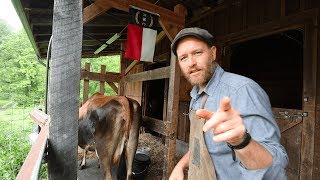
Chelsea asks how to fit high food production and a beautiful homestead on one acre. The hosts prioritize essentials first, accept that perfection takes years, and suggest future-self journaling to handle disappointment when tasks pile up.
Chapters
In last night's webinar, one of you guys, Chelsea, actually one of our members of our Do-It-Yourself Abundance area, asked an amazing question.
Papa? Yes? Can I get some chocolate bar and a drink?
I would have to get it for you when I go up with the milk. Totally missed that shot. Well, what I did was put some alfalfa in here. Some apple cider vinegar. Anyway, what her question was along the lines of how do you balance beauty and production on the homestead and then live with the idea of not being able to get all that you want to get done, done. I'm going to give you a clip of that right now in this show.
How do you balance the urge for more production with the human draw to aesthetic beauty? I only have 1 acre and it's hard to balance the drive to produce as much as possible with a desire for a restful space and relaxing beauty. Making rows are easy to care for, but winding paths are beautiful.
No, I don't feel like, um, yeah, I want to answer that one plus these other two together. And then this next one is, how do you rein in ideas to keep them from growing so large that they're overwhelming? And how do you handle the disappointment of realizing you just can't do it all that you want to do? So what I said, because I'm the one who answered those questions, which is Um, it is like you probably just need a path now, and a winding path is more beautiful, but maybe you should just get a path, a straight path, and then like eventually when you have time to make the winding beautiful path, make the winding beautiful path. Like, I think that everyone— like, you have to start somewhere. Rome wasn't built in a day. And the best thing to do is like make a list, like priorities list. Like, top of our priority list was meat. Like beef, chicken, lamb, pork at the top of our list. We wanted to have like those main sources and then like farther, you know, then like gardens also high priority. And then, you know, other things that are on our list that we're hopefully gonna get to in the next year, like bees. One day I want to tap maple trees, rabbits possibly. Like, there's just so many. He looks at me, he's like, no.
Um, these are all from Chelsea too, by the way. But okay, and we sort of know where Chelsea is coming from because she's just getting started. She's done a lot of research and is really into it and is really going to do well in this, but it's getting started and it's probably coming into some of the reality of it. Well, yeah, if you go out to our garden at BioGreen, you saw in the video, I think. Is it going to be up today or— I don't know. There's weeds this high around our greenhouse. Yeah, the garden, the kids' garden beside the greenhouse, it's, it's overtaking the fence that was protecting it from the guineas. Yeah, it's ugly, but it hasn't— the ugliness hasn't affected food production. We personally— I think it's personal. Yeah, we personally have prioritized the production, and when weeds come in and they're going to affect the production, then we're on it. And what has happened is if you're doing an animal garden miracle or you're mowing behind cows and pastures and moving them every day, it looks beautiful as it is. We haven't— I'm going to give you a reality check here. We don't have time to look at our farm and say, oh, this is so beautiful and relaxing. No, it just hasn't happened. If we go out on our farm we see all the work that needs to be done.
Yeah.
Fortunately, we find joy and happiness in that work. Like when I was out there helping you this morning, I really didn't want to come in and even eat breakfast.
I know, we didn't want to—
we didn't want to go at it working, and you didn't. You got to stay out there. Yeah. And I had to do the domestics.
Yeah. I think that the— I think that what it is is that you just have to Like last year we were really slow. We didn't, we didn't have all the things last year. We were trying to, but we didn't have them all. But yeah, this year, like, my health has improved greatly and, you know, we do have Anna. So like Anna is helping us inside and then I'm like an extra person now. Like I'm actually getting stuff done that we couldn't get done last year. So I think like just, you just have to, you just have to know that there's always gonna be something to do, We're excited because we're at a place though where our systems, we have them mostly in place, but now we can perfect them and do the beautifulness. But it takes years to get there. It's not like you're not going to build your barn and your greenhouse and it's going to look all beautiful that first year. I have to remember, remind myself that.
Yeah, every day.
Everybody say it with me. Every day and every way I'm getting better. Look closely at our vlogs, guys. You hear the music, you hear the romance, you're seeing mostly our good side. Look closely at the vlogs though. When I'm going out there to the barn to make the swill for the pigs, look around.
It's a mess.
Yeah, there's junk everywhere. Look at us when we go into the basement. Look at us when we go— look when we go into the loft, to the cool room, okay? It's a junk hole, okay? It's embarrassing. We're getting to it, but first we're going to feel that kuba, and then we might organize something out there, right? So that's just where we are. I do want to give you a reality check though. The farm's hard work. You gotta like— you gotta like work. You're like, you know, when we had that day yesterday where we went out and, yeah, uh, did chores by ourselves, and it was a beautiful morning, it was foggy, and it was quiet, it was just us. We weren't just like frolicking around in the field. No, skipping and saying, you know, wrestling and kissing, smooching.
We were—
what were we doing? We were maybe going a little slower with our chores. You were on the camera, I was freed up a little bit. So, um, and we enjoyed the beauty. You took time, and the video's uploading right now, and you, you said, oh, isn't it so beautiful out here? So I think it's the work environment. Like, isn't it cool if at work you had an office that had a view? Yeah, they had nice people. This, this is our work environment. And when you do it right in this way where you're moving ruminants every day, where you're, uh, growing animal garden miracles— like that soil we turned today, pulling that tarp up, then putting those beds together. It just looks absolutely beautiful and amazing.
Yeah, but like, I planted lettuce seeds out there and now I'm like, oh no, there's all this rain that's coming down. Is it going to wash them away? And what, am I going to go out there tomorrow or in a week when I go out there and see if my seeds washed away? Am I going to have a whole bunch of lettuce at the bottom of the hill?
Yeah, she says, I appreciate your honesty. I'm learning how to find joy in the grind. But it's so hard. It's not my natural instinct in that way. The homestead is really growing on me a lot.
Okay, so it's not your natural instinct. Totally, I agree. So there's a book called The Power of Neuroplasticity, and it is all about how you like retrain your brain to think a certain way. And it's like not cuckoo science, like it's legit, like our brains are made this way. And it, it's a really good book. It's by, um, Dr. Shad Helmstetter. And it's helped me a ton. One thing that's helped me a ton that I got from an Instagram account called The Holistic Psychologist, it's self— future self journaling. And so it's like what you see yourself in the future, how you want to be. And I can tell you, I've been doing that since January, and I can go back in my journal and look at my entries in the beginning and be like, wow, I've come a really long ways just in the way I'm thinking about myself and thinking about things in general. So anyways, I hope that encourages you because you can do it. You can do it.
Oh, and sorry for the— sorry for the audio on that and even the quality on that. We had a little bit of technical difficulties in that webinar and, uh, didn't officially record it, so I had to do a screenshot of that to get that to you guys. So sorry, but I hope you enjoyed just the content of it. There's more of that. There's a lot more of that actually. There's like over an hour we spent spent with our members. I'm going to give it to you guys, that webinar, as a replay, all of you, no cost. It was that good. It was so good. And not just those questions were answered. We also answered questions on how are we so patient with the kids, or, um, how do we afford to hire help, or, um, oh, how do you— what's your breeding program for your chickens? How do you know how much food scraps to give the, the chickens if you're feeding them food scraps, or pigs. So a lot of good questions in there. That webinar is y'all's as a replay. Go and enjoy that. It's called the Do-It-Yourself Abundance Crash Course. Not just my webinar, but videos from some of my homestead experting friends: Al Lumna, Casey Ostwich, Jason Contreras, The Fit Farmer, uh, The Hollers. Go and, uh, consume that stuff, guys.
It's free.
We're launching that this week, so, uh, link is down in the description. Enjoy. You guys want to just see— let's— let me point out some things. If you think we're getting it all done, do you think that's desirable? We almost this high on the greenhouse. It's not really affecting what we're doing here though, so we're cool. We have enough room to walk right here. Sure, we'd love to come in and mow this and make this look nice. Oh my gosh, this morning glory is taking over! It's swallowing our fence. We should have removed that fence after this got established and the guineas were no longer a threat. Um, it's gonna be a mess to get up, but everything in here though is still high production. I mean, it's at the end of its life cycle, but none of this affected the production, so we were cool with it. But like this, there's a, an abandoned transplant of squash there. It's too late to go out, so it's done. So we got to pick it up. You want to see some more ugliness? You want to see some tin that we should have taken up? Uh, months ago. That was when we were doing the greenhouse. And then this pig fence— now I should get that up right now because that's probably not going to weather well out here. Okay, see, it's time to eat.
I like to eat, y'all.
There's just not enough time in the day. Oh my gosh. Hold on, and I'm going to show you one more thing. No shame, no shame in showing you guys this. Every day, in every way, I'm getting better. Look around these raised beds. I can— can I— I can sort of walk through there. Look how grown up and grassy it is. But I want you to notice something. The raised beds are well maintained. The flowers, the beans, peppers coming on aren't really affected. Oh, tomatoes! Holy smokes, look at that tomato! Wow, give that to Beauty this morning. Not affecting the tomato growth. The weeds here are taller than this raised bed, so we're prioritizing the production over the beauty, but have found that generally it follows. And you can't just let this— I mean, eventually this is going to get to me, and eventually I'm going to say Okay, we gotta string trim this. But look, I mean, this is kind of the end of season with this, but look how beautiful this is. Okay, let me show you one more thing. So we came in and prepped this yesterday. Doesn't that look beautiful? The black soil of the Animal Garden Miracle, just rich, freshly planted. The kale cultivated, it looks nice. This, the, the carrots germinating. Look down here, look at that view out there. Isn't that nice? Production. Beauty follows production. Oh good, you're right here.
Ta-da!
Oh, how nice.
That's in your kitchen garden, honey. In my kitchen garden? Yeah, I, I just touched it and it fell off the vine. I was gonna see if it was ready, but I was like, yep, that's ready. Yeah, that is You got a lot more like it.
Awesome, I know. I need to make my tomato leather. It was on my list for this weekend. It never happened.
So how do you deal with that when there's something you want to do and you just can't? You just couldn't get to it.
I just try to do it the next time. Maybe I can get it to today.
I don't know, we'll see. When you have all of the world inside. Why would you look outside yourself when you have all of the world inside? Why would you look outside yourself when you have all of the world inside? Your mind is a space
More from Justin






If I had to start my Homestead all over again, it could only pick one animal… 




