How to Raise 2 Sheep From the field to Harvest
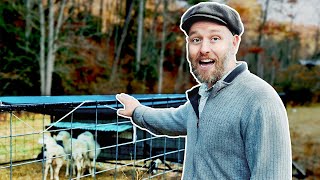
This content was created by Victor Justin Rhodes. This content was uploaded by Victor Justin Rhodes. YouTube video titled "How to Raise 2 Sheep From the field to Harvest" (published/created 2023-11-14) — a first-person homestead vlog and instructional walkthrough in English. The primary narrator (labeled SPEAKER A) leads a family team (Rebecca, Jonah, Austin and other family members like Lily) through pasture management and low-input sheep-raising (rotational moves, mobile pens/netting, mineral program, water, shelter, predator/security considerations), selection and sourcing of stock, and a very detailed, step-by-step on-farm butchering/process workflow (equipment, skinning, evisceration, hanging, handling organs). The video also covers using organs (liver) as food and supplements (soaking/freezing/freeze-dry ideas), brief discussion of personal blood-glucose/genetics testing and health, and interpersonal commentary about bonding through the process. The tone is practical, informal, and instructional—a family farm vlog demonstrating techniques, tips, and reflections on homesteading.
Chapters
It's butchering day today for the lambs. 3 made it. I think we had 6. Next year we're probably hopefully going to have 12 to 24 to choose from. So as they would say, um, in, in sports, if they have a year where you got a lot of young athletes, it's a building year. It's a building year for us. First, everybody wants to know what kind of sheep, what breed of sheep. I don't know if that matters as much as find— just finding something that's available. It's not like sheep are on every corner. We have the St. Croix breed, but I think what's more important is that you find sheep that are managed the way you would have them managed. So for example, we don't feed grain, we don't do vaccines, we don't— we want to do a minimum care program. We don't do any antibiotics or anything like that. So we're going to look for a hardy stock. To find the sheep, I would suggest an old-fashioned search on Craigslist or ask Mr. Google Pants for a sheep farm near you or a sheep breeder near you. Don't be surprised if you're going more than an hour. I got on a waiting list with Greg Judy and his sheep because he manages them the way I would want to, and we drove all the way to Missouri, which is like 12 hours. From here in North Carolina. So not only do we wait almost a year to get them, we drove 12 hours to get them and started a breeding program with them. Starting out, you— I would maybe recommend getting feeder sheep if you can get a hold of it. These are sheep that have just been weaned from their mom, so maybe 2 months old. It's going to be early spring, late winter that you buy them, and you would get them in the early winter, spring, run them on your grass throughout the growing season and then harvest them when you have no more grass or it's getting cold or you need a change. We usually harvest in November. Well, that's, that's now. Folks can harvest in December. For us, we birth in January, so we're kind of getting them out of the way, getting everybody situated for the birth. For care of sheep, think about food, water, shelter, and protection. So first, food. This is a 3/4 of an acre flat paddock, and that will work for 2 to 6 sheep for the growing season. That's all you need. We move them in this 16-foot by 16-foot— we call it the mobile wrestling ring. It's a welded wire cage on 8 wheels that just moves around and That gives them about 250 square feet a day. That's for 3 lambs. If I had 6 lambs, I'd maybe put as many as 6 lambs in here. I would then want to move this twice a day. The key here is you want to have a move that you're not coming back to the old spot, to the first spot, until that grass is recovered, which is 45 days. 60 days is even better. So this 3/4 acres will actually accommodate 2 moves a day for a 60-day— not returning to the original spot for 60 days. It's important that they be in one area for one day and they eat and they poop, and then the next day they are moved out. So they're away from their poop, which is going to give them the parasite pressure. It's going to give them the risk of parasites. You've moved them away from that. And you're giving that grass time to recover, and it recovers more evenly. You know, the weeds don't come back as fast as the edibles, and you end up with a better pasture, more productive pasture over time. Before you know it, you're gonna be doing twice as many sheep in the same amount of spot. That's the cheapest land you can get. It's hard to go out and buy more land. It's a lot easier just to move your animals every day and give your land rest. And double the production on the same amount of land. As for shelter, sheep are really hardy. They actually don't need any rain shelter. They prefer it, they'll be more happy. They're not like a chicken. I mean, a chicken will go downhill fast without shelter. We do provide a shade for them, so whether that's a shade cloth inside of this wrestling ring, or if we have them inside of a net, we will put, uh, give them a sheep shawl a mobile structure with solid roof. If you can give them shelter from the rain, they like it, they'll prefer it, they'll be happier. So that's good, but it's not totally necessary. One of my systems has just shade here, and the other one has some, a bit, some shelter from the rain, but it's all mobile. A caveat here: if you can't be mobile, you need to keep them in one spot. And you need to put down deep bedding. For us, we like wood chips, so put in a little bit of wood chips every day where these sheep are, or wasted hay. Sheep waste a lot of hay. If they're in one spot, you're having to feed hay, they're going to waste a lot of that, and that can be their bedding. Let's go to security. This is a 16-foot by 16-foot cage on wheels. It's a, it's a cattle panel, so it's 52 inches tall, the wall is, and it's welded with 1-inch square tubing, and we just welded a 16-foot cattle panel to this frame. Of course, we supported it with braces in the corners, braces around the wheels. I don't weld, so I had my friend— I hired my friend Ben Holler to do it. We put wheels extended out from it, and we did— we, uh, Northern Tool, I think, or Harbor Freight has these 10-inch non-flat tires, which that's critical because your, your tires are going to get flat day 2. We keep it about 6 inches off the ground. I mean, if you— if your ground is super flat, it'd probably be better that you go 4. Some of these little lambs can eventually crawl out if there's a divot. The good news is not everybody crawls out, and the one lamb is always wanting to get back in. They get out, but then they immediately want to get back in. So it's not a big problem. We do 6 inches because we have some divots we need to roll over. We have the shade cloth built on top of it. We have minerals. I should have maybe included that in the food section, but these minerals— we do the Advanced Biological Concept mineral program. As important as food and water. And, uh, they have choices of 16 different mineral minerals available to them at all times. And we also include a Redmond's salt rock on a rope. It's called Salt Rock on a Rope, just as redundancy. We have salt in their minerals, but we also have that rock as redundancy in case we forget to do the minerals or they run out or it gets busted. If you could only do one mineral, you would have an all-around salt block. I like the Redmond salt for that. And then if you could only have two, you would have salt and Thorvin kelp. And if you want to be, uh, the crazy apron-wearing permaculture chicken ninja master and you want to go all out and you're all in this for your health, you're going to get them the smorgasbord of minerals and get them the ABC program. Then there's water. With this cage, we just have a a quick link, quick snap, whatever those are called. It's like a carabiner thing, and we just hook it to the cage. It holds a bucket. We happen to be near a creek, so that's where we get our water most of the time, but we do have water line in the field too. We can get water out here, but with sheep, they don't drink a lot of water. Uh, with just a few sheep, and you could carry a bucket of water out there and it lasts them for a few days. If you don't want to create an all-in-one welded cage, basically, uh, you know, bulletproof, it's great for keeping our our ram, our breeding ram, separated from the ewes as well. You could do a just a one 100-foot Premier One, uh, sheep net. It's 3 times the amount of space, so you could do as many as 3 times the amount of sheep in it. It's just a 100-foot net, takes up 625 square foot. If you fill in, uh, I would recommend getting 2. You have the sheep in one one day set up the next net, move the sheep into it, then pick up that old net, and that's your next day. It's kind of like a hopscotch movement. So 2 nets will go a long way, and you can raise 2 sheep in it. You could raise, uh, 3 times 6, uh, 8, 8, as many as 18. Today is butchering day. I like to think, what do— what's the process? What— as, as I go through my checklist of what we need, well, first We capture them on our way down there. We'll pick up the pig port. I noticed it on the way down there. That'll help us corral them in a corner. Then we, then we knife them. I have these knives. I can leave a link for that down in the description. A skinning knife and then a cutting knife. I also have a container for catching the blood so we can spread it more evenly out in the pasture. It's a great fertilizer. You could use it on your garden. So then they come up here, we hang them on a gambrel Jona reminded me, hey, we pop, we do two at a time. That's right, you can do it, I can do it. We have the gambrel on a hook. We have this nice, uh, what do you call it, lighter weight one. You know, that was kind of our first one. Eventually we got to this because we also do pigs and cows. It's really simple, uh, knives, uh, gambrel. I mean, you're ready to go. I mean, some of these things are extras like barrels and plastic bags. Big enough to put the carcasses in to get them, uh, to the butcher. We don't part the animals. I mean, we can, we know how, but for now we're outsourcing that. We're focusing on other things. We have a nice bucket of water to rinse our arms, uh, rinse our knife continually, trying to keep hair, uh, and hair off the carcass. We got a couple of zip ties to tie the intestines in the butchering process. A boning saw— don't think we'll need it if we do it right. Maybe We get in a hurry and we just saw the head off instead of cut through the vertebrae. Don't forget, I do it, I do it every time because with big animals like this, sheep or cows, you're doing 1, 2, 3 once, maybe twice a year. And so you don't get that muscle memory that maybe you would butchering 100 chickens at a time. You kind of remember. I go every year to Abundance Plus. There's a nice, um, on-farm slaughter video for sheep. With Brandon Sheard in it, and I've got show notes in there too. It's on Abundance Plus where we show the— got pictures of the step-by-step. So because you can watch the video and it makes total sense, but then you're out in the field and you're like, uh-oh, wait, where do I start? That's what this is for. I also have text instructions, so whatever people prefer. We go down to harvest the them, and I'm like, well, let's just do one at a time. Jonah's like, oh no, no, we can do two at a time. Okay, uh, well, we gotta— we can't take two and leave one alone. So we tried something for the very first time. We actually killed three all at once, and the problem with that could be if we don't get— we can only butcher two at a time. We do have two Gambrels, Jonah reminded me, and that's, that's neat. Jonah's working one, I'm working one. But, uh, the problem with that would be one is sitting around. But I think we're to the point in our confidence, we've done this a number of times, that I think we thought we could do it in enough time. The problem would come in— I mean, it would take hours for the meat to go rancid, I think, but it does start bloating. Lay it up on its— actually, first one. That was the first sheep I've ever killed. First sheep. How'd it go?
Good.
We harvested all 3 of them, brought them up here, going at it. Tough guy saying he's gonna— he's going, he's going to get done and get good on the third one. So then it becomes a little bit of a competition. Is it going to be quality or is it going to be speed? We'll see. But you know, we come to harvest, it's an exciting day. There's something primal about being able to just be so intimate in the kill and in touch with it. There is something very special about that. It's not necessarily easy, but it's special. And then the icing on the cake, or the pure gold, maybe the heart of it all, is that we get to work together. And there's something bonding about especially this act of of slaughtering that bonds you in a special way. He's working one, I'm working one, and it brings us closer together as father and son. It's really just an honor and an enjoyment in and of itself, just this process. It's not about the end product anymore, which we will enjoy— the liver, the lamb— but it becomes about the process. And that's key because most of the time is spent in the process. Poke a hole in the— right there. Yeah, and then you zip up or to the hook. Yep, on the inside. Get around here to pull this down. I see. To here, remember? Yes. You have to peel this back and start it. There you go, all the way around. See, I think I did it now. You can get good enough to where you do this with a— just in one fell swoop. It's not me yet. I don't do enough. Now you can cut the feet off. You don't need that anymore. Okay, then you zip it across. Remember, zip it across. Zip down and across. Back. Every time you try to fist, it's back. Get my slit there that I— this is for later hanging, that slit. And pick up on that. I should do what you call zip. You can't zip like this on a cowhide because it would just— the hide's tougher, it's going to dull your knife. But the sheep hide is very fine. See, I'm already doing better. I'm already making it without— in just one strip, cutting down. And not out. Oh, circumcise this. I forgot to say that. Circumcise about where it's going to be cut off. You get it done. You're really just learning tips and tricks for efficiency and ease. Like, you could cut your foot off, but you learn that, hey, it's, it's good to hold on to that while you're pulling this off up here, you can really just pull this down nicely. Okay, I'm feeling where the joint is here too, and that's where I'm starting my circumcision. She's magical. Gentle. I like to go in gentle with the tip, so if I hit any bone, I'm only dulling the tip of my knife. Actually, I'm in the wrong spot. Be in tune with the knife. Winnie! Winnie's gonna have another feast. Okay, so what you do is you start— you keep peeling this off until you can get your fist in there. Let's see.
Okay, be careful, I'll cut you.
Use your skinning knife. Okay, zip across. Can I actually lower this a little bit so the head touches and I don't have as much movement. I'm just gonna put a knee on her. Definitely, if you have a wool sheep— these are meat sheep, so they're hair sheep— you have a wool sheep, you definitely want to shear it. Before you go into it. This, this rear end's getting kind of gnarly. Now we're just gonna get the back started, and then we can get our hand down in there and really make some progress. Technically, I'm supposed to hit the hide, not the meat. Yeah, look at that skinning knife. Oh, that makes a difference. I get a little excited and I actually cut some meat. That won't be the end of the world either. I mean, your butcher might make fun of you behind your back, but you chop up the meat, it doesn't matter. It's a homestead cut. You're not doing this for market. Anything worth doing is worth doing terribly at first. Yeah, rolling that wrist down there in this kind of motion. Feels good on a cold— hands are cold, this body's still warm. Now here's your some cloths. Did you tie off the intestines yet, Jonah? Should be able to find that intestines. All right, nicked it a little bit. Oh yeah, see her? Get around it. Yep, I'm able to poke my finger through. That was a note I saw this morning that I don't remember ever doing, but it's like, oh, that's a good trick, sticking my finger through there. You don't have to work around it with a knife. Putting a zip tie on it, and that holds the intestines. Now I can cut above that. You don't cut all the way across though, you just cut on either side so that you don't end up cutting your intestines, and then you can get under there. And there it is. Oh, that's not supposed to happen. Okay, that's when I'm gonna need butcher twine. I'm gonna need butcher Butcher twine. I'll be back. Find any butchering twine, but I did find some final zip ties. Important we zip this off because that's where your poop's gonna come out of. That works. Sooner you clean it, the less stickier it's going to be to your carcass. And I like the butchers to brag on our score instead of complain. Now zip down the middle. This one was a wither, Jenny. We shouldn't eat that big wither.
Yeah, and have a little favorite.
We should have kept this guy. Yeah, that's ice cream. All right, I didn't know. I thought it was 3 U's down there. From where we zip down the middle, we're gonna zip all the way down to the roof. The skill comes back to you. It's maybe the order deficiency which you have to jog your memory with. Once you remember what to do next, you remember how to do it. Did you zip tie the wrong thing?
I zip tied the wrong thing.
Okay, the little zip ties are right over there. Tie it real tight. Real tight. Real tight. Okay, and then— okay, now to find that joint, we can bend it, see if we can't identify it. That you just get the hang of. Trial and error finding that joint. You can feel for where it pivots, and once you get in there enough, you can see it. I just kind of cracked it myself at one point. Helps you find the joint, that's for sure. The icing on the cake, or the pure gold, maybe the heart of it all, is that we get to work together, and there's something bonding about especially this act of slaughtering that bonds you in a special way. He's working one, I'm working one. And it brings us closer together as father and son. It's really just an honor and an enjoyment in and of itself, just this process. It's not about the end product anymore, which we will enjoy— the liver, the, the, the, the lamb— but it becomes about the process. And that's key because most of the time is spent in the process. I'm gonna finish skinning the Get it off the leg down the front. We just loosen a lot of this up and then we'll be able to pull it off like Jonah did. Oh wow, yeah, this is going to pull. Let's get this side started. Yeah, I think I need to get it to that point. Yeah, I need to get it to at least below this so I can pull it all down at once. Should have left the head on for this part. See, it's those little nuances. If the head were on and it was touching the ground, it would hold me steady a little bit. Oh, we can get it done, but it would be a little more pleasurable if this thing wasn't bouncing around everywhere. Probably might want— oops. Oh, that's a good point. Okay, let's cut these tissues so it will let us have it. Now we ought to be able to pull that. I kept the belly meat. Papa just pulled his off. Yeah, so you ended up with a cleaner cut. Yes. Heck yes, it's going nicely. Let's pull it up so we can grab it better. Get something to hang on to here, pull down with. Yeah, I don't like how that's pulling, so I'm gonna just— it's pulling off a little bit of the meat. There's like a pretty strong connective tissue right there. There we go, there we go. Wow, that makes all the difference. It gets a little tough, just— oh, see, I don't like that it's pulling that meat off. You got to skin the belly. Wow, there we go. And hey, we got a nice hide. Wow, Kenny, you want to come rinse this hide? We're getting there. I don't know, where's our tub for guts? Come down the middle. I might get me a start up here, just barely poking in there. I don't want to poke any guts on accident, so I can get a couple of fingers in there and then I can kind of pull away my fingers. I don't think I'm cutting. See, I'm not cutting deep enough. Okay, there it is. But see how close the intestines are? I'm gonna be lucky if I didn't cut through that. So it's important to get your fingers in there pulling this flesh away from the intestines. Then you can cut. I do like that. There's no way I'm gonna do it without cutting the intestine. They are right there, just a very thin layer. The animal is bloating. Look at that, just ready to explode, come out of that. Try to stay in the center. Go down to— there's a bone here. Go down to that spot, and then the guts should fall out. Wow, isn't that pretty? Let's get everything out as much as we can. You're gonna start cutting things loose. Be careful. You don't cut this. See that poop? I mean, there's poop right there in there. Shoot. I know I can kind of— I can cut in here to loosen up the other thing. Look at this liver. I need to— we're growing what we eat and eating what we grow. I need to eat these livers. I don't— I hate— I can't stand it. Can't stand the taste. We've been taking supplements, but why we be buying supplements? When probably from New Zealand. Got nothing wrong with New Zealand, but the bile sac— some countries they drink that as a shot. Tastes like you're drinking, uh, aspirin. Tastes very medicinal, like pharmaceutical-ish. All right, if we're gonna grow what we eat, we gotta eat what we grow too, right? So that's the best part of the animal, most nutrient-dense goodness. Why does it taste so bad? Learned something that you could let it sit in milk for like a day or something. Yeah, and it takes away a lot of the taste. Wow. All right, so now we have our intestinal chute here. We need to— it's still got some connective tissue up here that can pull through. Yay, we pulled that through! That's the gross stuff. Now Just these connective tissues holding everything up. That's probably super good for you too, Winnie. There we go. There's the piece that's holding it all up. Nope, thought I had it. Here, watch this. That takes some pressure off. Pulling it up to where I can see, and then I can cut. What's holding us back here? You like the lungs, Winnie? It off throughout the process. Now all we've got left is just sawing it through, through the chest. I went through it. Usually follow the spine right there. Did a little bad cut there, but listen, it's a homestead cut. Do the best you can, get back on track, keep going. You're a jack of all trades, Master of none. That's the definition of a homesteader. That's okay. You're one thing, you know, we're supposed to focus on one thing, it's more efficient. Well, your one thing is trying to make it all work together. That's what permaculture does for homesteading, because you are a jack of all trades, master of none, except The art of permaculture and having things work together. That's your, that's your one thing. Yes, I'm gonna quit my liver supplement. Yeah, but this time we're getting serious. We're quitting the grocery store, quitting buying the supplements. Why buy the supplements? I can suck it up, just eat some liver. We could at least get a, uh, freeze dryer, make our own powdered liver. Huh? There you go. Yeah, make our own cups. Whatever we're buying ain't gonna be this good. It's not going to be this. Do you think you'd lose any nutrients by turning it into powder? Oh, that's a good question. That's a good question. Let's ask Rebecca that. We'll get her in the vlog. I don't know if that process preserves the nutrients like freezing would, right? Waiting on you. He was talking tough over there, acting like he was gonna get done. He was gonna get done and go on the third lamb. I guess we'll I guess we're gonna let you go at it, Austin, if you want to. So what we've been— what we've done in the past, being hopeful we'll eat liver, is dice it up and then freeze it on a flat tray. And then we can— once it's frozen, you can put it all in a bag together because you're not going to eat that whole liver all at once. So dice it in cubes, freeze it, then put it in the bag. Papa, who has your belly heat? Look, I kept that. Oh, good job. That's why I'm a little behind. You think you passed the quality test? Victor loves it pretty bad. Oh shoot. Keep going, keep going back more towards the— you're off, you're on the side. Got that now with your Flash. We'll tell them you did this one. Thanks. I came here to hold it, not to try to help me. Well, 2 sheep down, 1 to go. Not much, it's really not much, but that's why we have so many ewes. They could have fattened that. I guess we could have done in that one. Uh, we have so many ewes now, you know. Next year, that's gonna be very different. We're gonna be able to have 12 of these guys for ourselves. So 4 times that. Yeah, so this has been a building— what do they call it? This is a building year.
Before they're hatched, our sheep already gave a baby.
And that's true. Good point, Lily. Good point. I should say that's the plan. A little too much for you, big guy? Wait, wait, you're slipping. Met your match. Come on, get a good grip on it. Come on, I'll drag you on still. There we go. How do you like Jonah's homemade gambrel? We made that in a pinch, didn't we? Didn't we have to kill somebody like immediately? No, we had no supplies. I just wanted two gambrels. Okay, how was your first kill, Austin? Good. You're a savage beast. Yeah, you cut an animal's throat. Hey, if you get— if you're gonna eat meat, you gotta kill one. It's at some point. You had to kill something. Yeah, you got to feel the weight, right? Me and Joyful killed the crow. I didn't eat it. I did what she did. You're primal. You still got your primal instincts. Good for you. You want one of these hides? We saved Hope's hide. Sure, but now I have 3 hides. Oh cool, little dudes. And I've got Hope, my old Hope, and Hope Jr. Oh, I like it. Okay, go hose it off. Okay, you guys want to see the true unsung hero on butchering day? Look at you! Look at this house. It's good to have you back. Yeah, you know what that is? You know what that is?
It's the liver.
That's me eating what we grow, babe. I like it. Cut the supplements out. You're gonna eat it for my liver for a while. Can I cut it into supplement size and just swallow it from frozen?
Yes, you can.
So I'm gonna save some fresh for Austin and I for lunch. Okay. He likes it.
To sear?
Yeah, I've heard the only way to eat it is fresh.
Yeah, I've also heard just like searing it. So like, get your pan super hot, get some bacon grease in there.
You don't want to cook it.
And like, just sear it so it's basically raw in the middle.
You want it raw. And then— And I've heard with the onions and butter. Austin just does it with butter. Austin's wife said, so she's heard that you can soak the liver in milk.
Yes. I've heard that too.
For how long?
Um, I thought that was more kidney is what that was, but I feel like— I think like 24 hours and that helps.
Well, maybe we'll do an experiment of that too.
You can totally do little pills. Okay, can I—
well, I guess you're hard at work with the remodel.
No, I was doing something else. I, um, I saw something about genetics with like what's going on with you. Okay, so I was looking that up and I had actually had bought the genetic testing through this company, but they've like revamped it and revamped it, you know, things. So I emailed them and I said, hey, I bought this but we never used it, and I went to use it. Yeah, so we'll see what happens.
I haven't seen this over 107 in days. It's like 99. That's like a— well, how— great. It's not?
It's not wonderful.
It's not?
No, 85 is ideal.
Really? Yeah. Especially fasting. I haven't eaten since—
Correct.
Last night.
Correct. So—
So what we're doing is working though, because this has been like at 117.
Correct.
126. Blood sugar. I'm not having bad blood sugar.
That if your NOS gene is dirty, is what he says here, it can cause diabetic diabetes. And it also has to do with your cardiovascular stuff happening.
Wow. So I think it's all— she thinks it's all related. My—
it's 100% related. It—
okay, athlete's foot, jock itch, your A1C, hurting feet.
Your A1C in June was 4.7.
Tell the people if that's good. I have no idea.
It's great. A1C at 4.7 is perfect. 4 months later, whatever it was, October, July, August, September, October, 4 months later, 4 months later with a very bad pain, inflammation, drawn-out process there, it's 5.8. You can't tell me that you were not pre-diabetic and now you're diabetic because you ate a little bit of honey.
Well, it's been helping get off of it.
It has. It will help it.
It's not gonna be— because of my condition, I'm super sensitive. Added to it.
Exactly.
That's what you're trying to say.
But, but what I'm saying is, is that—
The sugar is not the bad guy. Correct. This kind of sugar. Honey and maple syrup. Rice every once in a while.
Yeah. The amount of carbs and honey glucose that you were eating is extremely minimal.
To most people's diet.
There has to be something.
Okay.
With genetics, so I'm doing that. Well, yeah.
She cleaned the house and she's healing me, all in one. We're gonna wash this liver and we're gonna cut it up a little time. We're gonna save some for lunch. We're gonna put some in the— in the milk for experiment overnight. On today's episode of Burn It Up Cooking Show, liver, lamb liver. Grab lunch. I mean, won't we all eat for lunch? All right, good amount of bit for lunch. Austin won't be here to cheer me on tomorrow, so let's just do a little bit for soaking in the milk. I know a lot of you commenters are like, yes, yes, you got it, that's the way to do it, soak it in the milk. Some of you saying, oh, I love liver, I wish I loved liver, it's, it's the superfood. It's— if there's a superfood, it's liver. To imagine, soak it in Our own raw milk, that's gonna take it to another level. We're gonna cut this into pill size. We're gonna freeze them like that and then just swallow them. How many would I take a day to replace my supplements, Rebecca? 6-ish. 6, okay. So basically a spoonful of liver. My job That almost looks like chocolate chips. Beauty's job. Hey Mom, you want to deal with your celery? It's from a while ago. Same idea. Now that that's frozen individually, it can be bagged together. Did you ruin your celery? It's all right, it's been frozen this whole time. What are you talking about? Hey, you guys got it made right now. Now come on, watching Henry. Who You did it! Yeah, did it. Feel like you could do a deer now? Oh yeah, that's not too hard. 3 of these trays. Are you gonna start eating this instead of your supplements?
Well, I probably should finish the supplements.
Oh, okay. You know, it took me a lot of time to process and meet and, and do that, so Aha, okay. Liver. A bottle of this is $50, lasts a month. But the dollar bill values— what do you think I should swallow, 5 or 6 of these a day? You love the supplements. Yeah, so maybe one, there's maybe 5 days. 5, 10, 15, 20, 20. Okay, so it's a month right here. Wait a minute, I just, I just processed $150 worth of liver supplements. Actually, that might be big. Because it only took me about a half an hour. I'll get paid $150 to $300 an hour to process my own liver.
There's so many different values. One, we know the story of that liver.
That's the most important— the health.
It's not from New Zealand, it's not from a long ways away. It's what we're actually eating. It's the nose to tail.
Fresh.
It's fresher.
Are you losing any nutrition by turning it into powder when you do the If I did, I would freeze dry it, and then I don't think I—
oh, you probably lose salt.
So freeze drying, you don't lose a whole lot? I don't think so, because her idea is to go ahead and freeze dry this.
So that's my goal. And we're gonna move back into the house. I want to freeze dry the organs, not just the liver.
I want to do— that's right—
and other things.
The benefit of the lungs, kidneys, I think. What about the brain? Pancreas, brain, eyeballs. I'm not doing eyeballs. You'll just swallow this whole— choked. Cooking some fresh liver. They say that's the only way to have it. Hey, you're gonna be talking with that, you gotta go outside, bro. We just sear it, right? You just sear it. You like it, so you must be doing something right. Is that seared enough? You want it more seared? A little more, a little more. A nice little crust. Okay, well maybe that's my problem, I haven't been cooking it long enough. Okay, that's our liver. Here's, uh, the raw liver inside. Now it's gonna get windy. Oh my gosh, liver first while I'm hungry. You probably don't want the commentary on this.
No, I don't.
I mean, it's Lever. Did you even cook it? Stop. Good. Go back to the pizza date we had.
No, I want to watch. I want to finish watching.
This isn't so bad.
What do you think, Austin?
I like it. He's a liver guy. That liver that you're eating right now—
okay, I'm about to vomit.
Really? We're not even talking about it. I know, I'm restraining. You'll just take them in your capsules.
Yeah, I have a literally eat liver and tried, and it's just so bad.
Why? This is like the best food in the world. Why are we not attracted to it?
Maybe because we've been so polluted by all these other tastes and fake, fake tastes, and we've gotten so far away from this. Like, we've gotten so far away from eating real food.
Well, I'm trying it. Tested the blood sugar before, 192. We have a goal for my doctor. She doesn't want me to go over 120. So no, like, 3 tablespoons of maple syrup in my coffee. Normally I put maybe a tablespoon of honey in the tea. I've put a lot of cream and a half a teaspoon of honey, and it's very enjoyable with a considerable amount of less of honey. So I'm curious to see what it does to my Blood sugar, 120 after any kind of food, and we got it down to that, and then below 90 fasting blood sugar, which I'm kind of just getting at. I'm just kind of getting to 92 in the morning, I think. Maybe I get 86. How fast does it take, Rebecca?
Food takes some time to be broken down into usable energy, but most of the food you consume will be digested and raise your blood glucose in 1 to 2 hours.
What about liquids? I should have said off the liquids.
2 hours after you drink a certain amount of glucose.
Goodness. Rebecca's setting up an appointment for me. Our doctor wanted us to get another opinion on my vascular health. We have some— I have some inflammation vascularly. I'm so sorry. How long have you guys been smudgy? That's coming up on the— in 1 week.
Yeah, 1 week from today.
So in our journey to grow our own food and eat what we grow, I'm Today, what a pleasant surprise with that liver. I know, it was not that bad to eat it straight up. Oh good, I'm happy. It just wasn't that bad. I don't know if my body's appreciating it more now or what. Could it be that I'm not— I need to eat much sugar at all? Hey, maybe I'm more into it. Uh, listen though, the big win for eating what we grow— I've got 3 months of liver supplements, $150. I earned in about half an hour.
Yeah, that's great.
I'll pay myself $300 an hour. 1 hour later. Here we go. Did that little half teaspoon of tea bother me? 97. We're good. Happy day, y'all. See you tomorrow.
More from Justin






If I had to start my Homestead all over again, it could only pick one animal… 




