How Were Planning Our 2024 Abundance Garden
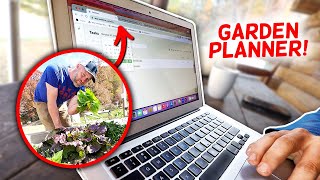
In this informal, multi‑speaker YouTube episode, host Victor (Speaker A) and guest Luke Hammond walk through a series of homestead projects they plan to tackle in 2024. The conversation opens with a hands‑on test of inexpensive nest‑pad mats for a chicken coop, weighing cost versus cleanliness benefits. Luke then demos the SeedTime garden‑planning app, showing how to add crops, set planting dates, view succession‑planting windows, generate task lists, and print weekly schedules or journal entries. The pair discuss the AgriGrow microbial inoculant, explaining how it stimulates native soil microbes to improve pasture regrowth, compost breakdown, and bedding health. The dialogue shifts to family meal planning, highlighting the use of garden‑grown pumpkins, leftovers, and nutrition considerations, while also touching on homestead economics such as Missouri’s low property taxes and the trade‑off between buying versus growing food. Later, they talk about a deck renovation, debating material choices, finishes, and durability. Throughout, the tone remains conversational, instructional, and enthusiastic, offering practical tips, cost estimates, and personal anecdotes that illustrate the day‑to‑day decision‑making of a modern homestead family.
Chapters
I got Luke here. Luke, what's your last name? Hammond. Are you with Farmers Friends? Who are you with?
Oh, I'm with everybody.
Are you just a fan? Agri-Gro?
Farmers Friend?
Farmers Friend? These eggs are cleaner today. Somebody's pooping in there. That's not the problem I'm interested in today. We're pretty clean of hay today, but it's only been one day. Maybe a few drops, but we're learning if they keep on doing that, which they will, it'll clog up the 1-inch mesh and poop won't fall through. We're gonna try something. Let's see if it worked, Luke. We tried an experiment yesterday and we just put these mats in there. These are from our rollaway. Good clean egg there. Look at that. Okay, these little mats are working so far with one chicken. I found some nest pads on Amazon. Oh, I don't know if this is gonna work either because This is just going to get loose too, and that's going to get caught up. I was thinking it would be more firm together, so we might have to find those mats somehow. I think this is probably going to be the perfect size though for these egg crates. Boom! What do you think? I mean, maybe it'll work. We'll see.
What's the price?
I know, it's too much probably. I don't know. I don't know though. If it keeps your eggs clean, then it's worth the cost. This hay is free, but we have to put it in ourselves regularly. And then when it clogs up the coop, how much you're going to charge for cleaning out a chicken coop? How much you're going to pay yourself for that? I think this was, uh, $30-ish bucks with shipping for one.
30?
Oh geez. 2, 3, 4, 5, 6, 7, 8, something like that. So they better last.
This is my $37 egg.
Well, I don't know, they might not have put hay in that. See, they get the hay out there. Yep. And there's nothing.
Are you having cracking problems? Are you having cracked egg problems on there?
Not really. Our next problem to be solved is if there's poop in there, they're perching in there, right? So we need to just do this at night. See, there's the opening. We just do that for a couple of weeks and they train not to go in there. You watering down the concrete, my man? Okay, you did good on this. Why are you watering down the concrete?
Clean eggs.
So those pads are coming to about $3 a pad. You can do 10 chickens per nesting box. Now what are you working on? Come on, lesson time. Mr. Brown said, oh boy, this orange light is terrible. Mr. Brown said, hey Pop, when's my lesson? And I looked down, 4 minutes. They have a twice weekly online tutor for their reading. All right, you're set up just in time. Thanks for asking about that. From Missouri, right? I'm from Arizona, but you're living in Missouri. Yeah, I feel like it's an underrated homestead state. What do you think?
100%. I mean, it does get hot and both cold, and depending on the county, it's some of the like least expensive ground with really good tax.
Oh yeah, I must say they practically pay you to live there. Well, because your taxes are— your taxes compared to the taxes here, they're so little.
Yeah, yeah, no, it's a good place for sure.
You were talking about hundreds of dollars, a couple hundred dollars instead of a couple thousand. Yeah, for sure, for the same amount of land. And it all really— so it's like 10 times cheaper. Yeah, for property taxes. Yeah, and you got a lot more freedoms. You basically have no homeschool rules. You boys want me to process this milk? Yeah, I'm on it. I just play pickup in the morning now.
That's the easier stage of homesteading when you— than when you have a bunch under, under—
oh, I know. Is that what you're at right now? So you have a bunch under 5?
Well, not under 5. So I've got a 1.5-year-old and then, uh, 5, 7, and 9. So they're getting to the stage.
Hang in there, buddy. They'll get to this before you, and you won't know it. You'll just all of a sudden realize it. Oh wait, my kids are doing the chores and they're telling me what to do. That's the dream. Yeah, I'm living the dream right now.
Good morning, Winnie.
This is what I do, Luke. I come in, pick up the pieces. Luke, you want to show the people a little demo like you showed me?
Sure can.
Of what this, uh, this garden planner can do.
I made a quick calendar. I located your zip code, and so we are now in Zone 7A. Yeah, North Carolina. In this calendar, you can really easily just click and add a crop. It's going to come up. I have some other stuff loading right now, so it's probably a little bit slow on my internet right now, but here go. Um, you can easily just pick your crop that you want to grow.
Rebecca said beans. Do beans. Oh, you want to do tomatoes? You do tomatoes.
Ah, you know what, we're getting into the winter. Let's just do some lettuce here. Um, you can type in lettuce, you can pick your variety. So one of my favorite varieties to grow is All-Star Mix.
Oh look, I see you can also buy it if you want to.
It looks like you can buy it on our store right there. If you're a subscriber to the app, you actually get 20% off of seed packets, and that's a true 20%, which is amazing.
And then you pick your variety of—
variety All-Star Mix, um, right there is one I really like. You pick all of your locations when you're going to plant. So let's just say we're going to go out and seed. We can go out and seed this right now in the garden on the 27th of October. I'm going to do it manual and we're going to direct seed this crop, cool season, set up on offset.
We're going to go and the spacing is already set up.
Spacing is set, but you can adjust it how you want.
Do you want to break the rules?
Exactly. Break the rules if you're a rebel.
Here we go.
We're going to schedule that, and automatically it's going to jump into our calendar. Let me move us a little bit closer to our dates, like October of 2023. And as you can see, it popped up in the calendar. I'm in the timeline view. I can easily change this view to see, um, another— like a typical calendar. So you can see, so when you did that, it automatically told you when you needed to do your bed preparation, when you're going to be seeding it, It tells you your cultivation windows. So on your task list, you can look at, you know, if it's a crop that is a longer growing crop and you need to get out there and weed the garden, it'll automatically jump in there. And that all batched into a task list, so you can jump in.
That's what I'm excited about. So now you— where is that print task? Is that right there?
You can immediately print that out, hand it to your kids, you know, in your case, what to do every week.
Yep, you can print that off once a week, right? And it'll say, go, go cultivate this, go harvest this, go plant this.
Go get it done. So if you're like me and you're more of the artist, but you really struggle with the system and the process of actually going out and getting the work done, this is a great way to stay on task, to not get too behind to where you're trying to rescue weed, you're trying to plant everything too late, and then you're just unsuccessful. So the whole goal of seed time is to help you be more successful in the garden, stay organized, and get your life back, get it under control.
And this maxes out to it, the Yeah, it's, it's succession planting, making sure you get all the beds planted.
So here's a succession planting at a quick click. So all we have to do is click this button right here, um, and it's going to come up and we can say add a succession.
Oh, there you go.
Um, it's going to say, hey, we're getting into deep winter.
I like this, it's saying warning, you're—
it's, it's really cool.
You're not gonna have any light, it's gonna be cold.
Yeah, are you sure you want to plant now? Gives you that warning. Maybe you're growing in a tunnel, maybe you added supplemental light.
Yeah.
Full creativity, you're able to do it. So that automatically jumped in. So we can jump to the timeline again, and you can see your harvest window has now been tiered and stacked. Okay, so you can harvest continually. So you can run these out all year long. You can be harvesting fresh lettuce in your garden. So that's a way that you can—
will give you a heat warning too. It will give you— this doesn't like—
exactly, there's a heat warning for those heat-sensitive crops.
Okay.
But wait, there's more. You know, there's the task list. Uh, you know, we also have a fully integrated journal to where if you click the journal, you can log in and you can say, you know, um, yeah, planting dates.
And then I guess you could search this journal.
And you can search the journal. Um, also, I'm back.
Do you use the journal yourself? Um, I'm planning to try on 2024 because I don't know if I would be the journal guy.
I am not a journal guy. And, and so, but some people would be. Some people would be. I am, I'm a, I would like, I'm a list guy.
I'm Yeah, I like the list.
So this is moving—
Yeah, I like to print out the list and have a workload.
A spiral ring, you know, give me the to-do list, get it done. Um, so now we're on the task list. Um, here's things we needed to do.
Okay.
Um, so today I— let's just say, uh, I did my bed prep the other day, or let's just say I did it today because I went ahead and I did the bed prep and I went— I'm going to check this off. It'll auto-populate that I did that today in the garden. And I'm going to say I went ahead and I went out there in the garden and I seeded it. That means it actually changed in your calendar already as soon as you check that off the list.
Oh nice.
And it brings it to the date. So this is a part of your journal. I mean, this is your— it brings it to the exact date.
You said you were going to plant it at this such and such date, but then you didn't take into account the actual date you actually planted. Right. And that's good.
It fades it out and scratches it off the list on your calendar right here. So when you go to a different view, you can see exactly what you're doing.
And that feels good. Feels like you're doing something.
Yeah. And on this crops page, you can go through and you can add all your crops in there.
Yeah.
Um, there are some things— I mean, this is an annual-based system. You can create your free account right now. Um, we have a really robust free account. You can do one calendar with that and you can do all the crops that we already have built into it. Um, if you want more and you want to do— plan out several gardens, or if you want to access our layout feature where you can draw out your garden and you can drag and drop from your garden exactly where it's going, You can do that as well on one of the paid subscriptions. So that's kind of what SeedTime is and how we try to roll it out. Um, again, check it out, see if you like it, um, and give us some feedback.
Yeah, we're gonna possibly try this out with you guys. You guys offer, uh, to do a show, you do a webinar where, uh, you, you work with us to plant our garden and Uh, we're learning the software, they're learning the software, right?
So I think our goal with your show should be something like this, to where in about an hour to an hour and a half we'll plan out your 2024 and all of your food, the crops that you want to grow, will be a full plan and you'll have your task list completely organized. And we'll be able to do that in an hour rather than—
are you ready? Because we're quitting the grocery store. So it's gonna be jammed out.
2024, no more.
That's right.
Grocery store no more. I love it.
Yep, love it. Growing what we eat and eating what we grow. How about that one? Yeah, growing and eating what we grow.
2024 no more, but it's pretty good.
Okay, now before you go, you got experience with this AgriGrow. Yes, you got me on it. So basically, what is it— what's it going to do for our pastures?
So what you're doing is you're stimulating all your native microbial species within your soil so that it helps increase nutrient uptake. Okay, so when, when you're doing that, um, what it's going to do for your pasture is it's, it's going to help everything grow. It's going to create fuller, more lush pasture. It's going to help disease resistance, drought tolerance, all that kind of stuff. That's things I've noticed. If you're spraying it directly behind and shortly after, like, poultry moves or sheep moves, or right after a heavy grazing, it's going to increase that, that regrowth You can miss some of it, but you want to be as even of a coverage as possible. That's going to give you the best results.
That's good to know. This also works in compost— or not comp— well, compost, but also deep bedding. It would help break down the chips.
It'll help break down the chips faster. Wow.
A little bit.
It's going to give you a little bit richer. You're going to notice less aroma.
Okay.
If you're out of balance within your, your carbon nitrogen ratio, which ideally you're shooting for about 35 to 1, if you're out of balance, you'll probably start noticing that that's going to help correct problems. So I use it all over the place, all over my farm, um, for a lot of different features. So that's a great product to use.
And it's just like the Korean Natural Method where it inoculates— that's essentially bedding and gets it active.
It's very similar to that, only you're actually— you're stimulating your native microbial species. So you're not just like inputting some of the—
oh, I see.
So a single teaspoon of soil is going to have over like 18 18,000 different strains of bacteria. 18,000 different strains in a single teaspoon of soil. So a lot of these inoculants, they only have, you know, 1 to 6 strains with a colony-forming unit count of however many billion or million. It sounds really impressive, but when you're talking about putting 6 strains into 18,000, it's not as impressive anymore. Do they work? Yes, they do work well, and they can also work in conjunction. But when you begin to feed the beneficial microorganisms within your soil, through competitive selection, they're going to outcompete the pathogenic strains. And so that's really the approach, is trying to get that microbiome within the soil or the bedding or anywhere to a healthier level. That's kind of the goal.
Wow.
What's going on here? Oh, we got a magic show!
Sit in the front seat, prepare to be amazed!
Oh, I'm prepared. Y'all prepared?
Yeah. Here is— I forgot what it's called. I'm taking out this ball.
Okay. Whoa! Ta-da!
Wait, I didn't do that right.
Whoa!
I'm gonna take out this ball.
Okay, you took the ball out.
Abracadabra!
What? Wow!
And now I'm gonna make it disappear. Let it disappear!
Oh, let me see the cat. Oh, it's not in there. That's weird.
Next, we are going to have the coin disappear. It's really complicated. This is why I'm— put it in. It's gone.
What?
Reappear.
Oh, whoa.
Ah, making money with magic. I'm gonna turn this I see $5.
Whoa!
Oh, oh, by the way, it's completely empty.
I see.
Make it $5.
Wow, we need to hang out with her.
Last and final trick. You're going to take this dice and pick any number. Do not tell me what number it is. Do not tell me what number it is. Then put it in this little thing, the number you picked, right upwards.
Don't look, her back Back is turned. Okay guys, we got— you know I'm gonna go with this one.
Okay, 6. I know, I know that one too. Oh wow, I hope you enjoyed today.
I loved it, thank you. One of the keys to eating what you grow is having leftovers, you know, even if it's just a little bit. Like this beef for tacos combined with just a little bit of lamb leftover we had for Greek. Together it's a hodgepodge meal. I got an idea that freshen it up from the farm. Hey, Lily, come on, it's your turn to cook. I'm thinking we'll have Greek. I'm gonna go get some fresh salad from the raised beds. Do you want to go get that, or do you want me to go get that? Well, if you stay—
what else are we gonna have?
If you stay here, you'll heat it up. Make some nachos, a little bit of nachos. We've got pumpkin, roasted pumpkin we can heat up.
Can we get pumpkin curry?
Um, pumpkin, pumpkin curry soup. That's tonight.
French fries.
Yeah, make french fries, pumpkin curry soup, and fish. I'm— fish and chips. So for lunch, you want to be in charge of heating this up or going and getting the lettuce?
I'll be in charge of heating it up.
Okay, I'll go get the lettuce. Put this on a tray and on some chips, put some cheese on it. I'm wondering if you should add that to the tray or do a separate tray, because then you have to do these too. Do what you can. It might have to be two trays.
Okay, do they need to be warmed up in the tray?
Yeah, but not all of them. We won't eat all them at once. Let's just try it. I'm not sure anybody will even like roasted pumpkin, but hey, it's what we grew. We're gonna eat it. You're not excited about it?
No.
Nobody needs to wait till 2024. We're gonna start now. We have some pumpkins from the garden. We've made pumpkin soup, roasted pumpkin, and what was the other one? Oh, pumpkin pie. We're doing better with the leftover situation. I like this eat what you grow motto. I mean, we all know the let's grow— let's, let's, let's grow our own food. But unless you eat it, what's the point? And it's been— oh, it might already been a couple of weeks since, you know, we're kicking the Whole Foods habits. Not Whole Foods like no ingredient, one ingredient foods. I'm not talking about that. I'm talking about Whole Foods the grocery store. It's gonna stay fresh on the plant. We cut it, I imagine, is— well, the moment it starts wilting, I imagine it's the moment we start losing its nutrients. Now, I'm not for sure about that. Certainly the way it works when grinding grain or grinding coffee, that's when you start losing your nutrients. And here's the thing, ever since Rebecca and I found out the grocery store has 15% of its nutrients out of 100%, that was a life-changing moment. Even now, guys, we've been growing food for 15 years. Been growing it for health for 10 years. Even now, I feel like that was a very pivotal moment because organic isn't good enough. Because it's the same story with organic— it's better than conventional. I don't know as far as nutrient density is concerned, but for the no GMOs, lower amount of pesticides, this kind of thing, it's better. Since we're growing food for our health, it's hard to dodge that stat. And yeah, counting labor and even our expense on the homestead, it can often be cheaper just to buy it. You think that might be a little too much? Let's put a little bit of pumpkin back. I don't— I think everybody's gonna have the same reaction you did.
Why does pumpkin taste so bad?
I think it's because it's low carb, low sugar, which is why I want to like it. I'm mostly carnivore. Uh, try to eat low-carb fruits like pumpkin. It's a fruit. You had enough chips. Oh, that's plenty. Bless you. What do you need? Okay, this is not happening. We're eating these up and it's over.
Yeah.
Canned refried beans, chips. I gotta ask Rebecca what she wants to do that in 2024. This Emily has 3 ingredients. Yeah, corn, grass-fed beef tallow, and sea salt. How extreme should we go on this in 2024? We don't have to go to the grocery store for that. That's chips. Can we still have— oh, and she loves to bake. I think we're gonna have to let you bake once a week, but if you keep baking at your pace, we're gonna be Oh, you don't have to do that with that one. That has a—
oh, it does.
Hope it didn't jack that up. Nice. Like, will we do fried chicken? Like, for the breading? Like, I'm telling you, we're gonna do spices. Uh, we can just order those. We're not gonna grow all our spices. There is that 80/20 rule, like, what is 80% of the results for 20% of the effort? Or we can make sandwiches Um, she's talking about her picnic when you show your horse next week. Not my first show.
Yeah, it's not next week, this week after that, two weeks from now.
Okay. All right, so this is our grocery from the co-op. No more Whole Foods. Co-op doesn't use the peel. I don't know if I'm ever gonna get these up. Bubbies pickles, string cheese for Gideon, ricotta cheese. I guess we need to get a third cow to be able to make all— to get the cheeses. Oh, dates. Cilantro, pomegranates. It'd be interesting to see how strict we get with this next year. Here, some local cider. It's apple season here through mid-November. Come on, Laura, you got two. Oh, the men are— the boys are taking them for you.
I was gonna have the boys take them.
I should have told them lunch is ready. Okay, well, I'll help you.
Thank you.
Big strong man, bring in a bushel of apples at a time. That's how we can go through some apples. We should, when they're in season like this, right? Exactly. And then slow down after it's over. But you know what, it's banana season all the time. Are we ever going to give up bananas?
Well, I thought I could—
even in 2024.
I got this. I'm hoping that maybe instead of buying the fruit strips, he'll eat like a date.
Yeah, that would be good.
Um, or this was another thought, which I got, and we're going to test it out on him.
Oh, that's a good idea. Dried fruit.
We'll try it and see if he'll eat this instead of a fruit strip.
Let's try it. Okay, I don't know if I've ever had roasted pumpkin before. I can see why I haven't had roasted pumpkin before.
I don't like it.
Very different. This is not what I expected. Zane said there are no bad ingredients, only bad recipes. Oh, maple syrup.
You want to try it?
These are the new yummies.
These are the new yummies.
Time to eat, boys.
No, I'm trying something out. Do you like it?
Oh, here you go.
That's good, huh? Really? You're crazy. Oh, he's getting more dates.
Hey, you want to try pumpkin? Try it.
Nope.
Okay. With butter and maple syrup. I mean, butter and maple syrup makes anything better. It has a bit of a stringy texture. Mom got some salad. On our nachos. Anybody else get some? Bunch of carnivores till it comes to corn chips, huh? Am I the only one that dared to get roasted pumpkin? I got it. Softball. Well, we'll see how pumpkin curry soup is tonight. We're at least sticking with pumpkin pie.
We have a pumpkin pie.
You lit up there. You didn't light up like that when it was roasted pumpkin. Hey, wow, is this before and after? Right there's what it's gonna look like when I get it done. I love it.
It did. But the only thing is, like I was telling him, quantity. Yeah, yeah, that's the biggest thing. We're going to try to outsource some more, or we going— because, you know, we got about, I think, total, just off top of my head, you probably going to need about 1,500 square foot to do them all.
You all right with the whole wing like that?
Structurally, I think you're right.
Character.
Okay, not that I'm trying to spend your money, but you probably want to use stainless fasteners on that. That locust is Isn't it acidic? It's pretty though, ain't it?
It is. It is pretty. How are we going to keep it pretty?
Will a stain keep it yellow? We'll have to ask the finisher. I know that on Ipe, a lot of people just let it— they like that patina, you know, it grays.
Okay.
But then I've also seen they put it— what's that stuff called? Rosewood oil. We'd probably have to go up there to the paint store and dabble with a couple things. You wouldn't have to worry about replacing the decking on that deck, buddy.
It'd outlast me and you.
I'm never going to replace it. It's a legacy deck.
That's right.
Look at the before and after here too.
Yeah, yeah.
Wow, that's the most—
that's amazing, right?
Holy—
does that make it all worth it now? Wow. You might want to find a stain. Okay, that's some eco to try to preserve this yellow.
Yeah, I'll do a— I, I have one like that, whatever we got before.
Oh, that Vermont stain that we have, that big bucket?
Yeah, well, although we put it on that and it's gray.
Oh, it didn't work.
Well, should we do it, use it for something else? It's so nice. I feel bad using it for decking. It's like so nice.
No, that's what it's used for.
Okay.
Well, I looked it up on the internet and there's an outfit that does that, that makes their own stain or finish to put on it. Oh, send us a link to that. Put that cover back on there while— man, when all else fails, we'll turn this squash and the pork. We lose some, we lose some. Pumpkin. Pumpkin, yeah. Next time, pumpkin pie. We'll see how the soup is tonight. Hey, get one of them apples. Everybody's getting an apple? He loves them so much he gets on them.
Look at this gigantic apple, Papa. Bigger than my hand.
Ambrosa? That's a big part of us realizing our goals is us getting back into the holler house. Hopefully by getting Henry's birthday, the end of February. Please, at the latest, please, at the latest, April 1st, our year anniversary of starting this homestead house remodel.
I really need to frame a wall about 2 foot out straight across so that he can shoot this ductwork up.
That's fine.
Are you okay with that?
Oh, thank God.
I told you she was— I told you they were team players.
You're just welcome to come in the house. Yeah, yeah, no, that's fine. What do you think you're doing in the house? The boys are down there playing soccer. Happy to have been the one that introduced them. Now they have so much fun with it, almost every day, at least once or twice a week. Got a buddy there, Beck. I know, you won't get off.
I'm ready to put him down.
Really? You kicked him off? Oh, now he's coming over here. The lard is coming on. Lily's kind of up to Potatoes. These are store-bought potatoes. We need to get rid of them. They're starting to eye. We had those before we had our homegrown potatoes.
Our homegrown ones taste better.
Oh yeah, how so?
They're more fresh and they don't taste so dusty.
So what's the first thing you do here to make fries?
Well, you rinse off the potatoes, then you peel them, then you rinse them off again. And then you chop them up nice and fine like this.
What's it at? You want 325 to 375. Over 400, so let's push it off for a second. Oh, you gotta be careful. Now do it. There you go. That's good. There, see? That's good. Let's not do any more. There you go. That's a better knife, right?
What I like to do is fill this full of French fries. Okay, that's how many— how many fried that done.
All right, I like to hear that sizzle. But what are you doing with these apple peels?
I'm gonna make apple cider vinegar.
Is that what— oh, okay. I was gonna say, how do you make apple cider?
It's called scrap apple vinegar.
What else you gonna put in there?
Honey and water.
And this has already happened, and now this is apple cider vinegar?
No, it's not that yet.
How long does it take?
A couple weeks.
Family's having fish tonight. I'm gonna have Flossie. I'm gonna fatten her up a little bit though. I just drenched this in tallow, which is beef fat. You're funny. You're pregnant. Letting you pregnant, Mama.
Yeah, that belly's really—
Hey, Rebecca, you're gonna have a grandbaby. Cinnamon, maple syrup, sugar, and honey.
Um, butter, cinnamon, maple sugar, and butter.
Oh, okay.
Is it good?
Yeah.
Are you gonna eat it at all?
Yeah, I'm gonna eat it.
Would you eat it again?
Yeah.
Okay, pumpkin— oh no, pumpkin curry soup. It does need salt mucho. I don't know if I'm a big curry fan. Jose, tell me the truth, you like that pumpkin soup?
Nope.
Jonah? It's not very good.
It's a little strong.
Would you have it again?
I don't know.
I will say this to you, it's okay to not like it. I know it is. I know it's okay. You're not being mean. She's so nice, she won't even admit to not liking anything.
You have to acquire the taste too. Yeah, it doesn't taste bad.
I'm gonna say this I'm gonna be straight up, we're not eating— ever eating this again, ever, unless she makes it. So we're gonna stick with pumpkin pie for now.
Kind of tastes like lentils or something.
Here's the deal, we gave this a valiant effort. I feel no guilt. You can't shame me about what I'm gonna do. I can hear some of you screaming, oh, you're wasting it. No, I'm not gonna waste it. I'm turning pumpkin soup, which nobody likes into pork. Did you hear that? Pumpkin soup into pork. Here we go. All right, happy day.
More from Justin






If I had to start my Homestead all over again, it could only pick one animal… 




