James Rebanks on Opting Out of Big Ag
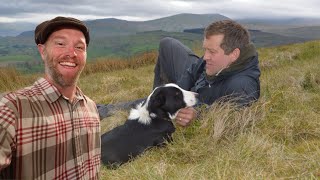
In this candid interview, author‑farmer James Rebanks, his wife Helen, and host Victor Justin Rhodes discuss the evolution of their Lakeland farm from conventional, input‑heavy practices to regenerative, conservation‑focused grazing. They reflect on deep family ties to the land, recalling the presence of James’s late father and grandfather while working the fields, and how those relationships shape their sense of purpose. The conversation covers practical experiments—such as converting hedgerows into productive fruit barriers, increasing soil organic matter by 3% through adaptive grazing, and fostering biodiversity with over 200 plant species—alongside the emotional challenges of grief, the pressure to prove oneself, and the desire to step back as their daughters take on more responsibility. They explore the role of social media, vlogging, and public engagement in sharing farming knowledge, citing influences like Joel Salatin, Greg Judy, and Irish NGO Farming for Nature. Themes of collective identity, anti‑celebrity humility, and the balance between preserving traditional breeds and adopting new methods recur throughout. The interview ends with optimism about community support, intergenerational succession, and the broader movement toward sustainable, community‑rooted agriculture.
Chapters
I'll do that. Um, yeah, so I guess we should start with why you wrote the book Pastoral Songs. We're just going to jump right into this. Why? Why'd you write that book?
So, um, that's a good question. So the, the book I wrote before that was the book I wanted to write ever since I was a kid.
Uh, okay.
And the first book, which is called The Shepherd's Life— is it called in America?
Yeah.
Yeah.
What's the name of that again? I don't know, it's on your bookshelf back there.
They changed the title in other countries, so I'm trying to think what it was called in America. Um, so the first one was to stick up for my people, really. It was just like, hey everybody, you don't— I am sick of everybody badmouthing farmers, uh, misunderstanding who we were.
We live in a very heavily tourist area, so there's 18 million visitors to the Lake District every year. And it's a really small area. It's beautiful, but it's really well known because of the Romantic poets like Wordsworth, of course, who wrote The Daffodils just over the hill from us, various other paintings and art and literature, and the stacks of books about the poets.
I've got all that stuff, no books about the people who live in it, work in it, made it what it was. So the first book was to kick back against that, and then It had a radically different title when it was sold to the publishers. Yeah, it had a very rude word in the title, but never mind.
What was the harsh word? What was the original word?
It was called Fuck Wordsworth originally.
They didn't go with that one, huh?
No.
I wonder why.
I think it would sell well.
No, that wasn't so popular with bookshops.
So wait, wait a minute. Were you upset when they didn't go with that title?
No, it's a working title.
You know what you're doing? You're just prodding. You're seeing what you can get away with.
Well, I mean, you probably did get the attention of the publisher with that title.
Oh, for sure.
And then the second book, Pastoral Songs, a bit of a more grown-up effort because I was— don't worry about it. I can see somebody listening.
We're looking to see if it sounded like something was pouring out.
Okay.
Don't worry. So the second book was a more grown-up thing, and it was, um, my dad had died, I'd become the farmer. It wasn't us anymore, or we, it was sort of me, Helen and I, instead of me and my dad. And I was grappling with why we didn't make any money and grappling with all of these global debates about what we should eat and what we need to do with our land and whether farming was good or bad. And I thought, okay, let's let's grapple with all that as honestly as we can and let's write about what my family have been part of. And if farmers have screwed the soil up or the environment up, then that's my dad, that's my dad and my granddad. Let's go to that place, let's talk about that, let's try and humanize that so we understand what those people were part of, what they got trapped in. And that's what I wanted to do really. I'm very lucky that a lot of people have read it, and I get these beautiful letters from farmers and non-farmers. But the ones that really touch me are from farming families that are either done the same thing, or yeah, they're, they're stuck in the same thing now, like conventional farming families with huge amounts of debt. And they write to me and go, you're right, aren't you? This is, this is the mess we got into, and we're still stuck in it.
Some people— yeah, I like how you put You put a human— you, with what you just said there, you're putting a human element to, uh, these bad guys or whatever. We, we want to criminalize like, uh, conventional farming, but we don't actually know the people. And if you get to know the people, they're sweethearts, really. They're not—
they're not— I didn't realize how crazy this was, particularly in American culture. Until I came on my first book tour. And you've got these weird expressions, right, like flyover states, as if, as if the whole middle of America is simply something you fly over. It doesn't matter, the people in it don't matter. You're like, whoa, hang on a minute, don't those people feed you? Like, yes, when did we stop respecting that? When did we stop caring about those people? Um, and I think they've become incredibly trapped in a lot of situations, but there's still families and there's people at the end of these And I wanted to show how hard it was to be like my mum and dad, when there's loads of debt and when no one wants to pay you properly for food, and what does that push you to do?
Yeah, that's true.
Part of it was also trying to get readers to be involved in understanding the story of what's happened to agriculture in the last 40, 50 years, where it's gone Remarkably speeded up, hasn't it? That intensity dial you talk about in the book, it's just, um, the machinery and the fertilizers and the chemicals.
So, so I was, I was like, hello, hello.
I hope he cooperates. Little Henry, good strong English name right there.
Oh wow. And then, and then maybe the final reason why I wrote the book is Although I'm a farm boy through and through, a handful of books when I was growing up had a huge impact on me and like felt like they changed my world forever. And, and I don't know if I'm in the league of those people, but you want to try, right? You want to swing, swing the bat and have a go at it and try and change the world, I guess.
Tell me those books and those people. Tell me those. I don't know, give me 1 or 2 or 3.
Well, to give you one example, I didn't— I didn't read this when I was a kid, but I read Silent Spring by Rachel Carson when I was in my 20s, and that was probably the first time I'd ever had somebody intelligent but also poetic and good at telling a story who just could tell me what was— what the hell was going on. Why did my dad spray crops with pesticides? And was that really a good idea? And immediately, as soon as I read it, I knew that my dad hadn't done a lot of the thinking. Yeah, I don't mean that— I don't mean that disrespectfully to my dad. My dad's just working really hard. Um, and you think, oh my God, like, what happens if this is all wrong? What happens if people haven't thought it through properly? And you realize that they haven't.
Yeah, well, when I— I'm, I'm different because you're farming, I imagine, for a living. Well, we're homesteading, so that's just growing our own food. Well, when— but we live on family property. I mean, Grandpa bought this 75 acres for $500 back in, in 1932. It's now— it'd probably now be worth a million and a half. Uh, so then my dad just hobby, kind of hobby farmed it for nostalgia and tax write-offs with cows. But then I come in, and I had been fortunate enough to pick up on Joel Salatin. And so I'm moving the cows every day which is something they didn't do. They just put them out to the field. Here's some water, here's some food. My dad would even, you know, he kind of made fun of me. He would call them the crazy wires. Tell me, James, if you think this could be part of it. And it could just be my story where I think they're coming from. But I think it was a little bit threatening to him to see me do this and to say, no, this is, this is good. I wasn't saying that's not— I wasn't trying to say that, but I felt like that's the way he had did it. That's the way Dad had— his dad had did it, uh, done it, done it. And, uh, I think, I think it was threatening to him.
I, I think it is. And I think it doesn't matter how kindly, how kindly you dress it up.
Yeah.
How kindly you talk about it. Um, people like my dad, your dad, they're not daft. They know that if you're effectively calling into question the way they did it, whether you want to talk about that or not. And, and yeah, I'm seeing that all around me now. So maybe half of my friends are confident enough to engage with ideas about regenerative agriculture or grazing, adaptive grazing, or rebuilding ecosystems, or all of that stuff. And the other half of my friends are threatened by it and also triggered by it. They're triggered by it. They're like, whoa, what the hell's going on? This is some crazy liberal communist nonsense. Um, and, and that's tricky because I live in a community where those are my friends. And yeah, I have to go to the pub, you know, go and have a drink in the pub with them, or we see each other at the school gate. And you think, I could easily trigger you. I don't, I don't want to. I have to tiptoe through the middle of this. Whereas if you're a writer, in my books I don't have to tiptoe around anything. I can just I could just write it and they can decide whether to read it or not.
Do they read it?
Yeah.
Did your— I forget, I forget, it's been a while, but your dad's still around?
No, my dad was around to read the first book.
Okay, and what'd he think after reading the first book?
I was terrified because he was— he had cancer and was dying, and I wanted to know what he thought of it because I thought this is going to be really awkward if he doesn't like what I've written about him. That's not a good end with your dying dad. So I went, he read it, and then I went to see him and I dedicated the book to him. And I said, Dad, what do you think of this? And he said, the dedication's a little bit soppy, which is northern farmer talk for I can't believe you were nice to me. And then I went to see my mom and I said, what does he really think about it? Tell me what's going on, Mom. And she said he cried all the way through it. And then I got my sister Jane, I got her to ask him. I said, look, like, I need to know before he dies a little bit more. And he said to my sister he couldn't believe he came out of it as the hero. And he sort of laughed as if to say, you know, that bloody boy of mine has mugged me off. This book was probably going to be angry about me 20 years ago. And yeah, and my dad's exact words were, I can't believe you made me the fucking hero of it.
That's what, that's what he said to you?
Yeah, and he was, he was dead, he was dead about 3 months later.
So you'll take that, right?
I'll take that. It was nice just before he died, I went to see him one day when he was in bed, and I, this is very northern farmer talk, but I just looked at him and I said, I put my hand out and I said, are you and me okay? Are we right? And, and he said, yeah, we're absolutely right, it's all good. And we shook hands. And that's a very macho, old-fashioned way to deal with dying, isn't it? But we shook hands, and I don't feel like there's anything unsaid. I wrote like a 250-page letter to my dad telling him why I respected him, why I loved him, and he got to read it. It probably isn't the most comfortable book for everybody in our family because it goes to some rough places, but yeah, um, yeah, yeah, I don't feel like there's anything left to say. And then the second book, I don't know what he would have made of the second book because I was a slightly different person 6 years later, and It's about some of these issues, these ways of farming that are changing. But I think he was changing at the time he died. Like when we started changing the farm around and restoring habitats, he really surprised me because I thought he would say no when I suggested things, and he said, no, get on with it. And just before he died, his mantra to me was, because he knows how stubborn I am, he kept saying, don't fight the world. Like, don't dig in and be too stubborn. Be flexible. And if you have to change and you have to do things different, I think, I think he knew that I was capable of being so stubborn that I would just dig in and not like fight the world. And he was saying, no, I changed loads in my farming life. If you have to change after I'm gone, like, you've got permission to do that. Do it. And, and I found that really freeing when we change things now. I think, do you know what, my dad knew that we might have to change and he knew that the world would change and it's all right.
And did you— do you think he knew you might have a problem with the change, or, or you might have a problem with wondering what he would think about it?
Yeah, I think so. We have a thing in our family because we've been in this— not on this farm, but in this area for at least 600 years, probably longer. There's a very strong quasi-religion in our family about the farms. Like, it's who we are, it's what we do. And that can become a bit of a burden if you're not careful. It can become like a religion that we just do it this way. And, and I've had to wean myself off that religion a little bit and go, do you know what, I, I honor my dad, I'll honor the work he did, the land, but I don't have to do it exactly the same way as him to, to honor him. I can— that's true— I, I can do it a bit differently. I can put it— and I'm using I a lot, it's really we. I should be saying we.
Did you— go ahead, Helen.
No, I was just going to say we used to have a lot more sheep than we do. We used to have a much bigger flock, and I think when your dad passed away we were at the height of our numbers, and I think you tried to fight the world a bit for that year, year and a half, losing him. You tried to prove that you could do everything, which was the writing, you know, and when A Shepherd's Life came out, it became an instant bestseller in the UK. It was top of the charts for 12 weeks, and then it was translated into 20 languages.
Wow.
And there was American Book Tours, Canadian, Australian, Madrid, everywhere.
Whether I liked it or not, my life changed a bit, as I imagine yours did when you've had—
Yeah, yeah, life changes, doesn't it? And then there's also an awful lot of sheep to tend to and a family, a growing family, and James was away, he was back, he was also trying to do worked for UNESCO at that same time. I had an off-farm job, an off-farm job that he hadn't quite shut down because those opportunities kept coming in. And we lived through a really, really busy, challenging time as a family, and then we had to— we were on a journey really to where we are now. I don't think we knew it quite at that point. But what's happened is that we've looked at our flock size, we've introduced cattle into the farm, we now have a pedigree herd of Belted Galloway cattle, the black and white ones that you guys got. I think they're known as the Oreo cows over there, aren't they? But they're incredibly hardy and resilient outside and they don't need winching inside.
And writing the second book was me trying to really get my head around, in some depth, around regenerative agriculture and what's what's really wrong with conventional farming and what kind of mess had we made of our land and our soil.
For sure.
And that's— I think that's made me a different person and it's made this a different farm.
And we were spending too much on inputs as well.
Yeah, we were heroically masking the fact that the farm didn't make any money when my dad died.
Yeah.
And we did that by off-farm work and unpaid work on the farm and all the rest of it. We did all the things that farming families nobly do to cover up the fact it isn't really working, hasn't been working for some time.
And I guess the death in the family changes things, doesn't it? It changes the dynamic of the work, who's doing the work and who's paying for the work, the, the everything. And I guess I probably got more involved in— well, I did, because your mum turned up with a heap of paperwork and said, here you go, Helen, you can do the farm accounts and everything else from now on. And we evolved, we evolved, we changed, and we looked at things and then you started— I don't know, what, what did you do first? Oh, who did you— you watched a lot of Greg Judy, I know.
I'm hugely under the influence of Greg Judy, I have to say. I'm obsessed with— I'm obsessed with changing our grazing.
And well, he knows how to make money.
Yeah, and I literally hang on Greg's every word. He's got— he's coming to see us at the end of June, which is going to be fun.
Fangirl, yeah.
You wouldn't believe how much attention my grass is getting at the moment. It's gonna look perfect for me.
Oh, that's fun. You'll have fun.
It was a huge amount of reading and soil learning, and we invited ecologists onto the farm. We invited river specialists, and we, we started to really get to grips with the health and have a holistic view of what was going on.
So Helen's, well, as well as been an amazing mum and my business partner and half of the farm, is super— I think like you, Rebecca, is, well, both of you, is super into what we should be eating and how we get away from all this food, which is doing us no good at all, and how we can feed ourselves better as a family and have a sort of sensible set of ethics that we can live by and Yeah, so, so we're quite a formidable team. Helen's other, Helen's other secret skill is telling me I'm not allowed to spend money, and boy does that constrict you as a conventional farmer.
That makes you creative, won't it? Oh, so are you making money on the farm now?
Yes, not, not a huge amount, but we used to make a loss and hide it. Now we make a modest profit, and we're, we're still in transition to something better, I think, really, but Yeah, and that's involving some choices that we don't all necessarily like. So we're a sheep of—
is it your, just you two, or is it your family as well that's, that's in on the farm since your dad passed?
Yeah, there's us two and James's mum is a sleeping partner in the, in the business, so she draws every month. Um, and that—
yeah, I thought you're gonna say how much. That was like, we don't need to tell everybody that.
And then we also have some land in trust with James's two sisters. So we— yeah, it's one of those messy transitions when your father died.
And I have to— I basically have to— and this is not unique to us— I have to work out how to pay my two sisters out of the business and make enough out of the farm ideally for us to live off and pay my mum her pension. I'm not complaining about that. She earned that. But yeah, it is what it is. It's a family farm dealing with succession. We've now got two teenage daughters that are both very interested in farming. So my second eldest, my 14-year-old, is working full-time on a really big conventional farm lambing sheep at the moment.
It's the Easter holidays. It's the Easter holidays.
And that's an interesting— everyone thinks your kids will be more liberal than you, but my two daughters at the moment are complaining there aren't enough sheep.
So how many— when you say they're at a big conventional farm, how big is that? How many sheep is it? How many acres?
So she's working with another woman lambing 2,000 ewes at the moment.
Okay. And you guys said you had the height of your sheep numbers. What was that?
When you're at one point, we got up to 700, 800 ewes. Um, uh, but that was a different kind of farm setup we had, which is much more input-based. And now we're down to 250 ewes and then a herd of cattle And it works for us, doesn't it?
It's working, working well.
And the truth is, what we were masking when it wasn't working— and we should have been super obvious because it's in all the statistics— is that huge, huge numbers of sheep don't pay. They're overly reliant on, they're over-reliant on input costs. And you can have like a huge operation, but probably 3/4 of the operation isn't actually profitable.
Wow.
And, and that's a really weird thing to wrap your head around when you— your whole life was supposed to be about having a big operation that did that. And we're increasingly finding that if we get— keep cutting off the bottom, the bits that don't make sense, that don't pay, we, we might— well, actually, I think we are a lot healthier and a lot more sensible having a smaller operation, but one that pays, even if only modestly.
So we really focus on the health of the sheep if there's any problems, if they're not thriving on this land here with hardly any intervention. We kind of cull off the lower bottom end if there's any problems, keeping a younger fitter flock.
I mean, to be a ewe or a cow here is the— I always like it to be like a boat. There's a certain number of seats on the boat, and you have to earn a seat on the boat, and if you're not productive, you're not profitable, you don't have a seat on the boat for very long. Somebody else will take it.
So it sounds quite hard.
Yeah, yeah, yeah.
It's the way we do it.
Greg Judy's gonna like that. Greg Judy's gonna love that. He, he had some sheep get out. Like, he's keeping sheep in one strand of electric, electric fence, and he had some get out. I don't know if it was in the one strand days or two strands, I don't know. But anyway, uh, he, he had an off-farm job at that time. He's now definitely a full-time farmer. But he came, he had to get, get, leave work, come, uh, he got a trailer, got all their sheep in the trailer, and took them right to the market.
Yeah, yeah.
And now we have—
he would shoot them when they got out of the, out of the fence. He was just like done.
I was like, no nonsense.
He's no nonsense.
So what—
I don't know if everyone in America maybe listening to this will understand what's going on, but within Europe we've obviously been part of this thing called the Common Agricultural Policy. A lot of the agriculture is subsidized. It's made it really messy about what actually pays, what doesn't pay. People are masking inefficiencies and poor practice in some cases with these payments that are coming in and propping the farms up a little bit. And you can get— I mean, some farmers are now 2 generations into that, and that's quite difficult to, to get your head out of that. That maybe we need to start costing things better. Maybe we need to start being much more ruthless in our selective breeding. Maybe we can learn— we were— I was very resistant to this as recently as being in my 20s. I'm 47 now. I used to be very resistant to the idea that the Australians or the New Zealanders or the Americans might be able to teach us anything. And It turns out that some of those systems can teach us a great deal. We can breed animals with less health problems, we can breed animals that are better adapted to our systems that we're living in, we can get away from antibiotic use, we can get away from a lot of those chemicals that are propping up those overstocked operations.
When you're talking about breeding animals better, so we've gone back to a really hardy native breed cattle and sheep. Our Herdwick sheep are, they have a thick grey fleece, it's really waterproof and thick and warm, they can withstand our Lake District wet and cold climate without coming inside.
They're basically Viking sheep, they're the sheep the Vikings worked out how to farm here.
So I guess it's for each area it would be trying to find out what's best suited to the ground, what thrives and does really well without needing to be necessarily brought in and fed any hard feed.
And again, by way of explanation, it's in the book Pastoral Song, until about 60, 70 years ago in England or Scotland or Wales, anywhere in Britain, if you plonk me down or my dad down or my granddad down, you don't tell us where we are from a helicopter, we can tell where we are because we look in the field and there's a local breed of sheep, a local breed of cow, a local breed of pig, and that tells you where you are. And there's this weird, weird agricultural history in Britain where it's highly specialized to each area, and they spent— and the peasants, people like my family, spent an enormous amount of time breeding these, working things out, yeah, cattle and sheep and goats and everything adapted to that particular area. Now when, when artificial fertilizers come in and cheap grain from the Ukraine or from the American Midwest comes on boats. We learn to farm like everybody else, and that stuff becomes really unfashionable. So my granddad thinks he's cool shifting away from those native breeds to like a French breed of cattle, uh, or like an American hybrid pig or whatever. Everybody shifts to this other stuff which requires a really big barn, which requires buying loads of medicines, which requires buying a load of feed. And what we're doing, which would have bewildered my granddad if he came back is we're going back to the stuff we used to keep.
Yeah.
And it, and it, and it just works better. Um, it isn't, uh, it isn't as productive, but then that was a false productivity that fossil fuels and things were making possible.
Yeah, yeah. And it's amazing. Sorry.
Yeah, sorry.
It's about the native— the breeds of sheep and cattle we have are incredibly good eating because they're the best.
They're the best food. They taste better. They can They can live in our landscapes, graze like Greg Judy grazes his cattle without any inputs. I haven't used antibiotics on a cow for 6 years.
Wow. Okay. And that's— you, you really do— they, they, they taste better.
Way better. The best meat in the world. Belted Galloway. Awesome. Grass-reared, grass-fed. Do you want to buy some?
Are you shipping it across the pond?
And Herdwicks.
Hopefully I'll be there and taste some.
And our breed of sheep are called Herdwicks, and that's allegedly the best mutton in the world.
Okay. What's mutton? What is actually officially mutton? How old does the sheep have to be to be a mutton?
Over a year old, I think.
Is that— Hogget is like 18 months and then it's older than that.
Do you treasure mutton? Do you treasure mutton, or is it, nah, I'd just rather have the—
it's become completely disrespectful. It's unfashionable, completely very unfashionable, apart from with really foodie people who know it's actually the good stuff.
Yeah, I was actually— we had, uh, James, uh, Brandon Sheard out here, uh, to do a class on butchering sheep, and that was the first encounter where I would say mutton and, and, and talk about an older lamb, and he's like, he wouldn't even— he didn't even go there. It was like, um, because in his mind it's better. I mean, it tastes, it tastes more like a sheep, it's more sheepy, but that's actually a good thing. And like, he just didn't even accept it. That it was inferior. Yeah, because, uh, I guess he would argue that it's—
so on the mountain, on the mountains here, they used to keep the castrated male sheep until they were 4 or 5 years old. These things were huge. And, and allegedly— I don't know because no one's done it for a long time— allegedly they were the best, the best eating that anybody ever had of sheep meat, a 4 or 5-year-old castrated male.
Very interesting.
I think my first exposure to mutton was on Seinfeld.
Yes.
Do you guys watch Seinfeld?
A little bit.
I don't remember the mutton joke.
They went somewhere and they were served mutton, and so then I think Elaine put it in her napkin. She would like eat it and then, and then put it in her napkin, and then she put it in her pocket, and then a dog was wanting to eat it because it was like chewed up meat in her pocket. And so yeah, and it was— she took the paper, the cloth napkin too.
So then we got Brandon shared here and we're like, well, we're gonna, we're gonna harvest this wither because, uh, he's old, he's skittish. We've already, uh, we're gonna keep one of our uses, uh, babies that's more calm and more what we're looking for. It was no big deal. Like we, we totally ate him up.
Yeah, he was delicious.
And nobody would know. Like if we had people over, nobody would be spitting that lamb out.
He was a couple years old.
Yeah.
Once, once you get used to it and you realize it's better, then the, the spring lamb, which is what the supermarkets here sell, is just watery.
She's like, water. No, we got to talk about that. So the supermarkets there sell— the average American eats 1/2 pound of lamb a year.
A year.
So that means a lot of Americans are not even eating lamb, and some are eating it on Easter And that's it.
We'll see.
We're bringing that up because we eat 5 pounds.
Our family eats 5 pounds a week of lamb.
How much lamb are y'all eating?
Yeah, I don't know the weight, but we're, we're having it weekly. Lamb burgers, mince, uh, slow-cooked shoulder. Um, we have a—
no, we have a leg of lamb in the oven tonight.
I mean, it's just common food for us, but it's delicious and it's All this Herdwick is, I mean, it's now got designated food status like Parma ham for Italy. The Herdwick lamb here.
And it has completely different fats because it lives on mountain vegetation, so it has like the omega-3 fats, which are the good ones rather than the bad ones. And it's entirely grass-fed, never gets any other feed than that. In the chimneys in the houses here, the old, the really old houses, they used to kill 6 or 8 sheep in like October before the winter that were fat, and then they would smoke them like Parma hams in the chimney piece.
Oh wow, you could have dried slices, like air-dried, all winter.
All winter you just go into the—
they do this in Norway as well, it's quite common. And we, we had some Norwegian visitors and they brought us one over.
They have like this air-dried, uh, mutton or lamb for Christmas dinner. It's like the biggest delicacy you can have in Norway. They love it.
Now, how is it that you had Norwegians over? How do you know Norwegians?
We have a lot of visitors.
What must have been Norway?
Is that— do you have a lot of— how is it that you're getting Greg Judy to come to your house?
Did you invite him?
Sounds like jealousy there.
What'd she say?
She said it sounds like there's some jealousy there.
Oh no.
Yeah, I guess we— that my books do seem to do great in some places and maybe not so good in others. They seem to strike a chord in the Scandinavian countries because that's where my people, our people, were from maybe 1,000 years ago. And the dialect, the way that we eat, the way that we farm is very recognizable to them. So we are— we get a lot of love from Norwegian farmers who say, look, no one respects us, but thank you for writing a book that's all about what we really do. So Ah, um, and then Greg Judy's coming to various con— I don't do conferences really, I tried to stay away from them, but Greg's coming to do some of the UK pharma regen pharma conferences.
Okay.
And between two conferences, he's coming to stay here on the— on the road.
No, I'm happy for you guys. I hope you have a great time.
I'm a little bit scared for everybody else because if Greg and me start nerding out about grazing in June, it's over.
You know, just stay there, Ronnie.
Send them across the field or something for a long time.
That's right.
Yeah. You've got Jan, though. I reckon Jan's a star. We don't see enough of Jan. She's coming too.
She's— I think she's great.
She—
we were with them and she was very sweet and kind and—
Oh, lovely. Yeah.
I think you'll hit it off with them both.
Yeah, they're both no-nonsense. Why did you say— OK, so now that I can bring it back with this, so Greg Judy, Was, um, we were at a permaculture conference, um, a number of years back, and one of the permaculture guys got up there and his point was going to be it's okay to make a profit. It's like actually good because he's in a room with a lot of permacultures who per— who are perhaps put shaming on that and put shaming on capitalism and all this kind of stuff in any way. And, uh, he was making the points of where it's good And he said, anybody in the room make any— make money last year, like have a profit? And I'm— maybe a handful, maybe out of 100 people or more. And one of them was Greg, and he was like the first.
Like, he's—
and I— and Greg's different because I asked him— I've been to his place a number of times, and I'll say, uh, well, why did you get into this way? And it's— for Greg, it's, it's, it's different. It's not Oh, my health crashed and I had to just get control of my life. He was actually going bankrupt, conventional farming, and this was actually profitable, moving the cows. When we went and saw him, he's moving the cows not once a day, 4 times a day. Yeah.
And, uh, and I, I can— he works, he works for me because I identify with that. He's like out and out, he's like out and out farmer, and if it didn't work, he'd tell you. Yeah, yeah. He's gonna— what he's actually telling you is that the other way doesn't work and that everyone's being foolish and just, just not speaking of it. And, and, and I'll be honest with you, when I first came across him and other people saying that stuff, it was so far away from what we were doing. I was, my, I was looking at it going Really? Could you, could you do that here?
I know we were set stocked in all the fields. We, we—
yeah, yeah. And then I have some friends over here that were helping me with the same stuff, like showing me soil and talking me through how it works, and really patient, clever friends. Um, and I still didn't believe them. Like, even when I heard all the theory, I'm like, okay, but I'm not risking my whole business on that. Yeah, let's do the field next to the house that no one can see from the road. Let's just, let's just do it literally.
Yeah, that's how you started.
Yeah, yeah, like about 6 years ago maybe. And everything they told me would happen when I grazed differently, trampled more, longer rest, lots of rest.
Yeah, yeah.
I came back from walking across the field one day, and I like birds, right? The field's full of birds. Well, I'm growing, I'm growing grass for fun, and, um, the productivity was higher. I could just tell it was higher. And I came back in the house to Helen, I'm like, What the hell? Everything I think I know is wrong.
Wow, that's so awesome.
But that's so awesome that you could like see that and, and admit it. I mean, yeah, it took a while, but it happened.
Visible. And, and when we've been moving the fence with the cows now, and we've, we've seen it work all through winter.
Yeah, we've moved, we move them twice a day. I would have laughed if you told me 5 years ago that I'd move cows twice a And I bet you everybody around is laughing at you. Yeah, they're probably laughing at me now, but to be honest, I don't care.
You're making money now.
We're not paying for hay or inputs, so extra feed. We don't have to house them. They are— their coats are shiny, they're healthy, they look so well.
And I've got £2,000— I've got £2,000 worth of hay in the barn that by rights they should have eaten. I completely saved it because I Because I, I strip grazed my winter stockpile right through winter. I never needed to go to that hay.
Greg's a student, he really is.
Um, that's why—
that thing goes back to why a big number of sheep don't pay, is that right? Because, uh, they're not as productive because you're keeping sick ones, but also because you're talking about winter stockpiling. When you have a smaller flock, you can do that. You can let grass grow and then graze it in the winter.
Yeah, so I think what most farmers don't understand— that I know this because that's me until very recently— what they don't understand is that there's, there's a sort of bell curve, isn't there, on a graph, which is too little and you can't cover your costs, uh, tip too far and your costs exceed anything you're going to earn back from them. Beyond a certain number, your sheep are living purely on inputs. And the disease levels are so high and you can't do it from grass. It took— I think all the studies in the world, in New Zealand, Australia, North America, they're repeatedly coming back saying that if you want a farm to be profitable, it's about forage utilization, which is a fancy word for keeping the right amount of stuff in the right way so that you can do almost all the performance from your grass. And when you get too far, too far above that in terms of your stocking levels or your stocking density, you— each, each additional unit of livestock you have is just losing your money. It's not making you anything. I mean, and I was not brought up to think like that. I was not brought up to see that like that.
Yeah. Let's dig into where you— that moment you were— when you were watching Greg, like, really, you, you had that moment and you said on the show that would that work here? I actually— it seems like So a lot of people are hiding behind that. Oh, that method might work because, oh, that's over in Washington and it doesn't rain as much there, or it rains more. And we see a lot of people on the West Coast saying, um, I can't do it Joel Salatin's way because he's actually got rain, or, you know, he's in a temperate rainforest. So tell me about that moment. How did you finally say— how did you finally give away that excuse? Oh, that would— that work for me?
So I've done it in stages. So, um, and I think everybody can do this, right? So if you're a conventional farmer, you're listening to this, I would say just in that— my first thing was, okay, can I shorten— can I shorten the hay feeding part of winter by a month? Okay, okay, easy, easy. All I need to do is— there's a 6-acre field behind the house. I'll save that for maybe the 25th of July. Okay, it's going to stockpile. And when I would normally start feeding hay in November, can I get through November with my cattle on that 6 acres of field by strip feeding with a wire fence?
Okay.
Year 1, that's what I did. And I went, oh, that was surprisingly easy. And it didn't make a mess of the field. Year 2, I was like, okay, maybe I could half, half the length of winter hay feeding part of winter. What? And 6 years in, this is the first winter where I, I know that I can do it without hay on my farm, subject to there being no heavy snow. Yeah, I mean, I'm also influenced by Jim Gerrish, who wrote a book called Kick the Hay Habit. Um, my— some of my friends will think I'm a mentalist, but I think it's possible to keep cattle here without— largely without hay.
Yeah. Do you think hay is the biggest pain point? Is that why you went for that first, or is that kind of the easiest thing to try?
Uh, well, no. At the same time, I've been cutting out bought feed concentrates as well. So we used to buy 25 to 30 tons of bought-in feed for our ewe flock. This year I bought 1 ton and I only fed it in the last 2 weeks of pregnancy. And I'm now irritated with myself because I didn't really need to. It was just I bottled it at the last minute. Yeah. And I'm now looking to next winter thinking, hang on a minute, I could do that without.
Yeah.
And, and I think the trouble for the conventional farmer is that they're so overstocked in the UK now, they can— and they've never done any of this stuff, so they think, hang on a minute, how can I not feed those ewes if the fields have got no grass? Um, I'd have to buy the feed to give them it.
Yeah. If their focus was on growing the grass more, um, I think everything would change, and their soil health. Yeah. Because once you've got that, I mean, then you can increase your numbers of stock, can't you? But you have to cut down before to let that grass really get—
yeah, that's a big risk.
And that's the risk in your business.
And I think there's another— sorry, I mean, I know you're interested in things being profitable. There's another— there is a piece of sort of bum news in this, which is in the conventional model, even though it doesn't work, you can sort of lie to yourself that if only we had a bigger barn, if only we had another 200 cows, if only we bought more stuff, we'd somehow pay all our bills and we'd make a living. Now it doesn't work, but you can borrow money for a long time and work for nothing and persuade yourself it sort of works. That this model is forcing me to do something that I don't really want to do, which is to admit that we have too much stock, we need to keep less, and if I still sell that conventionally, that's only going to deliver quite a modest profit. But maybe we just have to be grown up about that, and maybe we have to diversify. Now, it happens that I write books. That's okay, that's a nice side hustle. But we live in a place that 18 to 20 million people come and visit. Lots of the farmers here are diversifying into farm visits. Like, our neighbors are doing farm tours.
Some of that stuff, there's campsites, there's cottages, there's other streams of income that are coming in.
They have been for quite a long time for a lot of farmers around here because this is quite, you know, they've always been part of the reality, but we all lie to ourselves and say, oh no, we're just farmers, we're just farmers. And it's forcing us to grow up a little bit and go, do you know what, we're actually not just farmers, are we? We're people with multiple income streams that have to learn how to balance these different things. And let's stop being embarrassed about it. Let's get real. Let's make the whole thing pay. Let's create a life in which is a bit more healthier with a bit more rest involved. Let's stop doing the things that don't make sense ecologically, don't make sense in terms of animal welfare, and don't make sense in terms of profitability. And the challenge is I can graze brilliantly my sheep and cattle. But I can't scale up. I'm in this little farm landscape surrounded by all these other families that love their land every bit as much as me. I don't have a magic solution to scaling up. And that does put a limit, it does put a limit on how much we can earn as a family from just from livestock. And that's tough, tough to swallow.
Yeah. You're gonna have to scale sideways. Yes, which is the book, which is the, uh, maybe Greg Judy will talk you into doing a YouTube channel. I don't know, she's like, no, no, no, come on, can't you do it Greg Judy style? Can't you just get up? All he does is get his phone out there, one cut, just something interesting, that's it.
The first UK grazing school, we did two of them last year and it was super, super successful. And we've got 2 booked for this year.
Yeah, check this out, Justin. We had people on the first grazing school we did last June with a friend of ours who teaches this stuff, had people who were responsible for managing 145,000 acres in our barn. It's like, whoa, this is exciting, we could change things.
Yeah, 30 people came together, they paid to come on the 2-day course, and There were some estate managers there, wasn't there? And small farmers, crofters, lots of people interested in regenerative farming.
What's, what's great, you know, what's kind of cool is we can bring together people. I mean, we haven't had Greg at that, but we can bring people in in the UK that know the stuff that Greg knows. But we can also look at it on my farm. We can look at it on my farm and we, the farmers want to come because they're like, all right, how the hell do I do this? What's the hard bit, James? And where did 'Why did it take you 5 years? What's the bit that's difficult?' And I can show them it all, warts and all. So to give you one tiny example of that, the sheep we keep are mountain sheep, and with all due respect to Greg with his sheep broken to one strand of wire, mine aren't. So you need really good woven wire fences at the moment to make it work in our system, and half of my farm until the last 18 months hasn't been— hasn't had good enough woven wire fences. So we've had to build the infrastructure to turn that part of the farm into a place where we could do long rests and tramples and shorter grazing bursts, smaller fields rather than wide.
Yeah, rather than we move them through smaller paddocks.
So that's what, that's what the farmers want to come and do. And then, yeah, you're right, and that's probably, it's probably why I started watching you and others on YouTube. You're like, hang on a minute, there's other ways to think about this, there's other ways to do stuff.
It's kind of a— I mean, I, I hear you, and I could hear some— if I felt like maybe there's some sadness there or some realization that you, you, you can't scale up. I mean, it's similar to a feeling we have of what's happened to the world now. We couldn't— we can't go to certain kind— we, we couldn't just go out and go to certain countries, uh, because the pandemic and stuff like that. Like, I don't think we can go to China. Is— are Americans allowed to go to China right now?
I don't know what—
I, I've stopped reading anything about it.
So, so, and, and not that— not even that we would.
Yeah, I mean, I have no desire to go to China.
That we can't— I, I don't know, it's, it's, it's impending on our freedom, and, and, and it's kind of— it's kind of this restriction.
It's sad.
It's exactly—
we can't, we can't do something if we wanted to do it. Does that make sense?
Go on, I'm gonna— I might be wrong here. I think two things are happening here. One is we're all growing up and realizing that life is always constrained.
Okay.
And, and two, the world's changing, isn't it? The world is pushing those constraints up in our face more and more, isn't it? We're starting to realize food's risky, farming's a little bit screwed, and we haven't taken it seriously enough. We, we haven't looked after our health properly. And yeah, and we all have to do the best we can, but it's always really compromised and constrained— your places, our places.
But then what's the most important thing? I mean, is it endless freedoms, or is it living the best life you can with your family and caring for others in your community? And I think this whole idea of local action and local focusing on the small can have global effects, you know, brilliant effects. And I'm quite passionate about that.
We've withdrawn a little bit, like, a little bit like you, I would get pulled into loads of media stuff, or like people want me to be a sort of farmer activist, and we've pulled back from that in the last few months a little bit because we just want to get our own thing right. Like, we never did this to be famous or like have anyone listen. Well, I didn't. Um, we didn't either. Yeah, the, the books can do that. For me, it's about can we make our life good? Like, can I, can I be a proper dad? Can we, can we look after this farm properly? And to me, that's, that's the primary thing. And, and it's really nice because I've now got loads of friends in this valley and in this community who are doing, doing the same things or doing better things or different things. And this valley, like, this is just a little valley. You can nearly see the far side from where we're looking out the window. And but there's so much good things happening. There's like 100,000 trees been planted this winter and like 20 ponds. My friend, my friend Danny digs ponds. He's really into like wetland creation. And we're, we've got like a nature-friendly farming group and we have scientists come and talk about soil. And, and that's, and that's not just people that would say they were regenerative. That's like the conventional farmers and That's that. I find that exciting. I'm like, okay, let's, let's, let's solve our farm, let's solve our valley. Yeah, I can't, I can't solve America, I can't solve Ukraine, no, I can't solve the British government. But maybe if, maybe we're going about it wrong.
Maybe if we just get, start at the field level and the farm level and the valley level and get more people interested in eating well and considering where their food's coming from and and looking after their families in a really healthy way.
Helen just wrote an amazing book about this from a mom's perspective.
I'm excited. I know.
It's not out yet. It won't be out till next August, I don't think. We're getting an illustrator involved, an artist to come farm, and she's going to illustrate different scenes from it. There's a smattering of recipes, quite a lot of memoir in there. I've just submitted the first draft last week, which has been just a challenge to squeeze it into.
And I don't know if I'm allowed to say, but Helen gets frustrated that, that mums and carers and people that feed people aren't respected. It's treated like it's menial work.
Well, it's unpaid work and it's invisible work, but it props up society in a huge way, doesn't it?
We went to a farming conference thing in the UK with a charity that was organizing it, and it was, it was mostly men talking about big important stuff. And Helen got quite mad halfway through. She's like, everything you're talking about only happens because of mums.
Yes.
Yeah, like whether they're male mums or female mums, they could be both, but it's usually women. Uh, it happens because people have to shop better, because they have to maybe shop more inconveniently, or they have to cook better. Like, it's your thing, not mine.
Yeah, for sure, for sure. I, I realized that what everybody was talking about was the dilemmas I have daily. The kids are hungry, or you're away from home and you—
Helen flipped in 20 seconds from, what am I doing here? This is above my level, to actually, I'm the boss. Listen to me.
I was there for the day out, to be honest. But then I realized I actually was like, hang on.
Was that the start of the book idea right there? Was that the moment?
It was mulling it in a way, it was part of the jigsaw, one of the major pieces that made me look at creating something like this. Yeah, I just felt that we could have a revolution in particularly in the UK and the way where our food is coming from. I mean, constantly we're importing tons and tons of all sorts of things grown in greenhouses and far away, out of season, and people aren't questioning when they go eat out. And is anybody really responsible in the family anymore for cooking? Is it more like, what can we grab to feed everybody because we're all pulled out to work in different directions, after-school clubs?
And we have like an Instagram culture where food's separate, somehow separate from farming and and all the rest of it. Yeah, yeah, yeah.
I don't need to preach to you guys because you absolutely know this through and through, that growing your own, knowing where it's come from, from healthy soil, gut health, the whole picture of looking after our families, our bodies, our families, the health of the land, it's absolutely integral.
This will be where one of our kids comes in behind us with a packet of McDonald's or something, won't it?
Chocolate bars. Yeah, the surprise.
She's looking, she looked, she just made sure.
Where are they? Where are they? So I mean, I haven't gone preachy in my story that I've written. I've just done scenes of my, you know, life really, and how I've come to be doing, you know, I'm from a farming background myself. I grew up on a farm, so Yeah, I just realized how important it was and it's been overlooked.
When you guys— you had a very— when we talk about the constraint of not being able to travel abroad, Helen, you particularly had a very positive outlook on it, saying, oh well, you found the blessing in it. You, you were saying, you, you reasoned that, oh well, that just means we're going to pay more attention to our community. Um, and our family around us.
Yeah.
And James is— he's feel— and, and he said life is always constrained.
Well, that's—
that particular constrainment is new, but we've always had, uh, constrainments. Is that a word? We've always been— had constraints in some, some sort of way or other. So when I Uh, we were market farming and came down with Lyme disease, and so we were going the market farming way, and y'all wouldn't even know me, and this, this audience listening to this wouldn't even have me had I not got Lyme disease and had to— I couldn't scale up, so I had to scale sideways, so to speak. I couldn't keep doing the market farm, so I had— but I still wanted to be in the movement, so I just started creating content around it. Um, so that's, that's going to be cool to see where you go, James. At least you had a— or both y'all go— you had an open mind. And now, now she's writing a book. So you had this open mind. I mean, James, we were at the bottom financially and we rented out our spare bedroom on Airbnb. Yeah, and it paid our rent. When my dad was alive, I was renting this land from him and it paid the bills. Yeah, Grandpa, go ahead.
That's right. We, um, it's taken me like, it's 7 years I think since my first book came out, but I'm so— I'm such a farmer that I was sort of trying to be a full-time farmer and pretend that that was just like a thing I would do at 9 o'clock in the evening. And it's taken me a while to grow up enough to go, do you know what, all of that's me. And it's okay. I don't have to be like my friend who farms all the time. I don't have to be as big as my other neighbor who's getting bigger. I don't have to be them. I can just be me.
It's—
wow.
And, and, and then when you realize that, you go, you know what, let's, let's build a farm that works around what we really are.
This is great. It's like a therapy session. This— it's brilliant.
Let's go there. How did you come to that point where you say it's okay to be me? What got you to that point? Most people are not going to help— help us, the audience. How do we get to that point where I say it's okay to be me?
You've got to write a best-selling book that bears your soul and then everyone reads it.
Yeah, there's truth in that.
So I, um, so until I wrote my first book, I was, I was different things to different people. Like, if you want me to put a suit on and go and do like a, an office job because that's what I have to do to pay the bills I did that for a little while when I was young, and then I would do the farm around it, um, and I would, I would just be whatever I had to be in whatever context.
You've always wanted to write. You've always wanted to write.
You've had a real— I always wanted to write. I always wanted to be with Helen, and I always wanted to get my grandfather's farm and to make it what I thought it should be. But when I, when I poured my heart out into my first book suddenly everybody read it, you couldn't— I couldn't pretend to be different things anymore. Everybody knows who I really am now.
He wanted to write it under a pseudonym, he didn't want his real name on it, and he's always been on Twitter as Herdy Shepherd. He didn't want his real name on it because it was almost like a coming out of a farm boy is nerdy scholar, you know, that loves poetry, loves writing, and it was a coming out really, launching your book. And then, yeah, to put it—
yeah, but also even within your— I think we all do this within our families, we play roles and things. And that it, it brought that to an end as well. Like, everybody knows who I am and what I really care about because I told everybody in a book. And all right, I don't think everyone— listen, I, I don't think everybody listening to this can do quite the same thing, right? That's not accessible for everybody.
But it's about learning to be true to yourself, isn't it? And trying to, yeah, and shake, shake off that role kind of thing and think, who am I inside? And what, what do I really fundamentally love and believe in?
I read a— I think Helen made me listen to some podcast or other the other day, and it said that most of us spend most of our lives trying to impress our parents, even after our parents are dead. Um, and And the podcast was saying, you actually don't need to do that. Your job's to live your life. Um, we can honor the people that we love, but we, we shouldn't be slavishly trying to impress them, particularly after they're dead. That's, that's, that's nonsensical. So yeah, I don't know.
Helen, Helen, why'd you send him that? Why'd you think he would— why'd he need to hear that, that podcast?
Oh, um, yes, this is not horrible.
No, I'm massively interested in what makes people tick, what's behind the scenes, how do things get done, um, what's driving somebody. And I listen to various things to kind of unpick life's stories. I love memoir, I love reading novels. And it's—
yeah, it's maybe worth saying Helen knows me better than anybody. And when I was, when I was 17, 18 years old, the farm that we live on, they sold the farmstead from it because my grandfather died and they had to settle his estate with his different children. And it didn't work out how my dad, the one who'd lived on the farm and worked on the farm, had wanted to. And I mean, the truth is I was like a little Spartan, you know, like fists clenched, like, I will fight for my dad, I'll fight for our farm. I'll sort this out, even if it takes my whole life. I'll sort this out. I'll make money. I'll come back. I'll, I'll put it all to— I'll mend this thing that broke, that broke everybody's heart. And, and that's all right. That's quite noble on one level that I was that kid. But I think Helen knows I've kind of got to a point now where it's like, it's all right, James, you don't have to mend everything. Like, that was—
I have to fight life all the time.
That's not on— that's not on me. I, I No, that's not on me. I, I can live in what we've got. We can make it work. We've got here, we've created a beautiful farm, and we, we had to come back. We had to earn money off the farm, then we had to come back and rebuild a little farmstead on the land that we kept hold of.
And yeah, we've been here for 10 years, and it's, um, I mean, it looks, it looks idyllic.
We're in this beautiful valley with a beautiful house. It's built out of an old barn and It looks like we're the luckiest people in the world, but it was a tough old journey just to hang on to the place and do it.
Do you ever consider— is that— are you— how deeply rooted are you there? Is it even a consideration that, oh, I could sell and, and, and, and go and buy something more for less money somewhere else?
Not, not for me.
That wouldn't just be my decision, of course, but, uh We are deeply rooted here.
Yeah, I feel like the farm's been my whole— just to get us here.
But it's beautiful. I mean, yeah, it was a real struggle for, for me to leave our lovely home when the girls were very little and to come here because it was— there was nothing here, an old stone barn in a field with no services. And there was a— it's just, it was an awful lot of money and an awful lot of work. To restore and put back and build a home.
And we didn't have the money. Like, the books helped later on, but we didn't have any money when we wanted to come to the farm. So, so I'm, I'm basically selling to help— saying to Helen, I know we worked hard for 15 years to get like a reasonable, nice little house. We've got the kids in it, but I want you to give all of that up. I want you to go and live in a caravan up a field in the mud, like halfway up a bloody mountain. And, and I don't have the money to turn that barn into the beautiful house you'd want. Like, that's a tough old thing to ask of somebody, and yet she still did it and it worked out.
But yeah, things you do. That's right.
So I had a— yeah, um, I feel like— okay, so I had a moment just today, just out there. I was working on this 1-acre pig, uh, pig land for these 10 pigs. Setting up these, um, lines through the woods so that I could put fence down, temporary Premier One fence. And, you know, I had a moment where, you know, I cut my arm a little bit, scratched it, and it was bleeding. And I just had a memory. My dad used to do that all the time when he was— and we did a lot of chainsawing. I was chainsawing, so just really bringing back the memories. My dad's gone too. I remember as a kid looking at his bleeding arm and panicking a little bit. I mean, saying, you know, are you okay? Uh, oh yeah, yeah. And he just keeps working. Well, that was me yesterday. Yeah, I just noticed it and just paid it no mind and just kept going. There's a sense of walking on this land and working this land. I know there was a story where he flipped at 11 years old. They were plowing that— he was plowing that land by himself, 11 years old, barefoot, and he flipped the mule team. So they were plowing with mules, and he can remember problem solving that and, and getting out of that bind by himself and righting everything. And who knows, I could have been right there near the rock. So I guess what I'm saying is the land— when then I started making this connection of grandpa, I never knew grandpa, but he worked this land too. In a way, I'm communing with them.
I, I never feel like my— when I'm working on the farm, I never feel like my— I lost my dad 10 years ago to cancer, uh, sorry, 7 years ago. I never feel like he's dead when I'm working on the farm because he's everywhere. Like, he put the fences up, he put the walls up. He— I see something I haven't done very well and I think he'd have told me that was rubbish. Like, you better do that better, James. And, and the same with my granddad. Like, as a little boy, I was the little farm boy that followed his granddad around and thought his granddad was God, basically. My granddad knew how to do everything everything with sheep and cattle. And, and it— I don't think it's just me. Like, my mum comes to the farm and she said a few times to me that she, she feels closer to my dad when she's here on the farm because this was like his place. Like, his whole life's work is what we, what we've taken on, really.
And now we're building memories with the kids of the things that we're doing each year, the cycle of the work, the seasons, and the roaming around and playing or helping with the work, particularly now the girls are 14 and 16 and they're very hands-on with the work.
There's a quote I used in my first book which was I think by an Australian Aboriginal woman and it's from a poem, she's called Oodgeroo Noonuccal, and I can't remember it exactly but she says something like, 'This accidental present is not the all of me,' and she's basically talking about the fact that in Aboriginal time the individual doesn't matter that much. You're part of a long span of time and you're a tiny cog in a long chain. And when I read it, I thought, yeah, that's how I was brought up. That's how my childhood was. We were loved, but we weren't taught to think that us as individuals was the most important thing. We were taught that almost that the land was the most important thing and that we were a flow of people that came one after another and we did our duty by it and by each other. And I think that's probably what I believe, if I'm really honest. I know that isn't everyone's belief, but I know my dad poured himself into this land.
And then, so yeah, yeah, I'm just thinking it's the same thing for me. A long line of women that has cared for families and lived on farms and been that supporting role, so to speak, kind of, you know, or boss, as I like to call it, behind doing everything. But that, you know, the individual isn't that important and it's more about the collective work effort of a team, of a family. So I guess that's where we're both coming from, you from the land and me from the family side.
Yeah, it was, uh, we just watched the series 1883, which is about some American pioneers crossing the United States in 1883. So it's the Oregon Trail. Uh, hey Teddy, the vicious guard dog! She's gonna get a sign saying beware of the golden doodle. Uh, so, uh, we're watching this and, um, one of the stars of the show, a Native American, he had lost his wife and a Native American had assured him that because they were so bonded and married or whatever, she could see through his eyes in the afterlife. So she's— she could see the world through his eyes now. And he had, you know, he had lost her and he lost his daughter. And so part of the theme was Every once in a while he, he thought about, uh, you know, taking his life. And the story developed and you figured out that he didn't take his life yet because, uh, he, he then— this, this, this Native American had told him this, and his wife had always wanted to see the ocean. So he had to go to Oregon. You know, that's where they were going. They were going all the way to the West Coast to see, and, and he was going to see the ocean. So all, all these great trials to see the ocean. And, you know, he's there at the ocean at the end, and a little hummingbird comes by. And I think they're telling us, you know, that's her, she's saying hello.
You know, amazing.
I have an old farmer friend called Bill who lives a long way from here, but really, really good old farmer shepherd. And he told me after my dad died, he said, don't forget to talk to him. I said, he said, don't forget to talk to him. I said, And it was such a strange thing for this very unemotional old man to say. And he told me a great story, which is when he started out as a young man, his dad died when he was young, and his thing is breeding these great sheep that go to the shows, these great mountain sheep. And you have to— he said, I went to the first shows and I got a 5th and a 6th prize ticket, and it took me maybe 10 years to get a 3rd and 4th prize ticket. And he said, I never once really, uh, spoke to my dad about it because my dad would have wanted me to win. And he said it took me 30-odd years to get to the point where I won this big show, the one that everybody wants to win. And he said, I got my first prize ticket, and he said when I went home I carried that ticket up the field to where my dad used to like to stand, and he said I held it up in the sky and I said, what do you think of that, Dad? I've done it. And this was like 40 years after his dad had died. And you just think— and we all, we all do that. I'm sure I go around the farm looking at it, how my dad would see it, I know from your YouTube, uh, Justin, that you're doing a similar thing, right? Yeah, you still want your dad to be proud of you even though he's gone, and you know, you know what he would think of things. And yeah, it's good.
Yeah, it's hard. You know this, it's hard because you, you want something more than love from your dad, and that's his pride. And, um, you, you accomplish something well, you know produce my first book. Well, I had a fifth child too. He never knew about either one of those two.
Yeah.
Uh, and, and it's always been— it's now a victory, uh, that was always— that would have been sweet 100% before is now bittersweet because you have that sweet moment and then you're like, oh dang, I wish, I wish he were here to say something about this.
And that's the strength he's given you. It means you can go off You can go and do these things.
Yeah. Well, I was out there, I was out there working and I had a, I was, I was in some mood. I was in a bad mood. It was, I had a bad day. I was making myself, I wouldn't say it was a bad day. I was creating my own bad day, creating stress for yourself. I'm out there and, you know, Rebecca gave me a moment. I got to go out there alone. I didn't take the kids and I'm just working and I'm just being in the land and I'm just struggling and things are going okay. And there was a moment I was like, oh my word, is he seeing— is he seeing— I guess now looking back on it, his presence felt so strong that— is he seeing this? I mean, I had to go there in my thoughts. Like, it felt— I felt so connected. Like, now that I look back on it, he was there in some way or the other.
My dad wanted his ashes spread on the hill in the middle of the farm. So he could keep an eye on me.
So that, you know, I bring that up because like, you're, you're— I'm connected to this land. I'm so rooted to this land, and I'm still understanding the strength of that rootedness. And, and you are too, so I imagine you can relate with me. Because Rebecca can't relate. She, she grew up moving all the time and isn't attached anywhere. I mean, I could— we went on the Great American Farm Tour to hunt property. I mean, to be on the look, is there something else out there? You know, if you grow up in a certain religion, at certain— at some point you have to claim it as your own or reject it, right? Yeah, it was mom and dad's passing it on to you. That's how this was for the land. James, did you ever have that moment on your farm where mom and dad passed this down I'm gonna accept it, reject, or reject it, like a family religion.
Oh, it was very young for me. I was like, I was like 8 years— I wrote about it in Pastoral Song, the last book. Um, I was like 8 years old and, uh, watching like, watching Bonanza or whatever it was on TV.
You're speaking your age right there.
Yeah, seems like ever— I'm sure it was a repeat because I'm only 47, but never mind. Uh, seemed like a better idea than going outside with my dad in the rain. And like, my dad's stressed and a bit grumpy. He was in a lot of debt at that time. And, and the story I tell in the book is my grandfather realized that my dad was not gonna pull me into that world, so my grandfather made it his job over like a year to— he used to call me his squire. I think knights, you know, knights with armor, they used to have like a squire, which was a boy that followed them around, helped them take their boots off. And he used to call me his squire, and he'd take me with him, and he would teach me all the things about the fields and the sheep. And yeah, and the story I tell in the book, which is true, is I got about three-quarters of the way through that year, and I wasn't watching TV on like a Saturday morning, and nobody had asked me to go out. It had become who I was and what I loved. Ah, um, and I'd— and for For most of my life since then, I've just been just like a, like a tough farm kid who was going to do whatever the hell it took to keep, keep that legacy going. And probably only in the last 2 or 3 years, actually, as my kids get older and as my life gets busier writing and other things, there's maybe a little bit more of me now that says maybe it doesn't have to be my job forever. Like, I don't think I'll ever— I don't think I'll ever not be a farmer. But maybe I don't need to do every flipping thing on the farm. Like, if my daughters want to— if my daughters want the farm, then, then probably the best thing I could do is to get out the way sometimes.
Giving them space, isn't it, to grow and do the jobs without, you know, always keeping an eye. It's letting them have that freedom and trusting them.
And, and I always thought— I always thought I'd be the guy that never retired, that stuck around too long. But I can— I think I'm going to be another kind of old guy, which is Maybe one who gets out the way. And I think what's freed me up is I do have another— I do have another thing. I've got books I want to write. I've got things like— I don't lose any pride or happiness or feeling of significance if I do a little bit less on the farm and a little bit more of something else. I can do both.
I think, uh, Joe Salatin has figured that one out. He's 60— I don't know how old he is now. 62. 62. And I admire him. Probably one of the biggest reasons is he surrounded himself with young people. He empowered his, his, uh, children and let them have their own entrepreneurial ventures on their, on their farm. And now they're invested. And now— and, and not just his own children, but anybody who showed love for the farm and the land. In the business. So, you know, they're at a point where they're bringing in farm managers. So he's got a farm manager, and he's got his son Daniel. And Joel, in his older age, accumulating this wisdom, is now what? Well, he's traveling a lot. He's writing books, he's cranking out a book a year. And that seems right. And then it seems— and then these young people are taking over and taking care. Now it's shifted. He comes— when he comes, when he's on the farm, he'll say to Daniel or Eric, what do you want me to do?
Right?
And actually, my dad was— my dad was awesome. When— even before he died, when I was largely doing the farming, my dad was like— would just slot in. He'd like mend the thing that I couldn't mend. He'd put the wall up. He'd mend the fence. He'd do all those little things that build up. And, and I think in my head that's maybe going to be the kind of old guy I'm going to be. It might be that my daughters run the business, but I'll chop the logs or I'll go and put the fence back up, and I'll just, just quietly— I'll just go and put— we call it pottering. I'll potter away doing this and that.
Oh, that's funny. We call it putzing, putzing around, putzing around. I just said to Rebecca, you— I saw you over there putzing around. She was just cleaning a little thing over here and Shovel or something over there. Putzing around and you call it pottering.
I see things that need to be done. The kids spilled grain all over here, so I sweep it up and, and I, you know, go pet the little piglets and I go out to the chickens and there's no hay in the nest boxes and I fill that up and I clean the poop out and, you know, it's just—
I'm having fun. All of that. All of that.
I should have told you the last bit of that thing, you know, I was saying about the podcast where we try to impress our parents. Yeah, the punchline or the moral of it was other people, other people care about what the hell we're doing way less than we think they do. Like, we, we're, we're expecting it to be massive to them. They're too busy doing their own life, trying to work out their own problems. They don't really care what the hell we're doing on a Saturday morning. So, um, it matters way less than we think it does. It becomes like a myth in our head, doesn't it? We, we have to do this. We have, have to prove this thing to this person in this way. And I think we've got to take that off our shoulders, haven't we?
And try and find it inside, what makes you tick and what you enjoy.
And one of my— can I signpost you to another amazing thing? In Ireland they've got this thing called Farming for Nature. It's like an NGO that celebrates good farming, really. And there's a guy who won their ambassador series a couple of years ago called Thomas O'Connor, and he's got a 5-minute film on YouTube, and he says the most wonderful thing. So he's got this amazing permaculture farm, and at the end of the film— he won the prize— at the end of the film he says, we've got to get back to being like kids. When you were a kid, the farm was magical and it could be all these different things and you're excited and it could be this and it could be that. And, and I loved it. I heard this grown man saying this, that like, let's think about it like when we were kids, where the farm could be exciting again, where it could change and be this and that and the other. And I'm trying to, I'm trying to live with that spirit really on the farm now. So we just, we're doing more permaculture type things here and yeah, just mixing it up all the time. And I'm trying to stop looking over my shoulder thinking, what would, what does everybody, what does everybody else think? I don't care.
What's an example, what's an example of something you're doing?
We're just, uh, just outside the window, we've, we have a lot of what we call a hedge, which is like a managed thorn fence. Um, but when I'm watching all these permaculture people on, uh, YouTube, I'm like, hang on a minute, why couldn't a hedge be productive? Why couldn't we put apples, pears, and plums and fruit bushes and rhubarb at the bottom of it? Why couldn't we? I think there's a Canadian guy, isn't it? It's Stefan. Yeah, yeah, I love that guy. So I'm looking at these hedges going, hang on a minute, why don't I lace apples and pears and plums through these. So we've just done our first one, it's about 100 meters long outside the house.
Nice. And we put two pigs in our woodland bit, so we moved them around. I mean, they're now in the freezer, but they, they did a great job of disturbance. And we'd not ever kept pigs ever since my granddad kept them years and years ago.
And then, and then we're massively into like conservation grazing, so there's a whole thing here about restoring our ecosystem, which was like a wood pasture, like a silvopasture type thing. And what we've realized is that not only is it a good idea to do that on our own land, but people are asking us to take the cattle into their land now and graze extra land, which is a sideways way of getting that extra land that you were talking about. So we're kind of ripping up the rule book and going, you know what, let's just go with what works, what flows. And it's been really nice because my two daughters have said to me in the last week, they've said Sometimes, Dad, we think you're a little bit crazy, but it looks like it works. So keep going.
Yeah, I know.
Just because you're crazy, just because you're crazy doesn't mean you're wrong, right?
That's right.
You know, and Greg Judy's farming 1,600 acres. I mean, it's probably gone up since we visited him, but 1,600 acres and he's only owning like 200 of it or something.
That's right.
It's crazy. I want to go back to— you said Everything I knew was wrong. When you did that, when you did that experiment and it went— and the experiment went well and the land did better, that moment when you said, oh my goodness, everything I knew was wrong, who was the first person you told? Did you tell Helen that?
Definitely Helen first. And she's like, why are you babbling on about soil? Like, why are you bubbling on about Yeah, adaptive grazing. And stop talking about Greg Judy, you lunatic.
Yeah, give me a break from this.
So you, you possibly can guess, but I am somebody, when I get into a thing, I get really into it.
Like, okay, she's seen it before, so it was something else before this.
Yeah, and it was, it was my sheep. For most of my life, it was my sheep. I'm like an obsessive a breeder of pedigree sheep. I try to do that as well as I can. I still do. Um, but, but then it was— I think the truth is, I'm looking around me then, I'm going, which one of my friends can cope with this? And which one— which ones will react in the wrong way? And, and I was— I was— I had like a big following on, on Twitter and Instagram and things like that, so I think I did a cowardly thing. I just started speaking about it on those channels, and then I didn't really speak to my real friends about it.
But, okay.
And then I think this happens to everybody that gets into regenerative agriculture— you find your own tribe, right? People are popping up all over the place going, I didn't know you were into this. And, and because of my books and things, then like soil scientists and ecologists and bird experts and all sorts of people were like, can we come and 'Can we talk to you about this?' and 'Can we tell you about this other thing that you haven't thought about yet?' And we did that. And our farm is probably like yours, is like a revolving door of interesting people coming and going. And it makes you learn really quick, right? And actually having a public profile makes you learn really quick because you're sharing things and other people are seeing them.
Yeah, you're like, well, the ecologists are criticizing farmers, well, hang on a minute, what, what have we got here? What's the bench? What's the baseline? And what can we do to improve things?
So we were incredibly lucky in one sense, which is despite my dad and my granddad doing many of the things that other farmers did, the actual 200-acre farm that we're on here right now had not been completely spoiled. It still had loads of lovely habitats, loads of lovely trees, pretty good soil, loads of rare wildflowers and things. A lot of it's still there, just a bit battered after maybe 2 or 3 decades of synthetic fertilizer, and— but it's still there at the edges. And what was, what was really cool when we started having ecologist friends, they would go and look around our fields and they'd come back and go, do you know that you've got some really rare flowers? And we would look at each other and go, no, tell us about that. So it wasn't all cost, it wasn't all negative. There was lots of good news in the mix as well, and, and that gave us a buzz. We're still— we still get buzz.
Did you want that experiment to work out, or did you want it to fail? The experiment of regenerative agriculture?
Yeah, James is quite competitive, as you might have noticed already. He likes a challenge, he likes learning lots of things, and so If somebody down the road has got 90 species of different plants and flowers in their field, James will want to aspire to have a lot more.
So we have 200 species of flowers and grasses and herbs on the farm, which is an insane level of diversity.
And then you learn what it does for the sheep and cattle and how they like to graze different things, and it's medicinal and it improves their health.
And do you know what, I knew before the experiment it was true I just wasn't brave enough to admit it to myself, is the truth. And then when I saw it, when I saw it, it was irrefutably in front of my face that that was a good way to farm our land. Yeah, I think that gave me a lot of courage. Wow.
I mean, it's a big change from having set stocked fields that were short grass with sheep on to putting them in waist-high grass and mob grazing for 3 days and then moving them on, and what looks like is mostly wasted, that just is a real big shift, mindset shift, from the way we were farming previously. And now we look at fields as we're going around and you read fields completely differently.
And like everywhere, everywhere is badly grazed. Once you know what good grazing is, everywhere else is badly grazed.
You spend your entire life driving around going, wow, because you now know what, what's on the top is mimicked underneath with the roots. And those simple things aren't taught in schools, are they? No. And it's, it's, it's absolutely basic. So we do bring lots of school kids in and we try and do a bit with bits of educational visits.
We have, we have farmer visits. And if I ask farmers, so, so another breakthrough moment for me was I had a friend called Caroline who's a like a holistic management person, and she did a simple explanation in my field about how grass becomes more productive as it gets longer because it's photosynthesizing, basically.
Yeah, the solar panel of the blade of grass.
So she does this explanation. I could do it for you in like 20 seconds in one of our fields. It blew my mind because it was the opposite of what I'd been brought up to believe and the opposite of what everyone in my family's believed for 600 years, which is that short grass is better.
Yeah, fresh new growth, nibble it, you know.
And I now do this when we have groups of farmers come to the farm, and I, and I ask them afterwards, truthfully, who knew that was how grass worked? And they're all looking at me like, oh my God, is that true?
Wow.
Just the simplest things that we now know to be true about soil, thanks to scientists, and about photosynthesis You can't go back when you know this stuff. They're either true or they're not, and if they're true, then you have to accept they're true, and then you have to adapt to what they mean for how you graze and all the rest of it.
Yeah.
And that's really awkward if you very proudly love a very old system that's based on different principles. Yeah. We've been trying to work out how to bring those two things together. Can we keep the traditional breeds of sheep and cattle but graze them regeneratively? In a landscape that still has the features that make it beautiful in the way it always was beautiful.
And when you—
and the answer is, yeah, the answer is yes, you can. You can do it. We just, we just weren't taught how to do it.
And have you proved that? You're to the point where you've proved that, or you just know in your heart it's going to work?
Everything you can prove about it, I've proved beyond doubt to me and anybody else that wants to know. So within 3 years, we can put 3% more soil organic matter in our soils, just by flipping the grazing to some long breaks in summer, some more intense trampling animal impact. When we— yeah, just everything that you would have as measures of farm health. Yeah, we've learned how to do those things in ways I didn't know how to do 10 years ago.
Hey Tom, come and say hello.
Oh, do you know who this is? Do you know how we watch the films and the little boys on the, on the farm? This is, this is the mummy.
Tom watches more of you guys than I do. These guys are talking to us.
Tom, I like that shirt.
Hi, it's a Christmas dinosaur.
You got your dinosaur on there.
What's happening on the farm?
Remember Henry? Little baby Henry?
Yeah, look, he's asleep. Yeah, uh, okay, I'll send you down with this. Are you gonna go? Is Isaac okay?
That's, that's some of that health food we were telling you about.
Oh good, at least it's not a McDonald's bag.
How many kids do you guys have?
4. 4, okay.
Yeah, who would do that?
We've talked about the girls a lot in this, but we have 2 boys as well.
Okay, hey guys, I think 5 is the new 4.
Yes. No way! Yeah, amazing, Rebecca. Well done, Rebecca.
When you, when you had Henry, I was following this on YouTube.
Yeah, we did. I did watch a lot of the birth time stories and everything. I was hooked.
Helen just looked at me and went, no, no, no, Tom's 4 now.
He's, um, Is he the youngest? Tornado.
Yeah.
Yes. And Isaac's 10, and then the girls are 14 and 16. So we have got a good wide age range, um, which is great. I mean, they all pitch in and help each other.
Yeah. So Helen, you were, you were saying, oh, don't talk to me about Greg Judy, all that kind of stuff. And now here you are, you're, you're, you're, you're telling us all about it. So how did, how did that change? How did he convince you, or how did you come around, or what's that story?
I think survival.
You just kept on ticking.
Join them.
Okay. You couldn't beat him, huh?
No. And I, I didn't use social media for a long time, and then I just realized somebody was on their phone all the time, and I started an Instagram account myself. So I started it, yeah, I think I've been on a journey as well with this whole taking on the farm. I think the year, the most amazing year I've had living here has been the pandemic, 2020, where we were able to just be a family together on the farm and then we, without all the craziness of modern life, which for us is school runs and chasing around with the girls, did riding lessons and the swimming lessons, and there was visitors coming, and we were able to sort of shut the gate. Well, we had to, we were forced into it, weren't we? And I was able to spend more time walking around this farm and taking time out. And James's deadline for English pastoral, which— pastoral song, I should say, was the May, and that went off to the printers, and you were around much more with the kids that summer, and I just started taking myself off for walks and writing my own sort of story, and I realized what we were doing, because when you're in it and you're doing every single day, you're chasing, you're just hustling, And when you take the foot off the pedal and you kind of can look at it and observe it, and the writing was part of it for me, but also what other people say when they come to the farm and you realize their kind of take on things.
And also, I think it's fair to say when we used to farm the old way, it was harder. Like, we had a lot of stock. Yeah, you're working long hours, a lot of stuff's like dying, being sick, and you're meant to be amending and fixing and moods.
Are very—
yeah, yeah, stressful, and everybody's taut as a violin string. Um, Helen all along had a suspicion that was not quite right. Like, Helen would be like, why is this so hard? Like, and I'd be like, no, that's how farming is. It's, it's meant to be hard. Yeah, you're going to be tough, and you're just meant to work till midnight. And, and Helen never quite bought that, even though she was a farmer's daughter. And I think there was some intuitive good sense in there, really. So when I, when I came back and went, maybe we shouldn't have so many sheep, she's like, I've been waiting for you to tell me that for a long time. And maybe we shouldn't buy so much inputs. And she's like, well, I didn't want to buy that all along.
Yes, I guess I didn't really know what I was doing, but I've always—
you weren't as invested in the state of the school, were you? No, no, no.
That's true. So yeah, I just had a good look at everything in 2020, and I feel that we were definitely in the middle of a journey, and we're still on that, we're still on that path. But this winter's been the most amazing to see those cows out grazing on those strips, and just how healthy it all is for us all. It just feels right.
We've got so many flowers and insects and birds and things on the farm.
It's just exciting. And it's—
and in like the first 35 years of my life, nobody ever stopped me on the roadside and said, I love your farm, it's really beautiful, right? Nobody ever said that. Like once a month somebody does that now on the roadside, and they don't know who I am. It's just like somebody driving past or on a bike or something, and they'll just look at my meadow full of flowers and they'll say, wow, your farm's really beautiful.
And you think, I mean, I advertise. Yeah, I started sharing photographs through the pandemic on, in a tiny way, on my Instagram. And I had people in flats in Madrid that were in intense lockdown with young children. They were like, wow, a window into that world, that's amazing, looks like paradise. And I'm thinking, it's my regular day-to-day life. And when somebody else looks at it and tells— and messages you and says how beautiful—
you realize how lucky we are.
I am probably one of the luckiest people alive. I just am. I've been telling her that for a while, but you have to see it for yourself, don't you? Yeah, you have to see it for yourself.
Yeah, The Shepherd's Wife, uh, @theshepherdswife on Instagram.
That's me.
Yep. So that brings it back to, you know, uh, James, I don't know if you know this, but you know, I— well, I guess you don't know this, but I never shared my vlog when I started putting up YouTube videos as vlogs. I never shared that with my dad because I figured he would just make fun of me and he would just continue the trend because doing it so different. And we produced a lot of vlogs. We produced probably, what, a year and a half?
No, we did— it was like 10 or 11 months.
10 or 11 months. We even did our first year of 100 Days of Growing Food where we saw how much how much food we could grow in just 100 days. Uh, and we had a party at the end and we invited our, uh, fan base to come and do a little potluck and everybody bring a dish. And they came and we didn't invite my dad or didn't even think about it because he's just not into this kind of thing. You know, we're all here part— you know, we were all having our dinner and my dad comes up and he mows.
He was here because he still owned the land, so he was here like doing just little piddly stuff.
And we were having this party and we were like, oh, I don't know what it—
he don't even know anything about this.
It was more— it was just awkward. And it was—
I mean, can I tell you something off the back of that?
Yeah.
So when I started doing Twitter like 10 years ago, I did it anonymously for all of the same reasons, like, oh God, what am I— what are my people gonna think about this? Um, but it was quite funny because it grew really, really quickly and it was just like me talking to the public, like answering questions about farming, like, why do you do this? Why do you do that? Sharing day-to-day life. And I didn't really tell my dad, but it became a thing roundabout. People started liking it and farming people started following it. And then my dad was, my dad was saying things to me like, somebody's, somebody's doing like a Twitter or Twitter thing or whatever, like. And the guys at the, what you would call a sale yard, like an auction mart. Yeah, they're talking about it and it's somebody near to us, um, and they really like it because he's— this guy's sticking up for farming. I'm like, Dad, that's me. I just didn't want to— I didn't want to—
then he got stressed and he said, don't show them anything. Yeah, just don't, don't tell them how, how many sheep we've got. Don't tell them anything.
But he was getting— to be fair, he was getting really good feedback from the other farmers. Yes, what your boy's doing.
And then Yeah, it came from other people admiring, like, enjoying it.
And it came full circle because when he was getting chemotherapy in the hospital, he's following it on my mom's phone and really enjoying it and sending me messages and stuff. You're like, oh wow, this is a really weird turnaround.
Yeah, sheep had lambs and what kind of lambs they had.
And yeah, this is proving my point for where I'm going with the story because, uh, we then went on the farm tour.
Well, we told him about it before we went on the farm tour, and we're like, okay, he's getting out of up in age, he's not doing that great in health.
We better tell him about the show so he can keep up with us because we're going to be gone for a year and we might move. And we gave him the show, and long story short, he became our biggest fan. I mean, if the vlog didn't show up by 8 PM, he was calling me and saying, where is it? Is everything okay? Uh, he would tell waitresses about it, he would tell every— you know, he would get stickers from us and just give it to everybody their brother. They didn't— they— it would be like the most off person, like it could be his lawyer or something, like they're not going to care about it. But he didn't care.
He's like, my son, the biggest fan.
And James, I think it says in your— in your dad too. Yeah, there's something about when you— when you put your content out there in that way, it's disarming. And so these—
these—
these people we want to have conversations with but can't because it's like this closed father-son type thing, brother-sister type thing.
Uh, guys, we're getting a call. Uh, decline. I think we've got our 14-year-old on the lambing rounds right now. She may have found something that needs a bit of help.
Yeah, I might not be able to stay much longer.
Okay, well, we'll wrap it up.
You still see us okay? Yes.
Yep.
Yeah.
Okay, we'll wrap it up. So we can't—
for whatever reason, we can't see you anymore, but Oh, oh, oh, no, no, I don't want to click anything.
So, well, we can see you, I can hear you.
That's great. No worries.
So I'll wrap it up because you have to go. But, um, the, the point of that is, um, I, I joke and say, well, it's because he can't argue back, you know. He's, he's gonna watch this show and I get to talk and he can't just shut it down. And, you know, fast forward to his deathbed, he tells me We talk about the vlog a little bit and he tells me, you got it looking good up there. And that's his way of saying the crazy wires make sense. Uh, it's okay, the way I did it was all I know, but the way you do it is, is great and you've got it looking good up there. I'm glad you have it and you pass it on, similar to what, uh, the dad's—
your—
the way your dad gave you that piece, uh, to change.
Can I tell you what I think is true? Justin, I think your dad and where you came from, and my dad and where I came from, they're our secret weapon. They keep— they keep— they're keeping— it's keeping you real about what— like, and keeping me real.
Yeah.
And if we're— if we were from some sort of weirdly scientific hippie background or something, yeah, we wouldn't have the same sensibility, would we?
That's right, we'd be too far out. Nobody'd be paying us any respect. We'd be talking crazy. We wouldn't know how to relate to normal people.
And when, like, I don't want to be selling stuff, but when people read my books, I get these lovely letters from farmers and they're like, your family's just like ours, bit of a mess, bit complicated.
Yeah, a bit wrong.
A bit wrong. Yeah. But doing their best and like, like trying to be decent, honest people. That's what most farmers are around the world, I think.
Yeah.
Yeah. And we just need to— the rest of us just need to help farmers to do a bit better and learn new things.
For me, I think it's a really exciting time to be a farmer. You know, it's We're custodians of the land and we have in our power collectively, we can change things. But we need the support of the public, we need people to care and support it and want to learn. And I'm really excited, I'm really buzzing about what we're doing and sharing it. It's brilliant, all of us, right?
It needs Greg, it needs you, it needs Lots of voices. The little bit that we're doing, there's a whole— there's hundreds of farmers now doing versions of what we all do, and it's really important. I, I didn't realize when I was young how important it was to talk to the wider world, but we, we need everyone to, to know more and do more.
Yeah, I mean, and I, I appreciate you guys for sharing that and, and sharing that in your book. I hear, I hear your heart too on— we won't get to dive deep into it, but you, you have this big heart to to, you know, unite the community and not be this like outlier, but to do what you're doing and institute these changes but without ostracizing anybody and keeping everybody with you and keep everybody part of the conversation.
Yeah, it's really important.
Yeah, when I contacted James about being in Divergence doing a show on you guys, it was his, well, I'm not sure, we're diverging, I'm not sure you want to do a show on us, is what attracted me. So yes, of course, that's why we want, that's why we want, uh, because it's this, it's this whole different idea, okay? Um, uh, that, you know, we have this sometimes as Americans, we have this, uh, oh, this independency and in homesteading especially. People feel like they got to do everything themselves, every single thing. And there's like this homestead hero mentality in that, and there's homestead shaming. And you bring this sense of, no, it's okay. And it's okay to even bring in and partner and, and do things with people that even are doing it different and we might even disagree with.
Yes, that's hugely important. It's, it's part of the—
I, I think so. Yeah, I, I just look at me and I think I, I'm not one person. I was a different person 10 years ago and I was a different person 10 years before that. And if I can change, if I can learn, and I don't know everything yet, then, then how can I judge too harshly my neighbor who might not care about this stuff yet? Sure, because they've got different things to worry about, right? They've got different debt. Different family problems, that they might be different in 10 years' time. So I don't think we can—
uh-oh, you gotta go.
Hang on a minute, we've got puppies on the Justin Rhodes podcast.
Okay, um, that you've got 4 singles and then there's one lamb that you need to check when you get Molly from work.
Okay, all right, good. Thank you.
I didn't know you were on the thing.
See you later. So that was the 14-year-old who— we've got 4 new single lambs since I've been talking to you.
Oh wow.
And then another one having twins, and then, um, she wants me to go and have a look at another one.
So yeah, our other daughter's at work, she's working at the local pub, um, waitressing tonight, so I've got to go and pick her up. I'm her taxi. Oh nice. But it's okay. And then I've got time to put to bed, but it's just how it goes because it's, um, yeah, that was Isaac who was 9 who brought the phone.
And but our another thing I'm really, really passionate about is people still ask me, like even female journalists ask me, um, will your sons become farmers? I'm like, what are you talking about my sons for? I've got 2 daughters.
Like, what?
Yeah, why not?
So the 14-year-old is a really, really good young— we would call her a stockman woman.
So nice.
I love that. You know what, I guess what really stuck out in your email back to me, you said part of our local culture tradition that we never claim to be exceptional— part of our local cultural tradition is that we never claim to be exceptional or different. We downplay the self and individual. We instead believe in the primacy of the collective and the communal. There is no I in team. And our team are the small traditional northern family farms. We are quite anti-celeb and un-American in that, and you may as well know that up front. Yes, it's getting on the show.
That's a divergence to me, my man, because we, we are, we are also anti-celeb and American.
It's like, it's like a massive thing because ever since my books came out, people want to make me a celeb, like I'm sure they do with you too. Uh, and I push it away. I'm like, no, I wrote a book about northern farming people and how unexceptional we are because we're just one of those families. And I don't want to be that. And I know the modern world doesn't really like that, but that's what— here we are.
So yeah. Oh, and then you— in your PS too, I mean, if we were going nowhere but the PS, we're going to do— we're going to do a story on the PS. My wife Helen is writing a beautiful book called The Farmer's Wife. That no one knows about yet.
Whoops.
But for one of the top public— okay, about the undervalued role of the homemaker and why we need to eat good food from good farms and value much more highly the people in our lives who feed us and care for our children.
Thank you.
Thank you. We'll both love it. Yeah. Okay, yeah, I'm looking forward to it. And we gotta get your first book too. I know, I didn't know about the first book.
Oh, well, we'll send it through somehow. That's about—
that's, that's more about my growing up and how I wasn't the nicest teenager, but never mind.
Now, now we're on the— now you just teased it. Now everybody's gonna have to go buy the book, which is good, right? Go get the book.
So, well, I want to invite you guys, if you ever come to America, please come. Yes, we would love to have you, your whole family, not just you guys, but everyone, all the kids. My kids would love it.
And we're trying to get to We're trying to go there. I mean, we would—
we would like to—
we're going to send a film crew there. We don't go on the film shoots, but I mean, come on, it's England. I mean, maybe like to try.
It's this wonderful place that you're telling us about, and I'm like, maybe we should go.
So I guess you have time to talk about some logistics there?
Yeah, for sure.
Should I leave you with Helen on logistics and I'll go and check?
Yeah, we can do that. We'll wrap up the show. Well, before we wrap up the recording, what is Uh, where can we send them?
I mean, we already shouted out Helen's Instagram, your book The Shepherd's Life, and I'm on a social media holiday, but I do Twitter and Instagram and it's @theherdieshepherd1.
Okay, all right, all right. Well, thanks guys. Don't leave Helen, I will stop the recording though.
Thank you.
More from Justin






If I had to start my Homestead all over again, it could only pick one animal… 




