Joel Salatin and The 10 Biggest Homestead Pitfalls
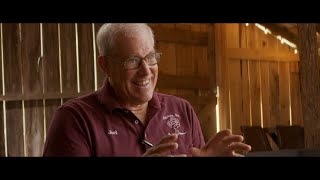
In this YouTube video, host Victor (Speaker A) briefly updates viewers on his dental surgery and promotes a free Joel Salatin master‑class module before playing the full lecture. Joel Salatin then delivers a comprehensive, anecdote‑rich guide to the ten most common mistakes homesteaders make. He stresses the primacy of animal control—ensuring fences, pens, and pets are securely managed—followed by the need to cull rogue or uncooperative animals rather than treat them as pets. He warns against the costly habit of hauling water, urging investment in permanent pipe infrastructure. Salatin discusses genetic pitfalls, urging careful vetting of animal sources, compatibility with the farm’s philosophy, and caution against exotic or heritage breeds that carry high capital risk. He critiques a “pet mentality” toward production livestock, advocating functional culling based on performance. Nutrition is covered, highlighting the shifting protein‑to‑starch needs of growing animals and the critical role of mineral supplementation (especially kelp and natural salts). Sanitation is presented as non‑negotiable, with clean, pleasant‑smelling housing as a benchmark. Finally, he stresses the importance of reliable “babysitters” – trained, situationally aware caretakers who can handle emergencies when the homesteader is away. The video intersperses brief host commentary about his post‑surgery condition and the packing/shipping of Polyface Micro orders, but the core content is Salatin’s practical checklist for avoiding homestead failures.
Chapters
That's 300+ Polyface Micro orders just since yesterday. In other good news, my inflammation numbers are down. I guess you guys can tell. I'm walking kind of normal. My fingers still hurt, but I've got movement in there. Look, I'm able to put on my shoes.
One at a time.
Did you guys see that? That's crazy. So I'm kicking this reactive arthritis. I would say the supplement regimen is paying off. And I've got to go to the oral surgeon. I had 3 implants put in and one did not take. They're porcelain implants. This is not a put you to sleep, this is a local.
And it—
we couldn't do it a few weeks ago because of my— because of my— because we were about to do steroids And I was just in bad shape and it just did not feel right. But today it feels okay. Let's do this while I'm at the, uh, oral surgeon. You don't want to see that. Uh, let's roll. Let's do this. Let's roll Joel Salatin's master class. The one, uh, the one module called, uh, what's it called? The 10 biggest pitfalls on the homestead, something like that. It's one of his— it's one of the best modules out of all 12 of them. I'm giving away 3 of them when you sign up for my email list, but I'm going to give one away right now, uh, and we'll just roll it. And if you want the others, of course you can go to, uh, polyfacemicro.com and sign up, or I'll put the link in the description. But enjoy that while I go to the, uh, surgeon. Lucky you, I guess I got the short end of this stick. Okay, enjoy.
Let's talk about the biggest pitfalls of animals on a homestead. By far and away, the first and biggest one in my view is control. Animal control. The tendency is to get animals before we're ready for them, you know, from a security standpoint. Fencing, whatever, pens, shelters, corrals, those sorts of things. We've got to be able to keep these animals where we want them. And I could entertain you for a long time about stories of animals that, you know, came off a trailer and ran into the next county. Yes, I want you terrified. I want you terrified about losing your animals because you can't imagine how fast, you know, you'd think a sheep, oh, come on, a little, a little cute sheep. Listen, man, when they take off running, They're going to make a fool out of you. A little pig? I mean, a little wiener pig that weighs 35 pounds, you think, "Oh, come on, what can that pig do?" Let me tell you what, that pig can run you through the neighborhood, through everybody's rose bushes and bramble patches, and stick you under a deadfall in the woods, and you're having a heart attack, and that pig's just looking at you like, you know, "What's your problem?" So, I want you to be quasi-terrified of losing your animals. I remember one time we had two come off a trailer. They went straight through three fences, headed up over the mountain. We never did find them. We lost them. Never found them. You know, I don't know where they are. I hope somebody had good hamburgers for dinner. You know, to my knowledge, those are the only two we ever lost. So I'm serious about this control. You be ready to have a place to put your animals before you ever unload them. Now, this also includes your pets. Like, again, people come out to a homestead, you know, they're moving out from the city, they got their pet dog. Oh, Fifi. Fifi is such a sweet little thing. Well, let me tell you what, when Fifi encounters a chicken for the first time, Fifi doesn't become a sweet little thing. She becomes a raving, ravenous wolverine that's gonna rip your chickens' heads off, rip their guts out, and you're gonna go out and there's gonna be blood and carnage and feathers, and the kids are going, "Oh no, my little pet Rhode Island Red is now a bundle of feathers. It's no good." Make sure that you've got these— your pets under control. If you need to use a nice Cabela's shock collar, use it. But the, the point is, um, you know, the control involves all of these aspects: being able to keep your animals home, being able to keep your pets under control so they don't cause you problems, those kinds of things. Another aspect of control, of course, is just being able to move the animal. So we'll talk about lanes and things like that a little a little bit later, but for now you just need to appreciate that part of being able to control your animals is to have them where you want them, when you want them to be there, know that they're going to stay there, and know that you can efficiently move them from that place to another place. And so that level of control is important. No matter what you do though, sometimes you're going to have a rogue. You're just going to have an animal that just has an attitude, I mean, that just will not respond. And so my advice on those kind of animals is just cull them, get rid of them. Life is too short to, to deal with an animal that won't get with the program. This could be anything from, from a cow that is so protective you're scared she might kill your child. And that happens. It can be an escape pig, you know, a pig that just is a Houdini pig, all right, or sometimes an animal that just won't stay with the herd, you know, the loner, the one that's already out by themselves and leading everyone else astray, by the way, that happens. And so, you know, the quintessential example of this to me is Greg Judy, who spent literally, you know, 15 years culling sheep. I mean, if he came, he was trying to get them trained to electric fence. And sheep were, you know, they're not like cows or pigs. They're a lot harder to train to electric fence. And so when he'd come and there'd be 2 out, he didn't put them back in. He loaded them up, put wheels under them, and sold them, got rid of them. I mean, I don't know whether he butchered them or just sold them, but the point is he got rid of them. And when he did that over and over and over for literally years on a time, Guess what? He doesn't have any rogues anymore. So when Justin got these sheep from Greg, after struggling with, you know, trying to keep sheep in for a couple of years, he told me, you know, I think these sheep would stay in with a bale of twine, you know, if I put them up. So you can train animals, but a rogue that has a personality of a rogue probably the most expedient thing is just put wheels under them and move them. As you have these animals, they're doing what animals naturally do. That's critical to understand. The beauty of vegetables, when you plant the tomato, you're not going to come out tomorrow and find the tomatoes over here in the squash. You know, they stay put. But animals aren't like that. Animals can move. And so, and animals have 24/7, 365 to fool around. I mean, when that animal has that much time to look around, sniff around, scratch, root, peck, jiggle, the latch will come loose. They'll figure out a way to the little itty-bitty hole and work it bigger, whatever it is. Okay, just remember, remember those animals are just doing what they're naturally prone to do. Don't be angry with the animals. Don't be angry with the— and don't be angry with yourself. Just take the experience. Oh, okay. And learn. All right, I've got to be more careful doing this. I've got to be more careful doing that. Let this just be a learning experience. Don't get angry with the animal. Remember, They're simply doing what they have 24/7, 365 to do. And so if the animal is not doing what you want, is not pleasing you, either change your protocol, your pen, your control, your whatever, change your technique to eliminate that, Or if you've done everything possible and you still can't deal with it, then cull them. They're a rogue and go on. But don't get angry at the animal. The animals are just doing what they want to do. Next pitfall: water. This is real short. We'll talk about water late later. You know how to develop water, that sort of thing. But for right now, you can't haul water. All right. It's a big pitfall on homesteads. People spend a lot of time hauling water on an ATV, carrying water, trying to get a trailer, hooking up and unhooking a trailer, waiting for your— waiting for a tank to fill so you can haul it out to the field, making mud tracks out through the field where you— water's heavy, water's cumbersome, needs to be in a pipe. Pipe is not that expensive. If you do the math between waiting and hauling water and the road upkeep and tire upkeep, trailer upkeep, fuel time to haul water versus just a one-time investment in a little bit of pipe to send it out there, there's no comparison. There's no comparison. Put in pipe, get water in a pipe. Trust me on this. Next big pitfall on a homestead is poor genetics. You know, you'd like to think that everybody out here shared the same philosophy about what a good animal is, but they don't. And, and, and there are a lot of people, there are a lot of marginal or sideways animals out there. That are passed off as okay. And trust me, every area, every region in the country has its traders, its animal traders and people who are always looking for a sucker. My mentor, Alan Nation, who founded Stockman Grass Farmer, always told me, he says, "If you go to a sale and in 5 minutes you don't know who the sucker is, it's you." And so there's always somebody in that, in that area that's looking for a sucker, looking for, you know, for somebody that they can pass off a marginal animal at a high price. So how do you select when you're, when you're out there, you know, acquiring your animals? So what you want, how do you, how do you select for the one that's going to be right for you or how are you going to protect yourself? Well, A, you know, a multitude of counselors is a good thing. So it's great to, you know, ask some folks you trust, but mainly look at compatibility. Where'd the animal come from? Go visit the farm, go visit the place, visit the farmer. Do you have compatible values? I mean, is this a farm that is completely founded on chemical use and artificials and they got, you know, lick tanks and all sorts of strange things around? Or is this a farm that's using some electric fence and is grass-based and maybe has a compost pile and shares values? So I always encourage people to acquire animals, the genetic base, based on compatibility. You try to find a place that's as close to doing what you would like to do as you can imagine. and then you'll have more compatible genetics. Just remember, one of the fastest ways to a train wreck is to be in a complete hurry about getting your animals. Take your time, vet them, go visit some farms, be deliberate about getting your animals, just as deliberate as you are about, you know, buying a car, choosing a college for your kids, or those kinds of things. Take your time, go at it systematically, Carefully, and then you'll enjoy some really good genetics. Next pitfall, and, and I've— it's related to the former one about poor genetics, but, but I'm putting it in because I see it as kind of a separate issue, and that is exotic genetics. Again, so many times folks come to a homestead and they want, uh, you know, heritage breeds. And listen, I'm not opposed to heritage breeds, You know, we use some heritage breeds on our farm. But when you start drilling down into economics of getting a rare or heritage breed animal, that, that breeding stock, seed stock, those animals are going to be way, way more expensive than just, you know, more what I call naturalized animals to your area. All right. So let me just break it down for you. I mean, I'll do cows just for want of a better thing. An exotic breed cow, for example, you know, a heifer may well cost in the neighborhood of $2,000. Okay? So you buy 4 of them, that's $8,000. Now, maybe they're bred heifers, you know, $2,000 apiece. You've got $8,000 in them. Of those 4 bred heifers, One of them is going to lose her calf. Okay, well, what's her value as a cull animal? You know, at the sale barn, she's going to be worth, you know, $500 or $600. Okay. So you've just lost all that. Those other 3 calves that you, that you kept, they now have to bear the weight of the one that you didn't, plus the money that you lost on the heifer that lost her calf that didn't. I mean, I can, I can belabor this, but there's no need to. The point is, that you're way in on a high capital, a high capital investment that's very difficult to recoup. But if you go, for example, you want 4 cows, you go to a neighbor that's got 4 standard cows, they're hardy, they're, you know, 5 or 6 years old. You get those 4 cows for, you know, $800, $900 apiece. Now, if one of those loses her calf, you're just out a very little amount. And so the risk factor really changes when you move away from exotic genetics. Another thing about exotic genetics, often those animals grow slower, which isn't necessarily a negative, but they're not, you're gonna butcher them smaller animals. Now, if you're gonna home butcher, might not be that big a deal. But if you're gonna take that 200-pound pig rather than a 300-pound pig down to a slaughterhouse, the slaughter fee is going to be the same. A steer that you take, you know, some sort of like a Dexter steer, all right, I'm going to an extreme here, that might weigh 650 pounds, 700 pounds mature, the slaughterhouse is going to charge you the same amount to, to kill that animal and skin it and get the carcass hung up, they're going to charge you the same amount as they would, you know, a 1,400-pound steer. Okay. Same amount. So what happens is when you spread that capital cost across the animal, it really increases the price of the, the price of the product. So there's a lot of reasons that I think that to start You should really just, just get community if you can, if you can find them, neighborhood, run-of-the-mill, dip your toe in low capital, low capital genetics to begin. And then as you, as you begin to gain confidence and you start getting familiar and you have control and you have water and you have these other things, then a couple years down the road, yeah, then you can dabble around with some of these exotics, but they're not the place to start. That's, that's the point here. Next big pitfall is having a pet mentality towards your production livestock. Tom Lasseter, who developed the Beefmaster breed many years ago, he had these 6, you know, 6 criteria for, for selecting his genetics, and one of them was that the cow had to bring a weaned calf in, you know, every year. And somebody asked him one time at a conference presentation, "Hey, Tom, what if lightning struck that calf? You know, you wouldn't cull that cow, would you? I mean, the cow can't be responsible for a lightning-struck calf." And he didn't bat an eye. He just fired back, "She shouldn't have had him where the lightning was going to strike." And so he practiced a ruthless culling procedure and developed one of the outstanding American breeds developed in the Far West, the Beefmaster. You want to call for the 3 O's: old, open, and ornery. All right, and so, so, uh, looking— you're not running a nursing home for animals, uh, as much as we might like them, uh, you know, you're— these are— this is production stock, and so they've got to carry their weight. They've, they've 'cause they've gotta pay the bills. They gotta pay for their feed. They've gotta carry their weight. And so this is not a pet store that you're operating. So being able, getting over the emotional standpoint, yes, this is a production functional deal to cull those animals as they reach maturity to utilize them. That's critical and not having that pet mentality. So all that discussion about culling and functionality, as good as it is, It's okay sometimes to let your heart rule your head. I mean, we're not running a Gestapo here on animals, so it's okay. And probably my favorite story on that was we had a cow that had a calf one time, and she was paralyzed. She was paralyzed in birthing, and I got her in a front-end loader, brought her to the barn, and the calf was fine. And, you know, she was able to I could roll her up enough and let the calf nurse her, you know, even though she couldn't stand up. And, you know, about 2 days, 3 days, 4 days went by, and I was getting frustrated of, you know, this cow. I've got to carry her water, carry her feed, you know, roll her up, let her calf nurse, all this. I went to an old-timer neighbor, Jim, and I said, Jim, I got this cow. She won't stand up after having a calf. How long do I wait? You know, do I put her down? How long do I wait? He said, "Give her 30 days." Oh man, 30 days. So, you know, the week— first week went out, second week went out, third week went out, fourth week. And I was marking the days off the calendar, you know, how long am I going to have to do this? How long am I going to have to do this? And 30 days was on a Sunday. Well, I just didn't have the heart to, you know, put her down on Sunday morning. I said, we'll go to We'll go to church and I'll deal with it Monday. And so we went to church and we were driving in the lane. She was out at the barn. We're driving in the lane and do you know, I looked over, that cow was standing up. Day 30, standing up. And so, should I have stayed that long? Yeah, probably not, but it's okay. I mean, these are, we get attached to these sometimes and it's okay to sometimes let your let your heart rule your head. But, but if that becomes a general rule, uh, you're going to get frustrated with your animals because they're going to be a— they're going to be a drain on your time, your finances, your emotions, and it's, it's not worth it. Let that be the exception and not the rule. The next big pitfall in, you know, homesteading is simply what I call, you know, nutrition deficiency or ration deficiency, those kinds of things. So just remember that there is a, you know, there's a tension in animals between protein and starch, just like, you know, humans, and it changes through the life of an animal. So a young animal needs, including chicks, turkey poults, needs a tremendous amount of protein, and as they get older, they need less protein and more starch, more carbohydrates. And so as we formulate our rations and as we think about how we're feeding, in fact, how we're grazing animals, you know, you can take an old dry cow, for example, and she can eat mostly, you know, a box. But young stock, growing stock, needs ice cream. So, you know, in your pasture, you're going to have box and you're going to have ice cream. And so you just have to be aware that different stages in an animal's development are going to have different nutritional requirements. And I would say in general, the number one deficiency that I see on homesteads and commercial farms is mineral deficiency. Remember, remember, when we, when we keep these animals from being able to wander wherever they want to wander, they simply can't find the leaves, roots, mineral licks, you know, all the different things that they might want to satisfy all their mineral needs. And so we have to supply those. And I can tell you on our farm, we probably spend— I'm going to just say on average 3 times as much on minerals as, you know, as the average farm. But guess what? We don't have any vet bills. And so making sure that your animals get that mineral— and our favorite, of course, is kelp, because kelp comes in a naturally— it's not formulated in a laboratory. In fact, kelp in the ocean water, which is the same mineral ratio that you find in kelp, Ocean water has exactly the same number and ratio of minerals as healthy human blood. So it's, it's naturally formulated, it's naturally chelated. So the beauty is that if the animal, if the animal needs the mineral, they metabolize it. If they don't, they simply excrete it. And so we view putting money in minerals as simply, you know, the, the flow-through part is if the animals don't need it then we're mineralizing our pastures, which also need minerals because they're mineral deficient. And so mineral deficiency is one of the biggest things. So as far as I'm concerned, one of the best things you can, you can invest in, spend money on in your homestead, is plenty of minerals for your animals so that they're not— I mean, that's an easy thing to cure. You know, it's not always easy to cure, you know, foot rot or or an injury, things like that, the easiest thing in your place to cure is mineral deficiency. So don't be miserly, get the good stuff, and keep it in front of them so at least they'll be mineral satiated. When you're choosing a mineral, in fact, when you're choosing, we like kelp for all the reasons that I suggested, but then what about different kinds of kelp? I mean, there's, there's alginate, there's Acadian, There's Thorvin, and our preference is Thorvin because it's Icelandic and it's geothermally dried. The other kelps are all dried with natural gas under higher heat. And so we've tried the different ones, and the Thorvin has this, this brilliant green color to it. I mean, you can eat it. All right. In fact, it would be good to put some on your cereal and eat it along. You use it like pepper and salt. And so you want to do that. Then the salt we use is either Sea90 or Redmond salt. These are coarser salts with nothing added, nothing depleted. In other words, they are again, they are simply mined salts. They're not iodized salts, they're not refined salts, they're not the iodized salt you get down at the farm store. So you want that totally natural mineral thing. And then it never hurts to just be adding, you know, in general, wood ashes to a chicken dust bath. It never hurts to have some charcoal around for pigs. You know, a lot of people don't realize that when the Native Americans lit fires, a lot of that was to bring animals in for hunting. You know, we've read Bambi too much and think about the animals fleeing fire, but actually animals were attracted to the charcoal, that became an important part of mineral licks and mineral contribution to the animals in the region was post-fire. And so it's actually an attractive way to make sure the animals have enough mineral. Next pitfall on a homestead is poor sanitation. And I'm going to say, I hope, a statement that doesn't offend you. I've been on thousands of farms around the world. Some of the worst sanitation I've seen have been on small-scale farms, not the big-scale farms. Sometimes I think that homesteaders or small-scale farmers, you know, we think that, well, because we're small, we can cheat. You know, I mean, how toxic can it be under 2 pigs? Well, let me tell you, if they're not moved and it's stinky and smelly and flies all over the place, it can be pretty toxic under 2 pigs. Or pathogenic. Ditto chickens. I mean, some of the worst chicken situations I've ever seen have been in small-scale dirt chicken yards, you know, where there's unthriftiness, pathogenicity, and all that sort of thing. So the rule of thumb for me is that good hygiene and sanitation for your animals means A couple things. The main one is if you go out there, it should be aesthetically and aromatically, sensually romantic. If your kids are coming in holding their noses, oh, the chickens stink, or the pigs stink, or they don't want to go gather eggs because it's stinky in there, that's a red flag. Something's wrong. You should be able to go in and have a picnic lunch with the chickens, a pig lick lunch with the pigs, picnic lunch with the sheep, whatever it is. Okay. And so that, that, that sanitation is a big deal and it's just as important. It's not about scale. Believe me, it's not about scale. It's about habitat that you offer. And so be up on that. Don't, don't, don't cheat on that. Create your place. Remember, these animals don't wear diapers. They're not potty trained. They don't flush. Okay. And, and so it's up to us to make sure that we create carbonaceous diapers, that we create sanitation, that we create a place that's, that's, that's beautiful and smells great. And so that's our responsibility for these animals. And we'll talk a lot more about that a little later when we have a whole time devoted to how to ensure sanitation and hygiene. When you're actually housing animals. Final pitfall in homesteading is what I call inexperienced babysitters. You've probably heard of Murphy's Law, you know, the law that says anything that can go wrong will go wrong at the worst possible moment. I mean, you know, there are corollaries like, you know, the probability of the jelly bread landing on the floor jelly side down is in direct proportion to the quality of the jelly that you put on the jelly bread, you know, those kinds of things. So Murphy's Law is true here. If something's going to go wonky on your place, it's going to happen when you're gone. And so, you know, new homesteaders that come, I mean, the, you know, the downside of animals is they need daily care. You can walk away from a tomato plant for 3 or 4 days, it's not going to go anywhere. It's not going to eat the neighbor's rose bushes. It's not going to head down the road and cause a crash on Interstate 35. You know, tomato's going to probably in 4 days when you come home, chances are the tomato plant will still be there where you left it. But if you walk away from a group of chickens or some pigs or a cow or goat or sheep in 4 days, chances might be high that you come back to an empty homestead and like they're gone. Where did they go? And now you got neighbors calling, you got a deputy sheriff car parked in the lane. And just trust me, if something's going to go wrong, if something's going to get out, if the water is going to stop working, if a hose is gonna burst, if the electric fence energizer quits, if lightning strikes the energizer and blows it up, it's gonna happen the 3 days in the year that you're gone. So I encourage everyone as part and parcel of developing your homestead, we're gonna talk about water, we're gonna talk about fencing, we're gonna talk about hygiene, lots of things, okay? But part of that checklist of developing your homestead is backup, you know, people backup. Who's going to babysit this? Because, you know, nobody's going to— nobody is never going to go away, you know, for 3 or 4 days. I mean, you're just not going to do it. So there's going to be times when there's weddings and funerals and things that you want to go away for 3 or 4 days. So start early. A neighbor, a friend, somebody, training them as a babysitter. And this includes setting them up. I mean, you know, Jill's going to come and she's training to babysit. So she's going to come. All right, well, then I'll go out right before she gets here and take a knife and slash a little hole in the water line. See what she does. See if she sees water spraying. You know, do you see it? Yes, there's a 20-foot geyser. In the paddock? Do you see the water spraying? That's number one. And then when you see it, do you know where the shutoff valve is? Do you know where a repair kit is? You know, those kinds of things. Do some testing on your babysitters. I mean, this is— it has a funny side, but I can tell you there have been disasters, catastrophic failures, that I've seen over my life, you know, with, with people. So, so be diligent about this. Don't, don't disregard this. Find a babysitter, find 2 or 3, okay? And train them. Start them early. Get somebody that really seems to have a, you know, situational awareness. You know, do they see when something's out? I mean, I remember when I went to a cattle school one time And the instructor said, most of you, he's an old crusty cowboy guy, he said, most of you guys, if I went out to your cow herd and tied a milk jug on the tail of every cow, you wouldn't even notice it 'cause you're looking at stuff from a pickup, you know, from the window of the pickup truck going 35 miles an hour. Yeah, they're all there, you wouldn't even see it. And so what you want is a babysitter that notices these kinds of things. And so put some investment, put some time, then you can leave your homestead with peace of mind knowing that you've got good care. Our most dramatic was one time we went away for a week and we had a couple apprentices there. You know, they were well-trained. They'd been with us for several months. They were top of the line, super duper. We get on a plane, we land on our first leg, and we get a call from them like a, a crazy windstorm came up and blew the COVID off of one of our hoop houses with 1,000 chickens in it. What are the chances? You know, we never had a cover ever blow off a hoop house. We're gone for 2 hours and a windstorm comes and blows the COVID off a hoop house. And these guys, they're out here, you know, hanging on, flapping in the sail in the wind, trying to keep— it was wild. But they got it under control. They, you know, they, they— we coached them through and they were able to get it. So trust me, things are going to go wonky. Teresa always said, she always said that the electric fence energizer was plugged into me, like I'm a walking dynamo of electricity. And every time the car left the lane and I turned left, the energizer quit, you know, electric fence went down. And so, you know, one time I was gone speaking at a deal and we had a predator attack, really bad predator. And so Daniel and she actually spent the night out with the chickens a couple nights. You know, Rachel was little, and I actually was speaking at a conference in Mexico. And so I was gone for, you know, about 4 days. And when she came to the airport to pick me up, she says today, she says, "I made up my mind, if you weren't on the plane coming in, I was on the next plane going out." So Trust me on this. Yeah, this is funny. We can laugh about it. But really, coming home to a bunch of dead animals or, you know, the sheriff deputy in your front yard is not a good thing. Train a babysitter, pick a good babysitter, and you'll be able to leave and you leave your homestead for a short period of time with and enjoy your time away.
Just got out of the procedure. Oh, wow. It's really swollen. Uh, it went well. Uh, he placed it in there. The implant's tight. He had to put a little bone in there. Rebecca texted me just as I got out, and look, you guys, she's shipping you your, your, your Polyface Micro. Look at that, 300, over 300. She said she got some video footage of it, so you guys watch that while I drive home.
We are in the people barn packing boxes. We've got Jonah packaging boxes, Lily and Josiah are, um, whatever you call that, I don't know, sealing them. And then Arun and I are putting labels on, and Gideon is doing— putting them in boxes and then putting them over here. So yeah, we are Rocking and rolling, and we're done. So we've got our, our boxes lined up over there for the post office to pick up, and we started pre-packaging more, um, books so that tomorrow when we get our labels, we can just stick the labels on those and package more as we go.
And I'm back. How do I look?
You look a little bit swollen, but you don't look that bad.
Probably take it easy.
Yes, make it very easy. I'm concerned.
I'm gone then. See you guys on the next one.
More from Justin






If I had to start my Homestead all over again, it could only pick one animal… 




